Teaching Kids the Ten Commandments as God’s Gift
The Ten Commandments are more than restrictions; they are God’s loving guidance for people he has rescued. Learn how to help children see each commandment as a gift that protects relationships, shapes
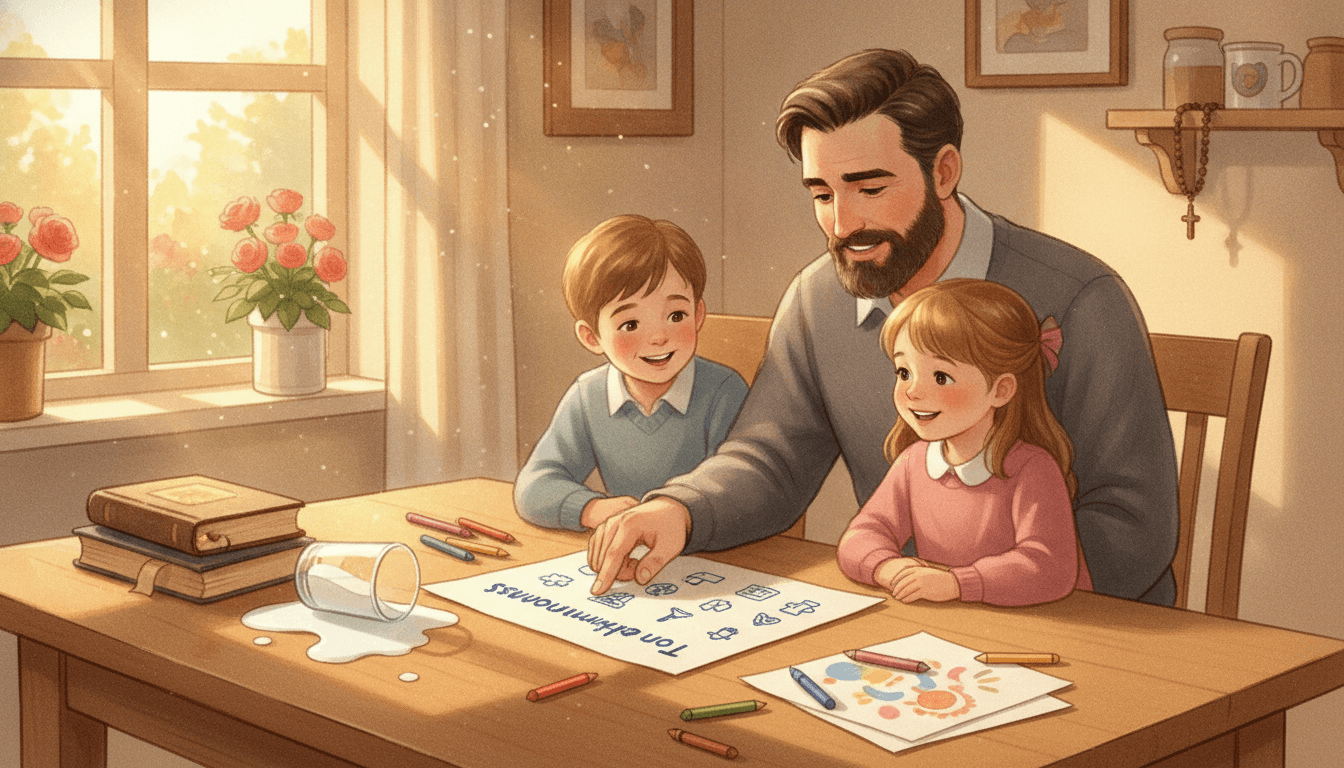
The other morning, someone at our table announced, “There are too many rules in this house.” It was said with deep feeling, right after being asked to put a cup in the sink. The Ten Commandments can sound the same to a child unless we begin where God begins: with love, rescue, and a path for living free.
Start With the God Who Loves and Frees Us

The cereal was on the floor, one child was blaming another, and somebody had decided that 7:14 a.m. was the right time to ask for a second screen turn. I told the kids, “We have rules because I love you too much to let this house become a tiny, loud jungle.” They laughed. Mostly. But it is the same place to begin when we talk about the Ten Commandments: not with a finger wagging, but with God’s love.
God did not hand Israel a list and say, “Follow these, and maybe I will care about you.” He acted first. He saw his people suffering in slavery, rescued them, and made them his own. Then he gave them a way to live as free people. That order matters. God’s commands are not a price tag for his love. They are a gift from the God who already loves and frees his people.
At our table, it can help to put it in parent language: we tell a toddler not to run into the street because we want him safe, not because he has passed a test to become part of the family. We ask children to tell the truth because trust is precious. We tell them not to hit because their brother or sister is not a target, even when that sibling has been extra annoying. Boundaries do not cancel love. Good boundaries are one way love takes care of people.
The first words God gives Israel make this plain: “I am the LORD your God, who brought you out of the land of Egypt, out of the house of slavery. You shall not have other gods besides me.” Before the command comes the rescue. Before “you shall” comes “I am your God.” That is the sentence children need to hear. We obey God because he is good and because we belong to him; we do not obey in an anxious attempt to make him love us.
One small thing we tried was beginning correction with a reminder of belonging. Instead of only saying, “Don’t lie,” try, “In our family, we tell the truth because God loves us, and we want to love each other.” When a child has made a mess of things, keep the door open: tell the truth, apologize, fix what can be fixed, and ask God to help tomorrow. The commandments are not bars on a cage. They are God teaching his children how to live free.
I am the LORD your God, who brought you out of the land of Egypt, out of the house of slavery. You shall not have other gods besides me.
Use Jesus’ Two-Part Shortcut: Love God, Love People
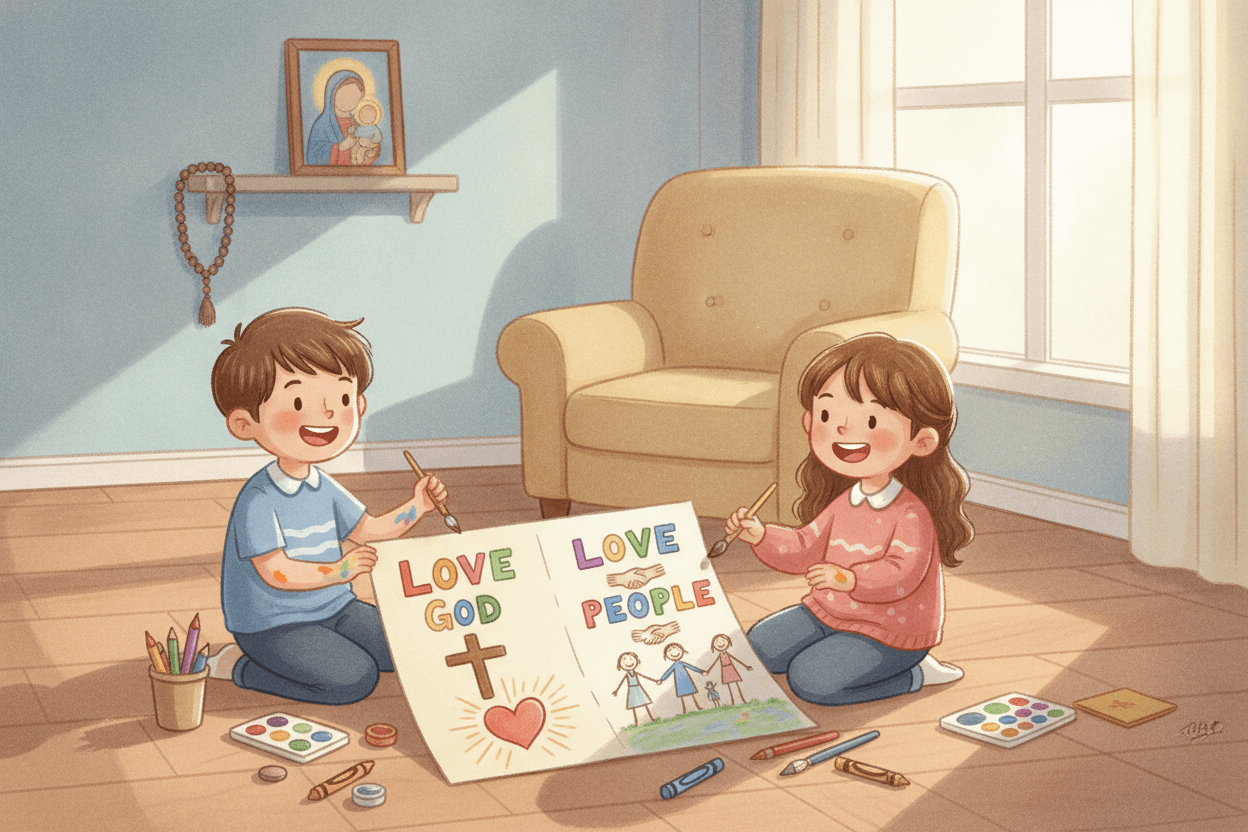
The other night, one child announced that the Ten Commandments were “a lot of rules.” Another child was mostly concerned with whether there would be dessert. Fair questions, honestly. A list of ten can feel long to a kid—and, on a tired Tuesday, to a parent too. So we do not start by marching through ten items like a quiz. We give our kids a simple handle they can remember: love God, love people.
Jesus gives us that handle himself. He says, “You shall love the Lord, your God, with all your heart, with all your soul, and with all your mind. This is the greatest and the first commandment. The second is like it: You shall love your neighbor as yourself. The whole law and the prophets depend on these two commandments.” That means the first three commandments teach us how to love God: putting him first, speaking his name with reverence, and setting apart time for worship and rest. The next seven teach us how to love the people God has put around us.
Here’s what landed with our kids: the commandments are not ten random ways to get in trouble. They protect love. Honoring Mom and Dad helps family life work. Telling the truth lets people trust us. Not taking what belongs to someone else says, “Your things and your work matter.” Not hurting another person says, “You matter.” Even the commandments about our thoughts and desires point us toward grateful, self-controlled hearts, not simply behavior that stays barely inside the lines.
The Catechism says, “The Decalogue must be interpreted in light of this twofold yet single commandment of love, the fullness of the Law.” That is a big sentence, but the kitchen-table version is plain: every commandment helps us love God or love people. One small thing we tried was asking after a hard moment, “Who did this choice affect?” and then, “What would love do next?” A child who grabbed a sibling’s toy may need to return it. A child who lied may need to tell the truth and apologize. Mercy is part of the lesson. We help them repair what they can, then remind them that God is ready to forgive and help them choose better next time.
This week, try drawing two columns on a piece of paper: “Love God” and “Love People.” Put the first three commandments in the first column and the remaining seven in the second. Do not worry about a perfect lesson. Bring it up when the tablet is competing with prayer, when siblings are arguing over a marker, or when someone is tempted to hide the truth. The child in front of you does not need a lecture. He needs to see that God’s commands are a gift: a clear way to grow into someone who can freely choose what is good.
He said to him, "You shall love the Lord, your God, with all your heart, with all your soul, and with all your mind. This is the greatest and the first commandment. The second is like it: You shall love your neighbor as yourself. The whole law and the prophets depend on these two commandments."
Make Each Commandment Feel Close to Home
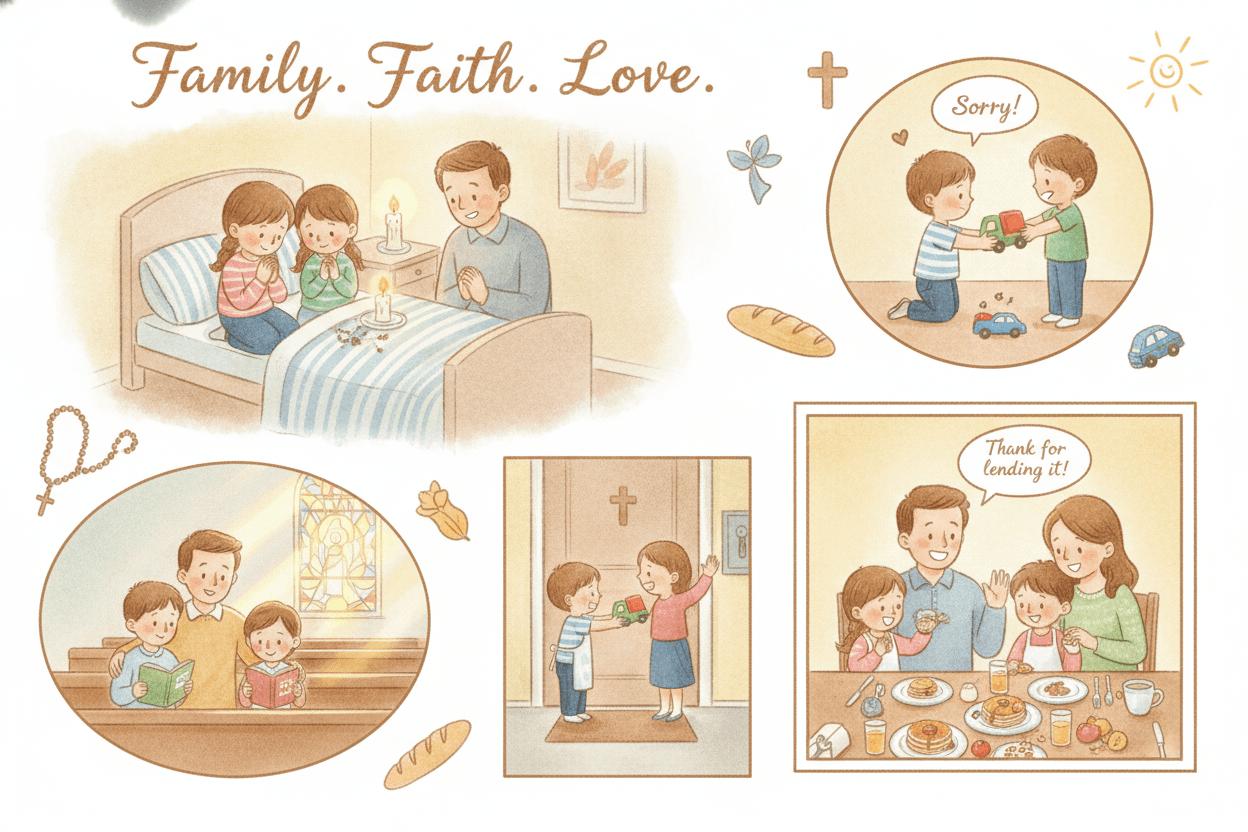
The tablet was on the counter, playing cartoons while everyone was supposed to be getting ready for Mass. One child had one shoe on. Another was looking for a snack he had already eaten. Normal Sunday morning stuff. Instead of saying, “Screens are bad,” we can say, “God comes first. Let’s turn this off and get our hearts ready.” That is the first commandment brought down to kid height. The commandments are not ten ways to make God happy enough to love us. They are guardrails for loving the God who already loves us and the people he has put near us.
For young children, give each commandment a picture they can recognize. Put God first: pray before the game, and choose Mass before entertainment. Respect God’s name: do not use it as a joke or an angry outburst; say it in prayer and praise. Keep Sunday different: make room for Mass, rest, family, and gratitude. Honor your father and mother: listen when Mom or Dad calls, even when you are building the world’s most important block tower. These are not random household demands. They protect a child’s relationship with God and help family life hold together.
Then move into the ways we care for people. Choose peace instead of hitting, kicking, or using cruel words. Tell the truth when the milk spills, even if your first instinct is to blame the dog. Respect other people’s bodies; no one is for grabbing, teasing, or treating like an object. Respect their belongings too: ask before taking a sibling’s toy, and return what you borrowed. A child may not yet understand every adult part of the commandments, but he can understand this: people belong to God, so we treat them with care.
The last two can be especially helpful in a house full of siblings. Do not spend your day wishing you had somebody else’s family, attention, toys, room, or treats. “I want what she has” is a familiar little storm at our table. Help your child name it without shame: “You are disappointed. But we can thank God for what you have and be glad for your sister.” That is how hearts begin to grow freer. The commandment is not asking children to pretend they never want anything. It teaches them not to let wanting turn into resentment.
One small thing we tried was using three questions after a rough moment: Who was affected? Did that show love? What can you do next? If a child lied, he tells the truth and repairs trust. If he broke something or took it, he apologizes and returns or replaces it when possible. Mercy belongs in this conversation. So does a fresh start. St. Paul puts the heart of it plainly: “Love does no evil to the neighbor; hence, love is the fulfillment of the law.”
Love does no evil to the neighbor; hence, love is the fulfillment of the law.
Move Beyond “I Didn’t Get Caught”
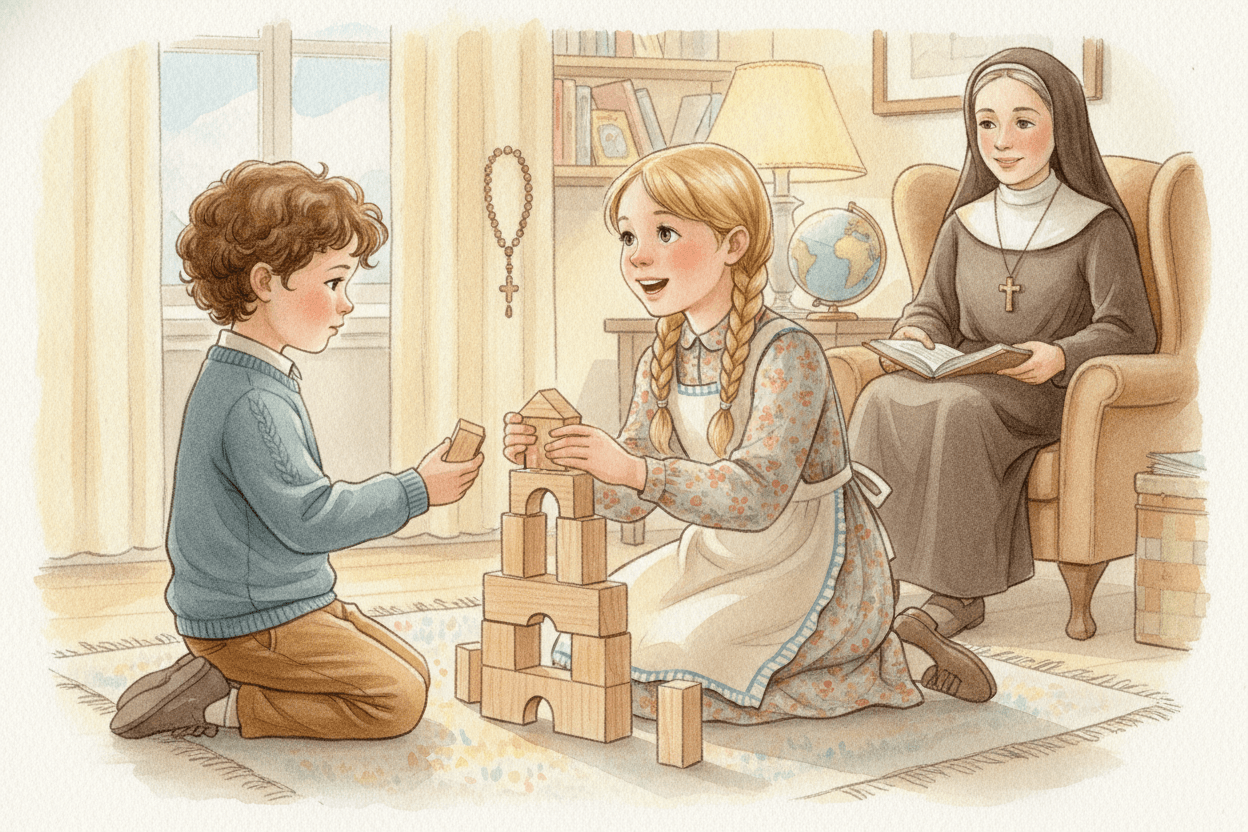
Last week, one child spotted the other child’s new sticker sheet and reached for it before breakfast. The hand stopped when I looked up. “I didn’t take it,” came the quick defense. Technically true. But at our table, we talked about the bigger question: What was happening in your heart before your hand stopped? Parenting offers these tiny courtroom scenes all day long, usually while someone is asking for more cereal.
The commandments are not only about avoiding the bad thing when Mom or Dad is nearby. God wants to form children who can choose the good even when nobody is watching. Not taking a sibling’s toy matters. So does learning self-control when you really want it. Telling the truth matters. So does becoming an honest person who does not need to build a story to escape trouble. Saying “sorry” matters. So does growing kinder, more grateful, and more ready to make things right.
Jesus puts love at the center: “If you love me, you will keep my commandments.” That does not mean children must perform perfectly to earn God’s love. They already belong to him. It means love slowly changes what we want. A child may begin by obeying because there is a consequence. Fair enough. We all start somewhere. Over time, we can help him see the person on the other side of his choice: “How did your brother feel when you grabbed that?” “What would help rebuild trust now?”
The tenth commandment is especially helpful on the days when a child wants what someone else has. Envy can show up as whining over a friend’s bike, sulking about a sibling’s dessert, or announcing that life is wildly unfair because somebody got the blue cup. We do not need to shame big feelings. We can name them calmly: “You really wish that were yours. It is hard to want something and not have it.” Then add a next step: “Can you be glad for her? Can you thank God for one thing you have? Can you ask for a turn instead of demanding it?”
One small thing we tried was replacing “Did you get caught?” questions with three gentler ones: “Who is affected by this choice?” “Does it show love?” “What can you do next?” When a child admits the truth, apologize and repair what was damaged when possible. That is not letting sin slide. It is teaching that God’s mercy makes honesty safe, and that freedom is more than getting away with something. It is becoming the kind of person who wants the good.
If you love me, you will keep my commandments.
Let Conscience Lead to Repair, Not Shame
The juice box had tipped over, spreading a red puddle across the breakfast table and dripping onto somebody’s spelling sheet. My child looked at me with wide eyes and said, “It wasn’t me.” The tiny red handprint on his sleeve suggested otherwise. It would have been easy to turn that moment into a speech about lying. Instead, we took a breath. The mess mattered, yes. But so did what happened next.
I tell my kids that conscience is the quiet inner judgment that helps us notice, “Was that choice good? Was it loving?” It is not the voice that says, “You are bad.” That is shame, and shame can make a child hide, blame a sibling, or give up. Conscience says something much more useful: “That was not right. Let’s bring it into the light and make it right.” Children need help hearing that difference, especially when their faces are already crumpling and the room is loud.
In our house, we use a simple path after someone has broken a commandment or hurt another person. First, tell the truth. Then name who was hurt: “I lied to Dad,” or “I grabbed the toy and made my sister cry.” Next comes an apology without a sneaky excuse attached. After that, ask what repair looks like. Wipe up the spill. Return the toy. Replace what was taken if possible. Sit beside the person who was hurt. These are small acts, but they teach children that love does not run away from a mess.
Then we make room for forgiveness. A parent can say, “Thank you for telling the truth. I forgive you. God forgives us too. What can you try next time?” That last question matters. It moves a child from guilt into practice. Maybe he will ask before taking something. Maybe she will put the tablet down when it is time to pray. Maybe they will come find us before the lie grows legs and runs through the kitchen. We are not training little lawyers to avoid trouble. We are helping them become people who freely choose what is true and loving.
Jesus connects the commandments with life itself: “He answered him, ‘Why do you ask me about the good? There is only One who is good. If you wish to enter into life, keep the commandments.’” The commandments show us the good, and repair gives children a way back when they miss it. One small thing we tried was keeping the words “tell the truth, repair the hurt, try again” ready for ordinary conflicts. It is short enough for a tired parent to remember. More importantly, it tells our kids that failure is not the end of the story.
He answered him, "Why do you ask me about the good? There is only One who is good. If you wish to enter into life, keep the commandments."
Try One Small Commandments Habit This Week
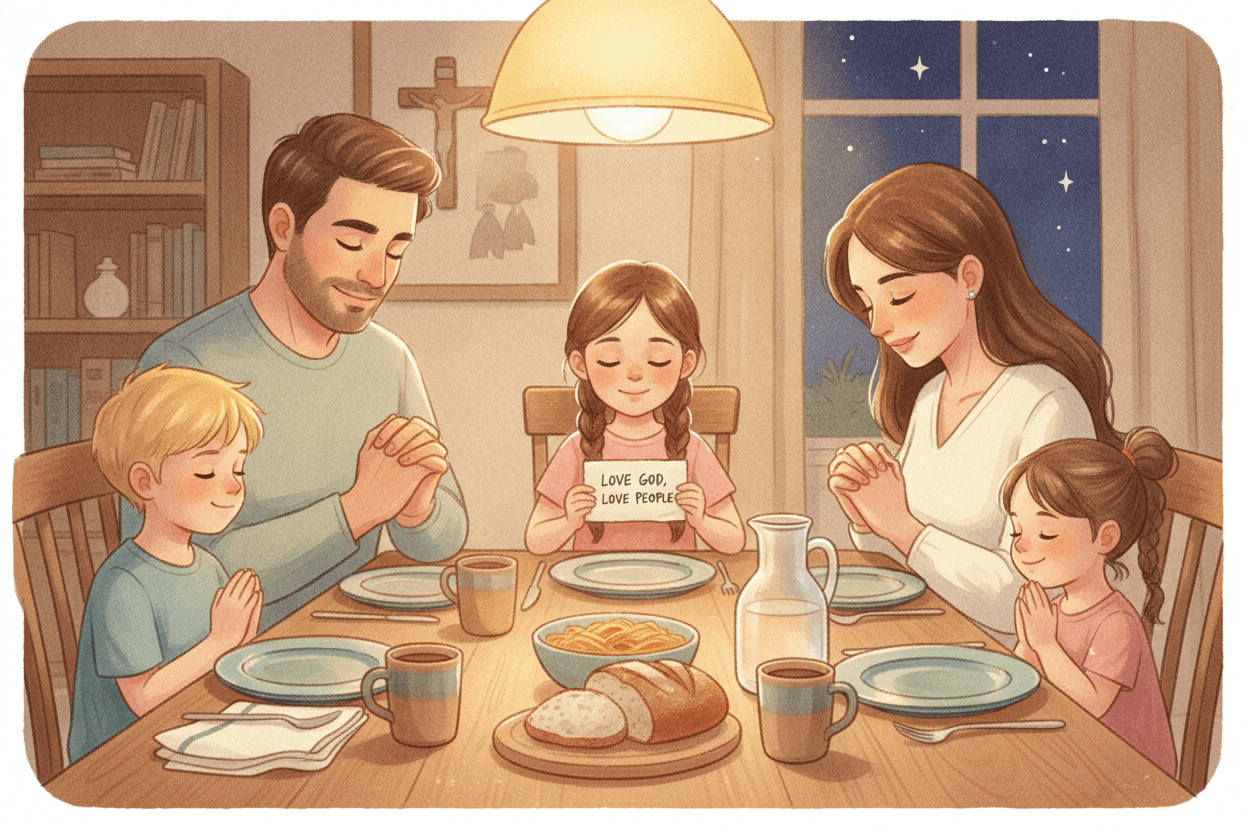
Tuesday night, somebody spilled milk, somebody else was upset about the blue cup, and bedtime was already running late. That is not usually when I feel ready to teach the Ten Commandments. But it may be exactly when our kids can see what they are for. A commandment is not a poster on a wall. It shows up when a brother grabs, when we are tempted to hide the truth, or when we would rather keep watching than stop and pray.
Try this for seven days: pick one commandment at dinner or bedtime. Keep it short. Name one real situation from the day. If you choose the commandment about truth, you might say, “Today I said I cleaned up when I had not finished. That made it harder for Mom and Dad to trust my words.” If you choose honoring parents, talk about responding when called the first time. If you choose keeping the Lord first, talk about putting down a game for two minutes of prayer. No speeches needed. The kitchen table has heard enough of those.
Then ask the same three questions every night: “Who is affected by this choice?” “Does it show love?” and “What would help you choose the good next time?” Young children may answer with one word. Older kids may shrug first. That is fine. Give them room. One small thing we tried in our house was letting everyone answer, including Mom and Dad. Children notice quickly when the commandments are only for them. They also learn something important when a parent says, “I was impatient. Tomorrow I can take a breath before I answer.”
The goal is not to turn dinner into a quiz show with mashed potatoes. The goal is to give children a simple habit of seeing their choices clearly. God’s guidance is a gift because it teaches us how to love him and one another in the actual life we have—the loud, tired, occasionally sticky life. When they get it wrong, help them name the next good step: tell the truth, apologize, return what was taken, or try again with a kinder voice.
End with a prayer that takes less than a minute: “God, thank you for loving us and showing us how to love. Help us choose what is good tomorrow. Amen.” Repeat the practice even when nobody gives a thoughtful answer and even when the day has gone sideways. Faith usually lands this way: through ordinary, messy moments, repeated with patience. Seven small conversations can give your family a language for the next hard choice.
Hear, O Israel! The LORD is our God, the LORD alone! Therefore, you shall love the LORD, your God, with your whole heart, and with your whole being, and with your whole strength.
Frequently asked questions
How do I explain the Ten Commandments to my child without making them sound like punishments?
Begin with what God did before he gave any commands: he rescued Israel and called them his people. Tell your child that God’s rules are not a way to earn his love; they are loving guidance from a Father who already loves us and wants us to live freely.
What is the easiest way for kids to understand all ten commandments?
Use Jesus’ summary: love God and love people. Explain that the first three commandments help us put God first, honor his name, and worship him, while the other seven show us how to treat family, neighbors, and ourselves with love.
How can I connect the Ten Commandments to everyday family life?
Use ordinary moments as examples: telling the truth after breaking something, returning a sibling’s toy, turning off a screen to prepare for Mass, or listening when a parent calls. Ask, “Who did this choice affect?” and “What would love do next?”
What should I say when my child breaks one of the commandments?
Start with belonging rather than shame: “In our family, we tell the truth because God loves us and we want to love each other.” Help your child name what happened, apologize, repair what is possible, and ask God for help to choose differently next time.
How do I teach young children the first three commandments?
Give them concrete pictures: pray before a game to put God first, use God’s name in prayer rather than as a joke or angry word, and make Sunday a day for Mass, rest, family, and gratitude. Small repeated practices help children see these commandments as ways to love God.
Do Catholics believe we have to follow the commandments to make God love us?
No. God’s love comes first; the commandments are not a test we pass to become worthy of him. Catholics obey because God has made us his children and gives us the commandments as a path toward freedom, trust, and love.
Sources: vatican.va · vatican.va · vatican.va · vatican.va · vatican.va · vatican.va · vatican.va · vatican.va
Scripture quotations in this article use the NABRE translation.