The Ten Commandments for Kids:A Catholic Parent’s Guide

“But why do I have to?” is often the real question behind a child’s argument about rules. The Ten Commandments give parents a better answer than “Because God said so”: God first loves and rescues his people, then teaches them the way of freedom, truth, and lasting love.
Start With the God Who Loves and Sets Us Free
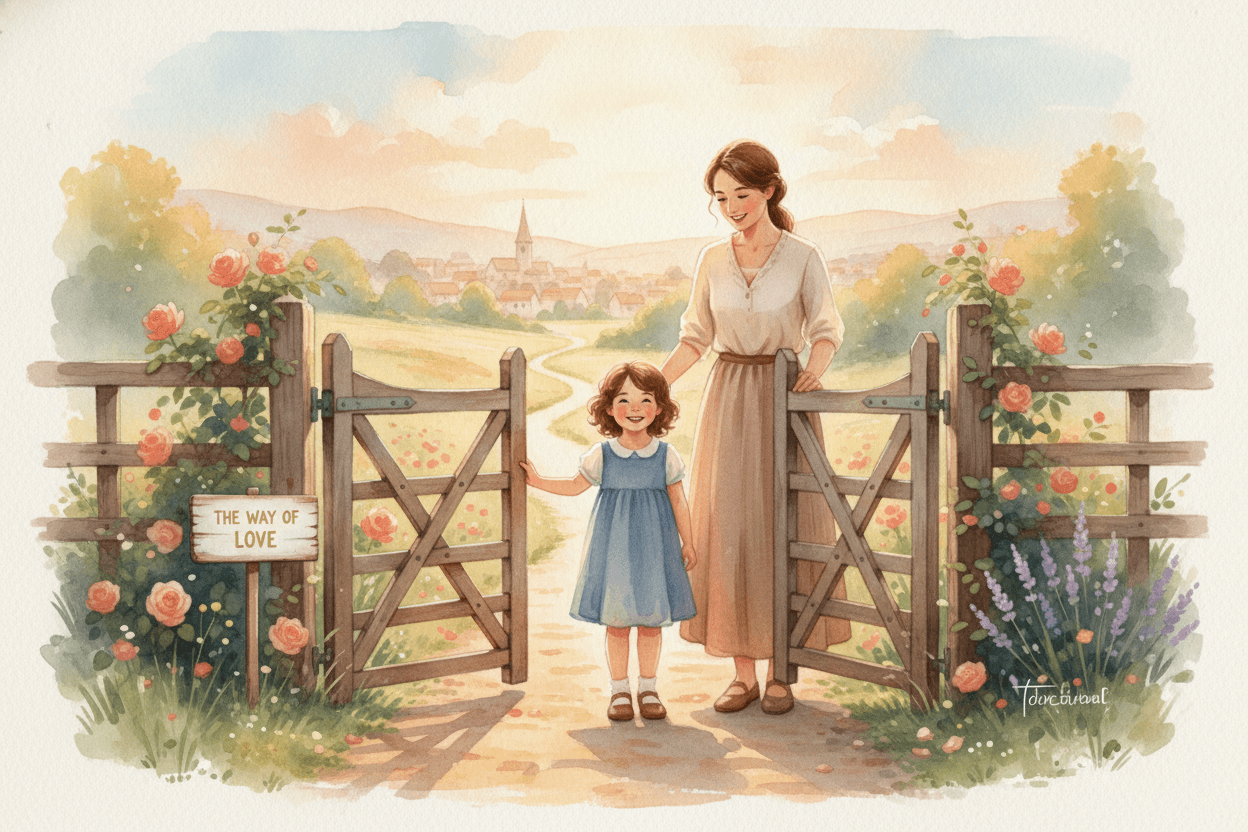
Before God gives Israel a single commandment, he tells them who he is: the One who brought them out of slavery. That order matters when we teach children. The commandments do not begin with a stern list from a distant ruler; they begin with the love of a God who sees his people suffering, rescues them, and shows them how to live free. Here’s how I’d teach this: “God did not save his people so they could be trapped by new rules. He gave them directions for living as people who are loved and free.”
Children already understand the difference between a rule meant to protect and a rule that feels random. A parent who says, “Hold my hand in the parking lot,” is not trying to spoil a child’s fun. That parent sees dangers the child may not yet see. In the same way, God’s commands teach us how to love him and one another without being ruled by selfishness, dishonesty, resentment, or harm. Pope Francis called the Commandments “the journey toward freedom.” That is a helpful phrase for a child: God shows us the path that keeps our hearts free to love.
This foundation is especially important when children prepare for First Reconciliation. Sin is not only “breaking a rule and getting in trouble.” Sin is a choice against love: refusing the good God intends for us and for the people around us. When a child lies, hurts a sibling on purpose, ignores God, or refuses to make things right, the concern is not simply that a rule was crossed off a list. Love was wounded. Confession then becomes more than reporting failures; it is returning to the God who forgives, heals, and teaches us to choose love again.
Scripture invites us to begin where God begins: with rescue, belonging, and love. Read Exodus 20:2-3 aloud before discussing the first commandment, then ask, “What had God already done for his people?” and “Why might a loving God give them these commands?” Let children answer in their own words. Their questions deserve more than “Because God said so.” We can say, truthfully and clearly: “God says so because he knows what helps us become loving, truthful, and free.”
I am the LORD your God, who brought you out of the land of Egypt, out of the house of slavery. You shall not have other gods besides me.
Give Kids the Big Picture: Love God, Love Neighbor
A child who can recite all ten commandments may still ask, “But what do they have to do with my brother taking my Lego?” That question is worth welcoming. Rather than presenting ten separate rules to memorize, give children one clear picture: God is teaching us how love looks in real life. The commandments show us how to love God faithfully and how to love the people God has placed around us.
Here’s how I’d teach this: draw a simple heart on paper and divide it into two parts. Label one side “Love God” and the other “Love Neighbor.” Explain that the first three commandments help us put God first: worshiping him, speaking his name with reverence, and keeping Sunday for Mass, rest, and gratitude. The remaining seven teach us how to love people: honoring parents, protecting life, respecting bodies and families, being honest, respecting what belongs to others, and resisting envy. The Catechism states this plainly: the first three concern love of God, while the other seven concern love of neighbor (CCC 2067).
Jesus himself gives children the summary they need to hear again and again: “You shall love the Lord, your God, with all your heart, with all your soul, and with all your mind. This is the greatest and the first commandment. The second is like it: You shall love your neighbor as yourself. The whole law and the prophets depend on these two commandments.” When a child asks why lying, mocking, cheating, or refusing to help is wrong, we can return to this center: it does not love God, or it does not love our neighbor.
Then make the connection concrete. Telling the truth when you may get in trouble is love for your neighbor because people deserve honesty. Putting away a screen for Sunday Mass says that God is not an extra activity squeezed into the weekend. Refusing to join a cruel joke protects a classmate’s dignity. Returning a borrowed item, even when no one would notice, is love expressed through justice. Children are capable of seeing these moral links when adults take time to name them.
This approach also keeps correction from becoming a list of accusations. Instead of saying only, “You broke the eighth commandment,” try, “What happened to love when you told that story about your sister?” After a quarrel, ask, “Which part of loving God or loving our neighbor was hard right then?” Such questions form conscience without reducing faith to rule-following. The commandments remain clear, but children begin to recognize them as God’s wise instruction for choosing the good.
He said to him, “You shall love the Lord, your God, with all your heart, with all your soul, and with all your mind. This is the greatest and the first commandment. The second is like it: You shall love your neighbor as yourself. The whole law and the prophets depend on these two commandments.”
Teach the First Three as Love That Makes Room for God
A child may be halfway through a game when it is time to leave for Mass, and the protest comes quickly: “But I’m almost done!” That small moment can teach more than a lecture. The first three commandments show children that loving God is not one activity squeezed into an already crowded week. God is first, and that changes how we hold everything else we enjoy.
Here’s how I’d teach the first commandment to ages six through nine: “God is the most important One in our life. Good things become a problem when we treat them as more important than God.” Toys, sports, friends, winning, and screens are not bad; they are gifts. But a child can recognize when a good thing starts acting like a little god: when he cannot put it down, becomes angry when it is taken away, or chooses it over prayer, Mass, or kindness. The Catechism teaches that the first commandment calls us to adore God alone and put our hope in him (CCC 2084-2094). A simple family question helps: “Is this helping me love God and people, or is it starting to boss me around?”
For the second commandment, keep the language direct: “God’s name is holy, so we say it with love.” Children hear holy names used as throwaway exclamations, jokes, or insults in videos, games, and conversations. Help them notice without making them anxious. They can choose not to repeat a careless phrase, refuse religious jokes that mock God, and never use God’s name to frighten or wound another person. Instead, teach them to say God’s name in prayer: “Thank you, God,” “Help me, Jesus,” or “Holy Mary, pray for us.” Reverence is not merely good manners; it is a truthful response to who God is (CCC 2142-2149).
The third commandment gives families a weekly way to make room for God. Tell children, “Sunday belongs especially to the Lord, because Jesus rose from the dead.” Mass is not an interruption to the weekend; it is the center of it. Scripture invites us to connect love and obedience: “If you love me, you will keep my commandments.” Children can live this by putting screens aside for Mass, preparing clothes and bags the night before, participating in the prayers and songs, and protecting a calmer rhythm afterward. Prayer, rest, gratitude, and unhurried family time all say that we are more than what we produce, buy, watch, or achieve.
These commandments are not meant to make children fearful of making mistakes. They form a pattern of return: when we put something ahead of God, speak carelessly, or let Sunday become frantic, we apologize and begin again. Parents teach most effectively when children see this pattern at home: adults placing phones aside, speaking God’s name reverently, making Mass a real priority, and choosing rest over another unnecessary commitment. Such practices show that God is not competing with family life. He is the One who gives it its right order.
If you love me, you will keep my commandments.
Teach the Next Four as Ways We Protect People
A child slams a bedroom door after being asked to put away a tablet. Another laughs when a classmate is left out at recess. A third quietly copies answers because “everyone does it.” These are not interruptions to teaching the commandments; they are the lesson. The fourth through seventh commandments help children see that love is concrete: it shows up in how we speak, how we treat bodies, how we handle other people’s things, and what we do when no adult is watching.
Here’s how I’d teach the fourth commandment: honoring parents and rightful authority does not mean agreeing with every instruction cheerfully or pretending hurt never happened. It means listening, answering without contempt, helping with the work of family life, and making repair after disobedience. A child can say, “I am upset, but I will not yell at you.” Parents should teach this commandment with humility, too. Authority is meant to serve a child’s good, not to demand fear; it should be patient, just, and loving. The Catechism places duties on both children and parents in family life (CCC 2214-2231).
The fifth commandment protects life and the dignity God gives every person. For children, begin close to home: no hitting, no threats, no cruel jokes, no pushing someone out of a game, no hostile comments in a group chat. Ask, “Did my words make this person feel safer and more respected, or smaller and less wanted?” This commandment also gives children language for caring for their own bodies and emotions. They can ask for help when they are angry, frightened, or being mistreated rather than hurting themselves or someone else.
When teaching the sixth commandment to younger children, plain and calm words are best. God made our bodies good, and every person deserves respect. We keep private parts private, practice modesty, respect personal space, and never touch or speak about another person in a way that makes him or her feel used, embarrassed, or unsafe. Children need to know they may say no, move away, and tell a trusted adult if someone ignores a boundary. This is not a lesson in shame; it is a lesson in honoring the goodness of the body and the person.
The seventh commandment reaches farther than taking something from a sibling’s room. It teaches justice: ask before borrowing, return what you use, share fairly, refuse to cheat, and admit when you have broken or lost something. It also belongs on a child’s screen. Copying a game, image, song, or other digital content without permission is not harmless simply because no one sees it happen. Scripture invites us to make these lessons part of ordinary family conversation: “Keep repeating them to your children. Recite them when you are at home and when you are away, when you lie down and when you get up.” The ordinary moments—lost pencils, unfair turns, unkind messages, a borrowed sweatshirt—are where children learn that God’s commands protect people because people matter to him.
Therefore, you shall love the LORD, your God, with your whole heart, and with your whole being, and with your whole strength. Take to heart these words which I command you today. Keep repeating them to your children. Recite them when you are at home and when you are away, when you lie down and when you get up.
Teach the Last Three as Truthful and Grateful Hearts
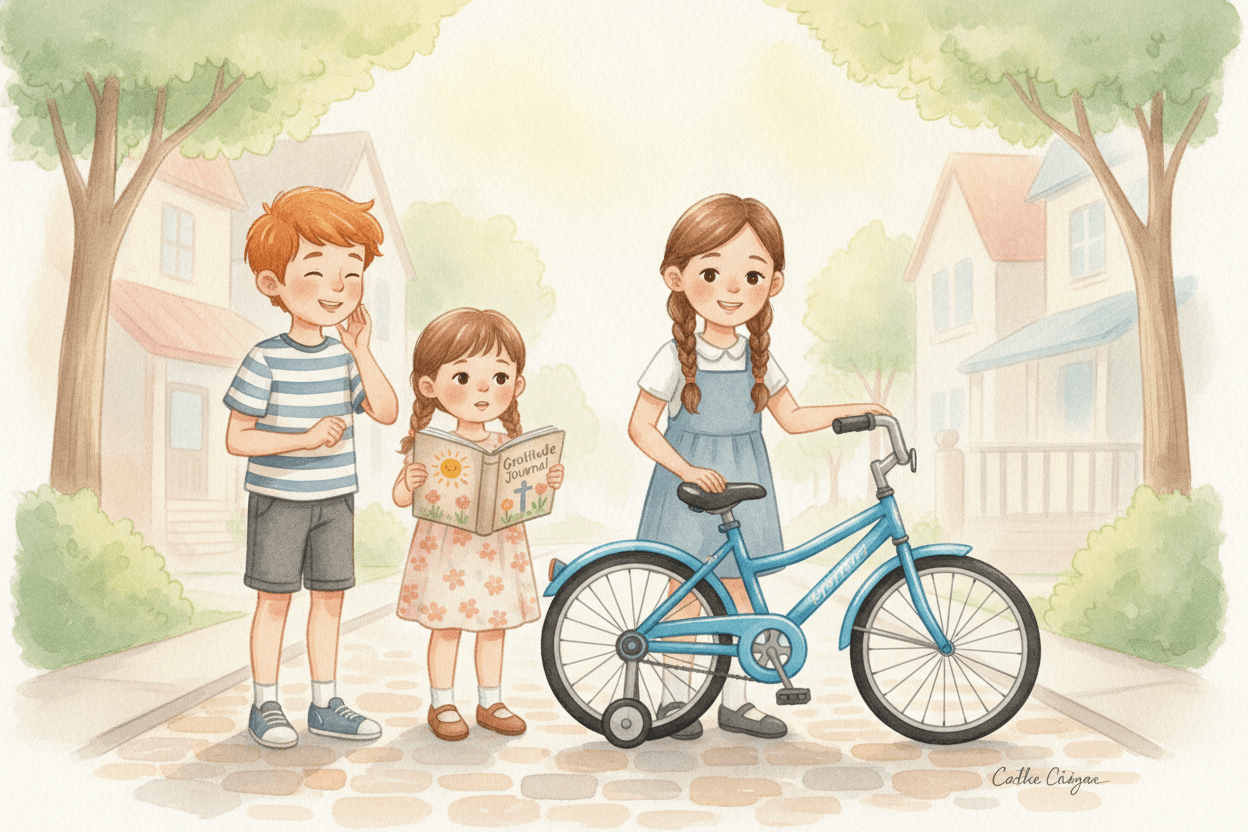
A child repeats a rumor from the lunch table, then watches the classmate at the center of it grow quiet. That is a moment to teach more than “Don’t gossip.” The eighth commandment forms children to recognize that words can either serve the truth and protect a person’s good name, or they can cause real harm. Catholic children are quite capable of seeing this connection when we give them concrete examples.
Here’s how I’d teach this: the eighth commandment asks us to be truthful, but truthfulness is more than avoiding obvious lies. It means not passing along a story we cannot verify, not making a false accusation when we are angry, and not leaving out key facts to make someone look bad. It also means pausing before posting, forwarding, or typing in a game chat. A child can ask, “Is it true? Is it necessary? Would I say this if that person were standing beside me?” The Catechism teaches that respect for the reputation of persons forbids rash judgment, detraction, and calumny (CCC 2477).
The ninth commandment can be presented simply and clearly: God asks us to honor marriage and family relationships, and to look at every person with respect. For younger children, this includes learning that bodies are good, private, and never a joke. It means refusing comments that reduce someone to appearance, respecting appropriate boundaries, and speaking about families without mockery. As children grow, parents can add more detail with calm, age-appropriate clarity. The essential lesson remains steady: no person exists for another person’s entertainment, curiosity, or use.
Then the tenth commandment helps children notice what is happening inside their own hearts. Envy often sounds like, “It is not fair that she got that,” or “I have to have the same shoes, game, or invitation.” A reasonable wish says, “I would like that someday.” Envy says, “I cannot be happy unless I have what someone else has.” Help children name the difference. When a friend earns a prize, makes a team, or receives a gift, practice a generous response: “I am happy for you.” Gratitude at bedtime can also be a practical remedy: name three gifts from God before naming one hope for tomorrow.
These commandments are not meant to make children anxious about every thought or careless word. They teach them to bring both speech and desire under the care of love. Scripture invites us to see the dignity of children themselves: “Let the children come to me, and do not prevent them, for the kingdom of heaven belongs to such as these.” When we correct lying, gossip, disrespect, or envy with patience, we are helping children come to Christ with honest mouths, respectful eyes, and grateful hearts.
Let the children come to me, and do not prevent them, for the kingdom of heaven belongs to such as these.
Try the Three-Question Family Practice This Week
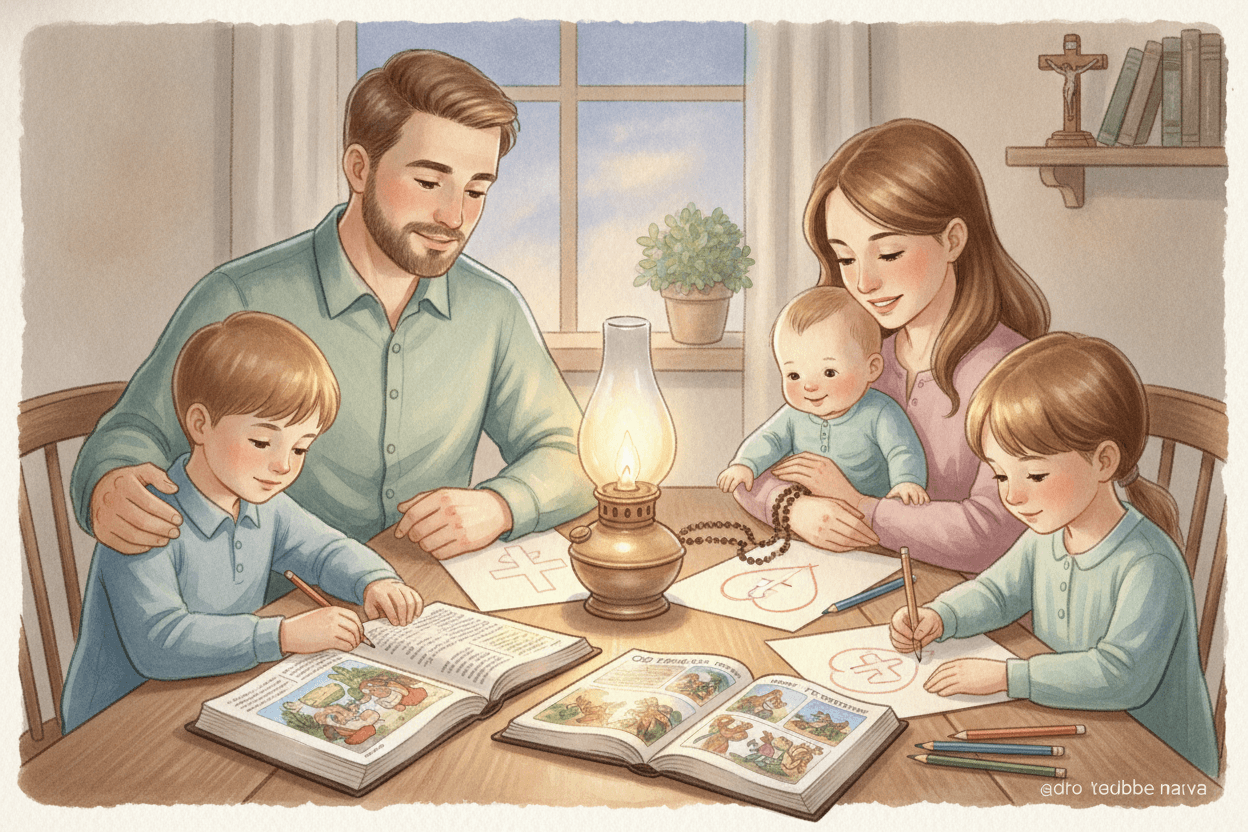
The dinner plates are still on the table, someone is asking for dessert, and a sibling has just complained that another sibling took a turn too long on the tablet. That is often the right moment—not a perfectly quiet lesson—to bring up one commandment. Children learn that God’s law belongs in ordinary family life when they see it speak to a real disagreement, a hard choice, or a kindness they have noticed.
Choose one commandment for the week and return to the same three questions: “What does this protect?” “How does it help love grow?” and “What might it look like at home, at school, and on a screen?” For the eighth commandment, a child may say it protects truth and another person’s good name. Love grows because people can trust one another. At home, it may mean admitting who spilled the juice; at school, refusing to pass along a rumor; on a screen, not sharing an embarrassing photo or a claim that has not been checked. This is more than a rule-recitation exercise. It helps children connect God’s command with the real good it guards.
Here’s how I’d teach this: keep the practice brief enough that it can happen at dinner, bedtime, or on the drive to school. One child might choose the fourth commandment and name a concrete action such as answering respectfully the first time. Another might choose the seventh and decide to return a borrowed pencil, ask before downloading something, or share fairly. Let each child name one choice that is specific and possible this week. Parents can join in, too; children need to see that honoring, truthfulness, rest, gratitude, and self-control are not merely requirements for the young.
During the week, ask everyone to notice one example of someone living that commandment. Perhaps a classmate tells the truth even though it is difficult. Perhaps Dad puts his phone away for family prayer on Sunday. Perhaps a child welcomes someone who is being left out. Naming these small acts trains children to recognize goodness rather than only spotting failure. As the Catechism reminds us, the commandments show us a path of freedom and love, not a list designed to catch us doing wrong (CCC 2057).
End by returning the choice to God in a sentence of prayer: “Lord, thank you for showing us what love looks like. Help us to live this commandment tomorrow.” Deuteronomy places this kind of teaching in the natural rhythm of home: speaking of God’s words when we sit at home, travel, lie down, and rise. If your children respond well to pictures and story, read the related Moses and the Ten Commandments comic together afterward. Let it open a Scripture-rooted conversation: What did God rescue his people from? Why would a loving Father give them a way to live free?
Therefore, you shall love the LORD, your God, with your whole heart, and with your whole being, and with your whole strength. Take to heart these words which I command you today. Keep repeating them to your children. Recite them when you are at home and when you are away, when you lie down and when you get up.
Frequently asked questions
How do I explain the Ten Commandments to my child without just saying, “Because God said so”?
Begin with God’s love and rescue of his people before introducing the rules. Explain that God gives the commandments as a path to live freely and love well, not as random ways to control us. Compare them to a parent’s safety rule, such as holding hands in a parking lot.
What do the Ten Commandments have to do with love?
Teach children that the commandments show what love looks like in everyday choices. The first three help us love God, and the other seven help us love our neighbors. Lying, cruelty, cheating, and taking what is not ours are wrong because they wound love and trust.
How can I make the Ten Commandments easier for kids to understand?
Draw a heart divided into two halves labeled “Love God” and “Love Neighbor.” Put the first three commandments on the Love God side and the remaining seven on the Love Neighbor side. Then connect each commandment to situations your child knows, such as being honest with a sibling or returning a borrowed toy.
How should I talk about sin before my child’s First Reconciliation?
Describe sin as more than getting a rule wrong; it is choosing against love for God or another person. After a bad choice, help your child notice what love was harmed and how they can make it right. This frames Confession as returning to the God who forgives, heals, and helps us choose love again.
How can I explain the first commandment to a young child?
Tell your child that God is the most important One in our lives, and good gifts should not take God’s place. Toys, sports, friends, and screens are good, but they can become a problem when a child cannot put them down or chooses them over prayer, Mass, or kindness. Ask, “Is this helping me love God and people, or is it starting to boss me around?”
What can I say when my child complains about leaving an activity for Mass?
Acknowledge that stopping a game or screen can be hard, then explain that Sunday Mass shows God is not an extra activity to fit into the weekend. Loving God means giving him first place, even when we would rather keep doing something fun. Remind your child that rest, worship, and gratitude help shape the whole week.
Sources: vatican.va · vatican.va · vatican.va · usccb.org · usccb.org · usccb.org · catholic.com · catholic.com
Scripture quotations in this article use the NABRE translation.