How to Teach Kids the Lord’s Prayer at Home
Turn a rushed Our Father or a question about toast into an invitation to explore Jesus’ words together. Discover simple, age-appropriate ways to teach the Lord’s Prayer through conversation, repetitio
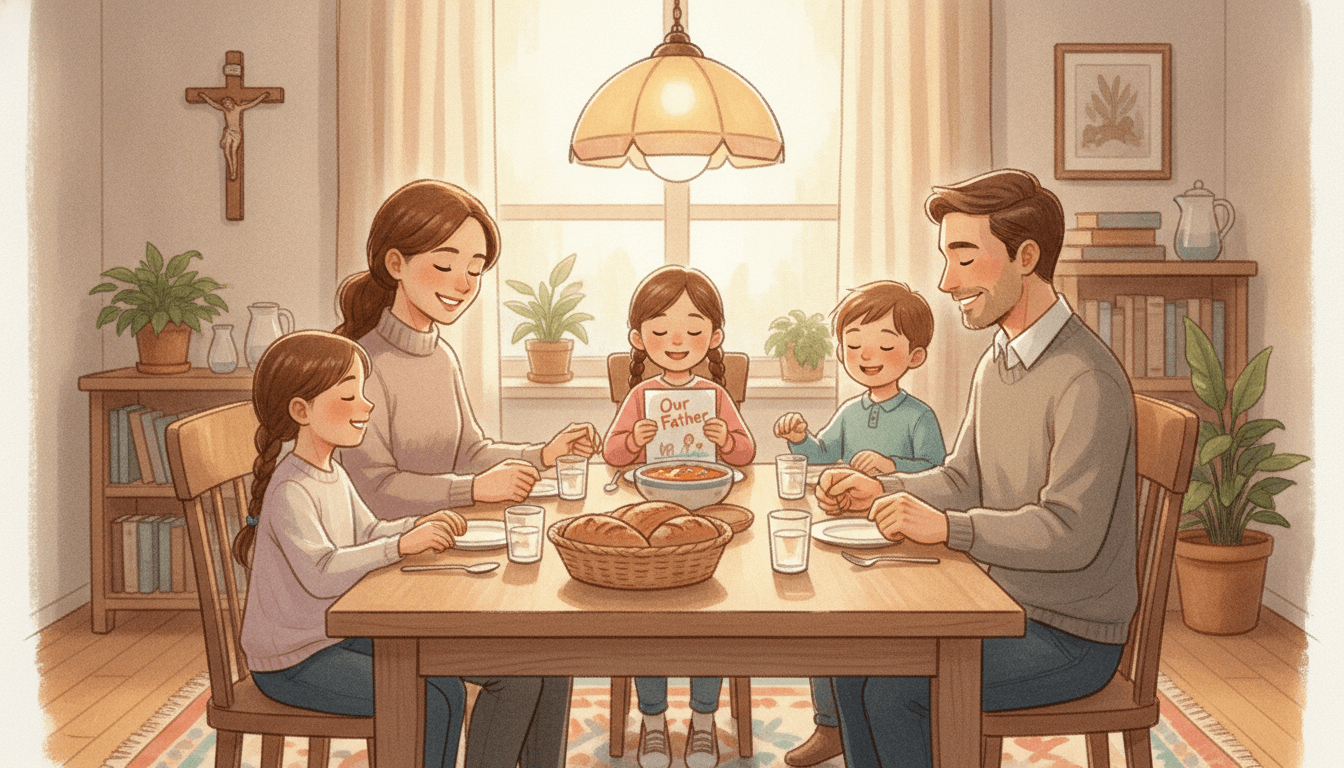
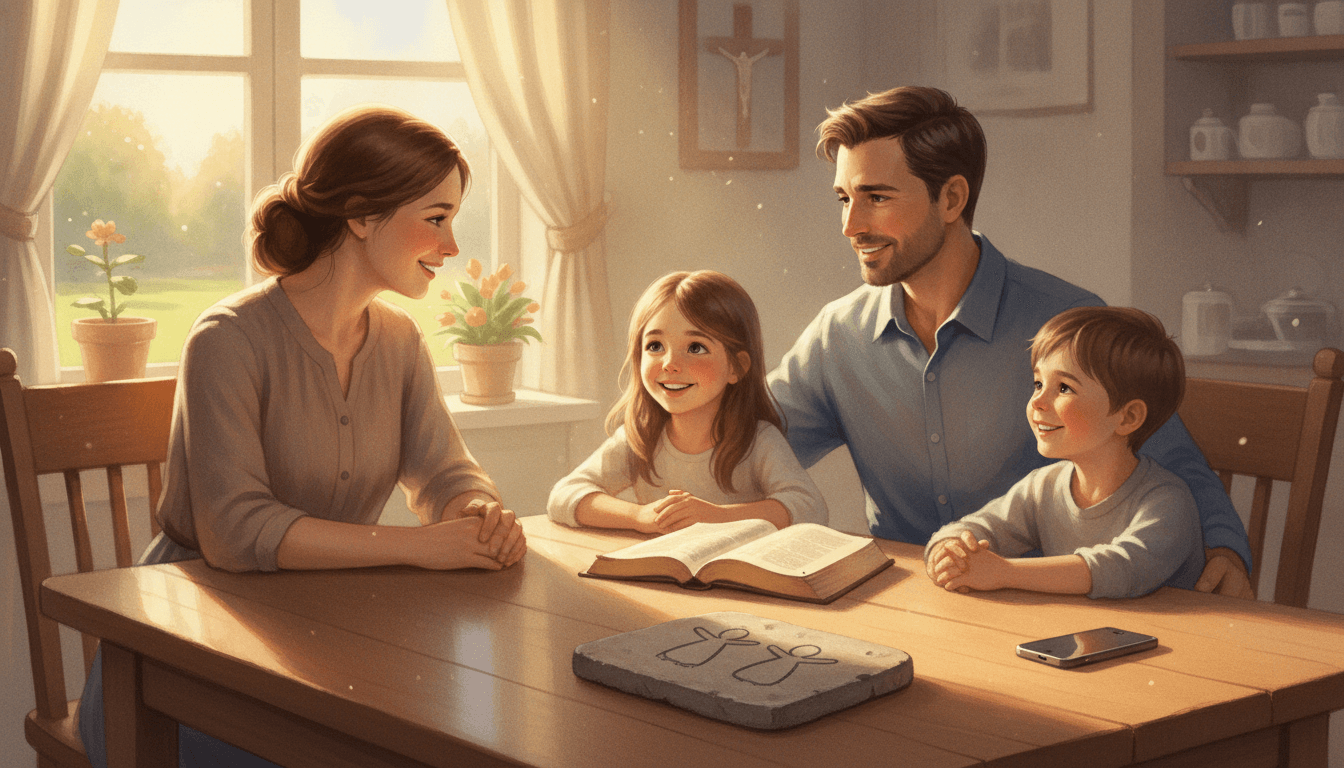
The other night, one child raced through the Our Father like it was the last lap of a track meet, while another stopped at “daily bread” to ask about toast. That is not a failed family prayer time. It is a good place to begin: Jesus gave us these words so our children can bring their real lives to God.
Start With the Person Who Taught the Prayer
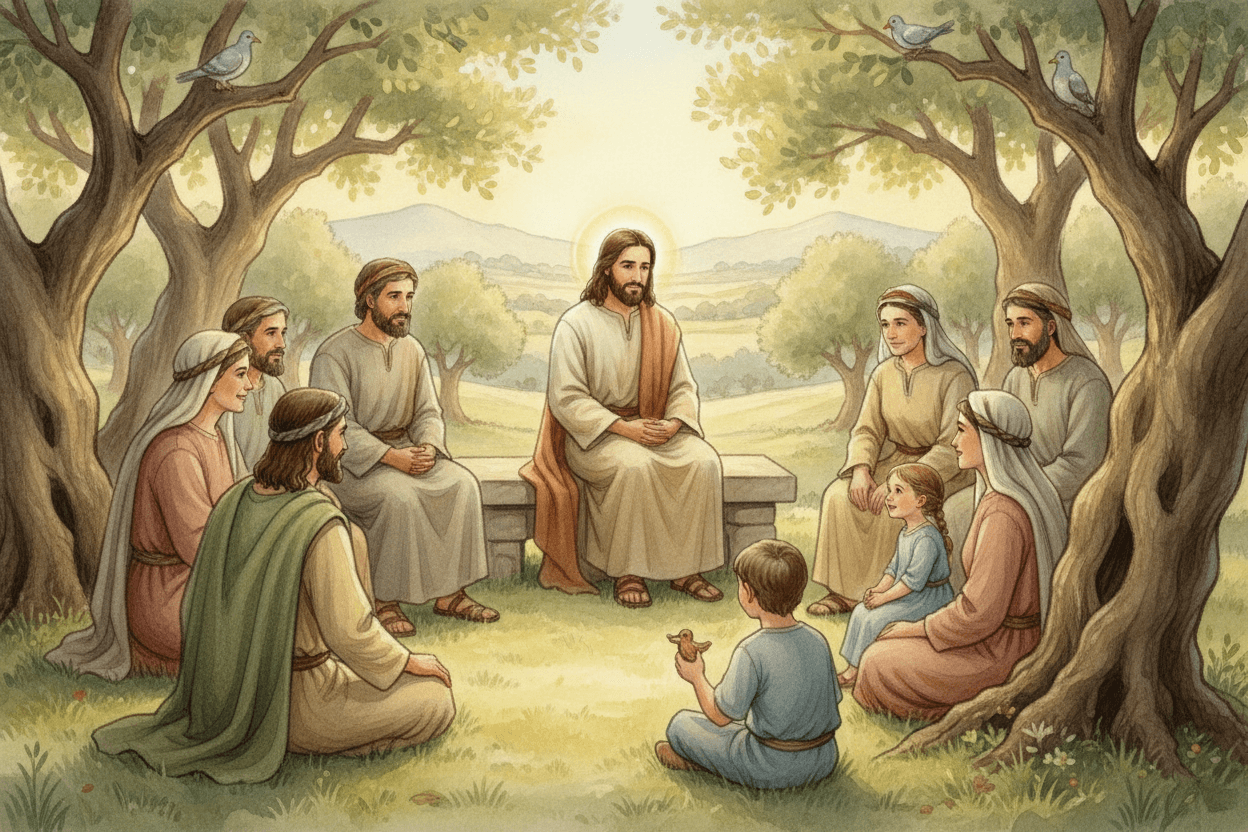
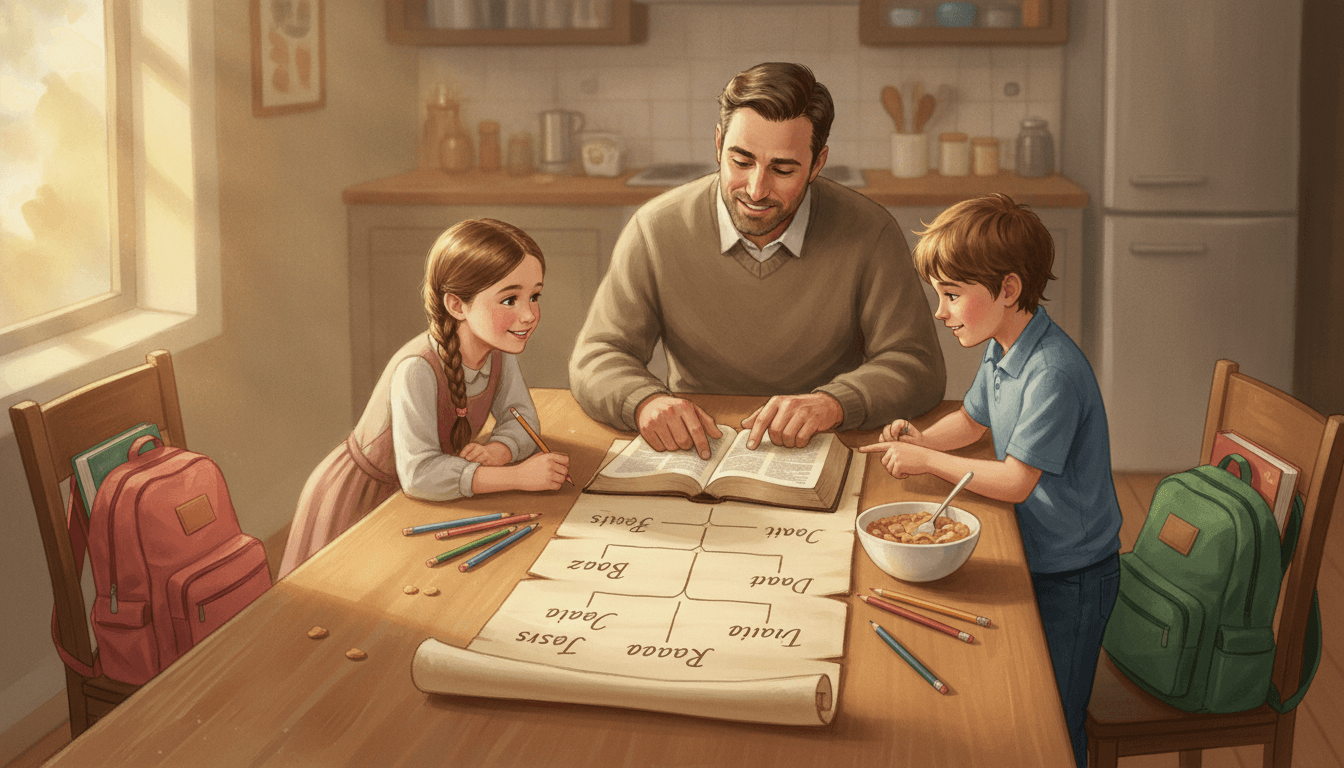
The first time one of my kids raced through the Our Father like it was a spelling test, I stopped him halfway through. Not because he got a word wrong. He had the words down cold. But his eyes were on the ceiling, his feet were bouncing, and we were both acting as if God had handed us a worksheet. “Who gave us this prayer?” I asked. He paused. “Jesus?” Exactly.
That small question changes the starting point. The Our Father is not a religious speech children have to perform for Grandma or recite at Mass without thinking. Jesus gave these words after his disciples came to him with a very ordinary request: teach us how to pray. They had watched him pray and wanted to learn. So when we teach this prayer at home, we can begin there: Jesus is showing us how to talk to his Father—and because of Jesus, our Father too.
For little kids, keep it simple: “Jesus taught us this prayer.” Say it before bedtime, in the car, or while clearing cereal bowls. Then add one short thought: “God listens because he loves us.” Preschoolers do not need a lecture on every line. They need to hear the prayer often, see you say it calmly, and slowly connect “Our Father” with a God who is near. A hand over the heart on the word “Father” can help. So can a family picture nearby, because “our” means we are not praying alone.
As children grow, ask a question before you begin: “What do you want to tell God tonight?” Let their answer be plain—“I’m worried about my test,” “I’m mad at my brother,” or “Thank you for pizza night.” Then pray the Our Father together. Here’s what landed in our house: the memorized words began to sound less like a script once the kids saw that Jesus gave them words for their real lives. Pope Francis said that Jesus taught the Our Father so that we might stand before God with the trust of children toward a father. That is the goal this week. Not perfect recitation. Trust, practiced in a noisy kitchen and carried into the next ordinary day.
“Lord, teach us to pray just as John taught his disciples.” He said to them, “When you pray, say: Father, hallowed be your name, your kingdom come. Give us each day our daily bread and forgive us our sins for we ourselves forgive everyone in debt to us, and do not subject us to the final test.”
Teach the Seven Petitions in Words Kids Can Use
The first time we tried to explain the whole Our Father at our table, one child was swinging a spoon and another was asking if “daily bread” meant toast. Fair question. The prayer can sound like a row of big church words until we slow it down. Jesus gave us seven simple requests to bring to the Father: three that put God first, then four that bring him the very real needs of our day.
Start with “Hallowed be thy name.” Tell your child, “We are asking that God’s name be treated as special.” This can look small: telling the truth when a broken crayon was definitely not broken by “nobody,” saying God’s name with respect, or giving thanks for dinner. Then comes “Thy kingdom come.” God’s kingdom is wherever his love is welcomed and his ways are lived. A child can pray this after inviting the lonely kid into a game, helping with dishes without a trumpet fanfare, or choosing not to join in unkind talk.
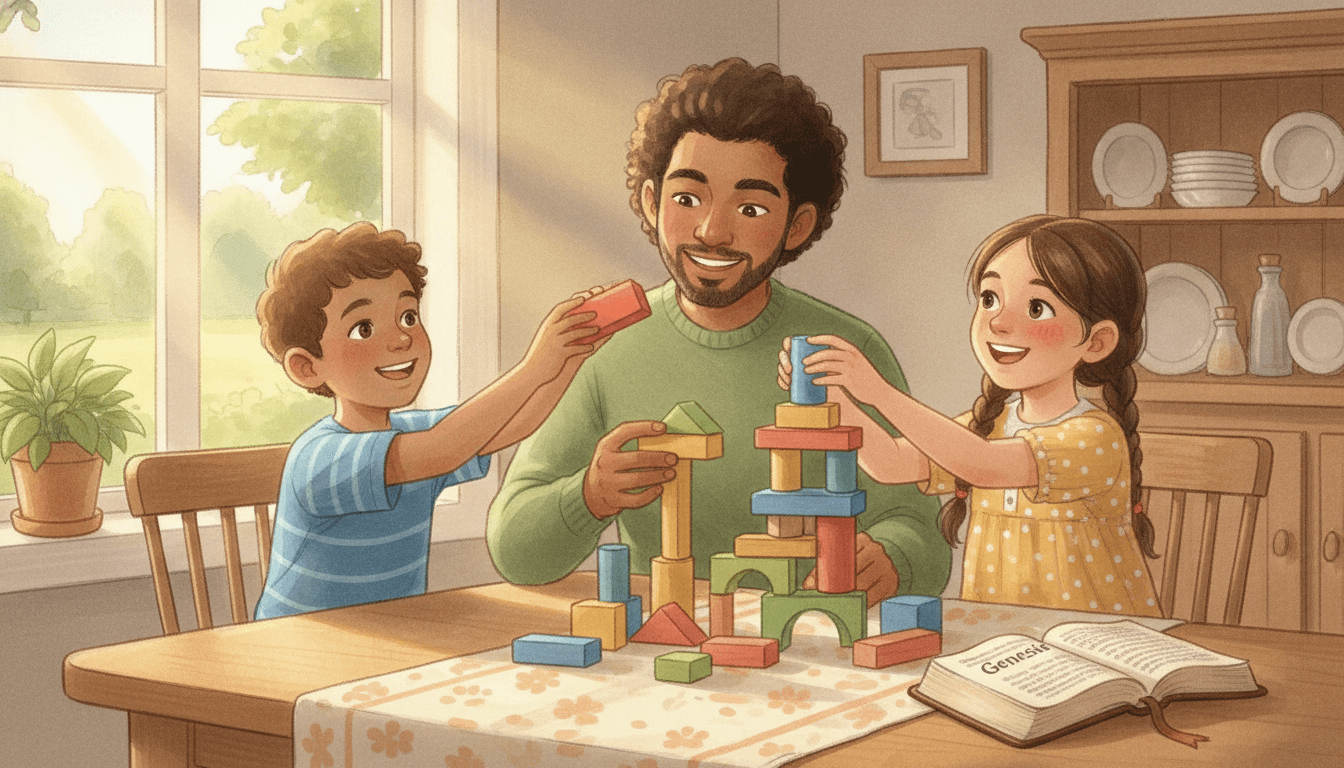
“Thy will be done on earth as it is in heaven” is a hard one, even for grown-ups with car keys and coffee. In kid words: “God, help me choose what is good, even when I do not feel like it.” That might mean being kind to a sibling after they wreck the block tower, obeying a parent the first time, or admitting a mistake. We are not asking God to make us robots. We are asking for help to love when love costs us something.
The next four petitions name what we need. “Give us this day our daily bread” means, “Father, please provide what our family needs today.” Pray for groceries, a sick grandparent, a job, or a family that does not have enough food. Also remind children that Jesus gives himself to us in the Eucharist. “Forgive us our trespasses, as we forgive those who trespass against us” means, “I am sorry; please forgive me, and help me forgive.” Saying sorry for yelling or grabbing is a real place to begin. Forgiveness does not mean pretending a hurtful thing was fine. It means we refuse to hold revenge in our hearts while trusted adults help make things right.
Finally, “Lead us not into temptation” means, “Help me before I choose wrong.” Name the actual moments: the urge to lie about homework, cheat in a game, exclude someone, or explode when angry. “But deliver us from evil” means, “Protect us from sin and from harm.” Children should know they can ask God for protection—and that they should tell a trusted adult right away if someone is bullying, threatening, hurting, or frightening them. One small thing we tried was taking one line each night and asking, “What would this look like tomorrow?” Here’s what landed: the prayer stopped being a speech to memorize and became words our kids could use.
“This is how you are to pray: Our Father in heaven, hallowed be your name, your kingdom come, your will be done, on earth as in heaven. Give us today our daily bread; and forgive us our debts, as we forgive our debtors; and do not subject us to the final test, but deliver us from the evil one.”
Make “Our Father” Real at the Kitchen Table
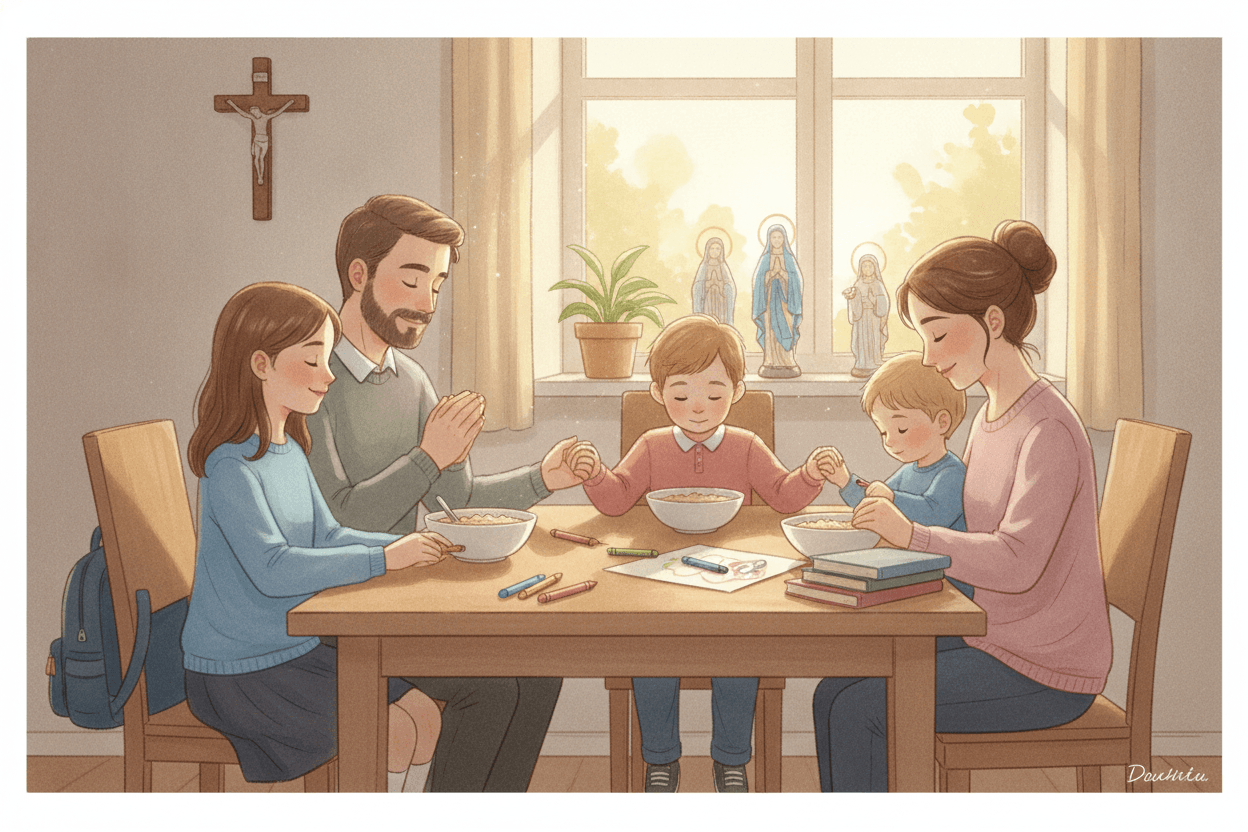
One night, the rice was getting cold, somebody had dropped a fork for the third time, and we started the Our Father the way we often do: a little too fast. We reached “Give us this day our daily bread,” and I stopped. Not for a lesson. Nobody wants a seven-minute explanation when dinner is on the table. I simply asked, “What bread do we need from God today?” One child said, “Food.” Another said, “Help with my spelling test.” That was enough. The prayer had moved from a string of familiar words into the actual life sitting in front of me.
At our table, one small thing we tried was pausing after just one line of the prayer. Pick the line that meets the day. After “hallowed be thy name,” ask, “How can we show God respect tomorrow?” After “thy kingdom come,” ask, “Who might need someone to include them at school?” After “forgive us our trespasses,” invite a quiet moment to name something that needs a sorry. Keep the questions small. Let a preschooler answer with one word. Let an older child pass if he is not ready to talk. A short, honest pause teaches more than a long speech.
Do not skip that first word: our. We do not pray as little islands, asking God only to fix our own scraped knees, hard homework, or missing soccer cleats. We pray with the whole Church and for people beyond our kitchen. A child can understand this without needing a big explanation: “Whom should we pray for tonight?” Maybe it is Grandma at a doctor’s appointment, a classmate who sits alone, a family that needs groceries, or people suffering somewhere far away. Over time, “our” helps children see that God’s family is bigger than the people who know where the snack drawer is.
Children also learn by watching us pray like we mean it. Slow down a little. Say the words clearly. If your voice catches when you pray for someone who is sick or struggling, that is not a problem to hide. It shows them prayer is real. The Catechism says, “The Christian family is the first place of education in prayer.” That sounds important because it is, but it happens in ordinary places: beside a spilled cup, in the school-drop-off line, before bed when everyone is tired. You do not need to make the kitchen table perfectly quiet. In our house, that would be a miracle. Just make it a place where your children hear you bring real needs to the Father, together.
Pray without ceasing.
Handle Forgiveness, Temptation, and Evil With Care
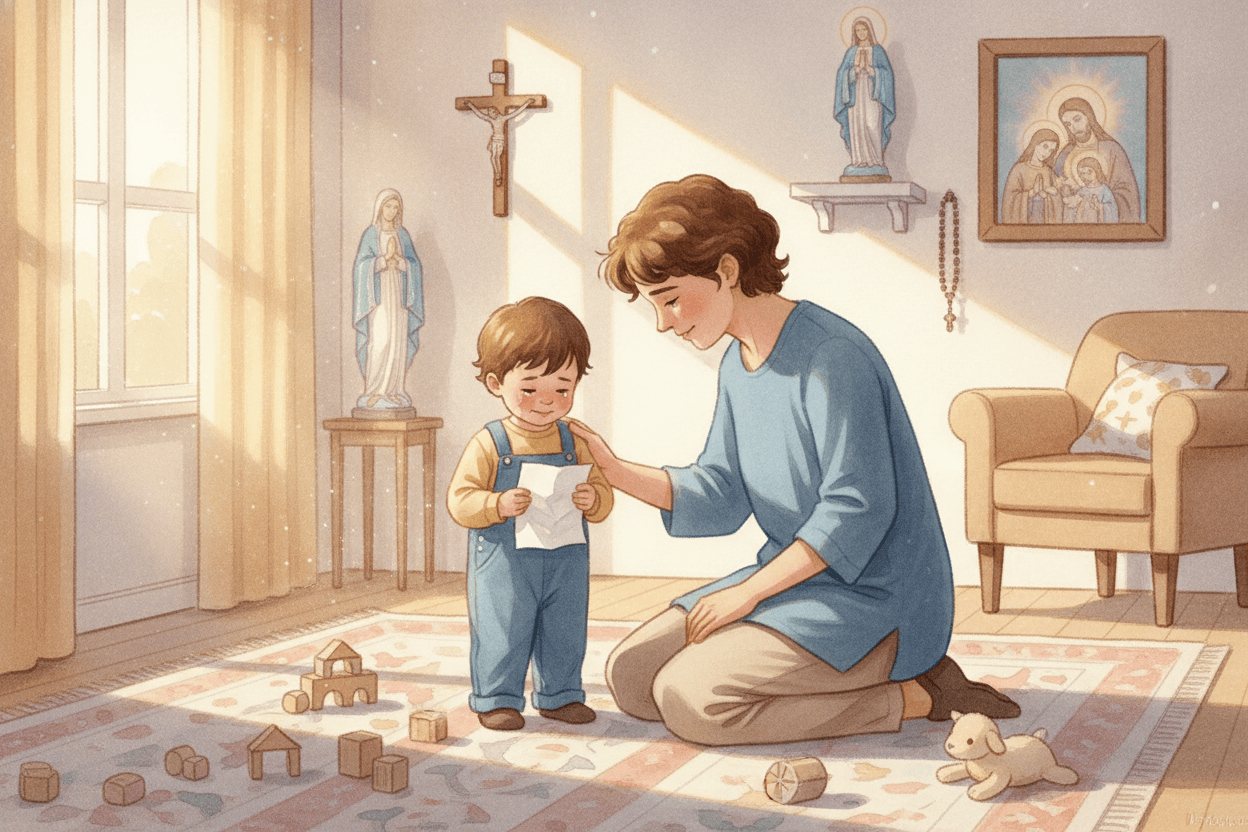
The spilled milk was not the hard part. The hard part was the quick little lie that followed: “I didn’t do it.” Most parents know that moment. A child has made a mess, feels cornered, and tries to escape it. The last lines of the Lord’s Prayer meet our kids right there—in the kitchen, on the playground, in the back seat after a sibling argument. They are serious words, but we can teach them without making prayer feel scary.
When we pray, “forgive us our trespasses,” help your child name what happened plainly. “I yelled at my brother.” “I copied an answer.” “I said it wasn’t me.” Then give them a simple next step: tell the truth, say you are sorry, and try to repair what they can. An apology might mean helping clean up, returning what was taken, or speaking kindly after harsh words. In our house, we try not to rush past the repair just because everyone is tired. And everyone is usually tired.
The next part matters just as much: “as we forgive those who trespass against us.” Forgiveness does not mean saying that hurtful behavior was fine. It does not mean a child has to keep playing with someone who is cruel, or trust someone who has not changed. It means we do not feed revenge in our hearts. We can say, “What she did was wrong. We will get help and keep a good boundary. But we are asking God to help us not hate her.” Jesus speaks directly about this: “If you forgive others their transgressions, your heavenly Father will forgive you. But if you do not forgive others, neither will your Father forgive your transgressions.”
“Lead us not into temptation” can sound grown-up, so make it concrete. Temptation is the pull to choose what we know is wrong. It can be lying to avoid trouble, cheating in a game or at school, leaving one child out on purpose, watching something they know they should not watch, or losing their temper when a sibling touches their stuff for the forty-seventh time. One small thing we tried was asking at bedtime, “What was one hard choice today?” Then we pray for help with tomorrow’s hard choice before it arrives.
Finally, “deliver us from evil” is a prayer for God’s protection, and it should lead children toward safety, not silence. Tell them clearly: if someone bullies them, scares them, threatens them, touches them in a way that feels wrong, asks them to keep a troubling secret, or puts them in danger, they should tell a trusted adult right away. They will not be in trouble for telling. God can protect us through prayer, but he also gives us parents, teachers, pastors, counselors, and other safe adults who can act. That is language every child needs to hear more than once.
“If you forgive others their transgressions, your heavenly Father will forgive you. But if you do not forgive others, neither will your Father forgive your transgressions.”
Adjust the Lesson for the Child in Front of You
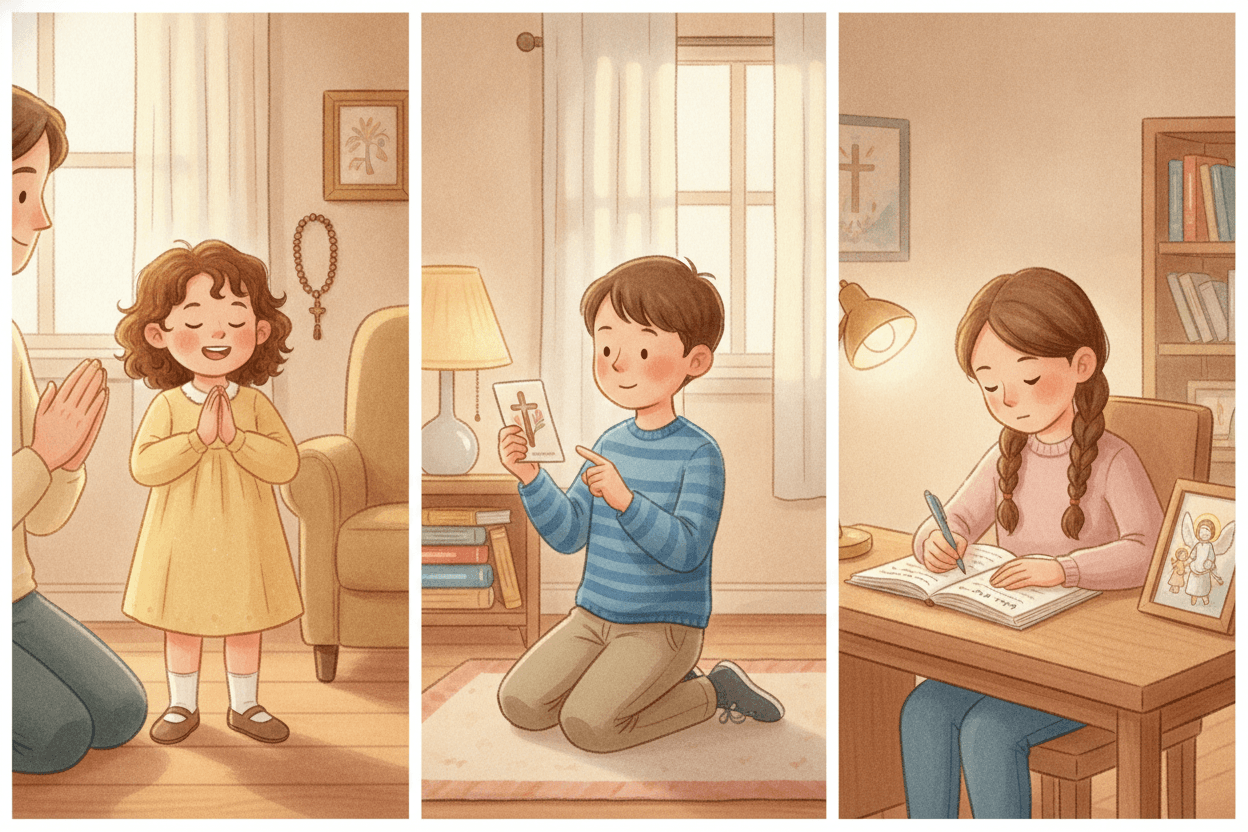
One child is upside down in a dining-room chair. Another suddenly needs water the moment prayer begins. A third is ready to ask whether God can hear prayers from the top bunk. That is not a failed lesson. That is family prayer with actual children in the room. The goal is not to deliver the same explanation to every age. It is to help the child in front of you speak to God with trust.
For preschoolers, keep the prayer small enough to hold. Choose one line for a week, such as “Our Father” or “Give us this day our daily bread.” Add a simple motion: hands open for daily bread, hands over the heart for forgiveness, arms wide for “our.” A picture can help too—a loaf of bread, a family gathered around a table, a child helping a friend. Repeat the phrase at bedtime or in the car. They do not need a full explanation yet. They need the sound of these words to become familiar and safe.
For children ages six to nine, take one petition at a time and ask for one real example. After “hallowed be thy name,” ask, “How can we show respect for God today?” After “thy kingdom come,” ask, “Who might need to be included at recess?” Here’s what landed with us: letting each child supply an example before we prayed the line. Their answers were not always polished. One involved sharing crackers. Still, they were learning that prayer reaches into an ordinary Tuesday.
Preteens can handle the harder edges of the prayer. Ask why Jesus teaches us to say “our” Father rather than “my” Father. Talk about daily bread and the Eucharist, but also about families who need food. Let forgiveness include justice: forgiving someone does not mean pretending the wrong was fine or staying quiet about harm. Bring the prayer to school group chats, cruel comments, cheating, and the pressure to go along when friends are making a bad choice. These conversations may be brief, but they give young people words for decisions that are not brief at all.
Short and steady usually beats long and impressive. Pray the Lord’s Prayer after dinner twice this week, or say one petition before school each morning. If someone fidgets, keep going. If a child asks a strange question, answer simply and come back tomorrow. Jesus welcomed children rather than making them wait until they had the right attention span. At our table, that is good news for everyone.
“Let the children come to me, and do not prevent them, for the kingdom of heaven belongs to such as these.”
Try a One-Week Our Father Prayer Card Routine
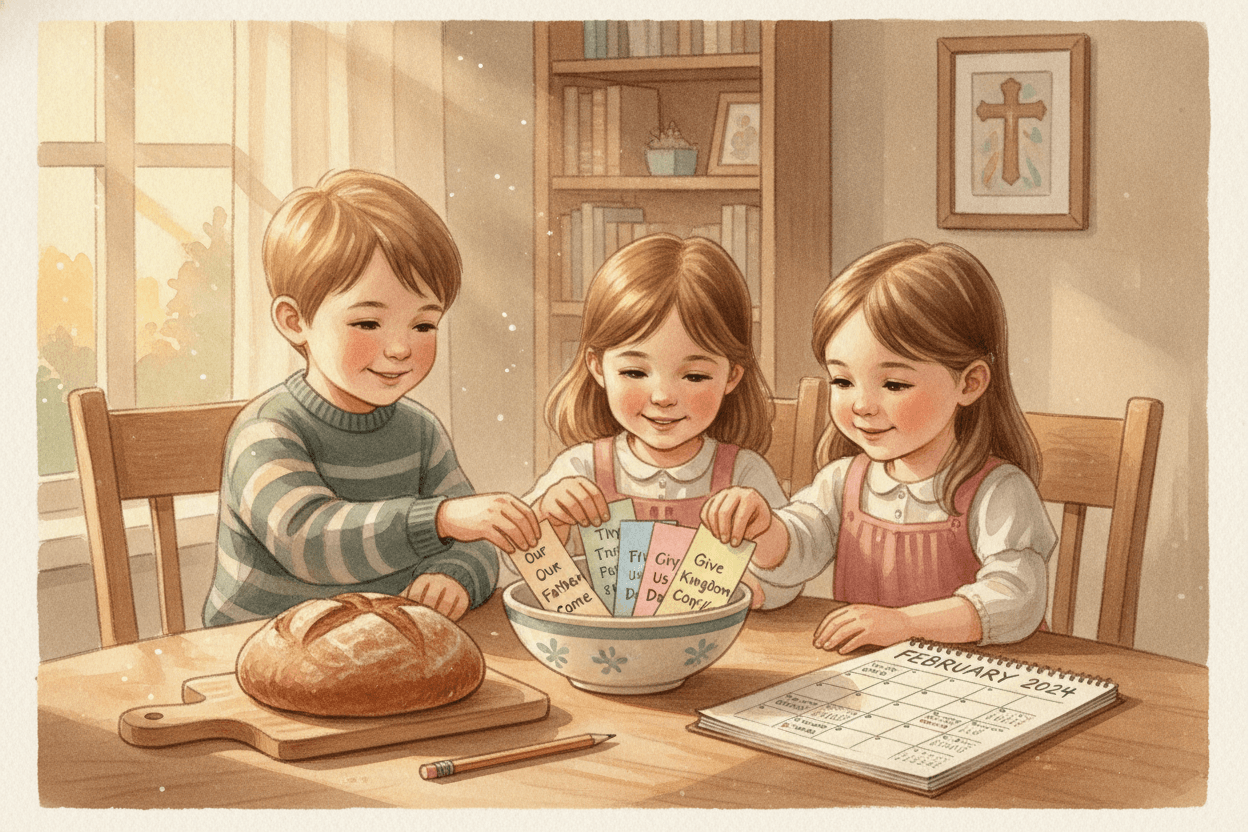
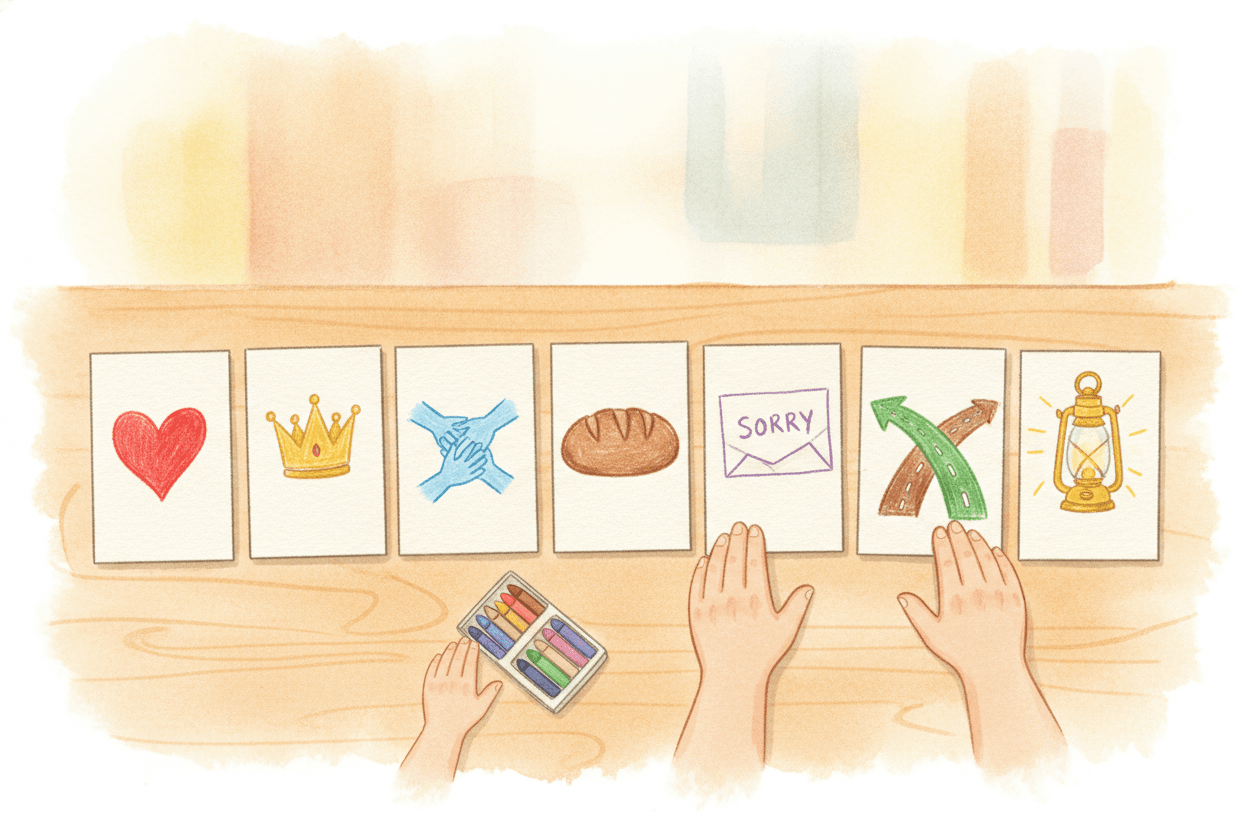
Tuesday evening, somebody has spilled milk, somebody else is arguing about whose turn it is to clear the plates, and prayer can feel like one more thing to get through. That is exactly why a simple card routine helps. It gives the Our Father a place at our table without turning dinner into a lecture. You need seven index cards, a pen, and about three minutes.
Write one petition on each card: “Hallowed be thy name,” “Thy kingdom come,” “Thy will be done,” “Give us this day our daily bread,” “Forgive us our trespasses,” “Lead us not into temptation,” and “Deliver us from evil.” If your children are little, add a small drawing: bread, a heart, a stop sign, or hands held in prayer. Let one child choose the card each day. Read it slowly together, then ask one plain question: “What could this look like in our family today?”
Keep the answers close to real life. For daily bread, put one extra pantry item in a bag for the food bank. For forgiveness, make the apology that has been hanging around since breakfast. For God’s kingdom, invite the child sitting alone at school into a game. For temptation, name the hard spot before it arrives: “When I want to blame my sister, I can ask God to help me tell the truth.” For God’s will, perhaps the tiny action is doing a chore without a dramatic sigh. We are still working on that one in our house.
One small thing we tried was letting the child who chose the card also choose the action. The actions were usually modest, which is fine. A prayer card does not need to produce a grand family project. It needs to help a child notice that speaking to God changes what we do next. If the conversation gets silly, smile and bring it back. Children are children; apparently even holiness must compete with knock-knock jokes.
On the seventh day, place all seven cards in the middle of the table and pray the whole Our Father together. Then ask which card felt most familiar and which one felt hard. Do this for one week, not forever. By Sunday, your children may not explain every line perfectly. But they will have practiced bringing hunger, hurt feelings, school worries, choices, and kindness to their Father. That is a strong start.
“This is how you are to pray: Our Father in heaven, hallowed be your name, your kingdom come, your will be done, on earth as in heaven. Give us today our daily bread; and forgive us our debts, as we forgive our debtors; and do not subject us to the final test, but deliver us from the evil one.”
Frequently asked questions
How can I teach the Lord’s Prayer to a preschooler?
Begin with one simple truth: Jesus taught us this prayer, and God listens because he loves us. Pray it regularly at bedtime, in the car, or at meals, without trying to explain every line at once. Small gestures, such as placing a hand over the heart at “Father,” can help children connect the words with trust.
How do I help my child understand the words in the Our Father?
Explain one line at a time using ordinary situations your child knows. For example, “daily bread” can mean asking God to provide what the family needs today, while “thy will be done” can mean choosing kindness or honesty when it is hard. Ask, “What would this look like tomorrow?” and let their answers stay simple.
What does ‘daily bread’ mean in the Lord’s Prayer for kids?
It means asking God to provide what we need each day, including food, help, health, and care for people who are struggling. You can connect it to a child’s real concerns, such as a test, a sick relative, or a family needing groceries. Catholics can also gently point out that Jesus gives himself to us in the Eucharist.
How can I make family prayer feel less like memorization?
Invite children to tell God something from their day before praying the Our Father: a worry, gratitude, anger, or need. Then pause after one line of the prayer and connect it to family life, rather than turning every prayer time into a lesson. The goal is not flawless recitation but learning to speak to God with the trust of children.
How should I explain forgiveness in the Lord’s Prayer to my child?
Tell them that asking forgiveness means being honest with God when we have done wrong and trying to make things right. Forgiving someone does not mean saying that a hurtful action was acceptable or unsafe; it means not holding onto revenge. If a child is being bullied, threatened, hurt, or frightened, encourage them to tell a trusted adult right away.
What does ‘lead us not into temptation’ mean for children?
It is a prayer for God’s help before a child makes a wrong choice. Name concrete moments they recognize, such as wanting to lie about homework, cheat in a game, leave someone out, or lash out in anger. “Deliver us from evil” also reminds children that they can ask God for protection from sin and harm.
Sources: vatican.va · vatican.va · vatican.va · bible.usccb.org · bible.usccb.org · vatican.va · vatican.va · catholic.com
Scripture quotations in this article use the NABRE translation.