Catholic Discipline That Builds Self-Control in Kids
When juice spills and tempers flare, Catholic discipline looks beyond punishment to formation: helping children practice patience, truthfulness, responsibility, and self-control. Discover how ordinary
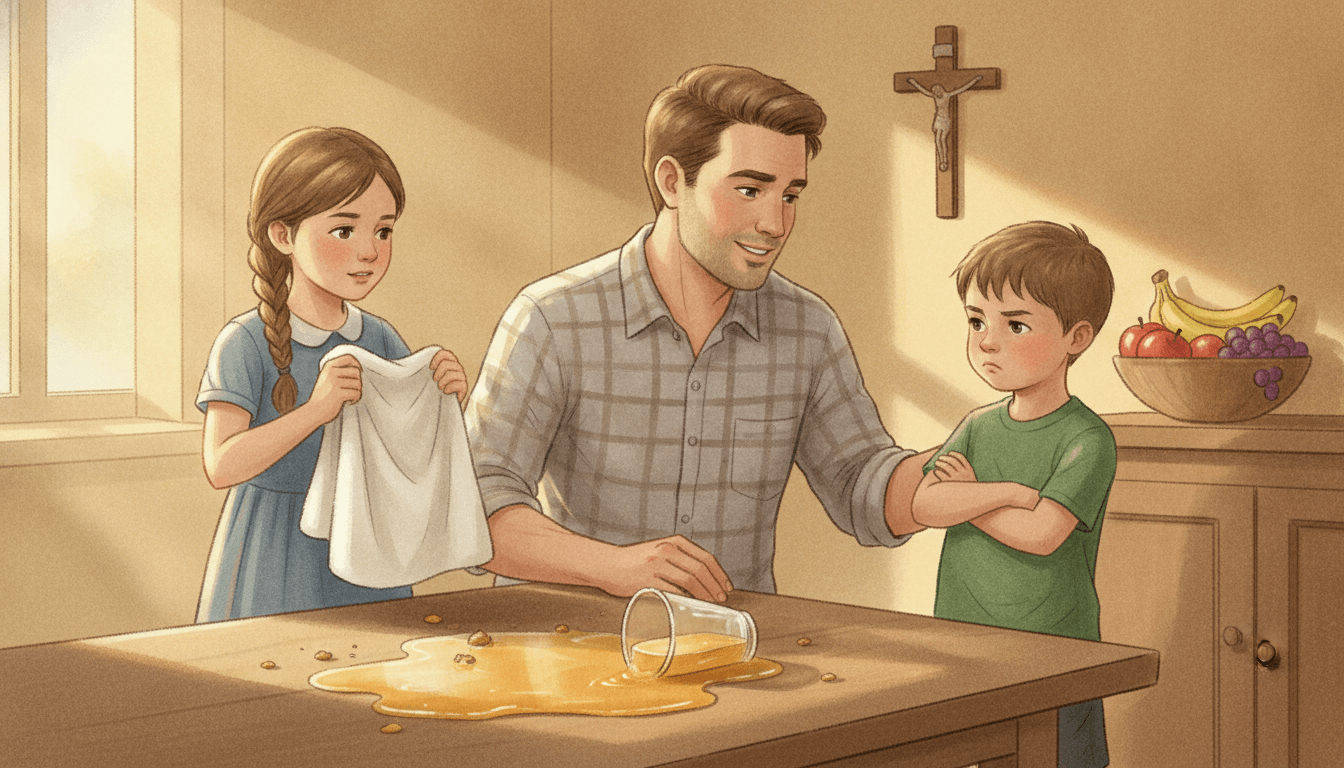
The juice had barely hit the floor when one child blamed the other, another started crying, and I felt my own voice climbing. At our table, these are the moments that remind me: discipline is not mainly about stopping the noise. It is about helping the child in front of us learn what to do with a big feeling, a strong want, and a body that wants to act first.
Discipline Is More Than Stopping the Behavior
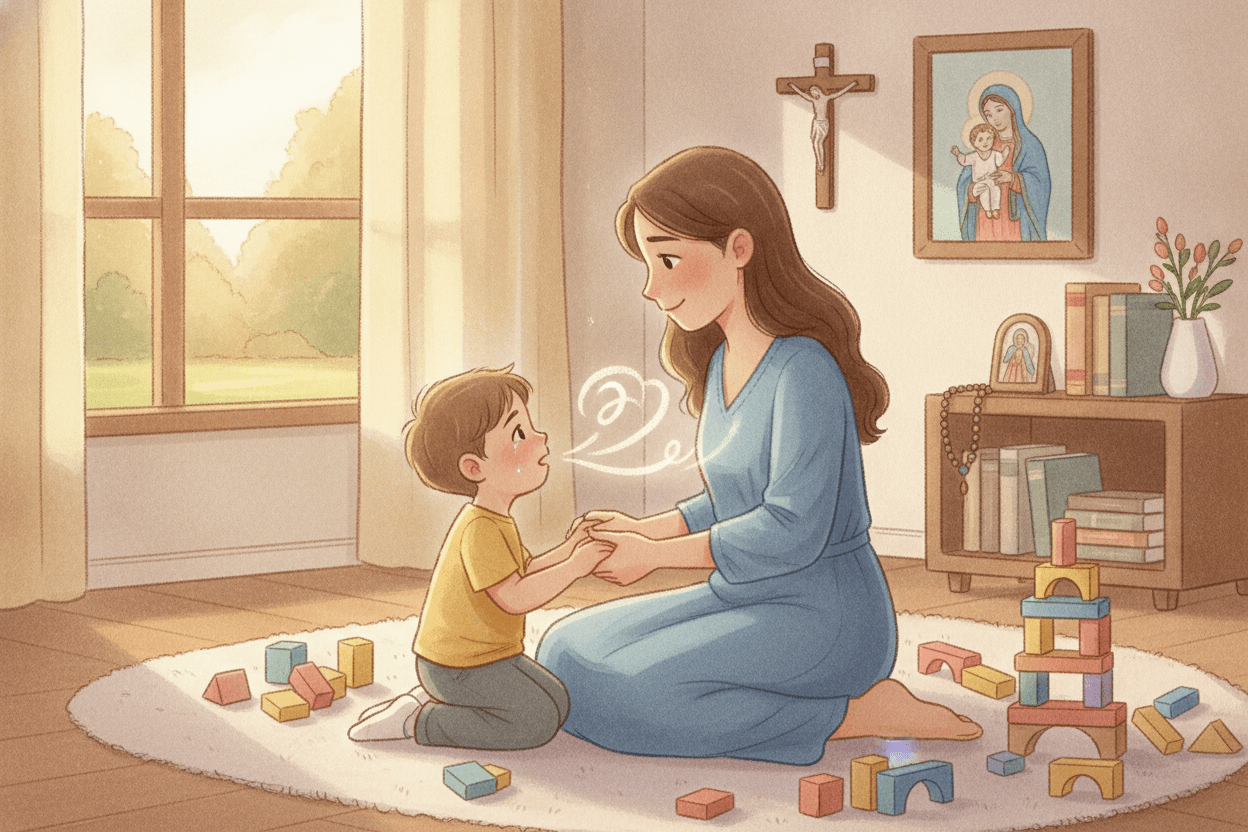
The cereal bowl hit the floor at 7:18 a.m. Milk spread under the chairs, one child was crying because the blue spoon was missing, and every cell in my body wanted one thing: make it stop. Parents know that feeling. We want the whining to end, the hitting to stop, the argument to be over before we are late again. Stopping the behavior matters. A child cannot be allowed to hit a sibling or scream at Mom. But Catholic discipline asks for more than a quiet room for the next five minutes.
We are not simply training children to obey when we are watching. We are helping them grow into people who can pause, choose the good, and repair what they have damaged when nobody is standing over them. That takes time. Young children do not arrive with self-control tucked into their backpacks. At first, we supply the structure: the clear rule, the calm voice, the consequence, the chance to try again. Little by little, that borrowed structure can become their own steady habit.
The Catechism puts this work right in the middle of family life: “The home is well suited for education in the virtues. This requires an apprenticeship in self-denial, sound judgment, and self-mastery—the preconditions of all true freedom.” That word apprenticeship helps me. An apprentice does not master a skill after hearing one instruction. He watches, practices, makes mistakes, and practices again. Our kids are learning in the very ordinary places: the car ride, the snack line, the bath-time standoff, the last cookie on the plate.
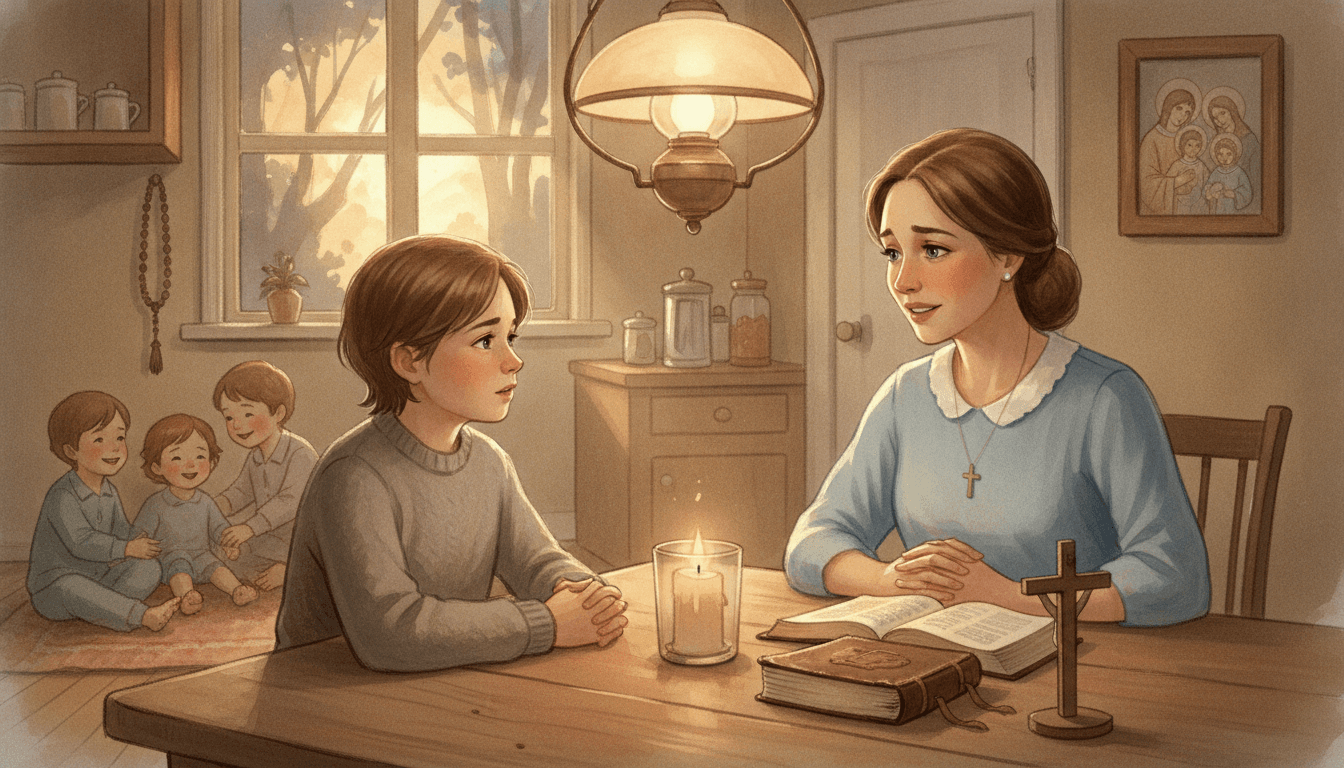
So when a child melts down, we can hold both the boundary and the bigger purpose. “I know you are angry. Anger is a feeling, but hitting is not allowed. Temperance means stopping your body. Try again with words.” We do not need a lecture while everyone is hot. We need a few clear words, followed by action if needed. Separate the children. Remove the toy. Pause the privilege. Then, once calm returns, help the child name what happened and make a specific repair.
St. Paul gives parents a needed guardrail: “Fathers, do not provoke your children to anger, but bring them up with the training and instruction of the Lord.” Firm does not mean harsh. A consequence can be brief, connected to the offense, and free from humiliation. One small thing we tried in our house was praising the exact step forward: “You stopped your hands.” “You waited.” “You told me the truth.” Those are small wins, but repeated small wins are how self-control starts to take root.
Fathers, do not provoke your children to anger, but bring them up with the training and instruction of the Lord.
Temperance Is Not Saying No to Every Good Thing
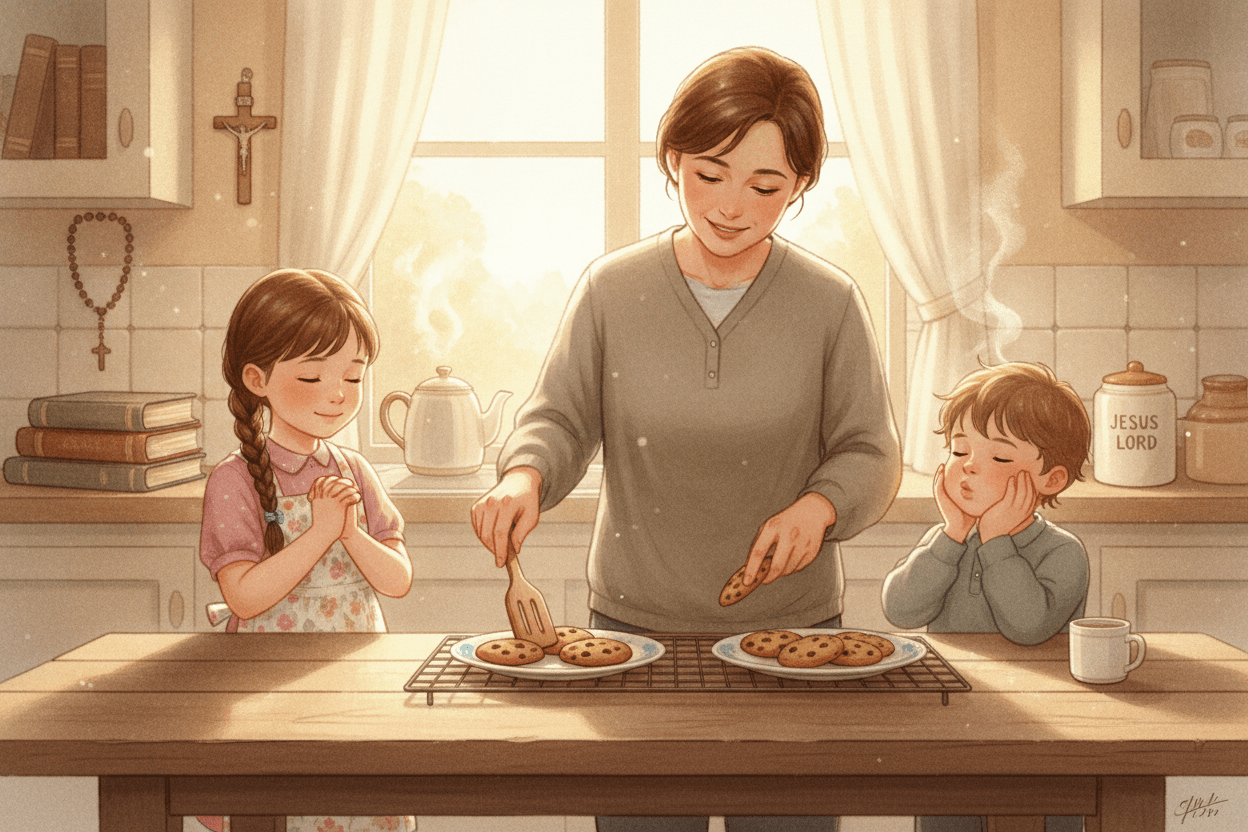
The trouble started with the last cookie. Not hunger, really. Both kids had already had dessert. But suddenly that one cookie seemed as important as a family inheritance. One child reached. The other shouted. I heard myself say, “Nobody is getting a cookie if we are going to turn this into a courtroom.” Not my smoothest parenting line, but the moment gave us something to practice.
Temperance does not mean that cookies, cartoons, fun, or wanting to win are bad. They are good things, or at least ordinary things. The problem comes when a good desire starts bossing the child. Temperance helps a child say, “I really want this, but I can wait,” or, “I am angry, but I do not get to hit,” or, “I have something smart to say, but I do not need the last word.” It puts the desire in its proper place.
The Catechism says temperance “moderates the attraction of pleasures” and gives balance in the use of created goods (CCC 1809). That sounds lofty until you see it at 5:15 p.m., when a child wants one more video and dinner is on the table. Reason says dinner comes first. The will chooses to turn off the screen. Love helps the child remember that other people are waiting too. None of that happens perfectly at age seven. Frankly, it does not always happen perfectly at age forty-seven. But it can be taught in small repetitions.
One small thing we tried was giving the virtue a name in the moment, without giving a long speech. “You want more screen time. It is okay to want it. Temperance means stopping when it is time to stop.” Or, “You want to be first. You may feel disappointed, but you may not push.” Then we offered the next right action: hand over the remote, take three slow breaths, let your sister choose first, ask again in a respectful voice. Clear words help a child see that feelings are real, but feelings are not the captain of the ship.
Paul lists “self-control” among the fruit of the Spirit. That matters because we are not merely training polite children who can sit still in public. We are helping them grow free enough to choose the good when a desire pulls hard in another direction. Praise the specific effort: “You stopped your body when you were mad,” or, “You waited, even though you wanted to go first.” At our table, that is often where the real lesson begins—after the complaint, after the reset, and before someone asks about the cookies again.
In contrast, the fruit of the Spirit is love, joy, peace, patience, kindness, generosity, faithfulness, gentleness, self-control. Against such there is no law.
Give Ages 6-9 Boundaries They Can Actually Practice
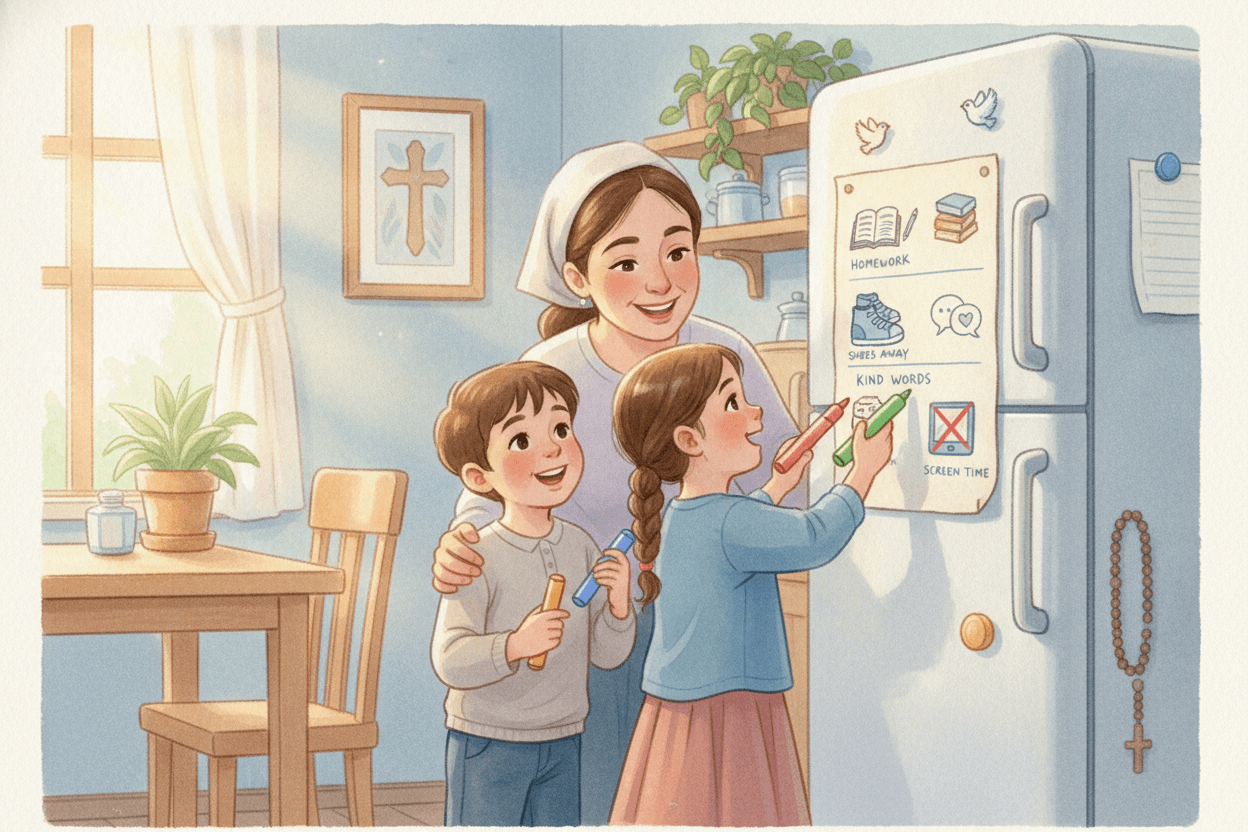
The cereal was already on the floor when I heard it: “He took my spot!” One child was crying, one was arguing his case like a tiny lawyer, and nobody was ready to hear a speech about character. In moments like that, ages six through nine need a boundary they can see and do: “Hands to yourself. Step back. Use words.” That is not lowering the bar. It is giving them a first step toward self-control when their feelings are running ahead of them.
At this age, keep expectations concrete. A child can practice waiting for a turn at the sink, stopping when Mom or Dad says stop, speaking without insults, keeping hands and feet to himself, telling the truth about what happened, and finishing a small responsibility before screen time or play. “Be good” is too foggy. “Put your shoes in the basket, then you may choose a show” gives a child something clear to do. The goal is not to control every move. It is to help him slowly supply his own brakes.
Warm boundaries matter because children learn better when they are not ashamed or scared. Firm still matters too. If a child hits, try: “I know you are angry. Anger is a feeling, but hitting is not allowed. Temperance means stopping your body. Try again with words.” Then stay nearby, separate siblings if needed, and require a simple repair: check on the other child, offer an apology, or help rebuild the block tower that got smashed. No courtroom drama required. Just truth, repair, and another chance to practice.
Long lectures usually bounce right off an upset seven-year-old. Honestly, they can bounce off a tired dad too. Give the brief reason after the child is calm: “We speak respectfully because people deserve respect.” “You tell the truth so we can fix what happened.” “Homework comes before games because responsibilities come first.” When a boundary is connected to the behavior, brief, and enforced each time, children begin to trust it. They may not like it. Those are different things.
One small thing we tried was choosing one expectation for the week at our table: stop when told. We noticed it in ordinary places—the driveway, the bathtub, the grocery store aisle—and praised the action specifically: “You stopped right away when I called. That was self-control.” If we missed the mark as parents, we apologized too. Scripture gives the balance: correction without stirring up needless anger. Our children need calm adults, clear limits, and many small chances to try again.
Fathers, do not provoke your children to anger, but bring them up with the training and instruction of the Lord.
Use Calm Words When Feelings Get Loud
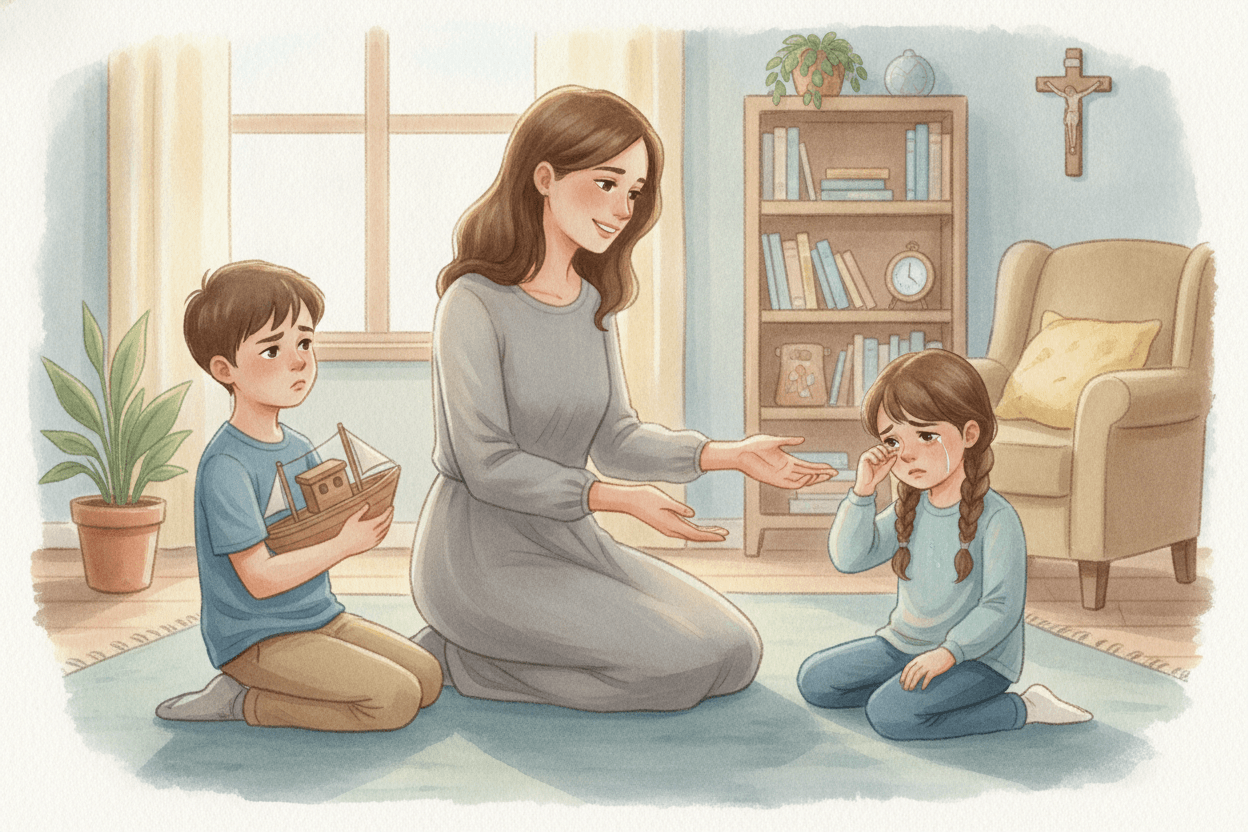
The crash of two plastic dinosaurs usually tells me we are past the “share nicely” stage. One child is crying. The other is holding the dinosaur like it is a rare museum artifact. My first impulse is to raise my voice over theirs. But a loud parent rarely teaches a child how to handle loud feelings. In our house, we are trying to use fewer speeches and more calm, repeatable words.
When hitting starts, separate the children first. Safety comes before the full investigation. Then say, “I know you are angry. Anger is a feeling, but hitting is not allowed. Temperance means stopping your body. Try again with words.” Once both children can listen, hear each short account. Ask the hitter to say what happened truthfully, then ask, “How did that affect your brother?” A repair needs to be specific: return the toy, help rebuild the block tower, bring ice, or offer a real apology. Not the mumbled “sorry” while staring at the ceiling fan. We have all seen that one.
Whining needs the same steady pattern. A child may really want the cookie, the screen, or the blue cup that apparently contains all happiness. We can acknowledge that without giving in to the demand: “You really want that right now. You may be disappointed, but you may not shout at me. Temperance means using a respectful voice when you want something. Try asking once more.” If the child tries again with calm words, notice it: “That was a good restart. I heard you.” The answer may still be no. The practice is learning that a desire does not get to drive the whole car.
Refusal over homework or chores can turn a simple request into a tiny courtroom drama. Keep the boundary firm and the choices small: “You do not feel like doing this, and I understand. Your homework needs to begin now. Self-control means doing the next right thing even when you would rather play. Would you like to start with math or reading?” For chores, try: “You may put away the shoes first or clear the plates first.” The child has some real freedom, but obedience is not up for a vote. If they refuse, use a brief, connected consequence: play waits until the work is started.
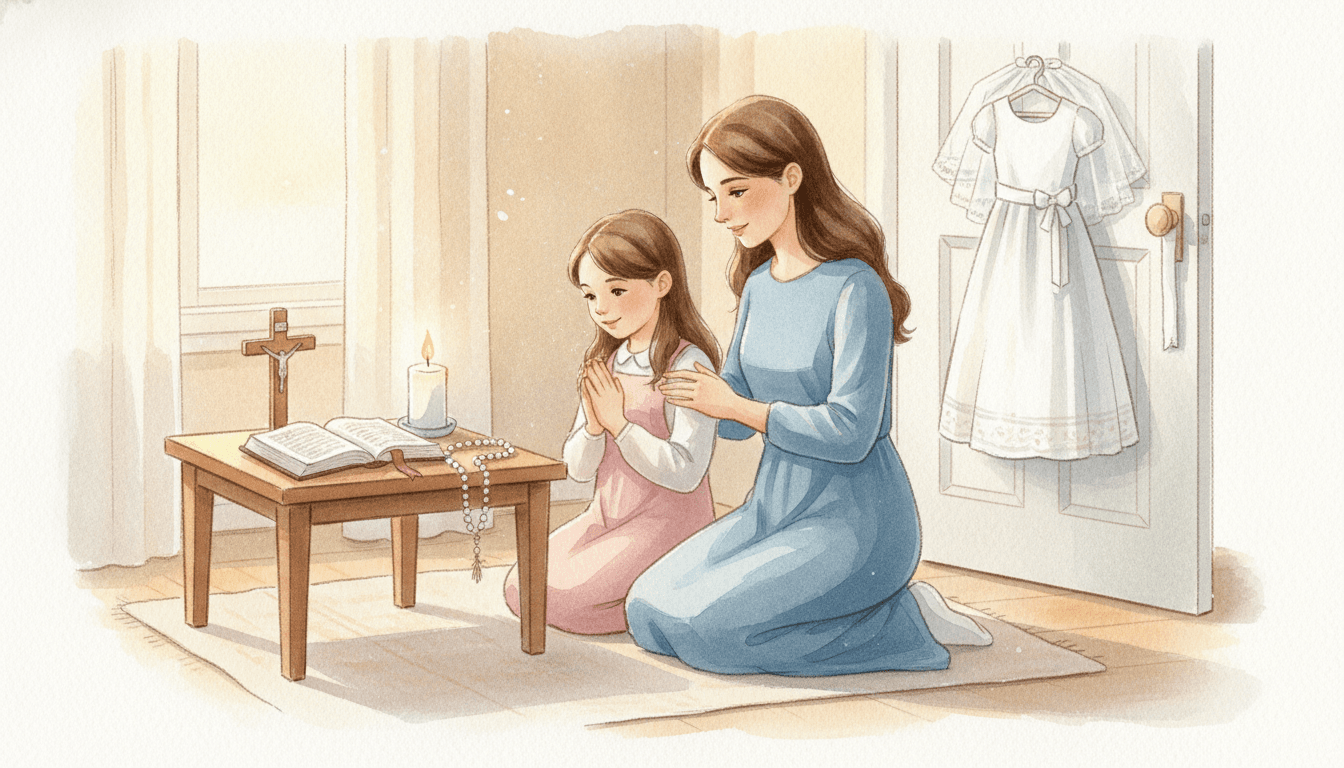
These scripts will not make every evening peaceful. Some days somebody will cry, somebody will stomp, and a parent may need a quiet minute too. Still, repeated calm correction gives children words to borrow until self-control begins to grow inside them. Saint Paul writes, “For God did not give us a spirit of cowardice but rather of power and love and self-control.” Pray that verse with your child after the storm has passed, then ask, “What can you try next time?” One small practiced response today can become a habit tomorrow.
For God did not give us a spirit of cowardice but rather of power and love and self-control.
Let Consequences Teach, Then Make Room for Repair
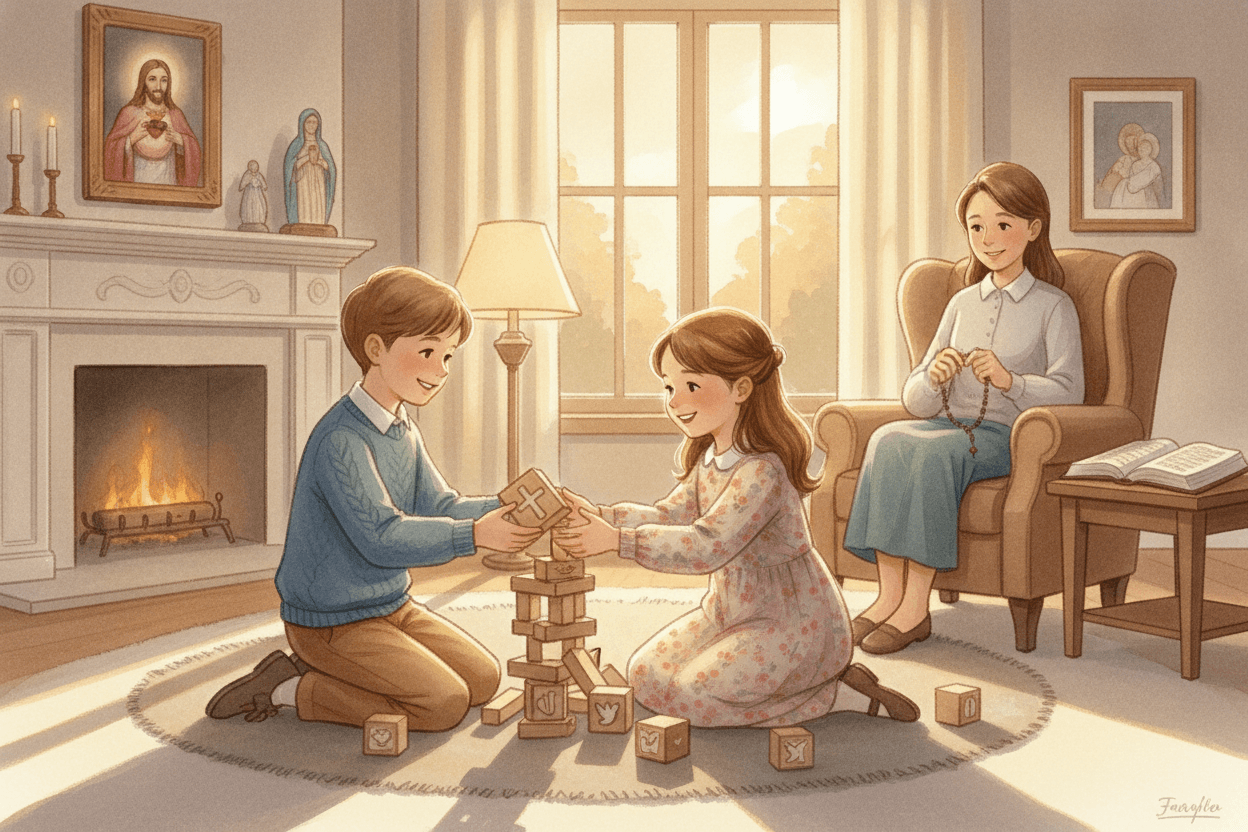
The block tower fell, and so did everybody’s afternoon. One child had grabbed the last blue piece. The other shoved him. There were tears, accusations, and a very detailed argument about who had touched what first. In that moment, I do not need a courtroom speech. I need to stop the hitting, settle the room, and help two small people learn what to do with a big upset.
A consequence works best when it fits the problem. If a child throws a toy, the toy is put away for a short time. If he uses the tablet after being told to stop, the tablet is done for the day. If she makes a mess in anger, she helps clean it up. Keep it brief, connected, and predictable. “You threw the truck, so the truck is resting on the counter until after dinner.” No long lecture needed. Certainly no threat to cancel Christmas because someone threw a sock. We have all felt the temptation, of course.
First, separate siblings when bodies or voices are out of control. Give each child a minute to breathe. Then hear both accounts without making the louder child the automatic winner. Ask simple questions: “What happened?” “What did you do?” “Did you tell the truth?” “Who was hurt or affected?” The goal is not to force a perfect confession on the spot. It is to help each child own his part. Even a six-year-old can say, “I grabbed it,” or, “I pushed.” That small bit of truth is a brick in the foundation of self-control.
Then make room for repair. An apology matters, but it should not be the only tool in the box. If a tower was knocked down, help rebuild it. If a toy was taken, return it and let the other child have a turn. If words wounded, offer an honest apology: “I was angry, and I called you a name. That was wrong.” At our table, we sometimes ask, “What can you do to help make this right?” The answer may be clumsy. That is okay. Repair is a skill, and skills take practice.
This is discipline without humiliation. We correct the action without naming the child as the problem. We can be firm without getting loud, and if we do get loud, we can apologize too. Scripture gives parents both the task and the boundary: “Fathers, do not provoke your children to anger, but bring them up with the training and instruction of the Lord.” A calm, consistent consequence says, “What you did matters. You can make it right. And I will help you practice.”
Fathers, do not provoke your children to anger, but bring them up with the training and instruction of the Lord.
Your Child Learns Self-Control by Watching Yours
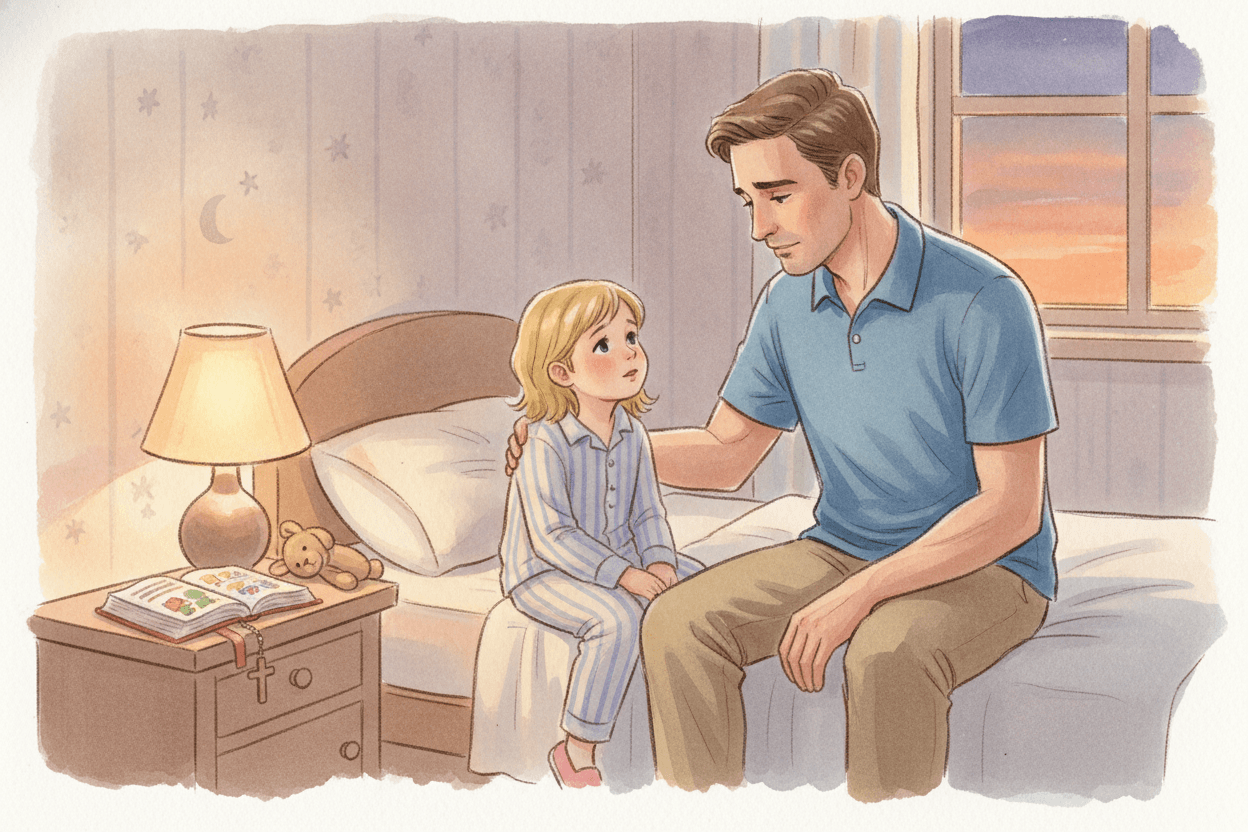
One evening, I told one of our kids to stop shouting from the hallway while I was answering an email with my own impatient voice. He looked at me for half a second, then said, “But you’re loud too.” Not my finest parenting moment. Also, fair. Children hear our instructions, but they study our faces, our volume, and what we do when somebody interrupts us for the fourth time before breakfast.
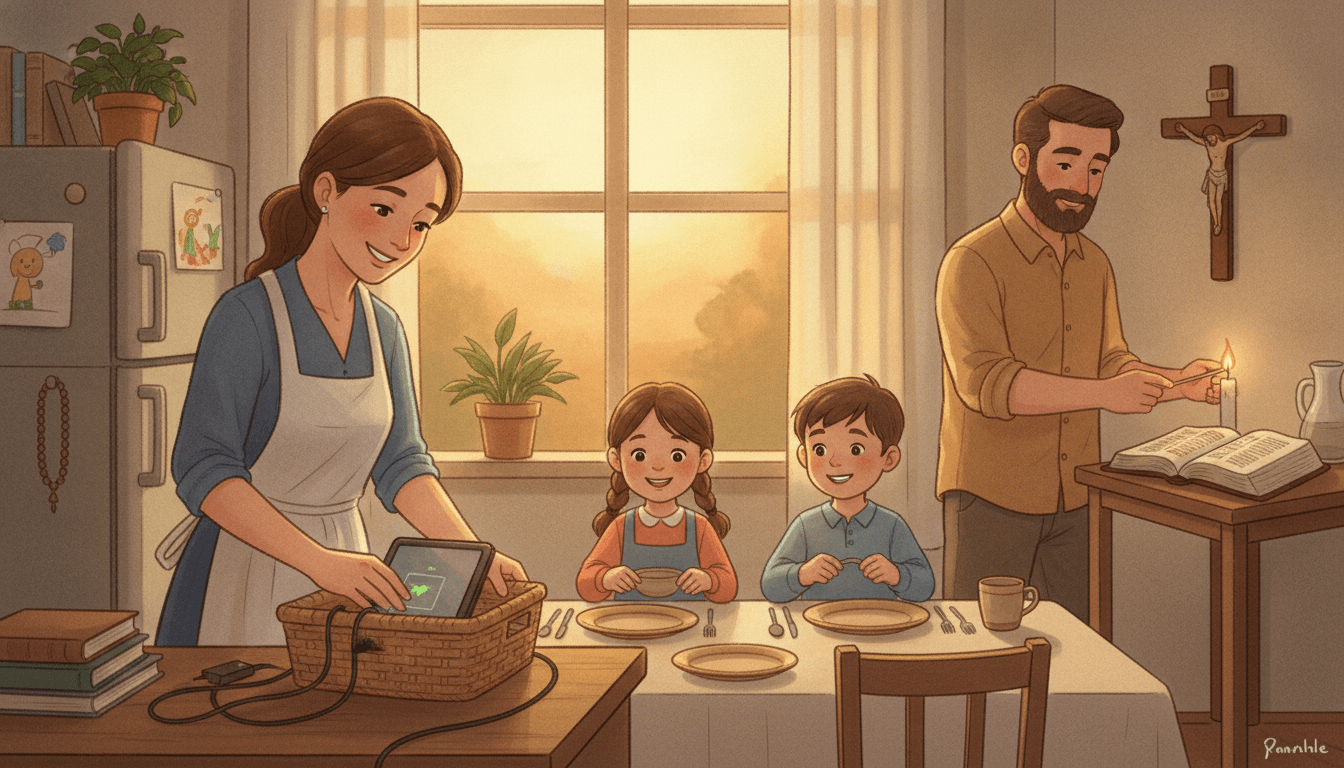
Self-control cannot mean that parents never feel angry, tired, hungry, or overwhelmed. In our house, those things usually arrive together around 5:30 p.m. It means we show our children what to do with those feelings. We can pause before answering. We can lower our voice instead of matching theirs. We can put the phone away during dinner rather than asking them to be present while we scroll. We can say, “I am frustrated, so I need a minute to calm down.” That is not pretending everything is fine. It is showing them that feelings do not get to run the whole house.
One small thing we tried was naming our own boundary out loud. “I want to keep talking, but I need to finish this chore first.” Or, “I want another snack, but I have had enough.” These are ordinary little choices, yet children notice them. They learn that temperance is not a punishment handed down only to kids who grab toys or demand dessert. It is a way of choosing what is good, even when we want something else right now.
And when we fail, we repair. If I snap at a child, I try to come back soon and say, “I was impatient and spoke harshly. That was wrong. Will you forgive me?” An apology does not make a parent less authoritative. It teaches the child that responsibility belongs to everyone at the table, including Dad and Mom. It also gives them a pattern for their own repair: name what happened, own it without excuses, ask forgiveness, and try again. That is grace with muddy shoes on.
Proverbs puts the danger plainly: “A city breached and left defenseless are those who do not control their temper.” We all have moments when our defenses feel thin. Before school, before dinner, or before bedtime, try a ten-second prayer with your child: “Jesus, help us choose calm words and loving actions.” Then let them see you pray it when you need it too. Here’s what landed for us: our children did not need a perfect parent. They needed a parent willing to practice self-control right alongside them.
A city breached and left defenseless are those who do not control their temper.
Try a Five-Minute Self-Control Practice This Week
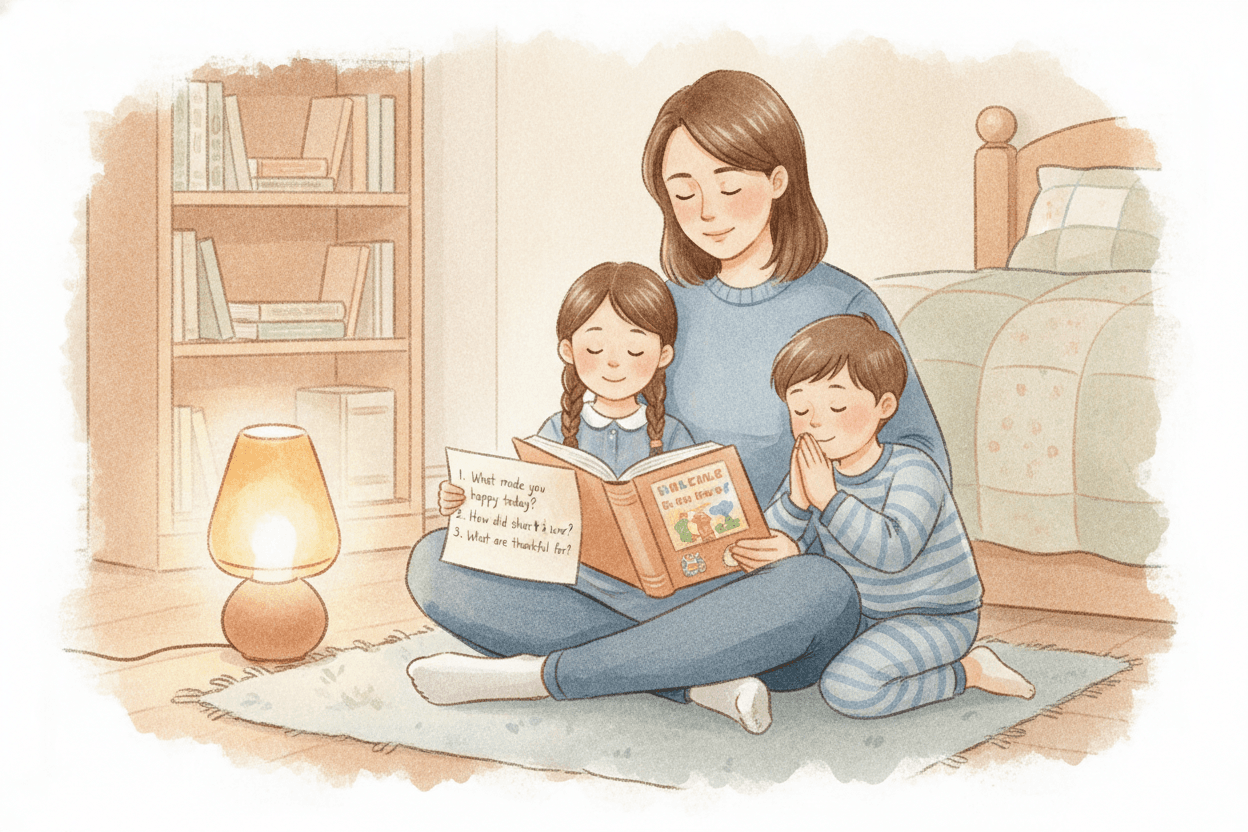
The hardest part of the afternoon at our table is often not the homework. It is the pencil that rolls onto someone else’s side, the brother who looks at it, and the very quick decision that this is now a major injustice. Nobody needs a long talk in that moment. They need a small habit they have already practiced when nobody was mad.
Pick one target for this week. Just one. Maybe it is keeping hands to yourself, waiting before speaking, or asking for a snack without whining. Then give it one plain boundary: “Hands stay to yourself,” or “Ask once in a calm voice.” Keep it short enough that a six-year-old can repeat it and an eight-year-old cannot argue his way around it. We have seen that the more words Dad uses, the more likely somebody suddenly needs to inspect the ceiling fan.
Spend five calm minutes practicing the words and action. You can make it almost silly. Pretend a sibling grabbed the blue cup. Let your child take one breath, hold his hands at his sides, and say, “I am upset. Please give it back.” If the target is demanding, practice: “May I have a snack, please?” Then let them try the wrong version once too—the shouty version is usually performed with impressive commitment—and practice the better version again. The point is not a perfect performance. It is giving their body and mouth a path to follow when feelings run ahead.
Notice one small win each day. Maybe your child stopped before hitting. Maybe she waited three seconds instead of interrupting immediately. Say exactly what you saw: “You stopped your hands.” “You waited while your sister talked.” “You tried again with kind words.” Concrete praise teaches children what to repeat. Calling them “good” can feel nice, but it does not tell them which choice was good or what to do next time.
At bedtime, keep the lights low and the questions simple: “Where did I practice self-control today? Whom did I help? What do I need to repair? What will I try next time?” Parents can answer too. That part matters. In our house, children are far more interested in this practice when they hear Dad admit he used a sharp voice and needs to try again tomorrow. Virtue usually grows this way: one small choice, noticed and named, then another chance the next day.
In contrast, the fruit of the Spirit is love, joy, peace, patience, kindness, generosity, faithfulness, gentleness, self-control. Against such there is no law.
Frequently asked questions
How do I teach my child self-control the Catholic way?
Treat self-control as a virtue learned through practice, not as instant obedience. In the moment, give a clear boundary and one doable next step, such as “Hands to yourself,” “Take three breaths,” or “Ask again respectfully.” Later, when your child is calm, help them name what happened and make a specific repair.
What does temperance mean for children?
Temperance helps a child keep a good desire in its proper place. Wanting another cookie, more screen time, or a turn to be first is not wrong; the child is learning that wanting something does not mean they must have it immediately. You can say, “It is okay to want it, but temperance means we stop when it is time to stop.”
What should I say when my child is angry and hits a sibling?
Use few, calm words: “I know you are angry, but hitting is not allowed.” Separate the children or remove the object causing the conflict, then give a concrete alternative such as stepping back, taking breaths, or using words. Once everyone is calm, guide the child to repair the harm through an apology, helping, or another appropriate action.
How can I discipline without shaming my child?
Choose consequences that are brief, connected to the behavior, and free from humiliation. A child who misuses a toy may lose access to it for a time; a child who hurts someone should first help restore safety and make amends. Be firm about the boundary while speaking respectfully, remembering St. Paul’s warning not to provoke children to anger.
How do I praise my child for self-control?
Praise the exact action your child managed rather than offering vague praise. Try phrases like, “You stopped your hands when you were mad,” “You waited for your turn,” or “You told me the truth.” Noticing small steps helps children see that virtue grows through repeated choices.
What self-control skills should I expect from a child ages six to nine?
Keep expectations visible and concrete: waiting for a turn, stopping when told, using words instead of insults, keeping hands and feet to themselves, telling the truth, and completing a small responsibility before play or screens. Broad commands like “Be good” are hard to follow when emotions run high. Give one specific instruction the child can do right away, then let them practice it repeatedly.
Sources: vatican.va · vatican.va · vatican.va · vatican.va · usccb.org · usccb.org · catholic.com · wordonfire.org · wordonfire.org
Scripture quotations in this article use the NABRE translation.