First Communion at Home:Preparing Your Child’s Heart
First Communion preparation at home can move beyond polished shoes and cake orders. Discover simple ways to help your child examine their conscience, understand Jesus’ presence in the Eucharist, and a
The week before First Communion, it is easy to spend more time checking shoes, hair ribbons, and cake orders than talking about the One your child is preparing to receive. The outfit matters because the day is worthy of care, but Scripture invites us to prepare something deeper: a child’s mind, conscience, and heart for Jesus truly present in the Eucharist.
Begin With the Question Beneath the White Dress
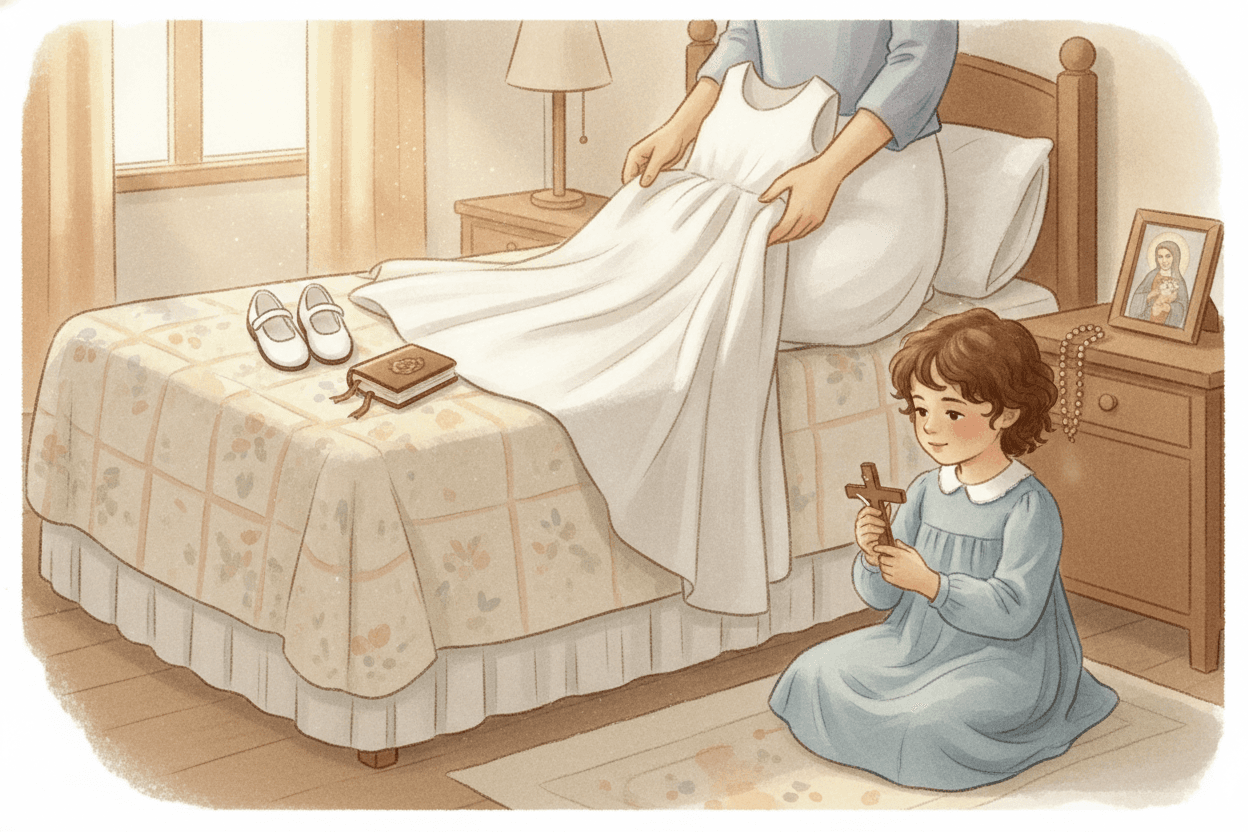
The white dress is pinned, shoes are being measured, relatives are asking about photographs, and someone still needs to order the cake. Those details are not wrong; a family feast rightly marks a great day. But before the practical lists take over, parents can pause over the more important question: What does my child believe is happening when he or she comes forward to receive Holy Communion? The goal is not simply that a child knows where to stand or how to hold folded hands. It is that the child begins to recognize Jesus’ gift of himself and responds with faith, reverence, and gratitude.
Jesus himself welcomes children, saying, “Let the children come to me, and do not prevent them; for the kingdom of heaven belongs to such as these.” A child preparing for First Communion is not merely participating in a family custom. He or she is being brought to Christ in the Eucharist, where the Lord gives his Body and Blood to his Church. Parents need not force adult-sized explanations onto a seven-year-old. They can say clearly and often: “At Mass, Jesus gives himself to us. The host is not ordinary bread after it is consecrated; it is Jesus, truly present, and we receive him because he loves us.”
The Church ordinarily prepares children when they reach the age of reason, traditionally about seven years old. This is not a claim that a child has mastered theology. It is a recognition that most children at this age can begin to distinguish ordinary bread from the Eucharist, understand right and wrong in a real way, and answer God’s invitation with growing freedom. As the Catechism reminds us, preparation should help children understand the mystery of Christ according to their capacity (CCC 1309). Respecting that capacity means short, truthful conversations, patient repetition, and room for honest questions rather than vague language or long lectures.
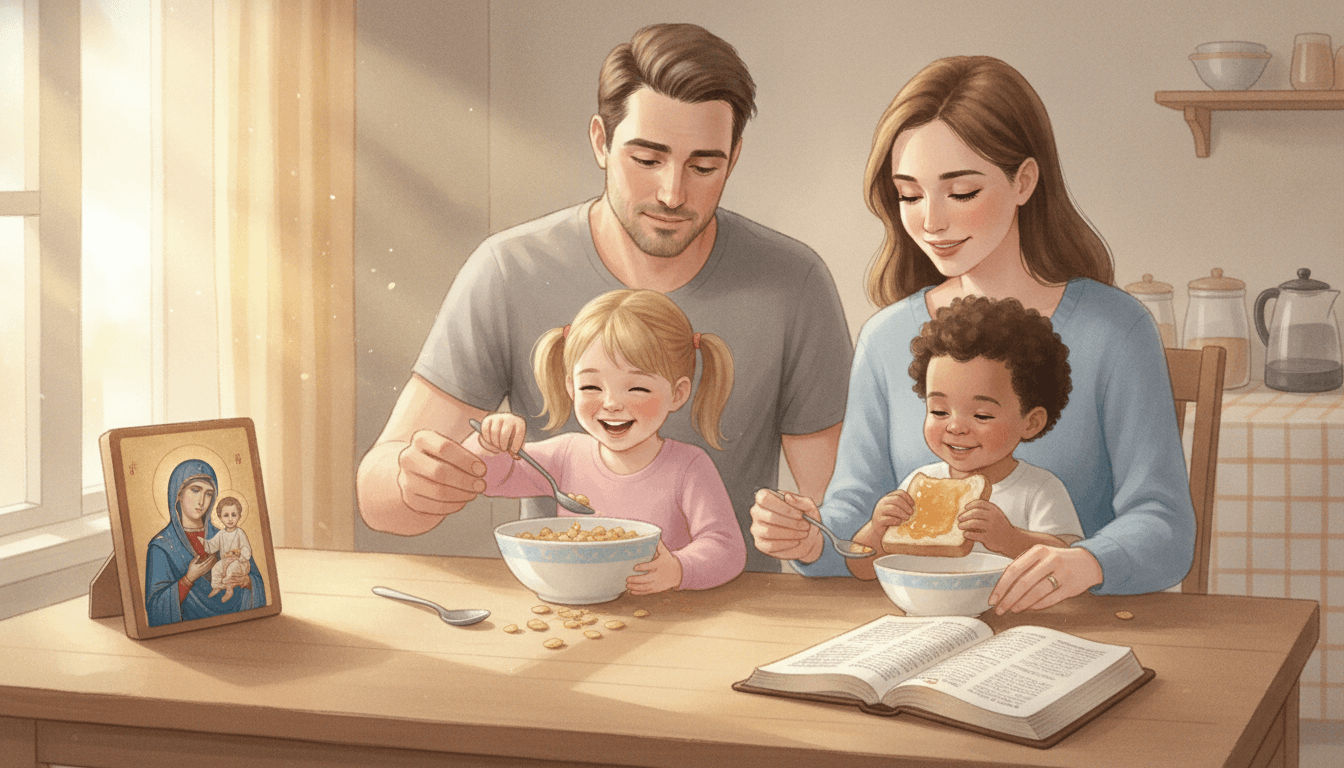
Here’s how I’d teach this at home: let the clothing and celebration plans become openings for catechesis. While laying out the outfit, ask, “Whom are we going to meet at Mass?” When choosing a gift, favor something that supports prayer: a children’s missal, a rosary, a Bible, or a crucifix for the bedroom. At the table, ask your child to name one thing he or she wants to thank Jesus for after receiving Communion. These small practices keep the family’s attention where it belongs: not on a perfectly arranged day, but on a child learning to receive the Lord with a prepared heart.
Let the children come to me, and do not prevent them; for the kingdom of heaven belongs to such as these.
Teach What the Eucharist Is—Clearly and Reverently
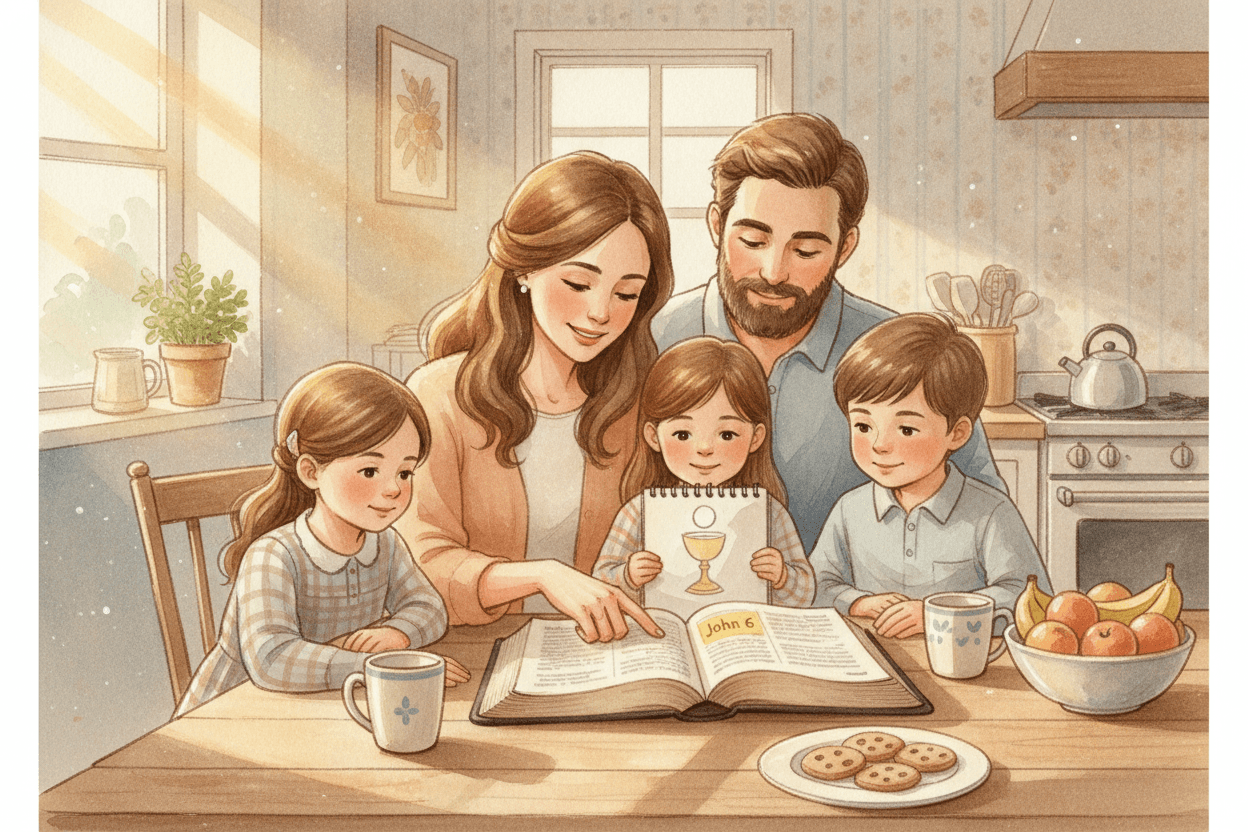
A child can usually tell when adults are choosing careful words. If we say, “It is special bread,” but then genuflect, fall silent, and receive on our knees or in our hands with reverence, they rightly sense that “special” is not enough. Before First Communion, give your child words that match what the Church actually believes: at Mass, when the priest prays the Eucharistic Prayer, bread and wine truly become the Body and Blood of Jesus. They still look and taste like bread and wine, but they are no longer ordinary bread and wine.
Here is how I’d teach this: “Jesus is really present in the Eucharist. This is not a symbol only, and it is not a play that reminds us of something Jesus did long ago. At the Last Supper, Jesus gave us this gift, and at every Mass he keeps his promise. When you receive Holy Communion, you receive Jesus himself.” Let your child ask the obvious questions: “Does Jesus look like bread?” “Why can’t I see him?” Answer plainly: “We cannot see him with our eyes in the Host, but we trust him because he told us the truth.”
Scripture invites us to begin with Jesus’ own words. In John 6, he does not say merely that bread will represent him. He says, “I am the living bread that came down from heaven; whoever eats this bread will live forever; and the bread that I will give is my flesh for the life of the world.” At the Last Supper, he is equally direct: “This is my body, which will be given for you; do this in memory of me” (Luke 22:19). Read John 6:51 aloud once or twice during the week, then ask, “What gift is Jesus giving us?” A six- or seven-year-old does not need a long lecture; he or she needs true words repeated calmly.
The Catechism gives parents firm ground beneath this simple teaching. The Eucharist is “the source and summit of the Christian life” (CCC 1324): from it the Church receives her life, and toward it her worship is ordered. Christ is present in many ways in the Church, but in the Eucharistic species he is present “truly, really, and substantially” (CCC 1374). These are adult words, yet they protect a child-ready truth: Jesus is not partly present, not pretending to be present, and not merely remembered. He is truly there.
Let your home practices reinforce the lesson. At Sunday Mass, quietly point out the moment of consecration: “Listen now; the priest is praying the words of Jesus.” Teach a slow, reverent response after receiving Communion, even if your child is not yet receiving: “Jesus, thank you for coming to us.” If you practice Mass responses at home, include the posture of attention and a brief silence. Children learn reverence not by being made anxious, but by seeing that their parents know whom they are approaching.
I am the living bread that came down from heaven; whoever eats this bread will live forever; and the bread that I will give is my flesh for the life of the world.
Build a Simple Prayer Rhythm That Makes Room for Jesus
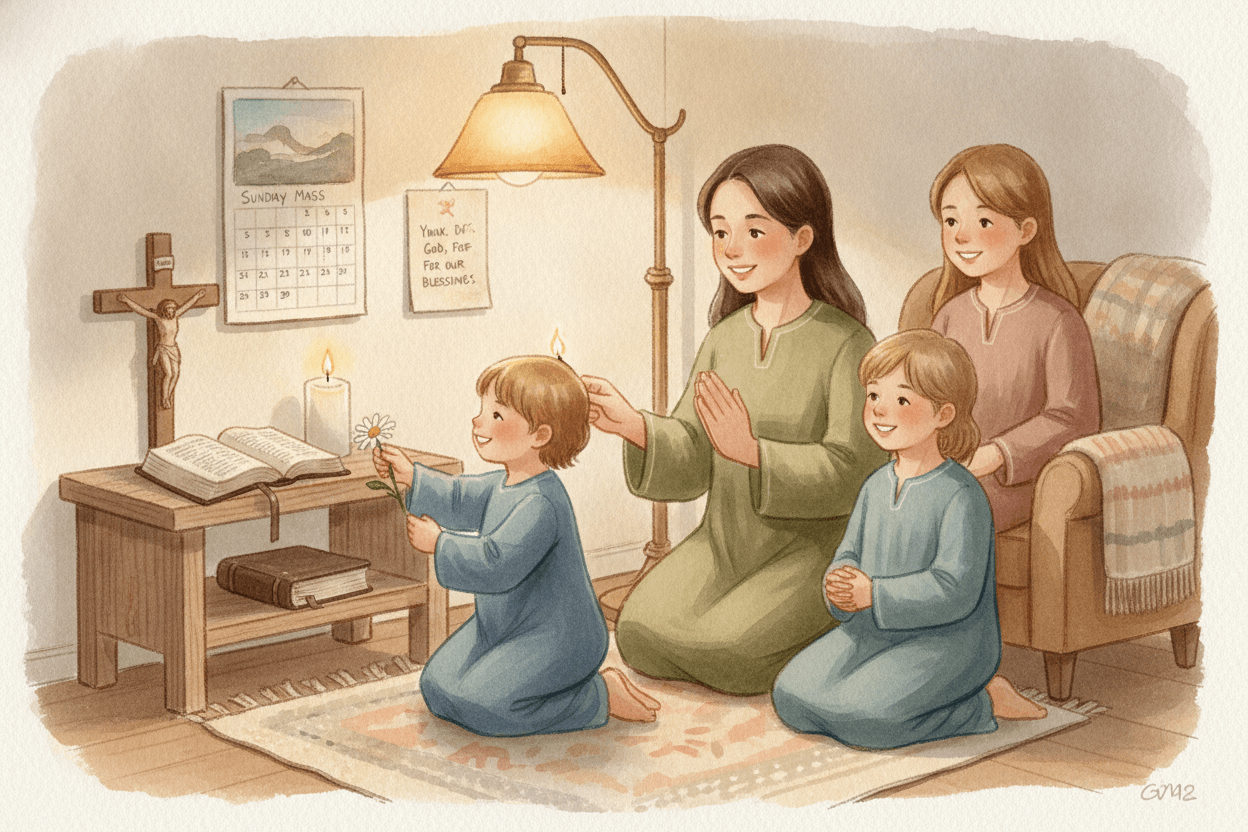
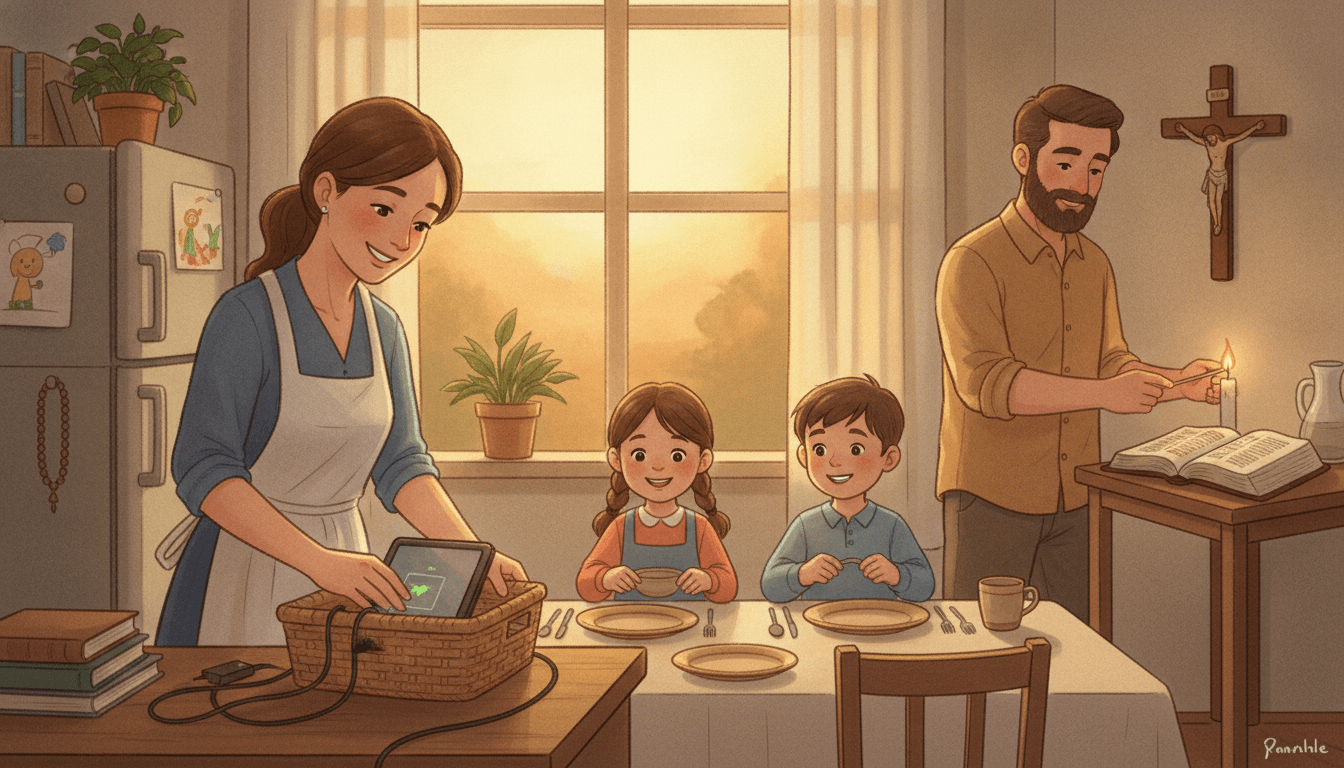
At 7:40 on a school morning, no child is ready for a forty-minute lesson on the Eucharist. But a child can light a battery candle on a small prayer table, make the Sign of the Cross, and say one honest sentence to Jesus before backpacks and breakfast take over. For children ages six to nine, steady repetition forms more than occasional long talks. A simple household rule works well: pray briefly every day, go to Mass every Sunday, and return often to the words and actions they will soon make their own.
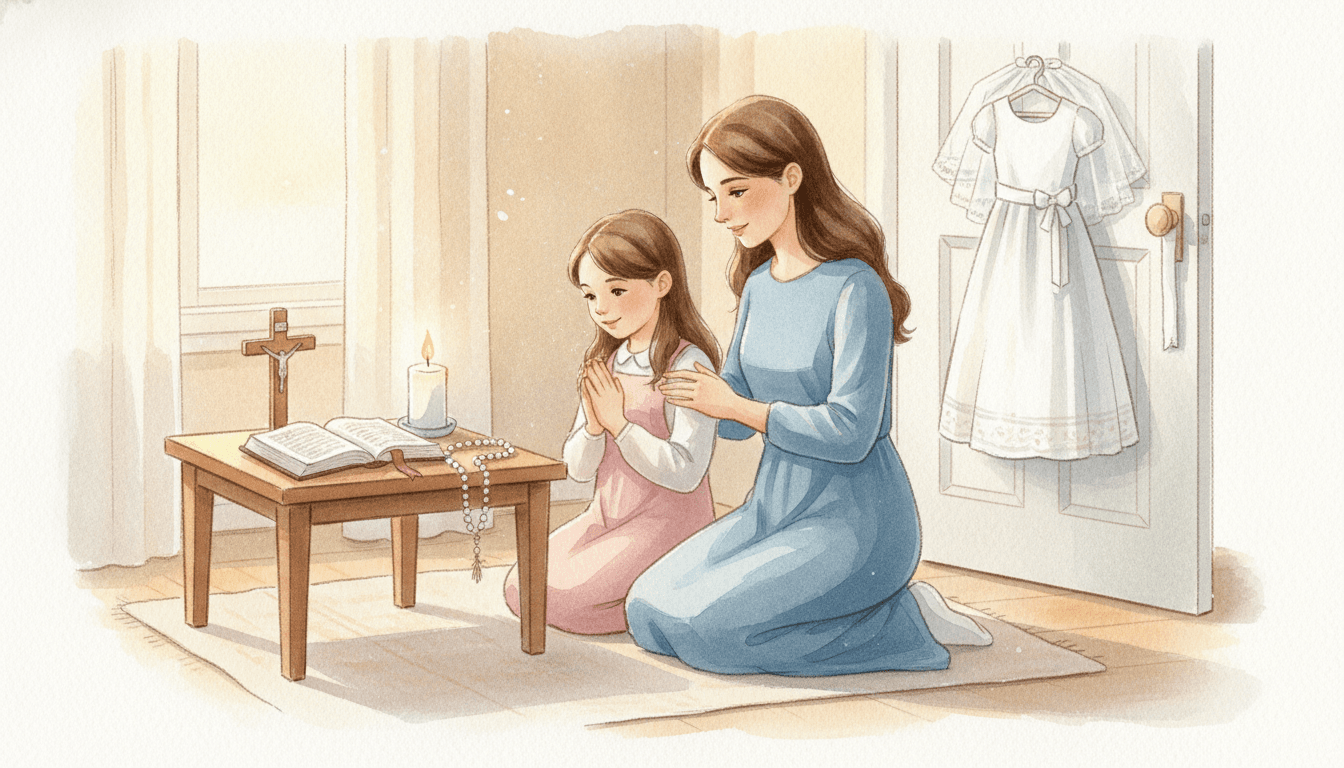
Set up a modest prayer table in a visible, respectful place: a Bible, a crucifix, a small cloth, and perhaps a holy card of Jesus or the child’s baptismal candle. This is not an altar in the liturgical sense; the Eucharist is celebrated at Mass by the priest. It is a family place for turning our attention toward God. Each day, read one verse from a Gospel passage, then ask one concrete question: “What does Jesus say?” or “What can we thank him for?” Keep it short enough that it can be sustained. Psalm 34 gives language a child can remember: “Taste and see how good the LORD is.”
After the verse, let your child pray in his or her own words. Parents need not correct a child’s phrasing or supply a polished prayer. A simple pattern is enough: thank Jesus, ask for help, and pray for someone else. Then end with the Our Father or a Hail Mary. The USCCB directs children preparing for First Communion and their families to attend Mass weekly and pray daily. That guidance is wisely practical: daily prayer teaches children that Jesus is not only someone we discuss in religion class, but the Lord to whom we speak at home.
Use a few minutes once or twice a week to practice the Mass responses together. Say, “And with your spirit,” “Amen,” and “Thanks be to God.” Show your child when to stand, sit, and kneel, and explain that these postures help the whole Church pray as one body. Here’s how I’d teach this: practice receiving reverently only after following your parish’s instructions, with the child understanding that the host is not ordinary bread. As the Catechism reminds us, Christ is truly present in the Eucharist (CCC 1374); clear language protects a child from thinking First Communion is merely a family ceremony.
Do not let Sunday Mass end in the parking lot. On the way home, or at lunch, take two minutes for thanksgiving: “Jesus, thank you for letting us worship you and receive your gifts.” Ask one gentle question: “What did you notice at Mass today?” Some weeks the answer may be about a hymn, a crying baby, or the color of the priest’s vestments. Listen first, then connect the moment back to Jesus. This calm rhythm makes room for reverence without turning preparation into pressure, and it teaches the child that gratitude belongs after every Mass, not only on First Communion day.
Taste and see how good the LORD is; blessed the man who takes refuge in him.
Prepare for First Confession Without Fear or Shame
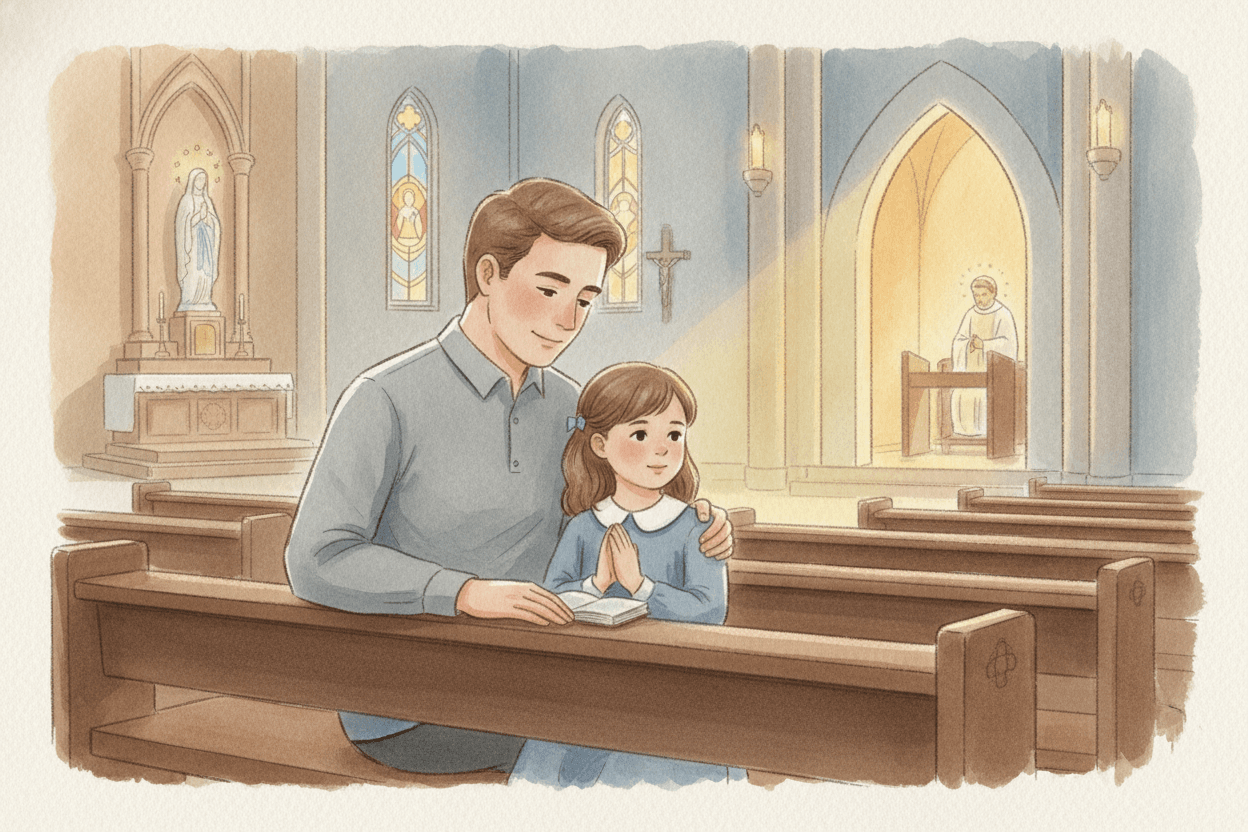
The first time a child says, “What if I forget what to say?” is not the moment to hand over a long list of sins. It is the moment to lower your voice and tell the truth: Confession is where we meet Jesus, who knows us completely and loves us enough to forgive us. A child preparing for First Communion needs this assurance early and often. The Church is clear about the order of preparation: “The First Communion of children must always be preceded by sacramental confession and absolution” (Redemptionis Sacramentum). This is not a hurdle before the celebration; it is a grace that readies the child to receive the Lord with a peaceful heart.
St. Paul gives the reason for honest preparation: “A person should examine himself, and so eat the bread and drink the cup.” For a child, examination of conscience should be brief, concrete, and suited to ordinary family life. Ask questions such as: Did I pray when I could? Did I obey my parents? Was I unkind to a brother, sister, or friend? Did I tell the truth? Did I refuse to share or hold onto anger? Here’s how I’d teach this: remind your child that we examine our choices not to prove that we are bad, but to notice where we need Jesus’ help and forgiveness.
Practice the simple steps at home once or twice, without making it a performance. Your child can learn to greet the priest, make the Sign of the Cross, say, “Bless me, Father, for I have sinned. This is my first Confession,” name sins simply, listen to the priest, pray an Act of Contrition, receive absolution, and complete the penance. If your parish uses a slightly different form, follow its guidance. Repetition helps children ages six to nine, but keep practice short and calm. They do not need polished religious language. A truthful sentence such as “I was mean to my sister” is enough.
As the Catechism reminds us, confessing sins is part of receiving God’s mercy. CCC 1456 teaches the importance of confessing grave sins, while CCC 1458 warmly recommends the regular confession of venial sins because it forms the conscience and strengthens us against temptation. Parents should be careful here: do not load a child with adult categories or suggest that every childish mistake is grave. Teach responsibility without shame. The child is learning to say, “I did wrong,” and, even more importantly, to trust, “Jesus forgives me.”
After Confession, resist the temptation to ask, “What did you tell Father?” The sacrament is personal, and your child deserves the quiet dignity of that conversation with Christ. You may ask instead, “How do you feel?” or simply say, “I am grateful Jesus gave you his mercy.” Let the trip home be peaceful. First Confession prepares the heart for First Communion because it teaches a lasting Catholic truth: we do not come to Jesus because we have made ourselves perfect; we come because he calls us, forgives us, and feeds us.
A person should examine himself, and so eat the bread and drink the cup.
Rehearse the Day So Reverence Feels Familiar
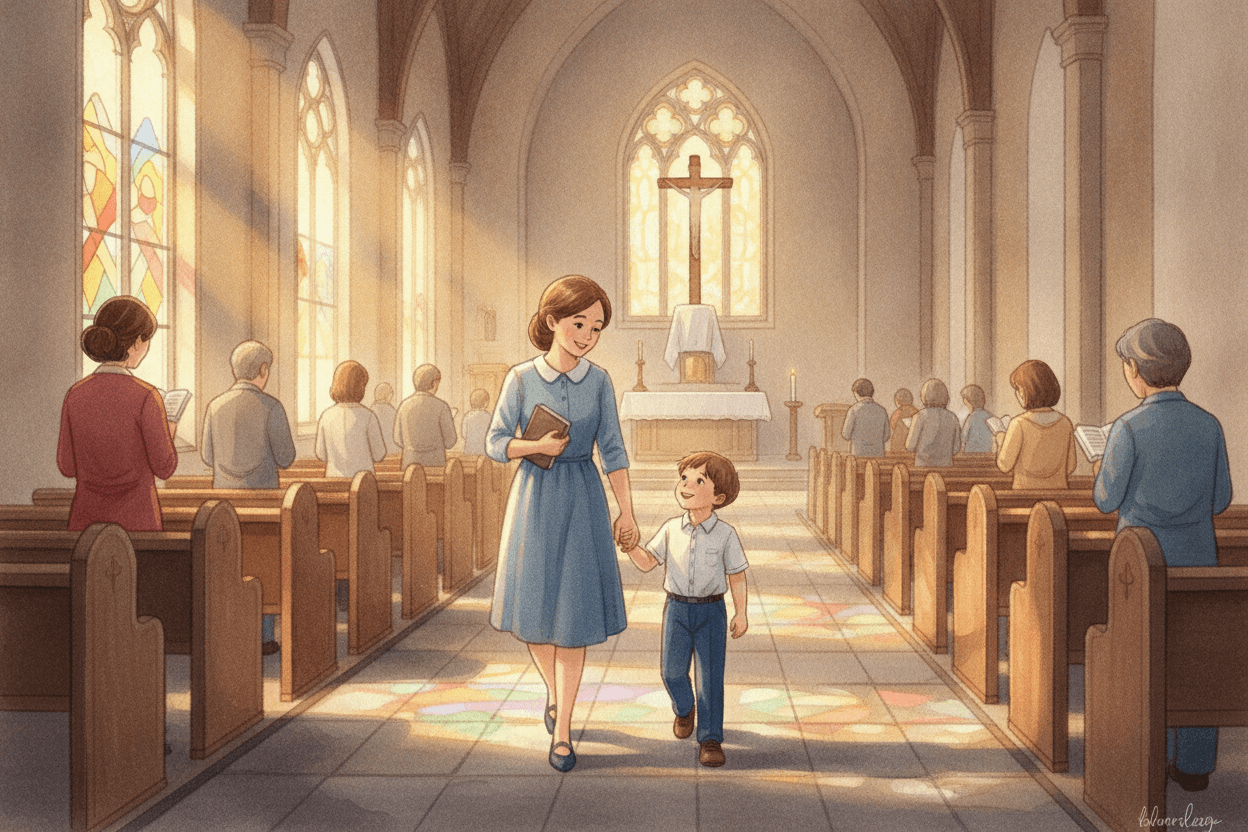
The most peaceful First Communion mornings usually begin before the church doors open. A child who has already found the family’s pew, practiced moving in and out of it quietly, and knows where to go when called is freer to pray instead of worrying. Plan to arrive early enough to use the restroom, straighten the outfit, greet the catechist, and sit together for a few quiet minutes. This is not rehearsal for a stage performance. It is a way of removing small distractions so your child can attend to the One they have come to receive.
During the week beforehand, walk through the order of Mass in simple language. At home, you might say, “We stand when we pray and listen to the Gospel. We sit to listen carefully. We kneel during the Eucharistic Prayer because Jesus becomes present in a unique way.” Practice the familiar responses together, especially “Amen.” Children should understand that this word is not a cue to move along; it is their personal assent: “Yes, I believe.” Here’s how I’d teach this: have your child practice a clear, unhurried “Amen” while looking toward the Host or chalice, then remind them that a soft voice and calm hands can show love without calling attention to themselves.
Also practice the actual reception according to your parish’s norms. If Communion is received in the hand, show your child how to place one open hand over the other, receive the Host, step aside, and consume it immediately. If your parish directs communicants to receive on the tongue, practice standing still, opening the mouth, and extending the tongue gently. Ask your catechist or pastor if you are unsure; parish practice should guide the family. Explain, too, the one-hour Eucharistic fast: for one hour before receiving Holy Communion, we do not eat or drink anything except water or medicine. Frame it positively. We make a little room in our ordinary routine because we are preparing to receive Jesus.
Keep the focus wider than your own family’s proud moment. First Communion takes place within Mass because the Eucharist is the Church’s worship, Christ’s sacrifice and meal, not a private ceremony with a religious backdrop. As the Catechism reminds us, the Eucharist is “the source and summit of the Christian life” (CCC 1324). Tell your child, “Today you are praying with the whole Church.” After Communion, resist the instinct to whisper instructions or reach for a camera. Help your child kneel or sit in thanksgiving: “Jesus, thank you for coming to me. Help me love you.” That short prayer will matter long after the photographs are put away.
This is my body, which will be given for you; do this in memory of me.
Let the Celebration Echo the Sacrament, Not Eclipse It
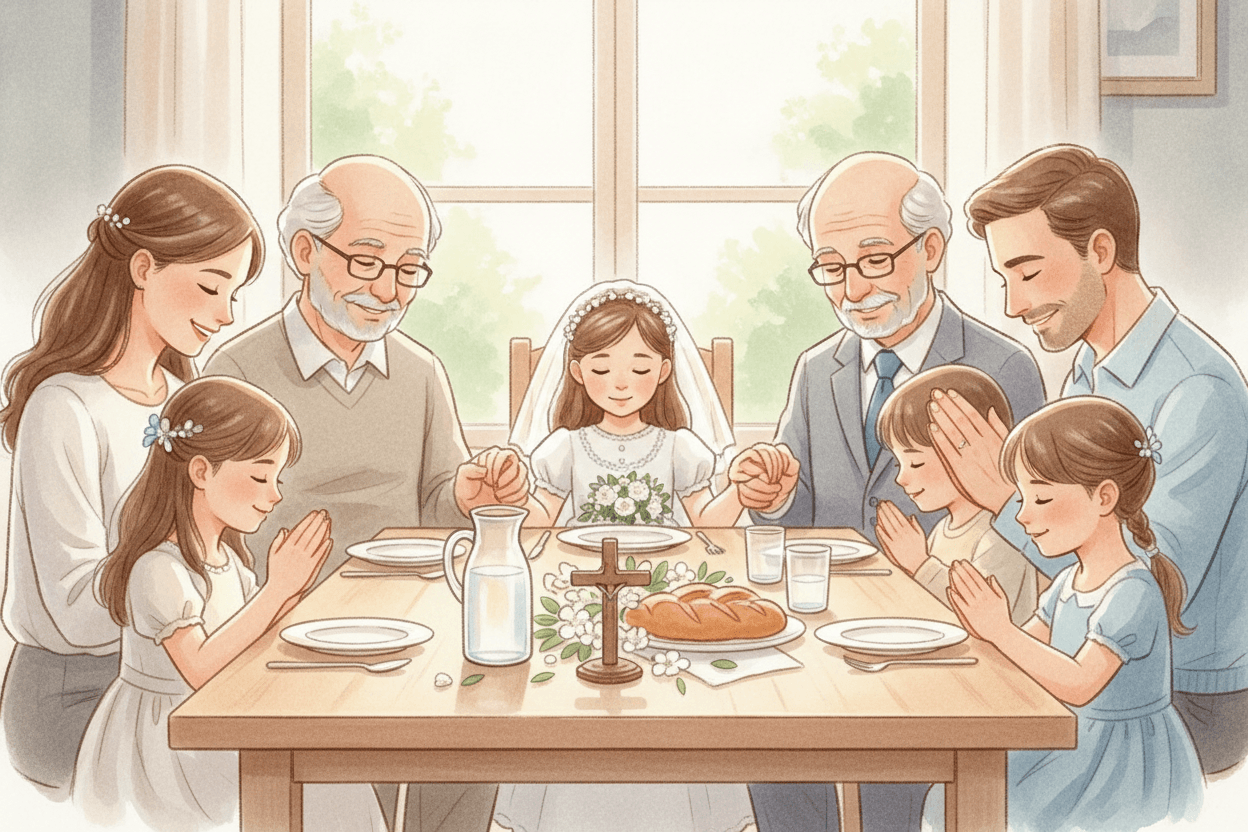
The photographs can wait ten minutes. When Mass ends and your child has received Jesus for the first time, resist the understandable rush toward the church steps, the relatives gathering, and the carefully planned meal. If possible, remain in the pew together for a few quiet moments. Whisper a simple prayer of thanksgiving: “Jesus, thank you for coming to me. Help me love you and follow you.” This is not dead time between the liturgy and the celebration; it teaches your child what the day is actually about. As the Catechism reminds us, the Eucharist is “the source and summit of the Christian life” (CCC 1324).
Joy is not a distraction from reverence. A lovely meal, a pressed white dress or suit, grandparents at the table, and a cake shared with genuine delight can all fittingly mark the day. The question is whether these good things serve gratitude or quietly take over. Keep the schedule humane. Avoid packing the hours immediately after Mass with multiple stops, posed photos, and obligations that leave the child tired before the family can speak about what happened at the altar. One family meal, a manageable guest list, and a little breathing room will often say more than an elaborate program.
Begin the gathering with grace, even if everyone is eager to eat. Ask your child to lead if he or she is comfortable, perhaps with a memorized prayer or a few words of thanks. Then offer one gentle question at the table: “What is one thing you learned about Jesus while preparing for today?” Do not turn this into an examination. Children often answer plainly: “Jesus is really there,” or “He forgives me,” or “I can talk to him.” Receive the answer warmly. Scripture invites us to remember that the Lord gives himself, not merely an idea about himself: “Taste and see how good the LORD is; blessed the man who takes refuge in him.”
Choose gifts that continue the formation begun at home and in the parish: a child’s Bible, a saint book, a crucifix for the bedroom, a prayer journal, rosary, Mass missal, or a modest piece of religious jewelry. A nonreligious gift is not forbidden, of course, but let at least one gift clearly name the grace of the day. I have found that children remember the adults who wrote a short note inside a Bible or prayer book: “I prayed for you when you received Jesus today.” Such a gift gives parents a natural opening to return to the Eucharist in the weeks ahead.
Finally, protect your child from the quiet comparison that can settle over sacramental celebrations: whose clothing was finest, whose party was largest, whose photos looked most polished. None of these measures readiness for Holy Communion. Your child has been welcomed to the Lord’s table and, having prepared through confession, receives him with a heart learning to love. Let the conversation throughout the day return there. Ask relatives to share a First Communion memory, pray before dessert, and end the evening with one more thank-you to Jesus. The celebration need not be small to be rightly ordered; it simply needs to echo the gift it celebrates.
Taste and see how good the LORD is; blessed the man who takes refuge in him.
This Week: A Seven-Day Heart Preparation Plan
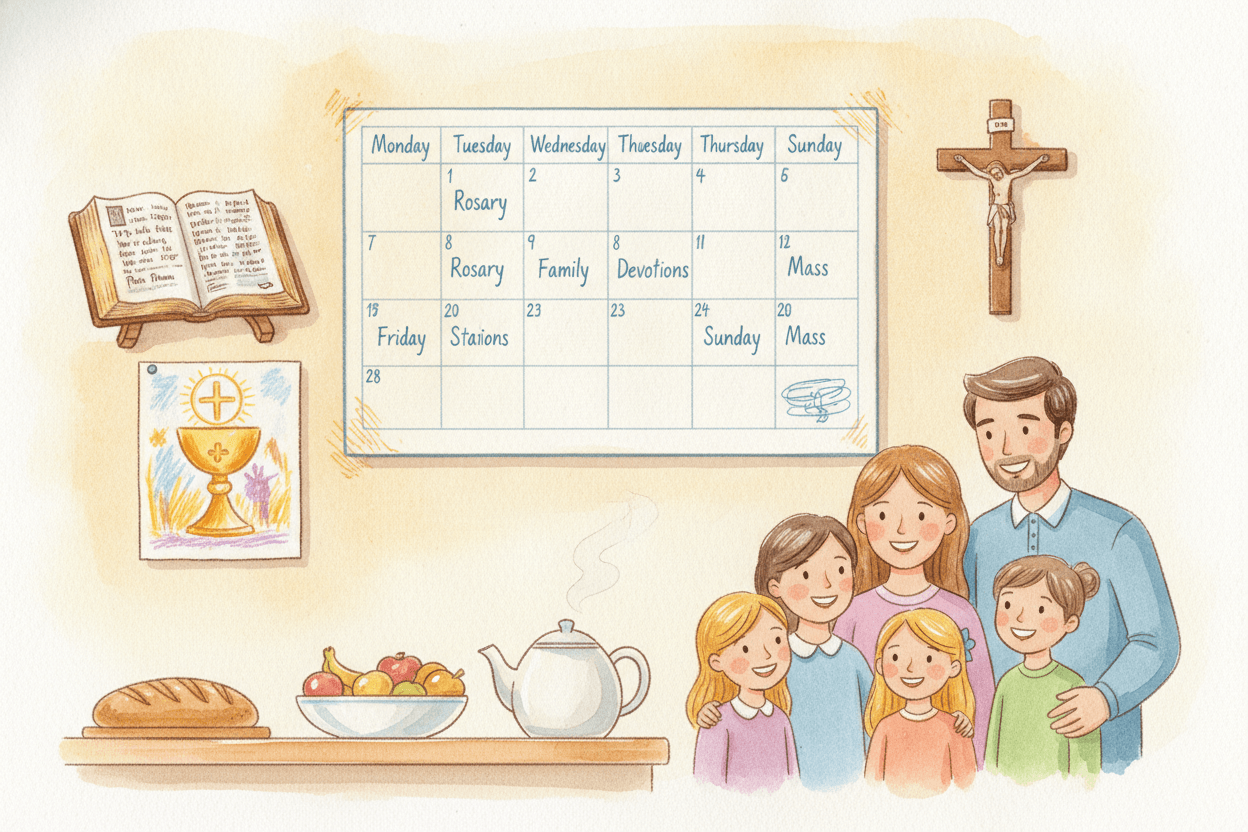
On Monday evening, put the dress bag, suit, or shoes out of sight for ten minutes and sit at the kitchen table with your child. Ask one question only: “Who are we receiving at Communion, and how can we welcome him?” Let the child answer before correcting or adding details. Then say plainly: at Holy Communion, we receive Jesus Christ—his Body, Blood, Soul, and Divinity—not a symbol or a religious snack. Children can grasp this truth when we give it to them clearly, calmly, and often.
Use the next seven days as a small family rhythm rather than another project to complete. Day 1 is that short Eucharist conversation. Day 2, read Jesus’ words from the Last Supper and explain that at every Mass the priest obeys his command in the name of the Church. Day 3, make a brief visit to the church if possible. Point to the tabernacle, genuflect together, and pray, “Jesus, help me love you and receive you with a ready heart.” Keep the prayer short enough that your child can pray it attentively.
On Day 4, practice one part of the Mass at home. Rehearse the responses, standing and kneeling at the proper times, or folding hands while waiting in the Communion line. Here’s how I’d teach this: explain that these are not performance details. Our bodies help us show what we believe. The same gentle repetition that teaches a child how to set a table can teach reverence without making Mass feel tense or unfamiliar.
Day 5 can be a quiet review for Confession. Ask your child to name ways he or she has failed to love God or neighbor: disobeying, refusing to share, speaking unkindly, or hiding the truth. Do not press for dramatic examples. Help the child remember that Confession is where Jesus forgives sins and restores us to friendship with him. As the Catechism reminds us, preparation for Holy Communion includes recognizing the need for forgiveness and approaching the sacrament with a rightly formed conscience (CCC 1385).
On Day 6, talk about the one-hour Eucharistic fast. Explain that we refrain from food and drink, except water and medicine, for one hour before receiving Communion because Jesus matters more than a quick snack. Decide together what breakfast and departure time will make this peaceful. At Sunday Mass, choose one thing to notice: the Gospel, the offertory, the consecration, or the Communion procession. After Mass, ask, “What did you notice Jesus doing for us today?”
Day 7 looks ahead to the moments after your child’s First Communion. Make a simple thanksgiving plan: return to the pew, kneel or sit quietly, and offer three sentences of gratitude—“Thank you, Jesus, for coming to me. Help me love you. Help me love others.” The event may include photographs, family meals, and happy tears, but steady family witness will form your child more deeply than a perfect day. A parent who prays, goes to Mass, seeks forgiveness, and gives thanks teaches the Eucharist long after the white clothes are put away.
This is my body, which will be given for you; do this in memory of me.
Frequently asked questions
How can I prepare my child for First Communion at home?
Use short, repeated conversations during ordinary moments such as setting out the Communion outfit, choosing a gift, or eating dinner. Remind your child that at Mass Jesus gives himself to us in the Eucharist, and invite him or her to name something to thank Jesus for. Daily brief prayer and faithful Sunday Mass will form more than one long lesson.
How do I explain the Real Presence to a child before First Communion?
Say plainly that after the priest prays the Eucharistic Prayer, the bread and wine truly become the Body and Blood of Jesus. They still look and taste like bread and wine, but they are no longer ordinary food. Avoid calling the Host merely “special bread,” since your child needs words that match the Church’s faith.
What should a child understand before receiving First Communion?
A child does not need to master adult theology, but should know that Holy Communion is Jesus truly present and that receiving him is a loving, holy gift. He or she should be able to distinguish the Eucharist from ordinary bread, understand right and wrong in an age-appropriate way, and approach Mass with reverence. Honest questions are a healthy part of this preparation.
What Bible verses can I read with my child before First Communion?
Read John 6:51, where Jesus calls himself the living bread and says that the bread he gives is his flesh. You can also read Luke 22:19, Jesus’ words at the Last Supper: “This is my body.” Read a short passage once or twice during the week, then ask your child what gift Jesus is giving us.
How can our family make First Communion preparation more prayerful?
Set aside a small prayer space where your child can make the Sign of the Cross and offer one sentence to Jesus each morning. At Mass, quietly point out the consecration and encourage a simple prayer afterward, such as, “Jesus, thank you for coming to us.” Choose gifts that support prayer, such as a children’s missal, rosary, Bible, or crucifix.
Should I focus on my child’s First Communion outfit and party details?
It is good to prepare the outfit and celebrate with family, because First Communion is a joyful and important day. Let those plans serve the deeper purpose instead of replacing it: while preparing clothes or cake, talk about whom your child is going to meet at Mass. The most important preparation is a heart ready to receive Jesus with faith, reverence, and gratitude.
Sources: vatican.va · vatican.va · vatican.va · vatican.va · usccb.org · usccb.org · usccb.org · vatican.va
Scripture quotations in this article use the NABRE translation.