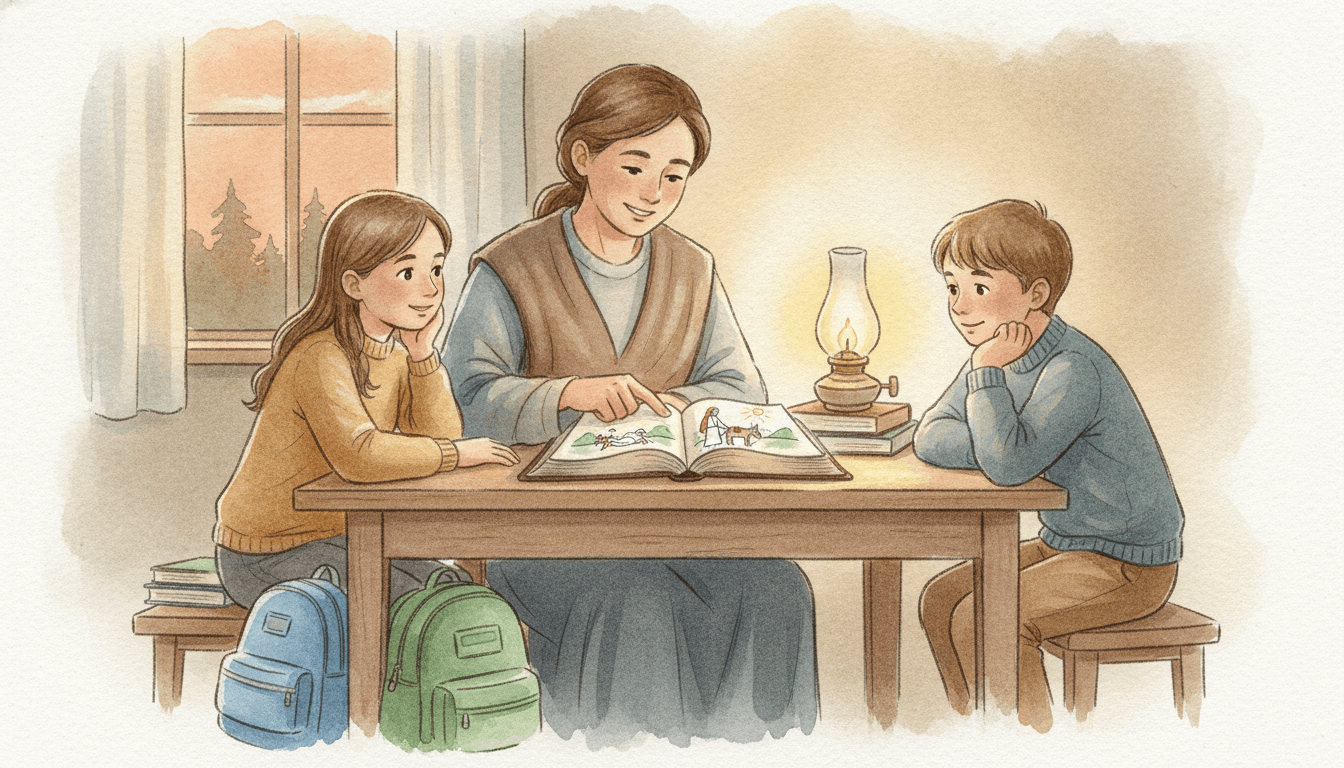
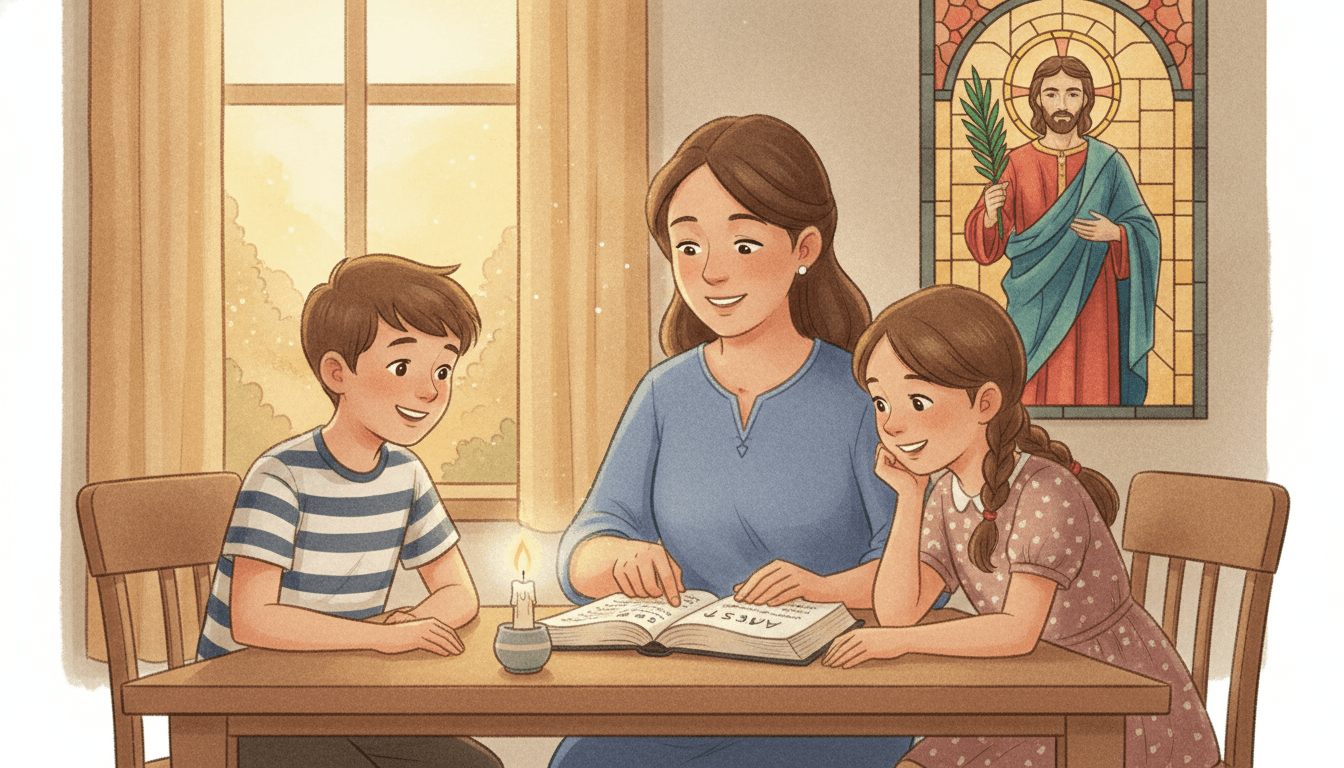
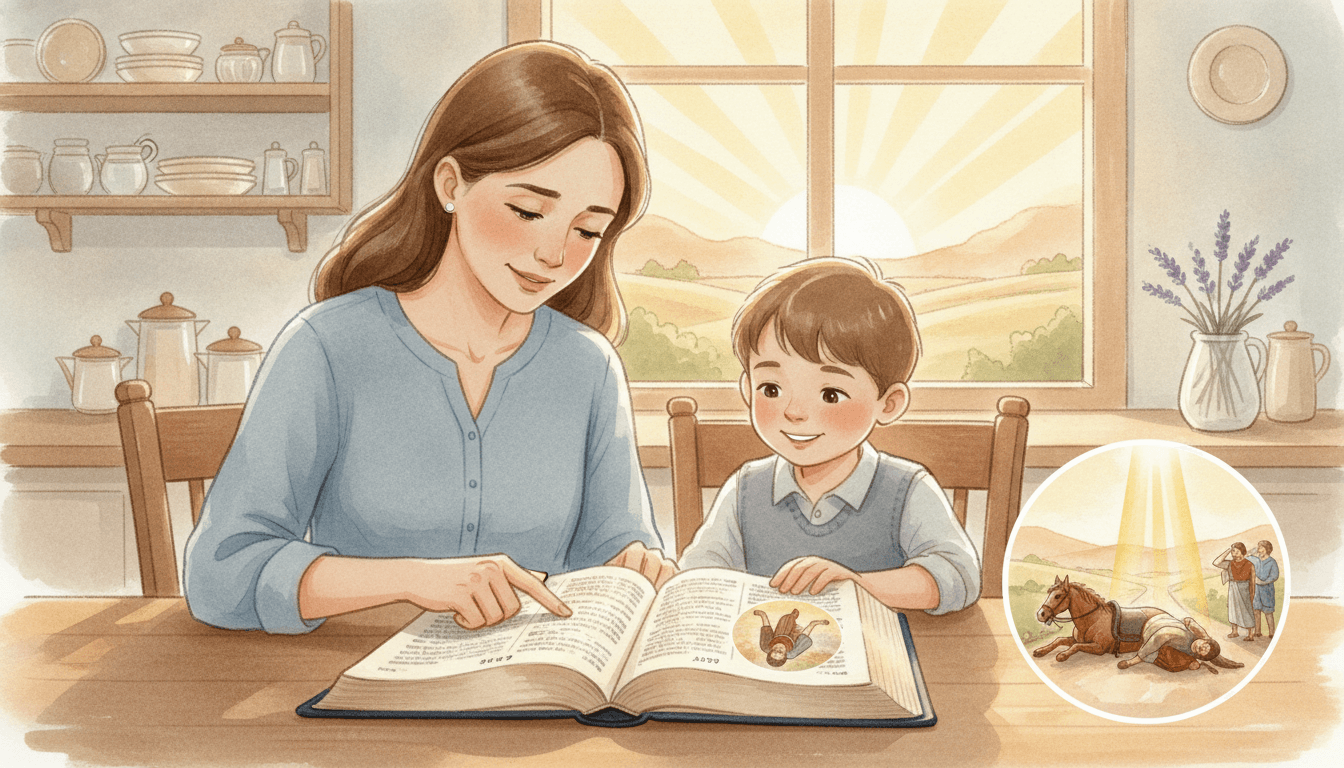
Daniel and the Lions’ Den:A Guide for Ages 6–9
Help children ages 6–9 discover why Daniel kept praying even when it became dangerous. This simple guide explores courage, faithful habits, and trusting God through the gripping story of the lions’ de
What would your child do if someone made a rule against praying to God? Daniel 6 gives children a clear answer without pretending courage is easy: Daniel kept his ordinary prayer routine, faced a real danger, and trusted God with the outcome.
Daniel 6 in One Clear Retelling

Daniel was not a young boy when he faced the lions. He was an adult Jewish exile who had lived far from Jerusalem for many years. King Darius trusted him and appointed him as one of three ministers overseeing 120 satraps, or regional officials. Daniel carried out his work so wisely and faithfully that he outshone the others. The king even considered placing him over the whole kingdom.
Some officials became jealous and searched for a reason to accuse Daniel. They could find no corruption or carelessness in his work, so they decided to use his faithfulness to God against him. They persuaded Darius to sign a decree: for thirty days, no one could make a petition to any god or person except the king. Anyone who disobeyed would be thrown into a lions’ den. Once signed, the decree could not be changed.
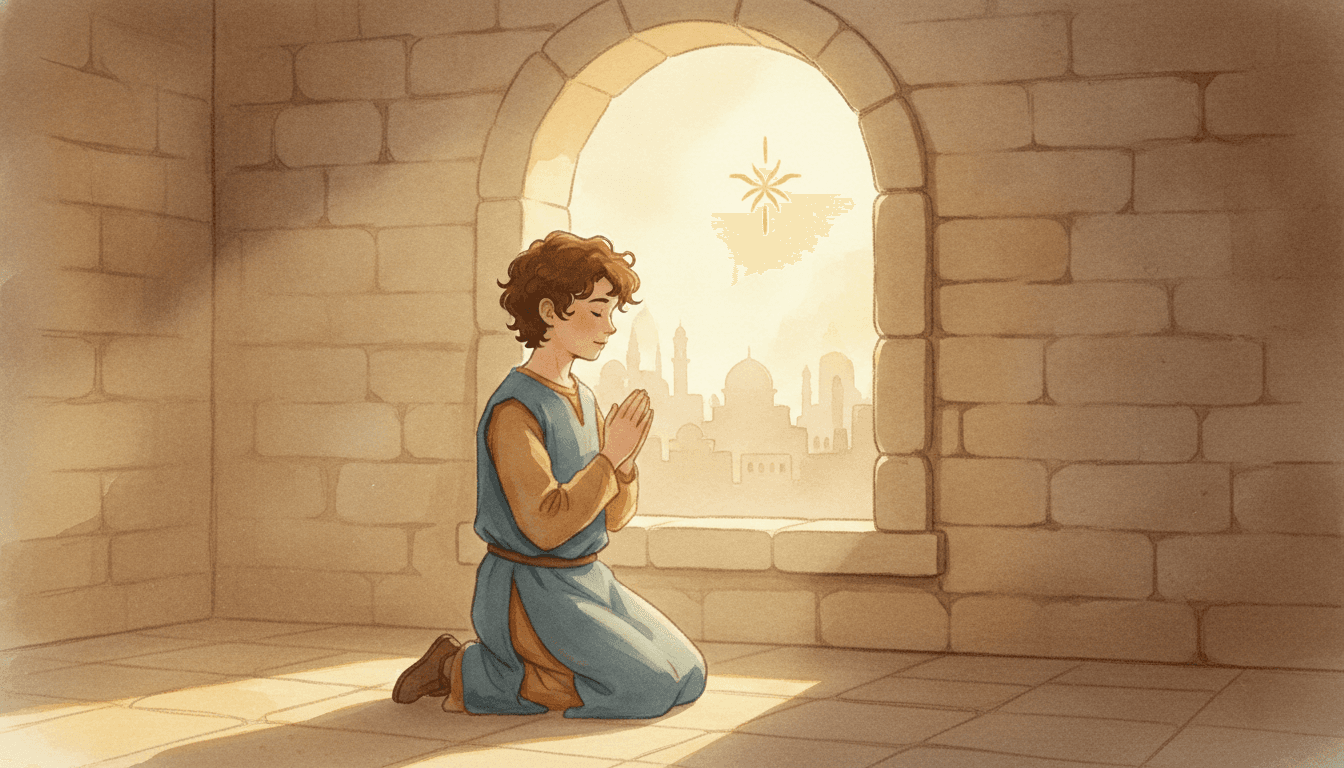
Daniel learned about the decree, but he did not abandon God or hide his usual practice. He went home, knelt near his windows facing Jerusalem, and prayed three times a day, giving thanks to God just as he had always done. Daniel did not act rudely toward the king. He simply understood that no ruler could take God’s place. The jealous officials saw him praying and reported him.
Darius was distressed because he valued Daniel and realized that the officials had trapped them both. Although the king tried to save him, the law was enforced. Daniel was lowered into the lions’ den, and a stone was placed over its opening and sealed. Darius told Daniel that the God he served faithfully might deliver him. Then the king spent a sleepless night fasting, and at daybreak he hurried to the den.
When Darius called out, Daniel answered. God had sent an angel to close the lions’ mouths, and Daniel had not been hurt. The king ordered him lifted from the den, and Daniel was found completely unharmed because he had trusted in God. This was a special act of divine rescue, not proof that faithful people will never suffer. Scripture invites us to notice Daniel’s steady choices before the miracle: he served honestly, prayed regularly, respected the king, and obeyed God first. For ages six to nine, that sequence matters. Daniel’s courage was not pretending the lions were harmless; it was remaining faithful when the danger was real.
Daniel answered the king: “O king, live forever! My God sent his angel and closed the lions’ mouths so that they have not hurt me. For I have been found innocent before him; neither have I done you any harm, O king!”
Why Was Daniel Forbidden to Pray?
The officials had a problem: Daniel was doing his work too well. King Darius had placed him among the leaders responsible for governing the kingdom, and Daniel proved honest, capable, and trustworthy. The other officials searched for some failure they could report, but they could find no corruption or neglect in his public service. Their plan did not begin because Daniel had done something wrong. It began because they were jealous of the king’s confidence in him.
Since they could not trap Daniel through his work, the officials targeted his faithfulness to God. They persuaded Darius to sign a decree stating that, for thirty days, no one could make a petition to any god or human being except the king. A petition is a request. During that month, every plea for help—including prayer—was supposed to be directed to Darius alone. Anyone who disobeyed would be thrown into the lions’ den.
The officials appealed to the king’s pride. Being treated as the only person permitted to receive petitions could make Darius feel unusually important. They also presented the proposal as though all the leaders supported it, although Daniel certainly did not. Once Darius signed it, the law of the Medes and Persians could not be changed. The officials knew this detail mattered: even if the king later regretted his choice, they could demand that he enforce it.
Daniel understood exactly what the decree meant. He did not pray because he wanted attention, nor did he stop praying to protect himself. He went home, knelt at his usual open windows facing Jerusalem, and prayed three times a day, giving thanks to God as he had always done. His steady habit made him easy to catch, which was precisely what the jealous officials expected. Yet Daniel would not treat an earthly ruler as though he were God.
Here’s how I’d teach this to children: Daniel respected the king, served the kingdom faithfully, and still knew that human authority has limits. A rule cannot make worship of God wrong or make a king worthy of worship. As the Catechism reminds us, citizens must not obey civil commands that contradict the moral order and the rights of persons (CCC 2242). Daniel’s choice was not rude or reckless. It was a clear act of obedience to God when powerful people demanded something they had no right to demand.
All the ministers of state, the satraps, nobles, and governors are agreed that the king should issue an edict and enforce the prohibition that whoever makes a petition to any god or human being except you, O king, for thirty days, shall be thrown into a lions’ den. Now, O king, approve the prohibition and promulgate the decree; for no decree or edict which the king issues can be changed, according to the law of the Medes and Persians. So King Darius signed the prohibition and the decree. Even after Daniel heard that the decree had been signed, he continued his custom of going home to kneel in prayer and give thanks to his God in the upper chamber three times a day, with the windows open toward Jerusalem.
Why Did Daniel Keep His Window Open?
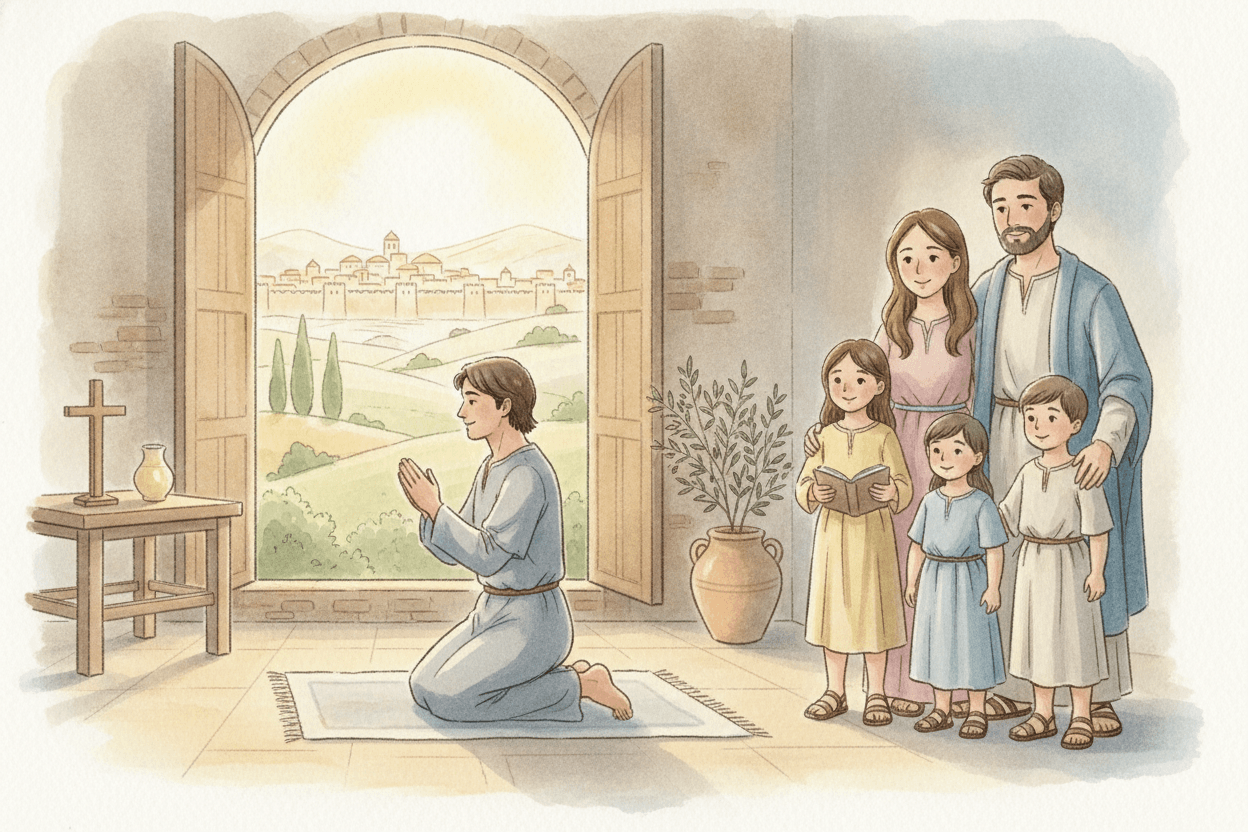
Picture Daniel walking into his upper room after hearing that the king’s decree had been signed. The window is already open toward Jerusalem. He does not fling it open for the officials to see, nor does he make a speech. He simply kneels, gives thanks, and prays. Daniel 6:10 carefully tells us that he did this “as he had always done.” His open window was part of an established pattern of prayer, not a newly staged act of defiance.
That detail matters when we explain the story to children. Daniel was not trying to attract trouble or prove that he was braver than everyone else. He was continuing to place God first in the ordinary way he already knew. Facing Jerusalem connected his prayer with the holy city of his people, even while he lived far from it. His posture also teaches something: Daniel knelt before God, although powerful people wanted all petitions directed to the king. His body expressed what he believed—God alone held first place.
Scripture invites us to notice three parts of Daniel’s custom: he prayed three times each day, he knelt, and he gave thanks. The thanksgiving may surprise children. Daniel knew he could be punished, yet his prayer was not only a frightened request for rescue. He still thanked God. This does not mean Daniel enjoyed danger or knew exactly what would happen. It means that fear did not erase his memory of God’s goodness.
As the Catechism reminds us, prayer cannot be limited to the moments when we happen to feel like praying. “We cannot pray ‘at all times’ if we do not pray at specific times” (CCC 2697). The Church therefore encourages regular rhythms of prayer, including morning and evening prayer, grace before meals, Sunday Mass, and the seasons of the liturgical year (see CCC 2698). Daniel’s three daily prayer times show children why such habits matter: a practiced habit helps us remain faithful when circumstances become difficult.
Here’s how I’d teach this at home or in a parish classroom: invite children to choose three simple prayer moments they can recognize each day. They might pray an Our Father after waking, offer grace before lunch, and thank God before bed. A child could also choose one regular prayer place—a chair, a bedside, or a small family prayer corner. The goal is not to copy Daniel’s window as though it were a magic detail. The goal is to learn his steadiness. Daniel kept praying openly because prayer was already woven into his daily life, and no unjust decree could make him treat God as someone to forget.
Even after Daniel heard that the decree had been signed, he continued his custom of going home to kneel in prayer and give thanks to his God in the upper chamber three times a day, with the windows open toward Jerusalem.
Daniel Respected the King but Obeyed God First
Picture Daniel standing before King Darius after the officials have caught him praying. Daniel does not shout, insult the king, or pretend the law does not matter. He knows the punishment is real. Yet he also knows that no king may take God’s place. Daniel had served Darius honestly, and later he could truthfully say that he had done the king no harm. His refusal was not an excuse for bad behavior; it was an act of fidelity to God.
Children ages six to nine can understand this important distinction: respecting someone does not mean obeying every command that person might give. Usually, children should obey parents, teachers, and other rightful authorities. Rules about bedtime, homework, safety, and classroom conduct help families and communities live well. But the king’s decree demanded something very different. It forbade Daniel to pray to God and treated Darius as though he deserved what belongs to God alone.
Catholic teaching gives us clear language for this. As the Catechism reminds us, citizens should respect legitimate civil authority, but they must not obey a command that contradicts the moral order, fundamental human rights, or the teaching of the Gospel (CCC 2242). Daniel did not reject all authority. He continued to recognize Darius as king, but he could not recognize Darius as God. His obedience to God came first because every human authority receives its proper limits from God.
Here’s how I’d teach this without encouraging rudeness or rebellion: offer children three questions. Is this person asking me to do something sinful? Would obeying mean breaking one of God’s commandments? Can I refuse calmly and ask a trustworthy adult for help? Most disagreements children face are not Daniel-like conflicts; being told to clean a room or turn off a game is not contrary to God’s law. But if a child is told to lie, steal, hurt someone, hide unsafe behavior, or deny the faith, the child should say no and seek help from a parent, priest, teacher, or another safe adult.
The stone over the den shows that Daniel’s choice carried a serious cost. Even Darius could not easily undo the decree he had signed. Still, Daniel neither attacked the king nor surrendered his worship. Scripture invites us to notice both parts of his example: he remained respectful toward the person in authority, and he remained faithful to the higher authority of God. That is courageous obedience—not doing whatever we want, but choosing what is right with honesty, steadiness, and trust.
Then the king ordered Daniel to be brought and cast into the lions’ den. To Daniel he said, “May your God, whom you serve faithfully, deliver you.” A stone was brought and placed over the opening of the den, which the king sealed with his own ring and with the rings of his nobles, so that nothing could be done to rescue Daniel.
What God’s Rescue Does—and Does Not—Mean
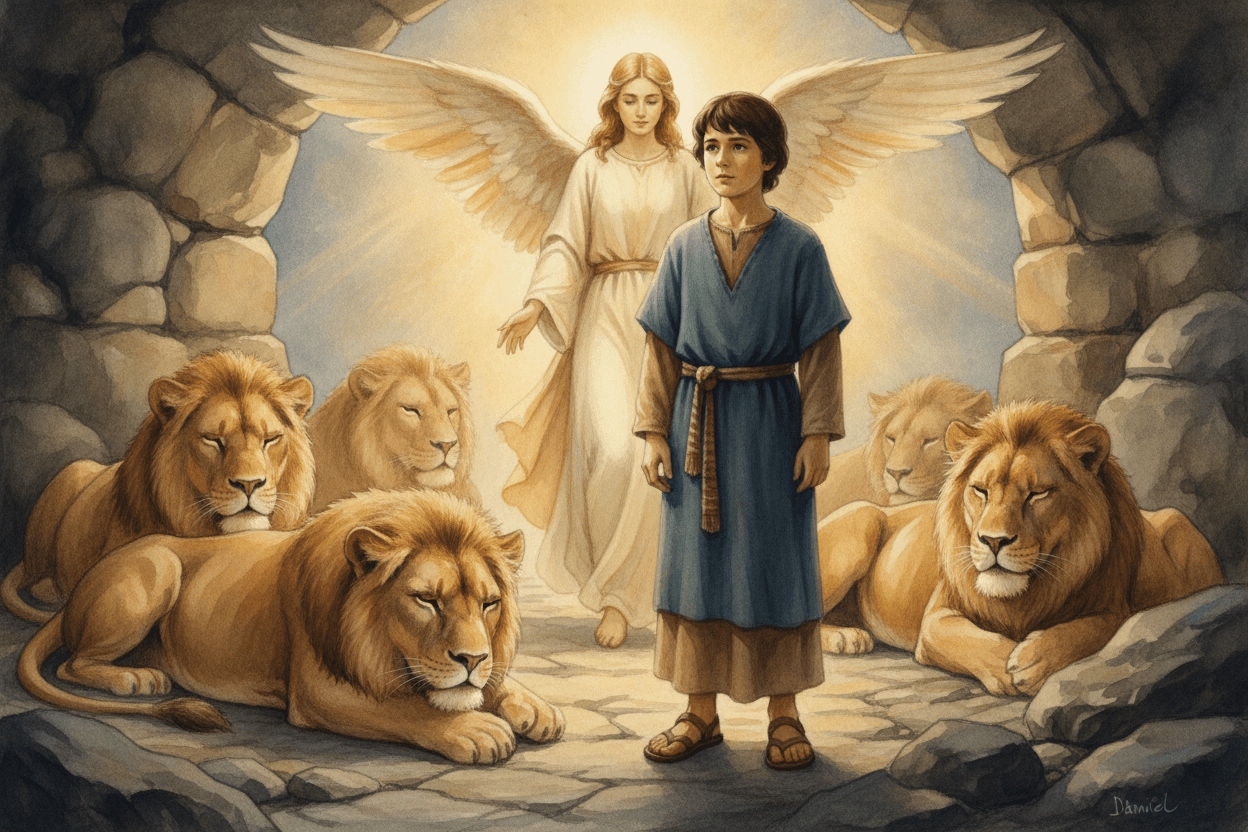
At sunrise, King Darius hurried to the sealed den and called out in anguish. Daniel answered from among the lions—not injured, not abandoned, and not speaking as though he had saved himself. He explained plainly that God had sent an angel and closed the lions’ mouths. Then the king had Daniel lifted out, and Daniel was found unharmed. Scripture gives the reason: he had trusted in his God.
This was a real miracle, not a clever escape or a lesson about Daniel being unusually good with animals. The lions were dangerous, the stone had been sealed, and Daniel had no human way out. God intervened in a special way. His rescue showed God’s authority over the animals and over the king’s decree. It also confirmed Daniel’s innocence: he had remained faithful to God without plotting against Darius or harming anyone.
Children may hear this account and conclude, “If I trust God, nothing painful will ever happen to me.” That is not what Daniel 6 promises. Faith is not a bargain in which we pray and God must remove every illness, bully, disappointment, or frightening event. Many faithful people in Scripture suffered greatly. Jesus himself was perfectly faithful, yet he endured the Cross before rising from the dead. God may rescue someone from a hardship, carry that person through it, or bring a good we cannot yet see.
As the Catechism reminds us, God can bring good from the consequences of evil, although evil itself never becomes good (see CCC 312–314). Daniel’s night in the den teaches that suffering does not mean God has disappeared. The angel’s presence made God’s care visible in this particular event. At other times, that care may come through courage, wise adults, doctors, the sacraments, a loving parish community, or the hope of eternal life. God’s faithfulness is certain even when the outcome is not the one we requested.
Here’s how I’d teach this to ages six through nine: ask two separate questions. First, “What did God do for Daniel?” Let children answer from the text: God sent an angel, closed the lions’ mouths, and brought Daniel out unharmed. Second, ask, “What can we always trust God to do?” The answer is not, “Keep every hard thing away.” We can trust God to hear us, remain with us, give us grace to choose what is right, and lead his faithful people toward life with him. That distinction respects a child’s intelligence while preserving the wonder of the miracle.
Daniel answered the king: “O king, live forever! My God sent his angel and closed the lions’ mouths so that they have not hurt me. For I have been found innocent before him; neither have I done you any harm, O king!”
Try Daniel’s Prayer Pattern This Week
On Monday morning, place the Bible on the breakfast table before anyone reaches for a device. Read just a few verses of Daniel 6 aloud, then stop. Children ages six to nine do not need a long explanation before they have heard the text itself. Scripture invites us to notice real people making real choices: jealous officials plot, Darius signs a foolish decree, Daniel continues praying, and God remains faithful. Tell your child that your family will spend seven days listening closely to this chapter rather than rushing through it once.
Here’s how I’d teach this across the week. On day one, read Daniel 6:1–5 and ask, “What kind of worker was Daniel?” On day two, read verses 6–10 and ask why the officials wanted the decree. On day three, reread verse 10 and notice Daniel’s regular prayer. On day four, read verses 11–17 and ask what Darius did wrong, even though he cared about Daniel. On day five, read verses 18–24 and identify what God did. On day six, read verses 25–27 and notice what Darius learned about God. On day seven, retell the whole chapter together without looking at the page.
The ending of Daniel 6 includes the punishment of Daniel’s accusers and their families. Do not skip it secretly, but do not add frightening or graphic details either. You might say, “This part shows us that the lions were truly dangerous and that Daniel’s rescue was God’s work. It also describes a severe punishment from an ancient kingdom.” Then return to three steady questions: What does this passage tell us about Daniel? What does it tell us about Darius? What does it tell us about God? That approach respects a child’s intelligence while keeping the lesson anchored in Scripture.
For the same seven days, try Daniel’s three-times-daily pattern in a form your child can manage. In the morning, pray, “Thank you, God, for this new day.” At midday, pause before lunch or after school and name one gift from the day. At bedtime, thank God for one person and ask for help with one concern. These prayers may take less than a minute. Their value comes from faithfully turning toward God again and again. As the Catechism reminds us, the Church’s daily rhythm helps nourish continual prayer (see CCC 2698).
Choose one sentence from the chapter to remember, perhaps, “For he is the living God, enduring forever” (Daniel 6:27, NABRE). Write it on a card and let your child decorate it with a crown, an angel, or closed lions’ mouths. Place it near the breakfast table and say it together each day. At the end of the week, read the related Daniel and the Lions comic as a reinforcement, not a replacement for the biblical text. Ask your child to point out which details came directly from Daniel 6 and which were added by the artist. That simple comparison teaches children to enjoy a retelling while still recognizing Scripture as the source.
The goal is not a perfect week or lengthy prayers. It is a small family habit: hear God’s Word, ask honest questions, and answer him with thanks. Daniel’s rescue was extraordinary, but his practice before the crisis was wonderfully ordinary. He had learned to pray regularly. Children can begin learning that same faithfulness now, one brief prayer at a time.
For he is the living God, enduring forever, whose kingdom shall not be destroyed, whose dominion shall be without end.
Frequently asked questions
How do I explain Daniel in the lions’ den to a 6- to 9-year-old?
Explain that Daniel was an honest, trusted leader whose jealous coworkers used his faith against him. When prayer was forbidden, he continued his normal prayer routine, accepted the real danger, and trusted God with what happened next.
Was Daniel a child when he was thrown into the lions’ den?
No. Daniel was an adult Jewish exile who had lived away from Jerusalem for many years and held an important position in King Darius’s government.
Why was Daniel thrown into the lions’ den?
Jealous officials could not find any dishonesty or neglect in Daniel’s work, so they persuaded the king to outlaw petitions to anyone except himself for thirty days. Daniel kept praying to God three times a day, and the officials reported him for breaking the decree.
Why did Daniel pray with his windows open?
The open window facing Jerusalem was part of Daniel’s established prayer practice, not a stunt meant to provoke the king. He simply continued kneeling, giving thanks, and praying as he had before the law was signed.
What does Daniel in the lions’ den teach Catholic children about obeying rules?
Children can learn that authorities deserve respect, but no human ruler can take God’s place. When a command directly contradicts obedience to God and the moral order, Catholics must put God first without becoming rude or needlessly reckless.
Does Daniel’s rescue mean God will always keep faithful people from being hurt?
No. Closing the lions’ mouths was a special act of divine rescue, not a promise that believers will never suffer. Daniel’s example is his steady faithfulness before the miracle: he worked honestly, prayed regularly, respected the king, and trusted God despite genuine danger.
Sources: bible.usccb.org · catholic.com · catholic.com · catholic.org · bible.usccb.org · access.barna.com · onehope.net · barna.com · barna.com
Scripture quotations in this article use the NABRE translation.