The Armor of God for Kids:Ephesians 6 Explained
Help children discover how each piece of God’s armor—truth, righteousness, peace, faith, salvation, and prayer—guides real choices at school, home, and friendships. Ephesians 6 becomes a practical pic
When a child comes home upset after a hard day at school, the answer is not to teach him to fight harder. Scripture invites us to show him how God gives courage for telling the truth, choosing peace, and praying through worry. Ephesians 6 offers a strong, memorable picture of that daily Christian life.
Start With What Paul Means by “Armor”
Before anyone cuts out a cardboard shield or pretends a pool noodle is a sword, open the Bible together and read Ephesians 6:10–18 aloud. Children often notice the battle words immediately. That is a good moment to say clearly: St. Paul is not teaching Christians to fight, threaten, or defeat other people. A classmate who is rude, a sibling who takes a toy, or a friend who disagrees is never the enemy. Jesus teaches us to love people, even when a situation is hard.
Paul uses the familiar picture of a soldier’s armor to describe God’s help in the real struggles of the heart. Children know these struggles already: the lie that says, “No one will know”; selfishness that refuses to share; temptation to copy someone’s unkindness; fear before a test or a new school day; discouragement after making a mistake. These are moments when we need more than a clever answer or strong feelings. We need the Lord’s grace so that we can stand firm, choose what is right, and respond with love.
Scripture invites us to hear Paul’s instruction as a call to depend on God: “Put on the armor of God so that you may be able to stand firm against the tactics of the devil.” The devil’s tactics are not always dramatic. They can be lies about God—“He will not forgive me”—or lies about ourselves—“I cannot do the right thing.” God answers those lies with truth, mercy, and the strength He gives in prayer. The armor is not something a child earns by being perfect; it is God’s provision for His children.
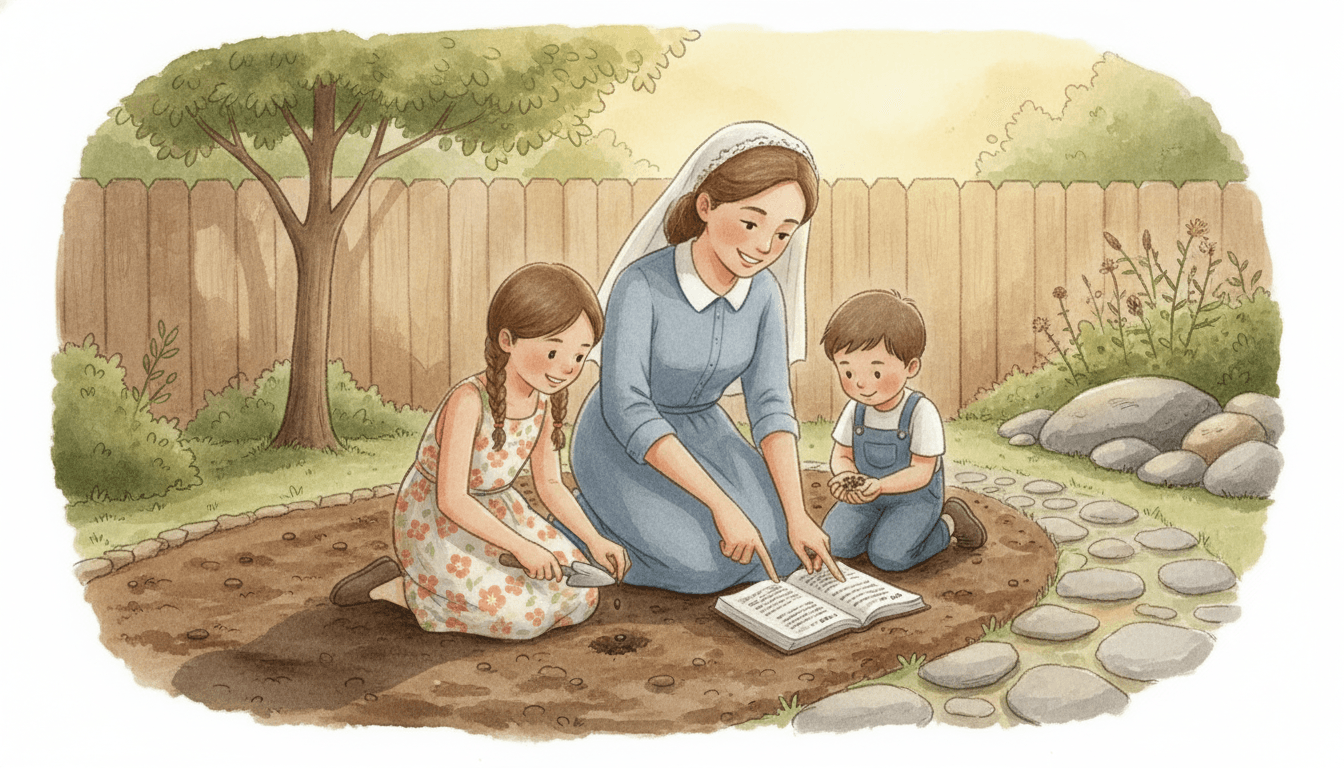
Here’s how I’d teach this at home or in a parish classroom: ask, “What is one hard moment you may face this week?” A child might name a quarrel, a worry, a temptation to cheat, or feeling left out. Then ask, “What would it look like to stand with Jesus in that moment?” Perhaps it means telling the truth, asking forgiveness, including someone, or quietly praying, “Holy Spirit, help me choose love.” As the Catechism reminds us, “The Christian family is the first place of education in prayer” (CCC 2685). A short family prayer after reading the passage helps children see that Paul’s image belongs in ordinary life: at the breakfast table, on the playground, and when they are trying again after a hard day.
Put on the armor of God so that you may be able to stand firm against the tactics of the devil.
Teach the First Three Pieces Through Daily Choices
A child stands in the doorway holding the broken toy car, deciding whether to blame the dog or tell the truth. That small pause is a real place to begin teaching the armor of God. St. Paul’s images are not costumes for pretending to fight people. They describe the steady help God gives us as we resist lies, selfishness, and the temptation to hurt others when we are hurt. Here’s how I’d teach this: ask children what they could say in that moment with the broken toy. “I broke it. I am sorry.” Truth may feel costly, but it makes room for trust and repair.
The belt of truth means more than avoiding obvious lies. It includes keeping a promise to put away the game when time is up, telling a parent about a mistake before someone else discovers it, and remembering that Jesus himself is trustworthy. A child can learn to pray, “Jesus, help me tell the truth even when I am afraid.” This is practical formation, not a vague lesson about being good. At home, invite each child to name one situation where telling the truth is difficult. Listen without rushing to correct every answer; then help them identify the honest next step.
The breastplate of righteousness guards the heart by forming habits of choosing what is good and fair. For children, that can look like refusing to laugh when a sibling is teased, returning something that does not belong to them, or admitting, “I pushed you, and that was wrong.” Righteousness is not pretending never to sin. It also means accepting responsibility and apologizing sincerely when we do. Scripture first gives the image; Catholic tradition helps us see the purpose: grace strengthens us to live as God’s children, with a real freedom to choose the good.
Then come the shoes of readiness for the gospel of peace. A child wears these shoes when she includes the classmate sitting alone at lunch, when he stops a sibling argument by saying, “Let’s take turns,” or when either child chooses not to retaliate with another insult. Peace is not simply staying quiet to avoid trouble. It is actively bringing kindness, forgiveness, and fairness into ordinary relationships. Before school or bedtime, a family might ask one simple question: “Where can I bring peace tomorrow?” The Catechism calls the Christian family the first place of education in prayer (CCC 2685), making this a fitting moment to ask the Holy Spirit for truthful words, a rightly ordered heart, and feet ready to make peace.
So stand fast with your loins girded in truth, clothed with righteousness as a breastplate, and your feet shod with readiness for the gospel of peace.
Help Children Use Faith, Salvation, and God’s Word
A child comes home worried about tomorrow’s spelling test, or upset because a friend chose someone else at recess. These are the ordinary moments when the shield of faith becomes concrete. Faith is not pretending that nothing hurts or that we will always get what we want. It is choosing to trust that God is present, good, and able to help us do what is right when we feel afraid, disappointed, or tempted. I often ask children, “What might faith say to your worried heart right now?” Their answers are wonderfully direct: “God is with me,” “I can pray,” or “I can try again.”
Paul next names the helmet of salvation. A helmet protects the head; this image can help children remember what is true about their identity. Jesus loves them. When they sin, they can repent and receive his mercy. They are called to live as his friends, not as children trapped by a bad choice, an unkind word, or a fearful thought. This does not excuse wrongdoing. Rather, salvation gives a child confidence to say, “I was wrong. I am sorry. With God’s help, I can choose better.” The Catechism reminds us that the Christian family is the first place where children learn to pray (CCC 2685), so these small conversations at the kitchen table or before bed matter greatly.
Then comes the sword of the Spirit: the word of God. Here’s how I’d teach this: a sword in Paul’s image is not permission to attack a sibling, win an argument, or throw Bible verses at someone who is struggling. God’s Word is never a weapon against another person. It forms the mind and heart for love, truth, mercy, and courage. A child who remembers a verse or a Gospel teaching has something steady to return to before copying homework, joining in teasing, or refusing to forgive. Scripture invites us to let God’s truth direct the next choice, not merely to repeat words we have memorized.
Try a simple family practice: name one situation involving worry, disappointment, or temptation, and let each child choose which piece of armor is needed. Then pray in one sentence: “Holy Spirit, strengthen my faith when I am worried,” or “Jesus, help me remember your mercy and choose what is good.” Paul joins faith, salvation, and God’s Word to prayer because Christian strength is received from God. Children are fully capable of understanding that truth, especially when they see adults turn to it in real life.
In all circumstances, hold faith as a shield, to quench all [the] flaming arrows of the evil one. And take the helmet of salvation and the sword of the Spirit, which is the word of God.
Prayer Is Not an Extra Piece of the Lesson
The argument over the last clean spoon can become a small training ground for prayer. Before a child snaps at a sibling, a parent can quietly prompt, “Ask the Holy Spirit for patience.” That is not a decorative ending to the armor of God lesson. It is how children learn to stand in truth, choose what is right, seek peace, and trust God when strong feelings arrive. Paul does not finish his teaching by adding one more object to a soldier’s uniform; he directs Christians to pray “at every opportunity in the Spirit” (Ephesians 6:18).
Here’s how I’d teach this in a parish classroom or at the kitchen table: connect prayer to the moments children already recognize. Before school, pray, “Jesus, help me tell the truth and be kind today.” Before answering an annoying sibling, pause for one breath and pray, “Holy Spirit, give me patience.” At bedtime, name one gift from the day and say thank you. These short prayers do not require polished language. They form the habit of turning toward God in the middle of ordinary life, rather than only after a problem has grown large.
Scripture invites us to see prayer as watchfulness, not worry. A child may be concerned about a test, excluded by friends, tempted to hide a mistake, or disappointed by a loss. In each case, prayer helps the child remember: I am not alone, and I do not have to answer fear or anger with sin. Parents should also be clear that the struggle Paul describes is not against classmates, siblings, or other people. We pray for the grace to resist lies, selfishness, discouragement, and the temptation to hurt others with our words.
As the Catechism reminds us, “The Christian family is the first place of education in prayer” (CCC 2685). Make this lesson concrete by asking each child to name one situation in the coming day that calls for courage, peace, faith, or truthfulness. Then pray briefly for that situation together. A family might keep the practice as simple as a sign of the cross, one sentence from each person, and an Our Father. Over time, children begin to understand that God’s armor is not a costume for a Bible activity. It is lived through choices, sustained by grace, and renewed whenever they pray.
With all prayer and supplication, pray at every opportunity in the Spirit. To that end, be watchful with all perseverance and supplication for all the holy ones.
A Catholic Way to Teach Ephesians 6 at Home
A child who has just argued with a sibling often understands the breastplate of righteousness better than a child who has copied a definition into a notebook. After reading a few lines from Ephesians 6, pause and ask: “What might righteousness look like after an argument?” Children will often say it plainly: tell the truth, stop blaming, apologize, or help repair what was damaged. That answer is already a serious beginning in moral formation. Catholic children do not need the passage reduced to costumes or catchphrases; they need time to connect St. Paul’s images with the choices in front of them.
Here’s how I’d teach this at home or in a parish group: open the Bible, read Ephesians 6:11, then take the armor pieces in short portions over several days. Read verses 14–15 one day, verse 16 the next, and verse 17 after that. Ask one question for each image, and let the children answer before offering your own explanation. For truth: “When is it hard to be honest?” For righteousness: “What is a good choice when someone is left out?” For the gospel of peace: “How could you bring peace at recess, in the car, or at the dinner table?” Write down their examples. Their own words will be more memorable than a list they are asked to recite.
The same method works for faith, salvation, and the word of God. A child may name a worry about a test, a friendship, a move, or a family member who is ill; that is a fitting moment to discuss the shield of faith. The helmet of salvation can lead to a clear conversation about God’s mercy: when we sin, we do not hide from Jesus, but turn back to him in sorrow and trust. For the sword of the Spirit, ask what Scripture might say when someone is tempted to be cruel or dishonest. Be careful with the image: God’s word is not a tool for winning arguments or hurting people. It forms our minds and guides our actions.
Keep the setting ordinary. At the kitchen table, invite each child to choose one piece of armor for a situation coming up that week. A parent might say, “I need the shoes of peace before a difficult conversation,” while a child might choose the belt of truth before admitting a mistake. Then pray briefly and specifically: “Holy Spirit, help us to be truthful, peaceful, and brave today.” As the Catechism reminds us, “The Christian family is the first place of education in prayer” (CCC 2685). This is the domestic church at work: Scripture heard, real life named, and prayer offered together.
Return to the passage often, without turning it into a test. Ask what the children remember, what has been difficult, and where they noticed God helping them stand firm. Scripture invites us to see spiritual struggle truthfully: the enemy is not the classmate, sibling, or parent in front of us, but sin, lies, selfishness, temptation, and discouragement. When children learn to identify those pressures and answer them with truth, goodness, faith, God’s word, and prayer, they are learning a durable Catholic pattern for daily life.
Put on the armor of God so that you may be able to stand firm against the tactics of the devil.
Try This Armor of God Prayer This Week
At the end of supper, place six small slips of paper in a bowl: truth, righteousness, peace, faith, salvation, and God’s Word. Let one child draw the day’s slip, then ask a question that keeps the lesson close to real life: “Where might we need this tomorrow?” A child may name a test at school, an argument with a sibling, a worry at bedtime, or the temptation to hide a mistake. This is not pretend battle language. Paul teaches Christians to resist sin, lies, selfishness, and discouragement by relying on God’s gifts.
Here’s how I’d teach this as a seven-day family practice. On day one, choose the belt of truth and name one honest thing that needs to be said or one promise that needs to be kept. On day two, choose the breastplate of righteousness and identify one good and fair choice, perhaps apologizing or including someone. On day three, put on the shoes of peace by planning one act of kindness or forgiveness. On day four, lift the shield of faith for a worry, disappointment, or difficult choice. On day five, remember the helmet of salvation: each person can thank Jesus for his mercy and say one way he or she can live as his friend. On day six, take up the sword of the Spirit by recalling a Scripture verse already learned and letting it guide a particular decision. Explain plainly that God’s Word is never a weapon for hurting people; it forms our minds and directs our choices.
On day seven, let each family member choose the piece needed most in the week ahead. Name one situation, then pray specifically for the grace it represents. This final day is also a good time to notice that prayer surrounds every part of the armor. Paul writes, “With all prayer and supplication, pray at every opportunity in the Spirit.” Children learn that prayer is not reserved for formal moments. They can ask the Holy Spirit for help before a hard conversation, during a fearful thought, or after they realize they have done wrong. As the Catechism reminds us, “The Christian family is the first place of education in prayer” (CCC 2685).
Close each day, or gather at the end of the week, with this prayer: “Jesus, clothe us in your truth and goodness. Give us faith when we are worried, peace when we are upset, and courage to do what is right. Help us remember your Word and pray in every moment. Amen.” If your children respond well to pictures and story, reinforce the conversation with the related Armor of God for Kids comic. Read it together, pause at each piece of armor, and ask them to connect what they see to the situation they named. Repetition gives children the confidence to recognize these graces when ordinary life becomes difficult.
With all prayer and supplication, pray at every opportunity in the Spirit. To that end, be watchful with all perseverance and supplication for all the holy ones.
Frequently asked questions
How do I explain the armor of God to my child?
Read Ephesians 6:10–18 together and explain that the armor is God’s help for everyday choices, not equipment for fighting people. Connect each piece to familiar situations such as telling the truth, apologizing, including someone, or praying when worried. Remind your child that God gives this help; they do not have to earn it by being perfect.
What does the belt of truth mean for kids?
The belt of truth helps children choose honesty, even when telling the truth feels hard. It might mean admitting they broke something, keeping a promise, or telling a parent about a mistake. A simple prayer is: “Jesus, help me tell the truth even when I am afraid.”
How can my child use the shield of faith when they are worried?
The shield of faith means trusting that God is present and good when a child feels afraid, left out, or discouraged. Help them name one true thought, such as “God is with me,” “I can pray,” or “I can try again.” Faith does not deny that something hurts; it helps them bring that hurt to God.
What do the shoes of peace look like at school?
Shoes of peace help a child actively bring kindness and fairness to relationships. They may include a classmate who is alone, refuse to return an insult, or suggest taking turns during an argument. Ask before school, “Where can you bring peace today?” and pray for the courage to do it.
Does the armor of God mean other people are our enemies?
No. Ephesians 6 does not teach children to fight, threaten, or defeat classmates, siblings, or friends. The real struggle is against lies, selfishness, fear, and the temptation to hurt others when we have been hurt. Jesus calls us to love people while choosing what is right.
How can our family pray the armor of God at home?
After reading Ephesians 6:10–18, let each family member name one hard moment they may face that week. Together, choose one faithful response, such as telling the truth, asking forgiveness, or including someone. End with a short prayer asking the Holy Spirit for courage, peace, and loving words.
Sources: bible.usccb.org · vatican.va · vatican.va · vatican.va · vatican.va · vatican.va · press.vatican.va
Scripture quotations in this article use the NABRE translation.