Daniel in the Lions’ Den:Courage for Catholic Kids
Discover how Daniel’s courage helps Catholic kids face peer pressure, tell the truth, and stand firm in faith. His story shows that bravery means choosing what is right while trusting God through frig
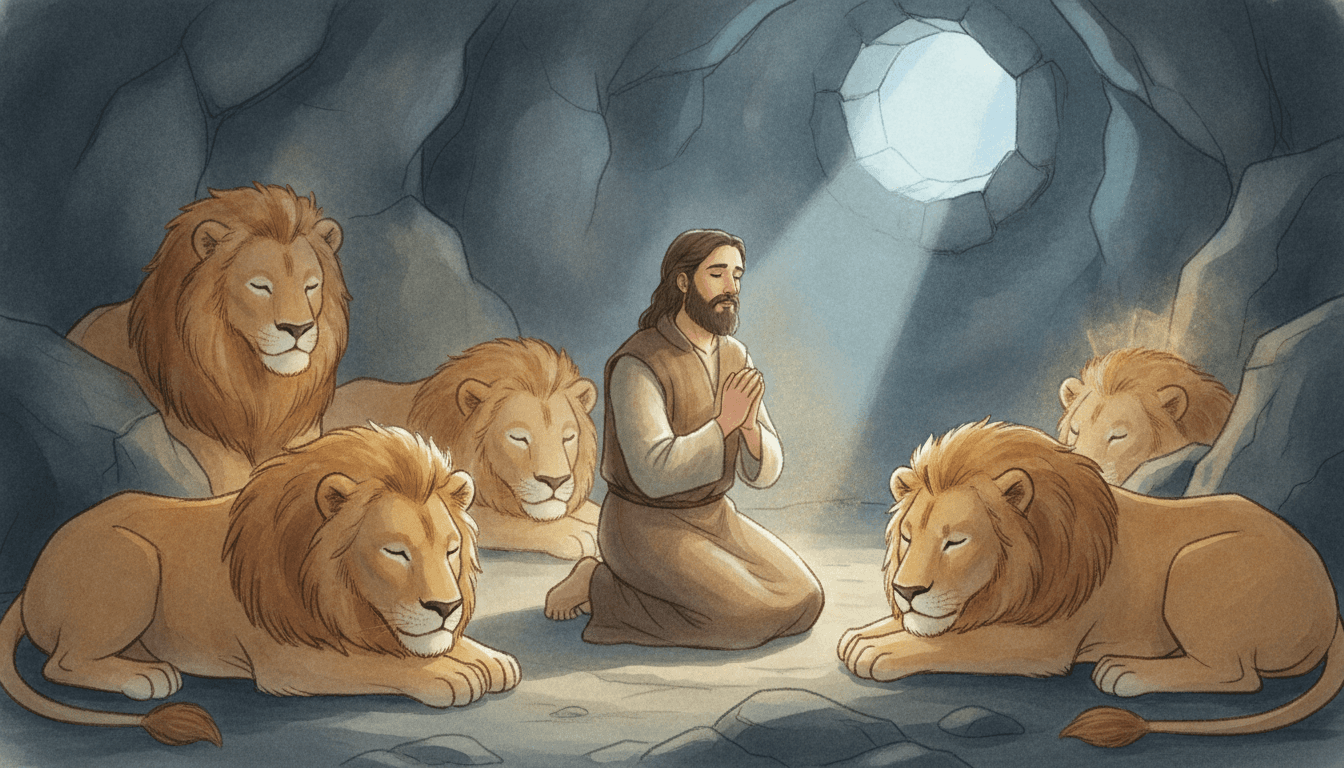
What can a child do when friends want him to laugh at someone, hide the truth, or stay quiet about what he believes? Daniel’s night among the lions teaches a deeper kind of courage: not fearlessness, but steady faithfulness, wise action, and trust in God.
The Courage Kids Need Is Often Quiet
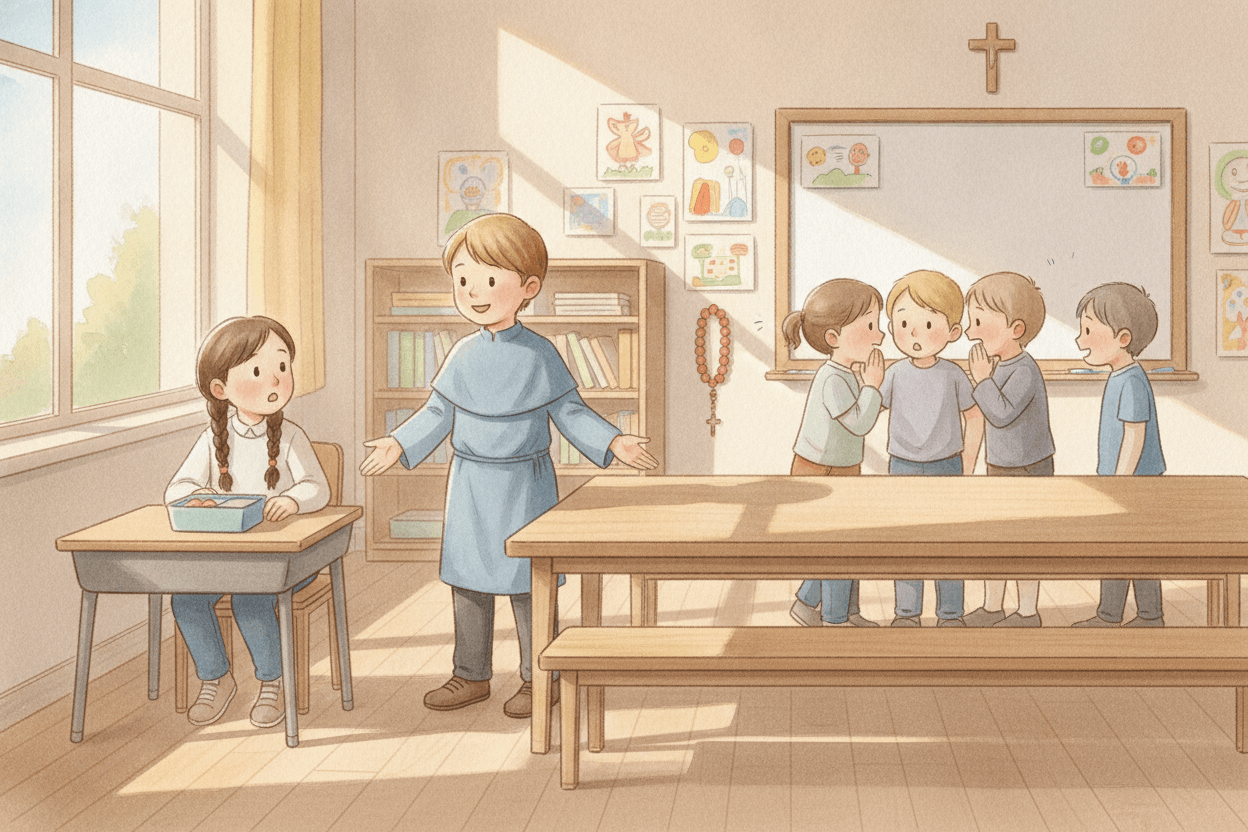
A child on the playground hears, “Say she cheated, or we won’t let you play.” Another child is asked to laugh when someone folds her hands to pray before lunch. A third is dared to climb where the teacher has said not to go. For children ages six to nine, these moments can feel as intimidating as a crowd of lions. The courage they need is often quiet: telling the truth, refusing to leave someone out, or stepping away from an unsafe game even when friends protest.
Daniel gives children a clear pattern. He did not wait for a crisis to begin trusting God. He had a steady habit of prayer, and when the king’s decree forbade prayer, Daniel continued to pray three times a day (Daniel 6:13). He was not trying to embarrass the king or insult the people around him. He remained faithful to God while serving the king with integrity. Christian courage is not loudness, rudeness, or pretending not to feel afraid. It is choosing what is right with respect, even when that choice costs something.
Here’s how I’d teach this: give children words they can actually say. “I don’t want to lie.” “Please don’t leave him out.” “I respect you, but I believe differently.” “I am going to do what is right.” These sentences are short enough to remember and calm enough to use. Then help children see that courage includes asking for help. If pressure involves bullying, threats, abuse, self-harm, weapons, or another danger, they should move away and tell a trusted adult immediately: a parent, teacher, parish leader, or another safe adult. Seeking help is wise, not weak.
We should also teach this story carefully. Daniel’s rescue shows God’s faithfulness, but it does not mean that prayer works like a guarantee that every frightening situation will end the way we hope. Pope Francis said, “Prayer is not a magic wand: it is a dialogue with the Lord.” As the Catechism reminds us, family prayer patiently forms children in the Church’s living memory (CCC 2685). At bedtime or before school, name one hard situation, ask God for courage, and choose one wise action. God is present when a child speaks up, asks for help, and does the next right thing—even when the outcome is uncertain.
Read Daniel 6: Faithful Before the Lions Arrived
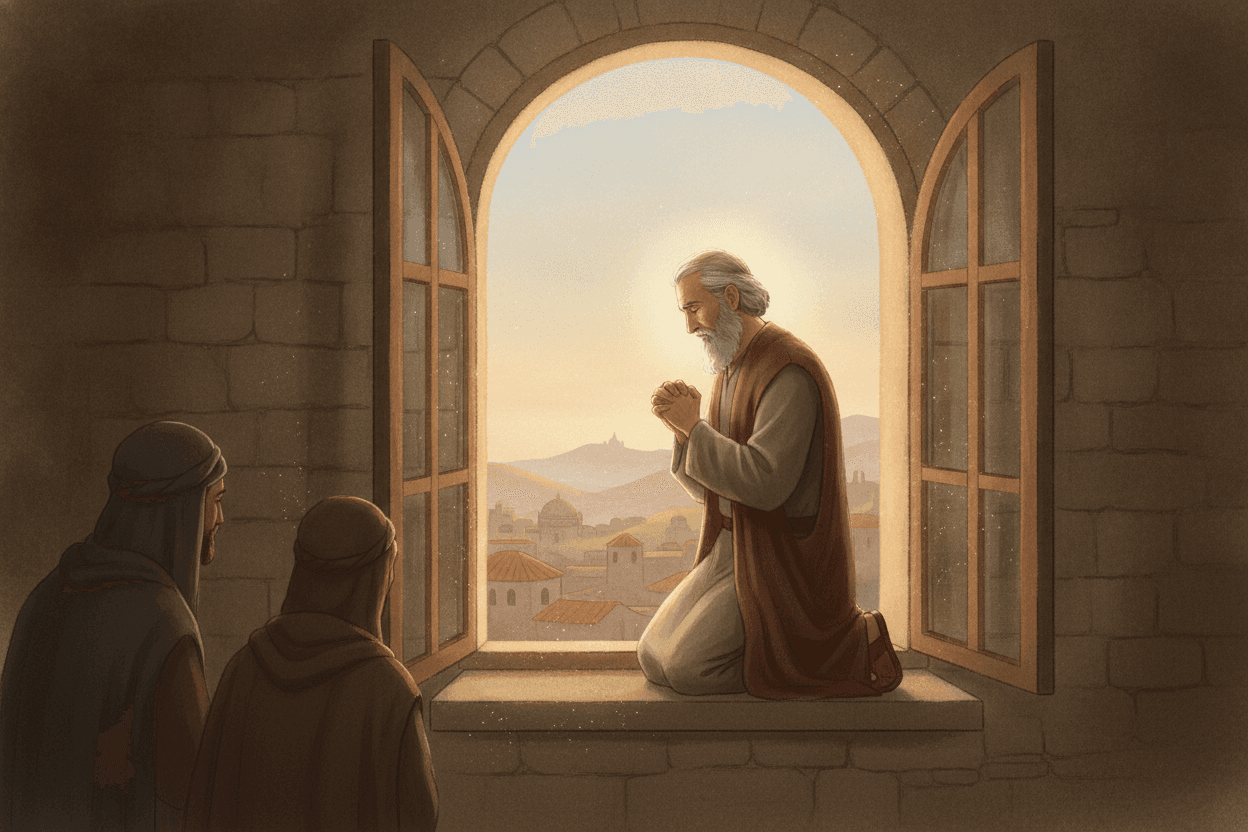
Picture Daniel’s enemies watching his window, not because he had suddenly decided to make a dramatic stand, but because they already knew where to find him. Daniel served King Darius with such skill and integrity that other officials grew jealous. They could find no corruption or negligence in his work. So they looked for a conflict between Daniel’s loyalty to God and a law designed to trap him.
The officials persuaded the king to forbid prayer to anyone but the king for thirty days. It was an unjust decree, and Daniel faced a real choice. He did not abandon his duties, insult the king, or create a spectacle. He continued the practice that had shaped his life: praying to God three times a day. Scripture gives the accusation plainly: “Daniel, one of the Judean exiles, has paid no attention to you, O king, or to the prohibition you signed. Three times a day he offers his prayer.”
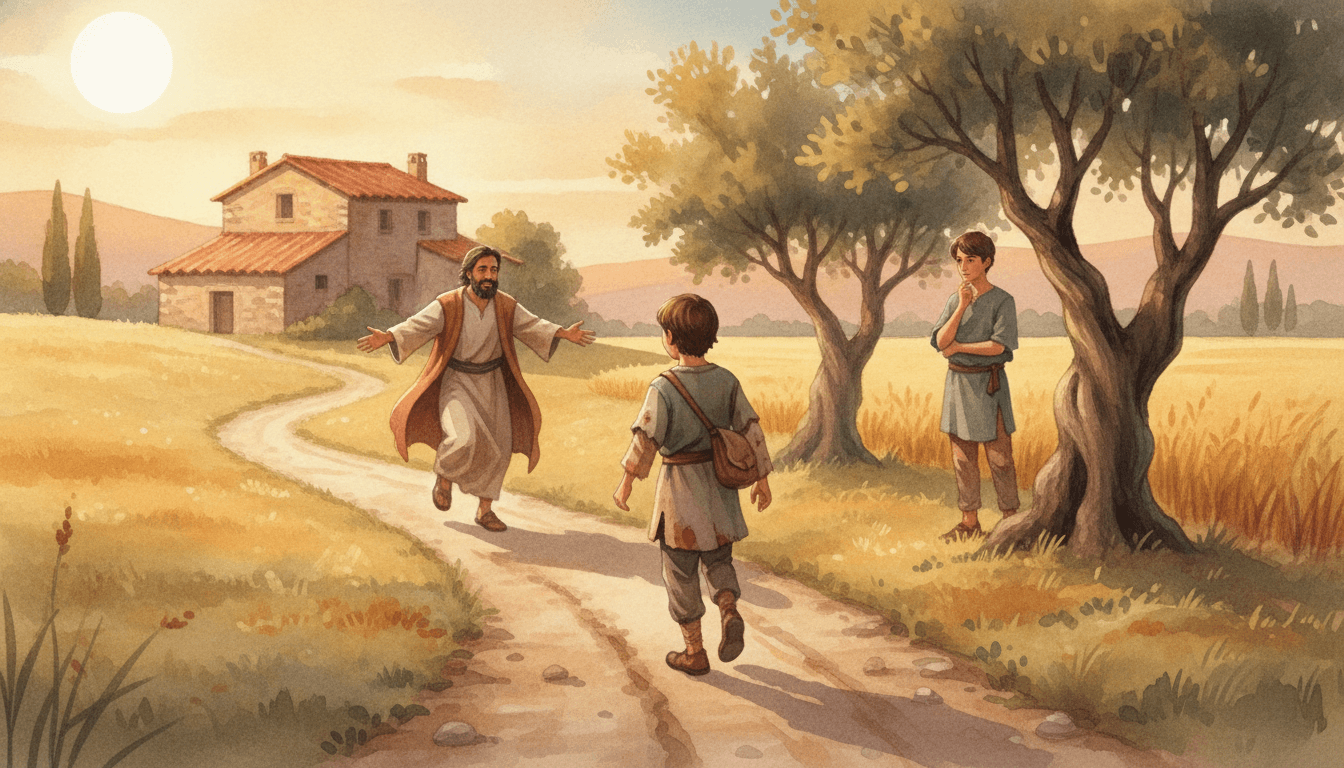
This is the point children should notice. Daniel’s courage did not begin at the edge of the lions’ den. It had been formed in ordinary days—through prayer, faithful work, and a settled decision that God came first. Scripture invites us to see courage not merely as a big feeling that arrives in a crisis, but as the fruit of habits that teach the heart whom to trust. Daniel was afraid? The text does not tell us. But it does show that he was faithful before he knew what would happen next.
Here’s how I’d teach this at home or in a parish class: ask, “What are the small prayers that can help us be brave later?” A child might name a morning offering, grace before meals, a decade of the Rosary, or a brief prayer before school. Then make the lesson practical: when friends pressure us to lie, leave someone out, mock faith, or do something unsafe, we can answer without cruelty: “I am going to do what is right.” If a situation involves threats, bullying, abuse, self-harm, weapons, or danger, courage also means telling a trusted adult immediately. Daniel’s trust in God did not replace wise action or the help of others; it gave him the strength to remain truthful.
To this they responded to the king, “Daniel, one of the Judean exiles, has paid no attention to you, O king, or to the prohibition you signed. Three times a day he offers his prayer.”
Prayer Is Trust in God, Not a Promise of Easy Outcomes
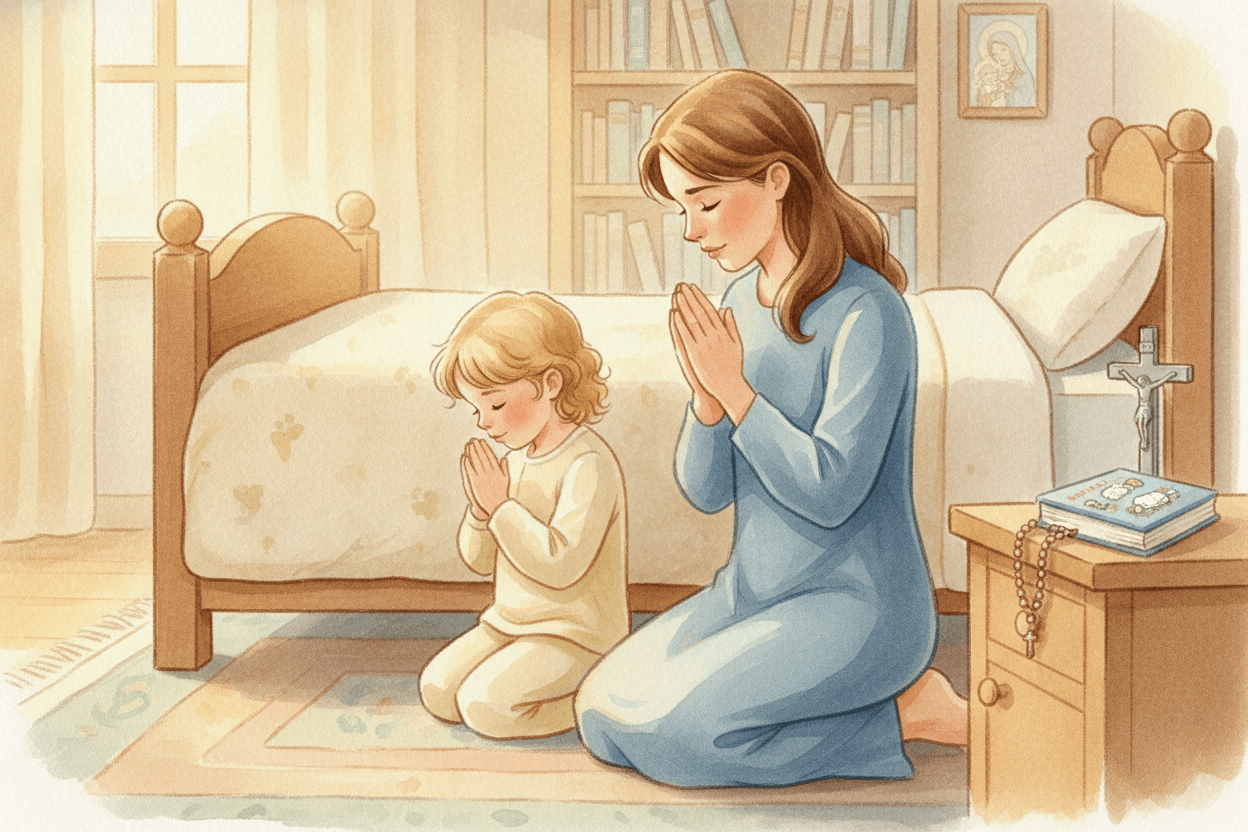
A child may hear that Daniel came out of the lions’ den unharmed and quietly draw a conclusion no adult intended: If I pray hard enough, nothing scary will happen to me. We need to correct that idea plainly and tenderly. Daniel’s rescue shows God’s faithfulness; it does not give us a formula for controlling every outcome. Faithful people can still feel afraid, face loss, get hurt, or need help. A child who is bullied, ill, or frightened has not failed God, and neither have the parents who pray beside that child.
Scripture tells us that Daniel was rescued: “My God sent his angel and closed the lions’ mouths so that they have not hurt me. For I have been found innocent before him; neither have I done you any harm, O king!” But Daniel 6 is not asking children to pretend that lions are harmless. It shows Daniel continuing to belong to God when obedience was costly. His trust was real before he knew what would happen in the den. That is the kind of courage we want children to understand: not certainty that life will be easy, but confidence that God does not abandon us.
Pope Francis puts it clearly: “Prayer is not a magic wand: it is a dialogue with the Lord.” Prayer includes asking God for protection and healing; Jesus himself teaches us to bring our needs to the Father. Yet prayer also makes room for listening, sorrow, gratitude, and perseverance when an answer does not come as we hoped. As the Catechism explains in its teaching on filial trust and persevering prayer, difficulties in prayer can reveal our need to keep turning toward God rather than treating him as someone who must meet our demands (CCC 2734–2741).
Here’s how I’d teach this at home or in a parish classroom: after reading Daniel’s story, ask, “What is one hard thing you want to bring to God?” Then ask, “What is one wise step we can take?” A child might pray before a difficult conversation, then tell a parent or teacher about unkind messages. They might pray when worried about a test, then study and ask for help. If pressure involves threats, bullying, abuse, self-harm, weapons, or any danger, prayer belongs alongside telling a trusted adult immediately. God’s care often reaches us through the help of parents, teachers, priests, counselors, and other safe adults. We pray because God is present, hears us, and gives grace for the next faithful step—even when the outcome is still unknown.
My God sent his angel and closed the lions’ mouths so that they have not hurt me. For I have been found innocent before him; neither have I done you any harm, O king!
How to Teach Respectful Courage Under Peer Pressure
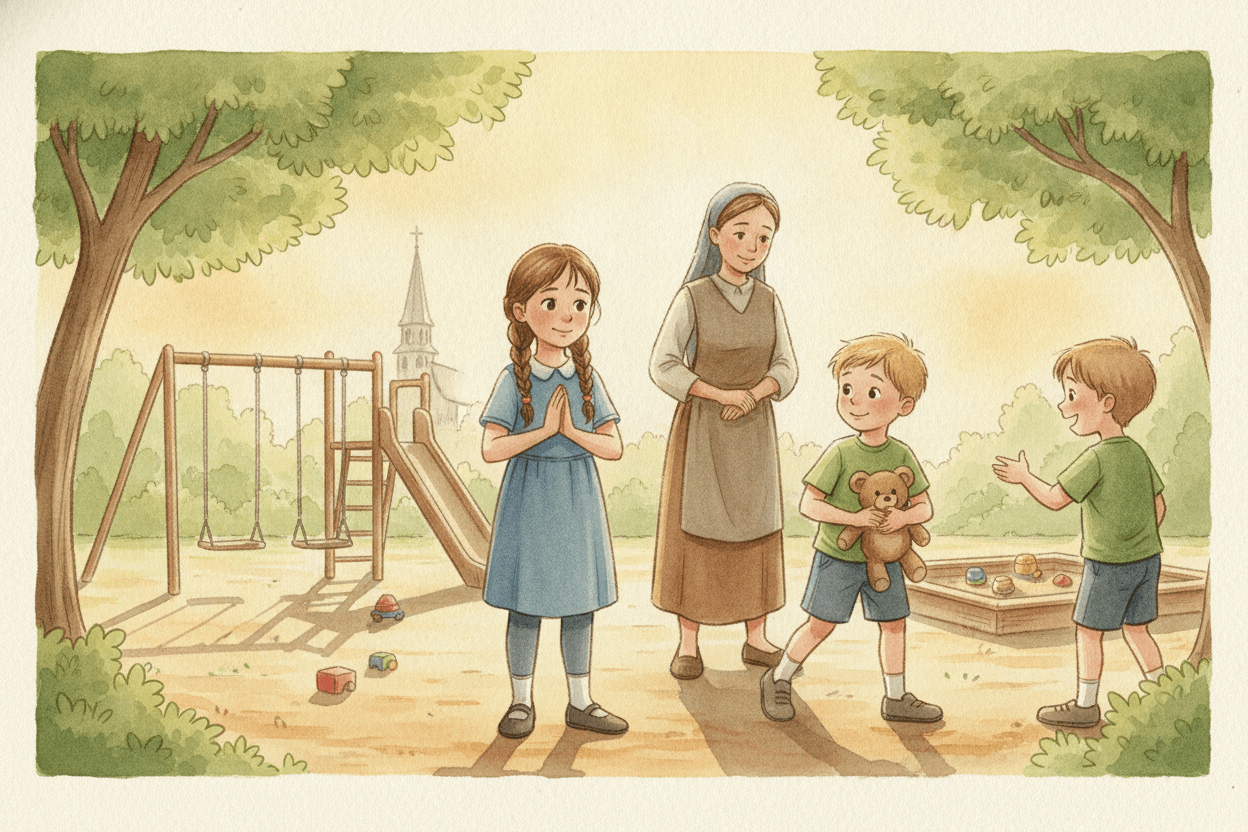
A child is laughing with friends when someone says, “If you are really Catholic, prove it,” and then suggests something unkind, dishonest, or unsafe. The most useful response is rarely a clever speech. Often it is a calm sentence, spoken clearly: “No, I do not want to do that.” Children need permission to use those words without apologizing for doing what is right.
Here’s how I’d teach this in a parish classroom: let children practice three short responses aloud before they need them. “I respect you, but I believe differently.” “I am going to do what is right.” “No, I do not want to do that.” A child may add, “I’m going to tell an adult,” or simply walk away. Role-play ordinary situations: being urged to copy homework, exclude a classmate, mock someone’s faith, or hide something from a parent. Rehearsal helps children recognize that courage can sound steady and respectful, not loud or combative.
Daniel gives us this pattern. He did not insult the king or reject his responsibilities in the royal court. Yet when the decree forbade prayer, he remained faithful to God. His accusers reported that “Three times a day he offers his prayer” (Daniel 6:13). Daniel’s courage was not showing off. It came from an already-established habit of prayer, and it allowed him to honor God without contempt for the people around him.
We should also be precise with children: respectful courage does not mean handling every hard problem alone. If pressure includes bullying, threats, abuse, self-harm, weapons, or any danger, the brave choice is to tell a trusted adult right away—a parent, teacher, school counselor, priest, or another safe adult. Asking for help is not weakness. It is good judgment. Parents can make this concrete at home by asking, “Who are three safe adults you could tell if something felt wrong?”
At the end of the day, try a brief family practice: name one situation that may require courage tomorrow, choose one wise action, and ask God for help. Daniel was rescued, and Scripture says he “was found to be unharmed because he trusted in his God” (Daniel 6:24). We can rejoice in that rescue while teaching the fuller truth: prayer is not a guarantee that every frightening event will end as we want. As the Catechism reminds us, prayer is living relationship with God (CCC 2558). God is present with children as they speak truth, seek help, and choose what is right.
This gave the king great joy. At his order Daniel was brought up from the den; he was found to be unharmed because he trusted in his God.
Courage Includes Getting Help From Safe Adults
A child comes home quiet after school, says that some classmates dared him to keep a secret, and then quickly changes the subject. That is a moment for patient attention, not a lecture about being tougher. Courage is not proved by handling frightening situations alone. When a child feels pressured, threatened, or unsafe, telling a safe adult is often the brave and wise next step.
Here is how I’d teach this: Daniel prayed faithfully, but Daniel was not asked to pretend that danger was harmless. His story shows trust in God; it does not instruct children to stay in a harmful situation to prove their faith. A child may pray, “God, help me,” and then tell a parent, teacher, school counselor, priest, coach, or another trusted safe adult. Prayer, good judgment, and accepting protection belong together. As the Catechism reminds us, fortitude gives strength to resist temptation and to persevere in difficulty (CCC 1808); sometimes that strength sounds like, “I need help.”
Be very specific with children about the situations that must not be kept secret: bullying, threats, abuse, pressure to hurt themselves or someone else, weapons, dangerous dares, or any behavior that makes them feel unsafe. They should leave the situation if they can do so safely and tell an adult right away. If the first adult does not listen or cannot help, they should tell another trusted adult. A secret about a surprise gift is different from a secret that causes fear, shame, injury, or danger. Children are intelligent enough to learn that distinction when adults state it plainly and repeat it calmly.
At home, try a short practice after evening prayer. Name one hard situation a child might face: being told to exclude someone, being dared to do something unsafe, or hearing a friend talk about self-harm. Ask, “What could you say? Where could you go? Which adult could help?” Possible words are simple: “No, this is not safe,” “I’m going to get a teacher,” or “I need to tell my mom or dad.” Then pray for courage and wisdom. God’s care is not measured by whether a child manages danger alone; often, his care reaches them through the steady protection of the adults he has placed around them.
Try a Four-Step Family Courage Practice This Week
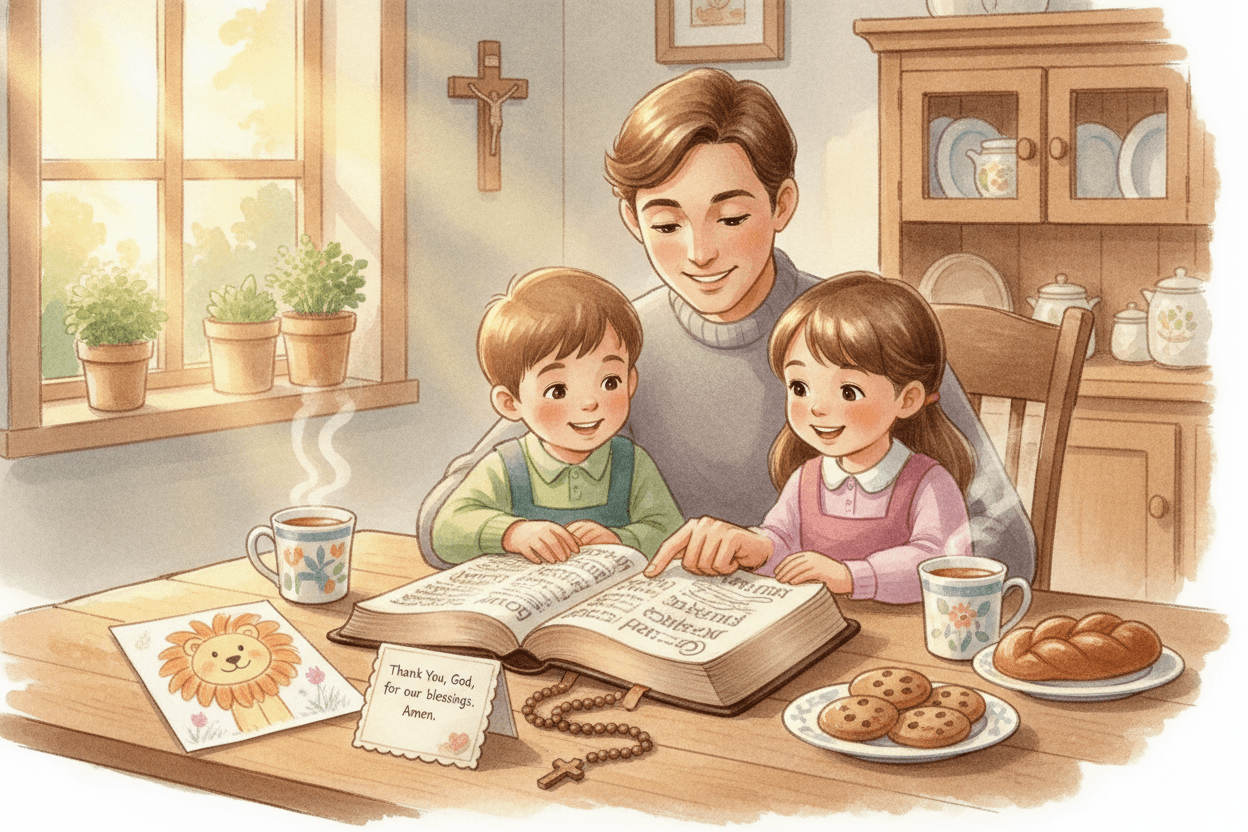
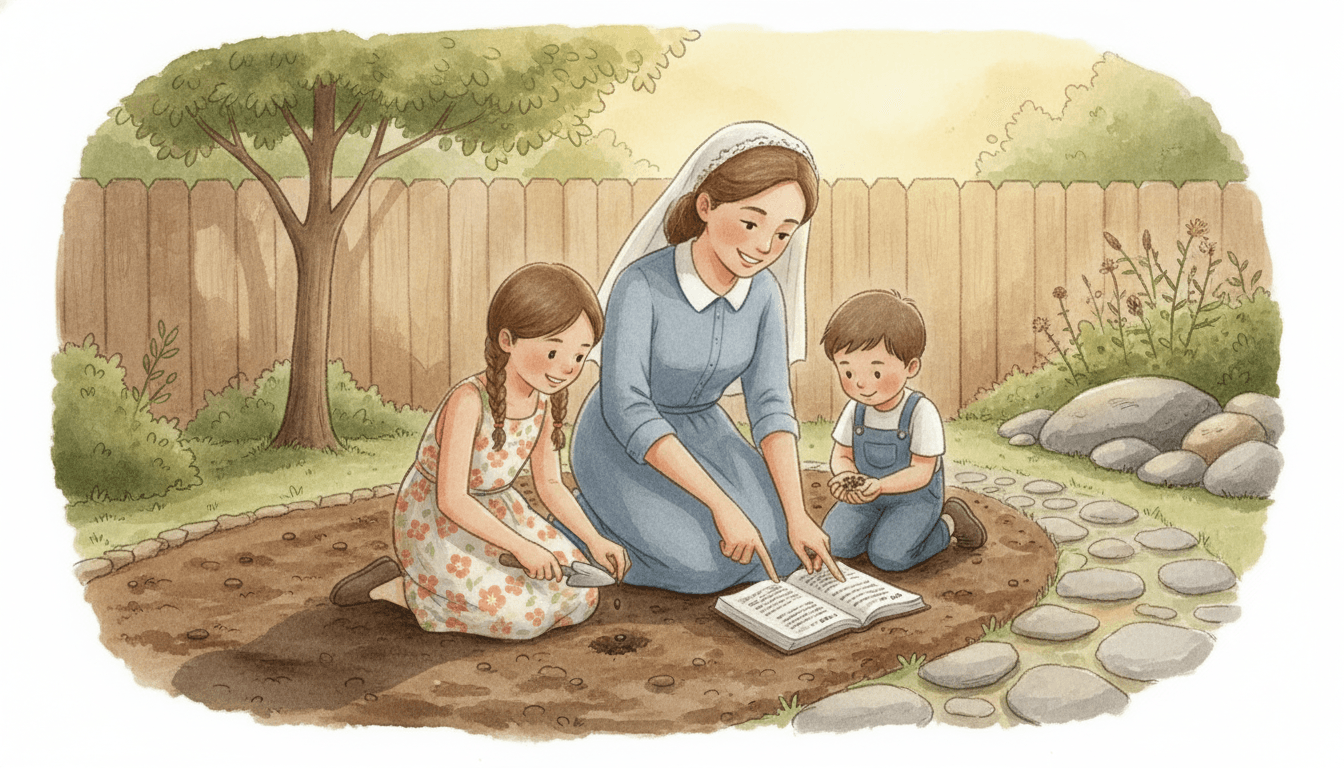
Before clearing the dinner dishes one evening this week, place an open Bible on the table and give your family ten unhurried minutes. Children learn courage best when it is practiced before the hard moment arrives—not only discussed after a difficult day. Daniel’s steady habit of prayer prepared him to remain faithful when the king’s decree made faithfulness costly.
Begin by reading a few verses from Daniel 6, perhaps Daniel 6:13 and Daniel 6:23–24. Ask one simple question: “What did Daniel do when he was afraid or under pressure?” Let children notice that he kept praying and that he did not answer wrongdoing with wrongdoing. Scripture invites us to see that Daniel’s courage was neither loud nor careless. He trusted God, and he also lived honestly before the king.
Then let each person name one situation that feels difficult right now. For a child, it may be a friend asking them to exclude someone, pressure to lie, teasing about prayer, or worry about speaking up at school. Help the child identify one wise action: “I can say, ‘I am not doing that,’” or “I can include the child who is being left out.” Next, name one safe adult to tell—a parent, teacher, school counselor, coach, priest, or another trusted adult. If a situation includes threats, bullying, abuse, self-harm, weapons, or any immediate danger, the wise action is to tell a safe adult right away. Courage does not mean handling danger alone.
Finish with a short prayer in your own words: “Jesus, give us courage to do what is right, wisdom to ask for help, and trust that you are with us.” The Catechism teaches that daily family prayer patiently forms children in the Church’s living memory (CCC 2685). This small practice is not a guarantee that every problem will disappear. Rather, it teaches children where to turn: toward God, toward truth, and toward the people God places around them for protection and help.
Return to this four-step practice throughout the week: read, name the difficulty, choose a wise action and safe adult, then pray. As children grow, their answers will become more thoughtful, and parents will hear concerns that might otherwise remain hidden. To keep the conversation going in a child-friendly way, read the related Daniel and the Lions’ Den comic together and ask which part of Daniel’s faithful courage they would like to practice.
This gave the king great joy. At his order Daniel was brought up from the den; he was found to be unharmed because he trusted in his God.
Frequently asked questions
How can I teach my child to be brave like Daniel?
Help your child see courage as doing the right thing even when friends disagree, not as never feeling afraid. Practice simple responses such as, “I don’t want to lie,” or, “Please don’t leave her out,” and encourage a small daily prayer habit that builds trust in God.
What can my child say when friends pressure them to do something wrong?
Give them short, calm phrases they can remember: “I am going to do what is right,” “I don’t want to do that,” or, “I respect you, but I believe differently.” Role-play these situations at home so the words feel easier to use at school or with friends.
Does Daniel in the lions’ den mean God will always keep my child from harm?
Daniel’s rescue shows that God is faithful, but it is not a promise that frightening things will never happen. Children can pray for protection and still need support, medical care, or help from adults; being scared or hurt does not mean they have failed God.
What should my child do if bullying or peer pressure feels unsafe?
Teach your child to move away and tell a trusted adult immediately if there are threats, bullying, abuse, self-harm, weapons, or other danger. A parent, teacher, parish leader, or another safe adult can help; asking for help is a wise and courageous choice.
How can family prayer help my child handle hard situations?
Regular prayer helps children learn to turn to God before a crisis, as Daniel did through his steady prayer life. At bedtime or before school, name one difficult situation, ask God for courage, and choose one practical next step your child can take.
Was Daniel being disrespectful when he kept praying after the king’s law?
No. Daniel remained faithful to God without insulting the king or neglecting his responsibilities. His example teaches children that they can disagree with pressure or unfair demands respectfully while still choosing what is right.
Sources: bible.usccb.org · bible.usccb.org · press.vatican.va · press.vatican.va · vatican.va · vatican.va · vatican.va · vatican.va
Scripture quotations in this article use the NABRE translation.