The Prodigal Son for Kids:Mercy, Repentance, and Home
Discover how the Prodigal Son helps children understand that repentance means turning back to God, who meets humble hearts with mercy, forgiveness, and joyful welcome rather than rejection.
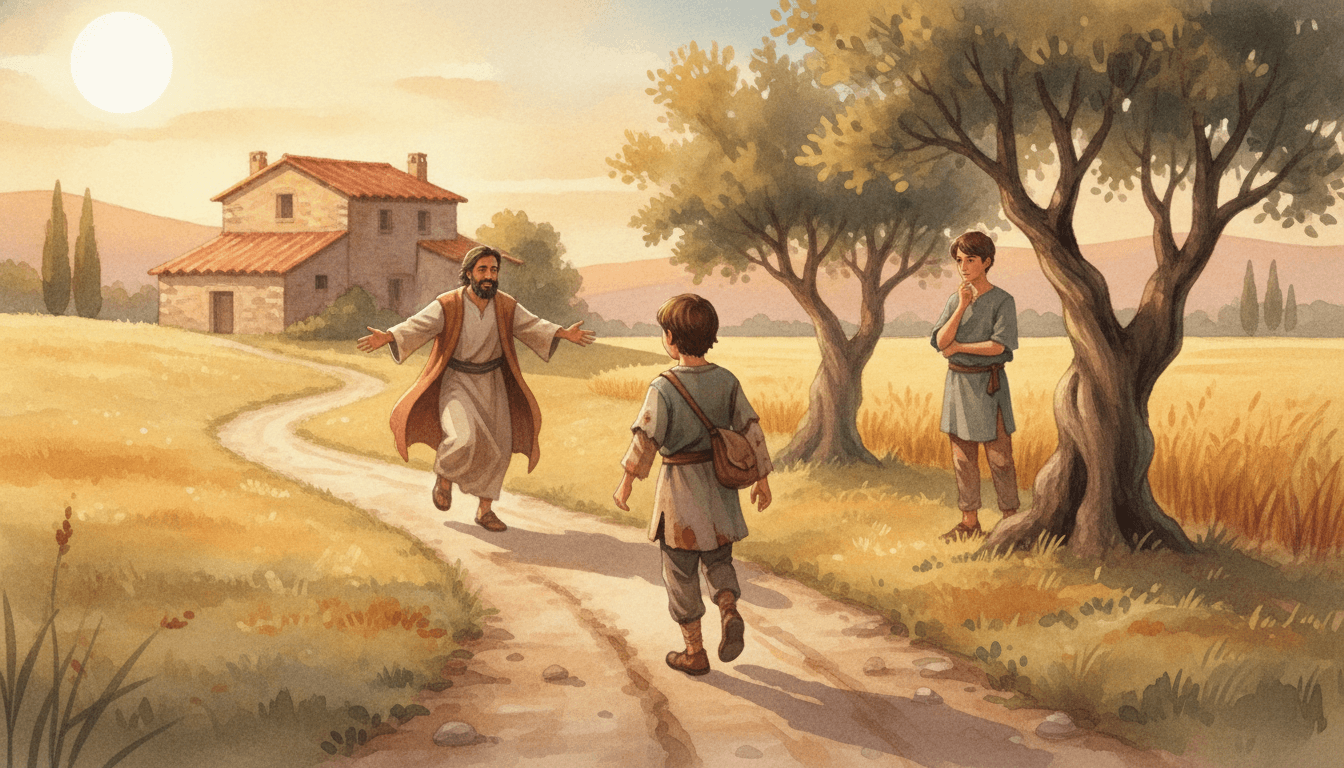
A child may ask after a broken rule, “Will you still love me?” Jesus answers that question with a father who sees his son coming from far away and runs to meet him. In Luke 15:11–32, Scripture invites children to see that returning from sin involves truth, repentance, mercy, and restored belonging.
Begin With the Question Every Child Understands: Can I Come Back?
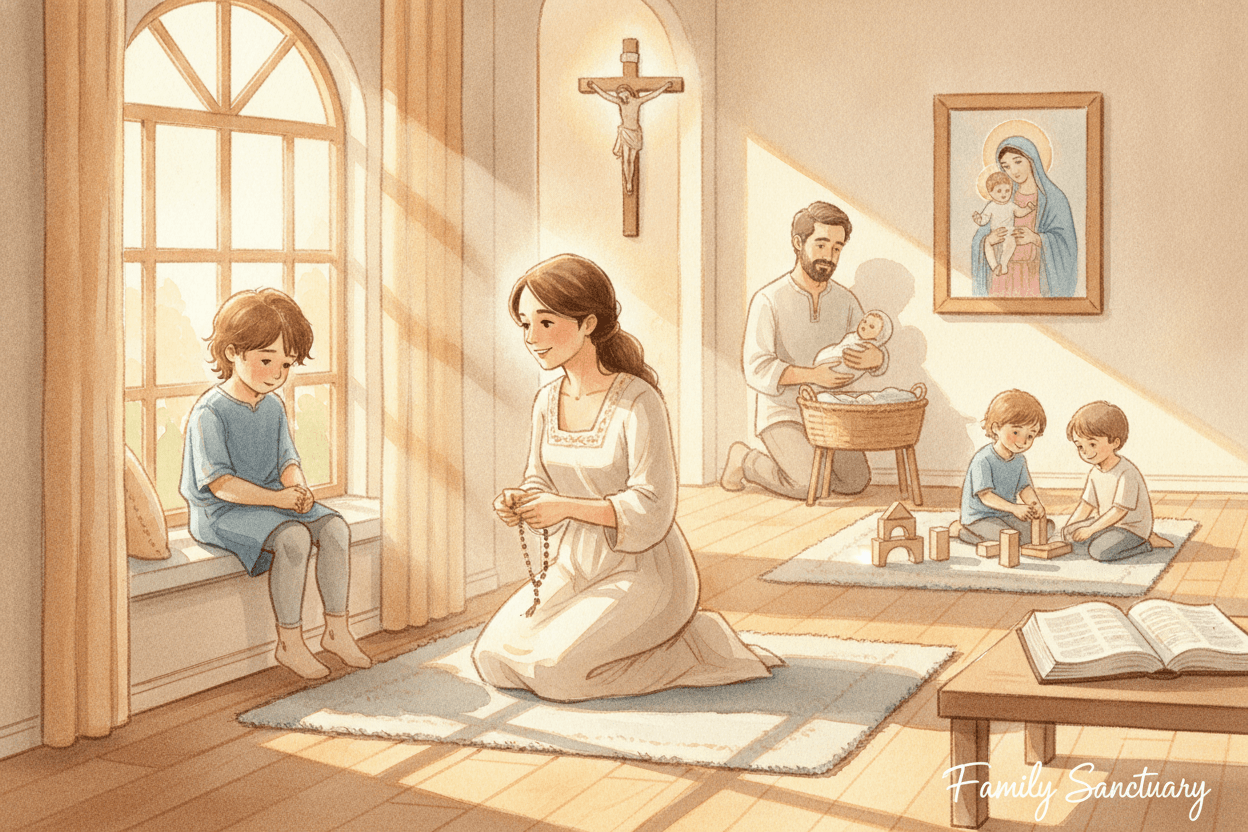
A child stands in the hallway after blurting something cruel to a sibling, or after admitting, in a small voice, that the broken lamp was not an accident. Often the first question is not, “What will my punishment be?” It is quieter: “Are you still mad at me?” Beneath it may be an even deeper fear: “Do I still belong here?” Jesus begins his parable of the father and two sons where children already live—in the real consequences of selfish choices and in the hope of being received again.
The younger son asks for his share of the inheritance and leaves his father’s home. He wastes what he has been given, and hunger and humiliation follow. We should not soften that part for children. His choices were harmful, and they brought real consequences. Yet consequences are not the same as rejection. When the son finally sees the truth, he does not merely feel miserable; he decides to turn around. Scripture gives us his words: “I shall get up and go to my father and I shall say to him, ‘Father, I have sinned against heaven and against you.’” Repentance includes recognizing the wrong, naming it honestly, and returning toward what is good.
Then comes the startling action of the father. Before the son can earn anything back, the father sees him, runs to him, embraces him, and kisses him. The father does not call the son’s sin harmless. He restores him to the household with a robe, ring, sandals, and a feast. As the Catechism reminds us, the son’s reflection, confession, and return show the pattern of conversion, but the center of the parable is “the merciful father” (CCC 1439). For a child, this is a necessary distinction: saying sorry does not erase every effect of what happened, but it opens the door to restored relationship.
The older brother matters, too. He has stayed home, worked faithfully, and feels angry when the celebration begins. Many children understand his objection immediately: “That is not fair.” Jesus does not mock him for feeling hurt. Instead, the father goes out to him as well and calls him “My son.” He invites the older brother to rejoice because his brother has returned. The parable is not a contest over which child deserves more love. It is a revelation of a father whose love seeks both the child who ran away and the child whose resentment keeps him outside the celebration.
Here’s how I’d teach this at home or in a parish classroom: ask, “What is one way a person can come back after doing wrong?” Children may answer: tell the truth, apologize without excuses, help repair what was damaged, accept a reasonable consequence, or choose kindness after an argument. Then ask, “How can we welcome someone who is trying to do better?” These questions respect a child’s moral sense without reducing the story to a rule lesson. Scripture invites us to see that coming home begins with honesty, and that mercy makes room for a true return.
So he got up and went back to his father. While he was still a long way off, his father caught sight of him, and was filled with compassion. He ran to his son, embraced him and kissed him.
Tell the Story Clearly Before Explaining the Lesson
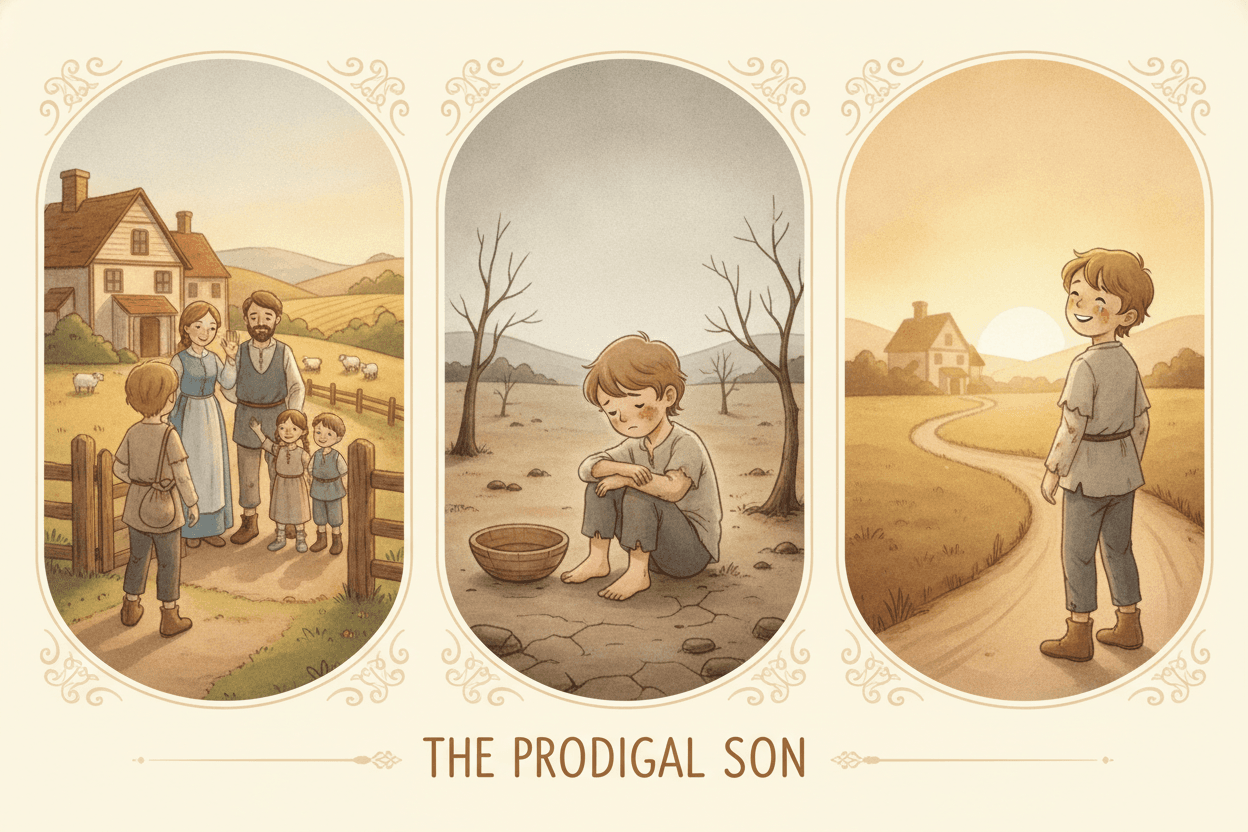
When I tell this parable to children, I begin with the younger son standing far from home, hungry enough to wish he could eat the food given to pigs. That detail catches their attention, but the story starts earlier. He had asked his father for his share of the family property, then left home and spent it carelessly. He wanted independence without the responsibilities of belonging to a family. His choice was serious: he treated his father’s gifts as more important than his father’s love.
Children deserve the truth without being shamed by it. The younger son’s choices brought real consequences. His money was gone, a famine came, and he was reduced to feeding pigs—an especially humiliating situation for a Jewish listener. He was not rejected because he was poor or because he had made a mistake. Rather, he suffered because he had squandered what was entrusted to him and separated himself from home. Here’s how I’d teach this: a wrong choice can hurt us and others, yet it never makes us beyond God’s mercy.
Then comes the turning point. The son does not merely feel miserable; he recognizes his sin, speaks honestly about it, and chooses to return. Scripture invites us to notice each step: “Coming to his senses he thought, ‘How many of my father’s hired workers have more than enough food to eat, but here am I, dying from hunger. I shall get up and go to my father and I shall say to him, “Father, I have sinned against heaven and against you.”’” The Catechism points to this reflection, confession, and return as the pattern of conversion (CCC 1439). For a child, repentance can be explained plainly: I name what I did, I am sorry, and I turn back toward what is good.
The father is central to the story. Before his son can earn anything back, the father sees him, runs to him, embraces him, and restores him as a son. The father does not call the waste harmless; he answers repentance with mercy and restored belonging. But do not leave out the older brother, who is angry at the celebration. Children often understand his complaint: “That does not seem fair.” His father listens and invites him to rejoice because his brother has returned. This gives families room to speak about jealousy, fairness, and the hard work of welcoming someone who is trying to make things right.
Coming to his senses he thought, ‘How many of my father’s hired workers have more than enough food to eat, but here am I, dying from hunger. I shall get up and go to my father and I shall say to him, “Father, I have sinned against heaven and against you.”’
Teach Repentance: Knowing the Wrong and Turning Around
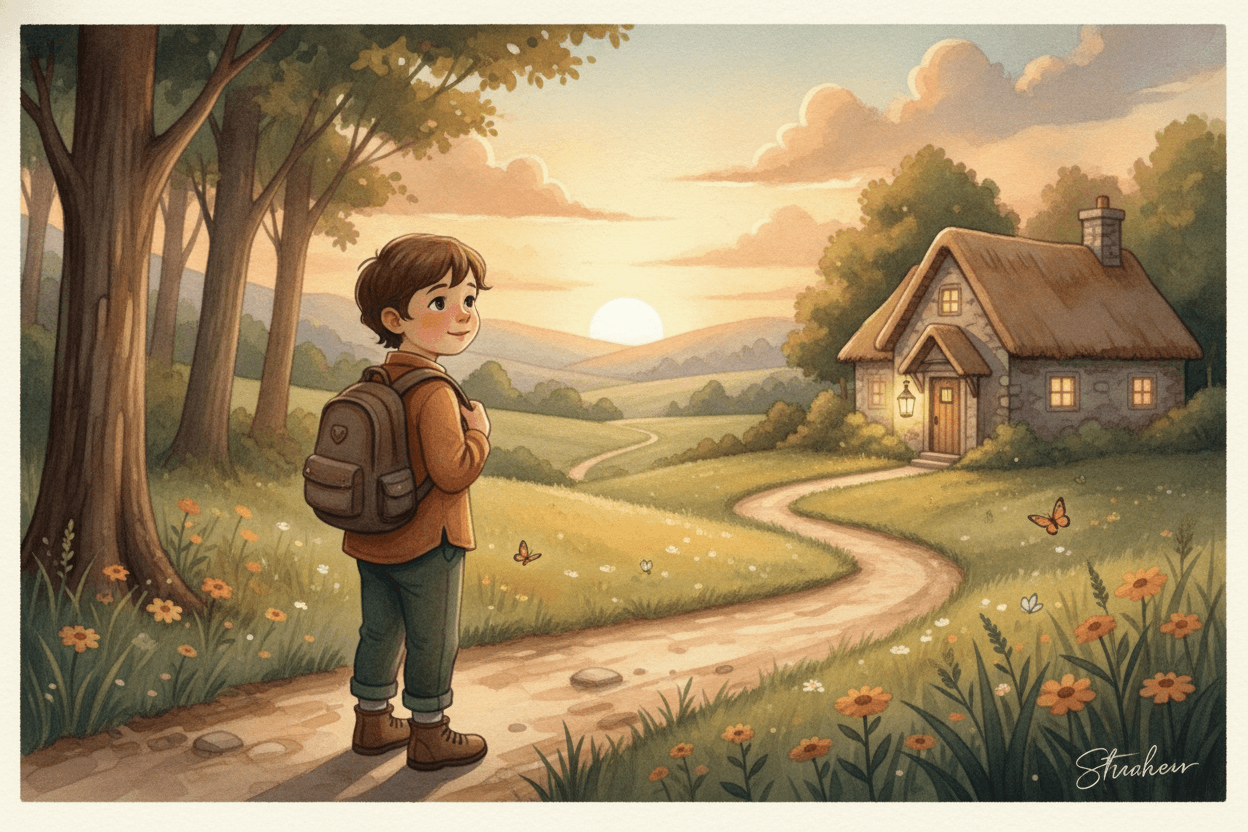
A child may slump at the kitchen table after breaking a sibling’s toy and say, “I feel bad.” That feeling matters, but it is not yet the whole of repentance. Children quickly understand the difference: someone can be sad because a consequence is unpleasant, or sad because he sees that he has hurt another person and wants to make things right. In the parable, the younger son does not merely dislike being hungry. Far from his father’s house, he begins to see clearly what his choices have done.
Here’s how I’d teach this: trace the son’s movement in three plain actions. First, he recognizes the truth. He has lost his money, his security, and the life he had with his father. Next, he names his sin without blaming anyone else: “I have sinned against heaven and against you.” Then he acts: he gets up and goes home. This is repentance—seeing the wrong honestly, being sorry for it, and turning back toward the good. Scripture does not portray him as trapped in shame or as excusing himself. He chooses to return.
The Catechism points directly to this scene: “The process of conversion and repentance was described by Jesus in the parable of the prodigal son, the center of which is the merciful father” (CCC 1439). Parents can keep the focus where Jesus keeps it. Repentance is not a child trying to earn love after failing. The son remains his father’s son even after his destructive choices. His hunger and humiliation are real consequences, but they do not become rejection. His return opens the way for restored communion with his father.
Try a brief conversation after reading the story: “What did the son finally understand? What did he say? What did he do next?” For a younger child, connect this to a familiar moment: telling the truth after hiding a mess, apologizing for cruel words, or helping repair what was damaged. For an older child, ask whether an apology means consequences disappear. It does not; repair may still be needed. Yet a child also needs to hear that honest repentance makes room for forgiveness and a renewed relationship. That is the hope at the heart of the father’s welcome.
Coming to his senses he thought, ‘How many of my father’s hired workers have more than enough food to eat, but here am I, dying from hunger. I shall get up and go to my father and I shall say to him, “Father, I have sinned against heaven and against you.”’
Mercy Does Not Erase Consequences—It Restores Belonging
A child may ask the question adults sometimes avoid: “If the son spent all the money, why does he still get a party?” It is a fair question. The younger son’s hunger was real. His inheritance was gone. He had reached the humiliating point of wishing he could eat the food given to pigs. His father’s mercy did not rewind those events or make his selfish choices harmless.
This is an important distinction to teach plainly: consequences and rejection are not the same thing. A child who breaks a sibling’s toy may need to help repair it, give up a privilege, or use saved money to replace it. Those are consequences. But the child does not become less loved, less wanted, or less a member of the family. The younger son had lost what he squandered, yet he had not ceased to be his father’s son.
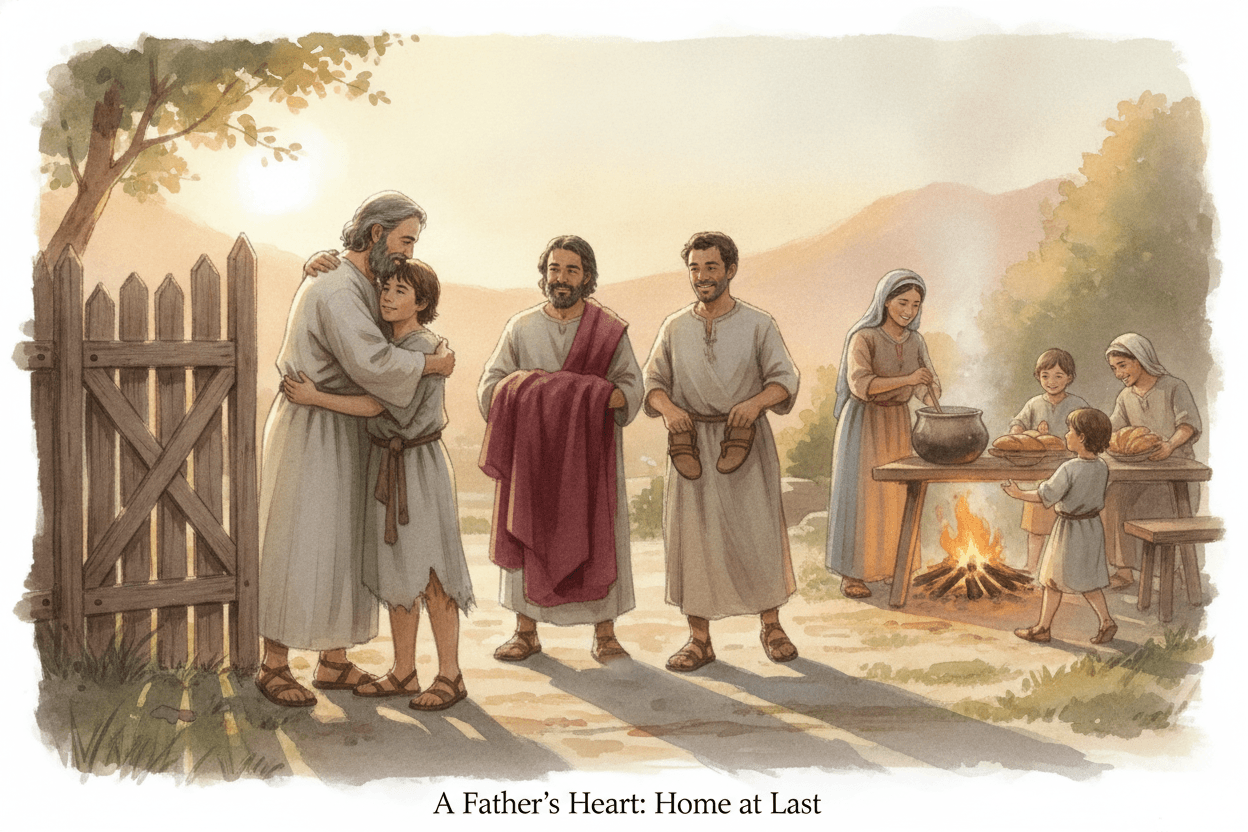
Notice what the father does when the son returns. He runs toward him, embraces him, kisses him, orders that he be clothed with the finest robe, and calls for a feast. These actions restore the son publicly to the household. The robe, ring, and sandals say, in effect, “You belong here.” The father does not deny the damage; he refuses to let the damage have the final word. Scripture invites us to see mercy not as overlooking evil, but as welcoming the repentant person back into communion.
As the Catechism reminds us, Jesus places the merciful father at the center of the process of conversion and repentance (CCC 1439). Pope John Paul II explained that forgiveness is not merely taking back the one who left, but welcoming him with the joy of restored communion. That is a helpful phrase for children: restored communion means the relationship is made whole again. In a family, an apology can be followed by repair, forgiveness, and a real return to shared life—not a cold reminder of past failure at every meal.
Here’s how I’d teach this at home or in class: offer a simple situation, such as a child lying about finishing homework or hurting a friend with unkind words. Ask, “What might need to be repaired? What would forgiveness sound like? How could the family show that the child still belongs?” Then name one small act of return: tell the truth, apologize without excuses, repair what was damaged, accept forgiveness, or welcome a sibling who is trying to do better. Children can understand both truths at once: choices matter, and no repentant child is beyond the Father’s open arms.
So he got up and went back to his father. While he was still a long way off, his father caught sight of him, and was filled with compassion. He ran to his son, embraced him and kissed him.
Do Not Skip the Older Brother: Fairness, Jealousy, and Mercy
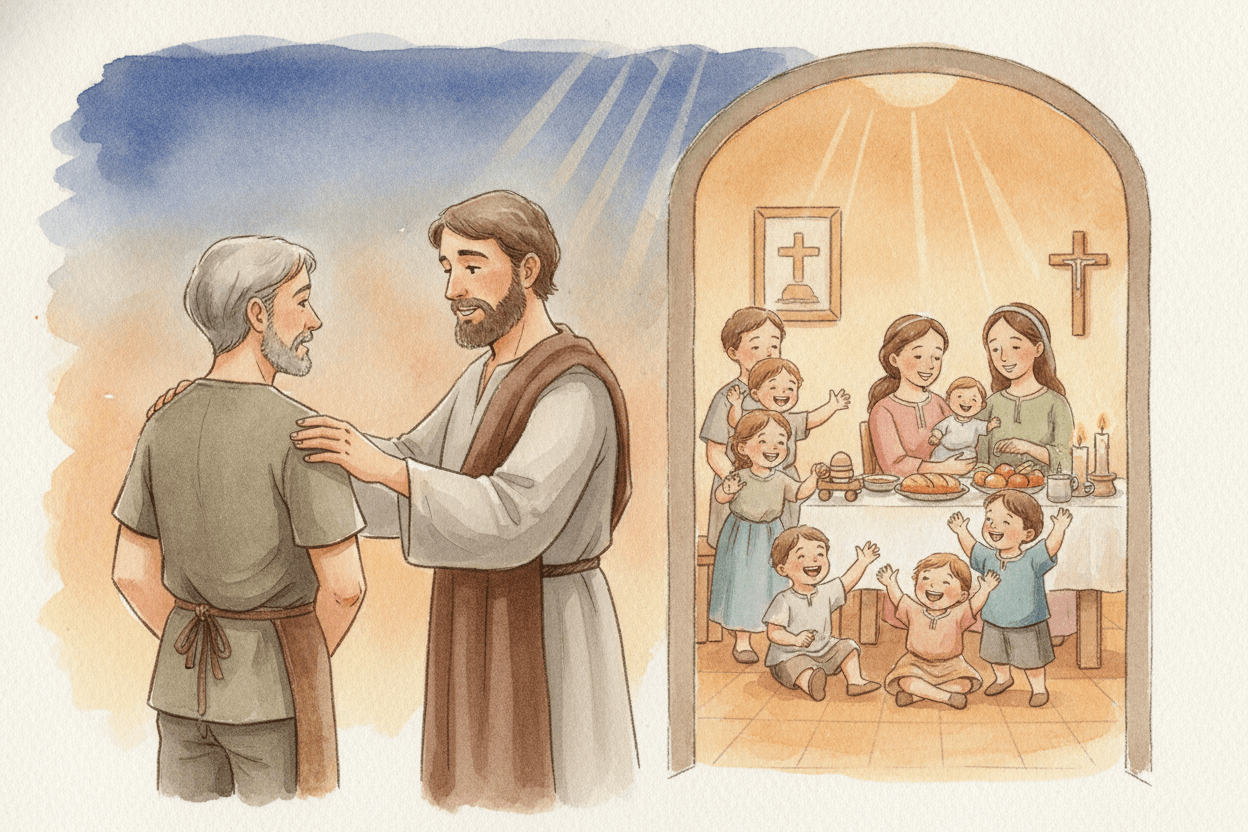
“That is not fair!” is often the first honest response when children hear that the father throws a feast for the younger son. A child who has tried to obey, shared with a difficult sibling, or watched someone else receive praise after causing trouble may recognize the older brother immediately. Do not hurry past him. His anger gives parents a way to speak truthfully about jealousy, hurt, and the fear that love is being given away to someone else.
Start by letting children name why the older brother is upset. He has stayed, worked, and apparently tried to be faithful. The feast can look as though the younger brother’s reckless choices have been rewarded. For ages six and seven, ask, “How do you think the older brother felt when he heard the music?” For ages eight and nine, ask, “What is the difference between wanting fairness and wanting your brother to stay excluded?” These questions respect a child’s sense of justice rather than treating it as selfishness.
Then attend closely to the father’s answer. He does not tell the older son that his faithfulness was unimportant. He calls him “my son,” assures him that he is always with him, and says that everything he has is his. Mercy toward the younger son is not favoritism toward a child who made harmful choices. The father is rejoicing because a relationship that had been broken is alive again. There is enough love in the father’s house for the faithful son and the returning son.
Here’s how I’d teach this at home: use a simple family example. If one child breaks a toy, apologizes, and helps repair or replace it, the parent may forgive that child and welcome him warmly. The sibling may still feel upset, especially if the repair took time or the toy cannot be restored. Both things can be true: the child who caused the harm needs to make amends, and the child who was hurt needs to be heard. Forgiveness does not require pretending that the hurt never happened. It does ask us not to make another person’s worst choice their permanent identity.
As the Catechism reminds us, this parable describes conversion with the merciful father at its center (CCC 1439). The older brother is invited into that mercy too. Invite children to name one situation in which they have felt overlooked when someone else was forgiven. Then help them practice a small response: tell the truth about the hurt, pray for a willing heart, and choose one welcoming action when the other person is trying to do better. The father’s invitation is not merely to tolerate his brother’s return, but to share the joy of having him home.
He said to him, ‘My son, you are here with me always; everything I have is yours. But now we must celebrate and rejoice, because your brother was dead and has come to life again; he was lost and has been found.’
Ask Questions That Fit Your Child’s Age
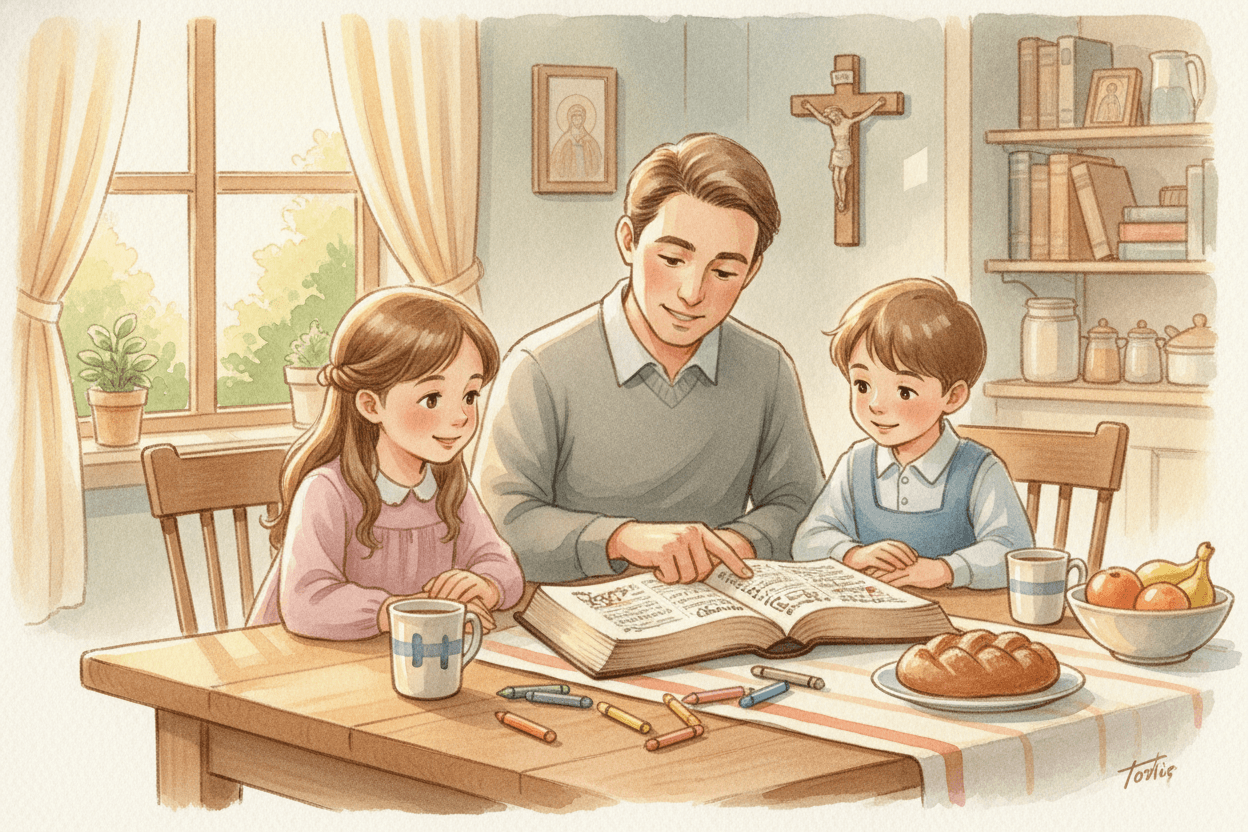
A seven-year-old may answer quickly that the younger son was “bad,” then fall silent when asked what it felt like to be hungry, alone, and ashamed. That pause is worth keeping. Children do not need a moral quiz with one approved answer; they need time to notice the people in the story and to speak honestly about what they see. In a parish classroom, I begin with simple, concrete questions and allow a few seconds of quiet before inviting responses.
For ages 6–7, ask: “What choice did the younger son make?” “How do you think he felt when he was far from home?” “What did he do when he realized he had done wrong?” “How did the father show love when his son came back?” If a child says, “The father gave him a party,” gently help them look more closely: the father saw him, ran to him, embraced him, and kissed him. These details teach that mercy is personal. The father welcomes his son, not merely his improved behavior.
For ages 8–9, the questions can carry more weight: “Was the younger son forgiven? Did that mean the hungry days and wasted money never happened?” “Why do you think the older brother was angry?” “Have you ever felt that someone else got kindness they did not deserve?” Children this age can understand that forgiveness and escaping consequences are not the same thing. The son’s choices harmed him, and his father still received him as a son. As the Catechism reminds us, the son’s reflection, confession, and return reveal the movement of conversion (CCC 1439).
Then bring the story near without forcing children to disclose personal failures. Ask, “What could reconciliation look like after hurting a sibling or friend?” They may name telling the truth, saying sorry without blaming someone else, replacing something broken, giving a person space, or choosing not to keep punishing someone who has sincerely apologized. If a child offers a complicated situation, thank them for the thought rather than rushing to solve it. The goal is to form consciences that recognize wrong, seek repair, and trust mercy.
Scripture invites us to linger over the father’s response rather than treating it as a prize the son earned. Read the verse aloud, then ask, “What surprises you about the father?” A child may notice that he ran before the son finished his speech. That observation opens a faithful conversation about God: He calls us to turn from sin, and He is never reluctant to receive a repentant heart. End with one small act of return each child can choose this week: tell the truth, apologize plainly, repair a hurt, accept forgiveness, or welcome someone who is trying again.
So he got up and went back to his father. While he was still a long way off, his father caught sight of him, and was filled with compassion. He ran to his son, embraced him and kissed him.
Try One Small Act of Return This Week
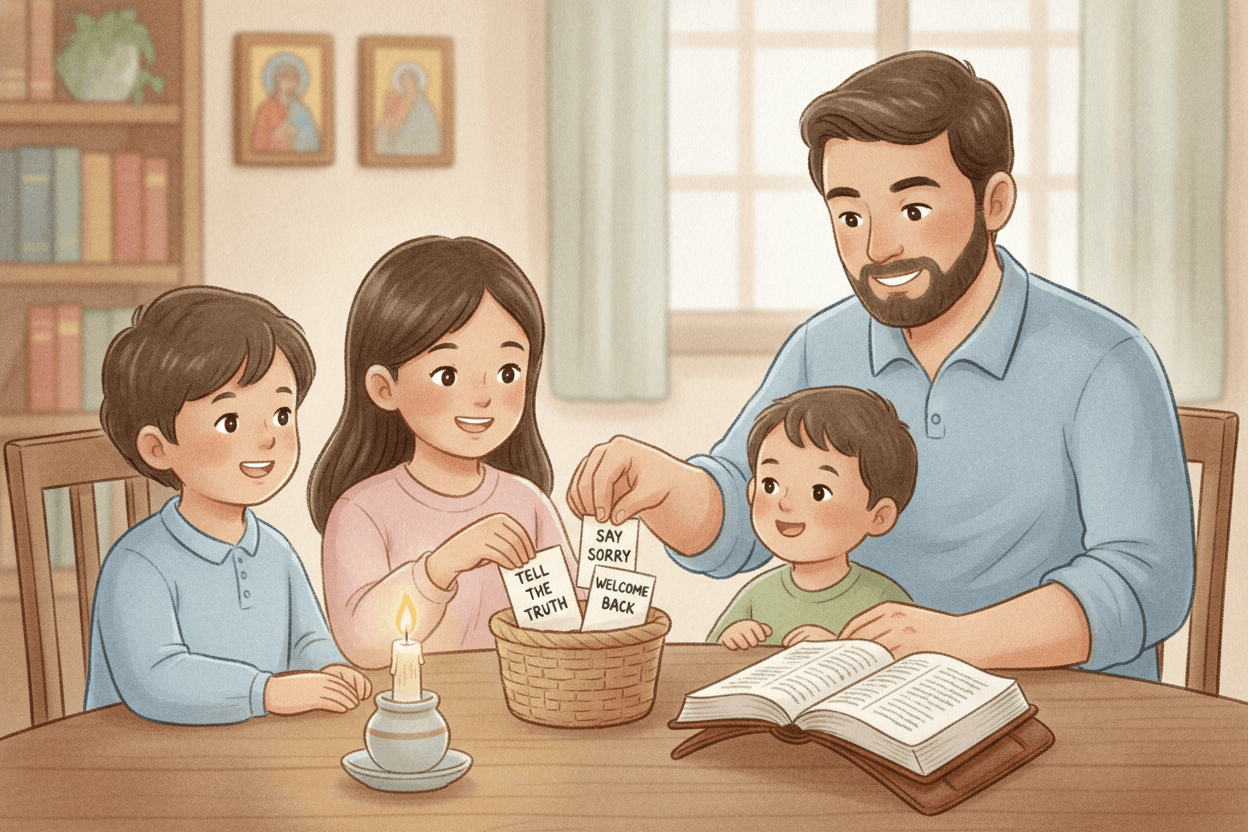
At the end of dinner, when the dishes are still on the table, choose one small act that helps someone turn back. Keep it concrete enough for a child to do before bedtime or by the next day: tell the truth about what happened, apologize without adding excuses, pick up what was thrown or broken, return something taken without permission, or speak kindly to a sibling who is trying again. Children learn repentance more honestly when it has hands and feet. Feeling sorry matters, but so does taking the next right step.
Here’s how I’d teach this in a family: each person names one sentence beginning, “This week I can come back by…” A younger child might say, “I can tell Mom when I spill the juice.” An older child might say, “I can apologize to my brother without saying, ‘But he started it.’” Parents can participate too: “I can ask forgiveness when I speak impatiently.” This is not a family exercise in public shame. It is practice in truthfulness, repair, and the confidence that a wrong choice need not be the end of the story.
Then read Luke 15:11–32 together from the Bible. If a visual aid helps your children follow the sequence, use the BibleHeroes Prodigal Son comic alongside the passage, returning to the Gospel text for the words of Jesus. Pause when the father sees his son from far away. The son has made a real return, and the father receives him as a son, not as a servant. As the Catechism reminds us, Jesus places the merciful father at the center of this account of conversion and repentance (CCC 1439).
The father’s welcome gives families a pattern worth practicing. When a child tells the truth, let the truth be met with calm attention. When an apology is offered, receive it without making the child earn back love. When repair is needed, require it fairly. And when someone is making a sincere effort to do better, do not let yesterday’s failure become the only name you use for them. Before the week ends, ask each family member: “What is one way I can help make our home a place where truth and mercy meet?”
But his father ordered his servants, ‘Quickly, bring the finest robe and put it on him. Put a ring on his finger and sandals on his feet. Take the fattened calf and slaughter it. Then let us celebrate with a feast, because this son of mine was dead, and has come to life again; he was lost, and has been found.’ Then the celebration began.
Frequently asked questions
How can I explain the Prodigal Son to my child?
Tell the story as a child who made selfish choices, suffered the results, and decided to go home and tell the truth. Emphasize that the father welcomed him before he could earn his place back. The point is not that wrong choices do not matter, but that God’s mercy helps us return after sin.
What does repentance mean in the story of the Prodigal Son?
Repentance means more than feeling bad or disliking a consequence. The younger son recognizes his sin, admits it honestly, and chooses to return to his father. For children, this can look like naming what they did, apologizing without excuses, and taking steps to repair the harm.
Does God forgive children even when there are consequences?
Yes. The father’s welcome shows that a child’s sin does not remove them from God’s love or from belonging to him. Forgiveness does not always erase the effects of a wrong choice, so a child may still need to accept a reasonable consequence or help make something right.
Why was the older brother angry in the Prodigal Son?
The older brother felt that the celebration was unfair because he had stayed and worked faithfully while his brother wasted everything. His feelings are taken seriously, but the father also reminds him that he is loved and included. Families can use this part of the story to discuss jealousy and how to welcome someone who is sincerely trying to change.
How can I teach my child to apologize like the Prodigal Son?
Help your child move beyond simply saying, “I feel bad.” Encourage them to say what they did, acknowledge who was hurt, ask forgiveness, and help repair the damage when possible. This reflects the son’s honest return to his father and teaches that mercy and responsibility belong together.
Sources: vatican.va · vatican.va · vatican.va · vatican.va · vatican.va · usccb.org · vatican.va
Scripture quotations in this article use the NABRE translation.