Elijah and Elisha:Teaching Kids About the Prophet’s Mantle
Explore how Elijah’s mantle helps tweens understand spiritual inheritance, faithful leadership, and God’s continuing work. Through Elisha’s story, families can discuss how faith is received, practiced

What does a cloak have to do with a child’s faith? In 2 Kings 2, Elijah’s falling mantle becomes a visible sign that God’s work will continue through Elisha—and a wise starting point for helping tweens see the faith entrusted to them at home.
The Mantle Is More Than a Cloak
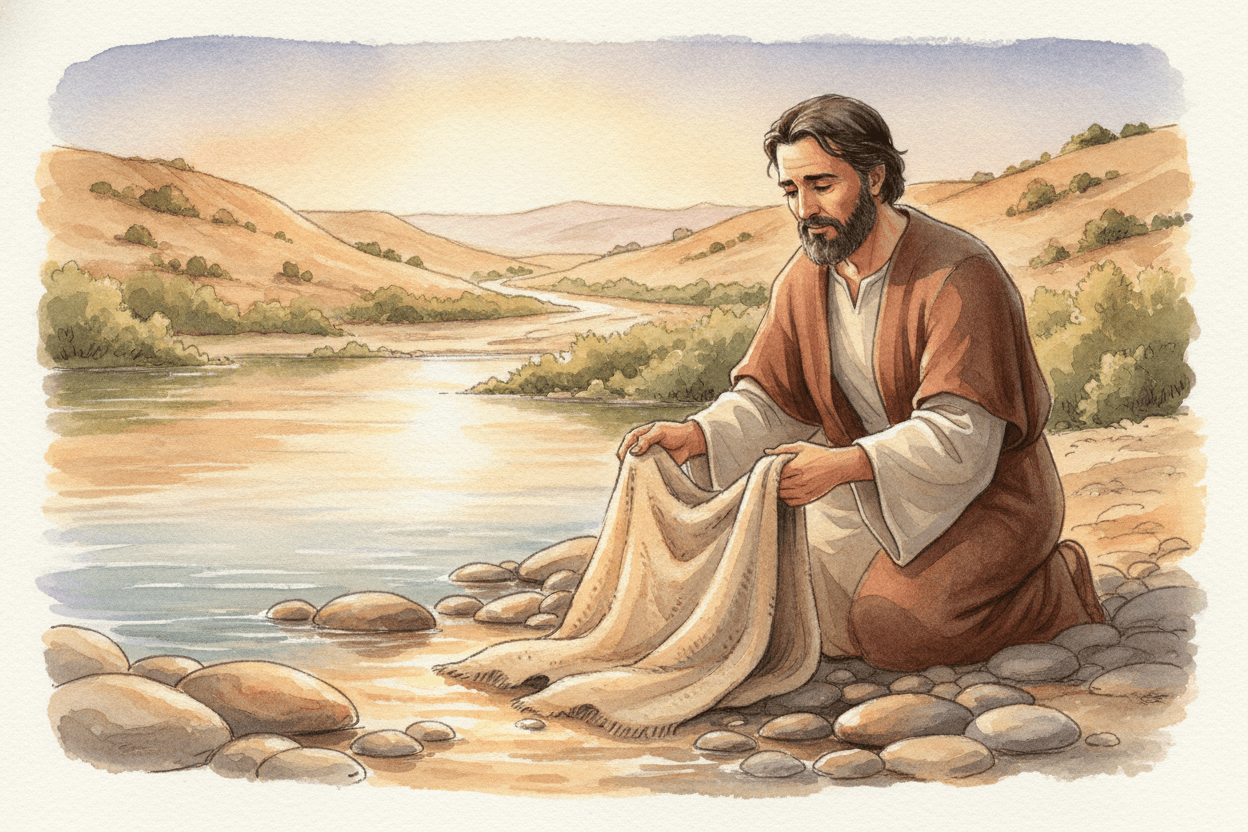
Picture Elisha standing on the riverbank after the whirlwind has passed. Elijah is gone, taken up in the flaming chariot scene that children rightly find unforgettable. But one ordinary, touchable thing remains: Elijah’s mantle, his outer cloak. Elisha picks it up, carries it to the Jordan, and strikes the water with it. The river divides just as it had for Elijah. For a child of 10 or 13, the point is not hard to see: God’s work has not ended because Elijah is no longer there.
The mantle is not a magic cloak, and Elisha is not becoming a copy of Elijah. It is a visible sign that God has entrusted Elisha with prophetic service. Before Elijah is taken, Elisha asks for a “double portion” of his spirit. That language recalls an inheritance: the firstborn received a special portion, not merely as a privilege, but with responsibility for the family. Elisha is asking to receive the spiritual strength needed to carry forward the mission God has given. The divided Jordan confirms that the LORD, not the cloth, is the source of this power.
Here is how I’d teach this: place a scarf, jacket, or blanket on a chair and ask, “Could this object make someone holy or brave by itself?” Of course not. Then ask, “What could it stand for?” Children usually answer well: a role, a promise, a duty, or belonging to someone. Explain that Elijah’s mantle points to a real calling. Elisha had learned from Elijah, served alongside him, and now had to listen to God and speak God’s word himself. He receives a mission, not a costume.
This gives parents a serious and hopeful way to speak about handing on faith. At Baptism, parents promise to raise their child in the faith; through prayer at home, Sunday Mass, forgiveness, service, and honest conversation, they keep fulfilling that promise. As the Catechism reminds us, education in faith begins in the earliest years and family catechesis “precedes, accompanies, and enriches” other instruction (CCC 2226). No parent can give a child a secondhand faith that requires nothing of him. Yet parents can give what Elijah gave Elisha: formation, example, and an invitation to answer God personally.
Ask your child, “What mission might God be preparing you for now?” The answer need not be dramatic. Perhaps it is defending a classmate, praying faithfully when no one notices, serving at Mass, or learning to apologize without excuses. The mantle in this story tells us that God calls ordinary people into real responsibility. Elijah’s ministry ends; Elisha’s begins; and the LORD remains faithful through both.
Then Elisha picked up the mantle which had fallen from Elijah, and went back and stood at the bank of the Jordan. He took the mantle which had fallen from Elijah, and struck the water, saying, “Where is the LORD, the God of Elijah?” When Elisha struck the water it divided, and he crossed over.
What Elisha Means by a “Double Portion”
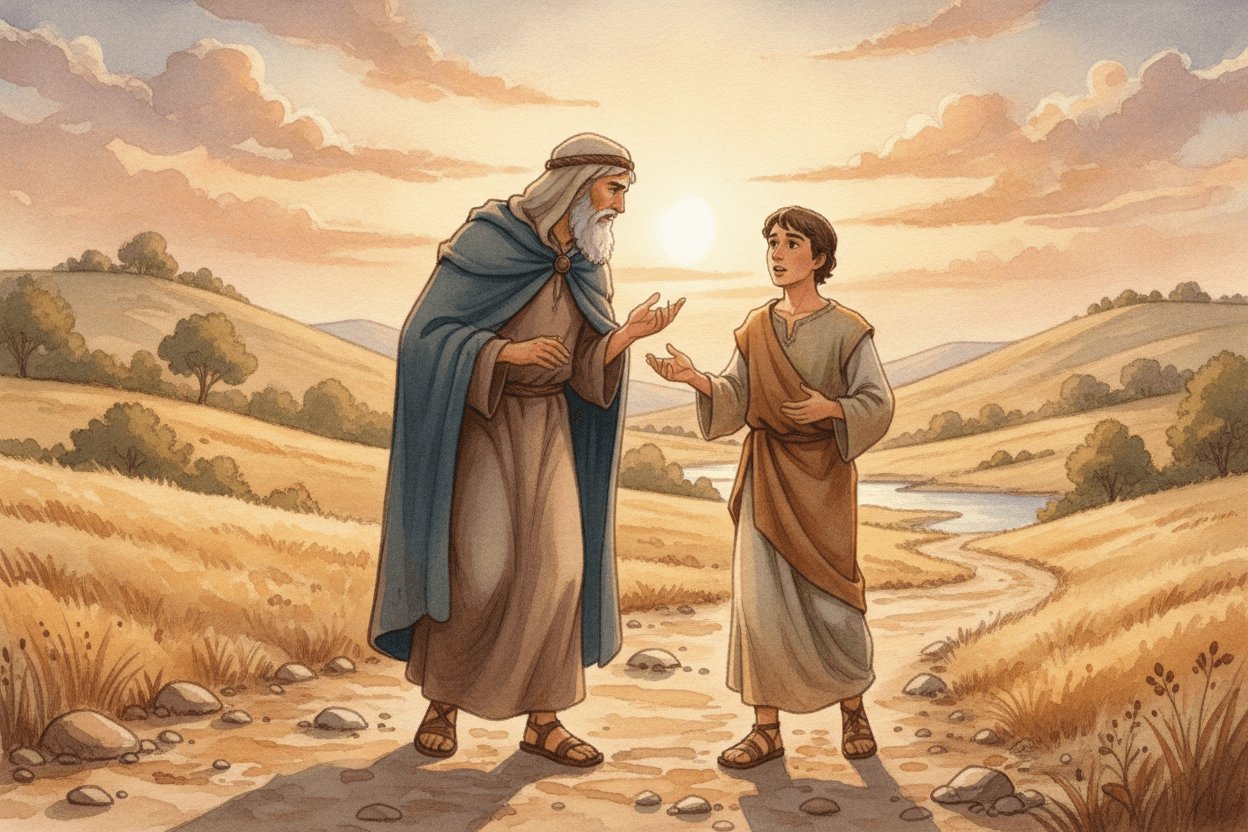
A child may hear Elisha ask for a “double portion” and picture a superhero upgrade: twice the miracles, twice the power, twice the importance. That is not what he is asking for. Elisha has walked beside Elijah, served him, and watched the cost of speaking God’s word in a resistant age. At the Jordan, as Elijah is about to be taken from him, Elisha asks for the spiritual inheritance needed to continue the work God has given Elijah.
In the Old Testament, the firstborn son ordinarily received a double share of the family inheritance. It was not a prize for being better than everyone else. It came with responsibility: preserving the family’s life, serving its members, and carrying forward what had been entrusted to him. Elisha’s words use that family language. He is asking to stand as Elijah’s principal heir in the prophetic mission—not to outshine Elijah, but to bear the duty that will remain after Elijah is gone.
Scripture records the request plainly: “May I receive a double portion of your spirit.” Elijah answers, “You have asked something that is not easy” (2 Kings 2:9-10, NABRE). That answer matters. The Spirit is God’s gift, not something Elijah can simply hand over as if it belonged to him. Elisha must receive what he asks from the Lord, and he must then use it in the Lord’s service. When he later takes up Elijah’s mantle and crosses the Jordan, the sign confirms that God’s work has not ended with Elijah.
Here’s how I’d teach this to children ages ten to thirteen: ask, “What responsibilities come with being trusted?” They may name caring for a younger sibling, keeping a promise, helping on a team, or doing a job without being reminded. Then explain that God gives gifts for a purpose. A child’s ability to listen well, speak kindly, understand Scripture, organize others, or notice someone left out is not merely a personal advantage. It can become a way to serve the Church and the people around them.
This also gives parents a helpful way to speak about the faith passed on at home. At Baptism, parents accept a real responsibility to raise their child in the faith; later, the child gradually begins to answer that call personally. Family prayer, Sunday Mass, honest conversations about hard questions, and acts of charity are part of that inheritance. As the Catechism reminds us, “Education in the faith by the parents should begin in the child’s earliest years” (CCC 2226). We are not asking children to copy our faith as though it were a family possession. We are preparing them to receive God’s gifts, recognize their own mission, and serve faithfully in their own time.
“May I receive a double portion of your spirit.” He replied, “You have asked something that is not easy.”
God’s Work Continues When His Servants Change
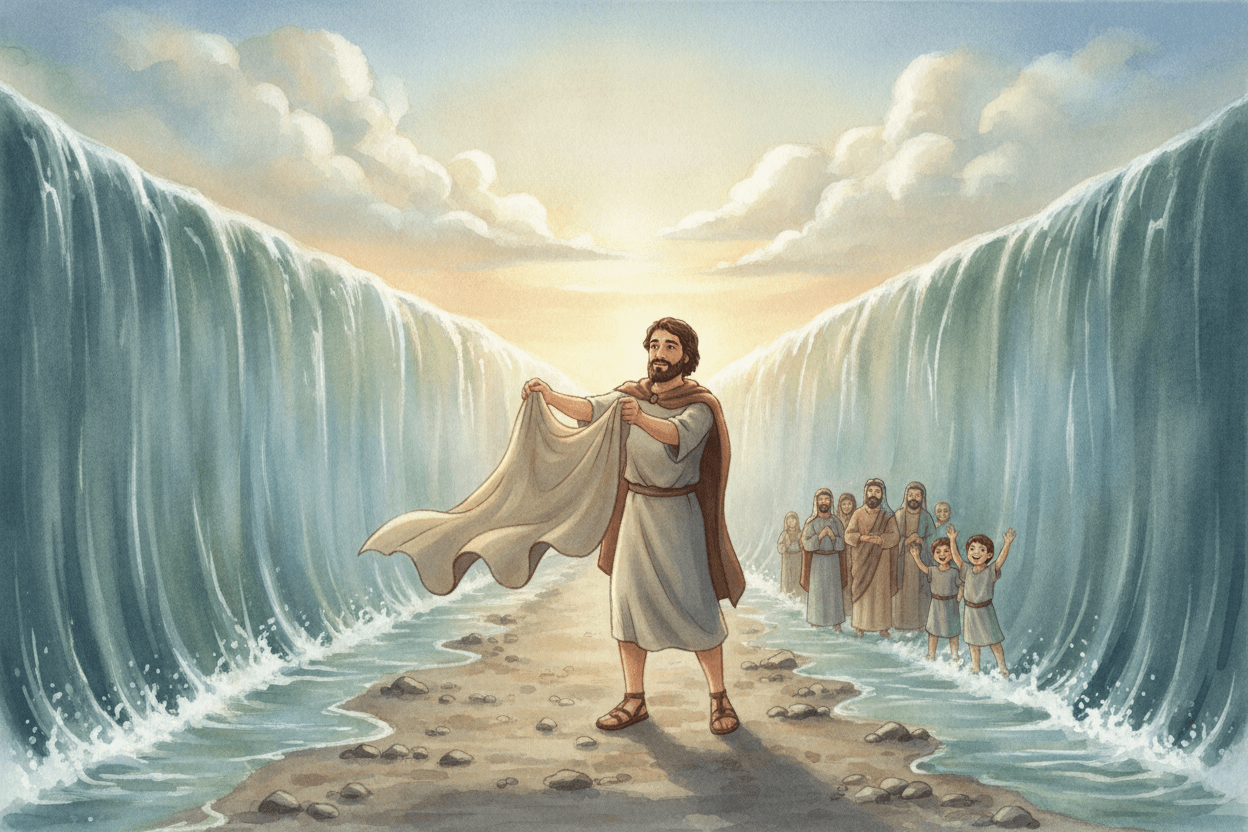
A child may hear about the flaming chariot and fixate on the spectacle: Elijah rises in a whirlwind, and Elisha is left standing beside the Jordan with a cloak in his hands. But the next action is the point to linger over. Elisha does not treat the mantle as a lucky object or a souvenir from his hero. He takes it to the water, calls upon “the LORD, the God of Elijah,” and strikes the river. The Jordan divides, and Elisha crosses. The God who worked through Elijah has not departed with Elijah.
Here is the distinction I would make plainly with children: it is good to admire holy people, faithful parents, priests, saints, and mentors. We should thank God for them. Yet our trust belongs to God alone. Elijah was the Lord’s servant; Elisha was the Lord’s servant; and the Lord remained faithful when one servant’s earthly work ended and another’s began. The mantle visibly marks Elisha’s new responsibility, but God—not the cloth—gives the prophet his authority and strength.
This is also why Elisha’s earlier service matters. Later, when kings seek a prophet, a servant identifies him as “Elisha, son of Shaphat, who poured water on the hands of Elijah” (2 Kings 3:11, NABRE). Before Elisha stood at the Jordan as a recognized prophet, he had served faithfully. Older children especially can grasp this: God often prepares us for larger responsibilities through ordinary duties done well—helping at home, listening during Mass, learning to pray, showing up for religious education, and serving without needing attention.
Here’s how I’d teach this at home or in a parish classroom. Ask children to name someone they admire for faith. Then ask two questions: “What gifts has God given that person?” and “How can we ask God to help us serve in our own way?” This keeps the conversation from becoming hero worship. A child may not receive another person’s exact role, personality, or talents. Still, every baptized Christian is called to receive God’s grace and take up a real share in the Church’s mission.
Parents need not carry the fear that everything depends on them. Their witness matters greatly, and CCC 2226 teaches that education in faith begins in the earliest years through a Christian life lived in the family. Yet parents are servants, not saviors. Children can be grateful for the adults who taught them the faith while learning to say, with Elisha, “Where is the LORD, the God of Elijah?” The answer is not confined to the past: the Lord is present, calling and equipping His people still.
Then Elisha picked up the mantle which had fallen from Elijah, and went back and stood at the bank of the Jordan. He took the mantle which had fallen from Elijah, and struck the water, saying, “Where is the LORD, the God of Elijah?” When Elisha struck the water it divided, and he crossed over.
Your Family Hands On Faith Every Day

The handoff often happens in an ordinary moment: a child hears Dad pause before a meal and say grace, or sees Mom return from Confession quieter and more patient than she was before. No one has placed a prophet’s cloak on the child’s shoulders. Yet something real is being given: the conviction that God belongs in the middle of daily life, including its failures and repairs.
Parents need not cast themselves as Elijah, and children are not asked to become copies of their parents. God gives each baptized person a distinct vocation. Still, parents are the first teachers of faith because children learn what faith looks like before they can explain its doctrines. CCC 2226 says that education in the faith begins in the earliest years and that family catechesis “precedes, accompanies, and enriches” other instruction. Parish classes, Catholic school, and youth ministry serve an important purpose; they cannot replace a home where prayer, Sunday Mass, forgiveness, and trust in God are practiced.
Deuteronomy gives parents a wonderfully realistic pattern: speak of God’s commandments at home and away, when lying down and when getting up. This is not a demand for a formal lesson at every turn. It is the habit of naming grace in the day’s actual events: “Let’s ask St. Joseph to help with your test”; “We need to apologize because Christians tell the truth”; “That Gospel at Mass was difficult—what do you think Jesus meant?” Such conversations respect the intelligence of older children. They teach them that Scripture addresses homework, friendships, disappointments, and decisions, not merely church time.
Here’s how I’d teach this at home or in a parish classroom: invite children to identify three ways faith has been handed to them already. They might name a baptismal candle kept in a drawer, a grandparent’s rosary, a family custom of attending Mass, or the experience of seeing a parent begin again after sin. Then ask a more demanding question: “What part of this inheritance will you make your own?” The goal is not passive imitation. Like Elisha, a child must personally answer God’s call and ask for the grace to carry responsibility faithfully.
A family’s most convincing lesson is not flawless religious performance. It is repentance joined to hope. When parents admit, “I spoke harshly; please forgive me,” and then seek the Lord’s mercy, children see that Catholic faith has room for truth and restoration. Scripture invites us to keep handing on what we have received: not a family image to protect, but the living faith of the Church. In time, children will carry that gift into friendships, parish life, and homes of their own.
These words that I command you today shall be in your heart. Take to heart these words which I command you today. Keep repeating them to your children. Recite them when you are at home and when you are away, when you lie down and when you get up.
Help Tweens See Their Own Call, Not Just Yours
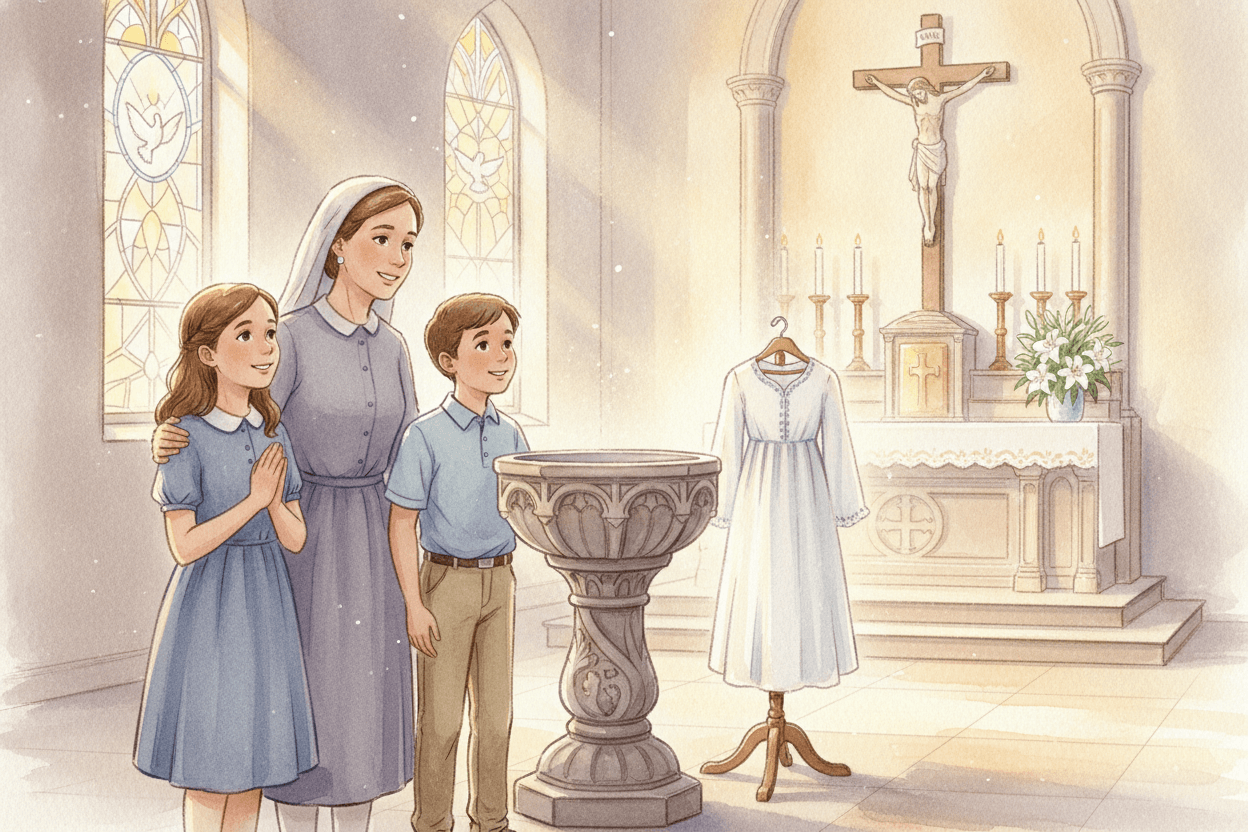
A parent may be sorting laundry when a tween holds up a white baptismal garment from a keepsake box and asks, “Was this really mine?” It is a small opening for a large truth: at Baptism, your child was not simply welcomed into your family’s religious custom. He or she was clothed with Christ, claimed by God, and given a real place in the Church’s mission. Elijah’s mantle helps children picture faith being handed on, but it must not suggest that a child is merely wearing a parent’s identity.
Here’s how I’d teach this: Elijah’s mantle was a visible sign connected to a particular prophetic mission; it was not a magical object that made Elisha faithful without his response. Elisha followed Elijah, asked boldly for a share in his spirit, received the mantle, and then acted in trust in the Lord. Likewise, parents give children the treasure of Catholic faith—prayer, Scripture, sacramental life, moral teaching, and a Christian example. Yet every child must eventually say his or her own yes to God’s grace. Faith can be received as an inheritance, but it cannot remain secondhand.
The Church gives us visible signs that make this easy to discuss without confusing the analogy. The white garment at Baptism points to new life in Christ. The sacred chrism used in Baptism and Confirmation marks a person as belonging to Christ and sharing in his mission. At Mass, the priest’s stole and chasuble show that he serves in a distinct ordained ministry. These signs do not mean that every baptized person has the same vocation. Rather, each baptized person is called to love God and neighbor in a particular life: perhaps through marriage, priesthood, consecrated life, single life, service, work, friendship, and the daily duties already entrusted to him or her.
St. Paul names both inheritance and personal faith when he writes to Timothy, “I recall your sincere faith that first lived in your grandmother Lois and in your mother Eunice and that I am confident lives also in you.” Lois and Eunice did not replace Timothy’s response; their faith gave him a living beginning. This is a helpful pattern for families. Tell your tween, “We will pray with you, bring you to Mass, and teach you what the Church believes. We also want to help you listen for what God is asking of you.” That language respects a young person’s intelligence and freedom while making clear that parents have a serious duty to hand on the faith.
Try asking one focused question after Sunday Mass or before bed: “Where do you think God may be asking you to serve this week?” A tween might name patience with a sibling, honesty in schoolwork, courage with a lonely classmate, or attention during prayer. Receive the answer seriously. Then connect it to the sacraments: Baptism is not only something that happened long ago, and Confirmation is not a graduation from religious education. God continues to give grace for a child’s own mission. As the Catechism reminds us, family catechesis begins early and accompanies the child’s growth in faith (CCC 2226). Parents place the faith before their children; God calls each child by name.
I recall your sincere faith that first lived in your grandmother Lois and in your mother Eunice and that I am confident lives also in you.
Try a Mantle Conversation This Week
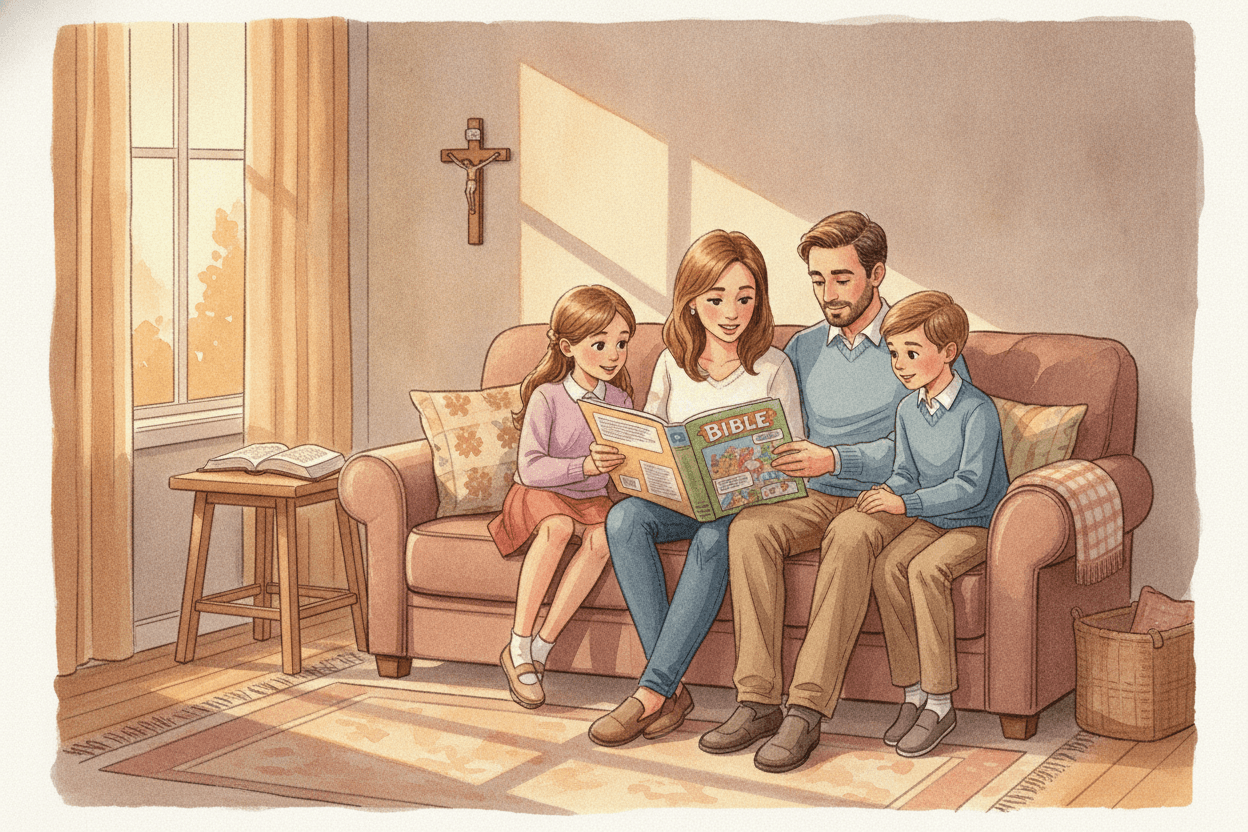
At the end of a lesson on Elijah and Elisha, I sometimes place a scarf or jacket over the back of a chair and ask the children, “If this were Elijah’s mantle, what would it tell Elisha to do?” After the first answers—pray more, be brave, help people—we slow down. The mantle is not a prize for being Elijah’s favorite student. It marks a real responsibility: Elisha is to serve the Lord faithfully after his teacher is gone.
Try a similarly simple conversation at home this week. Read 2 Kings 2:9-14 aloud from the NABRE, taking turns if your children are comfortable reading. Then ask three direct questions: What does Elisha receive? What does he ask for? What responsibility does he accept when he picks up Elijah’s mantle and stands at the Jordan? Let tweens notice the sequence for themselves. Elisha asks boldly, receives a sign of God’s call, and must act in trust. The story does not suggest that Elijah’s holiness can be copied like a costume; Elisha must answer God in his own life.
Next, name one practice of faith you are intentionally handing on in your family. Be concrete: Sunday Mass even when the schedule is crowded, a brief night prayer, asking forgiveness after an argument, blessing a child before school, or serving a neighbor. As the Catechism teaches, family catechesis “precedes, accompanies, and enriches other forms of instruction in the faith” (CCC 2226). Children need more than an impression that faith matters. They need to see what faith looks like at 7:30 on a Tuesday morning and at the dinner table after a hard day.
Then give every child, including the quiet one who may need a moment, the chance to name one gift he or she wants God to strengthen: courage, patience, honesty, compassion, prayerfulness, or the willingness to defend someone being left out. Parents can answer too. This keeps the conversation from becoming a speech about what children ought to do. You are all asking God to form you for the responsibilities he gives. Psalm 78 presents this as the ordinary work of God’s people: telling the next generation what the Lord has done so that they may place their trust in him.
If a child needs a visual entry point, read the related Chariots of Fire comic together after the Scripture passage. Pause at the scene of the mantle and ask, “What might this picture help us remember about serving God after someone teaches us?” End without extending the discussion too long: make the Sign of the Cross and pray, “Lord, give our family courage to receive your gifts and serve you faithfully. Amen.” Here’s how I’d teach this in a parish classroom as well: one clear passage, a few honest questions, and enough quiet for God’s word to stay with them.
We do not keep them from our children; we recount them to the next generation, the praiseworthy deeds of the LORD and his strength, the wonders that he performed. He set up statutes for Jacob and established a law in Israel, which he commanded our ancestors to teach their children. That the next generation might come to know, children yet to be born. In turn they were to recount them to their children, that they too might put their trust in God, and not forget the works of God, but keep his commandments.
Frequently asked questions
What does Elijah's mantle mean in 2 Kings 2?
Elijah's mantle is a visible sign that Elisha has been entrusted with continuing God's prophetic work. It is not a magic cloak or a costume that makes Elisha holy; the power comes from the Lord, who remains faithful after Elijah is taken up.
What does Elisha mean when he asks for a double portion of Elijah's spirit?
Elisha is not asking for twice as much power or importance as Elijah. He uses the Old Testament language of a firstborn inheritance, asking God for the spiritual strength and responsibility needed to carry on the prophetic mission.
How can I explain Elijah's chariot of fire story to my tween?
Start with the dramatic scene, but focus on what happens afterward: Elisha picks up the mantle, calls on the Lord, and crosses the divided Jordan. Explain that God was showing Elisha—and the other prophets—that His work would continue through a new servant.
How can I teach my child that the mantle was not magical?
Use an ordinary scarf, jacket, or blanket and ask whether the object can make someone brave or holy by itself. Then discuss what it can represent, such as a promise, a role, or a responsibility, and connect that idea to Elisha's real calling from God.
How does Elijah passing on his mantle relate to parents handing on the faith?
Parents cannot give children a secondhand faith, but they can form them through prayer, Sunday Mass, forgiveness, service, and honest conversations. At Baptism, parents promise to raise their child in the faith, while each child gradually learns to answer God's call personally.
What responsibilities can my child take on as part of their faith?
A child's mission may be simple but real: including someone who is left out, defending a classmate, serving at Mass, praying faithfully, or apologizing sincerely. Help your child notice that God-given abilities, such as listening well or encouraging others, are gifts meant for service.
Sources: bible.usccb.org · bible.usccb.org · vatican.va · vatican.va · pewresearch.org · research.lifeway.com · pewresearch.org · aleteia.org · christianpost.com · ifstudies.org
Scripture quotations in this article use the NABRE translation.