Family Prayer When Young Kids Cannot Sit Still
When children wiggle, wander, or interrupt family prayer, the goal is not perfect silence but a faithful return. Discover simple ways to keep praying through couch acrobatics, missing socks, and small
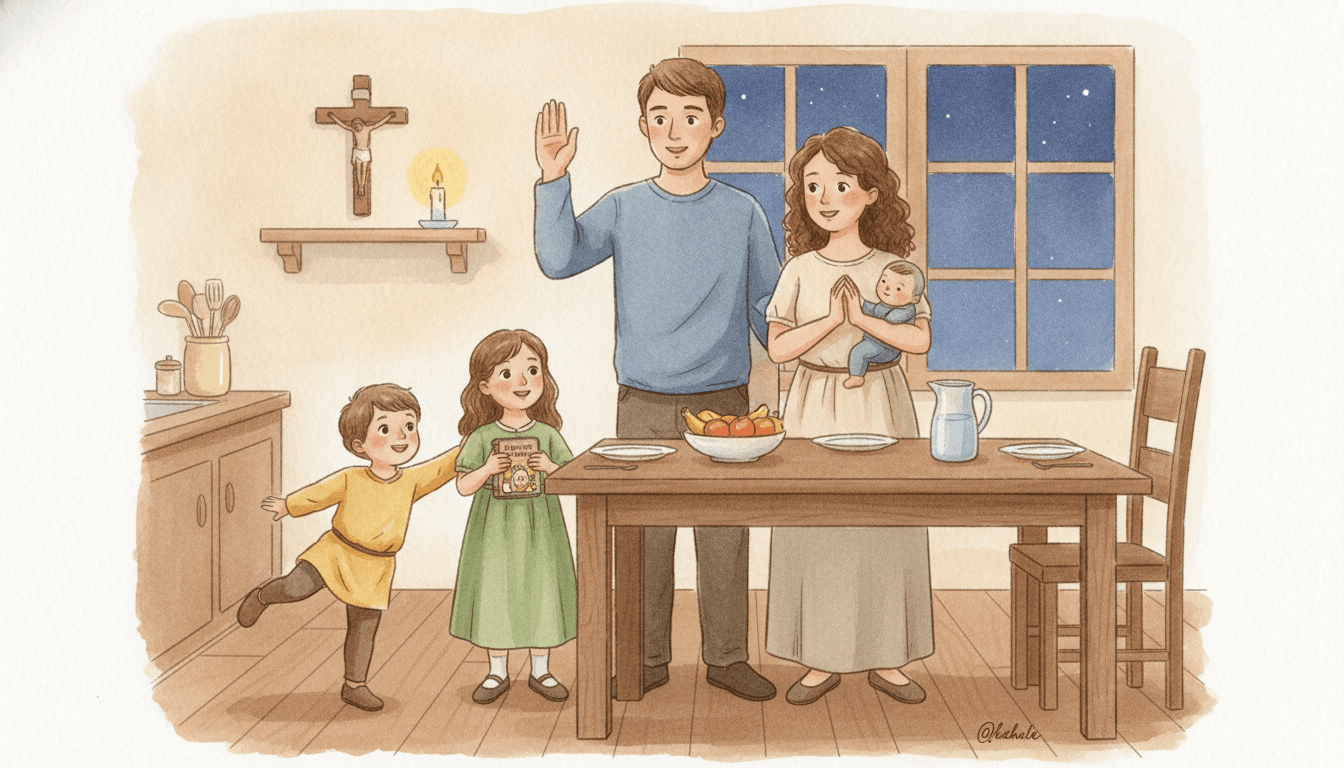
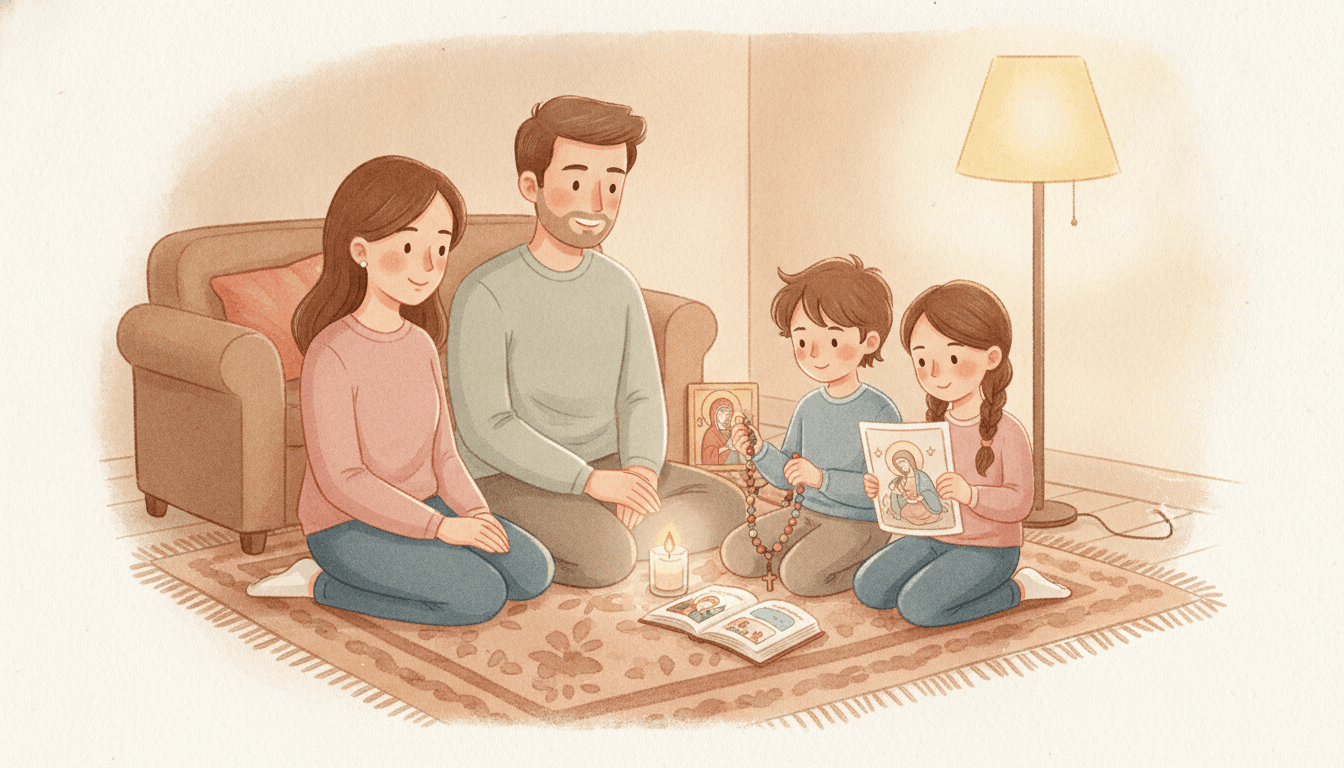
One child is upside down on the couch. Another has wandered off with a sock. You are halfway through the Sign of the Cross and wondering whether family prayer is supposed to feel this hard. The good news: prayer with young children is not a test of stillness; it is a small, repeated way of turning your family toward God.
Stop Measuring Prayer by How Still Everyone Is
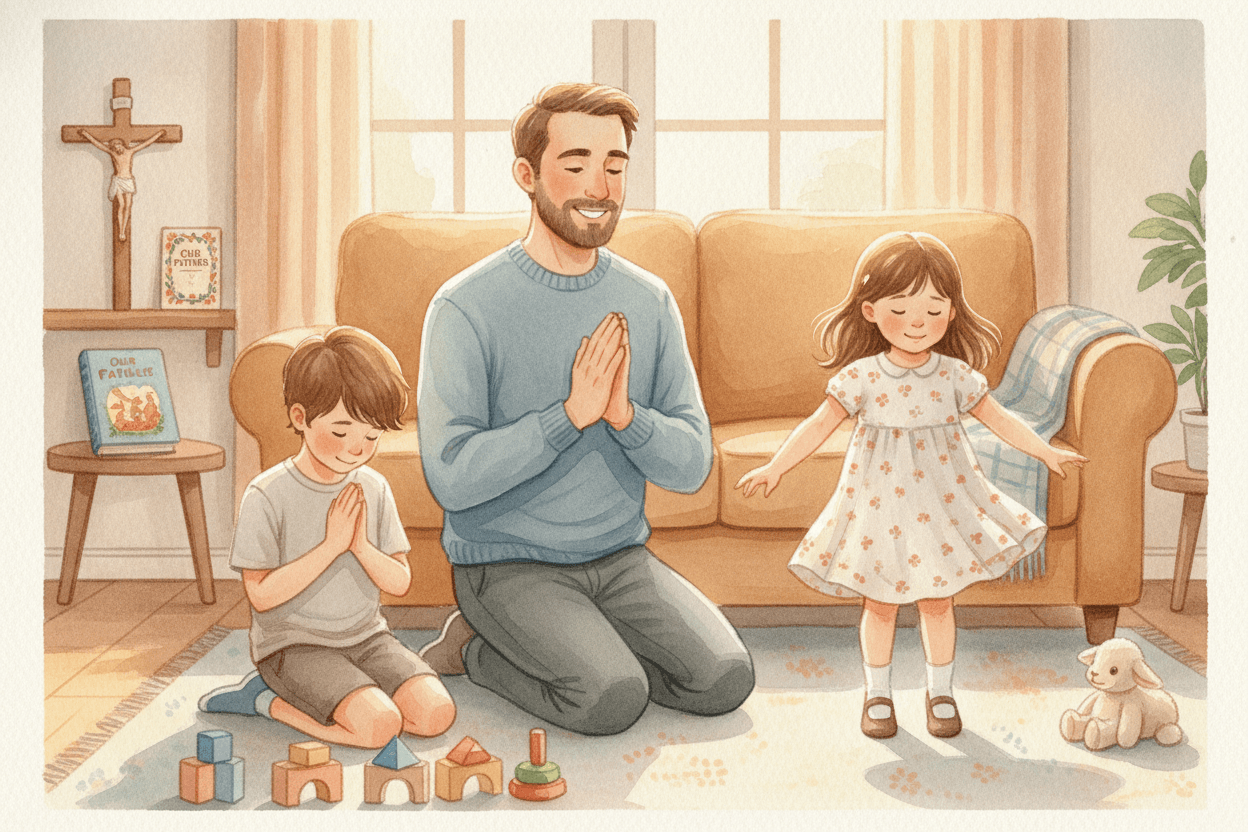
You finally gather everyone in the living room. You make the Sign of the Cross. One child is upside down on the couch, another suddenly needs water, and the preschooler who asked to hold the prayer card has wandered off with it. By the time you say “Amen,” you may wonder whether anyone prayed at all. I have had those moments. They can make a parent feel like family prayer is one more thing we are failing to do neatly.
But stillness is not the scorecard. Young children meet the world with their whole bodies. A wiggly child may be listening. A child who repeats only the last line may be learning it. A toddler who runs out of the room might return just in time to say “Amen.” None of that means the prayer failed. The bigger work is happening slowly: your children are learning that, in our house, we turn to God when the day begins, when the food is on the table, when someone is worried, and when bedtime has stretched longer than anyone planned.
The Catechism calls the Christian family the first place of education in prayer. That is encouraging because education takes repetition, patience, and plenty of imperfect attempts. We are not trying to produce tiny adults who can sit through a long devotion on command. We are helping the kid in front of us know that God welcomes him right now, with busy hands and a loud voice. Jesus said, “Let the children come to me, and do not prevent them; for the kingdom of heaven belongs to such as these.”
One small thing we tried was shortening the finish line. Instead of asking for five quiet minutes, try one minute before bed: a Sign of the Cross, one thank-you from each person, and a simple “God, be with us tonight.” Let a child hold the Bible, switch on a small lamp near a crucifix, or lead the response, “Lord, hear our prayer.” If somebody wiggles, keep going. If somebody leaves, finish anyway. Prayer is not a family performance. It is a repeated turning toward God together, and that can begin right in the middle of the wiggles.
But Jesus said, “Let the children come to me, and do not prevent them; for the kingdom of heaven belongs to such as these.”
Make the Prayer Moment Smaller Than You Think
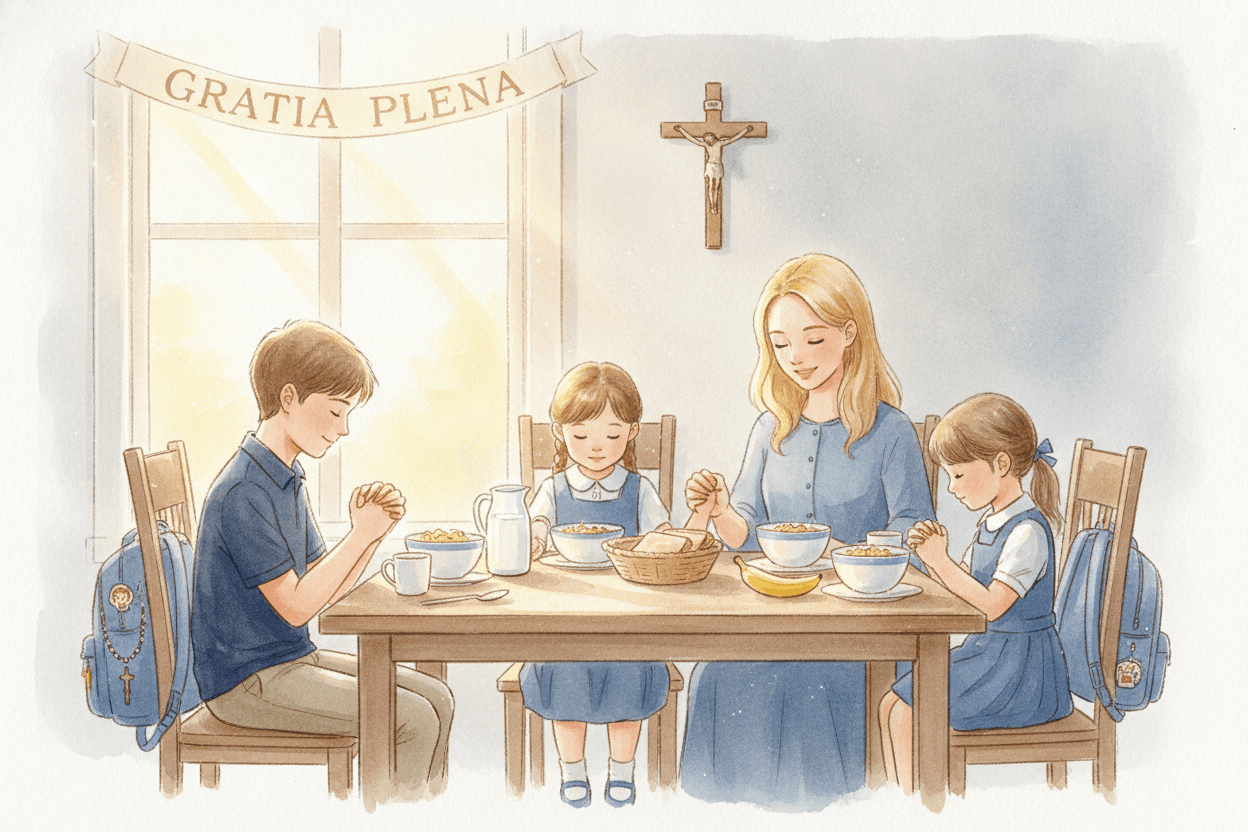
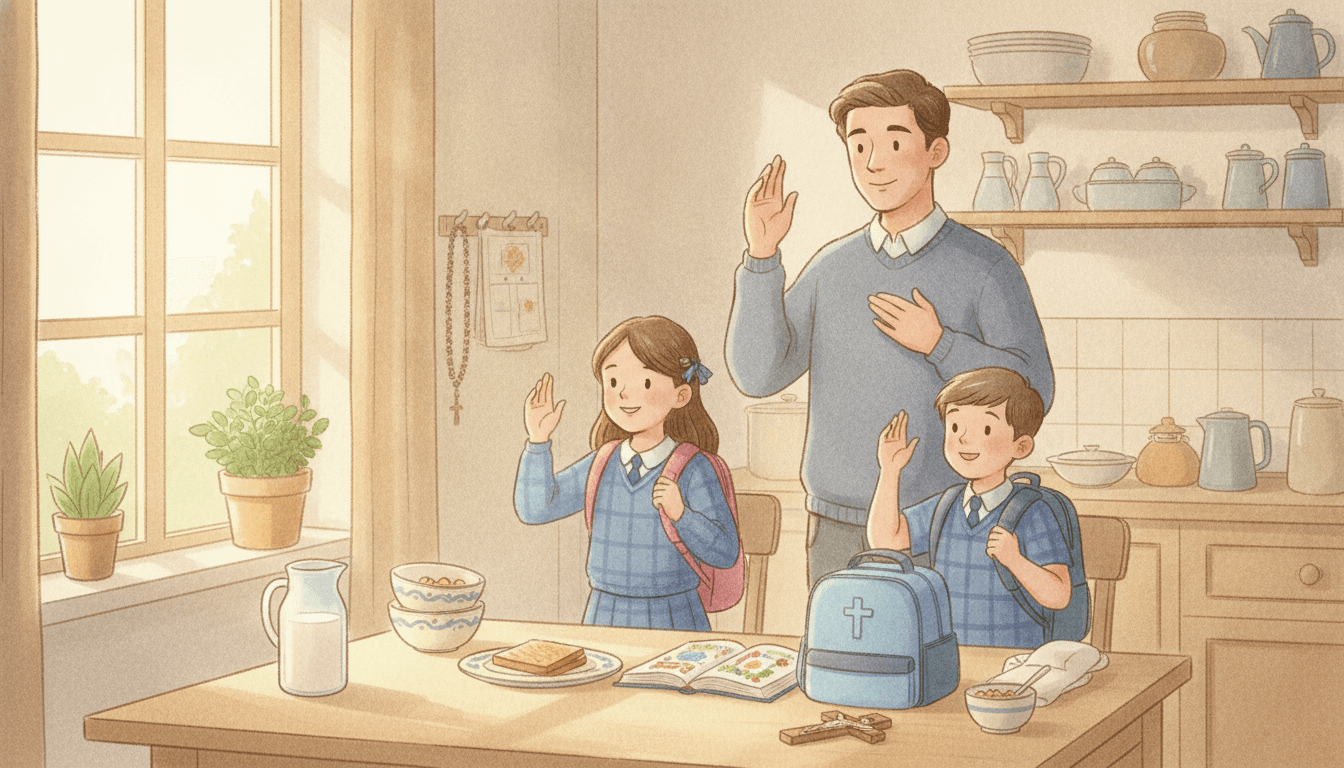
The cereal was getting soggy, one child was asking for a different spoon, and somebody had put a sock in the fruit bowl. That was not the morning for a ten-minute family devotion. It was, however, a fine morning for a 20-second prayer: the Sign of the Cross, one thank-you, and “Jesus, help us have a good day.” Everyone still got out the door. More importantly, we had turned toward God together.
Parents can put a lot of pressure on the prayer routine before it has even begun. We picture children sitting quietly, hands folded, listening to a full passage of Scripture. Then real life arrives with wiggles, spilled milk, and a toddler who suddenly needs to inspect the ceiling fan. Start smaller. For young children, one to three minutes at the same point each day is plenty. Consistency beats an ambitious plan that regularly ends with correction, raised voices, and everyone feeling like prayer went badly.
Ask this practical question: “What is the least chaotic moment already in our day?” Maybe it is right before breakfast. Maybe it is after pajamas go on, when the lights are low. Maybe it is the thirty seconds before everyone climbs out of the car for school. Pick one anchor point and protect it gently. In our house, that can mean a simple bedtime blessing even when the day has been a mess. A child says one thing he is thankful for. A parent names someone who needs help. Then we make the Sign of the Cross and call it done.
This is not cutting corners. Scripture itself puts faith into the ordinary rhythms of family life: “Take to heart these words of mine. Keep repeating them to your children. Recite them when you are at home and when you are away, when you lie down and when you get up.” Notice the places named there. Home. Travel. Bedtime. Morning. God is not waiting for the one peaceful hour that never seems to appear.
One small thing we tried was keeping the words nearly the same for a week. “Thank you, God, for this day. Please bless our family. Help us love each other.” Repeated words give little kids something to hold onto, and eventually they begin filling in their own thank-yous and intentions. Keep the prayer short enough that you can do it tomorrow. Then do it again the next day. That quiet return is how a family learns that God belongs at the table, by the bed, and in the middle of a very ordinary Tuesday.
Take to heart these words of mine. Keep repeating them to your children. Recite them when you are at home and when you are away, when you lie down and when you get up.
Let Their Bodies Help Them Pray
One night, our youngest made it through exactly half a bedtime prayer before he was upside down on the couch. I started to correct him, then noticed his older brother was still trying to make the Sign of the Cross. Slowly. Carefully. One child was a pretzel. One was praying with his whole little arm. Both were there with us. That changed how I thought about the wiggling.
Little kids do not always pray best by freezing in place. Their bodies are already doing a lot of the work of being three, four, or five. Give that movement a job. Ask everyone to stand for one short Gospel verse. Kneel for a single Hail Mary. Bow their heads for a moment of thanks. Make one slow Sign of the Cross together. Slow is the key word. Not because God is grading their form, but because a deliberate gesture helps a child notice: we are doing something different now.
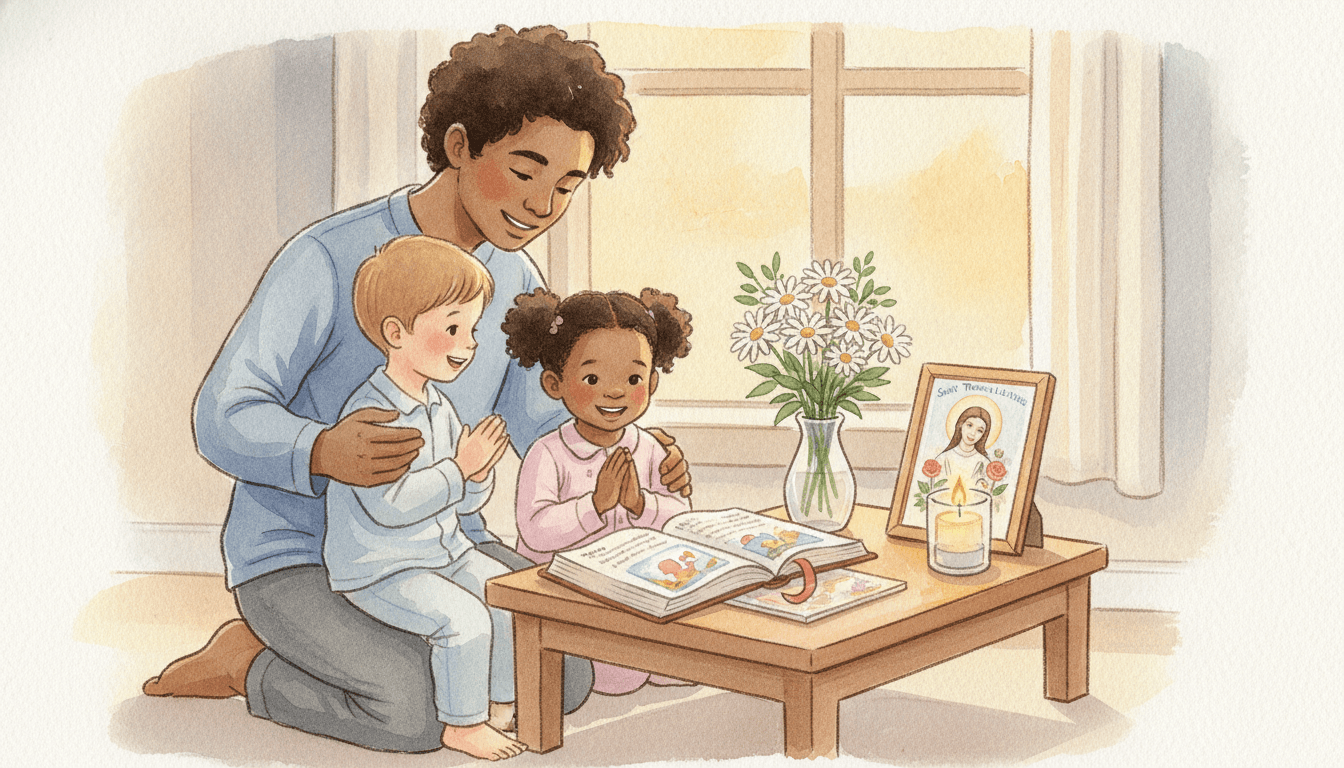
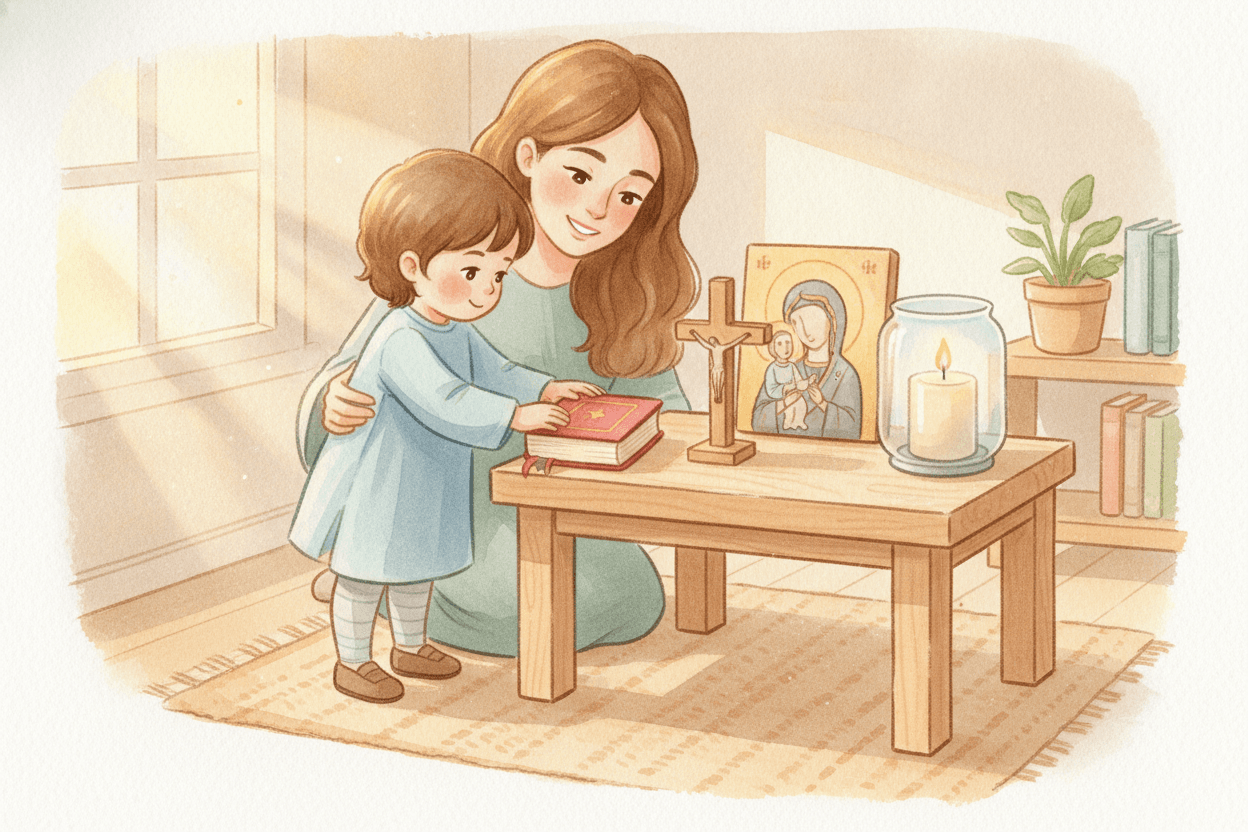
At our table, one small thing we tried was assigning tiny prayer jobs. A child carries the Bible to the prayer corner. Another places a saint card beside it. A parent lights a candle, with the children watching from a safe spot. Then everybody says, “Thank you, God, for this day.” The job ends when the prayer ends. That boundary matters. Carrying the Bible is participation; running laps with the Bible is not. Lighting a candle can mark the moment; playing with wax is not the assignment.
You can also put movement inside the words. Sing a short Alleluia and let them clap once at the end. Pray, “This is the day the LORD has made,” and open your hands on the word “rejoice.” When someone is worried or sick, let each child place one hand over his heart while the family says the person’s name. These are small actions, but they give active children a way to join before they have the attention span for longer prayers.
The goal is not to turn prayer into a game show with props. Keep the purpose plain, the choices few, and the routine familiar. Maybe tonight it is one bow, one intention, and one slow Sign of the Cross. Tomorrow, the same thing. Jesus did not tell children to become quiet grown-ups before coming to him. He said, “Let the children come to me.” Let them come with busy feet and restless hands, then gently teach those hands where to go.
But Jesus said, “Let the children come to me, and do not prevent them; for the kingdom of heaven belongs to such as these.”
Use Repetition, Music, and One-Sentence Prayers
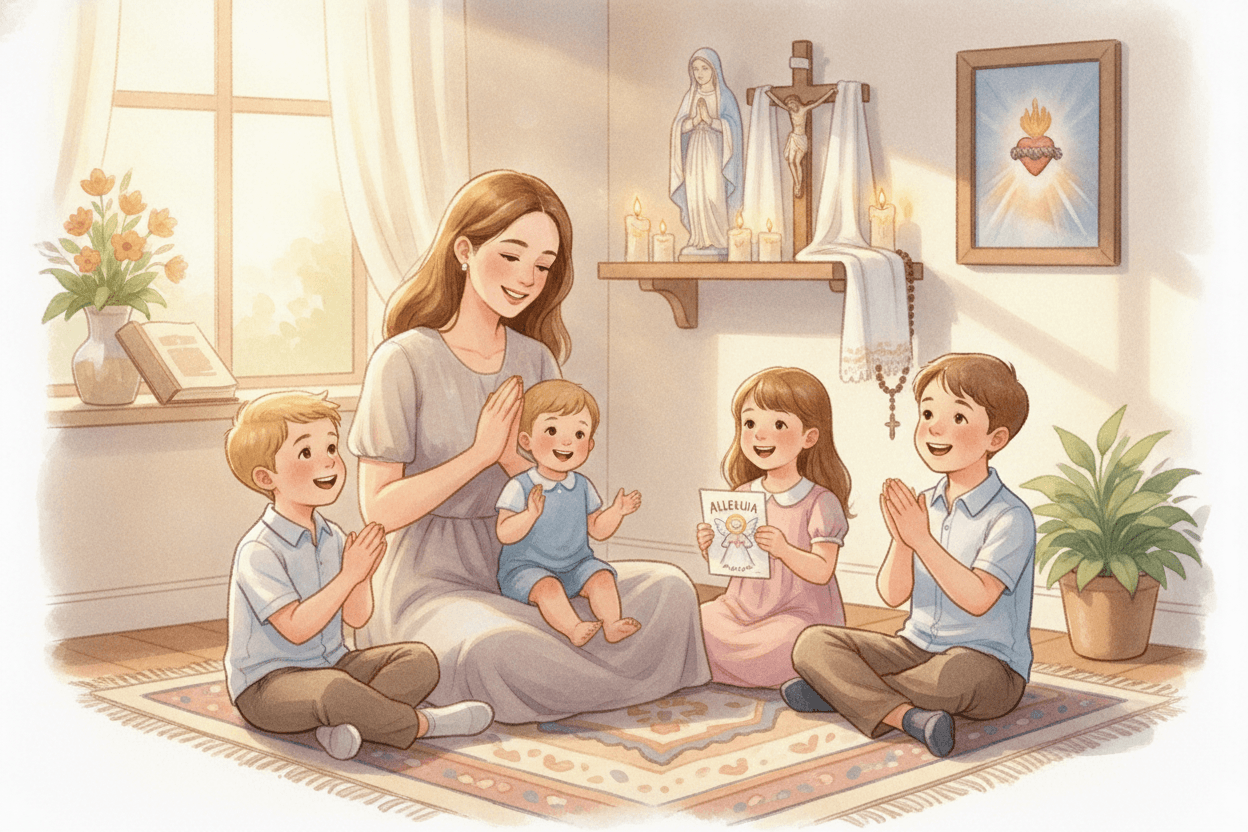
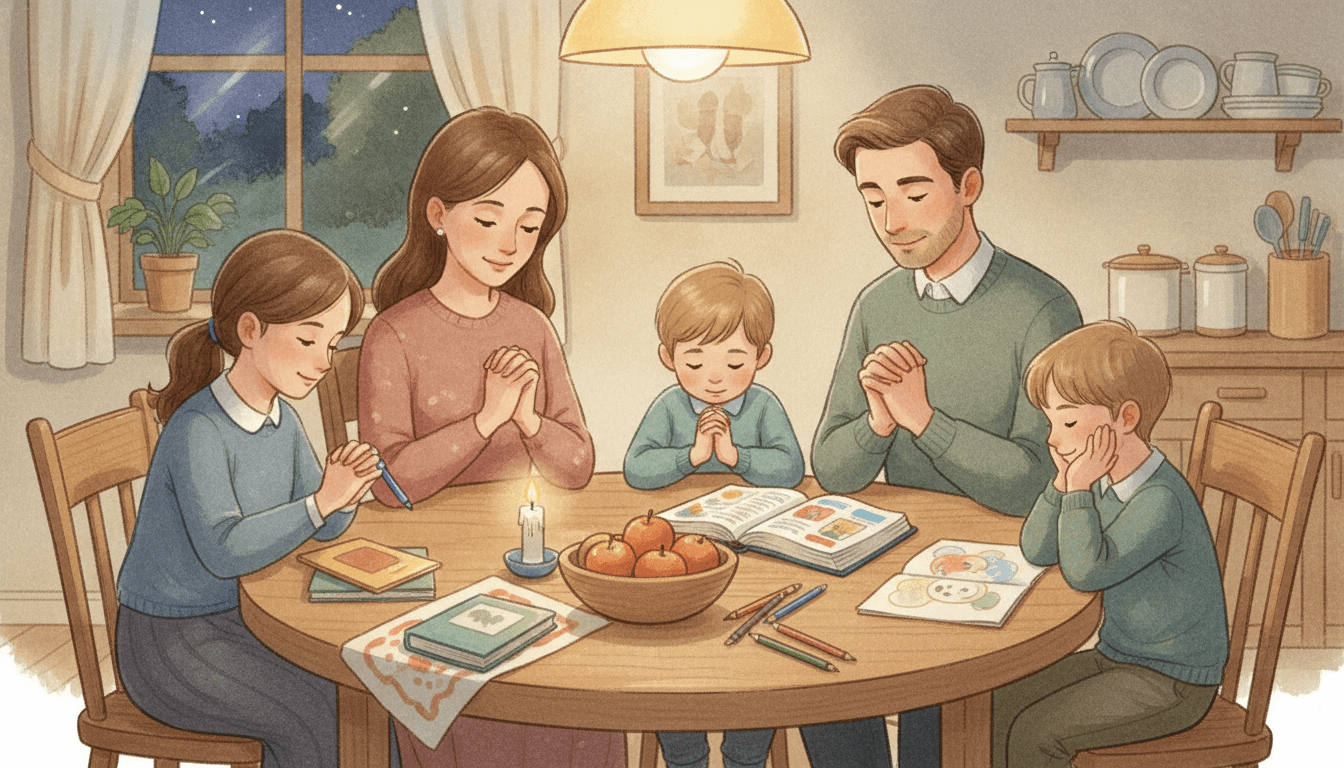
The spoon became a microphone halfway through dinner. One child was singing into it. Another was under the table looking for a crayon that had apparently become an emergency. So we did not attempt a long family prayer. We sang one Alleluia together, made the Sign of the Cross, and said, “Thank you, God, for dinner.” That was it. Nobody earned a gold star for posture. But everybody prayed.
Young kids learn through the words they hear again and again. The rhythm matters. The same little response gives them a place to jump in before they can follow a longer prayer or find their own words. Familiar prayer is not empty repetition for a four-year-old. It is often how the words make a home in them. Later, when they are scared, grateful, or sitting quietly at Mass, those small phrases are already there.
One small thing we tried was a call-and-response at bedtime. I say, “For the people we love,” and the kids answer, “Lord, hear our prayer.” Then each person names one person: Grandma, a friend with a cold, the baby next door, even the dog on a memorable night. If a child freezes or gets silly, I supply the words: “Lord, hear our prayer for Eli’s teacher.” They can repeat the response, nod, or just listen. No speech is required to belong.
You can also keep a few tiny patterns ready for the moments that already happen every day. Before breakfast, say, “This is the day the LORD has made; let us rejoice in it and be glad.” Then everyone says, “Thank you, God.” In the car, sing one familiar hymn refrain or a simple Alleluia. At dinner, let each person offer one gratitude. At lights-out, name one person who needs help and answer together, “Lord, hear our prayer.” Pick one pattern and use it for a week. Predictable beats impressive.
At our table, the repeatable prayers are the ones that survive the spilled milk, the late soccer practice, and the child who suddenly needs to explain a bug they saw three hours ago. A one-sentence prayer said together is not a lesser version of family prayer. It is family prayer. God is not waiting for the room to become quiet enough to listen. He is already meeting your children in the words they know, the tune they can sing, and the small voices learning to turn toward him.
This is the day the LORD has made; let us rejoice in it and be glad.
Keep the Sacred Visible, but Not Busy
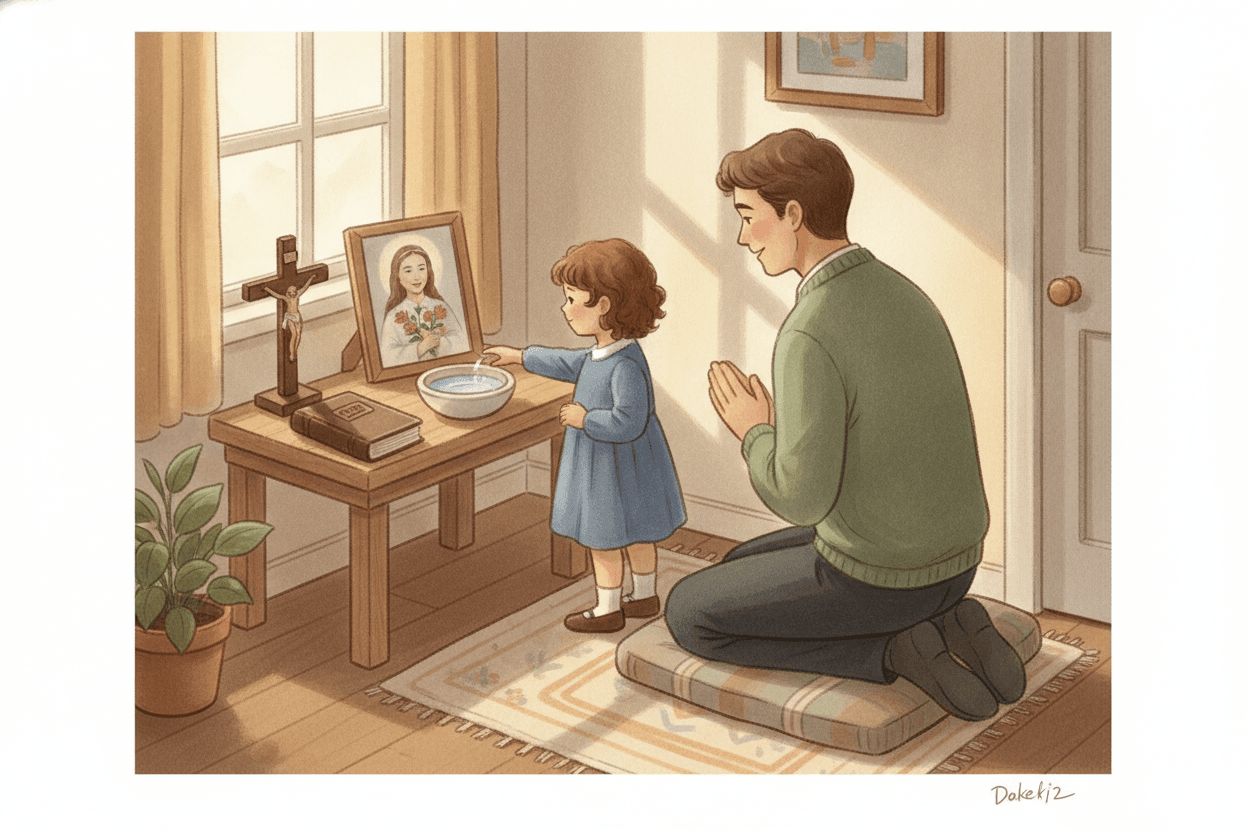
One evening, our youngest was circling the dining room chair like it was a racetrack while the older kids argued over who got to hold the prayer card. Nothing looked especially holy. But when I set a small crucifix in the middle of the table, everybody knew what came next. Not perfect quiet. Not a dramatic change in behavior. Just a familiar signal: we are stopping for a minute, and we are turning to God.
That is what a visible prayer cue can do for a family. It does not need to be a carefully styled corner with matching baskets and twelve meaningful objects. In our house, too many objects would become a tiny museum that somebody wants to rearrange during the Our Father. One small crucifix, a children’s Bible, an icon, or a prayer card is enough. During Advent, maybe it is the Advent wreath. During Lent, perhaps a simple cross. The object is not the prayer itself; it helps little eyes and busy bodies recognize the moment.
The Catechism calls the family a “domestic church.” In plain language, home is one of the first places our children learn what Christians do: we thank God, ask for help, say sorry, hear his word, and care for one another. A prayer spot does not make a home holy by itself. But it can make those habits easier to see. A child who cannot yet read can still learn, “When Dad opens that Bible, we listen,” or, “When Mom dips her fingers in holy water, we make the Sign of the Cross.”
Keep the cue where your family already gathers. Put a small crucifix near the kitchen table. Leave a Bible on the nightstand for bedtime prayer. Hang one prayer card by the door so you can bless yourselves before school or work. If you use a candle, let an adult light it and keep it out of little hands. Then give a child a simple job: carry the Bible, place the prayer card on the table, or point to the cross. Here’s what landed for us: the kids were more likely to join in when they had one clear thing to do.
Jesus said, “Let the children come to me, and do not prevent them; for the kingdom of heaven belongs to such as these.” We do not need to wait until our homes are calm, clean, and impressively organized before we pray. Pick one visible reminder this week. Let it stay in the same place. Let it quietly tell your children, again and again: God is welcome here, even when someone is upside down on the couch.
But Jesus said, “Let the children come to me, and do not prevent them; for the kingdom of heaven belongs to such as these.”
Try This One-Minute Family Prayer This Week
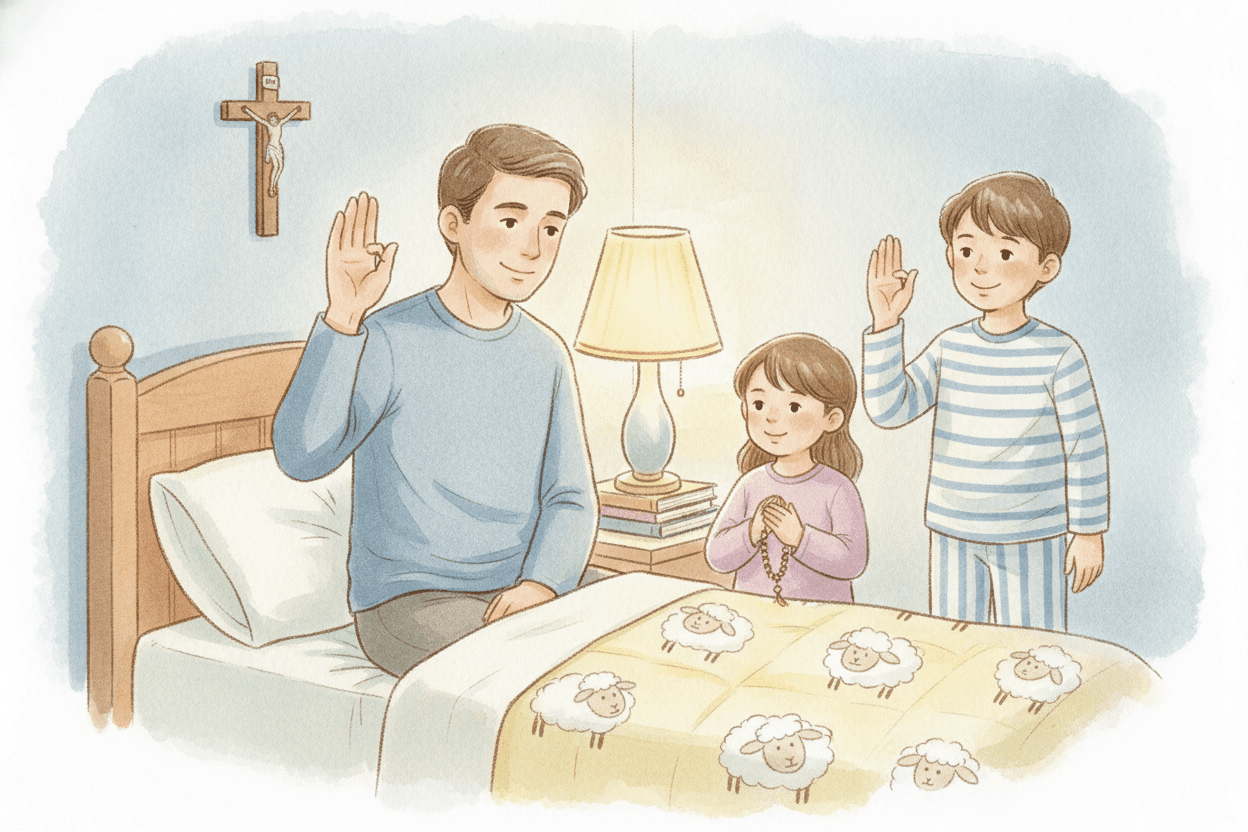
The best time for family prayer in our house is often the minute before somebody asks for another snack. The shoes are by the door, one child is upside down on the couch, and I am tempted to wait for a calmer moment. That calmer moment is a lovely idea. It does not always live here. So try one minute instead. Not a perfect minute. A real one.
Pick one cue you already have this week: breakfast, buckling into the car, bedtime, or the moment before everyone scatters after dinner. When the cue happens, gather whoever is nearby. Make the Sign of the Cross together. Say one line of Scripture, perhaps, “This is the day the LORD has made; let us rejoice in it and be glad.” Then ask one simple question: “Who or what should we thank God for?” One child may say Grandma. Another may say dinosaurs. Both count.
After that, invite one short prayer intention: “Please help Daddy at work,” or “Help my friend feel better.” If nobody has words, supply them. “Jesus, help our family be kind tonight.” Pray one Hail Mary, or let everyone answer, “Lord, hear our prayer.” Then end it. Yes, even if the youngest has finally decided this is the exact moment to become interested. Ending while the moment is still mostly peaceful is not quitting early. It is wise parenting.
Do this for a few days before changing anything. Do not grade the children on folded hands, closed eyes, or how many times they rolled across the rug. Notice smaller signs: a child remembers the response, reaches for the Sign of the Cross, names someone who is hurting, or asks to light the prayer candle with help. These are little shoots of faith, and they often appear quietly.
The Catechism says that “For young children in particular, daily family prayer is the first witness of the Church’s living memory as awakened patiently by the Holy Spirit.” Patiently is the word to keep. One minute at a familiar time can teach your children that, in all the noise and motion of family life, we turn toward God together. Start this week. Keep it small. Let tomorrow’s minute be enough.
This is the day the LORD has made; let us rejoice in it and be glad.
Frequently asked questions
How do I pray as a family when my kids cannot sit still?
Keep the prayer very short and continue even when children wiggle, repeat only a line, or briefly leave the room. Begin with the Sign of the Cross, one thank-you or intention, and a simple closing such as, “God, be with us tonight.” The goal is returning to God together, not achieving perfect quiet.
How long should family prayer be for toddlers and preschoolers?
For young children, aim for one to three minutes, or even 20 seconds on a chaotic morning. A short prayer you can repeat every day is more helpful than a longer routine that ends in frustration. Use the same simple words for a week so children can gradually join in.
What is the best time of day for family prayer with young children?
Choose the least chaotic moment that already exists in your family’s routine, such as before breakfast, after pajamas, at bedtime, or before getting out of the car for school. Attach prayer to that daily anchor rather than waiting for an ideal peaceful moment. A consistent bedtime blessing can work even after a difficult day.
How can I involve a wiggly child in Catholic family prayer?
Give movement a clear purpose: stand for a short Gospel verse, kneel for one Hail Mary, bow for a moment of thanks, or make a slow Sign of the Cross together. Small jobs also help, such as carrying the Bible, placing a saint card nearby, or leading “Lord, hear our prayer.” Keep the job connected to the prayer and end it when the prayer ends.
Does family prayer count if my child wanders off or only says Amen?
Yes. Young children are learning through repetition, and a child who catches the last line or returns for “Amen” is still encountering the family’s habit of turning to God. Finish the prayer calmly rather than treating distraction as failure, and invite the child to join again next time.
What simple Catholic prayers can we use every day as a family?
Use a predictable pattern: make the Sign of the Cross, let each person name one thing they are thankful for, mention someone who needs help, and close with a brief prayer. For example: “Thank you, God, for this day. Please bless our family. Help us love each other.” At bedtime, add, “God, be with us tonight.”
Sources: vatican.va · vatican.va · vatican.va · usccb.org · usccb.org · usccb.org · usccb.org · usccb.org · usccb.org
Scripture quotations in this article use the NABRE translation.