Simple Family Lectio Divina With Kids
Discover how lectio divina can fit into real family life, even with cold spaghetti, restless children, and reluctant prayers. A few Gospel lines can open meaningful conversations about Jesus, loneline
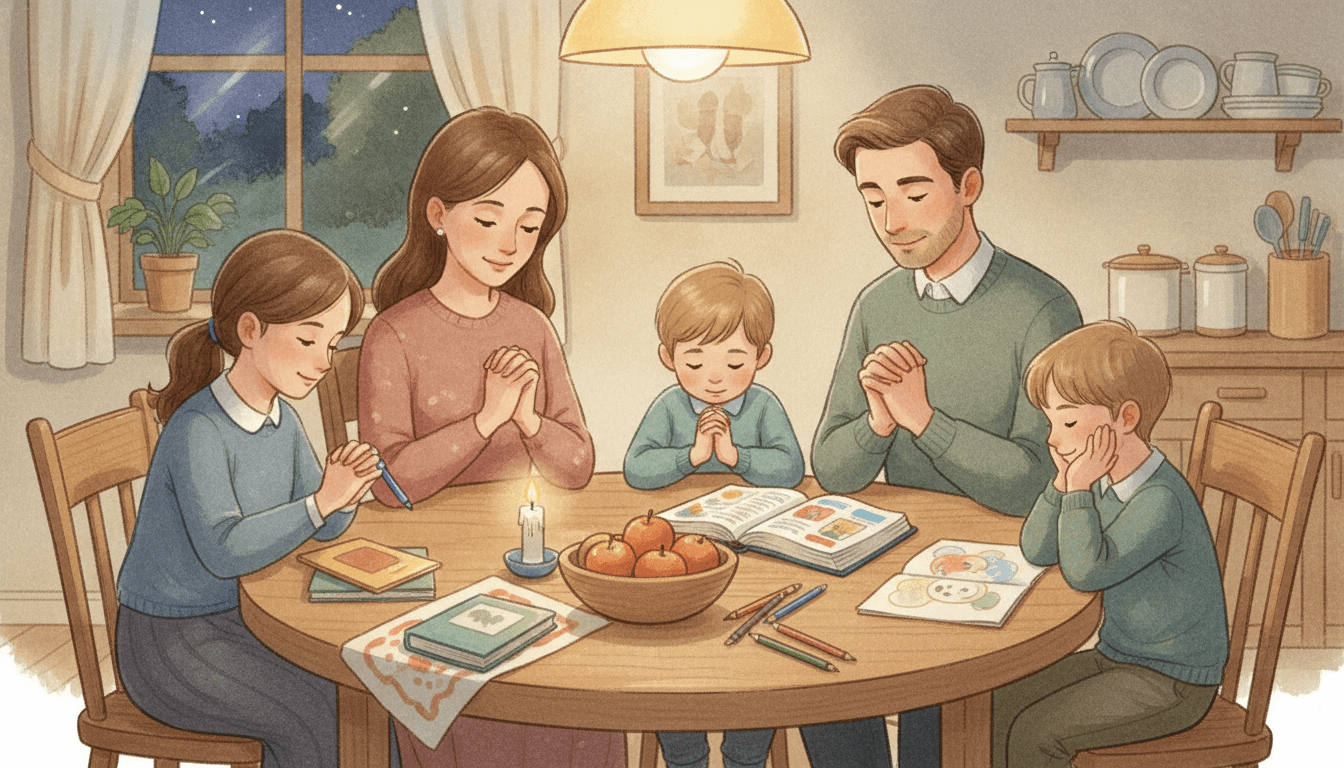
The spaghetti was getting cold, one child was under the table, and the other had just announced he was not in a praying mood. So we read three lines from the Gospel anyway. A few minutes later, somebody said, “I think Jesus would help the lonely person,” and there it was: God’s Word at our table.
You Do Not Need a Silent House to Listen to God
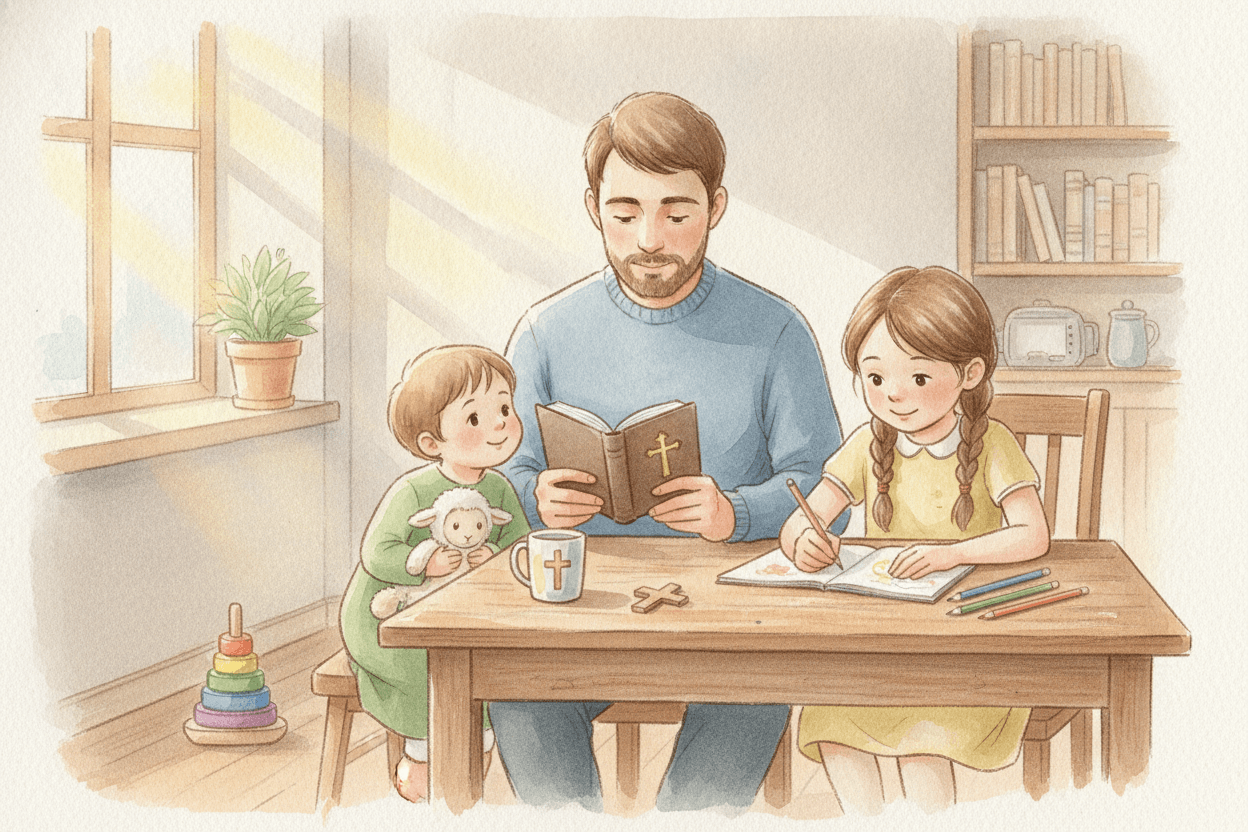
The baby is banging a spoon on the high-chair tray. Someone cannot find a purple crayon. The older child has suddenly remembered a very important question about snacks. If this is your house five minutes before family prayer, welcome. You do not need to wait for a silent living room, matching pajamas, and children sitting like tiny monks before you open the Bible. In our house, that day may never arrive.
Family lectio divina is not a test of attention spans. It is not a Bible quiz where the parent has the answer key hidden behind a holy smile. The goal is much simpler: spend five to ten minutes meeting Jesus in a short Gospel scene. Read a few verses. Notice a word or picture. Say something to Jesus. Choose one small way to carry his words into the day. Then stop while everyone can still remember it as a good thing. That last part matters more than we think.
Start with a scene children can picture: Jesus welcoming people, healing someone, calming a storm, sharing a meal. Read it slowly. Ask, “What word or picture stood out to you?” A child may say, “The boat,” or “Jesus was tired,” or nothing at all. All of those are allowed. Read it again and ask them to imagine being there. What would they see? Where would they stand? If a child wants to draw instead of answer, let them draw. If they pass, let them pass. Listening quietly counts too.
One small thing we tried was ending with a very ordinary question: “Jesus, what do you want us to do with this today?” The answers were not fancy. “Help my sister.” “Don’t yell.” “Say sorry.” That is enough. Jesus did not set a minimum age, a minimum reading level, or a noise limit for coming to him. He said, “Let the children come to me, and do not prevent them; for the kingdom of heaven belongs to such as these.” Bring the wiggly child, the distracted child, and your own distracted self. Open a short passage anyway. God can meet a family at a messy kitchen table.
Jesus said, “Let the children come to me, and do not prevent them; for the kingdom of heaven belongs to such as these.”
What Family Lectio Divina Is—and Is Not
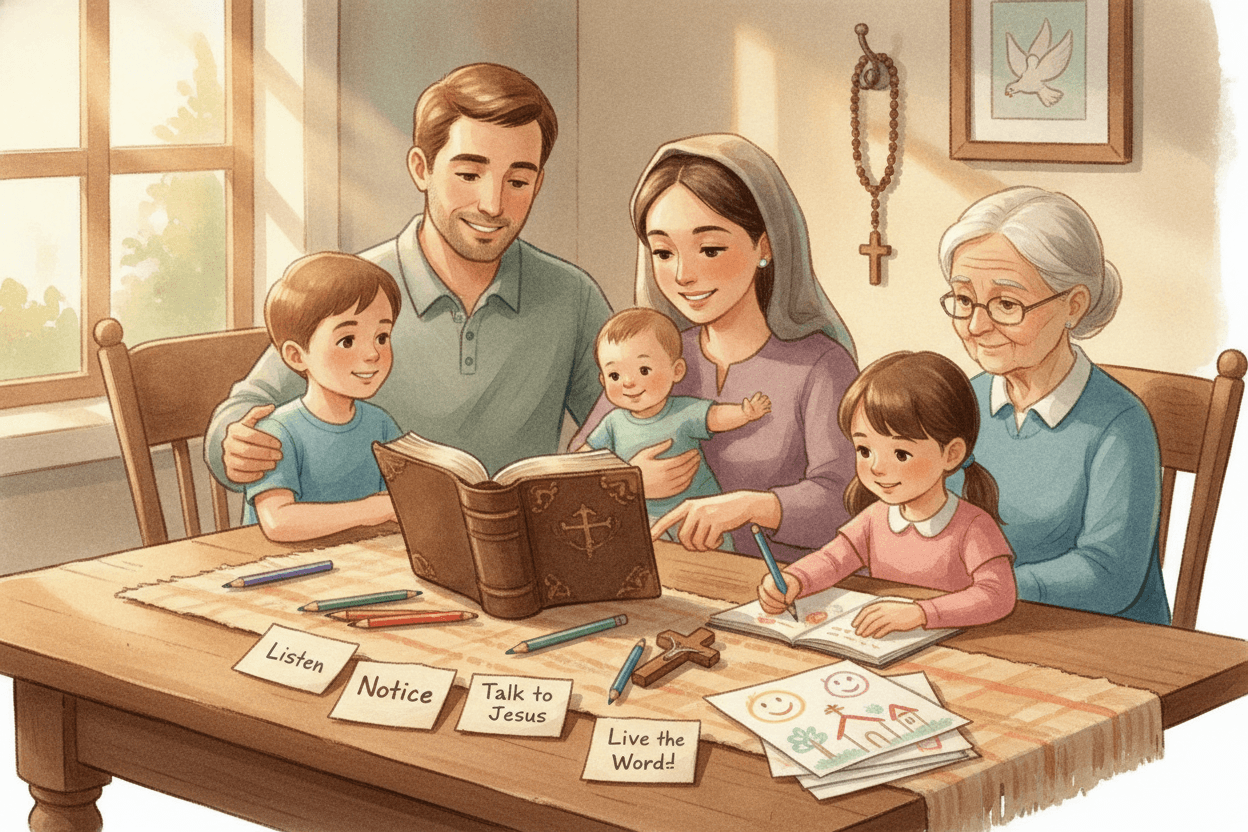
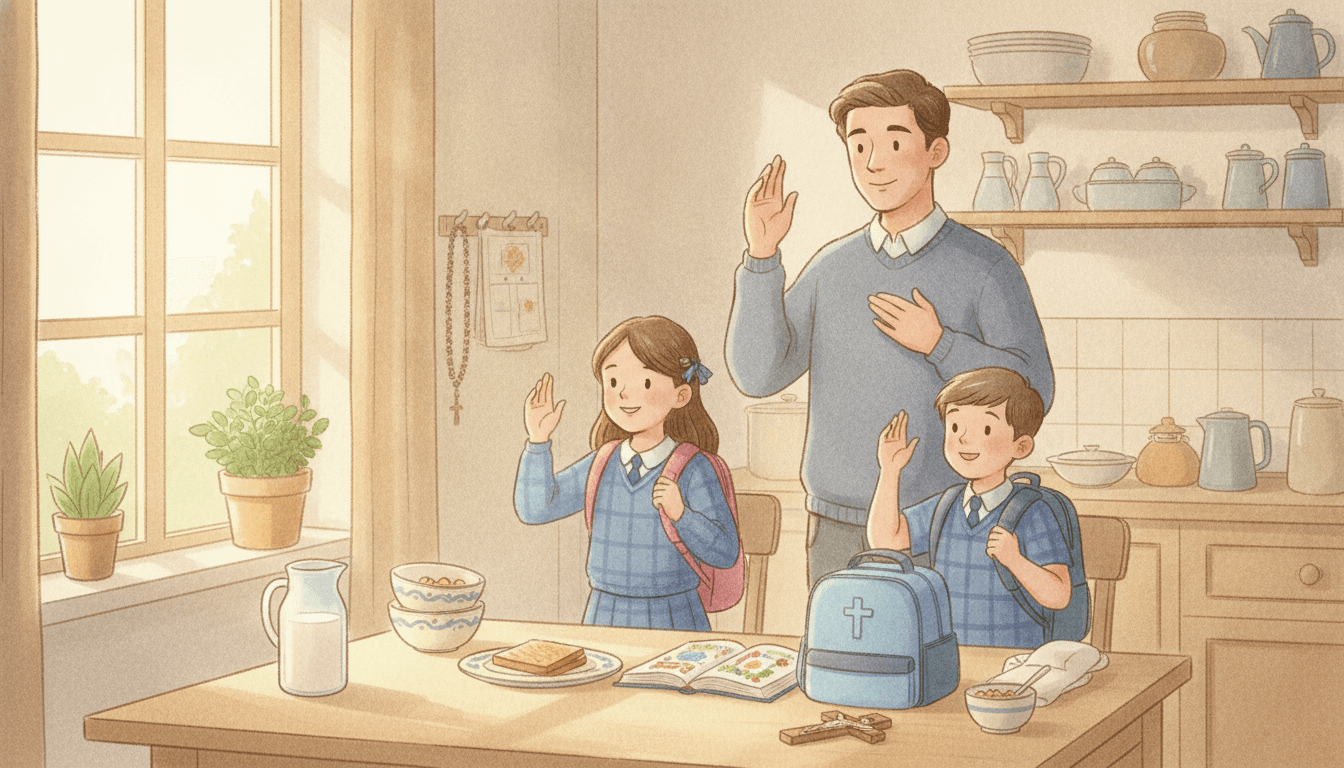
The cereal bowls were still on the table when we tried this one morning. One child was swinging his legs under the chair. Another wanted to know whether we could be done before his toast got cold. We opened a short Gospel passage anyway, read a few lines, and sat for about ten seconds. Then someone said, “I think I would be scared in that boat.” That was enough. Nobody gave a speech. But we had listened together.
Lectio divina is simply praying with Scripture. For a family, it can be as plain as four small moves: listen to a short passage, notice one word or picture, talk to Jesus about it, and choose one small way to live it today. Read the passage slowly, maybe two or three times. After the first reading, ask, “What word or picture stood out to you?” After the next reading, ask children to picture the scene. Where are they? What do they see? What might Jesus say?
This is not a Bible lesson with a right answer hidden under the table. It is not a quiz where Dad asks a question and waits for the most religious-sounding response. If your child says, “I noticed the fish,” you do not need to steer that answer into a sermon about evangelization. You can say, “Yes, there were a lot of fish,” and let the moment breathe. A child may pass, draw while listening, or offer one sentence: “Jesus, help me not be mean to my brother.” That counts as prayer.
Parents belong in the listening, too. At our table, I have found it helps to say what I noticed without trying to tie a bow around it: “I noticed Jesus stopped for that person. I want to slow down today.” The kids learn that Scripture is not only something adults explain. It is God’s Word for all of us, including the parent who lost patience before breakfast. As St. Paul wrote, “And that from infancy you have known the sacred scriptures, which are capable of giving you wisdom for salvation through faith in Christ Jesus.”
The Church calls the home an important place for prayer and Christian formation (CCC 2685). That can sound large, but it often looks very small: five minutes after dinner, a Gospel scene, a crayon in one hand, and a quick prayer before everyone runs off. End with one concrete response. Forgive. Help clear the dishes. Be patient in the car. Remember Jesus when you feel left out. Here’s what landed in our house: we did not need profound answers. We needed a regular little space where God’s Word could meet the kid in front of us.
And that from infancy you have known the sacred scriptures, which are capable of giving you wisdom for salvation through faith in Christ Jesus.
The Four Steps Kids Can Actually Do
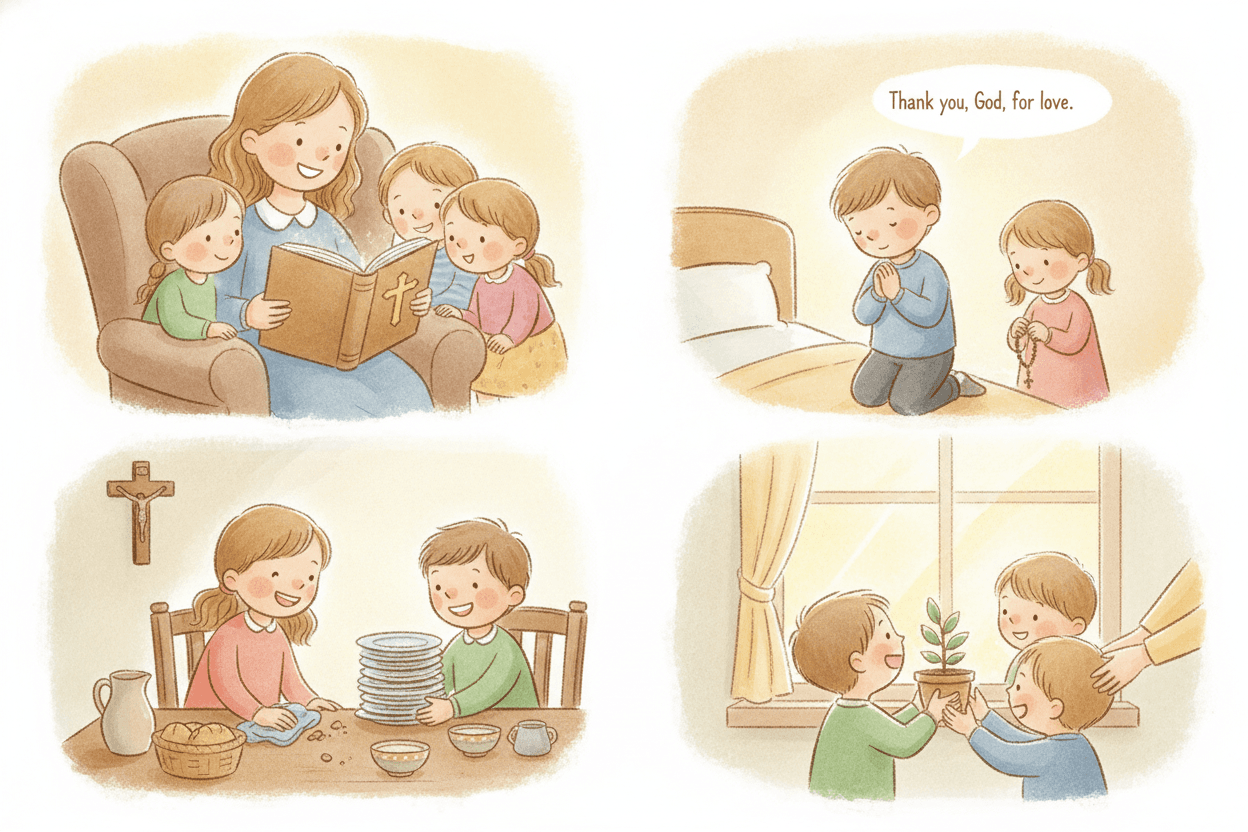
The cereal was getting soggy, one child was tapping a spoon like a tiny drummer, and I still wanted us to pray with Scripture. So we did not wait for the perfect mood. We opened to a short Gospel scene, set a timer for seven minutes, and began. That is the kind of lectio divina kids can actually grow into: small enough to fit before school, clear enough that nobody needs a workbook, and calm enough to try again tomorrow.
Start with this simple opening: “Jesus, we are here. Help us listen.” Then choose just a few verses, preferably a scene where Jesus is speaking with or caring for someone. Read it slowly. Pause. Read it a second time. If your children are able to stay with it, read it a third time. Do not explain every detail as you go. Let the words have a little room. The first step is Listen. You can ask, “What did you hear Jesus say or do?” If a child says, “Jesus was walking,” that counts. If somebody says, “I don’t know,” that counts too. Listening is not a quiz.
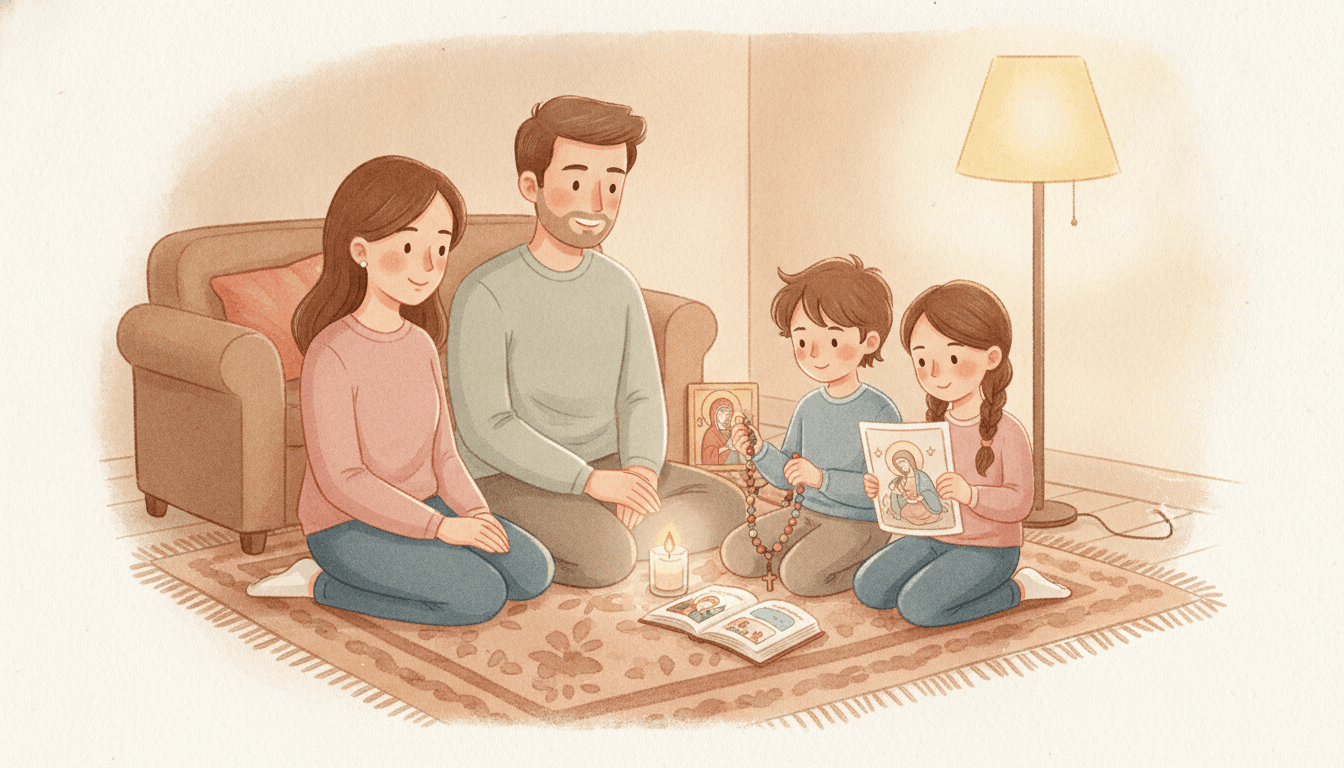
Next comes Notice. Ask, “What word or picture stood out to you?” A child may notice a boat, a crowd, a sick person, or one word Jesus says. Resist the urge to improve the answer. Here’s what landed with us more than once: the simple answer was often the one that stayed with a child all day. For younger kids, let them point to a picture in a Bible, draw the scene, or hold a small cross while they listen. Their bodies sometimes need a job so their hearts can settle.
Then invite them to Talk to Jesus. After the second or third reading, ask, “If you were in this story, where would you be?” “What would you see?” “What might Jesus say to you?” Keep the prayer short: “Jesus, thank you for helping people,” or “Jesus, help me not be scared.” A child can pass, pray silently, or repeat your prayer. At our table, I sometimes go first: “Jesus, help me be patient when things get loud.” This is not subtle parenting strategy, but it is honest.
Finish with Live the Word. Ask, “Jesus, what do you want us to do with this Word today?” Then choose one loving action that can happen before bedtime: forgive a sibling, help clear the dishes, speak kindly when frustrated, or check on someone who is sad. Name one action, not five. End with, “Jesus, help us do it.” Luke tells us that Mary “sat beside the Lord at his feet listening to him speak.” Your children may be wiggling, doodling, or wearing one sock during this prayer. That is okay. They are still learning to sit near Jesus and listen.
And she had a sister named Mary [who] sat beside the Lord at his feet listening to him speak.
Choose a Short Gospel Scene, Not a Big Assignment
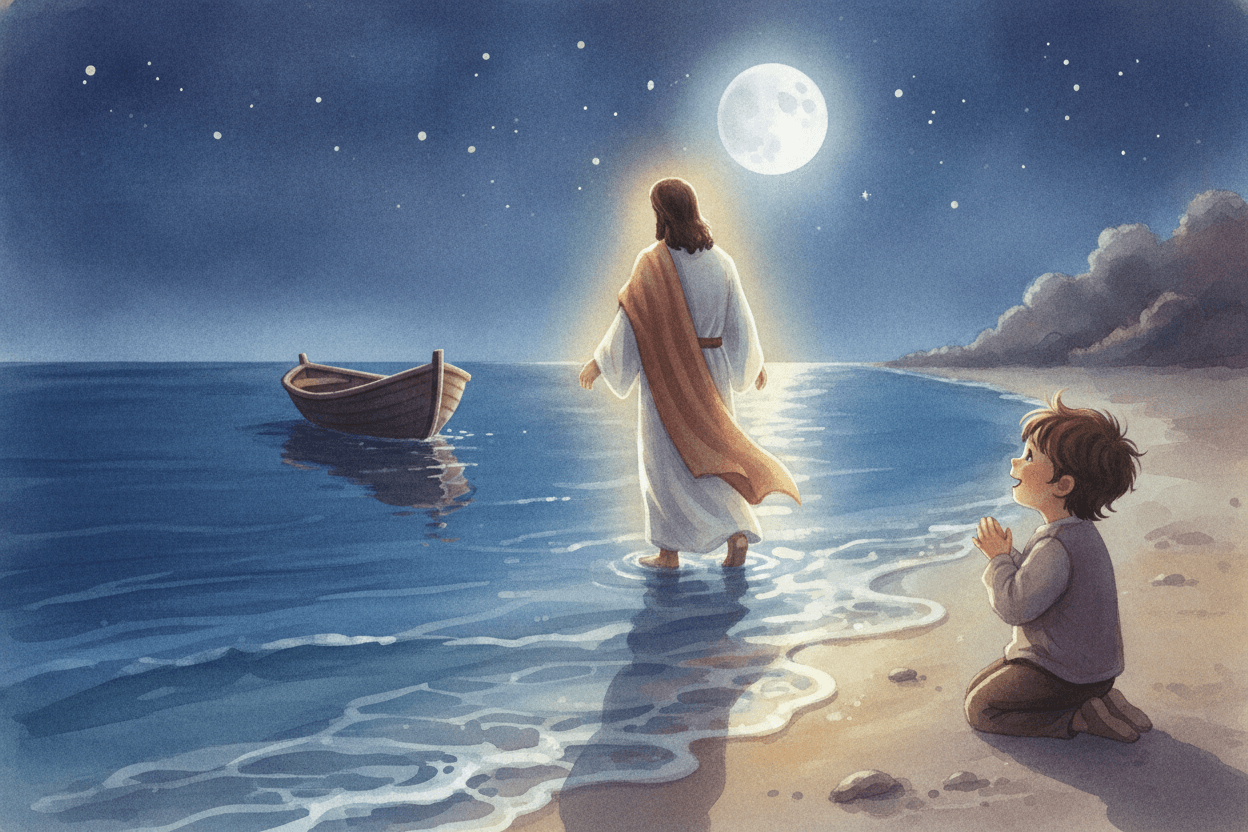
The first time we tried this with a longer reading, one child was still tying his shoe while another had decided the table needed a drum solo. By the third paragraph, I had lost them—and, if I am honest, I had lost myself too. A family does not need a big assignment at the end of dinner. It needs one small Gospel scene that everyone can hold in their mind.
Start with a moment where Jesus meets people. Matthew 19:13–15 is a good first choice: children come near Jesus, adults try to stop them, and Jesus makes room. You might also try Jesus calming the storm (Mark 4:35–41), the lost sheep (Luke 15:3–7), or Jesus walking on water (Matthew 14:22–33). These scenes have boats, wind, worried friends, a searching shepherd, and children right near Jesus. Young kids can enter them without needing a lecture first.
If the upcoming Sunday Gospel is short and concrete, use that. It helps the words they hear at Mass feel familiar. Read only a few verses, slowly, perhaps twice. Then ask simple questions: “What do you see?” “Where would you stand?” “What sounds would you hear?” “Who in this story would you want to talk to?” At our table, those questions have brought out answers like, “I would be in the boat because I am scared of storms,” or, “I would stand beside Jesus so nobody pushes the kids away.” That is not a wrong answer. That is a child paying attention.
Keep the passage small enough that nobody has to remember too much. You are not trying to cover every lesson in the story or test whether they caught the important detail. Let one word, picture, or feeling stay with them. A child may say nothing at all, draw a storm cloud, or repeat, “Jesus said, ‘Come.’” Fine. Give them room. The point is not a polished family Bible study. It is learning that Scripture is a place where we meet Jesus together.
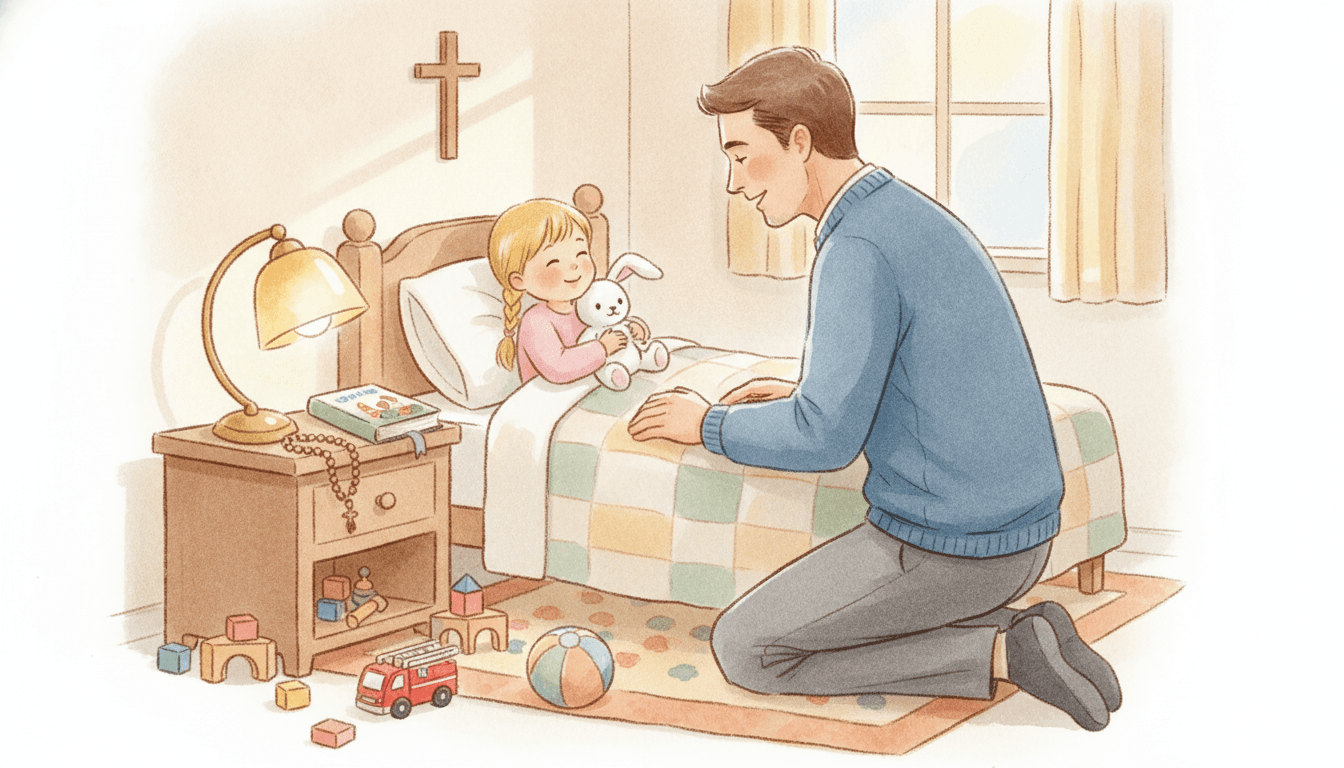
One small thing we tried was putting a bookmark in the Gospel the night before, so the Bible was already open when we sat down. Five minutes was enough. We ended with one question: “What can we do with this tomorrow?” After the lost sheep, a child might look for the sibling who is left out. After the storm, someone might remember to ask Jesus for help when they feel afraid. Small scenes make room for small, real responses—and those are often the ones that stick.
Thus faith comes from what is heard, and what is heard comes through the word of Christ.
When the Wiggles, Giggles, and Blank Stares Arrive
About three minutes into our last family Scripture time, one child was sliding off the chair, another was tracing the edge of the Bible with a finger, and someone laughed because the word “donkey” had come up in the story. This is not a sign that you have failed at prayer. It is a sign that you have children. The goal is not to produce a tiny monastery at the kitchen table. The goal is to make room for them to hear Jesus, little by little, in the real life they have.
Give kids a few honest ways to take part. They can answer with one word. They can say, “Pass.” They can listen without speaking. A child who needs busy hands can draw the part of the Gospel scene that stayed with him, or simply hold the Bible while you read. These are not lesser forms of participation. Sometimes the child who says nothing is listening more closely than the child with a long answer. At our table, permission to pass has kept the whole thing from turning into a pop quiz with a holy cover on it.
When an answer comes, receive it before you improve it. If your daughter says, “I noticed the boat,” you do not need to ask her to find a deeper meaning. Try, “Yes, the boat stood out to you.” If your son says, “Jesus is nice,” you can answer, “He is. What did he do that seemed kind?” Or just let the answer rest. Children learn that Scripture is a place where they can pay attention and speak honestly. As Barbara McAtee notes in USCCB materials, “Children can be introduced to lectio divina at a young age and be taught to unpack the Scriptures by themselves.” That starts with taking their small observations seriously.
The wiggles do need a gentle boundary. If the drawing becomes a spaceship battle or the Bible turns into a drum, calmly bring them back: “Let’s use quiet hands while we listen,” or, “Show me one thing you heard in the story.” Keep your voice low. Skip the lecture. A short redirect works better than a speech about reverence when everyone is already restless. Then end on time—especially if things are still going fairly well. Five good minutes this week is better than fifteen minutes that makes everyone dread next Tuesday.
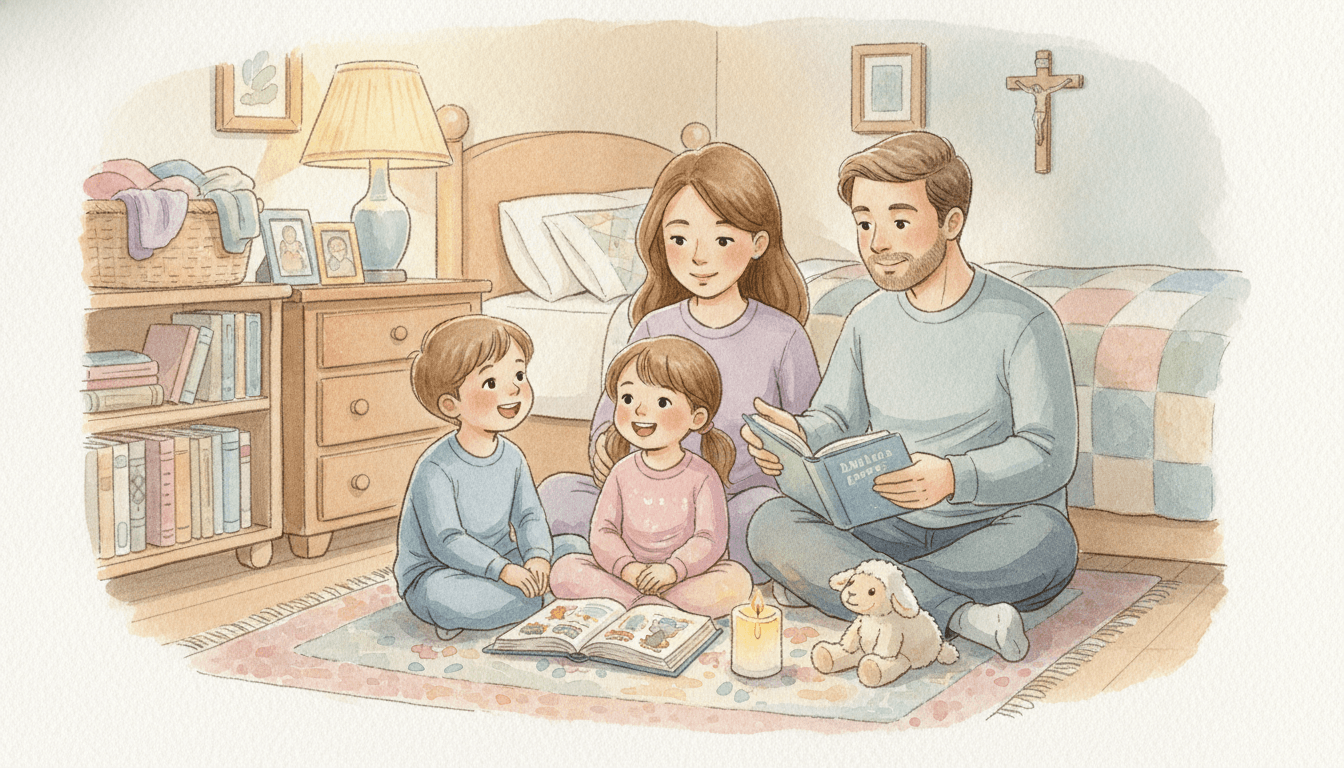
Repeat the same little routine each week: gather, ask Jesus to help you listen, read the short passage slowly, let each person notice something, and choose one small way to live it. Familiarity helps children know what comes next, even when their attention is still growing. One small thing we tried was ending with, “Jesus, help us remember this today.” The words were simple enough for everyone to join. Over time, the blank stares, giggles, and one-word answers become something steadier: your children learning that God’s Word is for them, right in the middle of ordinary family noise.
There is need of only one thing. Mary has chosen the better part and it will not be taken from her.
Try This One Small Family Prayer This Week
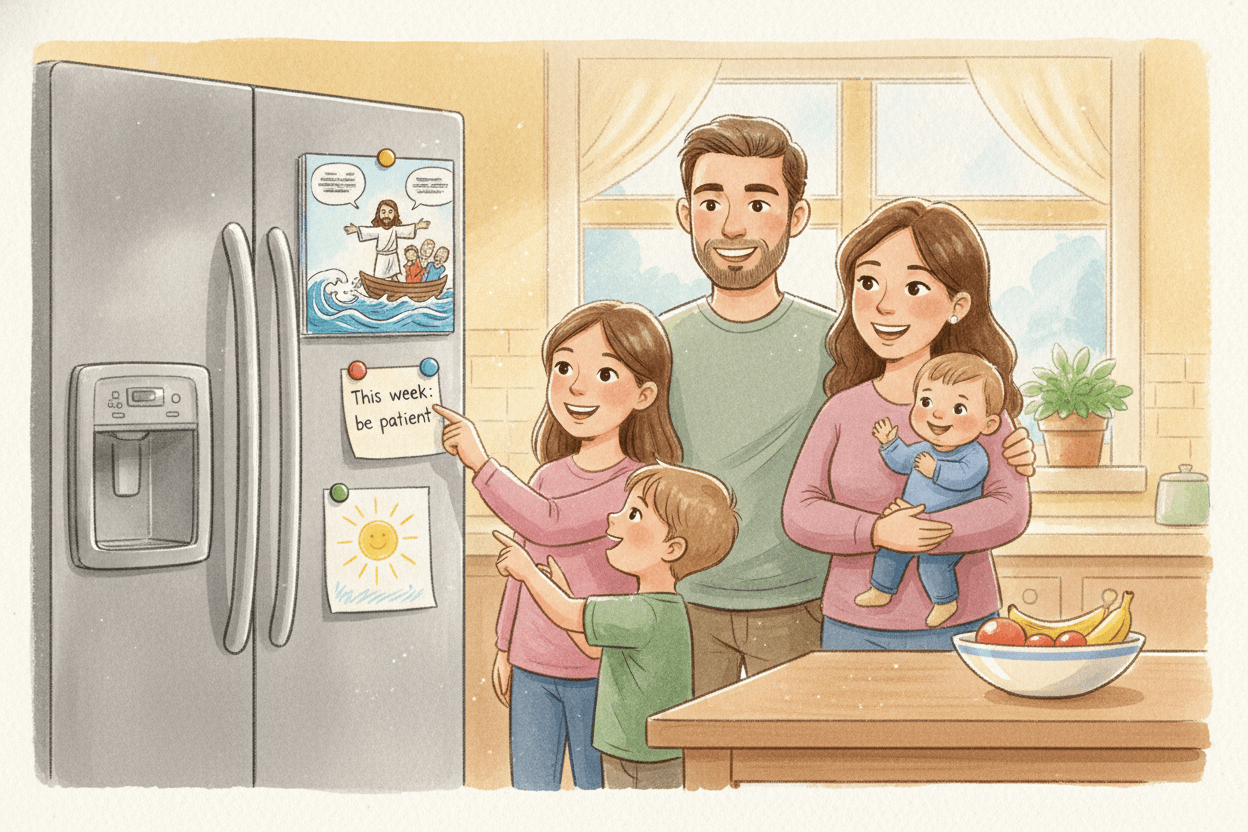
Tuesday after dinner is a good place to start. The plates are still on the counter. Somebody is asking for a snack they did not want ten minutes ago. Nobody needs to light a candle or find the perfect voice. Pick one regular moment this week—after dinner, before bedtime, or in the car before school—and give God five minutes right in the middle of your real family life.
Choose a Gospel scene that is only three to six verses long, preferably one with Jesus doing or saying something your children can picture. Set a five-minute timer. Begin: “Jesus, we are here. Help us listen.” Read the passage slowly. Then follow four simple moves: Listen, Notice, Talk to Jesus, and Live the Word. After the first reading, ask, “What word or picture stood out?” Read it once more, then ask, “Where are you in this scene?” A child can answer with one word, draw a boat, shrug, or pass. All of those can be honest ways of listening.
Then give everyone a turn to talk to Jesus in a sentence: “Jesus, help me when I feel scared,” or “Jesus, thank you for my brother.” Close by choosing one small act of love for the day: let someone else pick the game, forgive the annoying thing, carry in the groceries, speak patiently when you would rather stomp away. Sister Janet Schaeffler, OP, puts the point plainly in USCCB family resources: “Use the format of lectio divina to listen, reflect, and decide how to live this message of God’s Word in the world.”
If you want an easy first scene, try Jesus walking on the water, then keep the conversation going with the BibleHeroes Jesus Walks on Water kids comic. Read the Gospel first. Let the comic come afterward as a way to ask, “What do you think Peter was feeling?” or “When do you want Jesus to help you?” At our table, the best answers are not always the most polished ones. Sometimes they arrive while a child is coloring, chewing a carrot, or trying to beat the timer. That is okay. You are not running a Bible quiz. You are making room for your children to meet Jesus, one small prayer at a time.
Jesus said, “Let the children come to me, and do not prevent them; for the kingdom of heaven belongs to such as these.”
Frequently asked questions
How do I do lectio divina with kids at home?
Keep it to four simple moves: read a short Gospel passage, notice a word or image, speak to Jesus about it, and choose one small action for the day. Begin with a brief prayer such as, “Jesus, help us listen,” and stop after five to ten minutes.
What Gospel passages work best for family lectio divina?
Choose short scenes children can imagine, such as Jesus calming the storm, welcoming people, healing someone, or sharing a meal. A few verses are enough; the goal is to meet Jesus in the passage, not finish a long reading.
What should I ask my children after reading Scripture?
Ask open, simple questions: “What did you hear Jesus say or do?” and “What word or picture stood out to you?” You can also invite them to imagine the scene: where would they stand, what would they see, and how might they feel?
What if my child gives a silly answer or does not want to participate?
Let the answer stand without turning it into a lesson. If your child notices fish, a boat, or that Jesus was tired, receive it warmly; if they want to pass, draw, or listen quietly, that is fine too. Family lectio divina is prayer, not a Bible quiz.
How long should family lectio divina take?
Five to ten minutes is plenty, especially for young children. A timer can help keep it peaceful and doable before school or after dinner, and ending while everyone still has a positive memory makes it easier to return tomorrow.
How can we apply the Gospel after family prayer?
End by asking, “Jesus, what do you want us to do with this today?” Keep the response concrete: apologize, help a sibling, clear dishes, avoid yelling, or remember Jesus when someone feels left out. Small acts help children see that Scripture belongs in ordinary family life.
Sources: usccb.org · usccb.org · usccb.org · usccb.org · usccb.org · usccb.org · usccb.org
Scripture quotations in this article use the NABRE translation.