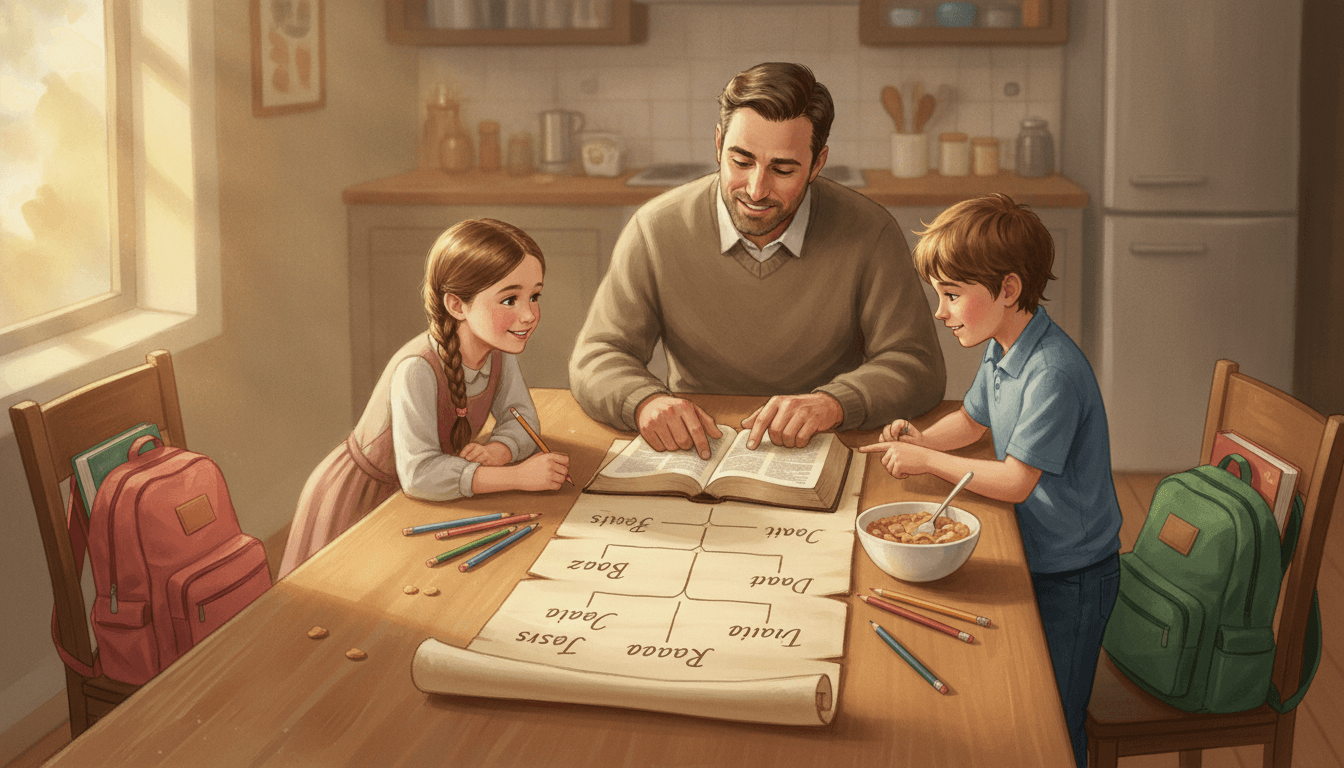
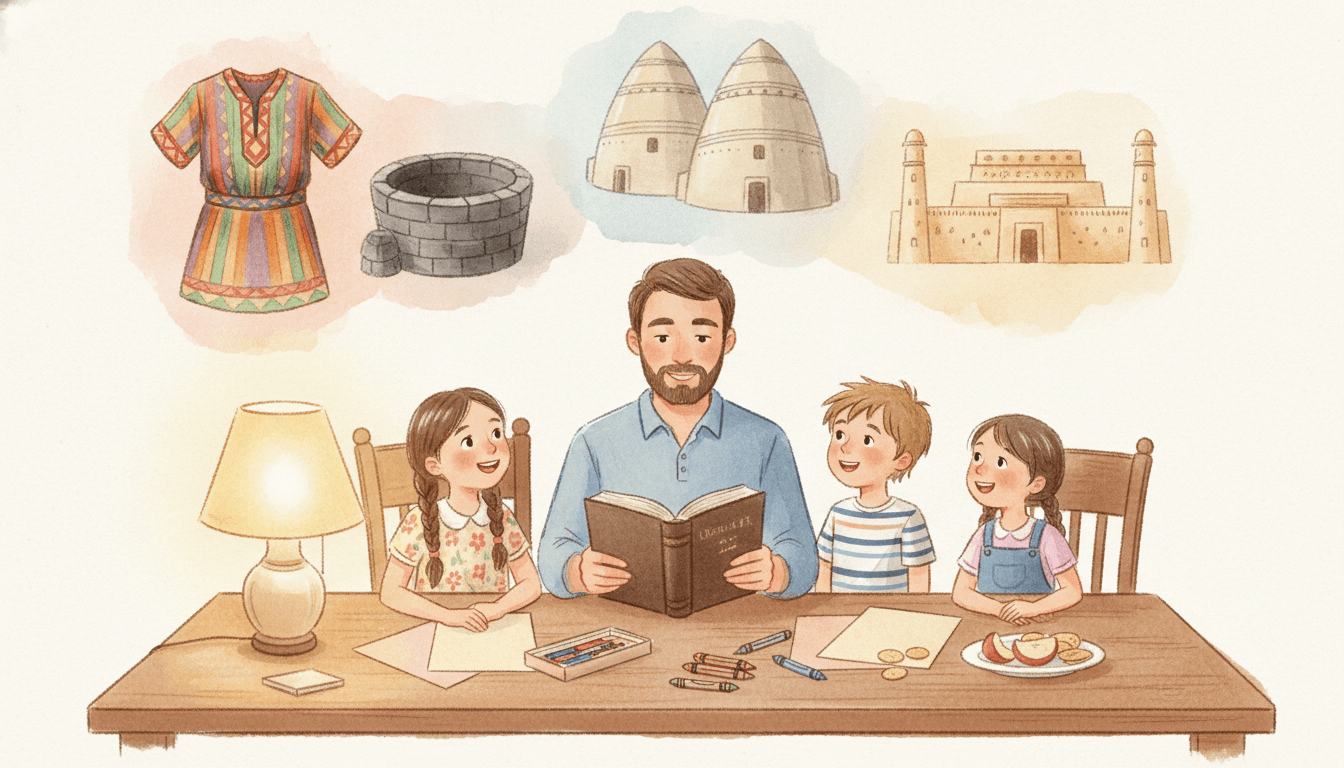
Teaching Kids About Pride Through the Tower of Babel
Use the Tower of Babel to help children see that healthy confidence celebrates God’s gifts and welcomes others, while pride insists on independence and recognition. Explore gentle questions and everyd
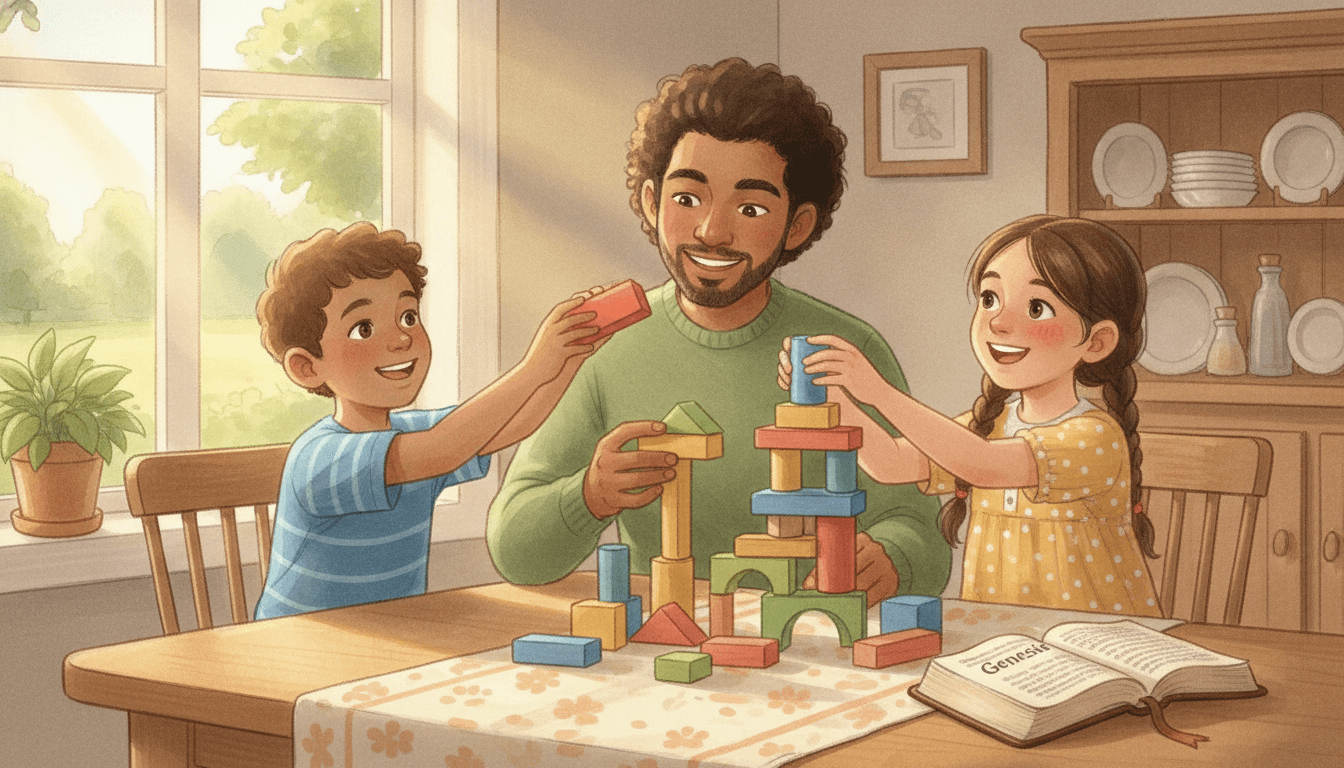
“I did it all by myself!” can be a child’s joyful celebration—or a small warning that they are pushing help away. Genesis 11 gives parents a gentle way to teach the difference: confidence receives God’s gifts with gratitude, while pride tries to make a name without God or neighbor.
The Moment a Child Says, “I Did It All by Myself”
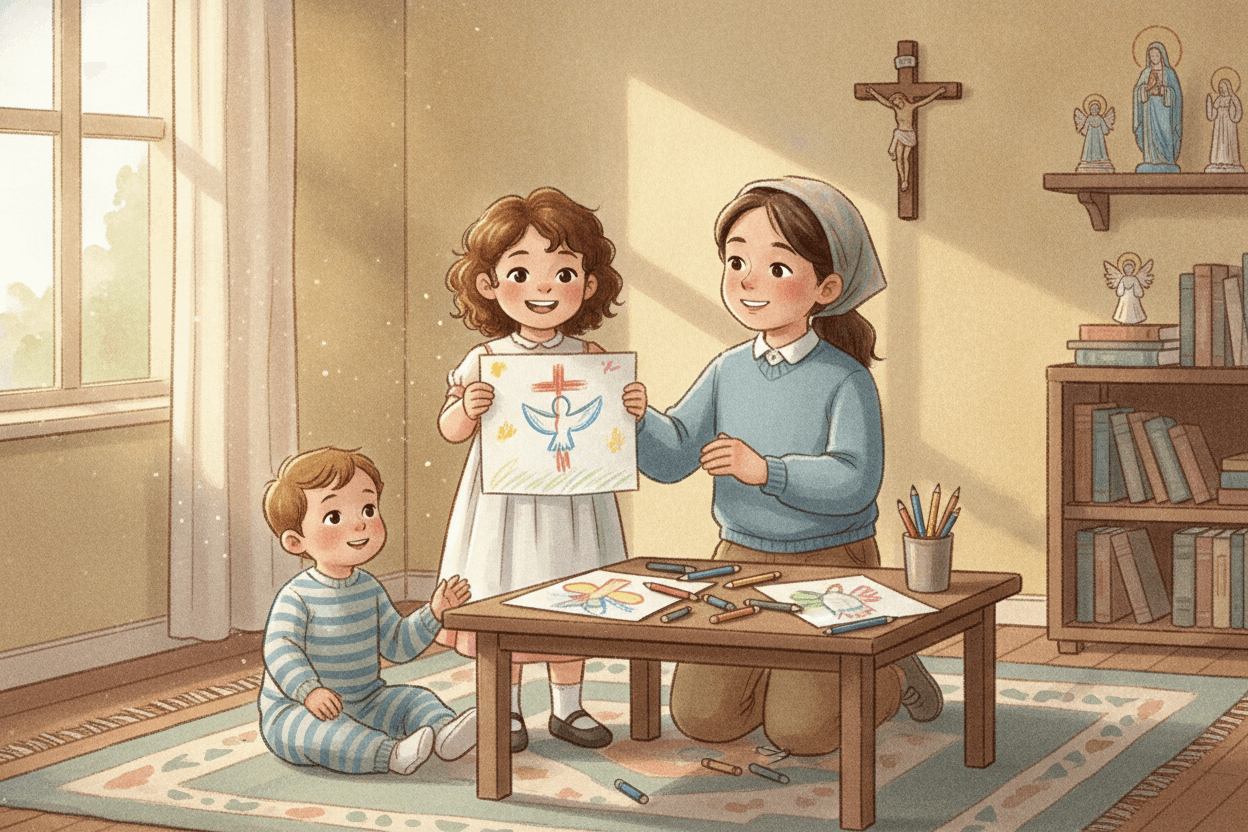
A child finishes a block tower, a spelling page, or a difficult puzzle and announces, “I did it all by myself!” At first, that sentence may be full of honest delight. But sometimes it quickly turns outward: “Mine is better than yours,” or “Don’t help me—I don’t need anybody.” This is a small, familiar moment in which parents and catechists can teach without scolding a child for being pleased with good work.
We need not silence healthy delight. Children are learning what they can do, and their self-understanding is still taking shape. Confidence says, “I worked hard, and I am glad I learned this.” Pride says, “I am better than you,” or “I do not need help, truth, or God.” The correction belongs to the attitude and behavior, not to the child’s worth. A calm response might be: “You did work hard. Thank God for helping you grow, and now let’s speak kindly about your brother’s tower.” This preserves joy while redirecting the heart.
Here’s how I’d teach this from Genesis 11. The problem at Babel was not that people made bricks, planned a city, or attempted something large together. Their words reveal the problem: “Come, let us build ourselves a city and a tower with its top in the sky, and so make a name for ourselves; otherwise we shall be scattered all over the earth.” They wanted security and glory on their own terms. Scripture invites us to notice that pride turns gifts, work, and even community into a way of placing ourselves at the center.
As the Catechism reminds us, “Pride is the mother of all sins” (CCC 1866). That does not mean a child who brags is a bad child. It means that each of us needs help seeing clearly: our abilities are real gifts, our effort matters, and we are never the source of everything we have. At home, try a simple three-part habit after an accomplishment: name the effort (“You kept trying”), name the gift (“God gave you a mind and hands to learn”), and name the next humble action (“How can you encourage someone else?”). A child can say, “I did it!” and also learn to add, “Thank you, God—and can I help?”
Then they said, "Come, let us build ourselves a city and a tower with its top in the sky, and so make a name for ourselves; otherwise we shall be scattered all over the earth."
Tower of Babel for Kids: What Went Wrong in Genesis 11?
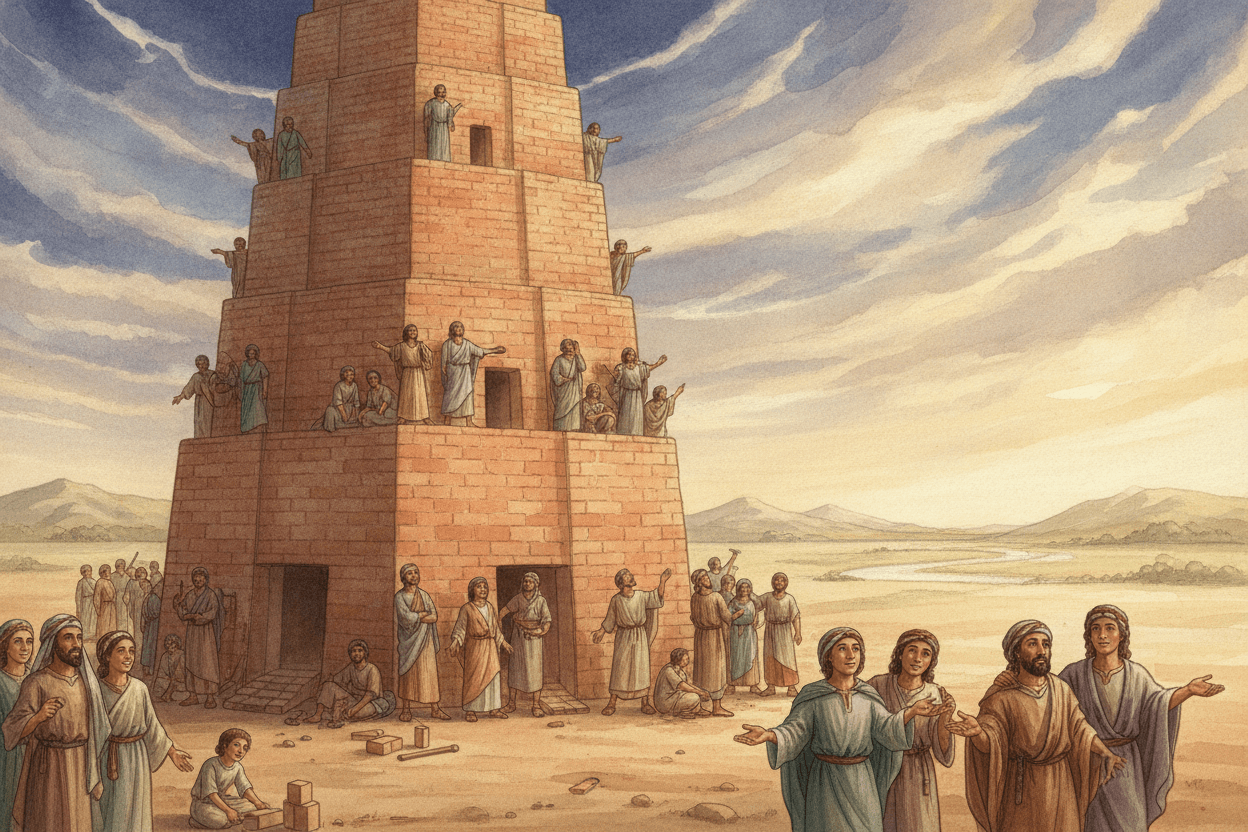
A child can stack blocks almost to her chin, step back, and announce, “Look what I made!” There is nothing sinful about her delight. Children should be glad to learn, create, practice, and work well with others. The people in Genesis 11 were not corrected because they made bricks, planned a city, or cooperated on an ambitious project. Their problem lay deeper than the tower itself.
The builders said, “Come, let us build ourselves a city and a tower with its top in the sky, and so make a name for ourselves; otherwise we shall be scattered all over the earth” (Genesis 11:4, NABRE). That phrase, “make a name for ourselves,” helps us see what went wrong. They wanted security and greatness on their own terms. Rather than receiving their lives and gifts from God, they tried to establish themselves apart from him. Scripture invites us to notice that pride is not simply feeling pleased after doing something well. Pride turns the heart inward and treats God, other people, and the truth as less important than being admired or being in control.
Here’s how I’d teach this to children: confidence says, “God helped me learn to read, and I worked hard.” Pride says, “I am better than everyone else, and I do not need help.” Confidence can accept a compliment and say thank you. Pride must win every conversation, interrupts to be noticed, refuses a teammate’s idea, or claims, “I did it all by myself,” even when others helped. This distinction matters because a child who is good at art, sports, math, or kindness does not need to feel guilty for having a gift.
God’s response at Babel—confusing their language and scattering them—shows that he takes seriously a community built around self-exaltation. He was not against human skill. In fact, the ability to build, invent, organize, and communicate is part of the good world God made. But gifts become distorted when we use them chiefly to make ourselves important. As the Catechism reminds us, “Pride is the mother of all sins” (CCC 1866), because it tempts us to put ourselves in God’s place.
A parent can end the story with a simple question: “What gifts has God given you, and how can you use them with gratitude?” That question corrects a child’s behavior without labeling the child as proud. We can name bragging or refusal to cooperate clearly, then point toward humility: telling the truth about our gifts, our limits, and our need for God and one another. The lesson of Babel is not “Do not build big things.” It is “Do not build your life as though you are your own maker.”
Then they said, "Come, let us build ourselves a city and a tower with its top in the sky, and so make a name for ourselves; otherwise we shall be scattered all over the earth."
Confidence or Pride? Give Children Words for the Difference
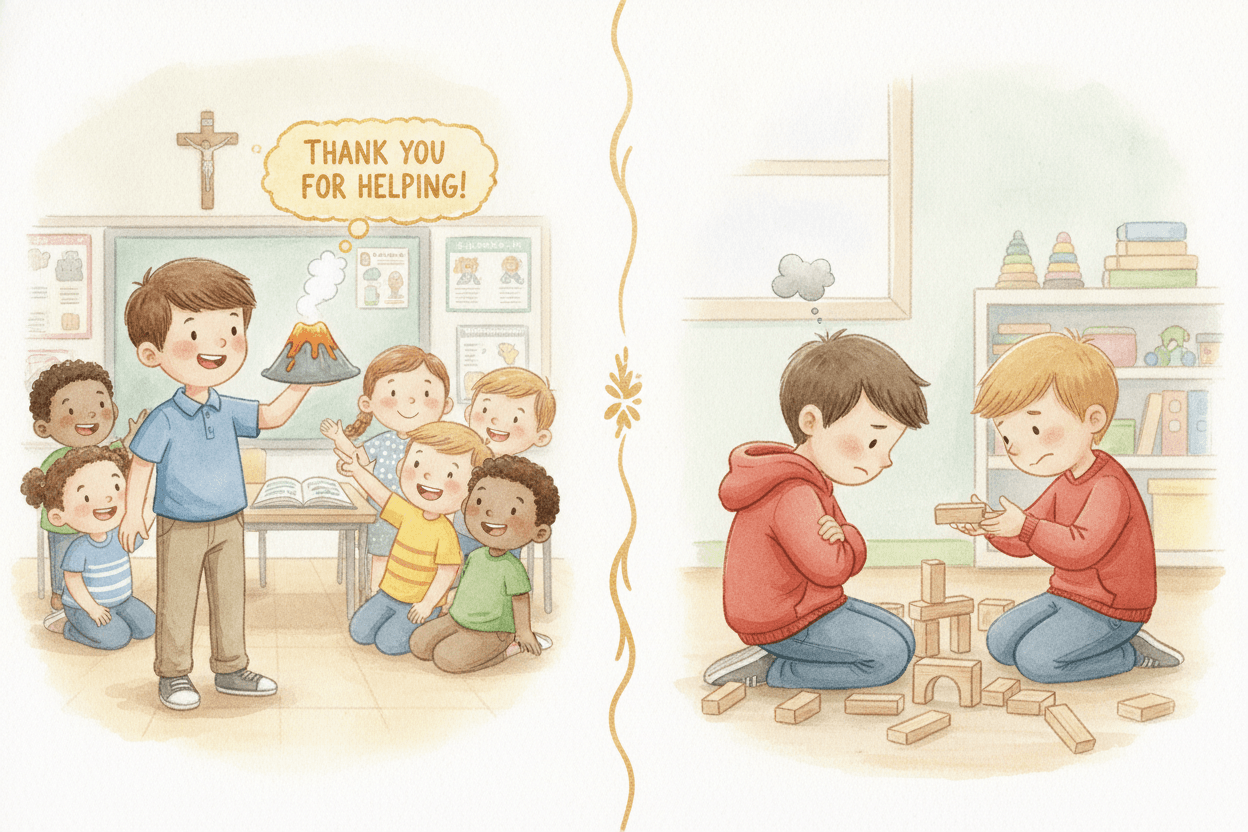
Your daughter finishes a difficult piano piece, looks up, and waits for your response. That is a small but important teaching moment. We do not need to dampen her delight or rush to warn her about pride. She worked, practiced, and used a real gift. The better response is, “You played that well. You kept trying—and thank God for giving you the ability to learn.” Catholic children do best when they learn that a gift can be honestly recognized without being turned into a reason to look down on others.
Here is the simple contrast I repeat with children: confidence says, “I can try with God’s help”; pride says, “I do not need God or anyone else.” Confidence is grateful, teachable, and willing to work. Pride wants to be above others, to receive all the credit, or to avoid the truth that every ability has limits. The people at Babel were not wrong because they could build or cooperate. Their trouble was in their purpose: they wanted to “make a name for ourselves” (Genesis 11:4). They treated their shared strength as a project of self-glory.
For ages six through nine, I would use examples they can identify quickly. A confident child might say, “I am good at drawing; I practiced a lot,” and gladly help a classmate who asks for a tip. A proud response sounds different: bragging until someone else feels small, interrupting repeatedly so everyone notices, refusing a group job because “they will ruin it,” or rejecting needed help with “I did it all by myself.” Being good at math, sports, music, reading, or making friends is not sinful. The question is what a child does with that gift and whether he can receive help, correction, and encouragement.
Scripture invites us to name the deeper issue carefully: “The beginning of human pride is to forsake the Lord; the heart has withdrawn from its Maker” (Sirach 10:12-13). Pride is not healthy satisfaction after effort. It is the heart beginning to act as though it has no Maker and no need of other people. As the Catechism reminds us, traditional moral teaching calls pride “the mother of all sins” (CCC 1866), because self-exaltation can make us resistant to God and uncharitable toward our neighbor.
Parents can correct without attaching a label to the child. Rather than, “You are so proud,” try, “That comment made your brother feel small. Let’s say what you did well without putting him down,” or, “You wanted everyone to notice you. Next time, let’s make room for someone else to speak.” Then give the child words for repair: “I am thankful I did well,” “Can you help me?” and “Good job; you worked hard too.” This is not shaming confidence. It is teaching children to tell the truth about their gifts, their needs, and the God from whom every good gift comes.
The beginning of human pride is to forsake the Lord; the heart has withdrawn from its Maker.
Teach Humility Without Making Your Child Feel Small
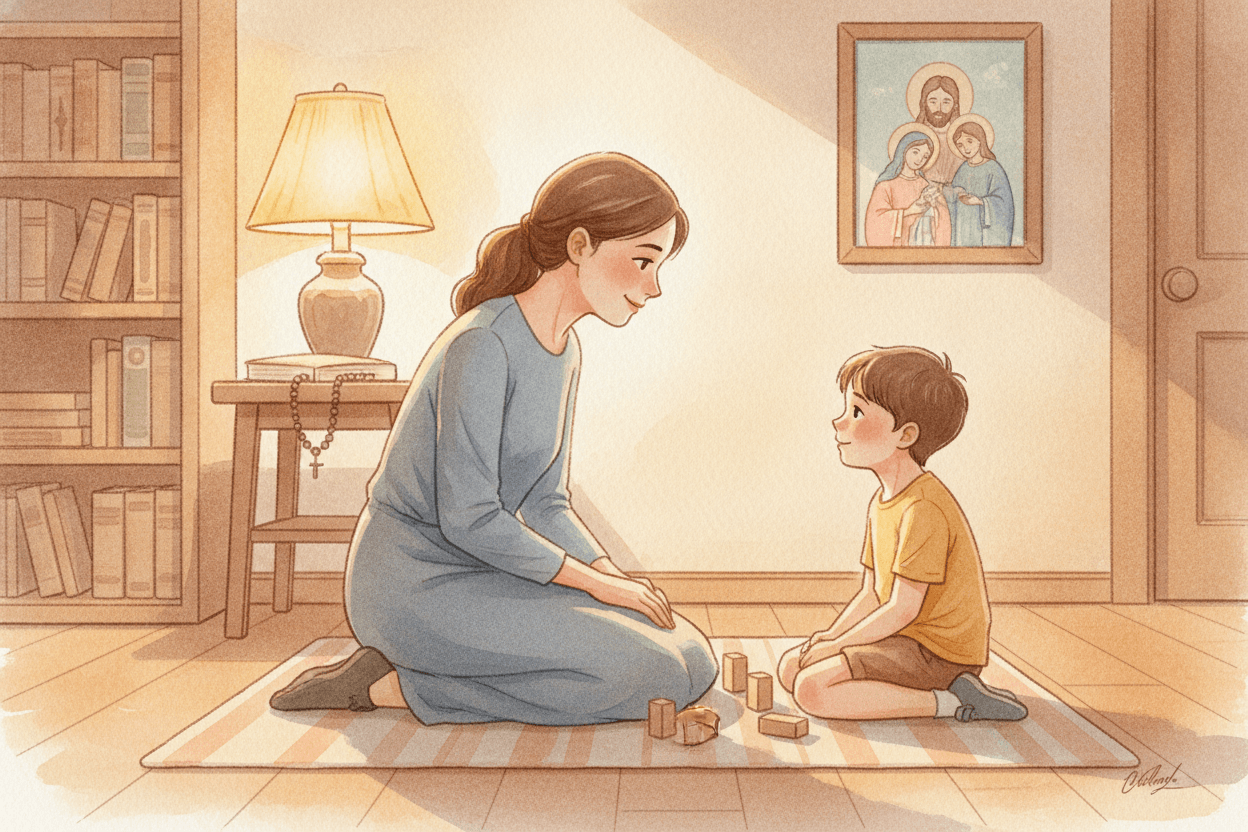
A child finishes a drawing, holds it up, and announces, “Mine is the best one here.” The correction matters—but so does its tone. If we answer, “Don’t be so prideful,” a child may hear that being talented, pleased, or noticed is somehow wrong. Catholic formation asks for more precision. We want children to tell the truth about their gifts, because gifts are real; we also want them to remember that no gift makes them more important than another person.
The Catechism names pride among the capital sins (CCC 1866), and traditional teaching calls it the beginning of other sins because it turns the heart toward self-exaltation. Yet humility is not self-dislike. It is not saying, “My drawing is awful,” when it is carefully made, or refusing a compliment to sound modest. Humility is truth: “I worked hard on this. Thank you, God, for helping me.” A humble child can be confident, grateful, and willing to learn.
Here’s how I’d teach this in a family or parish classroom: correct the particular choice, not the child’s identity. Try, “You spoke as if no one else’s work mattered. Let’s try again and notice what your friends did well.” Or say, “You wanted everyone to praise you, but you interrupted your sister. What could you say now?” These words name the behavior clearly while leaving room for repentance, repair, and growth. They also give a child something concrete to practice: listening, sharing credit, accepting help, and offering encouragement.
Jesus does not ask children to become invisible. He places childlike humility at the center of discipleship: “Whoever humbles himself like this child is the greatest in the kingdom of heaven.” This is not an instruction to think poorly of oneself. It is an invitation to receive life, abilities, and love as gifts rather than possessions we use to rank ourselves above others. Scripture invites us to teach humility as freedom from the exhausting need to be first all the time.
When a child succeeds, celebrate specifically: “You kept practicing those spelling words,” or, “You were a faithful teammate today.” Then add the wider truth: “God gave you abilities, and you chose to use them well.” When a child brags or refuses help, guide him toward a better sentence: “I’m proud that I worked hard, and I can still listen to others.” This approach forms conscience without planting shame. The child learns that a wrong choice needs correction, while he remains a beloved child of God, capable of choosing humility next time.
Whoever humbles himself like this child is the greatest in the kingdom of heaven.
A Babel Bible Lesson That Invites Conversation, Not Shame
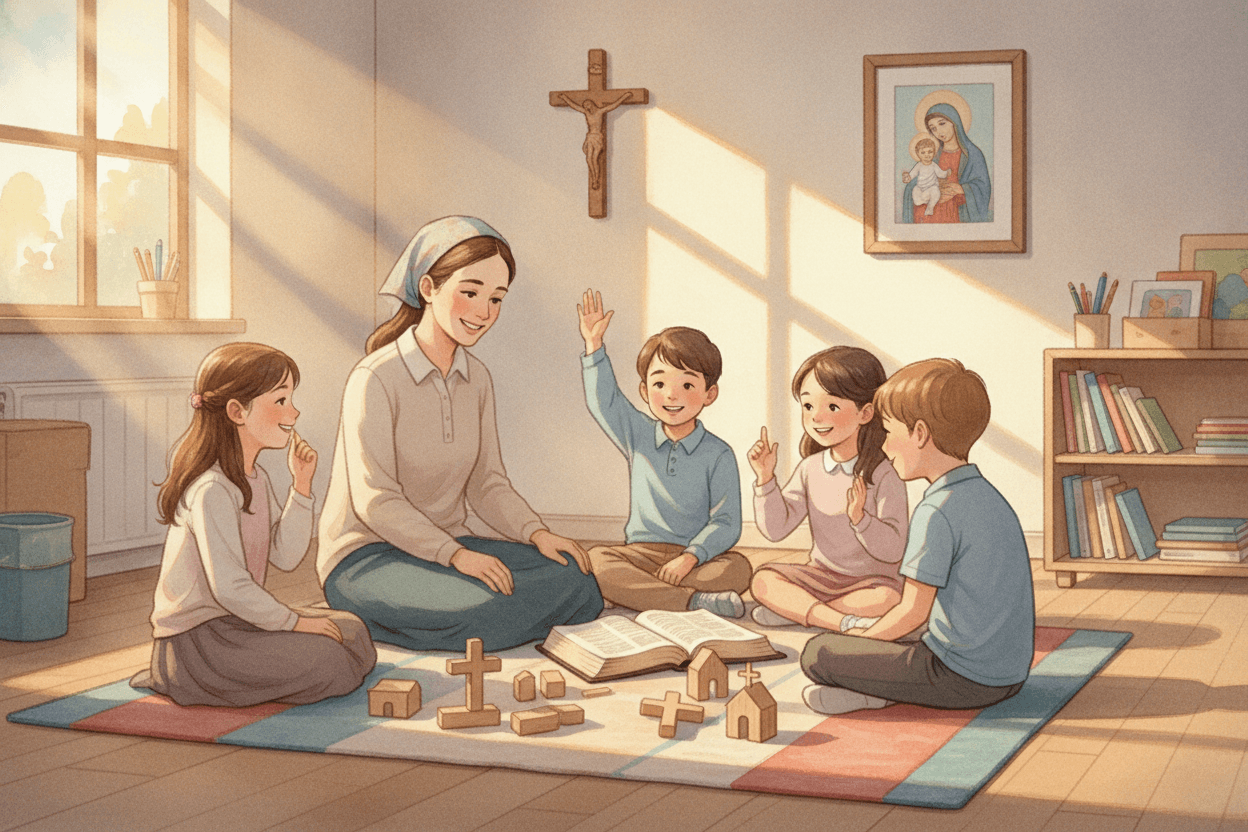
A child’s hand shoots up after a group project: “I did the whole thing!” Often, there is a grain of truth in the claim—and also an opening for patient formation. In a parish classroom, I would not answer with, “Don’t be proud.” I would slow the moment down. “You worked hard. Let’s think together: did anyone give you an idea, share supplies, explain the directions, or encourage you?” Children ages 6–9 can already recognize the difference between enjoying good work and insisting that all credit belongs to them.
Here’s how I’d teach this passage. Read Genesis 11:4 aloud, or retell it simply: the people planned a city and a tall tower because they wanted to “make a name for ourselves.” Then ask, “What did these people want others to think about them?” Let children answer before supplying a conclusion. They may notice that the people wanted to look important, strong, or independent. Clarify that the problem was not planning, working together, or building something large. The trouble was a heart turned toward self-glory rather than grateful dependence on God.
Next, bring the story close to ordinary childhood moments: wanting all the credit for a science project, interrupting so everyone notices your answer, refusing a teammate’s help, or saying, “I did it all by myself,” when a parent, teacher, or friend helped. Ask gently, “Have you ever wanted everybody to know you were the best?” and “Have you ever refused help because you wanted to prove something?” These are invitations, not traps. A child may say yes, no, or shrug. Leave room for an honest answer; formation is not a demand for a polished response.
Then offer questions that move from self-focus toward truth: “Who helped you?” “What gift did God give you for this?” “How can we use this gift to love God and others?” A child who is good at drawing can make a card for someone who is sick. A child who reads well can help a younger sibling. A child who is quick at soccer can include the player who is still learning. This does not diminish the child’s ability. It teaches that gifts are real, worth developing, and meant to be received with gratitude.
As the Catechism reminds us, “Pride is the mother of all sins” (CCC 1866), because pride tempts us to live as though we are our own source. Humility is not pretending we have no gifts. It is telling the truth: I worked hard; God gave me abilities; other people helped me; I can use what I have for love. When parents correct the bragging, interruption, or refusal to cooperate rather than labeling the child as “proud,” children learn that grace can reshape a habit without making them feel small.
Then they said, "Come, let us build ourselves a city and a tower with its top in the sky, and so make a name for ourselves; otherwise we shall be scattered all over the earth."
Try This Week: Celebrate the Gift, Name the Giver, Practice Help
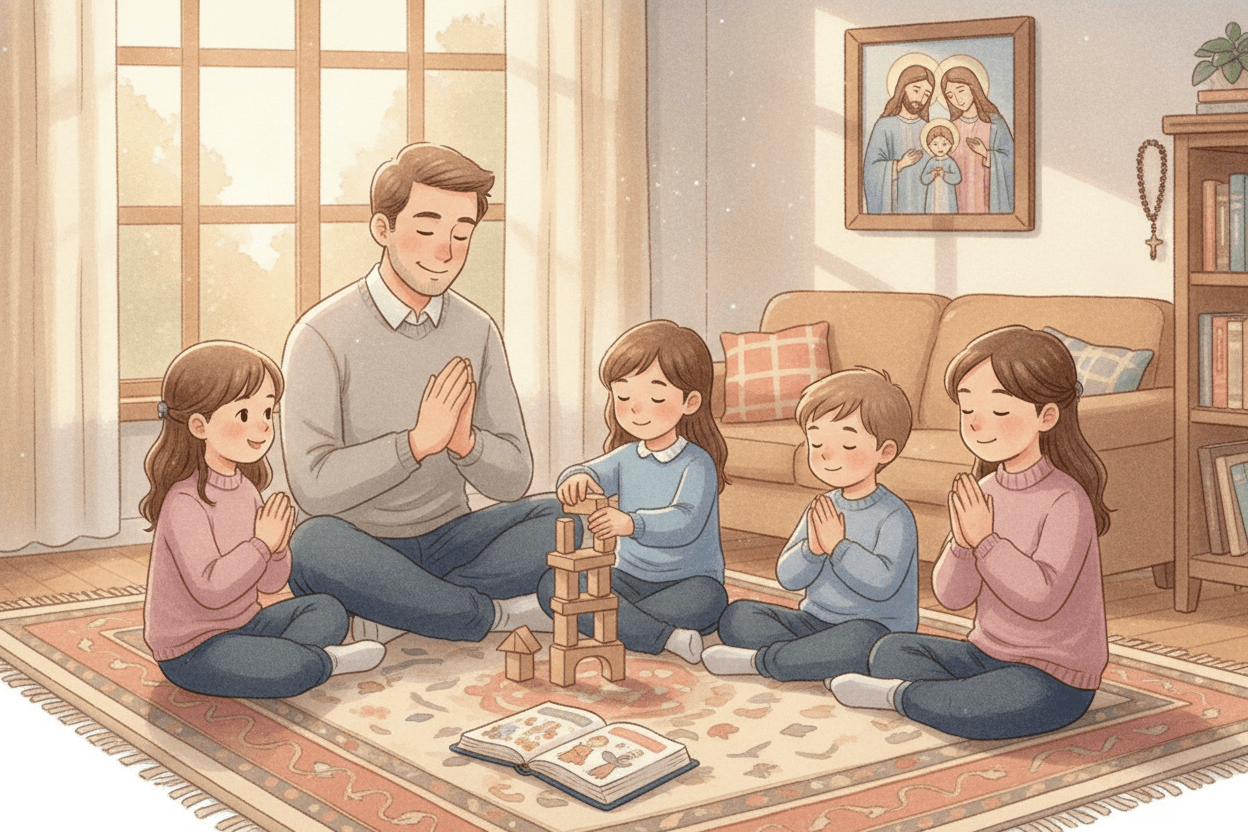
When your child brings home a spelling test marked 100, resist the vague “Good job!” for one moment. Look at the paper with him and say what is true: “You practiced those words every night. You kept trying when the long ones were hard.” Specific praise teaches a child to recognize real effort without turning achievement into a reason to stand above someone else. Catholic children need not be embarrassed by ability. They need language for receiving ability gratefully.
Then add the second movement: name the Giver. “Thank you, God, for the mind you gave Mateo, for his teacher, and for the time we had to practice.” This is not a speech meant to shrink a child’s happiness. It places that happiness in truth. Scripture invites us to notice the contrast at Babel: the people wanted to “make a name for ourselves.” Their trouble was not skill, cooperation, bricks, or a large plan. It was the desire for self-glory apart from God. As the Catechism reminds us, “Pride is the mother of all sins” (CCC 1866), because it tempts us to treat gifts as though they began and ended with us.
Here is how I’d teach this at home this week. Read Genesis 11:1–9 together, preferably with a small pile of blocks nearby. Let the children build a tower, then ask: “What is good about building together?” and “What words in the story show what the people wanted most?” If a child is young, keep the distinction plain: confidence says, “I worked hard, and I can try”; pride says, “I am better than everyone, and I do not need help.” The BibleHeroes Tower of Babel comic can extend the conversation for children who respond well to pictures and retelling. Return to the biblical text after the comic, so Scripture remains the source of the lesson.
Finally, choose one concrete act of humble teamwork for the week. A child who succeeded at school might help a sibling study, carry supplies for a teacher, set the table without announcing it, or let someone else choose the game. At the end of the day, ask three brief questions: “What did you do well? Whom did you thank? Where did you accept or offer help?” Correct bragging, interrupting, or refusing teamwork directly, but do not attach those choices to the child’s identity. We can say, “That sounded like you wanted all the credit; let’s try again with gratitude,” rather than, “You are prideful.” This practice makes room for honest celebration, thanks to God, and the quiet strength of receiving one another’s help.
Then they said, "Come, let us build ourselves a city and a tower with its top in the sky, and so make a name for ourselves; otherwise we shall be scattered all over the earth."
Frequently asked questions
How do I teach my child the difference between confidence and pride?
Tell your child that confidence is being glad about real effort and gifts, while pride puts other people, truth, or God aside. Try: “You worked hard on that, and God helped you grow.” Then invite one humble next step, such as encouraging a sibling or thanking a teacher.
Is it wrong when my child says, “I did it all by myself”?
Not necessarily. Young children often mean they are excited to notice a new skill, and that healthy delight should not be shamed. Step in when the statement becomes bragging, refuses rightful help, or puts someone else down.
What is the lesson of the Tower of Babel for kids?
Babel teaches that building, planning, and working together are good, but our goals matter. The people wanted to “make a name” for themselves apart from God, so use the story to help children see that gifts are for gratitude, service, and loving community—not self-glory.
How can I correct bragging without making my child feel bad?
Correct the words or behavior, not your child’s character. You might say, “You did work hard, but we do not say we are better than others,” and then help them name what is true: their effort, God’s gifts, and any help they received.
What does Catholic teaching say about pride?
The Catechism calls pride the “mother of all sins” (CCC 1866) because it tempts us to put ourselves in God’s place. This does not mean a child who boasts is a bad child; it means every person needs practice receiving gifts truthfully, gratefully, and humbly.
What simple habit can help children practice humility after an accomplishment?
Use three steps: name the effort, name the gift, and choose a loving action. For example: “You kept trying, God gave you abilities to learn, and now how can you encourage someone else or use this gift to help?”
Sources: bible.usccb.org · vatican.va · usccb.org · usccb.org · cathstan.org · washington.edu · socialsci.libretexts.org · newsletter.buildlegends.com · kiddieacademy.com · eprints.soton.ac.uk
Scripture quotations in this article use the NABRE translation.