Why Ruth Is in Jesus’ Family Tree
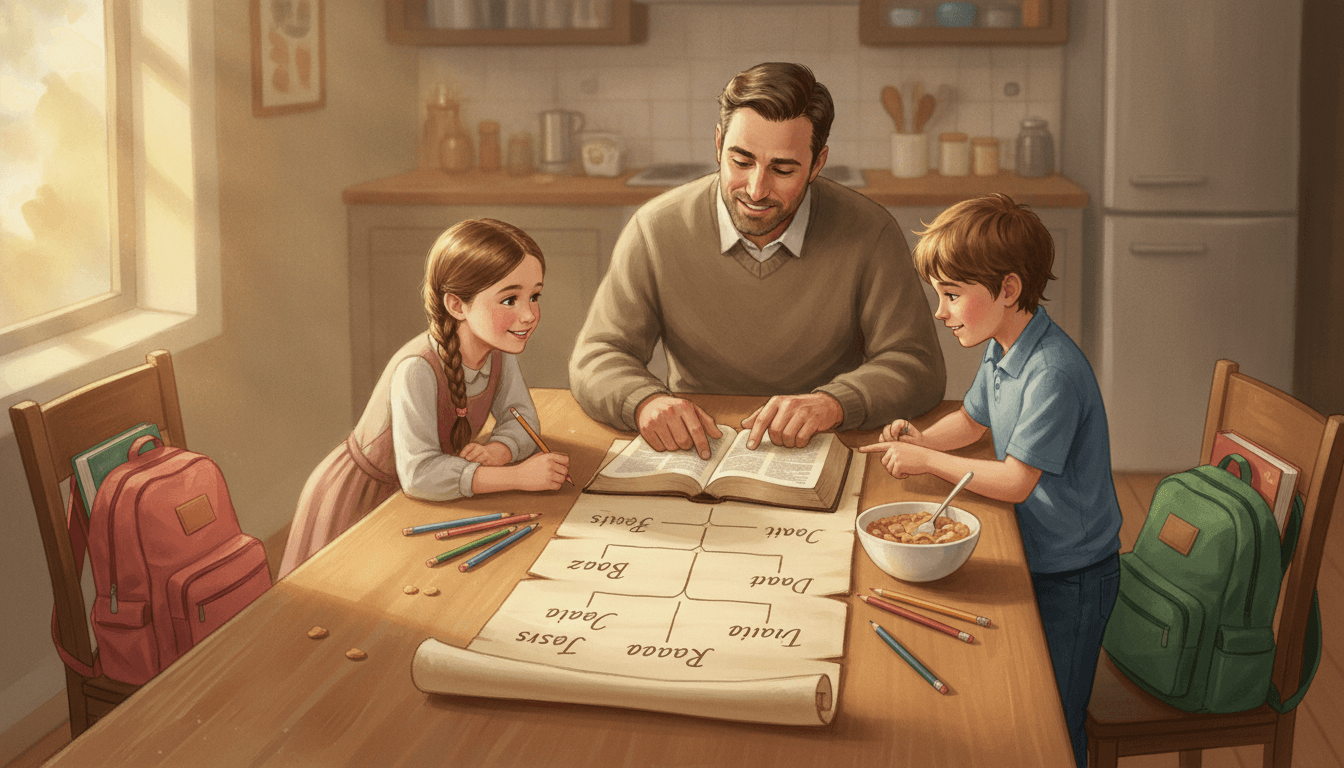
“Why are we reading all these names?” is a fair question when Matthew 1 shows up at the kitchen table. But tucked into that long list is Ruth: a foreign widow whose loyal love in Bethlehem became part of the road to Jesus.
Start With the Question Every Kid Asks: Why Do the Begats Matter?
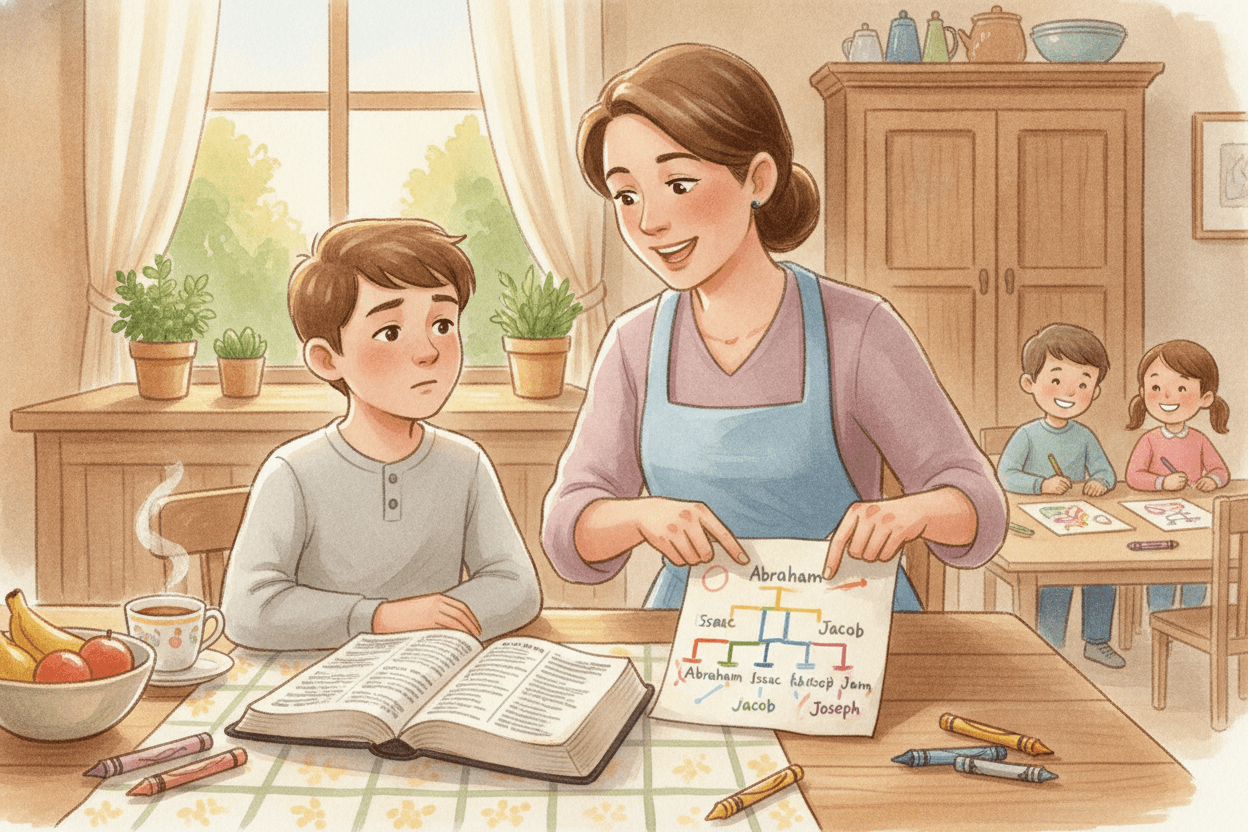
The first time we read Matthew 1 aloud with kids, somebody usually makes it three names in before asking the honest question: “Why is this in the Bible?” Fair question. A page full of fathers, sons, and names we can barely pronounce can feel like the part you have to get through before the real story begins. Meanwhile, somebody has spilled milk, and Dad is trying not to say “Zerubbabel” like it is a sneeze.
Here’s what landed at our table: this list is Jesus’ family scrapbook. Matthew is not filling space. He opens his Gospel by telling us exactly who Jesus is. Jesus did not simply appear out of nowhere like a superhero dropping from the clouds. He was born into a real human family, with grandparents and great-grandparents, brave people and sinful people, kings and outsiders. Those names tell the story of a God who kept working through ordinary generations, even when those generations were messy.
Matthew begins, “The book of the genealogy of Jesus Christ, the son of David, the son of Abraham.” Those two family names matter. Abraham was the man through whom God promised to bless all peoples. David was Israel’s great king, and God promised that his line would endure. By connecting Jesus to Abraham and David, Matthew is saying: Jesus is the promised Messiah. He is the King God promised. This is not a random baby in Bethlehem. This is the Savior Israel had been waiting for.
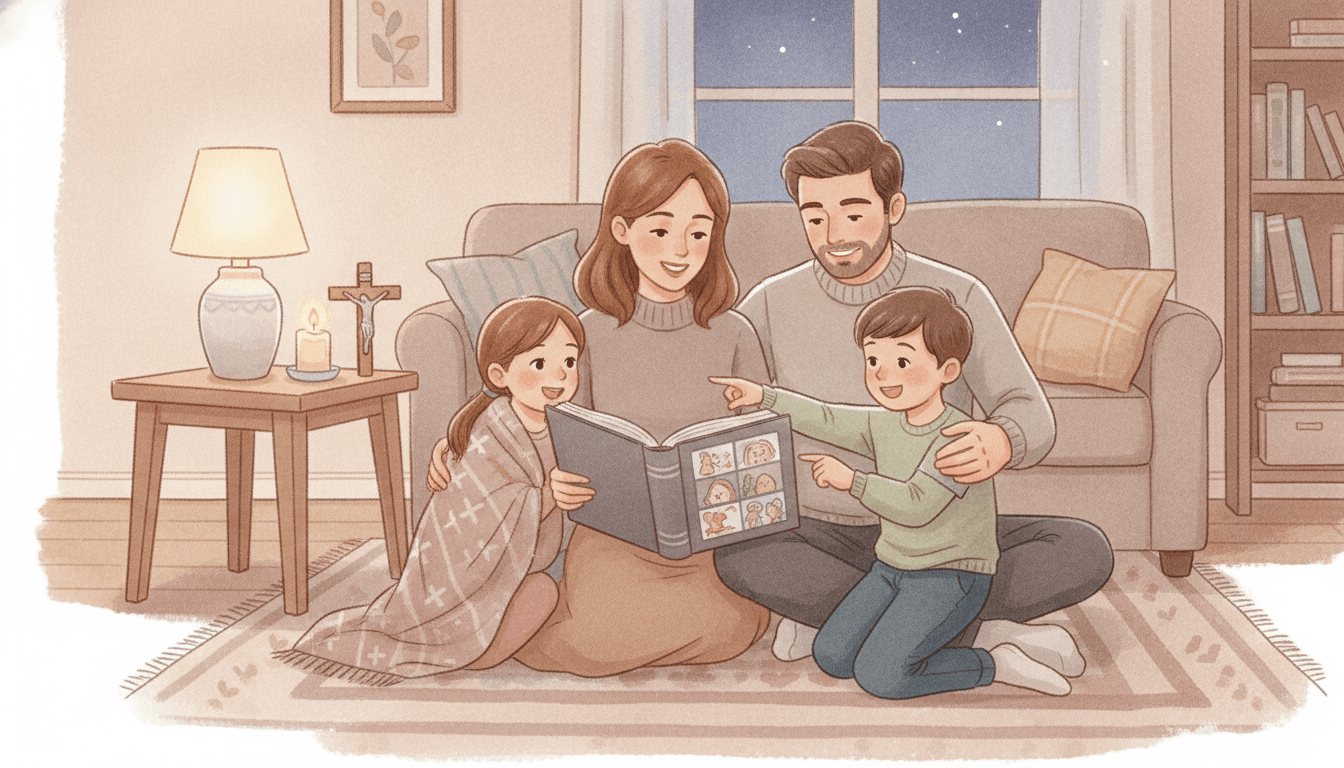
For a child, I would put it this way: a family name can tell you where you belong. If your child sees Grandma’s old photo album, they may point at faces and ask, “Who is that?” The answers make them feel connected: “That is your great-grandpa. He worked hard. That is your aunt when she was little.” Matthew gives us Jesus’ family album so we can see that God’s rescue plan had a history. It began long before the manger scene.
One small thing we tried was to read only the first verse, then draw a simple line: Abraham, David, Jesus. No quiz. No pressure to memorize fourteen generations—although a kid who loves numbers may enjoy Matthew’s pattern. Just ask, “What do you think Matthew wants us to know about Jesus before he tells us anything else?” Then remind them that God keeps His promises over a long time. That is good news for kids waiting on answers, and for parents still waiting for everyone to put on shoes.
The book of the genealogy of Jesus Christ, the son of David, the son of Abraham.
The Name That Should Make Us Stop: Ruth
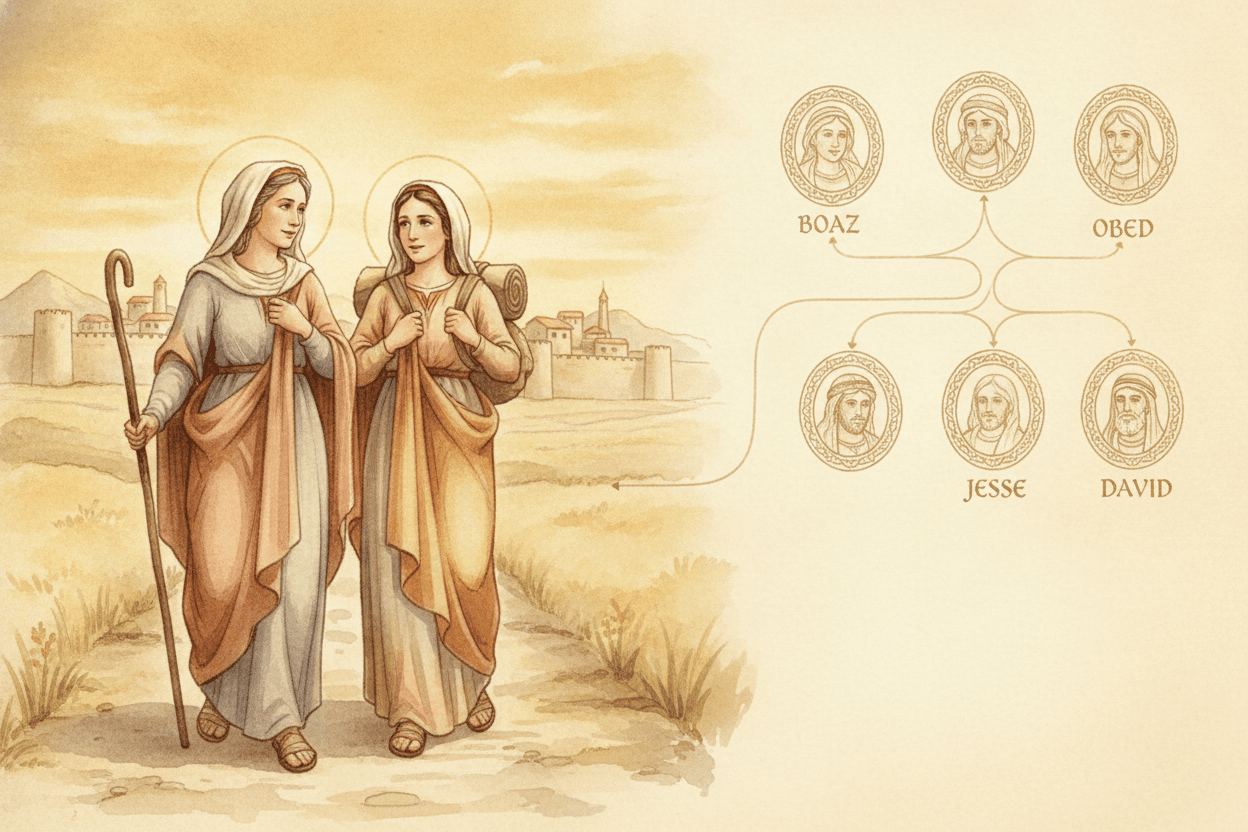
The first time we read Matthew’s long list aloud at our table, one of my kids stopped us at a name nobody expected to hear: Ruth. Not David. Not Abraham. Ruth. It is easy for children to picture kings in Jesus’ family line. It is harder, and better, to notice the widow from a different country tucked right into the names leading to Jesus.
Matthew does not mention Ruth by accident. He places her in a very specific chain: Boaz, then Obed, then Jesse, then David the king. That means Ruth became King David’s great-grandmother. And David is one of the biggest names in the whole Bible because God promised that the Messiah would come from David’s family. So when Matthew begins telling us who Jesus is, he shows us the family record. Jesus is truly the Son of David. But Matthew also makes sure we see Ruth’s name in the record.
Here is the surprise kids need to hear plainly: Ruth was a Moabite. She came from outside Israel. After her husband died, she chose to stay with her mother-in-law, Naomi, and went with her to Bethlehem. She did not arrive with a crown or a famous last name. She arrived carrying grief, loyalty, and a willingness to begin again. Later she married Boaz, and their family became part of the line that led to Jesus. God did not treat Ruth as a footnote. He gave her a place in the story everybody remembers.
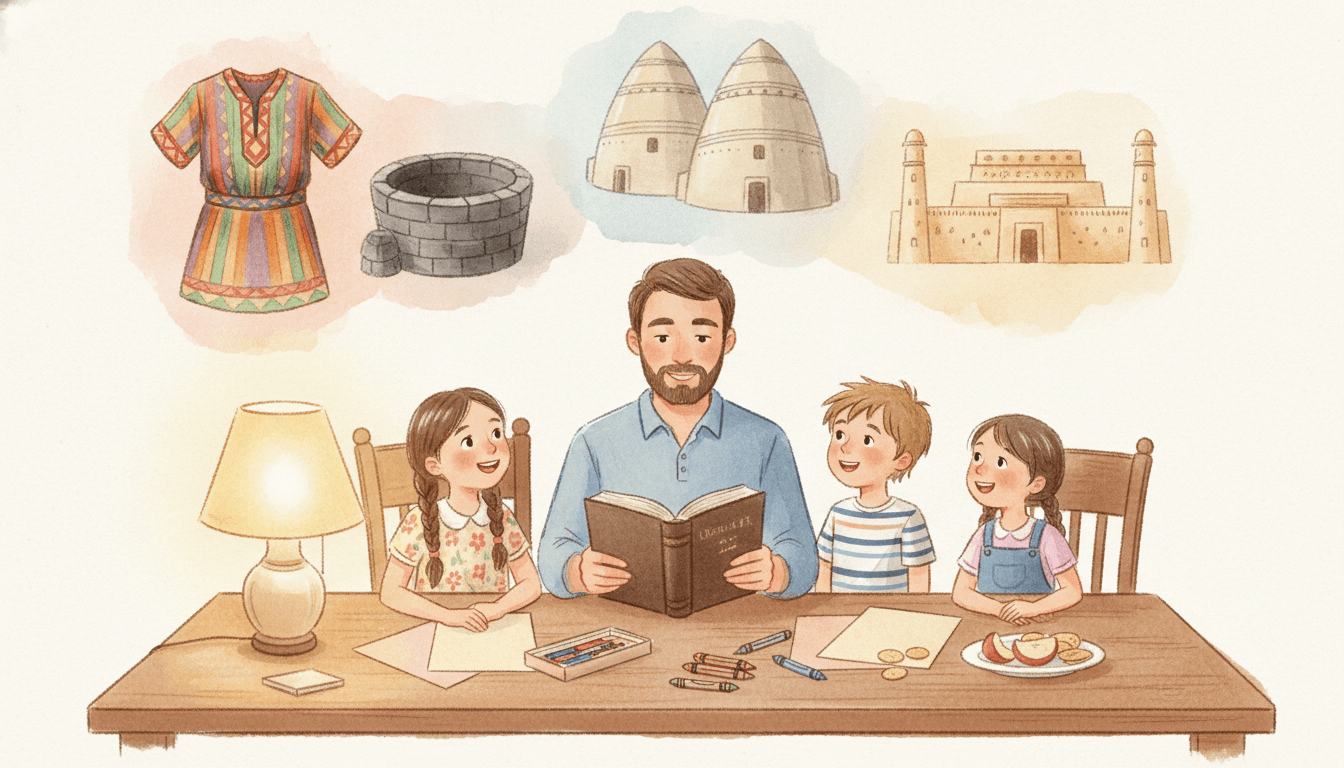
This can land close to home for a child who feels like the odd one out at school, in a new neighborhood, or even among cousins who all seem to know the rules of the game. Ruth shows that being an outsider does not put someone outside God’s care. Jesus’ own family line includes people with surprising stories. One small thing we tried was drawing four boxes on a scrap of paper: Ruth, Obed, Jesse, David. Then we drew an arrow from David to Jesus. It took about two minutes, which is good because someone was already asking for a snack. But the point stayed with them: Ruth’s quiet faithfulness mattered, and God used it in a way she could not have seen.
When your child asks why Matthew lists all those names, point to Ruth. Tell them, “This is Jesus’ real family scrapbook, and God wanted Ruth in it.” Her name tells us that God keeps His promises through real people, including people others might overlook. A kind choice, a faithful choice, a choice to stay and help when life is hard—God sees those things. Ruth did not know the whole future of her family. None of us do. She simply loved faithfully in the moment in front of her.
Salmon the father of Boaz, whose mother was Rahab. Boaz became the father of Obed, whose mother was Ruth. Obed became the father of Jesse, Jesse the father of David the king.
Ruth’s Small, Loyal Choices Became Part of a Big Story
The other morning, one of my kids complained about unloading the dishwasher as if we had asked him to cross a desert with no water. It was only ten minutes of spoons, cups, and one suspiciously sticky bowl. But it gave us a way into Ruth’s story. Most of her important choices did not look important at the time either. She was not a queen, a commander, or a person with a giant crowd following her. She was a grieving young widow trying to decide what to do next.
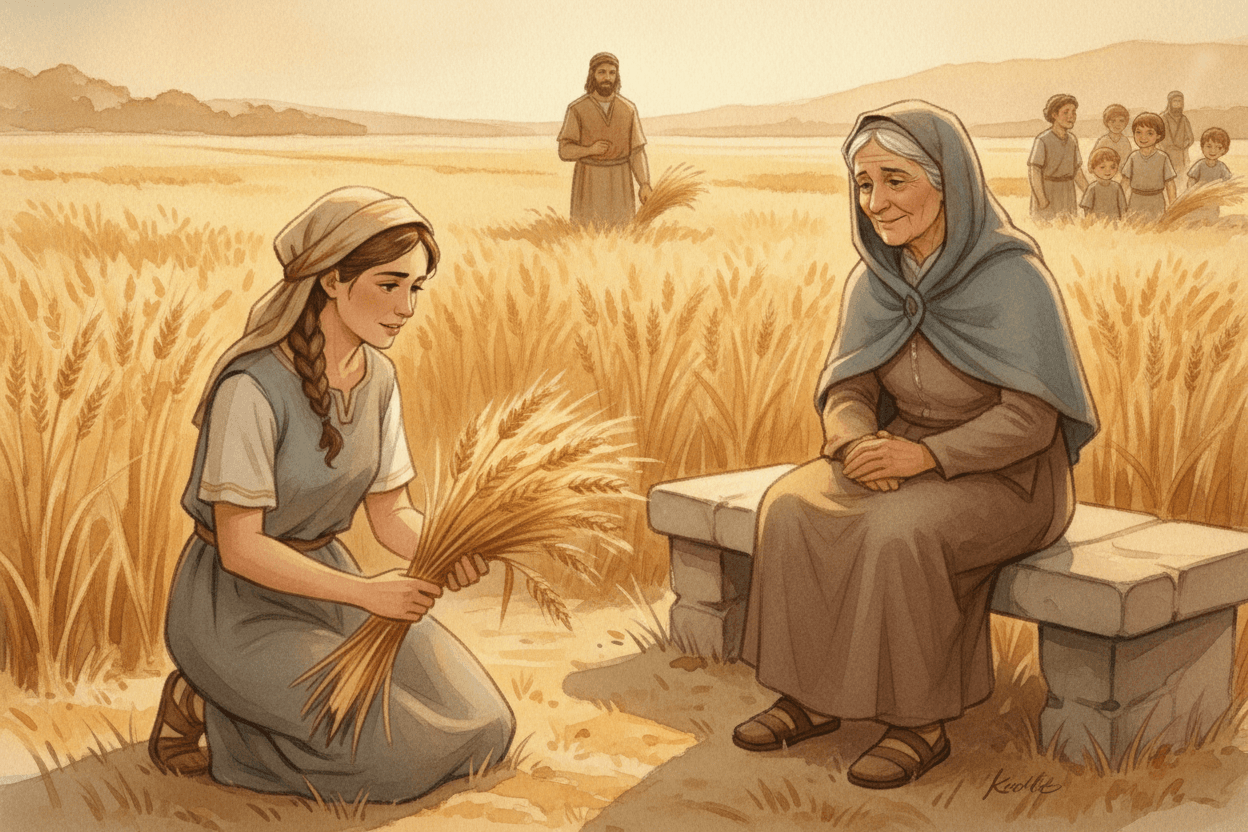
Ruth could have stayed in her own country of Moab after her husband died. Instead, she chose to remain with Naomi, her mother-in-law, who was also grieving and heading back to Bethlehem. Ruth left the place she knew and went with Naomi into a land where she would be an outsider. That is real courage. Then, in Bethlehem, Ruth did the ordinary work in front of her. She went into the fields to gather leftover grain so there would be food. She showed up. She worked. She cared for Naomi. Those actions may sound small to a tween, especially compared with slaying giants or parting seas, but Scripture makes room for this kind of faithfulness.
Ruth met Boaz while gathering grain in his field. Boaz treated her with kindness, and in time they married. Their family became part of Israel’s story in a way Ruth could never have guessed while she was picking up grain behind the harvesters. Here’s what landed with our kids: Ruth did not wake up knowing she would become King David’s great-grandmother and an ancestor of Jesus. She simply chose loyalty when leaving would have been easier, courage when the future was unclear, and steady work when life had fallen apart.
That is good news for the kid sitting at your table who feels unnoticed. God sees the child who includes the new student, tells the truth after making a mess, helps a younger sibling without being asked, or keeps praying when a hard situation does not change quickly. None of those choices earns God’s love; He already gives that freely. But our small choices can become ways of loving Him and the people He has given us. One small thing we tried was asking at dinner, “What was one loyal choice you made today?” The answers were not dramatic. “I shared my snack.” “I did not yell back.” “I helped Mom carry groceries.” That is exactly the point. Ruth’s story teaches our children that God is at work in faithful, everyday love—and He can do far more with it than we can see.
Salmon became the father of Boaz, Boaz became the father of Obed, Obed became the father of Jesse, and Jesse became the father of David.
Jesus’ Family Tree Was Real—and Not Neat
Last week, one of my kids looked at a family photo and asked why somebody was missing. It was not a trick question. Families have people we do not know how to talk about yet: the relative who moved away, the marriage that ended, the grandparent who died too soon, the hard part of the story that makes adults suddenly busy with the dishes. Matthew does not make Jesus’ family record look tidy for our comfort. He tells the truth about a real family.
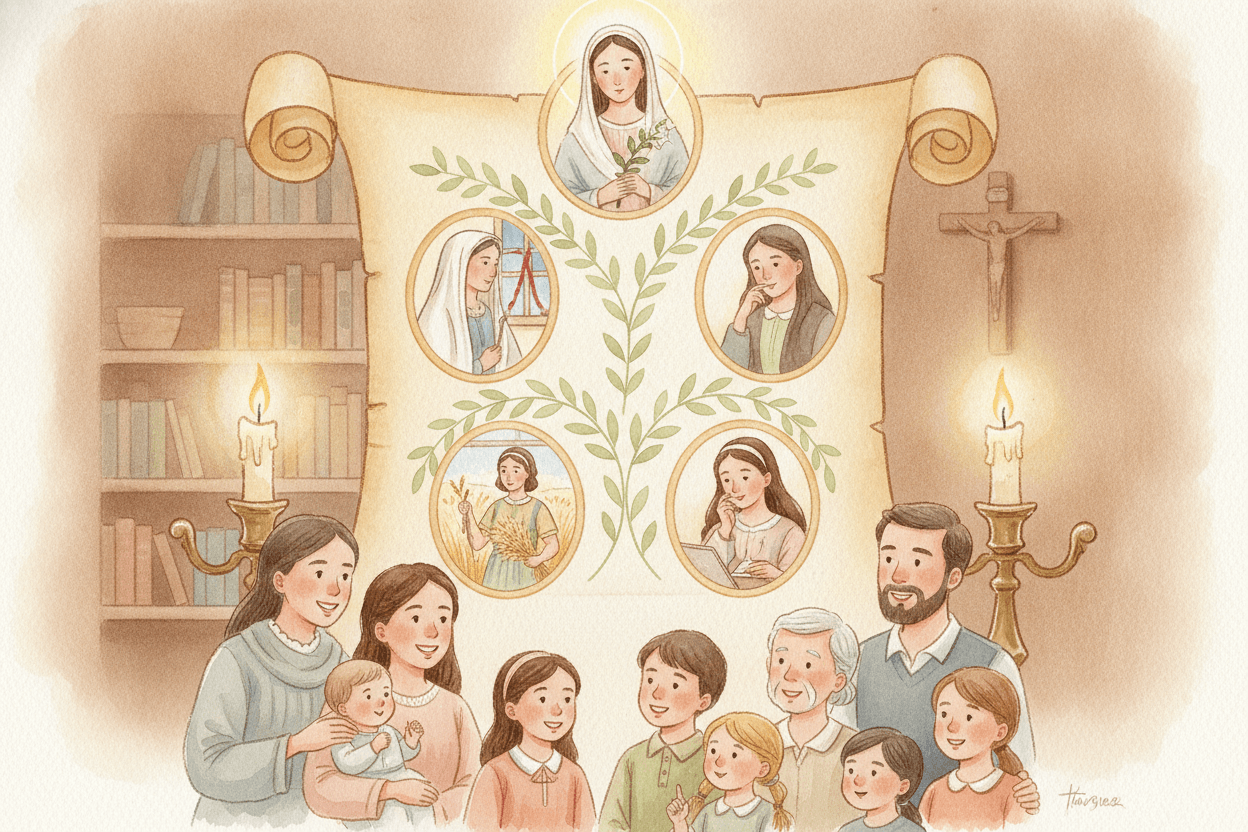
That is one reason the names of Tamar, Rahab, Ruth, Bathsheba, and Mary matter so much. Ancient family lists usually focused on fathers and sons. Matthew slows us down by bringing these women into the story. Their lives were not all alike. There was grief. There was sin. There were painful choices made by other people. Ruth came from Moab, making her an outsider to Israel. Bathsheba’s story carries the shadow of David’s grave sin; Matthew even refers to her as the wife of Uriah, refusing to let us pretend nothing happened. And Mary faced a frightening, misunderstood calling.
This is not Matthew gossiping about Jesus’ relatives. He is showing us what kind of Savior Jesus is. He did not arrive with a polished family tree full of people who always got it right. He entered a human family marked by joy and failure, courage and loss, faithfulness and confusion. God did not approve of sin or make suffering good. But he did not abandon people inside those stories either. His mercy kept working, generation after generation, until Jesus was born.
Here’s what landed with our kids: our family does not need to be perfect before God can work in it. That is a relief, because in our house somebody is usually upset about a missing shoe or a sibling touching the wrong snack. Try drawing a simple family tree this week. You do not need to explain every hard detail. Just tell your child, “Every family has happy parts and hard parts. God sees all of it, and he does not stop loving us.” Then ask them to name one person in your family who needs prayer. Matthew’s list teaches kids that no one is too messy, too sad, too far outside, or too ordinary for God to include in his plan.
What Ruth Teaches Kids About Belonging
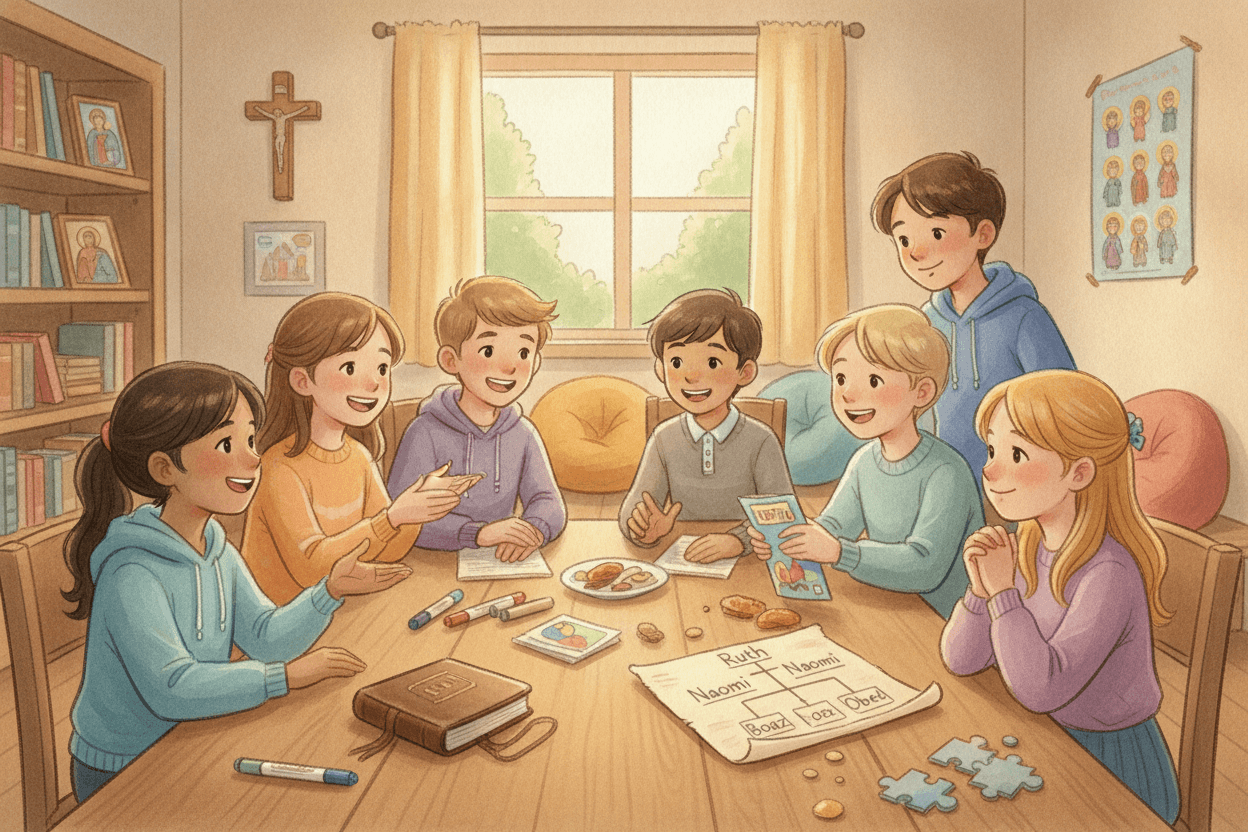
The new kid had been at school for three days, and our child reported the important facts over cereal: he sat alone at lunch, he liked soccer, and nobody knew where he had moved from. That is usually how belonging begins for children—not with a speech, but with noticing who is standing at the edge of things. Ruth knew that edge. She was a Moabite woman, not an Israelite, and she entered Naomi’s family in a hard season marked by loss and uncertainty.
Then Ruth made a faithful choice. She stayed with Naomi, traveled with her to Bethlehem, worked, and built a life among people who were not originally her people. Matthew does not hide her in the family list. He names her: “Boaz became the father of Obed, whose mother was Ruth. Obed became the father of Jesse, Jesse the father of David the king.” Ruth is David’s great-grandmother and part of Jesus’ own human family. The outsider is not a side note. Her name belongs in the story.
That can land with a tween who wonders where they fit. Maybe they are the new child in a class where friend groups already seem locked up. Maybe their family does not look like the family in someone else’s Christmas card: divorce, a stepparent, grandparents raising them, a parent who is absent, plenty of loud opinions at Thanksgiving. Ruth’s place in Jesus’ lineage says that God does not sort people into “important families” and “the rest.” He knows real families. He works within them. And a child’s mistakes do not put them beyond his mercy either. We still name the wrong thing as wrong, apologize, and begin again. But failure is not the end of their place with God.
One small thing we tried was asking at dinner, “Who might feel outside today?” Sometimes the answer is a classmate. Sometimes, honestly, it is the child answering. Help your tween pick one ordinary response: save a seat, learn a name, invite someone into a game, or refuse to laugh when a kid gets left out. Ruth’s story gives them a sturdy reason. In God’s family, belonging is not earned by having the right background, the easiest home life, or a spotless record. God made room for Ruth, and he teaches us to make room too.
Salmon the father of Boaz, whose mother was Rahab. Boaz became the father of Obed, whose mother was Ruth. Obed became the father of Jesse, Jesse the father of David the king.
Try This at Your Table This Week
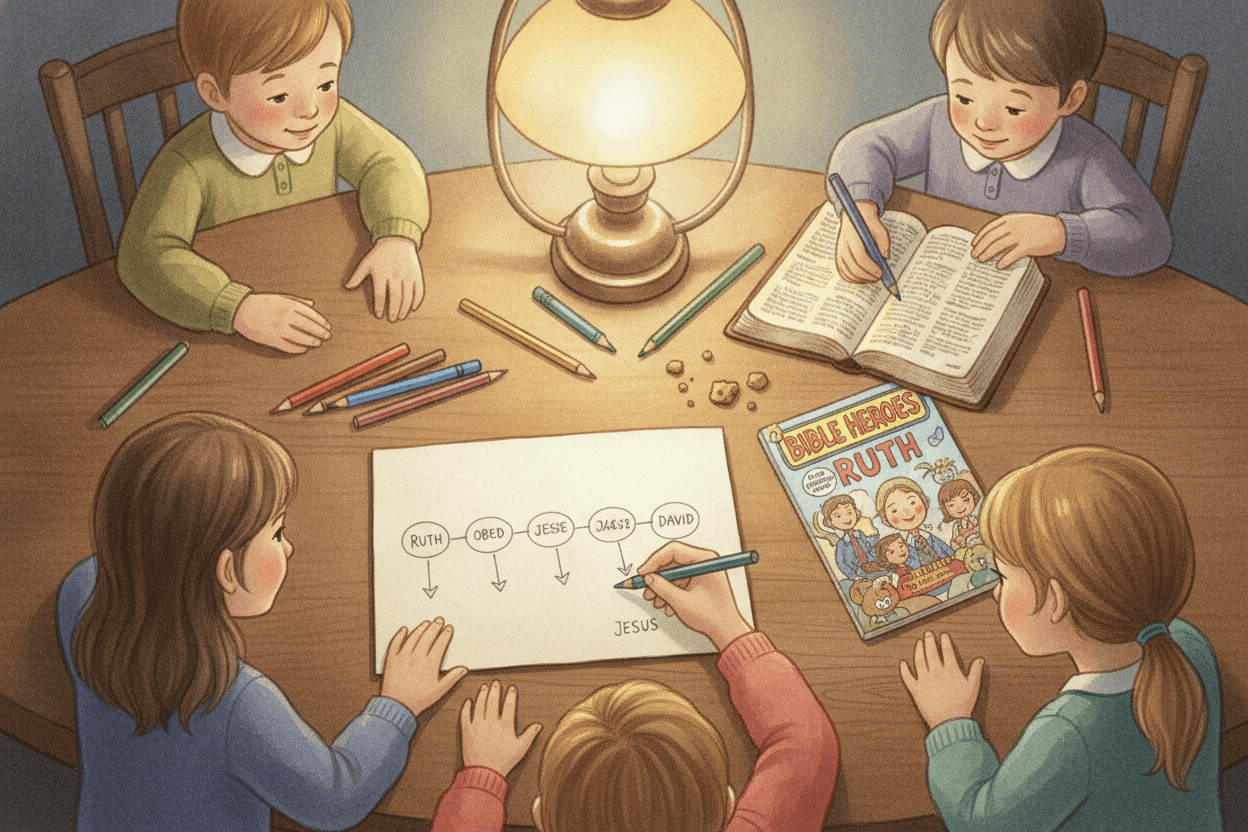
Tuesday dinner is usually not when our kids are most eager for a Bible lesson. Someone wants more ketchup. Someone else has slid halfway under the chair. That is exactly why this can work. You do not need a long family study or a perfect quiet room. Grab a Bible, a sheet of paper, and a pencil. Tell the kids, “Tonight we are finding one woman’s name in Jesus’ family tree.” That little bit of mystery is often enough to get them looking up from their plates.
Start by reading Matthew 1:1 aloud. Then skip to Matthew 1:5–6 and listen for Ruth’s name. Explain it simply: Matthew is showing us that Jesus came from a real family, and Ruth is part of it. After that, read Ruth 1 together if your kids can handle a longer reading, or retell it in your own words: Ruth lost her husband, chose not to leave Naomi alone, and traveled with her to Bethlehem. Then read Ruth 4:21–22, or point out the names at the end. Keep the goal small. Your children do not need to remember every detail tonight. They just need to see that the Ruth they met in the Old Testament shows up again when Matthew introduces Jesus.
One small thing we tried was drawing a very un-fancy chain on paper: Ruth → Obed → Jesse → David → Jesus. Let a child draw the arrows, even if David gets a crown the size of a dinner plate. Say, “Ruth was not born among the people of Israel. But she trusted God, loved Naomi, and became part of this family.” That helps kids see why her name matters. God did not keep outsiders at arm’s length. He brought Ruth into the line of David, and into the family line of Jesus.
Then ask one question before the dishes take over: “What small faithful choice can we make this week?” Maybe it is sitting with the lonely kid at lunch, helping a sibling without being asked, calling a grandparent, or praying for someone who feels left out. Write down one answer for each person. Ruth probably did not know her kindness would be remembered in the Gospel of Matthew. Our kids do not need to know the whole future either. They can make the next loving choice. If your family wants to stay with Ruth’s story, the BibleHeroes Ruth comic can give younger readers a clear, lively way to revisit Naomi, Boaz, Bethlehem, and the family line that leads to Jesus.
Salmon the father of Boaz, whose mother was Rahab. Boaz became the father of Obed, whose mother was Ruth. Obed became the father of Jesse, Jesse the father of David the king.
Frequently asked questions
Why is Ruth included in Jesus' genealogy?
Ruth is included because she became the great-grandmother of King David. Since God promised that the Messiah would come from David's family, her place in the family line helps show that Jesus is the promised Son of David.
How do I explain Matthew 1's genealogy to my kids?
Tell children it is like Jesus' family scrapbook: it shows that He was born into a real family and that God's rescue plan unfolded over many generations. Start simply with Abraham, David, and Jesus, then point out Ruth as one surprising person God included.
What does Ruth's story teach children about being an outsider?
Ruth was a Moabite who came to Bethlehem after losing her husband, so she entered Israel as an outsider. Her place in Jesus' family line shows children that no one is outside God's care or too overlooked to matter in His plan.
What can kids learn from Ruth's ordinary choices?
Ruth cared for Naomi, moved to an unfamiliar place, and gathered grain so they could eat. Her story helps children see that faithful acts of love, service, and courage matter to God even when they do not seem important at the time.
Sources: bible.usccb.org · bible.usccb.org · wordonfire.org · press.vatican.va · catholic.com · pewresearch.org · access.barna.com · bible.usccb.org
Scripture quotations in this article use the NABRE translation.