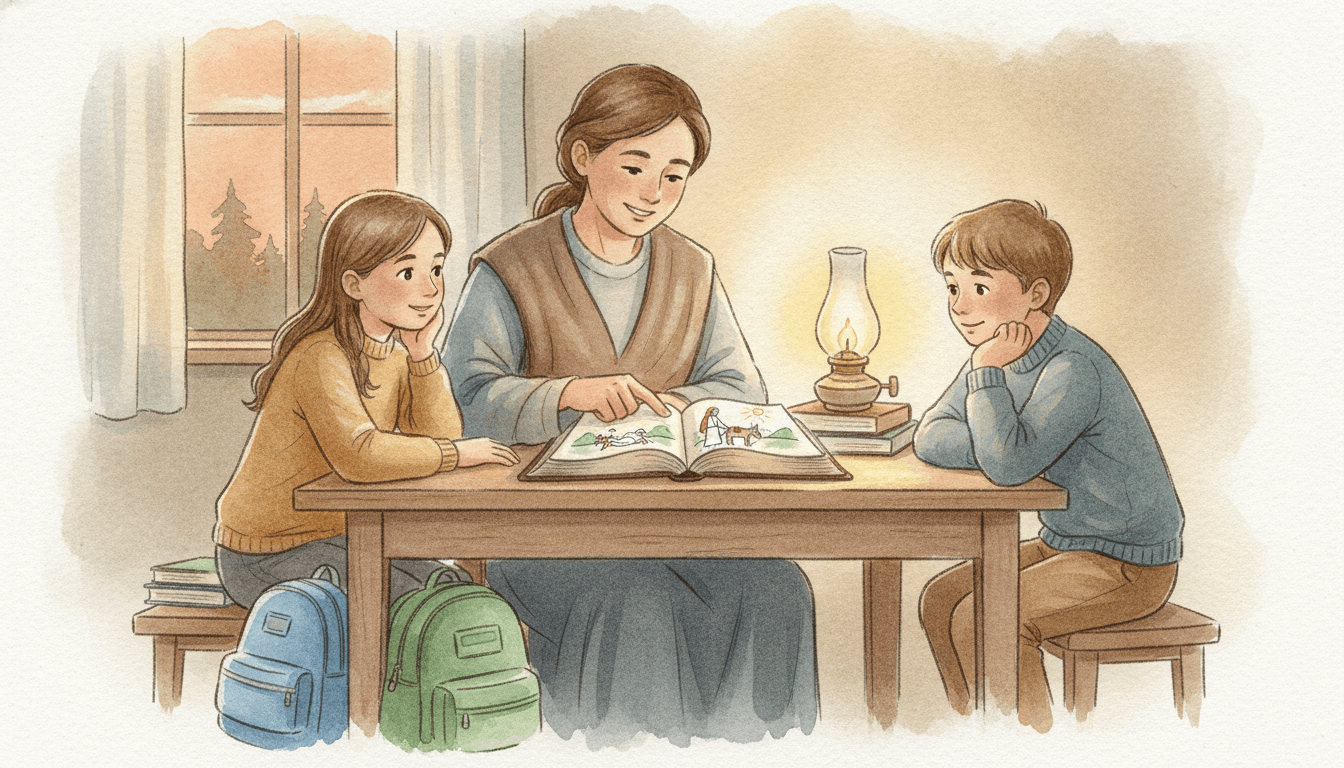
Paul’s Conversion:Can God Change Anyone?
Paul’s conversion shows children that no one is beyond Christ’s reach, while reminding them that genuine faith produces visible change. Explore how Acts 9 helps families discuss stubborn sin, forgiven

“But what if they keep doing it?” A tween may ask this after a classmate bullies someone, a relative disappoints the family, or they are discouraged by their own repeated sin. Acts 9 gives parents a truthful answer: Christ can reach anyone, and real conversion is more than a sudden feeling—it becomes visible in a changed life.
Start With the Hard Question Behind “Can God Change Anyone?”

A child usually does not ask, “Can God change anyone?” because the question is abstract. It may come after another cruel comment from a bully, a relative who has stopped speaking to the family, or a friend whose choices are becoming frightening. Sometimes the child is really asking about himself: “What if I keep lying, losing my temper, or doing the same wrong thing after I say I’m sorry?” Children notice patterns, including the painful ones. They deserve an answer that is honest enough to take evil seriously and hopeful enough to make room for God’s mercy.
Begin by saying plainly: God can change anyone, and no sin is stronger than his grace. That does not mean every person chooses to cooperate with grace, nor does it mean change happens on our preferred schedule. Scripture shows people resisting God, repenting, and beginning again. The Catechism calls hope the virtue by which we place our trust in Christ’s promises rather than in our own strength (CCC 1817). For a tween, that means we do not label a person by the worst thing he has done. We can say, “What she did was wrong, and God can still call her to repentance.” Both statements belong together.
Christian hope is not pretending that harm did not happen. If a child is being bullied, the right response includes telling a trusted adult, documenting what happened when appropriate, and keeping safe distance from the person causing harm. If an adult relative is unpredictable, cruel, or unsafe, children should not be asked to carry adult problems or to restore a relationship by themselves. Forgiveness does not cancel wise boundaries. Prayer for someone’s conversion is not permission for that person to continue hurting others.
Here’s how I’d teach this at home or in a classroom: ask, “What would real change look like?” Help children name visible steps: telling the truth, apologizing without excuses, making amends where possible, accepting consequences, seeking help, and choosing a different action the next time. This protects them from a shallow idea of repentance in which someone merely says, “Sorry,” then repeats the same harm. God sees the heart, but a changed heart gradually bears fruit in changed choices.
Then make the question personal without making it accusatory. Invite your child to identify one repeated fault and one concrete next step: perhaps pausing before speaking in anger, admitting a lie, or praying for the person who is hardest to love. Parents have a particular duty to introduce children gradually to prayer and to the mystery of God, as Saint John Paul II teaches in Familiaris Consortio, 60. A short prayer can be enough: “Jesus, change what is wrong in me, protect those who are being hurt, and bring this person to the truth.” That is not naïve optimism. It is the steady confidence that grace is real, sin is serious, and no person is beyond Christ’s call.
Acts 9 Does Not Soften Saul’s Sin

Picture a Christian family in Damascus hearing that Saul is coming with authorization to arrest believers. This was not a man who merely disagreed with the Church or asked difficult questions. Acts says he was “breathing murderous threats” and seeking out men and women who belonged to the Way so that he could bring them to Jerusalem in chains. Children deserve the plain truth here: Saul was choosing grave harm against Christ’s people.
That makes Jesus’ question on the road all the more striking: “Saul, Saul, why are you persecuting me?” Jesus so closely unites himself to his Church that violence against his disciples is persecution of Christ himself. Saul’s sin was personal, deliberate, and destructive. We should not shrink the story into, “Saul had a bad attitude, and then he became nice.” He needed repentance, mercy, and an entirely new direction for his life.
Yet Christ met Saul before Saul had earned anything. He stopped him, spoke to him, and gave him a command: “Now get up and go into the city and you will be told what you must do.” This is strong evidence for the answer kids are asking. No bully, hostile relative, classmate who mocks faith, or person trapped in repeated sin is beyond Christ’s call. God sees sin truthfully, but he does not stop calling sinners toward repentance. As the Catechism reminds us, conversion is not merely feeling sorry; it is a return to God with the whole heart (CCC 1431).
Here’s how I’d teach this at home or in a classroom: ask, “What changed after Saul met Jesus?” Let children name the next steps from Acts 9: he listened, accepted help from Ananias, received baptism, and began to proclaim Jesus. Real conversion bears fruit in changed actions. It does not erase the harm a person has done, cancel the need to say sorry, or require wounded people to pretend they were never hurt. Rather, grace makes confession, amends, obedience, and a new life possible. We may pray confidently for someone’s conversion while also keeping wise boundaries and taking harm seriously.
Now Saul, still breathing murderous threats against the disciples of the Lord, went to the high priest and asked him for letters to the synagogues in Damascus, that, if he should find any men or women who belonged to the Way, he might bring them back to Jerusalem in chains. On his journey, as he was nearing Damascus, a light from the sky suddenly flashed around him. He fell to the ground and heard a voice saying to him, "Saul, Saul, why are you persecuting me?"
Jesus Meets Saul—and Identifies With His Church
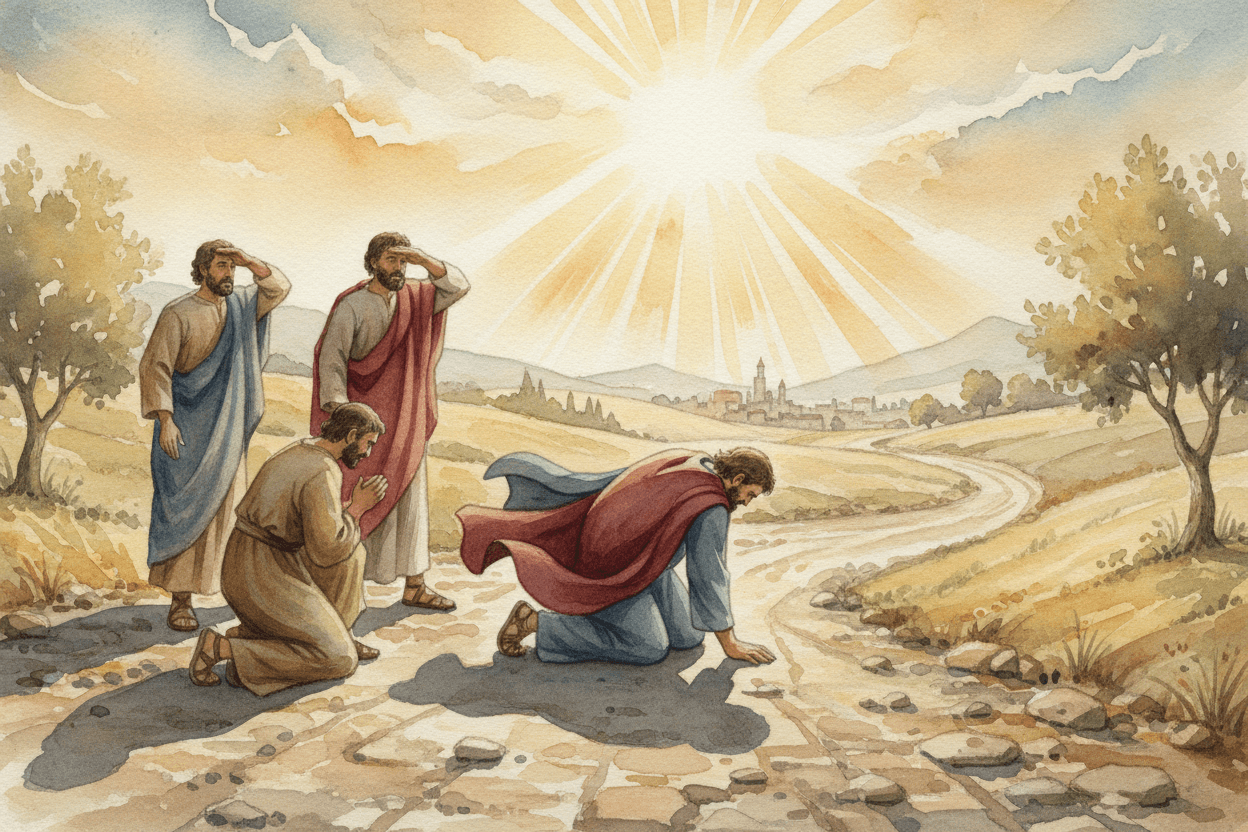
A child who has been left out at recess may understand this scene faster than an adult does. If someone mocks her friend, she feels the hurt personally. On the road to Damascus, Jesus does something even stronger: he speaks of the Christians Saul is hunting as himself. Saul has not seen Jesus walking the streets of Damascus, yet the risen Lord asks, “Saul, Saul, why are you persecuting me?” Jesus is not distant from the members of his Church when they suffer.
That small word, me, deserves our attention. Saul is threatening disciples—men and women who belong to the Way—but Jesus identifies himself with them. As the Catechism reminds us, Christ and the Church form the “whole Christ”: “The Head and members form as it were one and the same mystical person” (CCC 795). This does not mean Christians are perfect, or that every action by a Church member represents Jesus faithfully. It means that Jesus truly joins himself to his people. To wound them is not a matter he watches from far away.
Here’s how I’d teach this to tweens: ask them to picture Saul expecting to arrest believers, only to find that Jesus knows his name. The Lord does not begin with a long speech or a complete map of Saul’s future. He stops him, confronts the real evil Saul is doing, and then gives one clear instruction: get up and go into the city. Saul must take the next obedient step before he can see the whole path. That is often how conversion works in ordinary family life too.
When a child asks whether God can change someone who has done cruel things, Paul’s story gives a truthful answer. Yes, Christ can call that person; no, the harm does not suddenly become unimportant. Saul will need help from Ananias, receive Baptism, join the disciples he had terrorized, and live differently. God’s mercy does not excuse sin. It turns a sinner toward repentance, repair, and a new way of living.
This also gives children words for their own worries. They can pray for the classmate who bullies, the relative who has stopped practicing the faith, or themselves after the same bad choice appears again. We need not pretend to know when or how another person will respond to grace. Our task is smaller and more demanding: refuse revenge, tell the truth about wrong, pray, and take the next step Jesus asks of us. Christ knew Saul by name, and he knew the frightened Christians Saul was pursuing. He knows both the person who needs conversion and the person who has been hurt.
He said, "Who are you, sir?" The reply came, "I am Jesus, whom you are persecuting. Now get up and go into the city and you will be told what you must do."
The Blindness and the Scales Teach What Conversion Is
A child can picture Saul sitting in a dark room in Damascus, unable to see the faces of the people around him. Only days earlier, he had been certain he was doing the right thing. He was educated, determined, and intensely devoted to God’s law. Yet the light on the road revealed a hard truth: Saul could see with his eyes, but he did not recognize Jesus or understand what it meant to serve him. His blindness was not a punishment meant to humiliate him. It made visible the spiritual blindness already shaping his choices.
Here’s how I’d teach this to children: conversion is more than deciding, “I should be nicer.” Being nicer is good, but Jesus calls us more deeply. Conversion means turning away from sin and toward Christ, allowing him to correct what we think we know, and receiving the help he gives. Saul does not argue his way out of the darkness. He listens to Jesus, goes into the city as he is told, and waits. That humility matters. A child who has hurt a sibling, lied to avoid trouble, or joined in excluding someone may need to do more than feel bad. He or she can tell the truth, apologize, repair what can be repaired, and ask Jesus for a new heart.
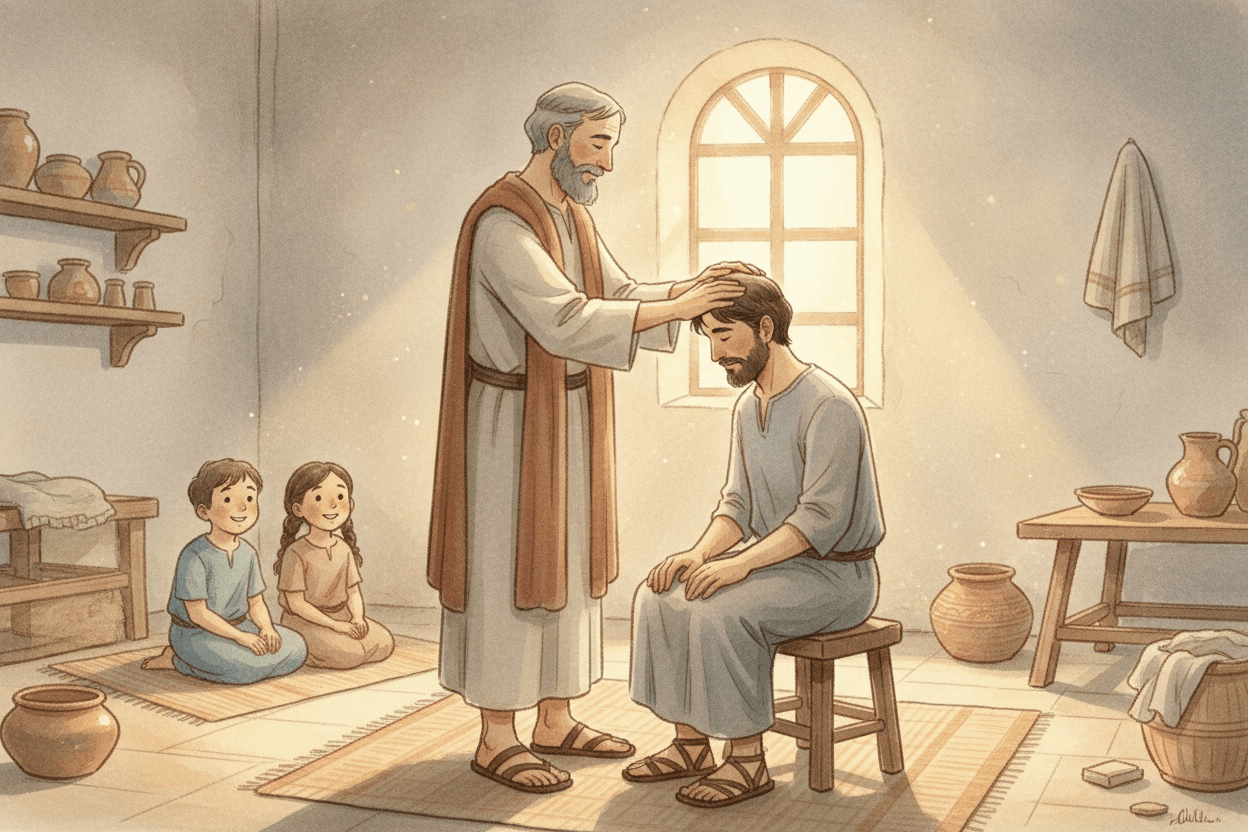
Then Ananias arrives—the very kind of Christian Saul had come to arrest. God chooses this disciple to lay hands on Saul, pray for him, and welcome him as a brother. Saul’s sight returns, and he is baptized. The details teach an important Catholic truth: God’s grace is personal, but we are not meant to receive it alone. Christ works through his Church, through prayer, the sacraments, and faithful people willing to help us. The Catechism calls conversion “a work of the grace of God” and describes it as a continuing task for the whole Church and for every Christian (CCC 1427–1429). Saul’s change began suddenly, but learning to live as Paul would take the rest of his life.
This gives families a wise way to answer the child who asks whether God can change anyone. Yes, God can reach a person whose heart seems closed—but we should not pretend change is automatic or merely emotional. Grace invites a real response: honesty, obedience, Baptism, reconciliation, new habits, and help from other believers. Ask at dinner, “Where might I be refusing to see clearly?” Then let everyone name one small, concrete turn toward Christ: admitting a wrong, praying for a difficult person, going to Confession, or asking a parent for help. Children are capable of understanding that conversion is not a label for someone else’s dramatic story. It is Christ patiently opening our own eyes.
So Ananias went and entered the house; laying his hands on him, he said, "Saul, my brother, the Lord has sent me, Jesus who appeared to you on the way by which you came, that you may regain your sight and be filled with the holy Spirit." Immediately things like scales fell from his eyes and he regained his sight. He got up and was baptized,
Real Change Has Next Steps: Help, Baptism, and New Choices

A child may hear that Saul met Jesus on the road to Damascus and assume the whole story was finished in a flash of light. But Acts gives us the next, necessary details. Saul gets up and does what Jesus tells him: he goes into the city, waits, receives help from Ananias, regains his sight, and is baptized. Grace comes first; then Saul must answer it with obedience. That pattern matters for children, especially when they are asking whether a person can truly change.
Ananias had every human reason to keep his distance. He knew Saul’s reputation. Yet he entered the house, called him “brother,” laid hands on him, and welcomed him into the life of the Church. Saul did not repair his life privately, by deciding he was sorry and moving on. He accepted help from the very community he had harmed. Here’s how I’d teach this: real repentance includes letting trustworthy people help us make a different choice. For a child, that may mean telling the truth to a parent, apologizing without excuses, accepting a consequence, or asking for prayer when the same sin keeps returning.
Baptism is not a decorative detail in Saul’s story. After the scales fall from his eyes, “He got up and was baptized” (Acts 9:18). Through Baptism, Christ joins us to his Body, forgives sin, and gives the new life of grace (CCC 1262–1266). Saul’s conversion therefore has a visible, sacramental shape: Jesus calls him, the Church receives him, and his life changes direction. Children should hear both parts. God’s mercy is freely given, and that mercy forms us for a new way of living.
Acts then gives the clearest evidence that Saul’s direction has changed: “He stayed some days with the disciples in Damascus, and he began at once to proclaim Jesus in the synagogues, that he is the Son of God. All who heard him were astounded and said, ‘Is not this the man who in Jerusalem ravaged those who call upon this name, and came here expressly to take them back in chains to the chief priests?’” His former actions made people understandably cautious; his new words and continued life among the disciples showed that Christ was truly reshaping him.
It is helpful to clarify one familiar phrase. People often say Saul “became Paul” as though Jesus gave him a new name on the Damascus road. Acts 9 continues to call him Saul; later Acts also uses Paul. The heart of the story is not a magical name change. It is a new mission: the persecutor becomes a witness to Jesus. When kids ask if God can change anyone, we can answer yes—and add that change has next steps. We pray, receive the sacraments, accept help, make amends where we can, and choose tomorrow’s obedience.
He stayed some days with the disciples in Damascus, and he began at once to proclaim Jesus in the synagogues, that he is the Son of God. All who heard him were astounded and said, "Is not this the man who in Jerusalem ravaged those who call upon this name, and came here expressly to take them back in chains to the chief priests?"
How to Talk About People Who Seem “Too Far Gone”

A child says, “But what if he never changes?” Usually there is a real person behind that question: the classmate who keeps picking on others, a relative whose choices have hurt the family, or perhaps the child himself after the same bad choice again. Before offering an answer, pause. “Who are you thinking about?” and “What makes this feel impossible?” are better first responses than a quick lesson. Children ages 10–13 notice hypocrisy and harm; they need adults who will listen carefully rather than wave away what they see.
Then name the Christian hope plainly: no heart is outside God’s power or knowledge. Saul had actively harmed the Church, yet Christ called him, and Saul’s life did not remain the same. Still, God’s ability to change someone does not mean we can predict when that person will cooperate with grace. Conversion can be gradual, resisted, and difficult to see from the outside. As the Catechism reminds us, conversion involves a real turning of the whole person toward God (CCC 1431). It is more than feeling sorry or making a promise after being caught.
Here’s how I’d teach this in a parish classroom: ask, “If someone is changing, what would we expect to see?” Let children supply concrete answers: telling the truth, apologizing without excuses, making amends where possible, stopping harmful behavior, accepting consequences, and seeking help. A person may say, “I’ve changed,” but trust is rebuilt through steady actions over time. This helps children hold hope without becoming naïve, and it gives them a truthful way to consider their own need for repentance.
A safeguard matters especially in family conversations. Forgiveness and hope never require a child to tolerate abuse, stay in an unsafe situation, restore trust before it is earned, or carry the burden of making an adult repent. If the person in question has been frightening, violent, manipulative, or sexually inappropriate, the child should tell a trusted adult right away. Parents can say, “We can pray for this person, and we can also keep you safe.” Appropriate boundaries are not a failure of mercy; they can be part of wisdom and protection.
Close by giving the child a small, honest response: pray by name for the person, ask God to change what is wrong, and speak with a parent, pastor, teacher, or other trusted adult when the situation feels heavy. For their own repeated mistakes, invite them to take one next step—admit it, apologize, go to Confession, and choose a different action. God’s grace is not permission to ignore harm. It is the reason we can tell the truth about sin, seek safety, and still refuse despair.
Try a Paul’s Conversion Family Practice This Week

A family does not need a long lesson plan to let Saul’s story do its work. Begin at the dinner table, in the car, or before bedtime with one honest sentence: “This week, we are going to notice where Jesus may be asking us to change.” Children ages 10–13 can handle the fact that conversion is not merely feeling bad after doing wrong. It means turning toward Christ with the whole self: thoughts, words, choices, and relationships. As the Catechism reminds us, conversion is a daily task for the baptized, not a one-time event reserved for saints with dramatic stories (CCC 1427–1428).
Read Acts 9:1–22 aloud in two sittings. On the first day, read verses 1–9, stopping after Saul is led into Damascus without sight. Let the silence sit for a moment. Then ask: “What do you think Saul could finally see when he could no longer see with his eyes?” On the second day, read verses 10–22. Notice that Jesus does not leave Saul alone. Ananias obeys, Saul receives help, he is baptized, and his changed life becomes visible in what he does next. Scripture invites us to see that grace does not excuse sin or erase its harm; grace creates a new response to God.
After the reading, give each person a turn to answer two questions without interruption: “Where do I need clearer sight?” and “What habit needs to change?” Parents can answer too, in an age-appropriate way. That matters. A child who hears a parent say, “I need to speak more patiently when I am tired,” learns that repentance belongs in ordinary Christian life. Keep the conversation concrete rather than vague. Clearer sight may mean admitting that gossip hurts, that resentment is being carried too long, or that a repeated choice needs real help. The goal is not to force disclosures, but to make truth-telling safe in your home.
Then each person chooses one faithful next step for the week: apologize, make amends, go to Confession, pray by name for someone difficult, or ask a trusted person for help. Put the choice on a small note where it can be remembered, and check in briefly at week’s end. If your family would like to continue the lesson visually, read the BibleHeroes Paul’s Conversion comic together and compare its scenes with Acts 9. Return to the question your child first asked: Can God change anyone? No one is beyond Christ’s call. And every one of us can take the next faithful step.
He said, "Who are you, sir?" The reply came, "I am Jesus, whom you are persecuting. Now get up and go into the city and you will be told what you must do."
Frequently asked questions
Can God really change someone who keeps hurting others?
Yes. Saul persecuted Christians, yet Christ called him to repentance and gave his life a new direction. God’s grace is stronger than any sin, but each person must still choose to cooperate with that grace.
What does real conversion look like for a child?
Real conversion is more than saying, “I’m sorry,” or feeling bad for a moment. It includes concrete steps such as telling the truth, accepting consequences, making amends, asking for help, and choosing a different action next time.
How do I explain Paul’s conversion to my tween?
Explain that Saul was doing serious harm to Christians, not simply having a bad attitude. When Jesus met him, Saul listened, accepted help from Ananias, was baptized, and began proclaiming Christ; his changed choices showed his repentance.
Should my child forgive a bully or unsafe relative?
Teach your child that forgiveness does not mean pretending the harm was okay or staying in danger. They should tell a trusted adult, keep appropriate distance, and allow adults to handle unsafe situations while still praying for the person’s conversion.
What does Jesus mean when he says, “Why are you persecuting me?” to Saul?
Jesus identifies himself closely with the Christians Saul was hurting. This teaches children that Christ is not distant when members of his Church suffer: harm done to his people matters deeply to him.
How can I help my child with a repeated sin like lying or anger?
Help your child name one specific pattern and choose one practical next step, such as pausing before speaking, admitting a lie promptly, or asking forgiveness. Encourage a simple prayer asking Jesus to change what is wrong in them and to help them begin again.
Sources: bible.usccb.org · bible.usccb.org · vatican.va · pewresearch.org · aleteia.org · research.lifeway.com · barna.com · wordonfire.org
Scripture quotations in this article use the NABRE translation.