Purim for Catholic Kids:Esther’s Story and Jewish Roots
Discover how Purim celebrates Esther’s courage and God’s providential care for the Jewish people. This Catholic-friendly guide helps children understand the story, connect with Scripture, and approach
When your child sees costumes, sweet treats, and the name “Esther” connected to Purim, a good question may follow: Is this a Catholic celebration too? Purim is a joyful Jewish feast rooted in a book of our Old Testament, and it gives Catholic families a beautiful opportunity to read Scripture closely, honor the Jewish people, and notice God’s providence at work.
What Is Purim—and Why Should Catholic Kids Know It?
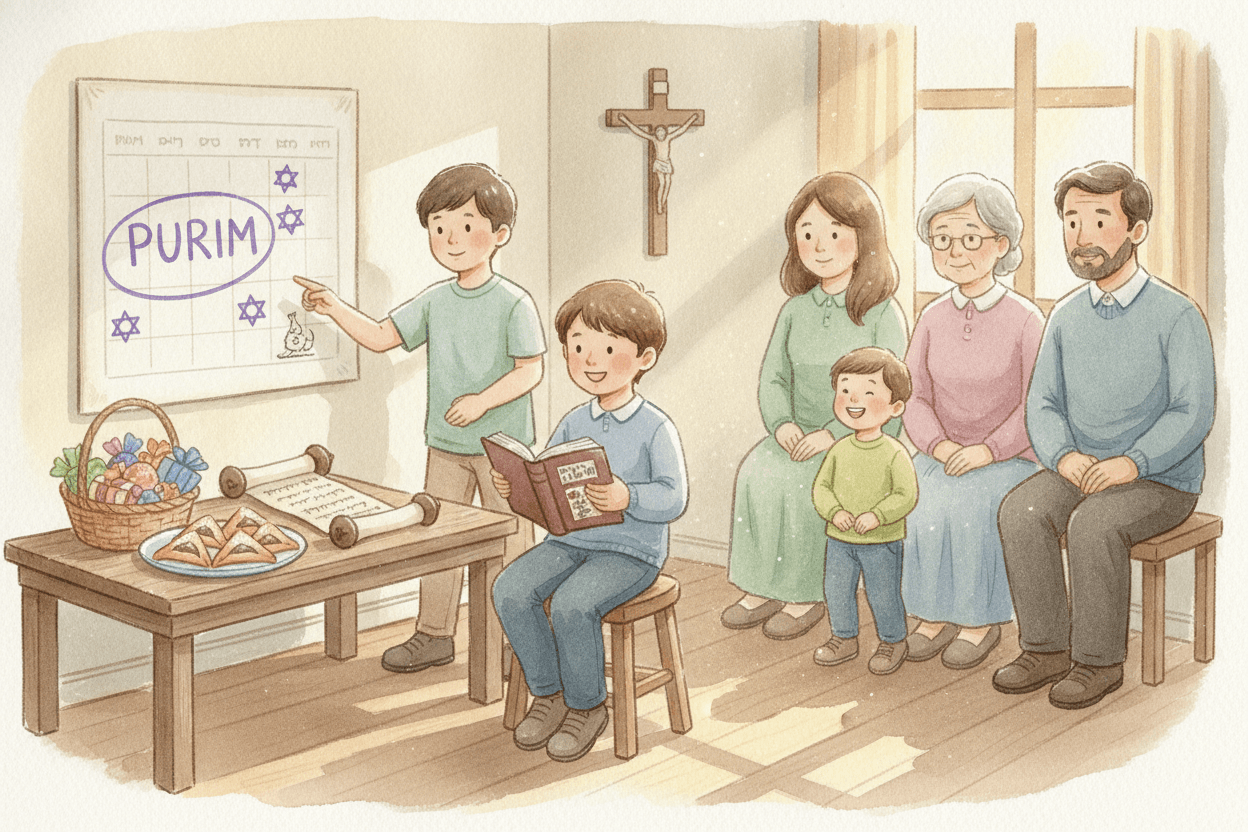
When children hear that Haman planned to have an entire people killed simply because Mordecai would not bow to him, the stakes of Esther’s story become clear. Purim is a Jewish feast remembering the deliverance of the Jewish people from that evil plot in the Book of Esther. It recalls a real danger, the courage of Queen Esther and Mordecai, and the reversal by which sorrow became rejoicing. Jewish families mark Purim with the public reading of Esther, festive meals, gifts of food, and care for the poor; children may dress in costume and make noise when Haman’s name is read.
Catholic children should know Purim because Esther is not someone else’s story tucked away in an unfamiliar book. The Book of Esther belongs to the Old Testament of the Catholic Bible: inspired Scripture, received by the Church and worthy of careful reading. Scripture invites us to see how God preserves his people even amid political fear, hidden threats, and imperfect human leaders. Esther does not wait for danger to disappear. After Mordecai challenges her, she speaks truth before the king and asks that her people’s lives be spared.
We do not observe Purim as a Catholic liturgical feast. Our worship centers on Christ and the mysteries of his Passion, Death, Resurrection, and Ascension, celebrated especially in the Eucharist and throughout the Church year. Still, that difference should never make us indifferent to Purim. The Catechism teaches that the Church, the People of God in the new covenant, is spiritually linked to the Jewish people (CCC 839). Jesus was born into Israel, knew Israel’s Scriptures, and came in fulfillment of God’s promises—not apart from them.
Here’s how I’d teach this at home or in a parish classroom: open Esther 4, explain that Purim is the Jewish remembrance of this rescue, and ask, “What did Esther risk in order to protect others?” Then add, “What belongs to our Catholic faith, and what do we respectfully learn from our Jewish neighbors?” Children can grasp both truths: we are Catholic, and we honor the people through whom God gave us the Scriptures and from whom the Messiah came. St. Paul’s image is especially helpful: Christians do not support the root; the root supports us (Romans 11:17-18). Learning about Purim forms gratitude, accuracy, and respect.
The feast also gives families a practical way to notice what Esther 9 celebrates: joy after mourning, food shared with others, and gifts given to the poor. A Catholic family need not copy another community’s religious observance to let those biblical themes prompt generosity. Read the story, pray for the Jewish people, and let Esther’s brave refusal to be silent lead to a conversation about defending those who are threatened or excluded. Catholic kids are capable of learning the distinction between appreciating a Jewish feast and claiming it as their own—and that distinction is itself an act of respect.
Mordecai recorded these events and sent letters to all the Jews in all the provinces of King Ahasuerus, both near and far, to have them celebrate every year on the fourteenth and fifteenth days of the month Adar, as the days on which the Jews obtained rest from their enemies, and as the month which was turned for them from sorrow into joy, from mourning into celebration; to have them celebrate them as days of feasting and gladness, sending food to one another, and gifts to the poor.
The Book of Esther Explained: A Courageous Queen Speaks

Imagine being Esther: young, Jewish, and suddenly living in the palace of a Persian king. She had lost her parents and had been raised by her cousin Mordecai. When King Ahasuerus chose her as queen, Esther did not announce that she was Jewish. Mordecai had told her to keep that part of her identity private for the time being. She was queen, but she was also still one of God’s people—and soon that would matter greatly.
A royal official named Haman became furious because Mordecai would not bow down to him. Instead of directing his anger only at Mordecai, Haman planned something far worse: he persuaded the king to issue a law ordering the destruction of all the Jewish people throughout the empire. This is the real danger at the center of the book. Children should understand that Esther’s story is not mainly about palace clothes, banquets, or becoming a queen. It is about a people threatened with death and one woman asked to speak when silence would be safer.
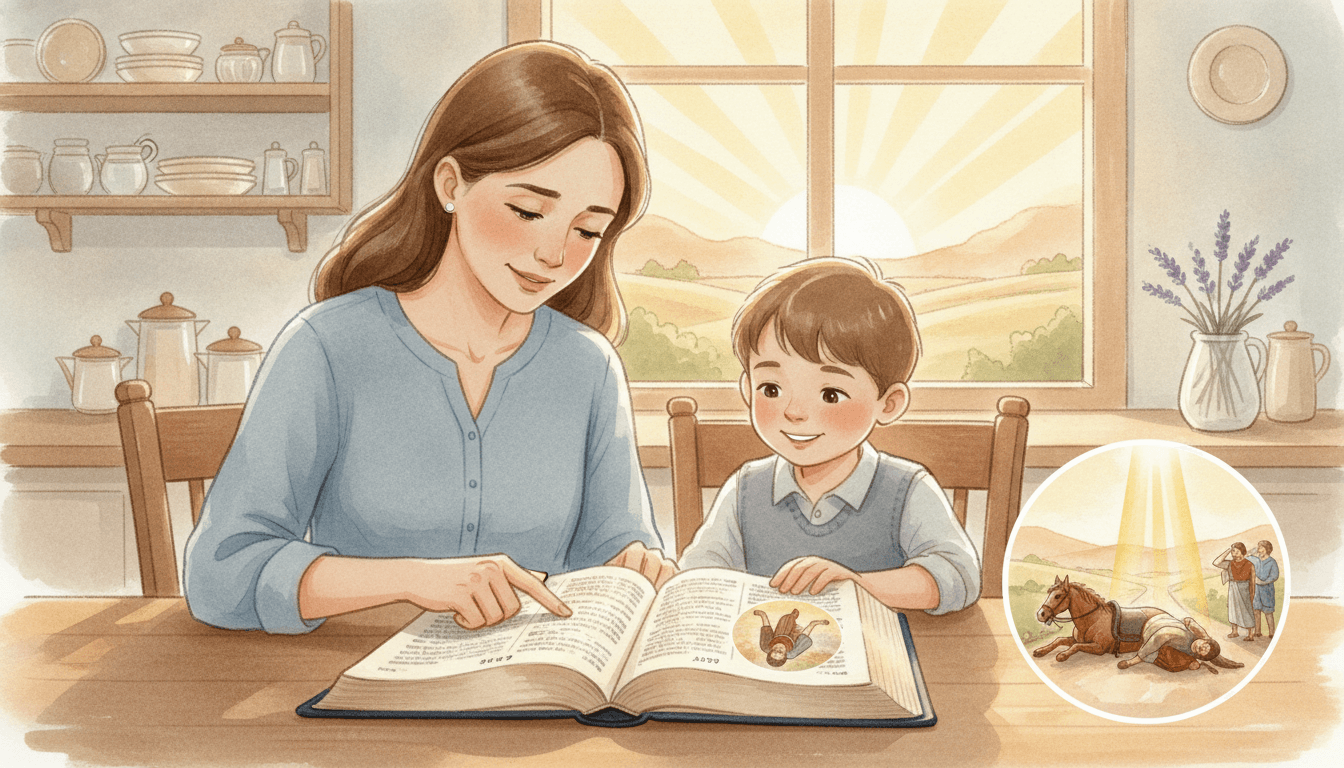
Mordecai sent word to Esther that she could not assume the danger would pass her by. Approaching the king without being summoned could itself lead to death. Yet Esther chose to act for her people. She prepared, sought help, and then went before the king. Her courage was not showing off or refusing to feel afraid. It was the decision to do what was right for others, even when the cost was real. Here’s how I’d teach this: courage is not the absence of fear; it is faithful action when love and truth require it.
Esther wisely invited the king and Haman to banquets, then told the king that she and her people had been marked for destruction. She named Haman’s evil plan plainly. The king acted against Haman, and the Jewish people were saved. Their rescue is remembered at Purim, a Jewish feast marked by hearing Esther’s story, sharing food, giving gifts, and caring for those in need. Those practices match the book’s movement from danger to rejoicing, while keeping the focus on God’s protection of Israel.
Catholic children can receive Esther as inspired Scripture, not merely as an exciting ancient tale. The Catechism teaches that the Old Testament is an indispensable part of Sacred Scripture (CCC 121), and Esther helps us see God at work in the history of the Jewish people. Ask children: “Who needed Esther to speak?” and “When might someone need me to tell the truth or stand beside them?” These questions respect their intelligence and help them see that faithfulness often serves a neighbor before it ever feels heroic.
Then Mordecai told them to reply to Esther: “Do not imagine that you, in the king’s palace, can escape any more than all the other Jews. Even if you were to remain silent at this time, relief and deliverance will come to the Jews from another source; but you and your father’s house will perish. Who knows—perhaps it was for a time like this that you became queen?”
Where Is God in Esther’s Story?
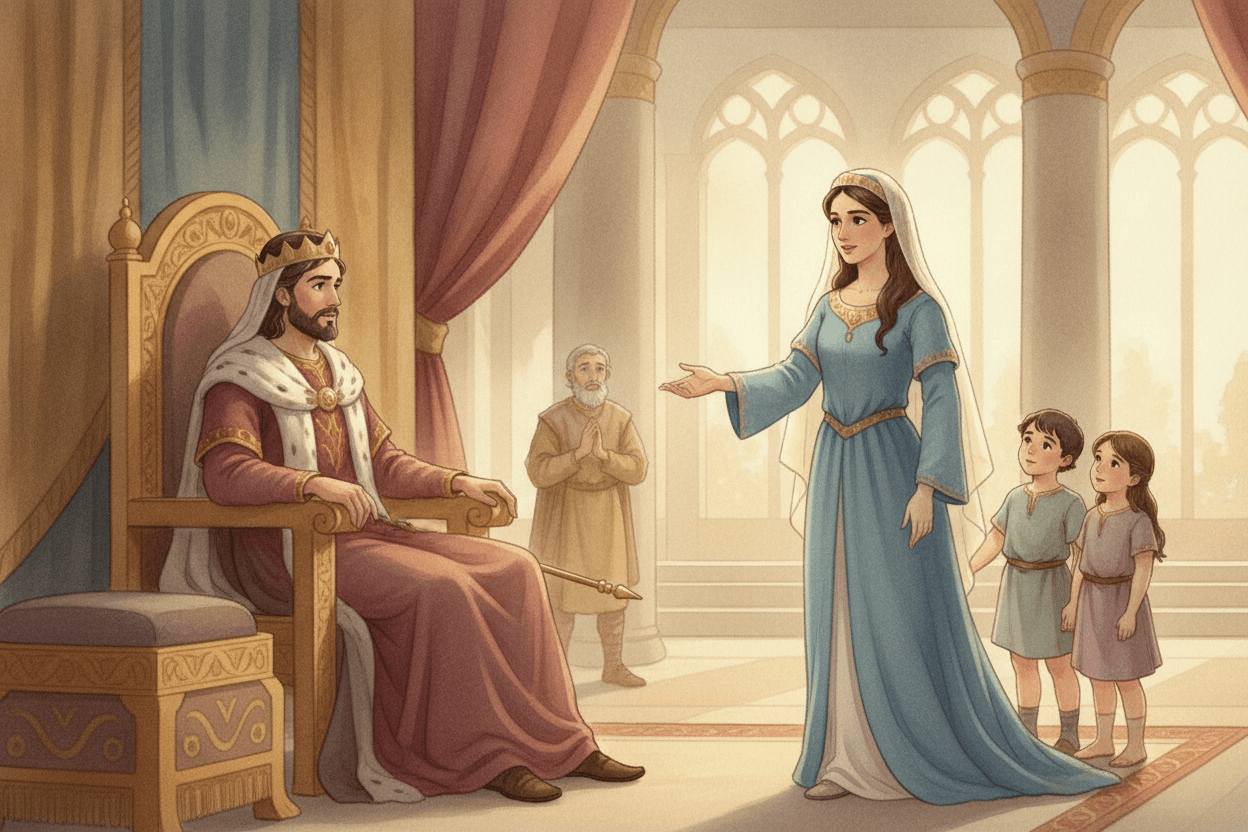
A child may notice something surprising while reading Esther: people make plans, send messages, fast, take risks, and speak before a king—but God can seem quiet in much of the story. That quiet is not the same as absence. Scripture invites us to watch what happens when God’s people are threatened: Esther is placed in a position where she can act, Mordecai urges her not to remain silent, and the plot meant to destroy the Jews is overturned.
This is a careful lesson about providence. Providence does not mean that every hard event is secretly good, or that we can always explain suffering. It means God faithfully guides and sustains his people, even when they cannot yet see the whole path. The Catechism teaches that God carries out his plan through the actions of his creatures (CCC 306). Esther’s courage matters. Mordecai’s counsel matters. The king’s decisions matter. Yet the preservation of the Jewish people is more than a lucky turn of events.
When Esther finally speaks, she does not make a vague complaint or hope someone else will solve the problem. She names the danger and asks for the lives of her people. Her words are clear and brave: “If I have found favor with you, O king, and if it pleases you, let my life be spared and the lives of my people. For we have been sold, I and my people, to be destroyed, to be killed, and to be annihilated.” Haman’s evil plan is exposed, and the people who faced mourning are given safety and cause for celebration.
Here’s how I’d teach this at home or in a classroom: ask, “What did Esther know? What was she afraid of? What was the next right thing she could do?” Then let children supply ordinary examples. A child may tell the truth after breaking something, refuse to join in excluding a classmate, report cruel messages to a trusted adult, or stand beside a friend who is being mocked. Courage is not pretending we are unafraid. It is choosing a faithful and wise action despite fear.
Parents can also make an important distinction: Esther did not act alone or recklessly. She listened, prepared, and used the responsibility she had been given. When children face a difficult situation, they should pray and seek help from parents, teachers, pastors, or other trustworthy adults. Esther teaches them to notice that God can work through prayer, sound counsel, truthful speech, and one person’s willingness to protect another. Even when God’s help is not immediately visible, he does not abandon his people.
Queen Esther replied: “If I have found favor with you, O king, and if it pleases you, let my life be spared and the lives of my people. For we have been sold, I and my people, to be destroyed, to be killed, and to be annihilated. If we had merely been sold as slaves, men and women, I would have remained silent, for such distress does not justify troubling the king.”
How Jewish Families Celebrate Purim
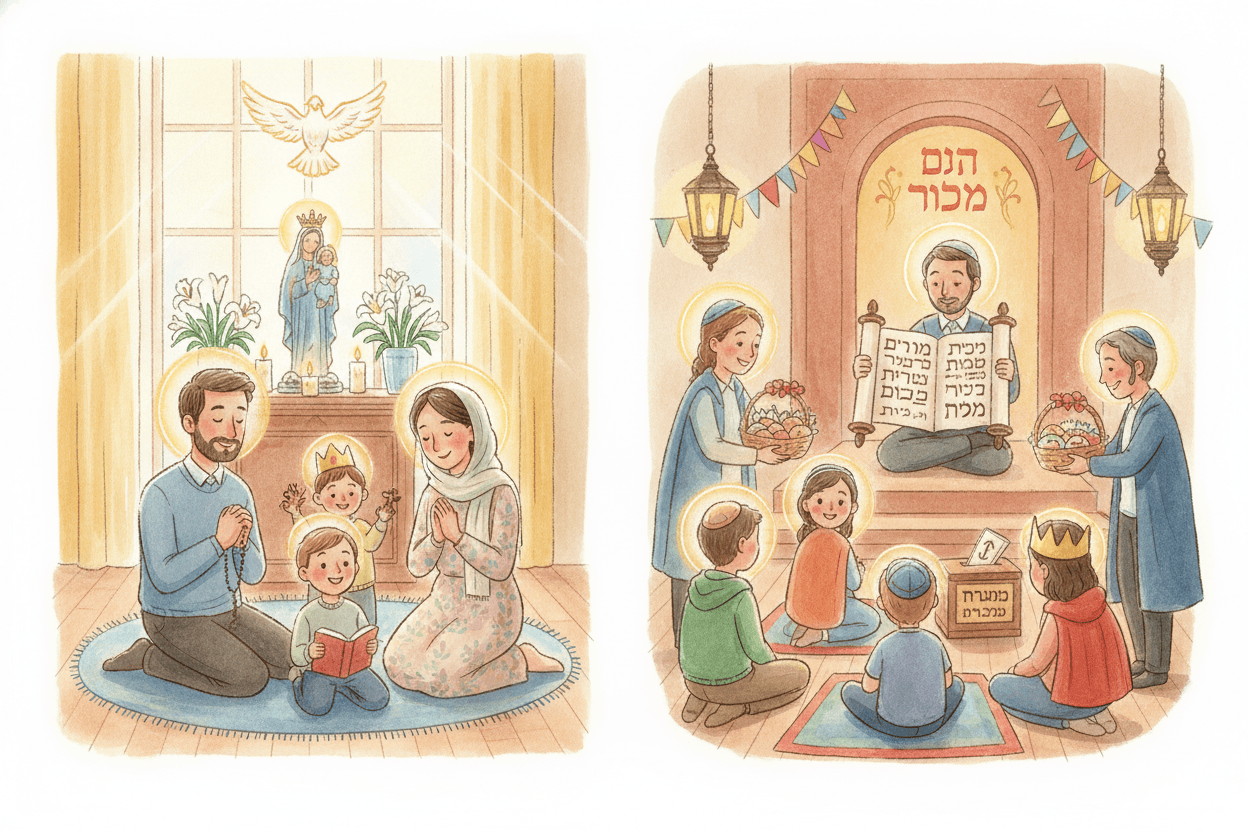
Picture a synagogue filled with children holding noisemakers, waiting for one particular name in the story. When Haman’s name is read aloud, many children stomp, rattle, or cheer to show their rejection of his cruel plan against the Jewish people. Some children also wear costumes, adding a playful note to a day that remembers a very serious rescue. Customs can vary from one Jewish community and family to another, but Purim is marked by both remembrance and joy.
At the center of Purim is hearing the Megillah, the scroll of Esther, read in the synagogue. “Megillah” simply means scroll, and in this setting it commonly refers to the Book of Esther. Jewish families listen carefully to the story of Mordecai, Esther, Haman, and the Persian king. Catholic children should recognize the story: Esther belongs to the Old Testament in our Catholic Bible. We do not take part in Purim as a Catholic liturgical feast, but we can respect this Jewish observance and be grateful that God’s word has been preserved and proclaimed among the Jewish people.
Purim also includes a festive meal, because the danger facing the Jewish people did not have the last word. Families and friends share food, rejoice together, and give gifts of food to one another. This practice teaches children that celebration is not meant to be private. Joy makes room at the table. Jewish families also give gifts to the poor, so that those in need can share in the feast rather than be left outside it. Here’s how I’d teach this: ask your child which part of Purim’s generosity stands out most—sharing food with a friend or making sure a neighbor in need is cared for—and why both matter.
These customs come directly from the conclusion of Esther’s story, when Mordecai calls the people to remember the days “which was turned for them from sorrow into joy, from mourning into celebration.” For Catholic families, that language can help us notice a truth Scripture repeats: God’s saving care moves his people toward thanksgiving, mercy, and concern for others. We need not copy Jewish religious practices to learn respectfully from them. Instead, we can read Esther together, speak with honor about Jewish neighbors, and let Purim’s gifts to the poor prompt a simple family act of generosity.
Mordecai recorded these events and sent letters to all the Jews in all the provinces of King Ahasuerus, both near and far, to have them celebrate every year on the fourteenth and fifteenth days of the month Adar, as the days on which the Jews obtained rest from their enemies, and as the month which was turned for them from sorrow into joy, from mourning into celebration; to have them celebrate them as days of feasting and gladness, sending food to one another, and gifts to the poor.
A Catholic Perspective: Rooted in Israel, Centered on Christ
A child may come home from school asking why a Jewish friend is dressing in costume, bringing treats to friends, or making noise at the name of Haman. That is a good moment for a Catholic parent to say clearly: Purim belongs to the living religious life of the Jewish people. We do not turn it into a Catholic holiday, but we do listen respectfully to the biblical story it remembers. Esther is part of our Old Testament too, and her courage belongs within the history through which God prepared the world for Christ.
The distinction matters. Catholics do not add Purim to the Church’s liturgical calendar, because the Church’s worship is ordered around Jesus Christ, especially his Passion, Death, Resurrection, and Ascension—the Paschal Mystery. Yet being centered on Christ never gives us permission to dismiss Israel or to act as though Christians have taken Israel’s place. As the Catechism teaches, when the Church reflects on her own mystery, she discovers her bond with the Jewish people, whom God chose first to hear his word (CCC 839).
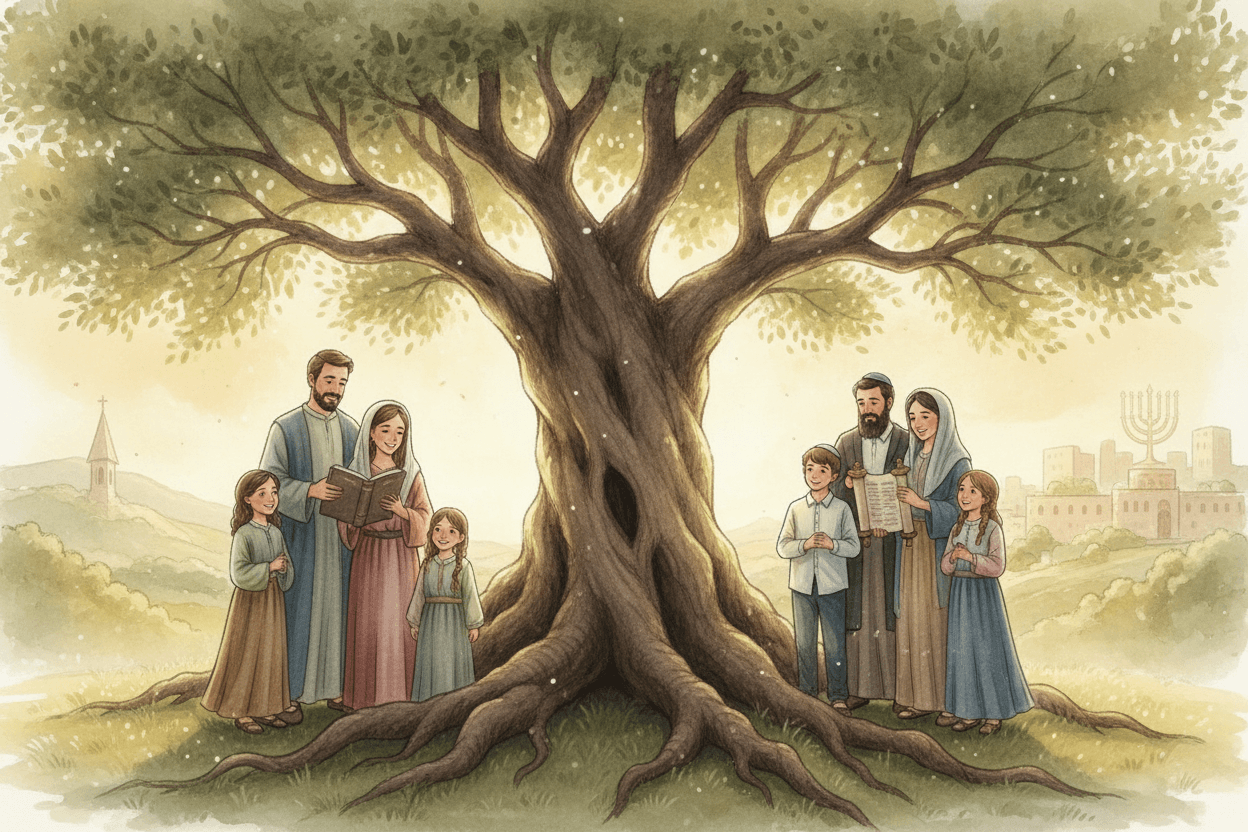
St. Paul gives families a memorable image: Christians are like wild olive branches grafted into a cultivated tree. We receive life from a root we did not plant. Scripture invites us to teach children humility here: Jesus was born into the Jewish people; Mary, Joseph, the apostles, and the first disciples knew Israel’s Scriptures; and God’s promises are trustworthy. We can tell a child, “We are grateful for the Jewish people, because God gave us the Scriptures and because Jesus came to us as a Jew.” That is not merely a history lesson. It forms reverence rather than pride.
Here’s how I’d teach this at home or in a parish class: read a short portion of Esther, then ask, “What did Esther risk to protect her people?” Next ask, “How can we speak respectfully about Jewish friends and their celebrations?” Keep the answer concrete: we can learn, listen, avoid pretending that someone else’s feast is ours, and thank God for his faithful care of Israel. Purim helps Catholic children see one large truth of salvation history: the God who preserved his people in Esther’s day is faithful, and his faithfulness reaches its fullness for us in Jesus Christ.
But if some of the branches were broken off, and you, a wild olive shoot, were grafted in their place and have come to share in the rich root of the olive tree, do not boast against the branches. If you do boast, consider that you do not support the root; the root supports you.
Try This This Week: Read, Retell, and Practice Esther’s Courage
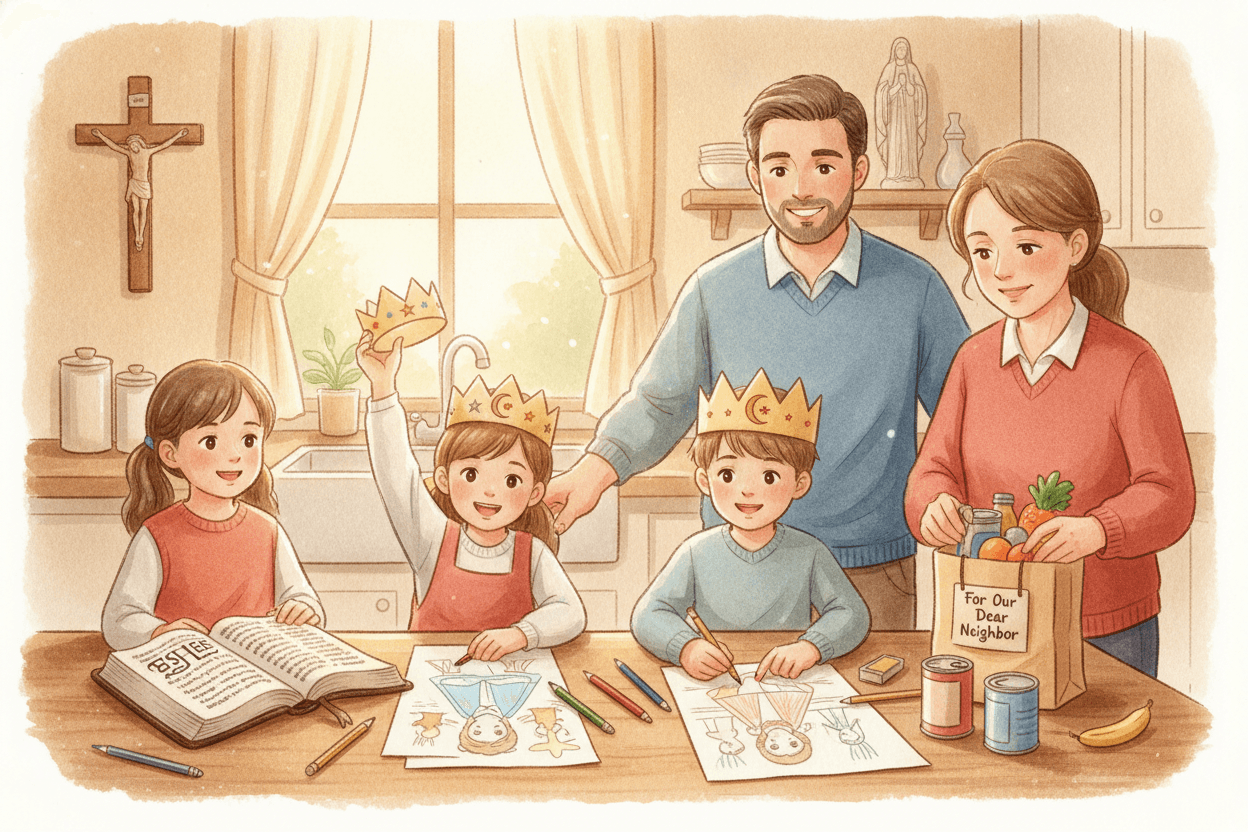
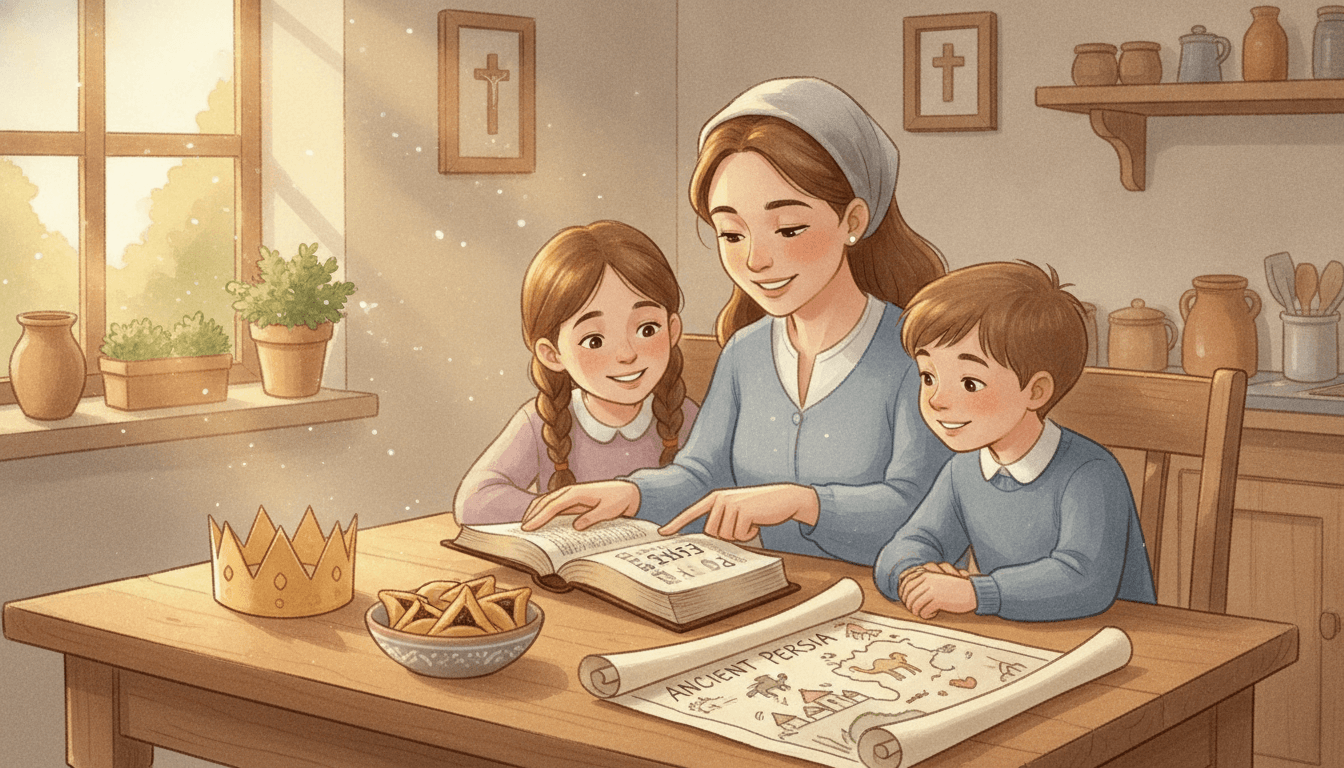
Set a paper crown in the middle of the kitchen table, open the Bible, and let your children take turns being Esther, Mordecai, the king, and Haman. Children remember what they can see and say, but do not rush past the hard part of this story: Esther was not simply playing queen. She chose to speak when speaking could cost her life, because her people were in danger.
Here’s how I’d teach this in a family or parish classroom. Read Esther 4:13-14 aloud first, then Esther 7:3-4 from the NABRE. Pause after each passage. Ask, “What did Esther risk by going before the king?” and “Whom was she trying to protect?” Let children answer in their own words, then help them notice that courage is not showing off or refusing to feel afraid. Courage means doing what is right, with trust in God, even when the cost is real.
Next, make simple paper crowns, or act out the scene with whatever is nearby: a chair can become the king’s throne, and a scarf can become Esther’s royal robe. Keep Haman’s plot clear without making him the center of the activity. The center is Esther’s truthful plea and God’s care for the Jewish people. If a child asks why Catholics are reading this story, answer plainly: Esther is part of the Old Testament, the Scripture Jesus knew, and it tells part of the history of Israel, the people through whom God prepared the way for Christ.
Then move from retelling to practice. Have each child choose one concrete act of courage for the week: telling the truth after a mistake, including a classmate who is often left out, defending a sibling from unkind words, or asking forgiveness without excuses. Also choose one small gift for a person in need. It might be a pantry item, a few dollars for a parish collection, socks for a local outreach, or a handmade card for someone who is lonely. Purim includes gifts to the poor, and this is a respectful way to let its concern for others shape Christian family life without turning a Jewish feast into our own celebration.
Close with a short prayer: “God of Abraham, Isaac, and Jacob, we thank you for your faithfulness to the Jewish people. Bless our Jewish neighbors and friends. Give us Esther’s courage to speak truth, protect those in need, and trust your care. Through Christ our Lord. Amen.” Scripture invites us to remember that God does not abandon his promises: “For the gifts and the call of God are irrevocable.” If your children enjoyed the drama and the questions, continue the story together with the related “Esther: Crown and Plot” comic.
For the gifts and the call of God are irrevocable.
Frequently asked questions
Is Purim a Catholic holiday?
No. Purim is a Jewish feast that remembers the rescue of the Jewish people in the Book of Esther. Catholics do not celebrate it as part of the Church’s liturgical year, but we can learn about it respectfully because Esther is inspired Scripture in the Catholic Old Testament.
Why should Catholic kids learn about Purim and Queen Esther?
Purim helps children understand the biblical story of Esther, Mordecai, and God’s protection of the Jewish people. It also teaches gratitude for the Jewish roots of Christianity and respect for the people through whom God gave us the Scriptures and from whom Jesus came.
What is the story of Purim in the Bible?
Purim recalls how Haman planned to destroy the Jewish people because Mordecai would not bow to him. Queen Esther risked approaching the king, revealed Haman’s plan, and pleaded for her people. The danger was reversed, and the Jewish people’s mourning became rejoicing.
How can I teach my child about Esther’s courage?
Read Esther 4 together and explain that Esther was afraid because going to the king uninvited could cost her life. Help children see that courage does not mean never feeling fear; it means doing what is right when love and truth require it. Ask whom they might need to defend, include, or speak up for.
Can Catholic families celebrate Purim?
Catholic families should not claim Purim as their own religious observance, since it is a Jewish feast. But you can read Esther, pray for the Jewish people, share food, give to someone in need, and discuss the book’s themes of courage, generosity, and God’s providence. Keeping that distinction is a respectful way to learn from Jewish neighbors.
What do Jewish families do for Purim?
Jewish communities commonly hear the Book of Esther read aloud, enjoy festive meals, share gifts of food, and give help to the poor. Children may wear costumes and make noise when Haman’s name is read. These joyful customs remember the rescue described in Esther and the turning of sorrow into celebration.
Sources: catholic.com · pewresearch.org · pewresearch.org · pewresearch.org · barna.com · wordonfire.org · vatican.va · usccb.org
Scripture quotations in this article use the NABRE translation.