A Gentle Family Examen for the End of a Long Day
A family examen offers a gentle bedtime rhythm for noticing God’s gifts, naming difficult moments, and listening for grace together. With a few quiet questions, families can end noisy days with gratit
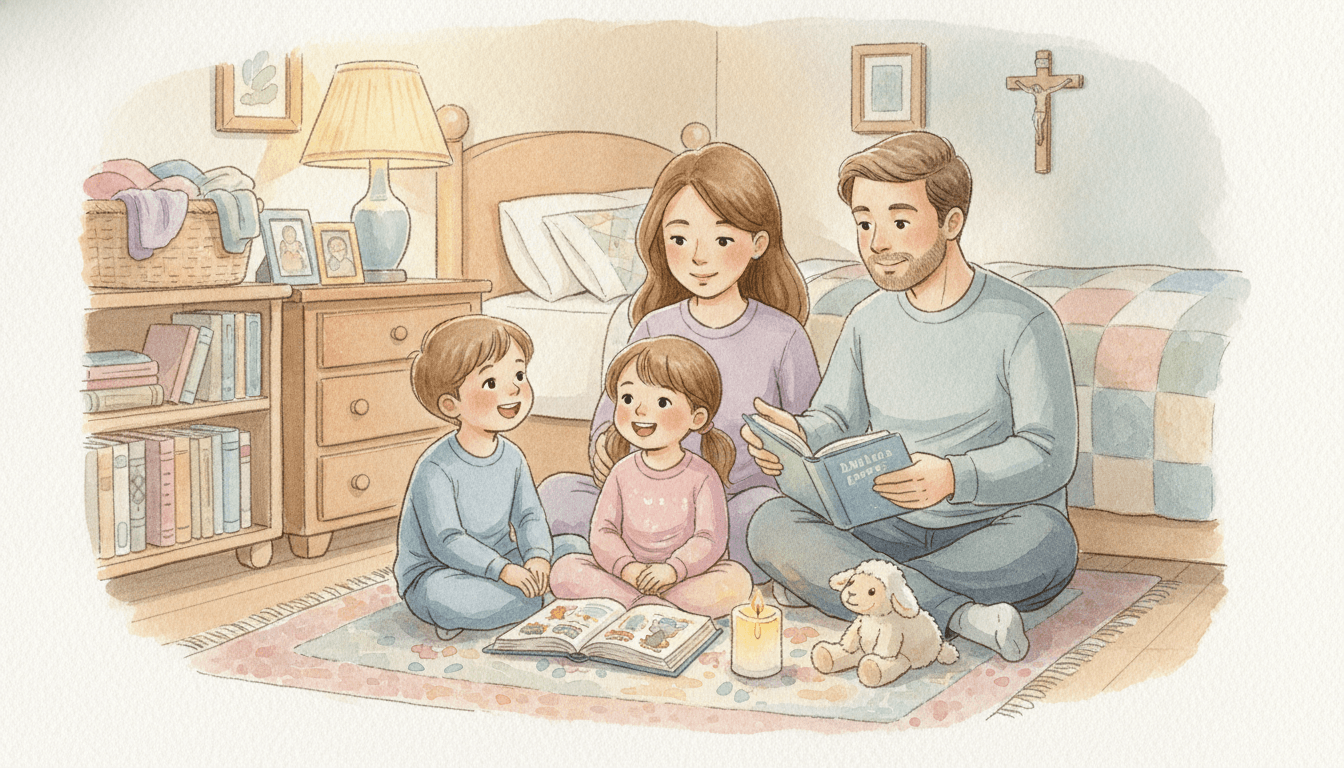
By bedtime, somebody is looking for a missing stuffed animal, somebody else is suddenly thirsty, and the day can feel too noisy to sort out. A family examen prayer gives us a small, calm way to sit with Jesus, notice the good, name the hard, and begin again tomorrow.
When Bedtime Needs More Than One Last Drink of Water
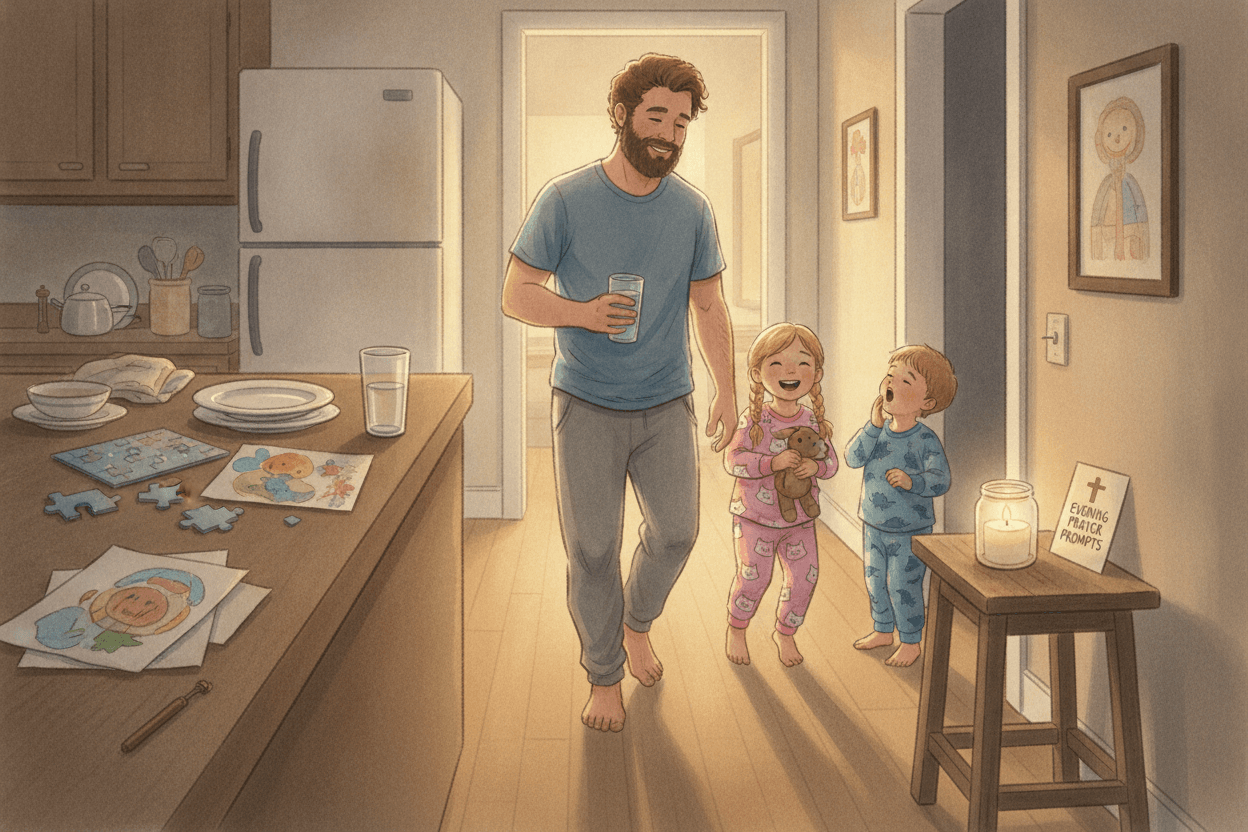
The lights are low. One child suddenly needs water. Another remembers, with remarkable urgency, that his sock feels “weird.” Then comes the question that can stop a parent in the doorway: “Can I tell you something?” Bedtime has a way of pulling the whole day to the surface. The spilled juice, the sharp words, the proud moment at school, the worry nobody mentioned at dinner. We do not always need a long talk. But we can give those loose ends a place to land with Jesus.
A family Examen is a gentle two-to-five-minute check-in before sleep. It is not another task on the chart, and it is definitely not a late-night family meeting where everybody gets a performance review. Think of it as sitting with Jesus and looking back over the day together. Ask each child, “What was one good thing today?” Then, “What was hard or sad?” If there was a choice they wish they could redo, let them name it plainly. End with one small hope for tomorrow: patience with a sibling, honesty about a mistake, courage to try again.
At our table, the answers are rarely polished. A child might thank God for a banana at snack time. Another might admit he yelled because his tower fell down. That is enough. Parents can go first sometimes, too: “I was impatient when we were getting shoes on. I’m sorry. Tomorrow I want to speak more calmly.” Kids learn that looking honestly at a day is not about getting in trouble. It is about receiving mercy and asking for help.
That matters because regular shared prayer is not as common as we may assume. Barna identified 31% of U.S. Christian households as spiritually vibrant—homes marked in part by shared daily prayer, regular Scripture engagement, and faith conversations. That number is not a reason to feel guilty while standing beside a mountain of unfolded laundry. It is an invitation to begin small. A short prayer tonight can become a familiar family rhythm over time.
One small thing we tried was keeping the questions the same each night, so no one had to wonder what to say: “Thank you, Jesus, for ___. Please help me with ___. I am sorry for ___. Tomorrow, help me be ___.” Then we prayed for one another and ended with the Our Father. Some nights a child answered with one word. Some nights nobody could stop giggling. Both kinds of nights count. The point is not a perfect prayer. The point is helping the kid in front of you settle his heart in God’s care before sleep.
Take to heart these words which I command you today. Keep repeating them to your children. Recite them when you are at home and when you are away, when you lie down and when you get up.
What a Family Examen Prayer Is—and What It Is Not
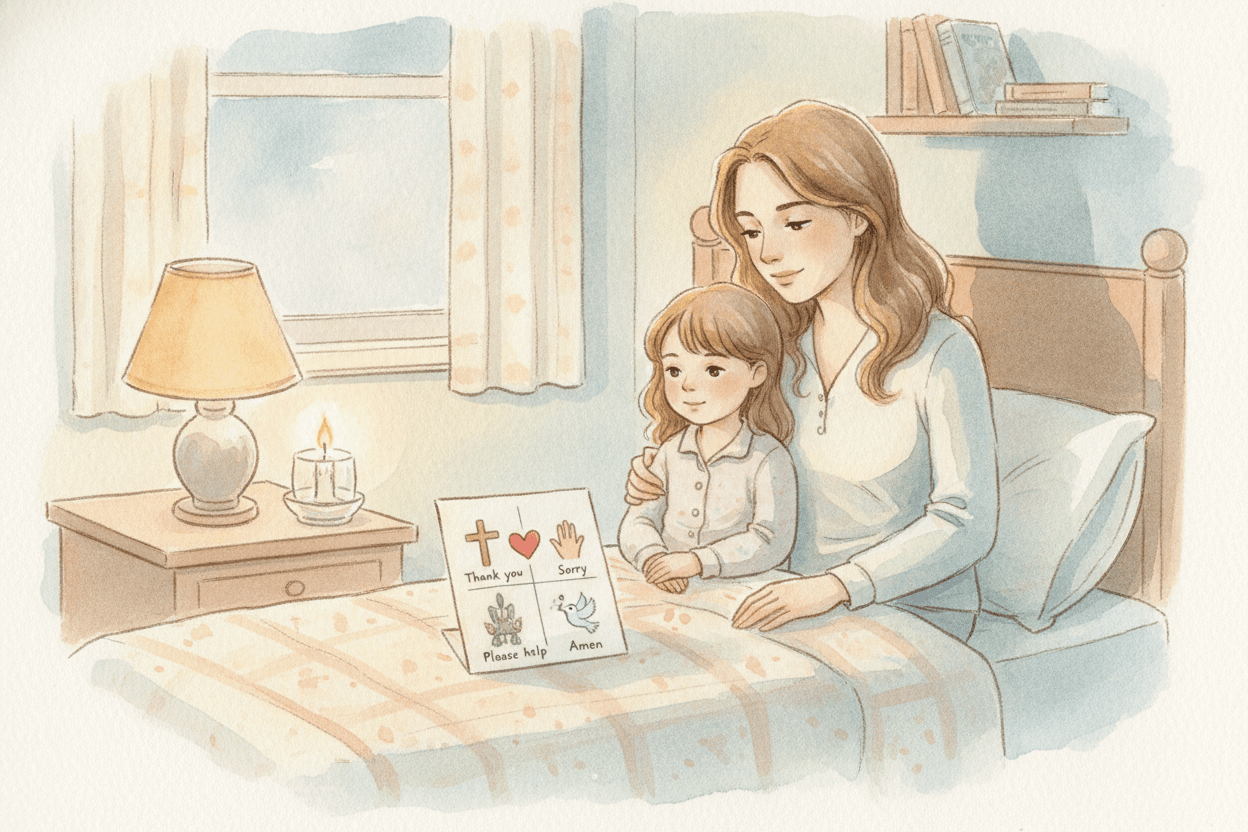
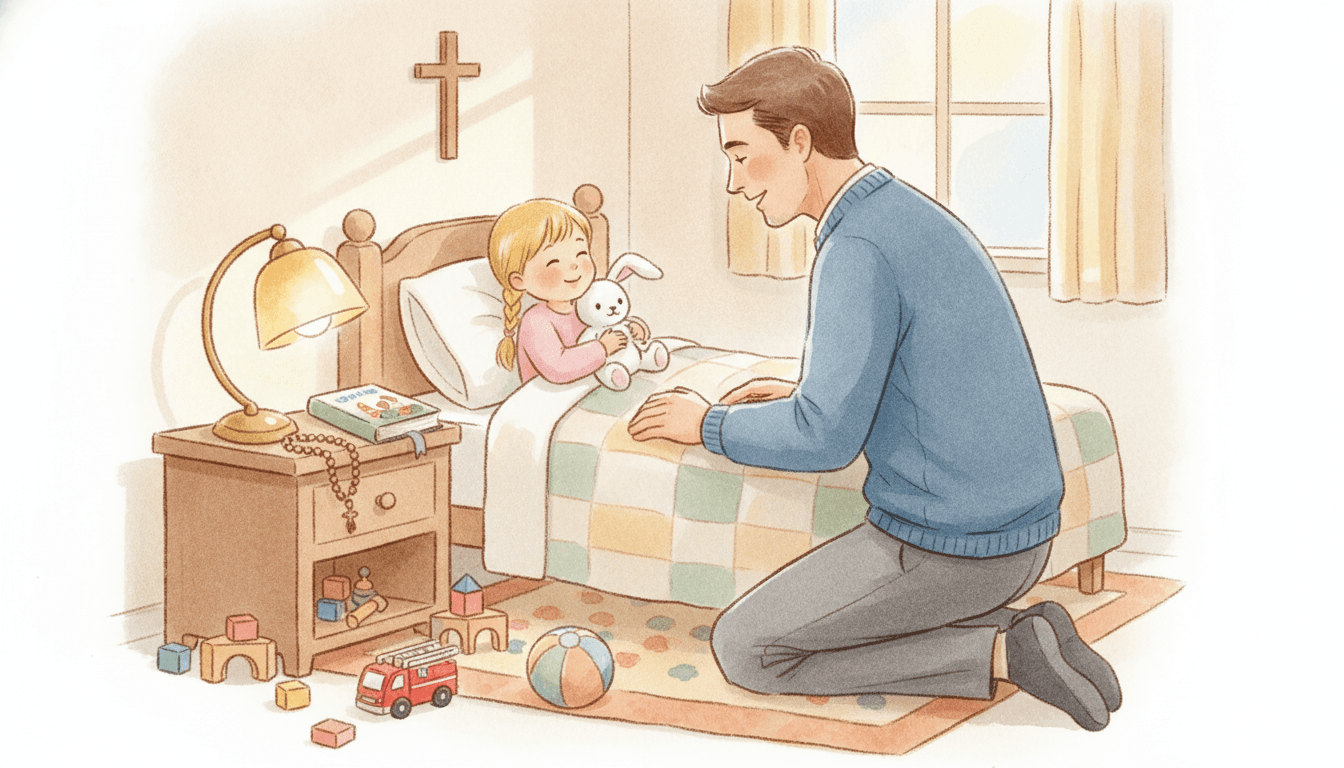
Last Tuesday, the spilled milk had been wiped up, the toothbrush arguments were mostly over, and somebody was still looking for a stuffed dinosaur. It would have been easy to end the day with a quick “Say your prayers” from the hallway. Instead, we sat on the edge of a bed for a few minutes and asked, “What was one good thing from today?” The answer was ice cream at lunch. Fair enough. God was there too.
A family Examen is that kind of small nightly pause. It comes from the prayer tradition of St. Ignatius, but young kids do not need a lecture on Ignatian spirituality before they can pray it. We simply listen with Jesus to the story of the day. We notice the good gifts. We name what felt hard. We remember a choice we wish had gone differently. Then we ask for help with tomorrow. Gratitude, awareness, mercy, and hope—those are the bones of it.
This is not a behavior report with God as the principal and parents as assistant principals. It is not the moment to bring up every unmade bed, sharp word, or sibling dispute that already caused trouble at 4:30. If a child says, “I yelled at my brother,” resist the urge to add supporting evidence. Say, “Thank you for telling the truth. Let’s ask Jesus to help tomorrow.” The Examen makes room for repentance, but it does not turn bedtime into a hunt for failures.
Bishop Robert Barron describes the Examen as a way of seeing ordinary life as a place where God is acting. That matters when the ordinary life in front of us includes lost shoes, math homework, and a toddler wearing a colander as a hat. God’s grace is not limited to the quiet church moments. A child can begin to notice it in a friend who shared, the courage to answer a question in class, or the patience Dad showed when dinner took twenty extra minutes.
One small thing we tried was keeping the questions the same: “What made you glad today? What was hard? Is there anything you want to tell Jesus you’re sorry for? What help do you want from him tomorrow?” We keep answers optional; tired children are not always chatty theologians. Then one person prays a sentence for the next person, and we finish with the Our Father. Psalm 139 gives the posture: “Probe me, God, know my heart; try me, know my concerns.” We are not asking God to shame us. We are asking him to know us, forgive us, and lead us into tomorrow.
Probe me, God, know my heart; try me, know my concerns. See if there is a wicked path in me; lead me in the way of old.
The Four Questions Kids Can Actually Answer
The toothpaste cap was missing again. One child blamed the other. The other child had a very detailed defense, complete with hand motions. By the time pajamas were on, nobody needed a long speech about holiness. They needed a few honest words, a chance to settle down, and the reminder that Jesus was still near in a bathroom full of damp towels.
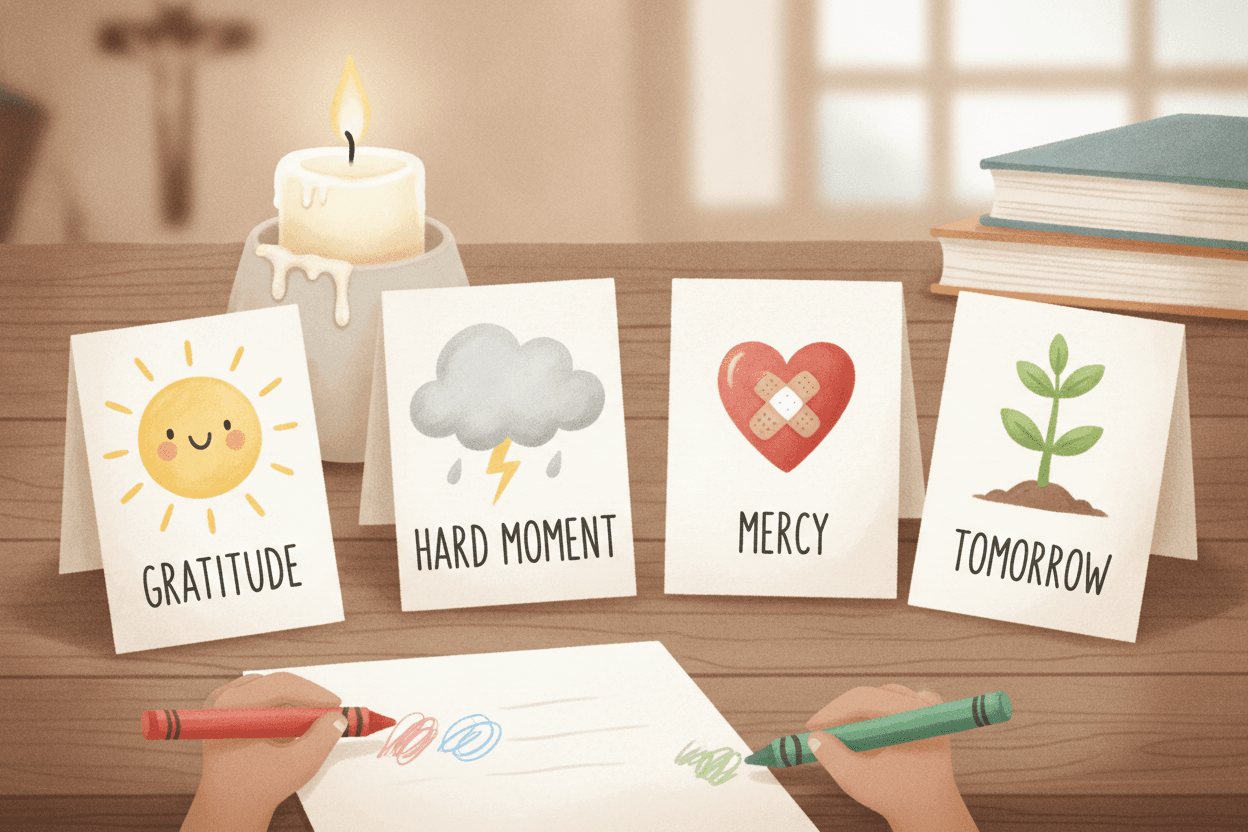
For children ages six to nine, four questions are enough. You can put them on an index card by the bed or say them while tucking in blankets. Ask slowly: “What is one good gift from today?” “What was hard, sad, or frustrating?” “Was there a choice you wish you could redo?” “What kind of help do you want from Jesus tomorrow?” Do not make every child answer every question perfectly. A shrug counts as an opening. So does, “I don’t know.” Give it a minute. Kids often find the words after the first silly answer.
The answers will be wonderfully ordinary. A good gift might be getting picked for a classroom job, finding a ladybug at recess, or Dad making pancakes for dinner. The hard thing might be a friend not sharing, a spelling test, or being afraid when the lights went out. The redo might be grabbing a toy from a sibling, saying “I didn’t do it” when they did, or laughing when someone got hurt. Then make tomorrow specific: “Jesus, help me tell the truth even when I’m worried.” “Help me be patient with my brother.” “Help me be brave at school.” This is not a family courtroom. Nobody is building a case against anybody. We are learning to tell the truth with Jesus beside us.
One small thing we tried was adding a variation when the kids seemed stuck: “Where did you see God today?” Sometimes they saw him in a friend who shared crayons. Sometimes in Mom coming back for one more hug. You can connect it to a BibleHeroes-style story moment: David showed courage when he faced Goliath; who showed courage today? Or name a quality children recognize: Was someone kind like St. Teresa of Calcutta? Was someone brave, patient, or honest? Keep the question concrete. God is not only found in church; he is present in the lunch line, the car ride, and the apology after a fight.
After each person shares, one family member can offer one short prayer: “Jesus, thank you for Mia’s good gift. Please help her tomorrow when she feels left out.” Then close with an Our Father. That is plenty. The goal is not to finish with everyone cheerful or to pull a perfect answer from a tired seven-year-old. At our table, the win is simpler: the children learn that every part of their day—the good, the hard, and the part they wish they could redo—can be brought to God.
Take to heart these words which I command you today. Keep repeating them to your children. Recite them when you are at home and when you are away, when you lie down and when you get up.
Keep the Tone Gentle: Mercy Before Mini-Lectures
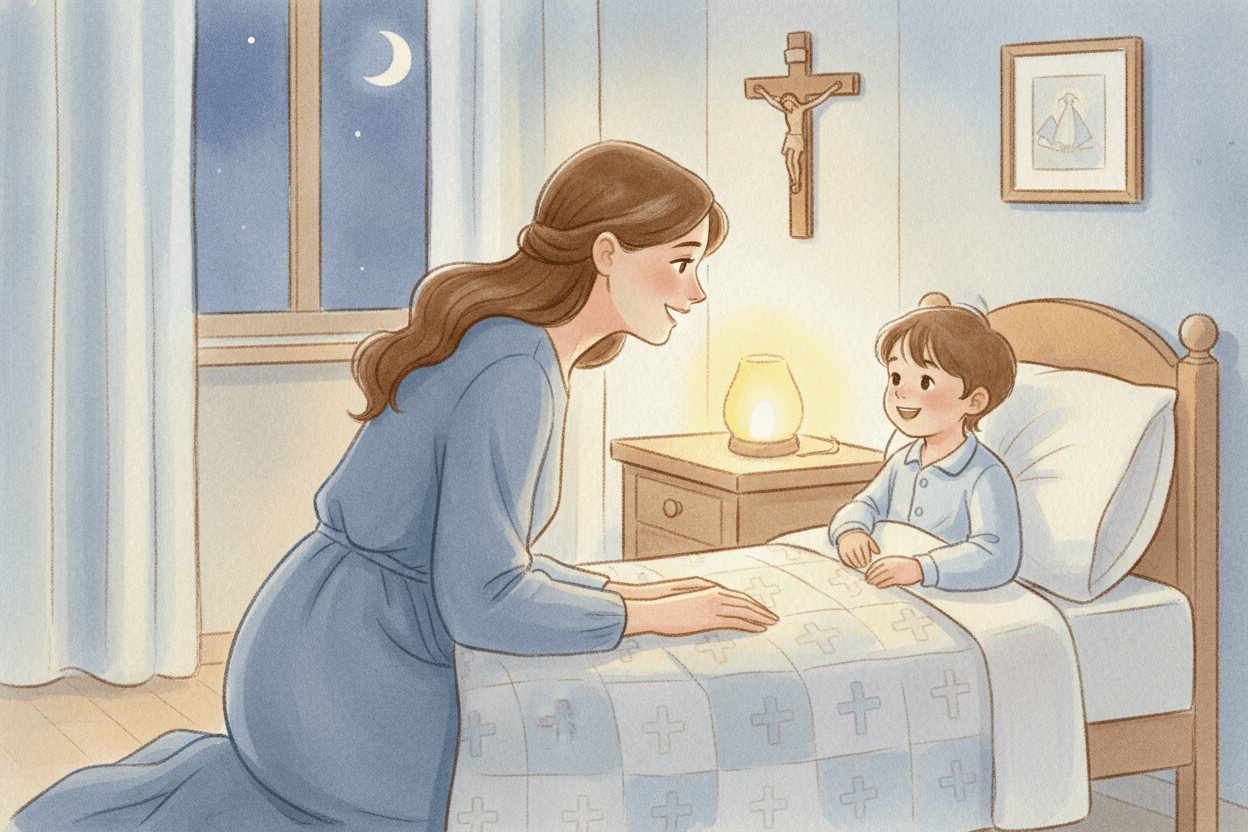
The room is finally quiet. One child is under the blanket. Another is asking whether a stuffed dinosaur can also say prayers. Then your seven-year-old says, almost too softly, “I lied about finishing my homework.” This is the moment when it is tempting to launch into a full bedtime lesson on honesty. I have felt that temptation. But the Examen works better when our first response is not a lecture. It is, “Thank you for telling the truth.”
That sentence does real work. It tells a child that honesty is safe in your house, even when the truth is not pretty. Then name what is truer still: God loves you right now. He is not surprised by the bad choice, and He is not waiting to embarrass you. You might say, “Jesus, thank you for helping us tell the truth. We are sorry for the lie. Please help us be honest tomorrow.” Short prayers are enough. Bedtime is not the hour for a courtroom cross-examination, especially when everyone is one missing toothbrush away from tears.
Lamentations gives us a simple direction: “Let us examine our ways and test them, and return to the LORD.” The point is returning. Not replaying every mistake until a child feels small. When a child names a wrong choice, help them name the feeling too: sad, angry, left out, jealous, scared. Then make room for gratitude, forgiveness, and grace for tomorrow. Ignatian guides for parents put these pieces together because children learn that God receives the whole day—the good parts, the hard feelings, and the choices they want to redo.
Sometimes a repair is needed. If your child snapped at a sibling, tomorrow may call for an apology. If they hid a toy, they may need to return it. Keep it concrete: “What is one kind thing you can do in the morning?” Do not force a grand speech at 9:14 p.m. A whispered “I’m sorry” and a plan to try again can be plenty. Here’s what landed at our table: we treat repair as the next small step after mercy, not the price a child must pay to be loved.
Over time, this makes an examination of conscience feel familiar rather than frightening. A child begins to see that admitting sin does not end in shame; it ends with forgiveness, help, and a way forward. That is good preparation for Reconciliation. They will one day bring their sins to Christ in the sacrament, but they do not need to wait for that day to learn His welcome. Each gentle nightly check-in teaches the kid in front of you: tell the truth, receive mercy, and try again tomorrow.
Let us examine our ways and test them, and return to the LORD.
Use Small Daily Moments to Grow Big Virtues
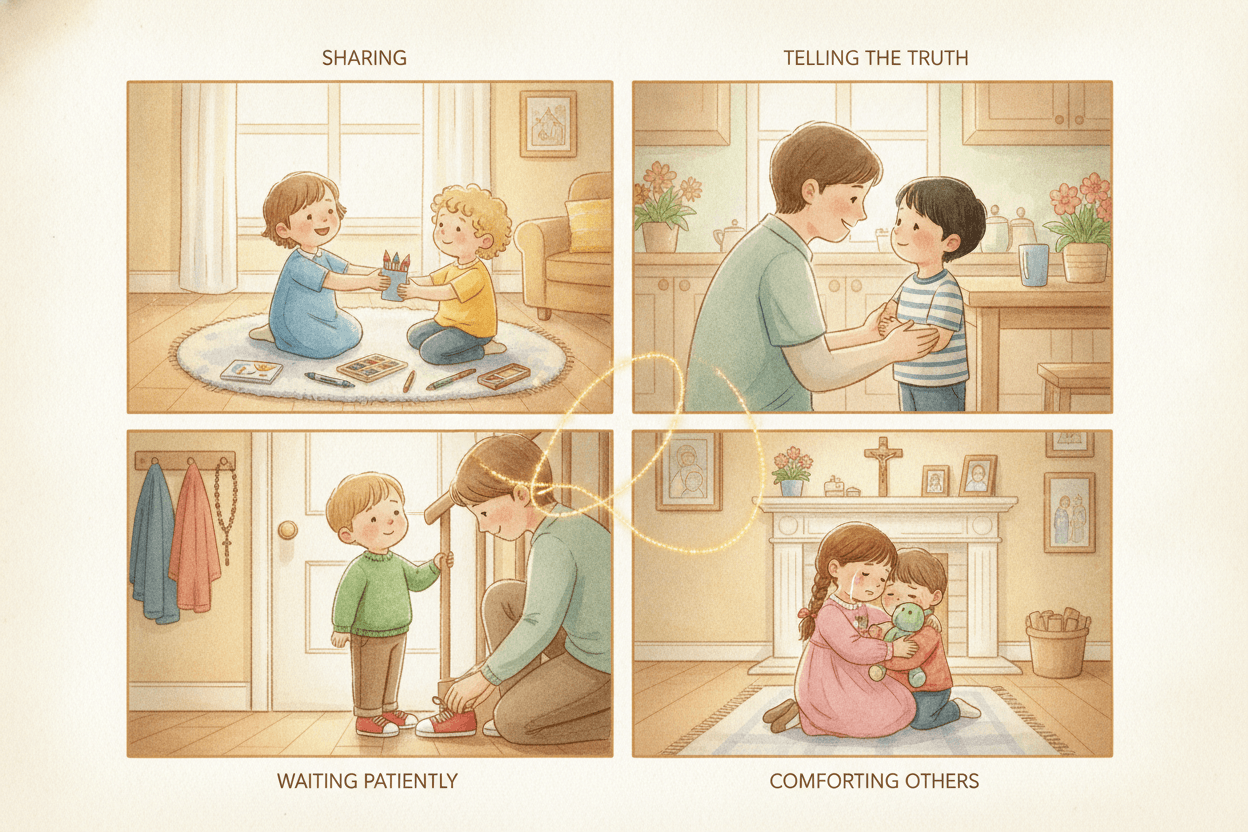
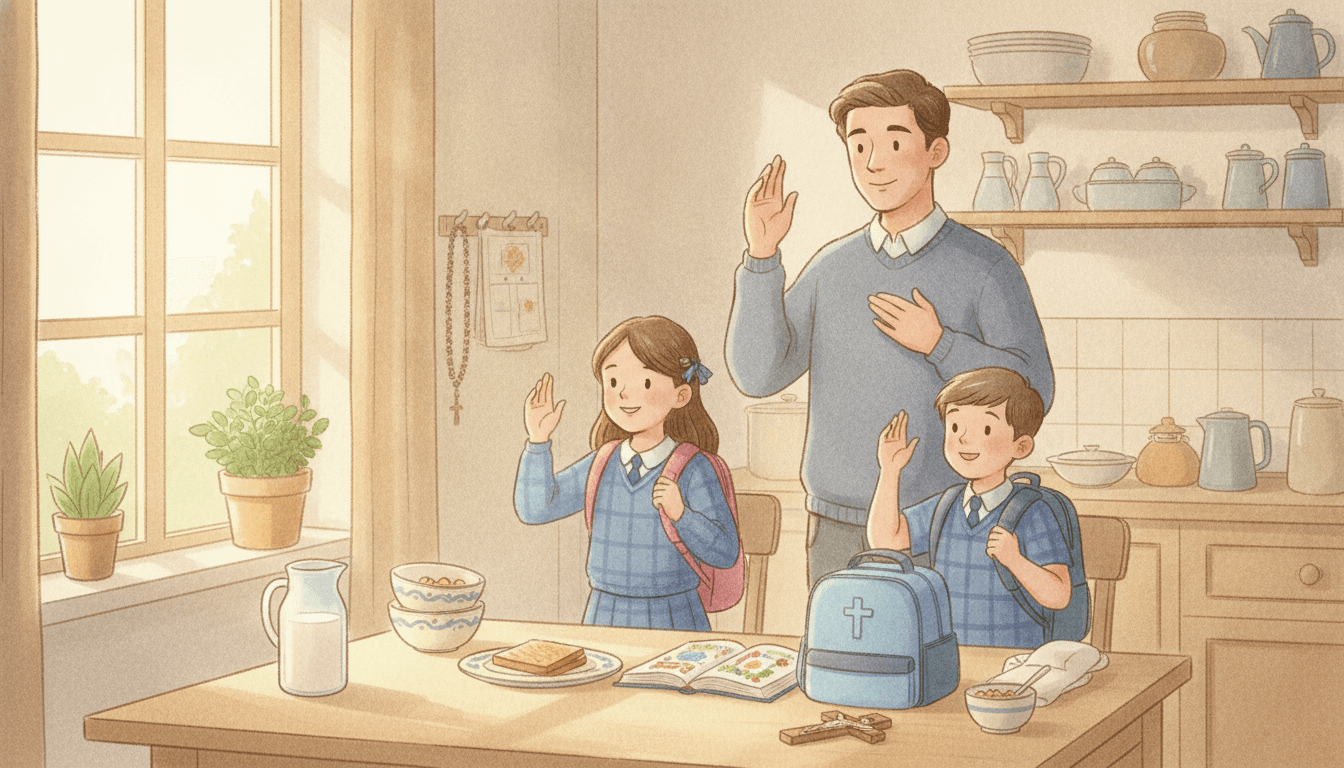
The shoe was missing again. We were already late, one child was crying, and another was insisting he had checked “everywhere” while standing two feet from the shoe rack. By breakfast, patience had left the building. That night, instead of saying, “Try to be better tomorrow,” we named the actual moment: “Jesus, help me use patient words when we are looking for shoes.” That gave our child something he could carry into the next rushed morning.
A family Examen is a good place to choose one virtue at a time. Not every virtue. Not a full report card on the child’s soul before pajamas. Just the one that showed up in the day’s real mess. After teasing, the prayer might be about kindness. After a hidden spill or a blamed sibling, it might be honesty. After the fourth request for help while you are packing lunches, patience gets its turn. Before apologizing to a friend or speaking up when something is wrong, ask for courage.
Here’s what landed with our kids: make the request specific enough that they can picture it. “Jesus, help me be good” is sincere, but it is hard for a six-year-old to grab hold of. Try, “Jesus, help me tell the truth even when I think I’ll be in trouble.” Or, “Jesus, help me use kind words when my sister wrecks my game.” Or, “Jesus, help me say I’m sorry without stomping away first.” The details may be a little funny. They are also where the work happens.
This is not a scoreboard. A child may ask for patience tonight and lose it over cereal tomorrow. So might Dad. The point is not to catch mistakes or produce tiny saints by Thursday. We are helping our children notice a choice, receive mercy when they miss it, and ask for grace for the next try. That is a sturdy habit for an examination of conscience later on, including when they prepare for Reconciliation.
Saint Paul gives the family a simple rhythm: “Rejoice always. Pray without ceasing. In all circumstances give thanks, for this is the will of God for you in Christ Jesus.” At our table, that can sound like thanks for the good part of the day, honesty about the hard part, and one small request for tomorrow. Faith grows in the kid in front of you—the one with toothpaste on his shirt and a tender conscience—not in an imaginary child who never argues about shoes.
Rejoice always. Pray without ceasing. In all circumstances give thanks, for this is the will of God for you in Christ Jesus.
Make It Small Enough to Last This Week
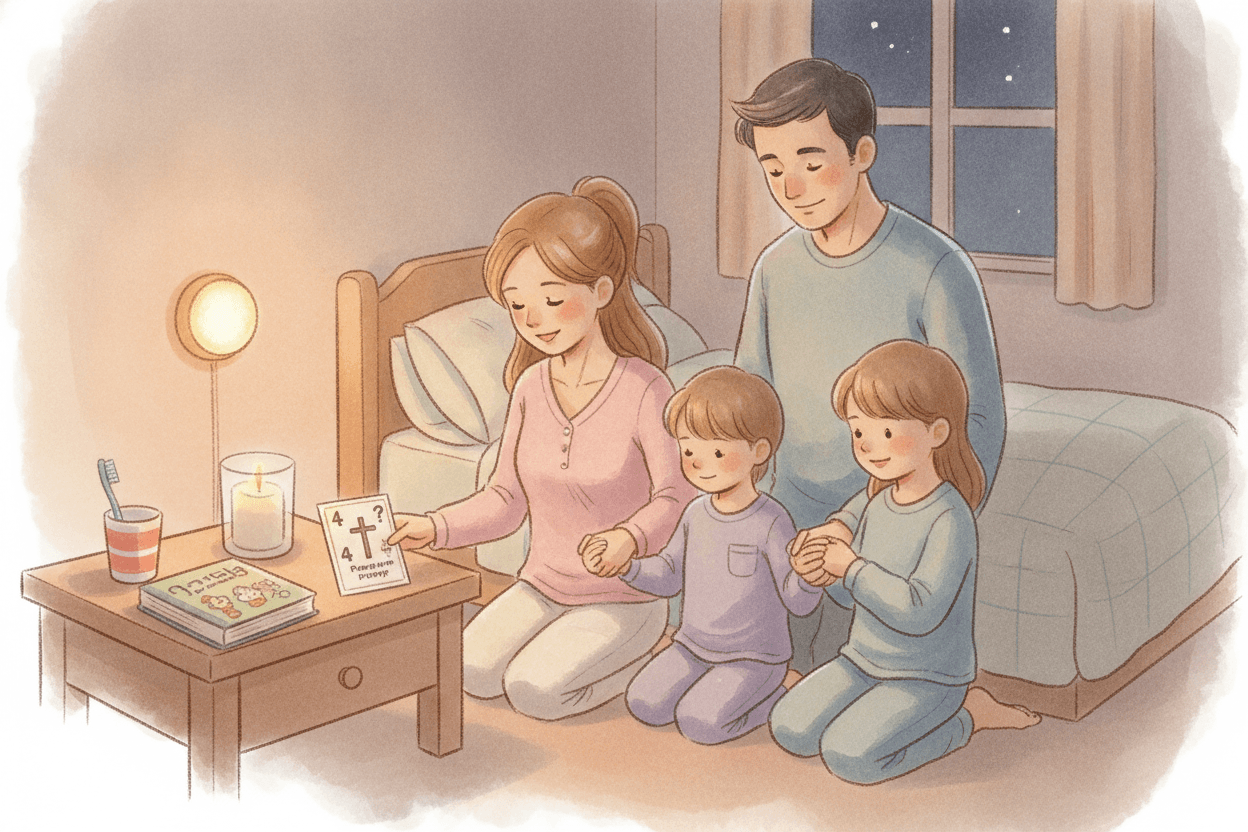
Last Tuesday, our best prayer time happened with one child already under the covers, another still looking for a stuffed animal, and toothpaste on somebody’s pajama sleeve. It was not calm. It was not Instagram-worthy. But we paused for about two minutes, and each person said one thing from the day. That counted. A family Examen does not need a candle, a perfect circle, or everyone sitting still like tiny monks. It needs a repeatable little opening where your children learn: our day belongs to God too.
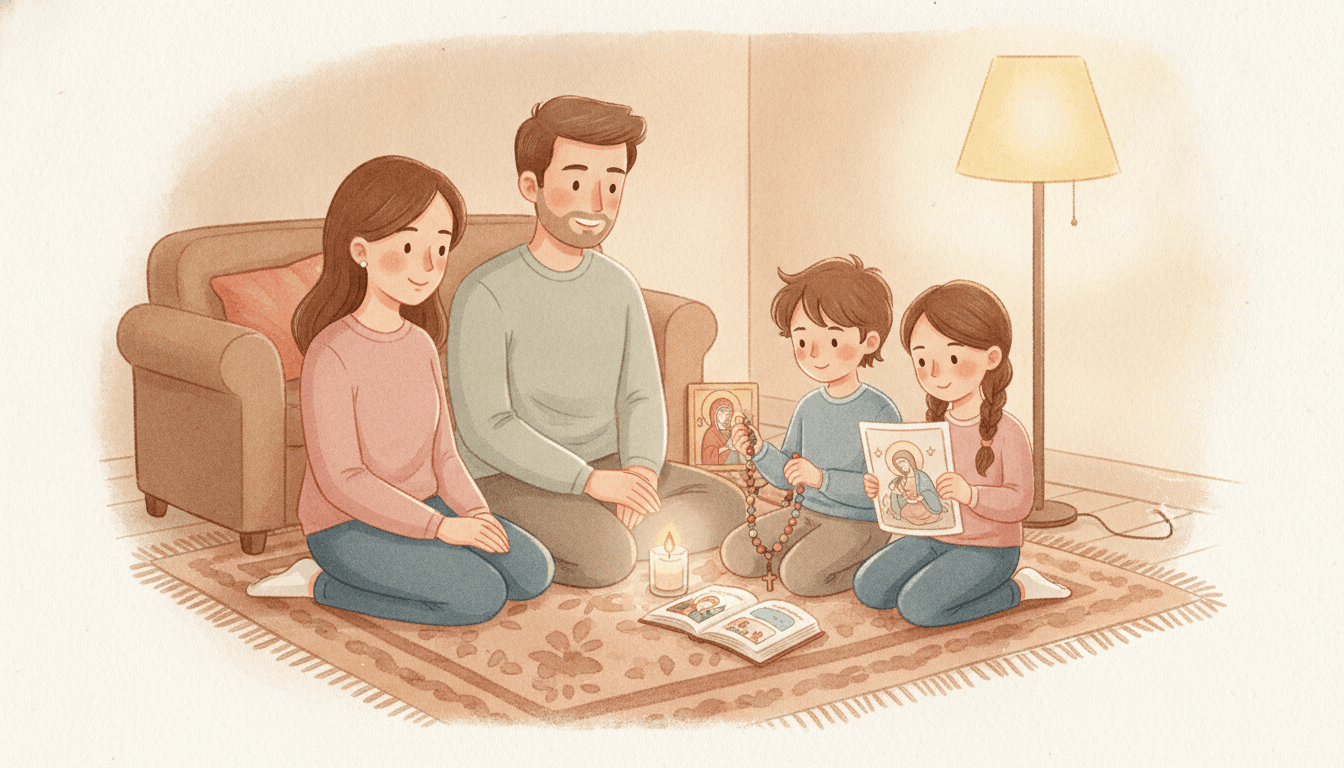
Pick one place and one cue for this week. Maybe it is on the hallway rug after teeth are brushed. Maybe it is at our table after dinner, before anyone disappears to build a fort from couch cushions. The cue matters because parents are carrying a lot already. When the same moment comes around each night, you do not have to decide whether prayer will happen. You simply begin.
Keep the first attempts under three minutes. Ask the four simple questions: What was one good thing today? What was one hard or sad thing? Is there a choice you wish you could redo? How do you want Jesus to help you tomorrow? Let every person answer or pass. Yes, parents too. When Dad says, “I was impatient when we were rushing out the door. I want help being patient tomorrow,” children see that saying sorry is not a trap. It is part of being loved and growing up.
Then pray one sentence for each other. “Jesus, help Mia be brave at school.” “Jesus, help Dad be patient in traffic.” That is enough. If a child offers a wild prayer request about a missing Lego guy, bring that along too. God is not confused by the mix of big feelings, small worries, and plastic bricks. One small thing we tried was ending with the Our Father only when everyone still had the attention for it. On tired nights, the one-sentence prayers were the finish line.
Here is a seven-day launch plan: tonight, choose your spot and cue; tomorrow, make or print a small card with the four questions; for the next five nights, keep it under three minutes, let anyone pass, and close by praying one sentence for each person. Do not wait for a better bedtime season. Begin after brushing teeth, with one child half asleep, if that is the real life in front of you. Deuteronomy pictures faith being repeated at home, when we lie down and when we get up. That ordinary rhythm is the point. Put the card where you will see it tonight, and give it a try.
Take to heart these words which I command you today. Keep repeating them to your children. Recite them when you are at home and when you are away, when you lie down and when you get up.
Frequently asked questions
How do I start a family Examen prayer at bedtime?
Keep it brief—just two to five minutes—and use the same simple questions each night. Ask about one good gift, one hard moment, a choice they would redo, and the help they want from Jesus tomorrow. End by praying for one another or saying the Our Father together.
What questions should I ask my child during a family Examen?
For young children, ask: “What made you glad today?” “What was hard or sad?” “Is there anything you want to tell Jesus you’re sorry for?” and “What help do you want from him tomorrow?” Put the questions on a card near the bed so the routine feels familiar.
Is the Examen supposed to be a time to correct my child’s behavior?
No. The family Examen is not a bedtime behavior report or a chance to revisit every conflict from the day. If your child admits a wrong choice, thank them for telling the truth and help them ask Jesus for forgiveness and strength for tomorrow.
What if my child will not talk during family prayer?
Keep answers optional, especially when children are tired or silly at bedtime. A one-word answer, a shrug, or “I don’t know” can still be part of the prayer. Give a little quiet space, and let parents model honest answers without pressuring children to perform.
What is an Ignatian Examen for families?
The Examen is a prayer tradition associated with St. Ignatius that helps people notice God’s presence in their ordinary day. In a family version, you look back with Jesus, thank him for good gifts, name what was difficult, receive mercy for failures, and ask for grace tomorrow. Children do not need a lesson in spirituality to begin; they can start with everyday moments like school, snacks, arguments, and friendships.
How can parents model the Examen for their kids?
Go first occasionally by naming a real gift, struggle, or mistake from your own day. For example, a parent might apologize for being impatient during the morning rush and ask Jesus for a calmer voice tomorrow. This shows children that honesty before God leads to mercy and growth, not shame.
Sources: usccb.org · usccb.org · usccb.org · ignatianspirituality.com · teachingcatholickids.com · uccmn.org · stthomasatcanyonlake.org · access.barna.com · aleteia.org · thelittleroseshop.com
Scripture quotations in this article use the NABRE translation.