St. Stephen the First Martyr:Teaching Kids Sacrifice
Why did Stephen refuse to fight back? Acts 6–7 helps Catholic children see that Christian sacrifice is not seeking suffering, but serving faithfully, forgiving enemies, and choosing love when doing wh
What do you say when your child asks why Stephen did not fight back as people hurt him? Acts 6–7 gives us more than a difficult story: it shows a disciple whose courage, service, and forgiveness were rooted in Jesus. For older children, Stephen’s witness can clarify that Christian sacrifice is not seeking pain, but choosing faithful love when doing what is right costs us.
Begin With the Question Kids Are Really Asking
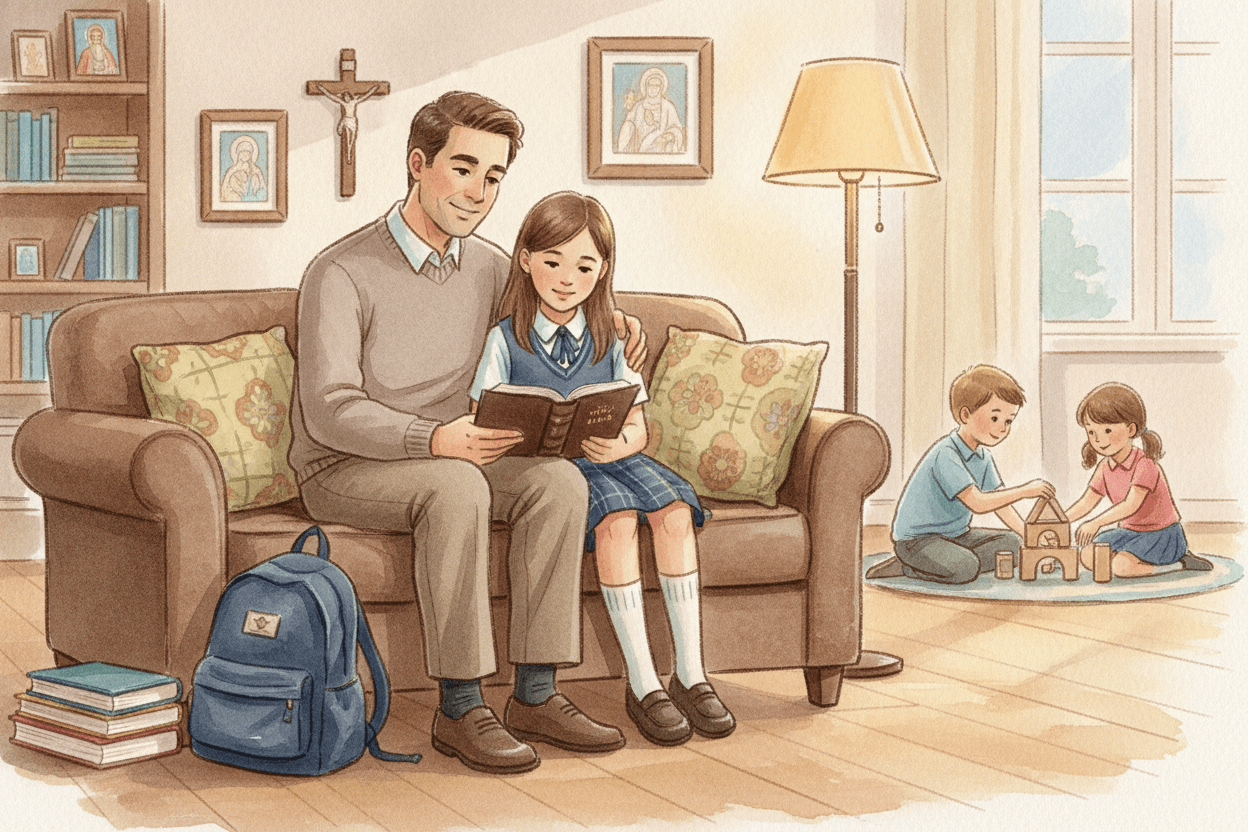
“If I am supposed to forgive, do I just let them keep doing it?” A child may ask this after being left out at lunch, mocked in a group chat, or pressured to laugh at someone else. That is the real question beneath St. Stephen’s story. Children hear that he forgave the people who killed him, and they rightly wonder whether Christianity asks them to become passive when someone is cruel. We should answer plainly: no. Jesus does not ask children to accept bullying, secrecy, threats, violence, or abuse. They should move toward safety and tell a trusted adult—a parent, teacher, school counselor, priest, or other responsible caregiver—until they receive help.
Stephen’s death is serious, and it deserves a reverent, calm telling. He was not looking for suffering, nor was he unable to escape an ordinary conflict. He was the Church’s first martyr: a witness to Christ who accepted death rather than deny the truth about Jesus. The Catechism calls martyrdom “the supreme witness given to the truth of the faith” (CCC 2473). That is not a lesson telling a ten-year-old to stay near a child who is hurting him, or a teen to remain silent about mistreatment. Martyrdom is the extreme cost some Christians have borne for fidelity to Christ; it is never a reason to excuse another person’s sin or to leave a child unprotected.
Here’s how I’d teach this: Stephen did not choose hatred, even when others chose violence. He had already served the community and spoken truthfully about Jesus. At the end, Acts tells us that he prayed, “Lord, do not hold this sin against them” (Acts 7:60, NABRE). Forgiveness meant that Stephen placed judgment in God’s hands and desired his persecutors’ good. It did not mean that what they did was acceptable. Children can grasp this distinction: forgiveness says, “I will not seek revenge”; wisdom says, “I will get help, set a boundary, and refuse to pretend this is okay.”
For most children, sacrifice will look much smaller but still real: refusing to pass along a humiliating photo, telling the truth when a lie would protect them, sitting with the classmate others avoid, or saying, “I’m not joining in.” These choices can cost comfort or popularity. Scripture invites us to see such moments as opportunities for faithful love, not as invitations to danger. Begin by asking, “What would help you feel safe?” Then ask, “What is the kind and truthful thing to do next?” In this way, Stephen’s witness forms courageous children—children who neither return cruelty nor quietly endure harm.
Then he fell to his knees and cried out in a loud voice, “Lord, do not hold this sin against them”; and when he said this, he fell asleep.
Who Was Stephen Before He Became a Martyr?
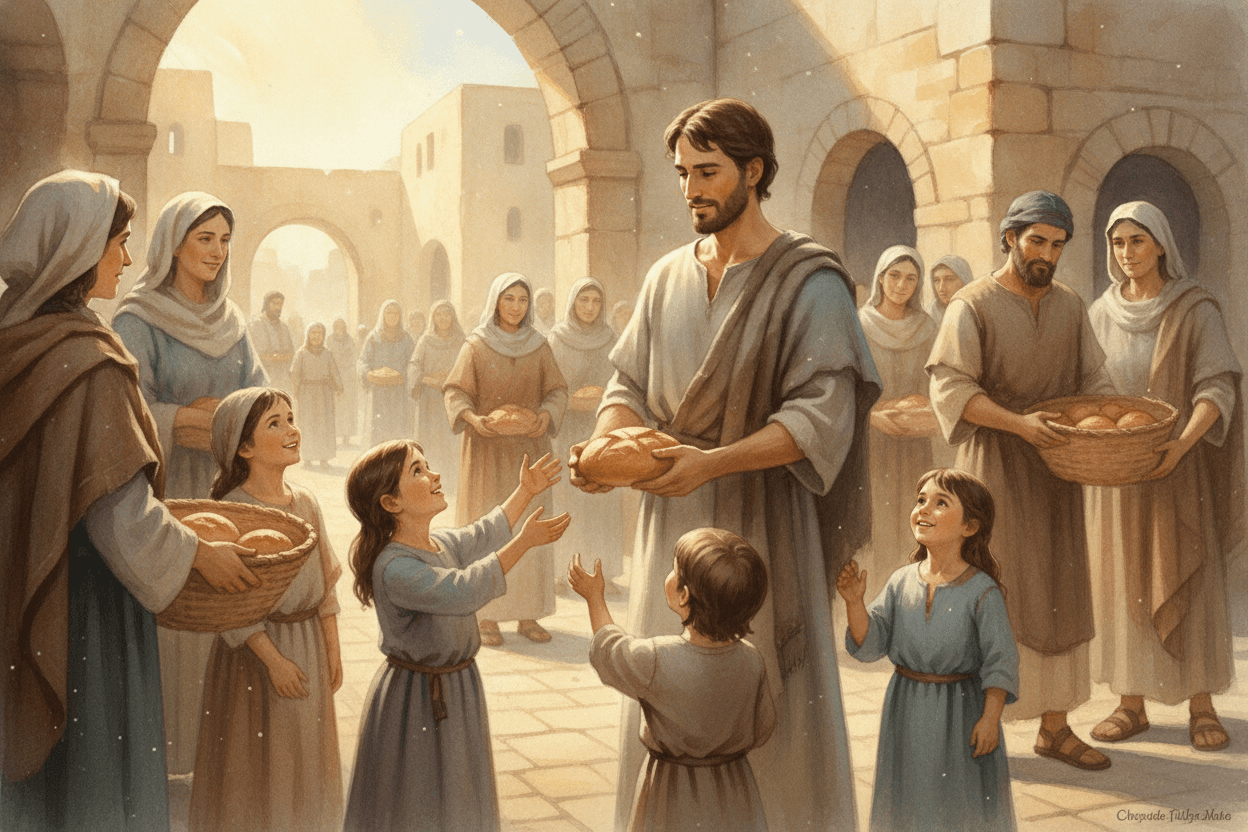
Before Stephen ever stood before an angry crowd, he was standing with the Church’s ordinary needs in front of him. In Acts 6, the Christian community was growing, and some widows were not receiving fair daily care. The Apostles asked the community to choose seven reputable men, filled with the Spirit and wisdom, to take responsibility for this work. Stephen was not first introduced as a man seeking danger or attention. He was chosen to help make sure vulnerable people were served.
That beginning matters when we teach children about sacrifice. Stephen’s courage did not appear suddenly on the day he was persecuted. It was formed through faithful service: noticing a need, accepting responsibility, and putting the good of the community ahead of his own comfort. Tradition recognizes these seven men as the first deacons, servants appointed for the Church’s practical care. As the Catechism reminds us, the diaconate is ordered to service in the Church (CCC 1569). Stephen shows that service at the table and witness to the truth belong together.
Scripture gives Stephen a remarkably clear description: he was “a man filled with faith and the holy Spirit.” Faith meant more than knowing facts about Jesus. Stephen trusted the risen Lord enough to let that trust shape his work, his words, and eventually his suffering. Later, Acts says he was filled with grace and power and performed great wonders among the people (Acts 6:8). For a child, this is an important order to notice: first faithfulness, then service, then courage when courage is required.
Here’s how I’d teach this at home or in a classroom: ask, “What are the small jobs that help people feel cared for?” Children may name setting the table, including a classmate, helping a younger sibling, or refusing to laugh when someone is mocked. Then ask, “Which of those might cost us something?” Stephen’s sacrifice began in such choices. He used his gifts for others and spoke about Jesus even when people resisted him. We do not ask children to seek suffering; we help them understand that love sometimes asks us to do what is right when it is inconvenient or unpopular.
The Church celebrates Stephen’s feast on December 26, the day after Christmas, and calls him the first Christian martyr, or protomartyr. A martyr is a witness who remains faithful to Christ even rather than deny him. Yet before Stephen became known for the manner of his death, Acts presents him as a servant of the Church. That is the foundation children should remember: a courageous witness is usually formed through many quiet decisions to pray, serve, tell the truth, and trust Jesus.
The proposal was acceptable to the whole community, so they chose Stephen, a man filled with faith and the holy Spirit, along with Philip, Prochorus, Nicanor, Timon, Parmenas, and Nicholas of Antioch, a convert to Judaism.
What Does “Martyr” Mean in Catholic Teaching?
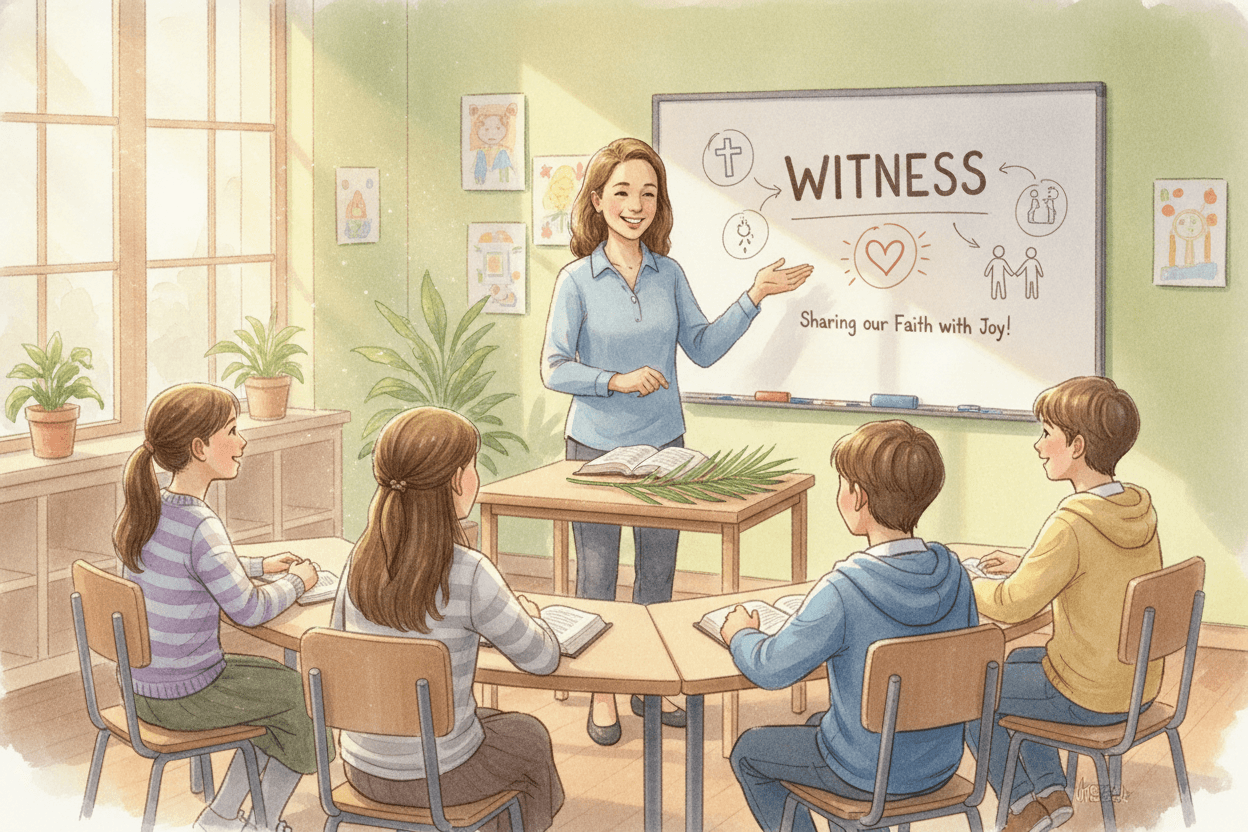
A child may hear that Stephen was killed for his faith and ask, “Did he have to die?” That is exactly the right question. We should answer it plainly: Stephen did not go looking for death, and the Church never asks Christians to seek suffering. He was a martyr because, when others demanded that he reject the truth about Jesus, he remained faithful—even when that faithfulness cost him his life.
The word martyr means witness. In Catholic teaching, a martyr is someone who bears witness to Christ so completely that he or she accepts death rather than deny Jesus and the faith. The Catechism calls martyrdom “the supreme witness given to the truth of the faith” (CCC 2473). Stephen’s death was not chiefly about being brave in a difficult moment. It was his final testimony that Jesus is Lord, risen from the dead, and worthy of complete trust.
Here’s how I’d teach this to children: “Stephen loved Jesus more than he feared the people who wanted him to stop speaking the truth. He did not choose violence. He did not hate them back. He stayed with Jesus.” That last point matters. As people stoned him, Stephen prayed, “Lord Jesus, receive my spirit.” Then he prayed for those hurting him: “Lord, do not hold this sin against them.” His witness looked like Jesus’ own mercy on the Cross.
The Catechism also helps us keep this lesson in its proper place. Martyrdom is a grace from God, not an achievement Christians earn or a danger they should chase (CCC 2474). We are not likely to face what Stephen faced; his witness helps us practice small acts of faithfulness now. For a ten-year-old, that may mean refusing to laugh when a classmate is mocked. For an older child, it may mean telling the truth when lying would be easier, declining gossip, or calmly saying, “I don’t want to be part of that.”
Parents can make the connection without making children fearful: “Stephen shows us that Jesus is worth everything. Most days, our sacrifice will be smaller: giving up revenge, admitting a wrong, defending someone who is alone, or praying for a person who has hurt us.” Scripture invites us to see that Christian sacrifice is not about dramatic suffering. It is love that remains faithful when faithfulness costs something. That is a strong, realistic lesson for Catholic children.
Then he fell to his knees and cried out in a loud voice, “Lord, do not hold this sin against them”; and when he said this, he fell asleep.
Read Acts 7 Through Stephen’s Eyes: Courage Without Hatred

Picture the moment with your child: Stephen is standing before people who are angry with him, and he does not answer anger with more anger. He has spoken plainly about Jesus, and the crowd does not want to hear it. This is the part of Acts 7 that can make children uneasy, so there is no need to dwell on the violence. Keep their attention on Stephen’s response: he looks upward. He is not trying to win an argument, impress a crowd, or prove that he is tougher than everyone else. He is trusting the risen Jesus.
Scripture invites us to notice what fills Stephen at this decisive moment. Acts says he is filled with the Holy Spirit and sees God’s glory, with Jesus standing at God’s right hand (Acts 7:55-56). For a child, that detail matters greatly. Stephen’s courage did not come from having no fear. It came from knowing that Jesus was alive, reigning, and near to him. Courage, then, is not loudness, sarcasm, or refusing to care what happens. Christian courage is choosing what is true and good because we belong to Christ.
Here’s how I’d teach this at home or in a parish classroom: ask, “What could Stephen have done if he only wanted people to like him?” Children will quickly see that he could have stayed quiet or changed his message. Then ask, “What did he do instead?” He continued to tell the truth about Jesus. This leads naturally to their own situations: refusing to laugh when someone is mocked, telling the truth when a lie would be easier, or saying kindly, “I do not want to talk about her that way.” These choices are not martyrdom, but they train a child’s heart to be faithful when faithfulness costs something.
Stephen’s final prayers show the deepest kind of courage. As he is dying, he says, “Lord Jesus, receive my spirit” (Acts 7:59). Then he prays, “Lord, do not hold this sin against them” (Acts 7:60). These words echo Jesus’ trust in the Father and Jesus’ forgiveness from the Cross. Stephen does not call evil good, and he does not pretend that cruelty does not hurt. Rather, he refuses to let hatred rule his own heart. As the Catechism reminds us, martyrdom is the supreme witness given to the truth of the faith (CCC 2473). Stephen bears that witness not only by dying for Christ, but by forgiving like Christ.
This is a wise place to be very clear with children: God does not ask them to look for danger or to remain in an unsafe situation. If someone is hurting, threatening, or bullying them, they should tell a trusted adult and seek help. Stephen’s example is not “put up with mistreatment.” It is “do not become cruel because someone else has been cruel.” Families can end this reading with a simple prayer for one person who has been difficult that week. That small practice helps children understand sacrifice as love that remains faithful, truthful, and merciful.
But he, filled with the holy Spirit, looked up intently to heaven and saw the glory of God and Jesus standing at the right hand of God, and he said, “Behold, I see the heavens opened and the Son of Man standing at the right hand of God.”
Why Did Stephen Pray for the People Hurting Him?
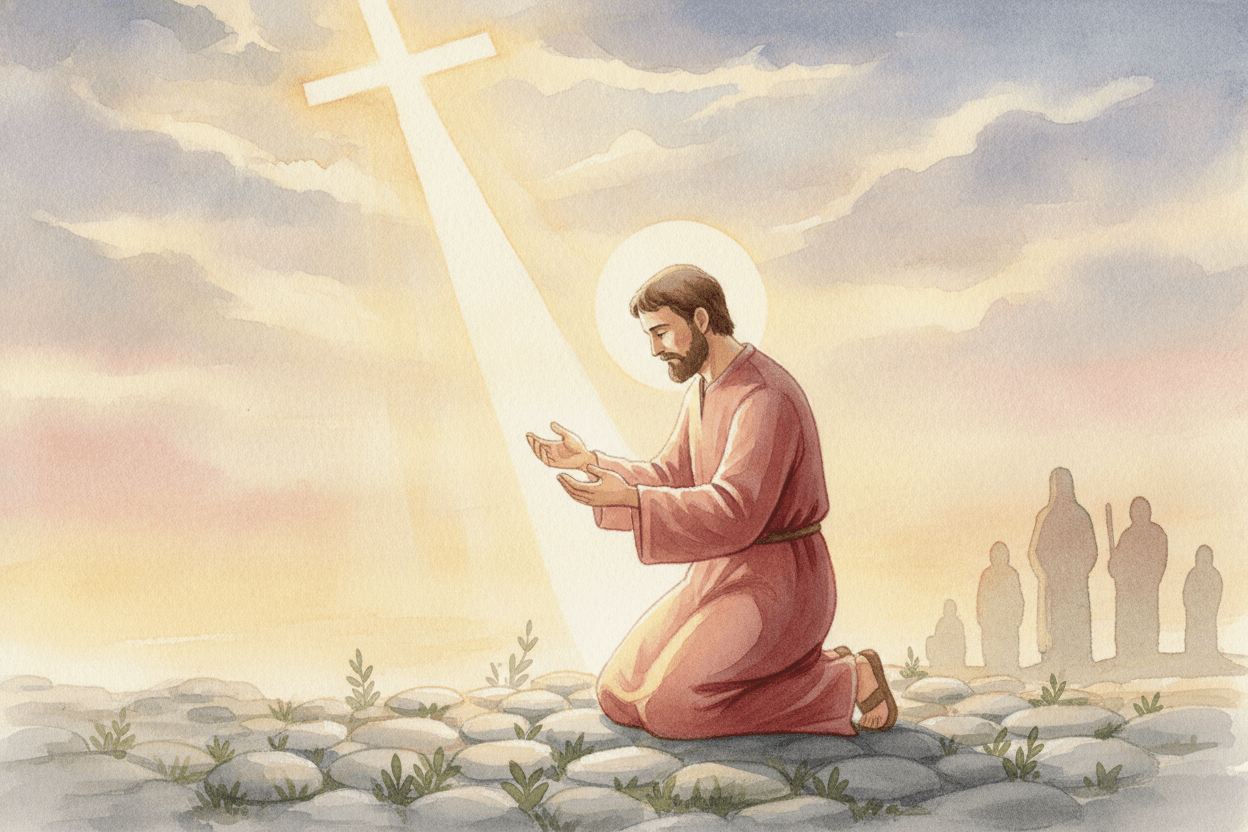
The most startling detail in Stephen’s death is not that the crowd threw stones. It is that Stephen used his last breath to pray for the very people throwing them. He did not pretend their action was acceptable. He had spoken the truth about Jesus, and they answered with terrible violence. Yet Stephen refused to let their sin teach his heart to hate. For children, this is often the hardest part of his story—and the part most worth discussing slowly.
Here’s how I’d teach this to older children: forgiveness is not saying, “What happened was fine.” It is not forgetting, dropping necessary consequences, or allowing someone to hurt you again. A child who is being bullied, threatened, abused, or repeatedly mistreated should tell a trusted adult and seek protection right away. Forgiveness can include firm boundaries, distance, and help from parents, teachers, pastors, or counselors. Stephen’s prayer does not make evil smaller; it places justice where it belongs: in God’s hands rather than in our desire to get even.
Scripture invites us to notice how closely Stephen’s mercy resembles Jesus’ mercy toward those who persecuted him. Stephen belonged to Christ so completely that, even under suffering, he answered hatred with prayer. This is sacrifice in its clearest form: not simply giving something up, but offering our pain, choices, and desire for revenge to God out of love. The Catechism teaches that martyrdom is the supreme witness given to the truth of the faith (CCC 2473). Stephen’s witness included both courage to speak the truth and charity toward those who rejected it.
Bring the lesson down to the places children recognize. A sibling blames you for a mess. A classmate excludes you from a group chat. Someone repeats an embarrassing story after you asked them to stop. The Christian response is not passivity: tell the truth, get help, and name what was wrong. But it also means refusing to spread another cruel story, plan payback, or celebrate when that person suffers. A child can pray, “Jesus, help me want what is good for this person, even though I am hurt.” That is a real beginning of forgiveness.
Stephen’s prayer also gives parents a useful way to correct a common misunderstanding. We do not forgive because the offender deserves an easy escape. We forgive because we belong to Jesus, who sees every wound and judges with perfect justice. Ask at dinner: “What is one way we can protect someone who is being hurt, without becoming hurtful ourselves?” Stephen shows children that mercy is not weakness. It is the strength to let Christ shape our response when anger would be easier.
Then he fell to his knees and cried out in a loud voice, “Lord, do not hold this sin against them”; and when he said this, he fell asleep.
Translate Stephen’s Sacrifice Into a Tween’s Real Life
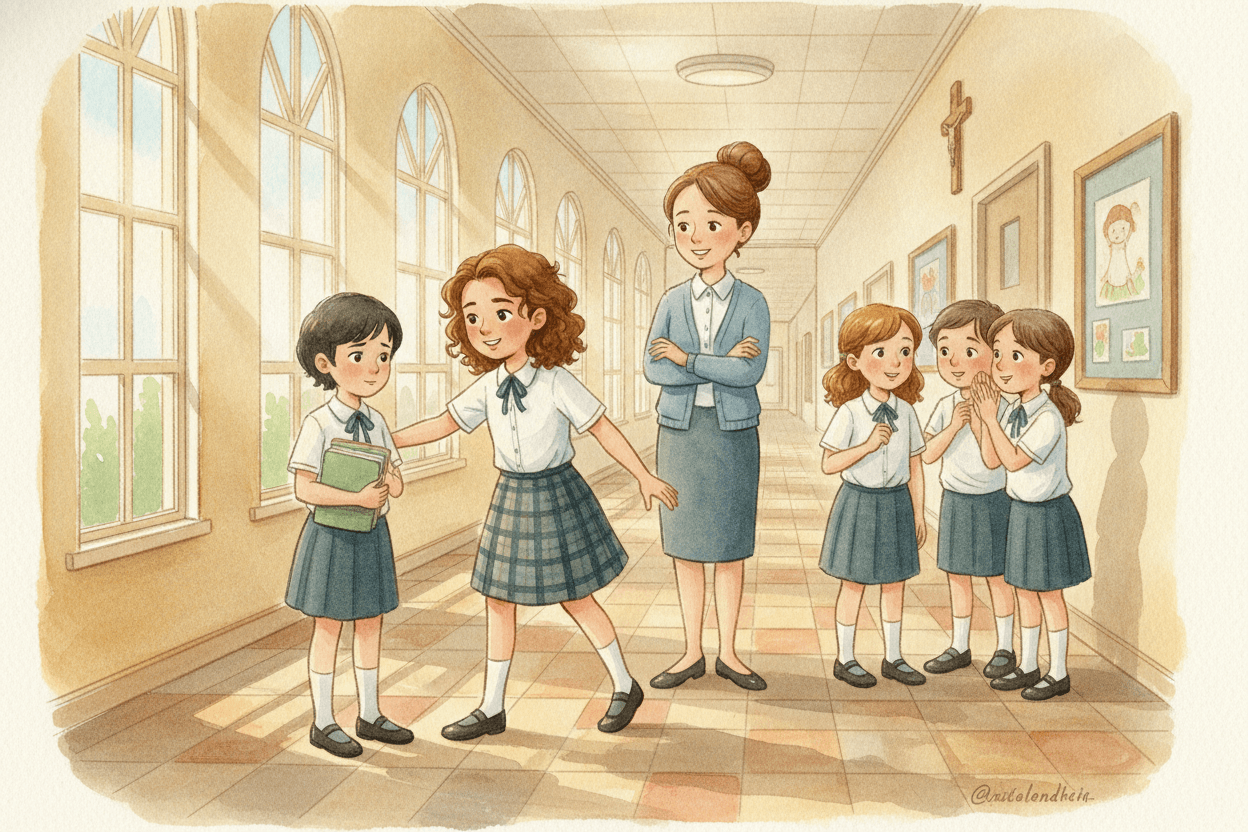
The group chat starts making fun of a classmate, and a tween feels the pull to add one laughing emoji so no one turns on him next. That small moment is a real place to teach Stephen’s sacrifice. Stephen’s death was unique and terrible; children should never be asked to imagine themselves seeking suffering. Yet his steadfast love helps them recognize the smaller costs of being faithful: giving up approval, the last word, or the chance to get even because Jesus asks something better of us.
Here’s how I’d teach this: “A sacrifice is not always giving up a thing. Sometimes it is giving up a wrong response.” A child may refuse to pass along gossip, even if friends call her boring. He may tell the truth after breaking something, though admitting it feels embarrassing. She may say, “That is not funny,” when a classmate is being mocked. These choices can cost popularity or comfort, but they are proportionate ways of putting love of God and neighbor ahead of pride. As the Catechism reminds us, Christian witness means speaking and acting in a way that makes Christ known (CCC 2472).
Stephen did not answer cruelty with cruelty. While he was being stoned, Scripture records his prayer: “Lord, do not hold this sin against them.” For a tween, this does not mean pretending that hurtful behavior was acceptable. It can mean choosing not to retaliate: not insulting a sibling back, not posting the secret someone shared, not recruiting friends against a peer, and praying, “Jesus, help me want what is good for this person.” Often the first sacrifice is surrendering the satisfying feeling of revenge.
Parents can also name an important boundary plainly. If a child is being bullied, threatened, touched inappropriately, pressured to keep a dangerous secret, or harmed in any way, he or she should tell a trusted adult immediately: a parent, teacher, school counselor, pastor, or another safe adult. Forgiveness and protection belong together. A child can pray for the person causing harm while adults work to stop the harm and keep the child safe. Stephen’s mercy never teaches us to excuse evil or remain silent about danger.
At dinner or on the ride home, try one specific question: “What might it cost you to do the right thing tomorrow?” Let children supply the answers, then help them make a simple plan. Perhaps they will sit beside the student who is usually left out, apologize first after an argument, or leave a cruel conversation without joining it. Scripture invites us to see these decisions as training in faithful love. They are not dramatic, but they form the heart to choose Jesus when truth, kindness, and courage carry a cost.
Then he fell to his knees and cried out in a loud voice, “Lord, do not hold this sin against them”; and when he said this, he fell asleep.
Try a St. Stephen Family Practice This Week
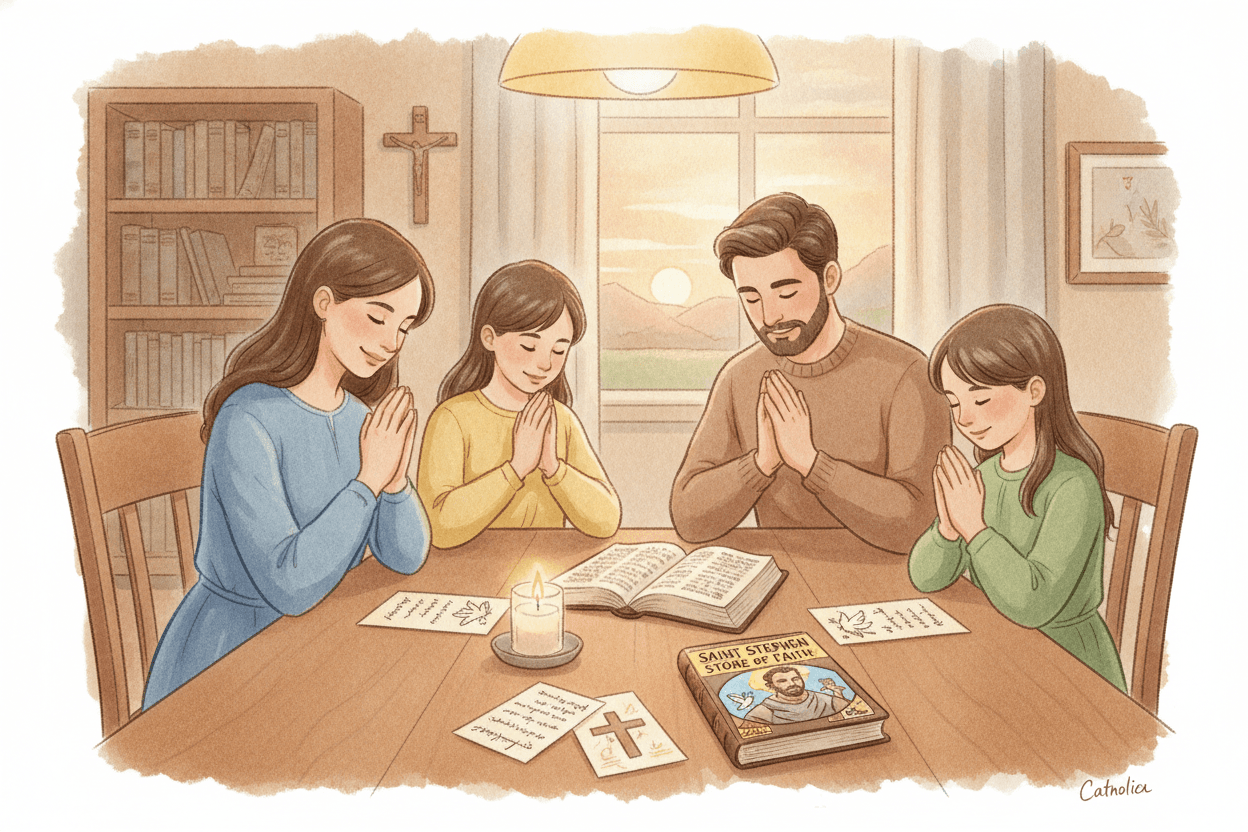
At the dinner table, the most useful question may not be, “Would you die for Jesus?” For a child, that can feel distant and frightening. A better beginning is, “What does it cost to love like Jesus today?” Perhaps it costs admitting, “I broke it.” Perhaps it means sitting beside the child everyone else ignores, refusing to pass along a cruel joke, or apologizing before being asked. St. Stephen helps children see that faithfulness usually begins in these smaller, ordinary choices.
Here’s how I’d teach this as a family practice: open the Bible and read Acts 6:5, then Acts 7:55–60 aloud. Let different family members take a verse if that helps everyone listen. Do not rush past Stephen’s fearsome situation, but keep the focus on what Scripture shows clearly: Stephen was filled with faith and the Holy Spirit, kept his eyes on Jesus, entrusted himself to the Lord, and prayed for those harming him. Ask, “What made Stephen strong?” Listen for answers such as prayer, the Holy Spirit, trust in Jesus, courage, and forgiveness. These are not merely Stephen’s qualities; they are gifts God gives His Church.
Then ask a second question: “What is one small cost of loving well this week?” Encourage each person to choose one concrete action, small enough to remember and specific enough to do. A tween might decide not to join a group-chat pile-on, include a lonely classmate, tell the truth about unfinished work, or do an unwelcome chore without complaining. Parents can choose something too. Children learn that Christian courage is real when they see adults pay a small cost for honesty, patience, and mercy.
Next, name one person each family member needs help forgiving. This need not require anyone to share private details; a child may simply say, “Someone at school,” if needed. Explain that forgiveness does not call evil good, erase wise boundaries, or mean returning to an unsafe situation. It means refusing revenge and placing the hurt before Jesus. As the Catechism reminds us, forgiveness reaches its height in prayer for one’s enemies (CCC 2844). Pray Stephen’s words together: “Lord, do not hold this sin against them.” If a child cannot yet pray those words sincerely, invite a more honest beginning: “Jesus, help me want to forgive.”
If your children respond well to visual storytelling, use the BibleHeroes Saint Stephen comic as a conversation starter before or after the reading. Ask what they notice about Stephen’s face, words, and choices, then return to the biblical text as the source. Put the family’s chosen acts of courageous, forgiving love somewhere visible. At the end of the week, revisit them without grading anyone: What was hard? Where did we need God’s help? What happened when we chose love at a cost? That quiet review teaches children that sacrifice is not a dramatic performance. It is the steady decision to belong to Jesus when kindness, truth, and forgiveness ask something of us.
As they were stoning Stephen, he called out, “Lord Jesus, receive my spirit.”
Frequently asked questions
Why didn’t St. Stephen fight back when people hurt him?
Stephen chose not to answer violence with hatred or revenge. He remained faithful to Jesus and prayed for his persecutors, but that does not mean their actions were acceptable. His witness shows that Christians can reject cruelty without becoming cruel themselves.
Does forgiveness mean my child should put up with bullying?
No. Children should never be told to accept bullying, threats, violence, abuse, or secret mistreatment in the name of forgiveness. They should get to safety and tell a trusted adult, such as a parent, teacher, counselor, priest, or caregiver, until they receive help.
How can I explain martyrdom to a Catholic child?
A martyr is a witness who remains faithful to Christ rather than deny the faith, even at great cost. St. Stephen did not seek pain or death; he was killed because he would not reject the truth about Jesus. The Catechism calls martyrdom the supreme witness to the truth of the faith (CCC 2473).
What does St. Stephen teach kids about sacrifice?
Most children’s sacrifices will be ordinary choices that cost comfort, convenience, or popularity. They might refuse to share an embarrassing photo, tell the truth, include someone who is left out, or decline to join in mocking another child. Sacrifice means choosing faithful love, not putting themselves in danger.
How did St. Stephen serve the Church before he became a martyr?
In Acts 6, Stephen was chosen to help the growing Christian community care fairly for widows in need. Tradition recognizes him as one of the first deacons, called to practical service in the Church. His courage was formed through everyday faithfulness, responsibility, and care for vulnerable people.
What can I do if my child asks whether forgiveness means saying something wrong is okay?
Explain that forgiveness means giving up revenge and placing judgment in God’s hands; it does not call wrong behavior good. Your child can forgive while also setting boundaries, naming the harm honestly, and asking adults for protection. A helpful next step is to ask what would help them feel safe and what kind, truthful action they can take.
Sources: bible.usccb.org · bible.usccb.org · bible.usccb.org · usccb.org · catholic.com · catholic.com · ewtn.com · vaticannews.va
Scripture quotations in this article use the NABRE translation.