Talking About Heaven and Hell With Kids Without Fear
When children ask about heaven and hell, they need more than vague reassurance. Learn how to explain God’s love, human freedom, mercy, sin, and eternal hope honestly—without using fear to answer big q
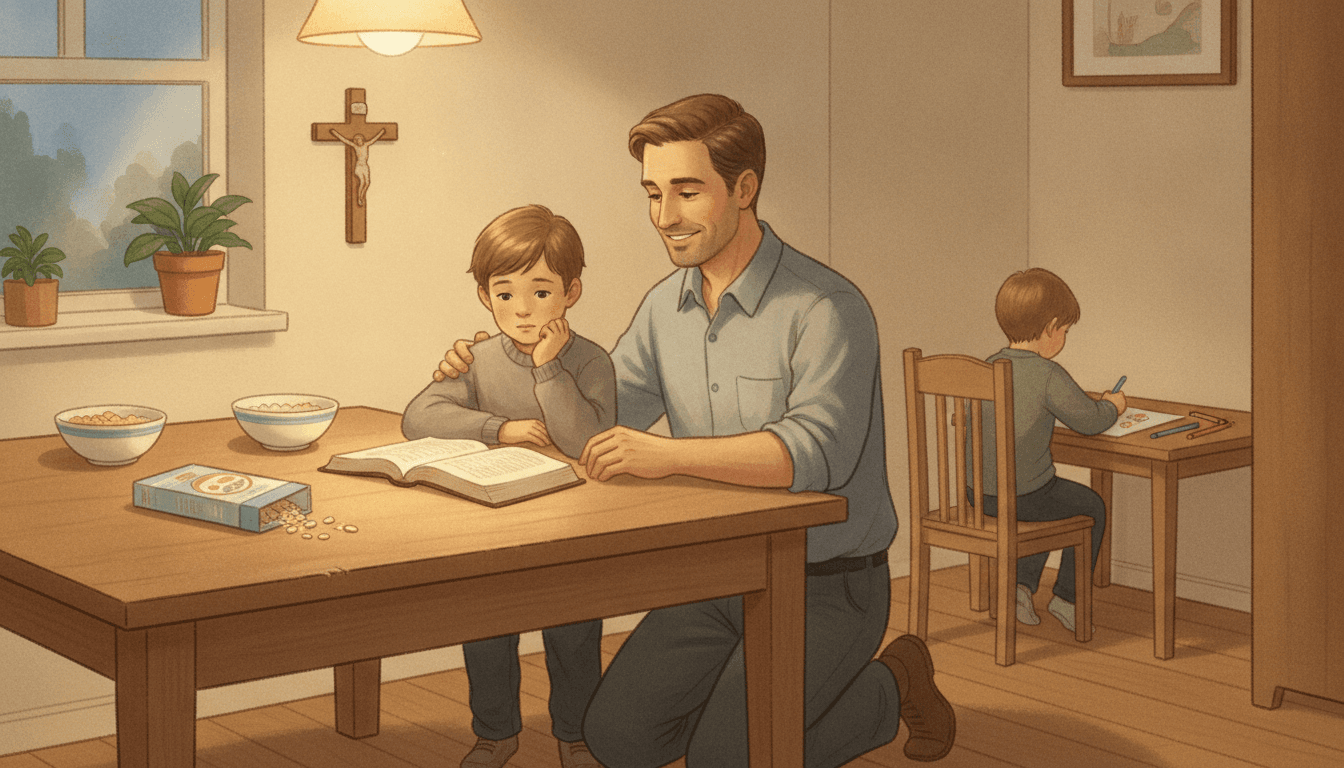
The question came while we were clearing cereal bowls: “Dad, could I accidentally go to hell?” Big questions have a way of arriving between spilled milk and missing shoes. We do not need to dodge them or frighten our kids; we can give them the Church’s clear, hopeful truth about God’s love, freedom, mercy, and heaven.
Start With the Question Your Child Is Actually Asking

The question came between spaghetti and somebody asking for more milk. “Dad, if I do something really bad, will I go to hell?” Our youngest had heard a word somewhere—maybe at church, maybe from an older kid—and carried it to the table like a backpack that was too heavy. The first temptation is to give the complete answer, with every detail we remember. But a child asking about heaven or hell is often asking something smaller and more urgent: Will I be safe? Does God still love me when I mess up? What happens to someone who dies?
So listen before you explain. Try, “What made you think about that?” or “What do you picture when you hear that word?” Their answer may surprise you. One child may be worried about a grandparent. Another may be replaying a bad choice from recess. Another may have a very vivid image from a movie, complete with flames and dramatic sound effects. You do not have to correct every idea in the first thirty seconds. Let them finish. A calm parent is already part of the answer.
Then answer the child in front of you. For a little one who knocked over a lamp, say plainly: “Accidents and ordinary mistakes do not make God stop loving you. We say sorry, we make it right, and God helps us.” For an older child worried about serious sin, you can say that God made us for heaven, gives us grace, and is always ready to forgive a heart that truly turns back to him. Hell is not God looking for reasons to throw people away. It is the terrible choice to refuse God, who is the source of life and happiness. No one slips into that by accident, and unwanted thoughts or temptations are not the same as choosing grave wrong with full knowledge and freedom.
At our table, one small thing we tried was ending these talks with a simple prayer: “Jesus, help us love you and trust your mercy.” It keeps the conversation from becoming a scary quiz. If your child asks about a person who has died, resist declaring where that person is. Say, “God alone sees the whole heart. We can pray for them, and we trust God’s justice and mercy.” The goal is not to make kids fear God enough to behave. It is to help them know the Father who receives those who come home.
“So he got up and went back to his father. While he was still a long way off, his father caught sight of him, and was filled with compassion. He ran to his son, embraced him and kissed him.”
Lead With Heaven: The Home God Made Us For

One night after dinner, one of our kids asked whether heaven would be boring because “you can’t ride bikes on clouds forever.” Fair question. The picture in his head was a long, white, very quiet afternoon. So before we talked about anything hard or frightening, we talked about the place God wants for us: home with him.
Heaven is not a prize God holds over children who behave. It is perfect, unending life with God—the One who made us, knows us, and loves us better than anyone. It is being completely happy, completely safe, and completely ourselves. No more sickness. No more death. No more tears at bedtime because someone said something cruel at school. We will be with Jesus, and with all the saints and people who belong to him. For a young child, I might simply say, “Heaven is being with Jesus forever, and nothing sad or broken can hurt us there.”
Jesus himself gives us words for this. He does not speak as if he is sending us somewhere strange and cold. He speaks like someone making room for people he loves. At our table, that image helps: Jesus is preparing a place, not handing out tickets to a cloud factory. The details of heaven are bigger than what we can picture, but the center is clear. We will be with him.
Try starting with what your child already loves: being held after a bad dream, laughing with cousins, a family meal when nobody has spilled milk yet. Then say, “Those good things are little signs of the happiness God wants to give us forever.” Be honest, too: heaven is more wonderful than a playground, more joyful than a birthday, because God will be there and we will finally see him clearly. Kids do not need a full map of the afterlife. They need to hear that their deepest wish—to be loved, known, and never lose what is good—has an answer in God.
One small thing we tried was ending nighttime prayers with, “Jesus, thank you for making us for heaven. Help us love you and trust you.” That line is simple enough for little voices, even the ones brushing teeth with suspicious speed. Beginning here changes the tone of later conversations about sin, choices, and hell. God made your child for heaven. He gives grace. He welcomes a repentant heart. The first and loudest message is not fear. It is that Jesus wants us with him forever.
“In my Father’s house there are many dwelling places. If there were not, would I have told you that I am going to prepare a place for you? And if I go and prepare a place for you, I will come back again and take you to myself, so that where I am you also may be.”
Explain Hell as a Real Choice, Not God’s Trap

One night, after a story that mentioned hell, a child at our table asked the question underneath the question: “What if I make God mad and He sends me there?” The plates were still out. Someone had spilled water for the second time. It was not the moment for a long lecture. It was the moment to tell the truth in a way a child could carry to bed without fear.
We said this: Hell is real, and it is serious. But it is not a trap God sets for people who forget a prayer, lose their temper, or have a bad thought pop into their heads. God made us for Himself. He wants us with Him forever. Hell is the lasting choice to refuse God and His love. God does not stop loving anyone, but He does not force a person to love Him back. Love that is forced is not love at all.
That helps children see the difference between ordinary sin and a deliberate turning away from God. A child who snaps at a sibling, then feels sorry and says, “I’m sorry, Jesus,” is not beyond hope. Neither is a parent who has had a hard day and raised his voice. We all need mercy. We all need to ask forgiveness. God is ready for that. The Church teaches that no one is made or destined for hell; a person must persistently and freely reject God’s mercy.
One small thing we tried was connecting this conversation to the choices our kids already understand. When you hide after breaking something, you can still come back and tell the truth. When you hurt someone, you can apologize and make it right. Prayer, a simple examination of conscience before bed, and Reconciliation are not punishments. They are ways of turning back toward the Father. For a child worried about “accidentally” ending up far from God, say plainly: “You can always come to Jesus. He helps you choose what is good, and He forgives a heart that is truly sorry.”
We should also be careful with names. We do not announce that a person is in hell, no matter how terrible that person’s actions seem. God alone sees the whole heart, the whole story, and the final response to grace. Our job is not to guess who is lost. Our job is to trust Christ, choose Him again today, and teach our children that His mercy is not reluctant. It is offered freely, again and again.
“For God so loved the world that he gave his only Son, so that everyone who believes in him might not perish but might have eternal life.”
Use Simple Answers for the Questions That Can Spiral
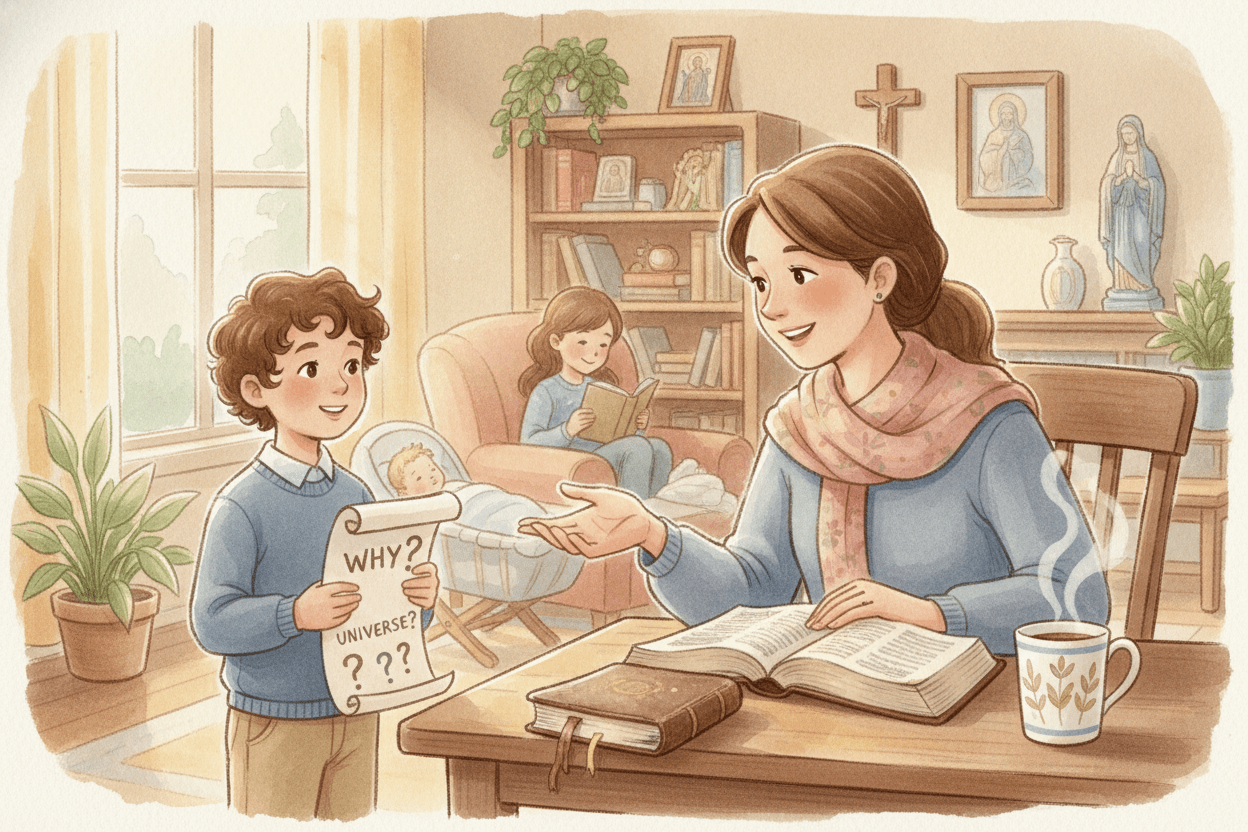
The question came from the back seat on the way to school: “What if I accidentally do something bad enough to go to hell?” Nothing makes a parent miss a green light quite like that. Big questions often arrive between a dropped water bottle and an argument about whose turn it is to choose the song. When they do, our job is not to give a long lecture. It is to give the child in front of us a steady place to stand.
For “Could I accidentally go to hell?” try: “No. God is not looking for a way to trap you. A serious sin is not an accident. It means choosing something seriously wrong, knowing it is seriously wrong, and freely deciding to do it anyway. Forgetting, making ordinary mistakes, being tempted, or having a scary thought pop into your head is not the same thing.” Then add what children need to hear: “When you are sorry, you can always turn back to God. He wants to forgive you.” The father in Jesus’ parable does not wait with folded arms. He runs toward his returning son.
For “Does God stop loving people in hell?” keep it simple: “No. God’s love does not stop. Hell is the terrible choice to refuse God and his love forever. God made us for life with him, and he respects our freedom.” This is not a reason to make a child picture frightening scenes. Bring the conversation back to God’s desire for them: prayer, kindness, telling the truth, saying sorry, and going to Confession when they need it. These are not points on a chart. They are ways we learn to receive the love God keeps offering.
For “What about someone who died?” resist the urge to settle the case. Say: “We do not know that person’s final choice. God alone sees a person’s whole heart. He judges with perfect justice and perfect mercy, so we can pray for them.” And for “Will God judge me?” say: “Yes, every person meets Jesus. But Jesus knows you completely, loves you completely, and calls you to be honest about your choices. You never have to hide from him.” At our table, that answer has led naturally to a quick bedtime prayer: “Jesus, show me where I need to say sorry, and help me love you tomorrow.”
One small thing we tried was ending these talks with a next step instead of a warning. If a child is worried about a mean word, help him apologize. If she is carrying guilt, pray together and plan for Reconciliation. If the question is mostly fear, hold her close and repeat the truth: “God made you for heaven. He gives you grace. He hears you when you ask for help.” Children do not need every mystery solved before bed. They need to know that turning toward Jesus is always the right direction.
“So he got up and went back to his father. While he was still a long way off, his father caught sight of him, and was filled with compassion. He ran to his son, embraced him and kissed him.”
Teach Judgment as Truth Met by Mercy
One evening, after a sibling argument that began over a blue cup and somehow involved three stuffed animals, one of our kids asked, “Does God see when I’m being mean even if nobody else does?” It was a serious question hiding inside a very ordinary mess. Older children start to notice that their choices count. They may also picture judgment as God catching them in a mistake with a giant clipboard. That picture needs some gentle correcting.
We can tell them that, after death, each person meets Jesus and sees the truth of his or her life clearly. Nothing is hidden. The love we gave, the harm we did, the chances we took to make things right—all of it matters. But Jesus is not looking for a reason to slam a door. He is the Savior who knows us completely and loves us completely. Judgment is not a divine gotcha moment. It is an encounter with Christ, who is both perfectly just and perfectly merciful.
That gives daily choices their proper weight without making a child anxious. We can say, “What you do matters because people matter to God.” When they include the lonely kid, tell the truth after breaking something, or help a tired parent without being asked—yes, even that last one—they are learning to love Jesus in real people. As Jesus says, “Amen, I say to you, whatever you did for one of these least brothers of mine, you did for me.”
It also helps to be plain about sin. We do not brush it off when a child lies, hurts a sibling on purpose, or refuses to apologize. We name it, make amends where we can, and ask forgiveness. Then we let them see that forgiveness is real. One small thing we tried was ending a hard day with two questions: “What is one good thing you did today?” and “Is there anything you want to tell Jesus you’re sorry for?” Keep it short. This is not an interrogation under the kitchen light. It is a small habit of truth and trust.
For an older child especially, the steady message is this: God made you for heaven. Your freedom is real, and your choices shape your heart. When you fail, do not hide from Jesus. Turn back. Pray. Go to Reconciliation when you need it. Repair what you can. At our table, that is the framework we want our kids to carry: accountability, yes; fear of a trap, no. Christ sees the whole story, including every repentant step home.
“Amen, I say to you, whatever you did for one of these least brothers of mine, you did for me.”
What to Avoid When You Talk About the Afterlife
A child can ask a huge question while you are wiping pancake syrup off the counter. “What if I go to hell because I yelled at my sister?” The temptation is to rush in with a big answer, or worse, to say, “Well, you’d better behave.” But a worried child does not need a threat dressed up as religion. He needs to know that God sees the whole of him: the mess, the sorrow, the desire to do better, and the love underneath the outburst.
I would avoid graphic descriptions that give a child pictures he cannot shake at bedtime. Hell is real, and we do not help our kids by pretending otherwise. But we can say what the Church teaches in words they can carry: hell is the lasting refusal of God, who is the source of life and happiness. It is not a trap God sets for children who make mistakes. God made them for heaven. He gives grace. He invites them back whenever they turn toward him.
I would also avoid using hell as the ultimate consequence for ordinary misbehavior. “Clean your room or you’ll make God angry” may get a sock into a basket, but it can twist a child’s picture of the Father. At our table, consequences for lying or hurting someone are real: apologize, help repair what was damaged, try again. Then we connect that repair to God’s mercy. A child learns that sin matters, and that repentance is not hiding from God but coming back to him.
The opposite mistake is vague reassurance that everybody automatically goes to heaven no matter what. Kids notice when that does not fit what we have taught them about choices, love, and forgiveness. Keep it simple: God never stops loving people, and he respects our freedom. We do not get to announce where any particular person ended up. God alone sees the heart and judges with perfect justice and mercy. For a child afraid of accidentally losing God, say plainly that unwanted thoughts, temptations, and everyday failures are not the same as freely choosing a serious rejection of God.
Finally, do not dismiss a child’s fear as drama or disrespect. If the question returns every night, listen before correcting. One small thing we tried was ending those conversations with a short prayer: “Jesus, thank you for making me for heaven. Help me love you and trust your mercy.” Remind your child that he can tell God he is sorry, ask forgiveness, and go to Reconciliation when he is ready. Jesus’ welcome gives the tone: “Let the children come to me, and do not prevent them; for the kingdom of heaven belongs to such as these.”
“Let the children come to me, and do not prevent them; for the kingdom of heaven belongs to such as these.”
Try a Hope-Filled Heaven Conversation This Week
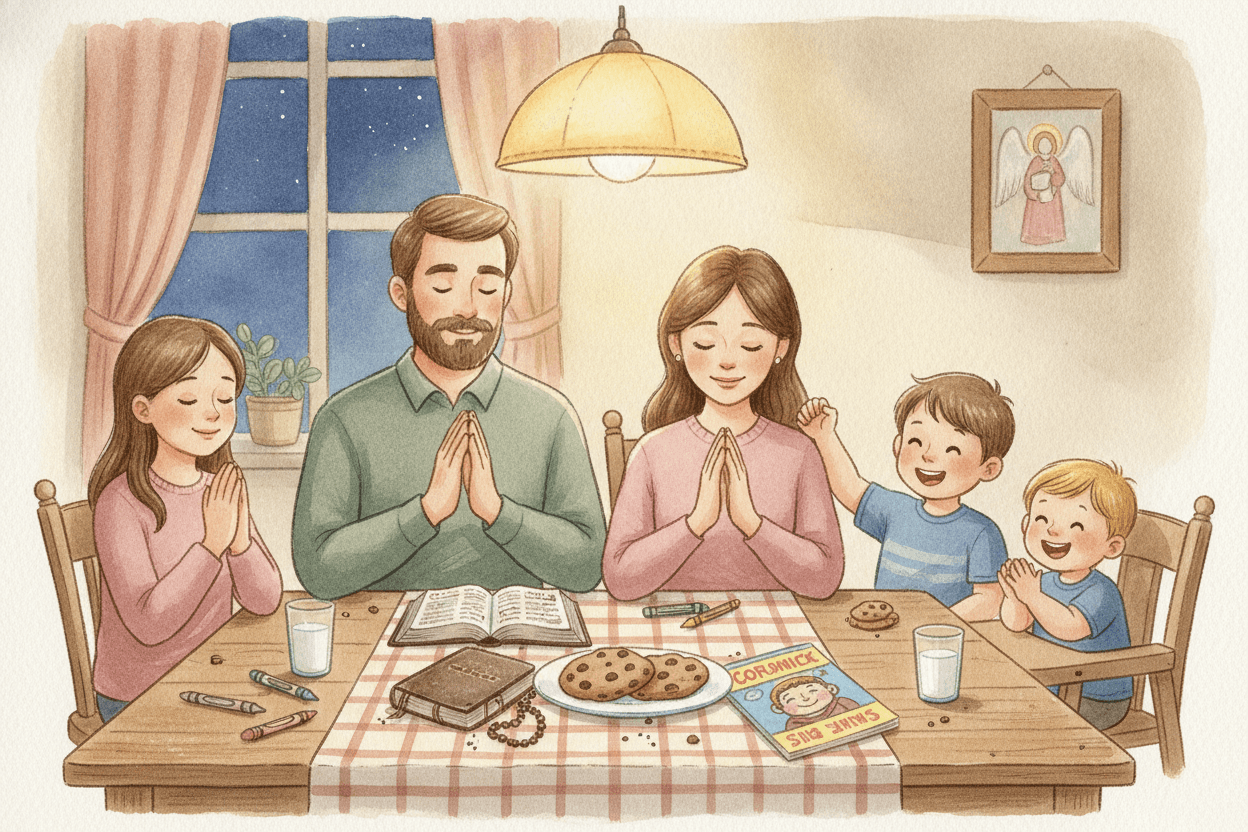
The best time for a heaven conversation is probably not when everyone is already wearing pajamas, one child is crying because the blue cup is dirty, and somebody suddenly remembers a fear from three months ago. We have learned that big questions go better in a calm pocket of the day: the drive home, a walk after dinner, or five quiet minutes while folding the laundry together.
Try starting smaller than you think you need to. Ask, “What do you wonder about heaven?” Then let the silence sit for a moment. A child may ask whether Grandma has a house there, whether pets are there, or whether they could make a mistake so bad that God would not want them. Do not rush to solve every question. Say what is true and steady: God made us for life with him. Heaven is being fully at home with God, with no more sin, fear, or separation. And God is not looking for reasons to keep a child away from him.
Here’s what landed with our kids: Jesus talks about heaven like a home he is preparing, not a test designed to trick us. If your child brings up hell or worries about punishment, keep the answer plain. God takes our choices seriously because love and freedom are real. But ordinary mistakes, temptations, angry thoughts, and accidents are not a person choosing to reject God. We can always turn back, ask forgiveness, and receive mercy. God sees the whole heart better than any of us can.
One small thing we tried was a tiny nightly examen. Before bed, each person can name one good gift from the day, one moment they wish they had handled differently, and one person they want to pray for. Keep it brief enough that no one starts bargaining for a second glass of water halfway through. Then choose one act of kindness for tomorrow: help a sibling, include someone at recess, or put away the shoes nobody claims. If something serious is weighing on a child’s conscience, make a simple plan for Confession and remind them that Jesus welcomes a repentant heart.
This week, choose one calm moment and ask each child what they wonder about heaven or death. Read John 14:2–3 together, or read Luke 15:20 and notice the father running toward his son. Then say the reassurance out loud: “God made you for heaven, gives you grace, respects your freedom, and is always ready to forgive a truly repentant heart.” Return to the question another day; these talks do not need one perfect ending. For a visual way to keep going, read the BibleHeroes Last Judgment comic together and let your child point out what they notice.
“In my Father’s house there are many dwelling places. If there were not, would I have told you that I am going to prepare a place for you? And if I go and prepare a place for you, I will come back again and take you to myself, so that where I am you also may be.”
Frequently asked questions
Can my child accidentally go to hell because of a mistake?
No. Accidents, ordinary mistakes, unwanted thoughts, and temptations do not make someone lose God’s love or “slip” into hell. Teach your child to say sorry, repair what they can, and trust that God welcomes a repentant heart.
How do I explain hell to a child without making them afraid of God?
Start by saying that God made us for heaven and wants us to be with Him forever. Explain that hell is not God looking for excuses to reject people, but the serious and lasting choice to refuse God’s love freely. Keep your tone calm and leave room for your child’s questions.
What should I say when my child worries that God is mad at them?
Reassure them that God does not stop loving them when they sin or have a bad day. Help them name what happened, apologize if needed, and pray simply: “Jesus, help us love you and trust your mercy.” This teaches repentance without turning faith into fear.
How can I describe heaven in a way my child understands?
Tell them heaven is being with Jesus forever, where nothing sad, broken, sick, or hurtful can harm us. Connect it to good things they already know, such as being loved, sharing a joyful family meal, or feeling safe after a bad dream. Remind them that heaven is even better than anything we can fully imagine.
What do I tell my child about a loved one who has died?
Avoid saying for certain where a particular person is after death. Instead, tell your child that God alone sees every person’s heart, and that God is perfectly just and merciful. Pray together for the person who died and entrust them to God’s care.
How do I know what my child is really asking about heaven or hell?
Ask gentle follow-up questions such as, “What made you think about that?” or “What do you picture when you hear that word?” A child may be worried about a mistake, a deceased relative, or something frightening they heard. Listening first helps you give the reassurance and truth they actually need.
Sources: vatican.va · vatican.va · vatican.va · vatican.va · vatican.va · vatican.va · vatican.va
Scripture quotations in this article use the NABRE translation.