Teaching Kids What “I AM” Means in Exodus 3
Help children explore Moses’ encounter with the burning bush and discover what I AM reveals about God: holy, faithful, present, and near. A child’s honest questions can become the beginning of wonder,
A child may hear God say, “I AM,” and reasonably ask, “I AM what?” That honest question opens the door to Exodus 3: not a lesson in difficult ideas, but an encounter with the God who is holy, faithful, and truly near.
Begin With the Question Your Child Is Already Asking

One evening at dinner, my six-year-old son looked up from his plate, brow furrowed in thought. "Mom, what does 'I AM' mean?" This simple yet profound question sent me into a delightful and unexpected exploration of God’s nature. Children are naturally curious, and they often sense that phrases we use in Scripture aren’t just about religious jargon; they are the beginnings of something deeper. In his innocence, he was asking about God, trying to understand an element of faith that perplexes even adults. This question is a springboard for teaching the richness of our faith — and it can start right in our own homes.
For children aged six to nine, the challenge is not to provide a philosophical treatise on existence but to offer foundational truths that resonate with their world. The phrase 'I AM' is direct but also mysterious. We don’t need to dive into abstract definitions; instead, we can share that 'I AM' means God always was, God always is, and God always will be. It’s about God’s unfailing presence and faithfulness, something they can relate to in their everyday experiences. We can remind our children that God is not a figure in a storybook; He is a living God, who loves us fully and is present in our lives.
Using concrete examples can help solidify these truths. Picture a glowing candle—when it’s lit, it brings warmth and light, just as God’s love brightens our lives without ever diminishing. Explain to your child that just like that burning bush from the Exodus story, we can see that God’s love is a fire that never goes out. When God called to Moses, saying, 'I AM has sent me to you,' He revealed His identity as an ever-present friend who is deeply involved with His people. Exodus 3:14 tells us that this name is meant to be a forever title, indicating a relationship that is timeless and unbroken.
In my catechetical approach, I would encourage parents to create memorable phrases for their children to repeat, such as: 'God always was,' 'God always is,' 'God always will be,' and 'God is always with me.' These short, repeatable phrases are like seeds; they can take root in a child's heart and grow into a rich understanding of faith. Encourage your kids to speak these affirmations during prayer time or when they feel lonely or afraid, reminding them that God’s faithfulness is constant.
Art and play can also serve as powerful tools. You could set up a small craft corner where kids can draw their interpretation of the burning bush or role-play the scene of Moses approaching. This hands-on exercise allows children to experience the story of God calling Moses in a personal way. As they act out Moses’ response, 'Here I am,' they’re practicing how to respond to God’s call in their lives every day.
Most importantly, embrace the notion that it is within everyday conversations and shared experiences that children’s faith flourishes. As George Barna's research suggests, the spiritual beliefs and habits formed in childhood stay with individuals for a lifetime. Engaging with children about deep truths in approachable terms nurtures a relationship with God that parents can cultivate every day.
I am who I am. Then he added: This is what you will tell the Israelites: I AM has sent me to you.
Tell the Burning Bush Story With Awe and Reverence
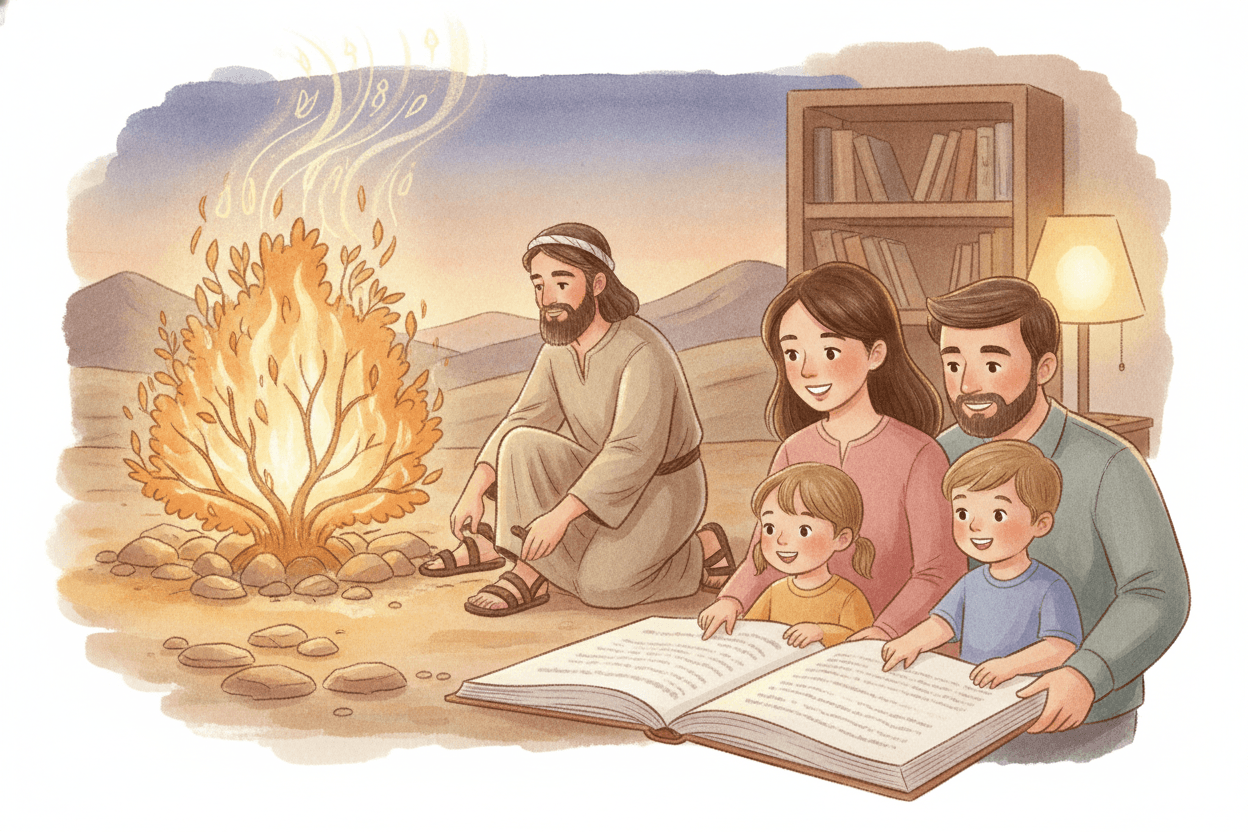
Imagine standing alone in a quiet forest, the sun breaking through the leaves, casting dappled light around you. Suddenly, you notice something unusual—a bush, aflame but unburned. As you draw closer, curious, a voice calls your name. It’s a jarring experience. That striking scene is what Moses encountered at the burning bush, a moment filled with awe and reverence. The story in Exodus 3 invites both children and adults to grasp how deeply personal God is and the incredible holiness of His presence. Such an illustration provides a solid anchoring point for youngsters to understand that God is not simply an interesting figure; He is holy, and yet He desires to speak to us personally.
As we retell this story to children, we want to linger on the details that might spark their imagination and reverence. Imagine the heat of the flames but experiencing no destruction. The bush stands untouched despite the fire's fervor. This imagery draws a parallel with God’s love—intense, dynamic, yet never consuming or harmful. We can remind our children that God's presence can be fierce and purifying but also nurturing and merciful. In speaking to Moses, God is showing us that He longs for a relationship with each of us, a message that is simple yet profound, especially for young minds.
When God calls out to Moses, ‘Moses! Moses!’, it’s crucial to highlight how personalized this calling is. Just as Moses has a name, so do our children. They are known and loved individually. This recognition springs from God, who says to Moses, 'I am the God of your fathers,' reminding him of his lineage and the community to which he belongs. Children can begin to grasp that God is calling them by name too. He desires them to be in a relationship with Him—a thought that anchors our spiritual lives.
Moses’ instinct to hide his face and remove his sandals is also an essential moment to reflect on. It's an act of reverence, a recognition that he stands on holy ground. This can be framed for children as understanding respect for God and the sacred. I often encourage parents to recreate this moment at home, perhaps with an art session where they draw the burning bush or act out this encounter. Such creative expressions help children visually and physically engage with the profound concept of holiness, introducing the foundation of respect for sacred moments in their lives.
As you weave this narrative with awe, it is also beneficial to link it to their everyday lives. We can teach them that, while God is infinitely holy, He chooses to draw near to us, inviting dialogue and relationship. This intimacy continues in our faith life, especially through the sacraments and prayer. Encourage your children to think of God as one who is always present—a loving supporter. Short, repeatable phrases, like 'God is always with me,' can help ground this concept in their hearts, allowing them to call upon Him easily during prayer or whenever they feel alone.
So the burning bush represents more than just an Old Testament anecdote; it is an invitation to understand God's nature. He is not merely magical; He is holy, intimate, and loving. When we share this story, we back it with the truth found in Scripture and the richness of our Catholic tradition, paving the way for deeper faith formation at home. Through this story, we help our children discover their own place in God's unfolding plan.
There the angel of the LORD appeared to him as fire flaming out of a bush. As he looked on, he was surprised to see that the bush, though on fire, was not consumed. So Moses decided, “I must go over to look at this remarkable sight, and see why the bush is not burned.” When the LORD saw him coming over to look at it more closely, God called out to him from the bush, “Moses! Moses!” He answered, “Here I am.” God said, “Come no nearer! Remove the sandals from your feet, for the place where you stand is holy ground.” I am the God of your fathers,” he continued, “the God of Abraham, the God of Isaac, the God of Jacob.” Moses hid his face, for he was afraid to look at God.
A Kid-Friendly Way to Explain God’s Name
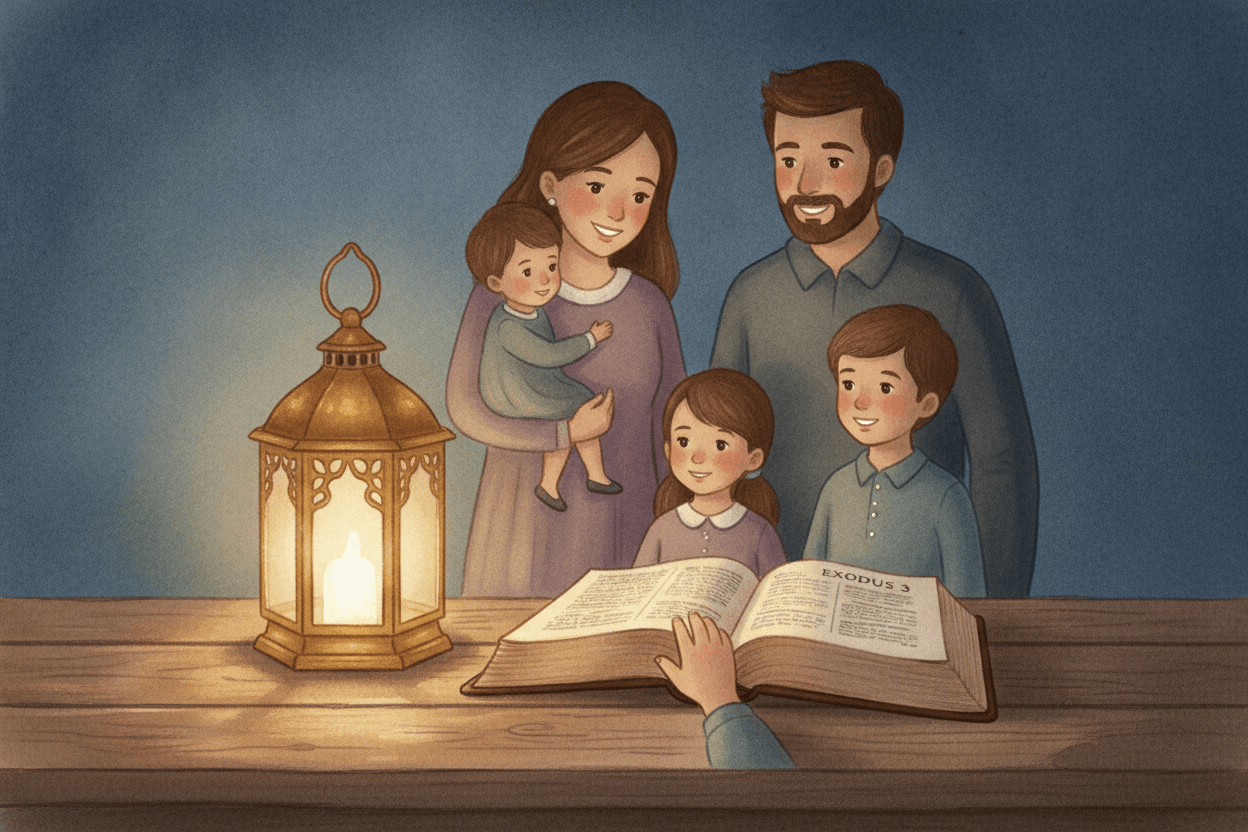
On a chilly afternoon, while reading Exodus with my children, I watched their eyes widen as the story came alive. They leaned in closer when Moses approached the burning bush, enraptured by the flames that did not consume it. I realized then that the tale of Moses isn’t just a narrative; it is an invitation to explore the profound mystery of who God really is. When God reveals His name to Moses—'I AM WHO I AM'—He offers an essential truth about Himself and an opportunity for us to teach our children about His nature in a concrete way.
To help our children grasp the concept of 'I AM,' we need to use accessible language. Here’s a simple phrase you can share with your kids: 'God is the One who always exists. He never began and will never end. He is always with his people, and His love does not run out.' This clarity not only simplifies the theological truths but also encourages kids to feel the warmth of God’s presence in their lives. They can understand that God is not just a distant force, but a loving and immediate reality.
Exodus 3 exemplifies how God is deeply engaged with His people: He sees their suffering, hears their cries, and sends Moses as a response. This points to God’s closeness—His name reveals both His mystery and His faithful presence. As the Catechism teaches, 'God's name is a sign of His mystery and His presence' (CCC 203). Highlighting this relationship helps children realize that the same God who spoke to Moses is speaking to them today. They can learn to trust in God, knowing He is always there when they need Him most.
To further emphasize this connection, encourage your children to see 'I AM' through the lens of their daily lives. When they feel scared, they can remember that 'God is always with me.' When they are lost or confused, they can reflect on 'God always was, is, and will be.' These short and repeatable phrases foster understanding and comfort. Pair them with simple prayers, like, 'Jesus, I know You are here,' to reinforce their personal relationship with God.
Feel free to bring this lesson to life through visual and tactile experiences. Perhaps create a small art project where the kids illustrate the burning bush, comparing the flames to God’s enduring love—brilliant and life-giving but never destructive. Children relate better to spiritual truths when coupled with sensory experiences. You might consider reading a passage from Exodus 3 together and then have them act out Moses taking off his sandals, heightening their sense of the holiness that surrounds God.
As diligent parents, it can be both inspiring and daunting to guide our children’s faith formation. Remember, as research shows, parents are the primary influence on their children's spiritual development; around 85% acknowledge this responsibility (Barna Group, 2024). Providing these insights into 'I AM' invites your children to respond like Moses, saying, 'Here I am,' ready to explore their faith further.
God replied to Moses: I am who I am. Then he added: This is what you will tell the Israelites: I AM has sent me to you.
Use Concrete Signs Without Reducing God to a Metaphor
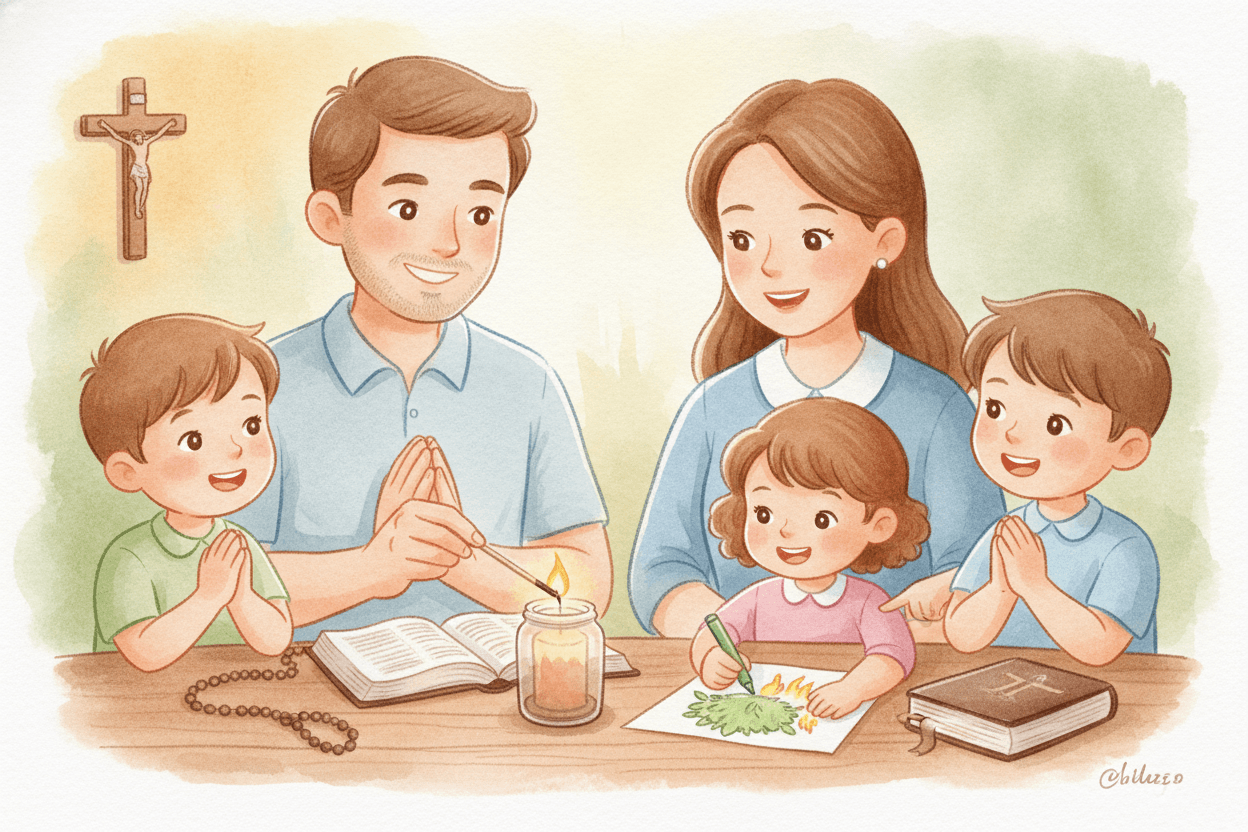
Picture this: a young child sits cross-legged on the floor, eyes wide with fascination as you recount the story of Moses and the burning bush. Suddenly, you light a candle, its flickering flame captivating their attention. In that moment, the child doesn't just hear the story — they witness a tangible reminder of God’s presence. The flame emanates warmth and light, a simple yet profound symbol. But it's important for us, as parents and catechists, to clarify: while the candle can help us remember God, it is, in fact, not God. Rather, it points us to the very essence of his love and holiness, which remains ever-present and unconsumed in our lives.
In teaching young children about 'I AM,' we can ground our lessons in concrete signs that reflect the truth of Scripture without reducing the divine to mere metaphors. The burning bush encapsulates this beautifully. Specifically, in Exodus 3:2, it reads, 'There the angel of the LORD appeared to him as fire flaming out of a bush. As he looked on, he was surprised to see that the bush, though on fire, was not consumed.' Here we see a vibrant image of God's holy love that does not waste away but instead flourishes. In a similar way, we can help our children understand that God’s love is a bright, holy presence that never runs out.
To reinforce these concepts, I recommend engaging children's senses through simple activities. For example, during Scripture time, after reading about the burning bush, invite the kids to place a hand over their hearts and say, 'God is always with me.' This tangible gesture connects them physically to the idea of God’s constant presence in their lives. Repeating such phrases reinforces the truth that God is not just a distant concept but a loving force accompanying them every day.
Another hands-on activity would be to create a visual representation of the unconsumed bush. Perhaps you could use art supplies to draw or craft a bush with flames—without forgetting to explain that this representation is not God himself but reminds us of God’s unquenchable love. Such projects can make the message stick, as children learn best through sensory experiences. The act of creating the artwork allows them to process the story and grasp its significance more profoundly.
As we explore these ideas, remind the children that physical symbols serve as gateways to understanding deeper realities about God. While we may lean on a candle's light or the image of a burning bush, our goal is to teach them about God’s unchanging love, his holy presence, and how he interacts with us throughout our lives. We want to instill a sense of awe and wonder that respects their intelligence and invites them into a lasting relationship with their Creator.
In doing so, we affirm their innate curiosity about God’s identity. They are not merely absorbing information but responding to an invitation — much like Moses did when called to that holy ground. God isn't a concept to grasp; he is a divine reality seeking a relationship with each of them. By presenting these truths in engaging ways, we help children form a solid foundation of faith, encouraging them to explore, ask questions, and ultimately discover the richness of their Catholic identity.
There the angel of the LORD appeared to him as fire flaming out of a bush. As he looked on, he was surprised to see that the bush, though on fire, was not consumed.
Show Children That Jesus Is the Same Lord Who Spoke to Moses
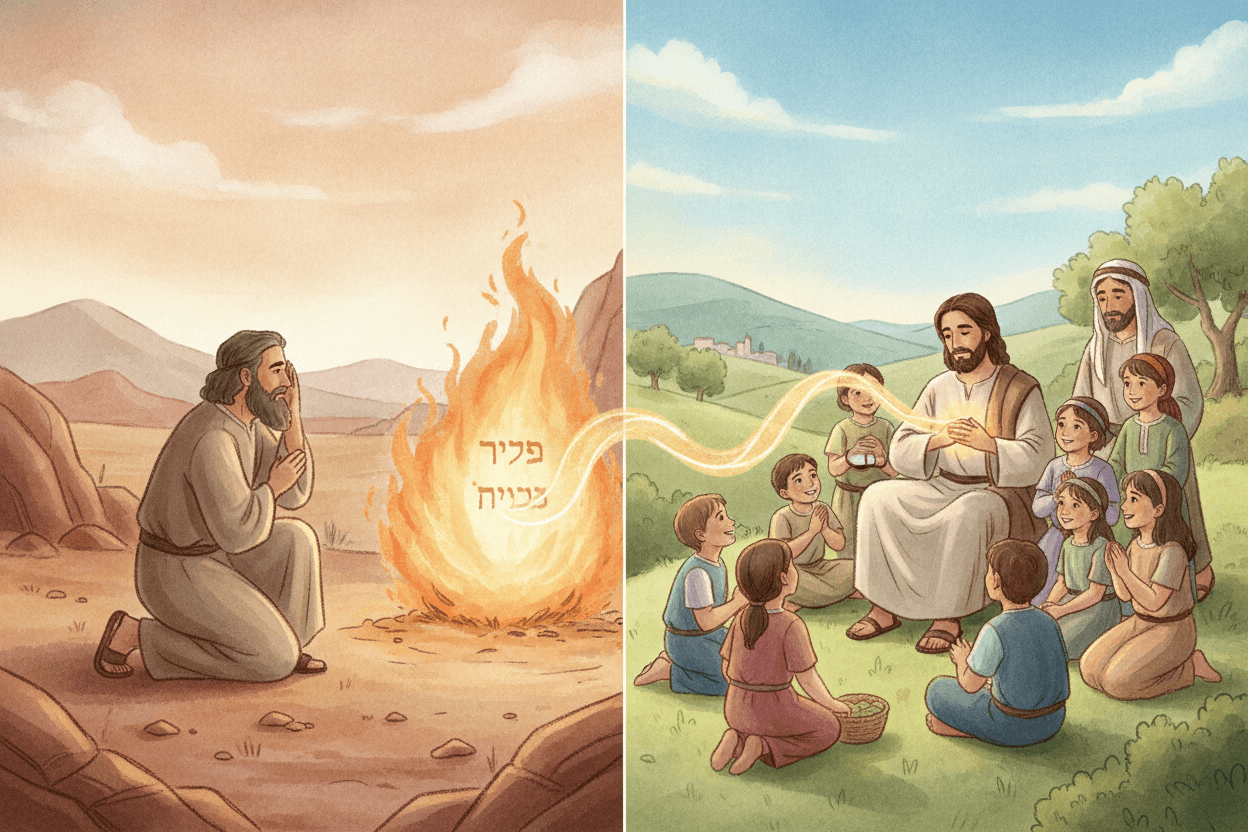
Imagine a bright Sunday morning, the sun streaming through the church windows as children eagerly gather for class. Suddenly, during a lesson on Moses and the burning bush, one child raises their hand with wide eyes, asking, 'But why does Jesus call himself ‘I AM’ if Moses heard that name first?' It's a beautiful moment—a reminder that children are natural theologians, curious about the ties that bind Old Testament narratives to the New Covenant. This connection isn’t just historical; it’s deeply personal, urging us to consider the divine presence running through our faith.
To help children grasp this significant link, we can turn to John 8:58, where Jesus declares, 'Amen, amen, I say to you, before Abraham came to be, I AM.' These words resonate deeply, revealing not just a statement of existence but a declaration of divine identity. Jesus isn’t merely claiming to be old; He is laying claim to the very essence of God. He is the same God who spoke to Moses, eliciting awe and respect—a personal God who desires to engage with us, not just as an ancient figure but as a present and living Lord.
In Exodus, Moses experiences the burning bush, a visual metaphor for God’s holiness and living presence. God reveals Himself as 'I AM who I AM,' inviting Moses into an intimate relationship, a foretaste of the personal engagement we find in Christ. When we teach children the story of the burning bush, we must also link it to who Jesus reveals Himself to be. Just as God called Moses by name from that burning bush, He calls each of us through Scripture and prayer, connecting the Old and New Testaments in a seamless narrative of divine love.
A practical approach could be to create a simple family discussion around this connection. After reading the story of Moses, ask your children how they see God in their lives today. For instance, they might say prayers acknowledging Jesus as 'I AM.' This recognition helps children understand that while Jesus is fully human—as they see Him described in the Gospels—He is also fully divine, the God who has no beginning and no end. Reinforce this by showing them that the God who spoke to Moses wishes to be known and trusted by each of us today. Drawing parallels helps solidify their understanding and enriches their faith experience.
Another effective tool could be role-playing. Have the kids act out standing before the burning bush, experiencing what it might be like to hear God's voice. Then switch to Jesus in the Gospels, perhaps recalling His parables or actions, so they can visually and emotionally connect Moses’ experiences to Christ's life and mission. This sensory engagement makes the theological truths they are learning less abstract and more personal, allowing for lasting impressions that encourage deeper faith development.
As parents and catechists, it’s essential to emphasize that the God who spoke to Moses speaks to us today through Jesus. When we instill this truth in our children, we are not just teaching them biblical history; we are guiding them to recognize the eternal presence of God in their lives. As they learn that Jesus embodies the same divine spirit who reached out to Moses, they will begin to hold both truths—His humanity and His divinity—together in their young hearts.
Amen, amen, I say to you, before Abraham came to be, I AM.
Try a 10-Minute “Holy Ground” Lesson This Week
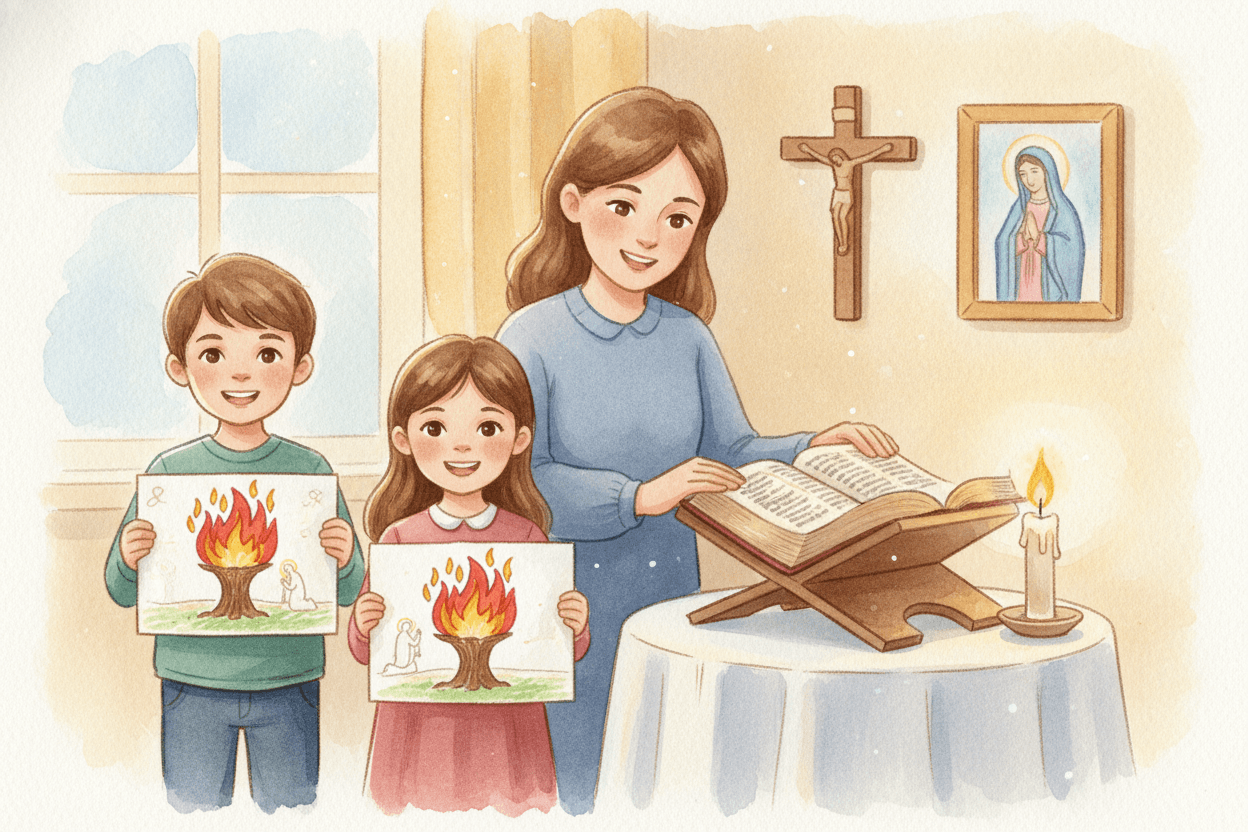
Last Tuesday evening, as twilight wrapped around our kitchen, my daughter, Malia, looked up from her crayon-strewn table and asked, 'Mom, what is holy ground?' The question hung in the air, hinting at a deeper exploration of faith. It reminded me of Moses’ encounter at the burning bush—a moment that perfectly bridges the divine and the everyday. As I began to connect her inquisitiveness back to Scripture, I realized this was not just a question, but an open door to an exciting lesson about who God is and how he interacts with us.
The story of the burning bush from Exodus is compellingly vivid. Picture Moses, shepherding his flock, walking through the wilderness when he stumbles upon a bush engulfed in flames but miraculously unscathed. This moment speaks volumes to the childlike heart, and it’s perfect to help our little ones grasp the concept of 'I AM.' God’s name, 'I AM who am,' signifies that He is ever-present, the foundation of our existence. For ages 6-9, I suggest framing this in kid-friendly terms: 'God is the One who always loves us and is always with us.' It’s all about tangible elements, transforming sacred truths into easily digestible ideas.
To give this story a concrete visual, why not let the kids draw that iconic bush? Equip them with crayons and paper, inviting them to illustrate a bush ablaze with color but remaining whole. As they create, we can talk about how God’s love burns bright like fire, never consumed, only purifying and nurturing. By engaging in this activity, we bridge an ancient encounter with a familial experience that resonates with their understanding. As Bishop Robert Barron notes, the burning bush represents intimacy with God, drawing us closer while teaching us reverence for the divine.
Incorporate an interactive response into your lesson: when discussing Moses’ encounter, introduce the phrase 'Here I am, Lord.' This simple yet profound response echoes not only Moses’ submission but can also be our family’s call to listen to God. Foster a moment where you practice this response together, fostering a new habit of recognizing when God is inviting us to listen. This intertwining of Scripture and action supports children in grasping spiritual concepts; it’s not just about knowing who God is but responding to His call.
Finally, as you conclude your lesson, pray together as a family using the phrase, 'Jesus, I know you are here. Help me listen and trust you.' This prayer reinforces the personal relationship emphasized in this lesson and deepens the understanding of God's constant presence in our lives. After your prayer, consider extending your talk with a bedtime discussion around the Moses and the Burning Bush comic, engaging their curiosity and allowing the story's lessons to resonate further as they prepare for sleep.
To enrich this lesson, remember to ask: 'Where did you notice God’s goodness today?' This question not only solidifies their learning but cultivates a habit of recognizing God's grace throughout their daily lives. The lesson on holy ground not only teaches about God’s nature but instills an awareness of His goodness that can guide them in their journeys ahead.
When the LORD saw him coming over to look at it more closely, God called out to him from the bush, “Moses! Moses!” He answered, “Here I am.”
Frequently asked questions
What does 'I AM' mean in the context of teaching my children about God?
'I AM' signifies God's eternal presence; He always was, is, and will be. Instead of deep philosophical explanations, focus on the idea that God is a faithful companion who is ever-present in our lives.
How can I help my kids understand the story of Moses and the burning bush?
Engage them with imaginative details about the burning bush, emphasizing that it burned but was not consumed. You can even encourage them to express this story through art or role-play to deepen their understanding.
What practical ways can I teach my children about God's faithfulness?
You can create memorable phrases for them to repeat, like 'God always is with me,' and incorporate these into prayer time. This approach helps nurture a sense of God's constant presence.
How do I explain the holiness of God to my children?
Discuss Moses’ reaction in front of the burning bush, emphasizing respect for God’s holiness. You might consider activities that illustrate sacred moments, helping children connect emotionally and spiritually.
Why is it important for kids to know that God calls them by name?
Understanding that God knows and loves them individually helps children feel valued and recognized. This personal connection fosters their relationship with God and reinforces their sense of belonging.
Sources: bible.usccb.org · bible.usccb.org · usccb.org · barna.com · barna.com · barna.com · pewresearch.org · barna.com · wordonfire.org
Scripture quotations in this article use the NABRE translation.