The Annunciation for Kids:Understanding Mary’s Yes
One morning at our table, a child asked whether Mary was scared when an angel suddenly appeared. Fair question. Luke’s story gives kids something better than a neat, shiny answer: Mary was troubled, asked a question, and still chose to trust God.
Start With the Question Kids Actually Ask

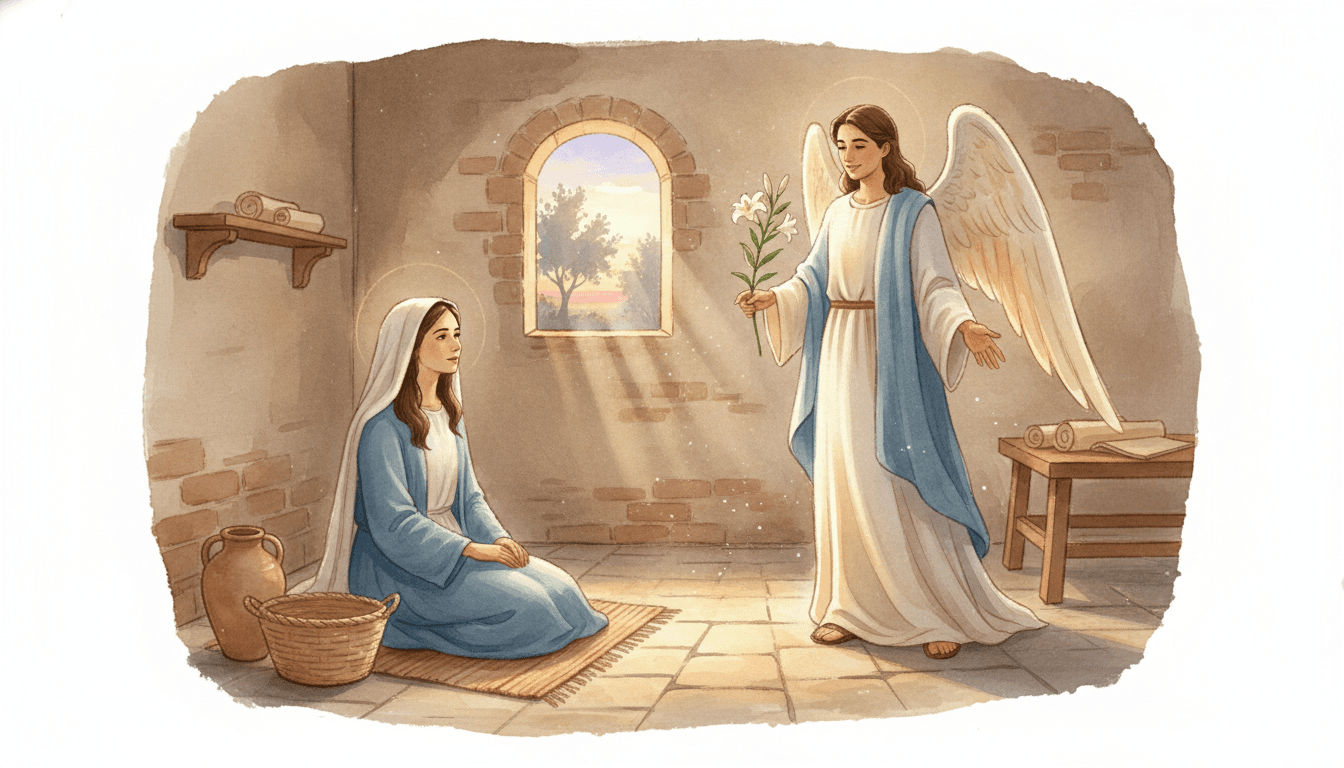
The question usually comes while somebody is coloring an angel with very large wings: “So, what happened when Gabriel came to Mary?” It is a good question. Better than starting with a stack of big church words, start there. Tell your child that Mary was a young woman living in a town called Nazareth. One day, God sent the angel Gabriel to speak with her. Gabriel brought news that would change the whole world: Mary would be the mother of Jesus.
The word Annunciation simply means announcement. Gabriel came with an announcement from God. He told Mary that God was with her and that she would have a son named Jesus. Jesus would be the Son of God. For a six-year-old, that is enough for the first telling. You can say, “God had a special job for Mary. He asked her to be Jesus’ mother.” Then pause. Let them ask whether angels are scary, whether Mary knew Gabriel was coming, or whether Joseph was there. Kids are wonderfully committed to the details we adults skip.
One important detail is that this was not a demand. God did not force Mary to say yes. Mary was troubled by Gabriel’s greeting, and she had a real question about how this could happen. The angel did not scold her for being confused. He told her not to be afraid and explained that the Holy Spirit would make it possible. That matters for kids. Being brave does not mean you never feel scared or puzzled. Sometimes it means telling God what you do not understand and trusting Him one step at a time.
Then comes Mary’s answer. She says yes freely: “Behold, I am the handmaid of the Lord. May it be done to me according to your word.” Her yes opened the door for Jesus to come into the world as a baby. At our table, I try not to make that sound like a faraway gold-frame moment. Mary’s yes was big, but children can recognize its shape: saying sorry after a fight, including the lonely kid, doing the hard chore without a long debate—well, perhaps with a slightly shorter debate.
One small thing we tried was acting out the story after dinner. One child was Gabriel, one was Mary, and someone insisted the dog should play Joseph. It was not reverent in the museum sense, but it helped the story stick. This week, ask your child, “What do you think Mary felt when Gabriel appeared?” Then ask, “What is one small yes God might be asking from you today?” Keep it ordinary. Faith often grows right there, between spilled milk and bedtime.
In the sixth month, the angel Gabriel was sent from God to a town of Galilee called Nazareth, to a virgin betrothed to a man named Joseph, of the house of David, and the virgin’s name was Mary. And coming to her, he said, “Hail, favored one! The Lord is with you.”
Mary Was Chosen, but She Was Not Forced
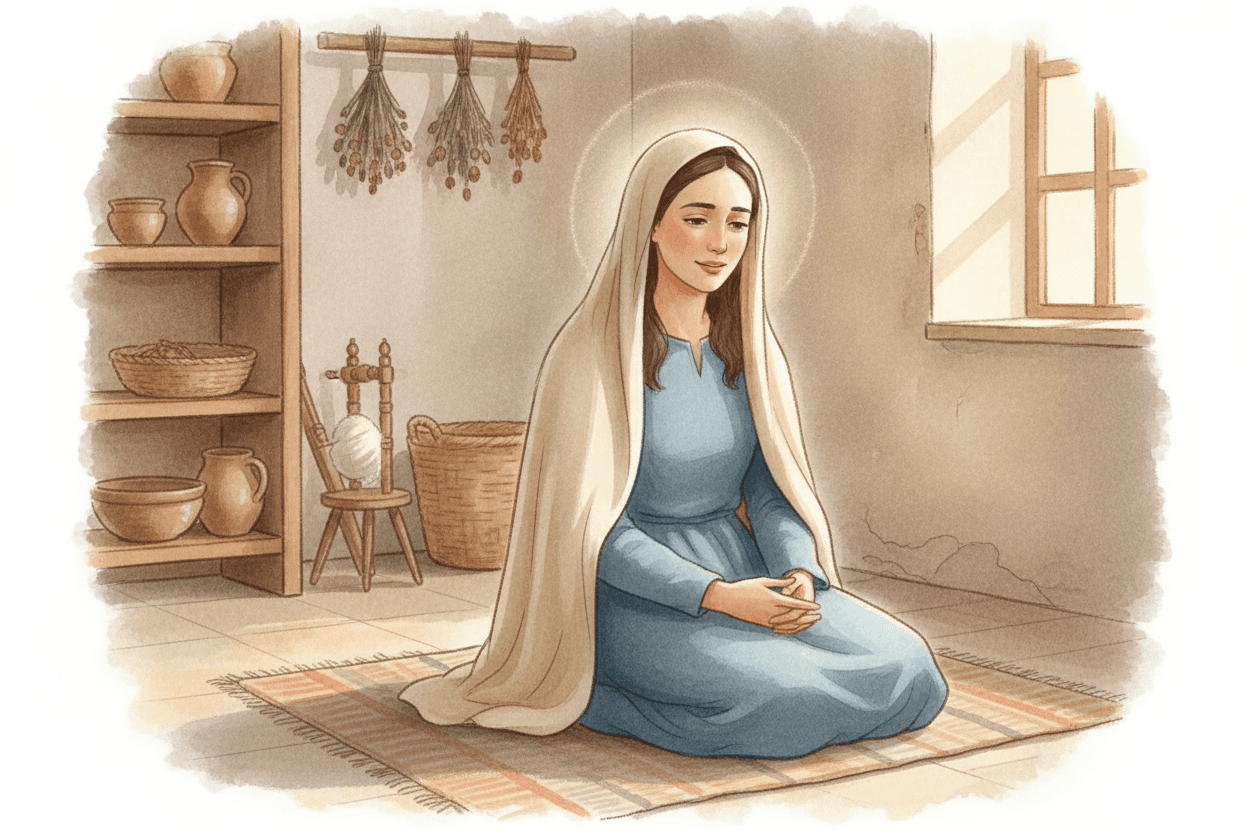
The other morning, one of my kids was asked to carry napkins to the table. You would have thought we had handed him the keys to a spaceship. He stood there, considering the weight of this assignment, then said, “Do I have to?” That little question gets surprisingly close to what kids wonder about Mary: Did God make her say yes?
No. God chose Mary, but he did not force her. Gabriel came to her in Nazareth with an invitation that would change the whole world. Mary was not a queen, a celebrity, or someone with a big crowd following her around. She was a young woman promised in marriage to Joseph. God chose her because she was full of grace and ready to trust him. That does not mean she had every answer neatly lined up. Scripture says she was troubled by Gabriel’s greeting. Mary had questions. She was human. She had to decide what she would do.
This matters because love cannot be forced. If I tell my child, “Say you’re sorry right now,” I may get the words, usually with an impressive eye roll, but I cannot make him mean them. God did not want Mary to be a robot who simply followed a command. He invited her to take part in his plan to send Jesus, the Savior. Her answer was a real gift of trust. Mary said yes even though the road ahead looked confusing and hard.
Here’s what landed at our table: Mary’s yes was not a one-time magic word. It was the beginning of many faithful yeses. She said yes when she did not understand everything. She said yes when she might have been afraid of what others would think. She said yes because she believed God was good and would be with her. That is brave faith, and it is something a child can begin to understand.
Try asking your child about one small yes they can give God this week. Maybe it is telling the truth after spilling the cereal. Maybe it is including a lonely classmate, helping with a chore without a full courtroom argument, or saying a quick prayer when they feel worried. Their yes will not look like Mary’s, and that is okay. Mary’s unique yes made room for Jesus to come into the world. Our everyday yeses make room for his love in our homes, classrooms, and very sticky kitchen floors.
“Hail, favored one! The Lord is with you.”
Yes, Mary Was Scared—and That Matters
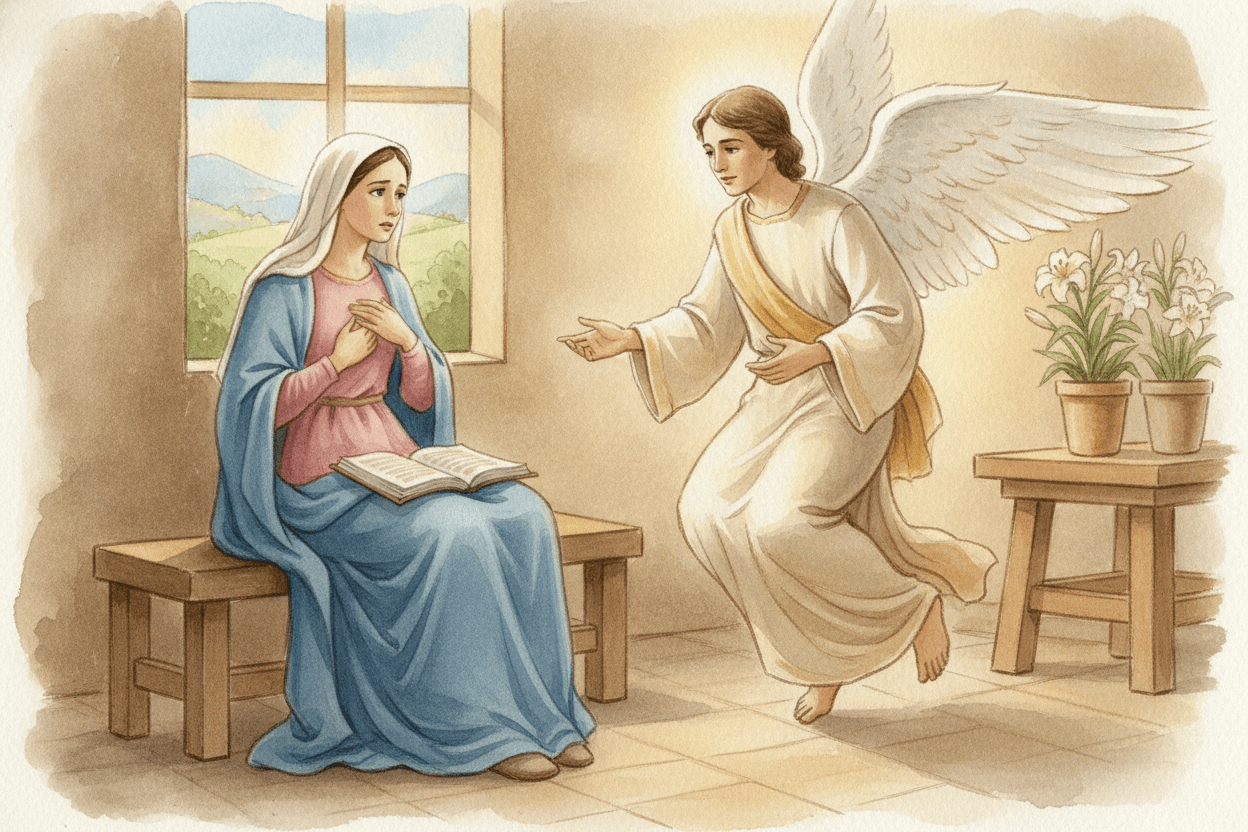
Last week, one of my kids stood frozen at the top of the playground slide. He had climbed it plenty of times before, but on this day the slide suddenly looked very high. “I want to go down,” he said, holding the rail with both hands, “but I’m scared.” That is a pretty good place to start with Mary. She was not calmly nodding along as if an angel in her room was an ordinary Tuesday.
Luke tells us Mary was “greatly troubled” by Gabriel’s greeting. She wondered what it meant. Then Gabriel said, “Do not be afraid.” Mary also asked a real question: How could she have a baby? She did not pretend to understand everything. That matters for our kids, especially the ones who think faith means they must always look cheerful, certain, and ready for anything.
Bravery is not the absence of fear. Bravery is doing the good thing while fear is still tapping you on the shoulder. Mary listened. She asked. And then she trusted God. Her yes was not careless. It was brave because God’s plan was bigger than what she could see, and she chose to trust that God was good.
At our table, it helps to name fears without rushing to fix them. When a child says, “I’m scared about school,” or “What if I mess up?” try saying, “That makes sense. Mary felt troubled too.” Then ask, “What is one small way we can trust God today?” It might be walking into class, apologizing to a sibling, going to bed after a bad dream, or telling the truth when it is hard. Small yeses count. Frankly, some mornings getting everyone into shoes with a decent attitude feels like a small act of courage for all involved.
One small thing we tried was a simple bedtime prayer: “Jesus, I feel scared about ____. Please help me trust you.” Parents can pray it first, too. Kids notice when we bring our own worries to God instead of acting like we have every answer. Mary shows them that questions are welcome, fear can be spoken aloud, and trust can grow right in the middle of the shaky feeling.
But she was greatly troubled at what was said and pondered what sort of greeting this might be. Then the angel said to her, “Do not be afraid, Mary, for you have found favor with God.”
What Gabriel Told Mary About Jesus
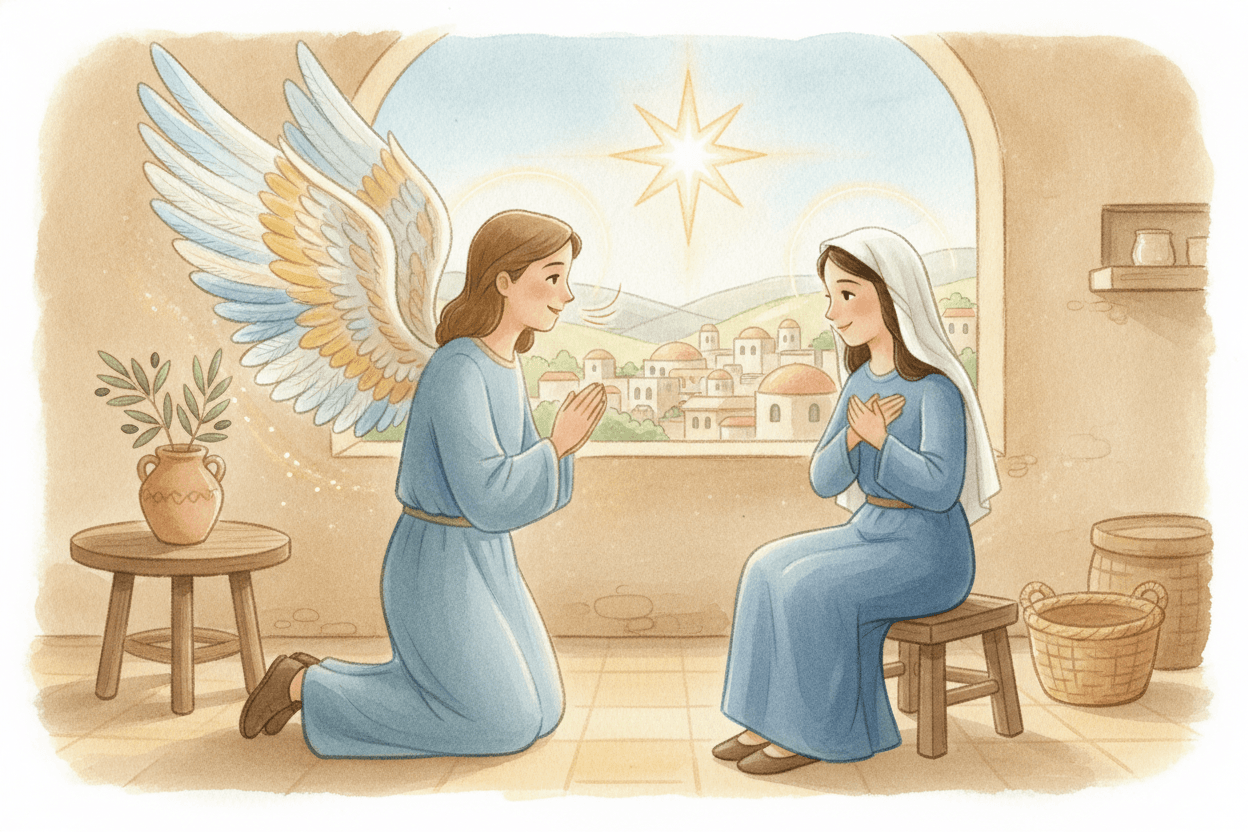
The question came while we were buckling car seats: “So, did Gabriel tell Mary the baby’s name?” That is exactly the kind of question that helps children get hold of this huge moment. Gabriel did not give Mary a fuzzy promise that someday something good would happen. He told her she would have a son, and that his name would be Jesus. Names mattered in the Bible, and this name tells us who this child is: Jesus came to save us. Before anyone in Nazareth held him, fed him, or heard him cry, God was already telling Mary that her baby had a special mission.
Then Gabriel says Jesus “will be great.” Kids may hear that and picture a superhero cape, which is fair enough. But Gabriel means something bigger. Jesus would be called the Son of the Most High. He is not only a good teacher or a brave man in a Bible story. He is God’s Son, who came close enough for Mary to carry him and for ordinary people to know him. This is the surprising part we can say plainly: the God who made the world chose to come to us as a baby.
Gabriel also told Mary that Jesus would be king, but not the sort of king children see in cartoons, sitting on a throne and ordering everyone around. His kingdom would never end. Jesus brings God’s love, mercy, and truth into the world, and nobody can take that kingdom away. When a child worries that a friendship changed, a favorite toy broke, or a hard day feels like it will last forever, this is steady news: Jesus is still King. His care does not run out.
That is why this moment belongs at the beginning of Advent. Christmas did not begin with a crowded stable, a star, or wrapping paper appearing in the closet before anyone admits buying it. It began when God sent Gabriel to Mary and invited her to be the mother of Jesus. Through Mary’s free yes, the Word made flesh came to us. One small thing we tried at our table was to ask, “What are the four things Gabriel says about Jesus?” Let the kids answer: his name is Jesus; he will be great; he is the Son of God; his kingdom will never end. Four short truths. Plenty to carry into Christmas.
“Behold, you will conceive in your womb and bear a son, and you shall name him Jesus. He will be great and will be called Son of the Most High, and the Lord God will give him the throne of David his father, and he will rule over the house of Jacob forever, and of his kingdom there will be no end.”
Mary’s Yes Was Brave, Simple, and World-Changing
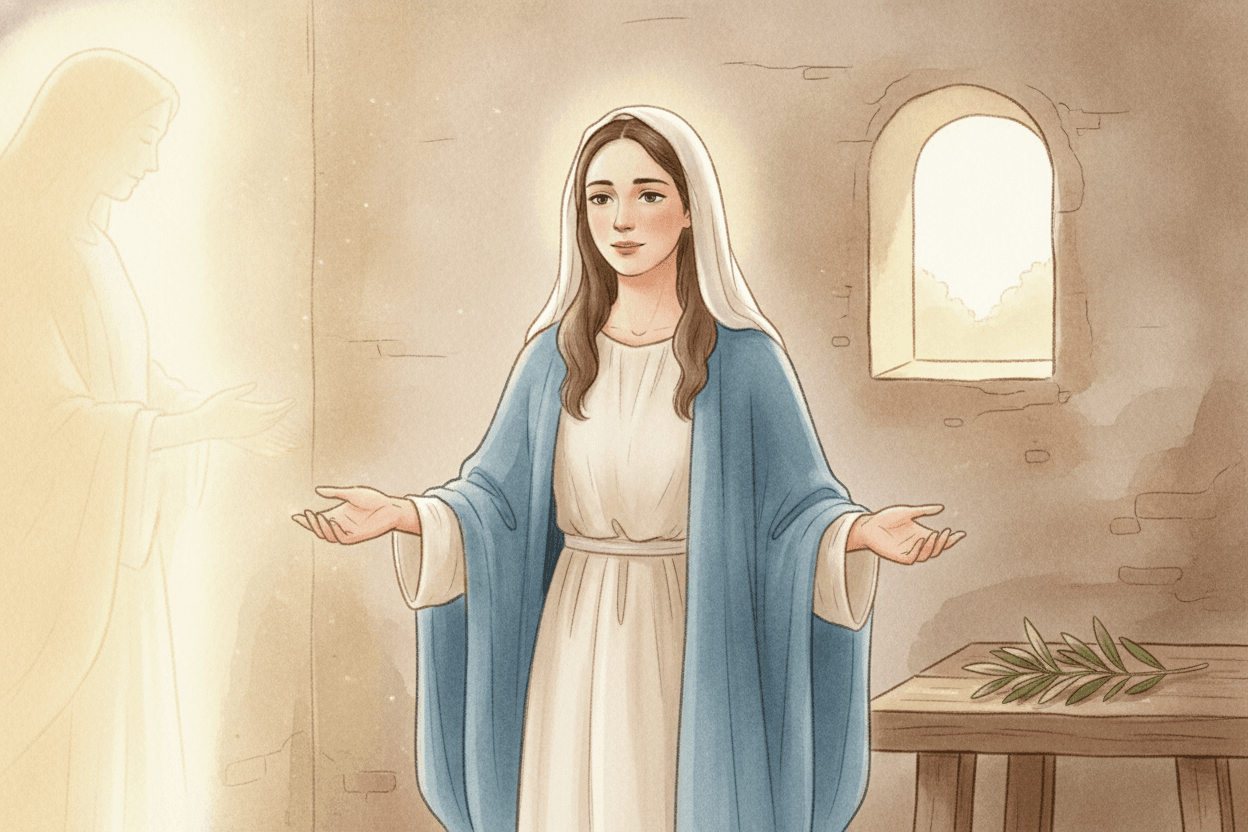
The cereal was already on the floor when one of my kids looked at the mess, looked at me, and said, “I didn’t do it.” The tiny pause afterward told the whole story. We talked about how telling the truth can feel scary when we know we might be in trouble. Then we remembered Mary. Her yes to God was much bigger than a spilled bowl of cereal, of course. But it began in the same place many brave choices begin: trusting God when you do not know exactly what comes next.
Mary answered the angel, “May it be done to me according to your word.” Catholics sometimes call this her fiat. Fiat is a Latin word that means “let it be.” It was Mary’s free, loving yes. She was not saying, “I understand every detail.” She had asked Gabriel a real question. She had been troubled. Yet she believed God could do what he promised, even when the path ahead looked confusing.
That is what makes her yes brave. Mary was not brave because she felt zero fear. She was brave because she trusted God more than her fear. And her simple answer changed the world. Through her yes, Jesus came to us. God the Son took on human flesh in Mary’s womb. Christmas did not start with a manger full of animals and visitors. It started with a young woman in Nazareth saying yes to God.
Our children will probably not meet an angel in the kitchen before school. They do get plenty of chances to practice a smaller yes. “Yes, I will tell the truth.” “Yes, I will stop teasing my brother.” “Yes, I will help Dad carry groceries even though I wanted to keep playing.” “Yes, I will say sorry.” These moments can seem small, especially between backpacks, snack requests, and somebody asking where their other shoe went. But small obediences train a child’s heart to trust God.
One small thing we tried at our table was asking, “What is one yes God might be asking of you today?” Keep it concrete. A child may say, “Be kind to my sister,” or “Do my reading without complaining.” Parents can answer too. That matters. We are learning this alongside them, not handing out assignments from the other side of the table. Before bedtime, thank God for the yeses you noticed, even the wobbly ones.
When a child feels nervous about doing what is right, give them Mary’s words to borrow. God does not ask us to have every answer before we obey him. He asks us to trust that he is with us. Mary’s yes was once-in-a-lifetime. But its shape can fit into an ordinary Tuesday.
“…for nothing will be impossible for God.” Mary said, “Behold, I am the handmaid of the Lord. May it be done to me according to your word.” Then the angel departed from her.
The Magnificat: Mary’s Thank-You Song
The lunch plates were still on the table when one of my kids announced, “I made this picture for you!” It was mostly purple scribbles, three stickers, and what may have been a dog wearing boots. I said thank you, and he beamed like he had handed me a treasure. Kids know something we adults forget: when someone gives you a good gift, joy wants to say something back.
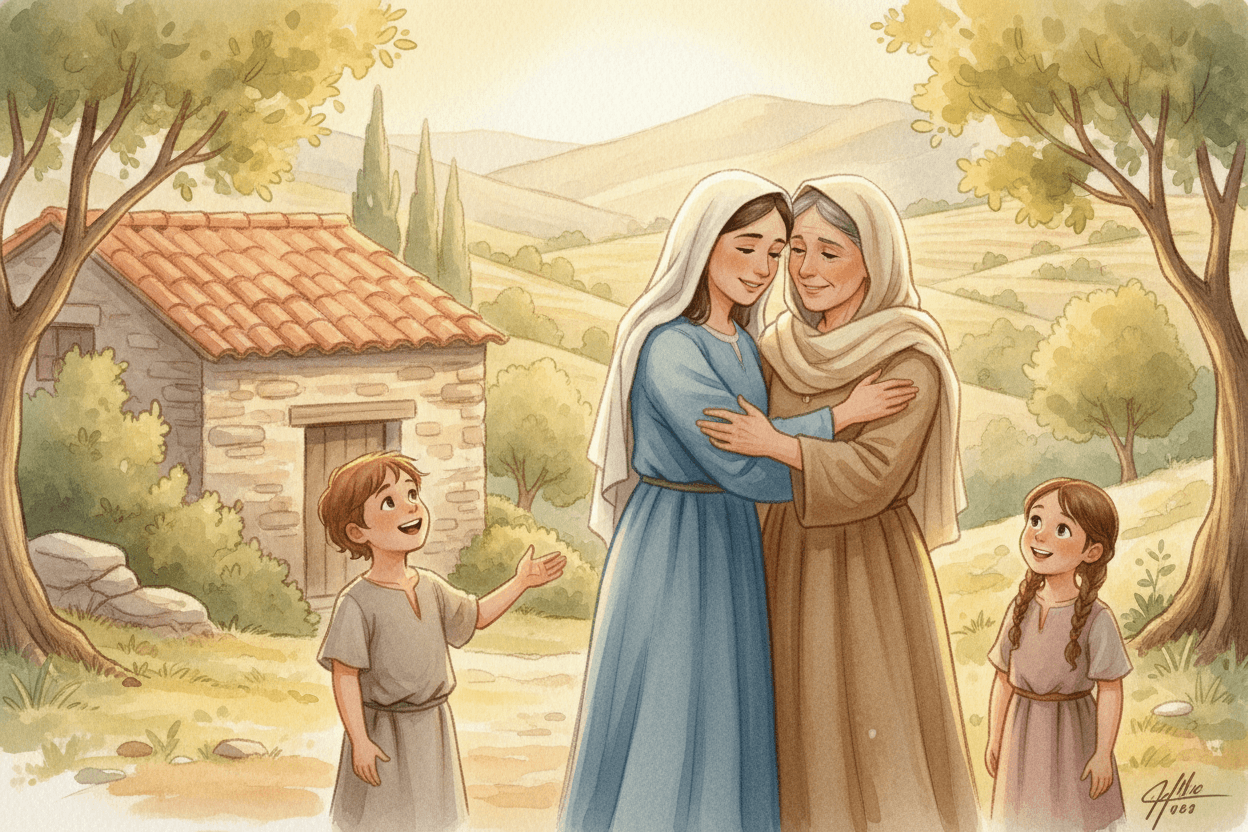
Mary’s story does not stop when Gabriel leaves. Later, Mary visits her cousin Elizabeth. Elizabeth recognizes that Mary is carrying Jesus, and Mary answers with a song of praise. We call it the Magnificat. That name comes from its opening words: “My soul proclaims the greatness of the Lord.” Mary is not showing off. She is giving God the credit. She knows the good news is bigger than she is, and she is grateful.
Her song helps children connect Mary’s brave yes with ordinary prayer. Mary praises God for being good. She rejoices in him. She remembers that God sees people others might overlook: the humble, the small, the ones without much power. That is comforting news for a child who did not get picked first, who feels little beside older siblings, or who has had a hard day before 8:00 a.m.—which, in our house, is not exactly rare.
One small thing we tried was giving the Magnificat a child-sized line at bedtime or in the car: “Thank you, God, for the good you have done.” Ask each child to name one good gift from the day: a friend, a snack, a finished math page, a grandparent’s hug, even a dry seat in the car after soccer practice. Then say the line together. This is not fancy prayer. It is Mary’s kind of prayer: noticing God’s goodness and answering him with thanks. Over time, kids begin to see that praise is not just something we do at Mass. It is what we do when God gives us a gift, and our hearts want to sing back.
And Mary said: “My soul proclaims the greatness of the Lord; my spirit rejoices in God my savior. For he has looked upon his handmaid’s lowliness; behold, from now on will all ages call me blessed. The Mighty One has done great things for me, and holy is his name.”
Try a Family Mary’s Yes Moment This Week
The cereal was going soft while one child looked for a missing sock and another asked for more milk. It did not feel like a holy moment. But that is usually where family prayer has to begin: right in the middle of the noise. You do not need a craft closet, a perfect Advent wreath, or children who sit still for twelve straight minutes. You just need a few minutes and the kid in front of you.
One small thing we tried is reading Luke 1:26-38 aloud at breakfast or before bed. Keep it simple. Say, “Listen for what Mary says when Gabriel tells her God’s plan.” If your children are little, stop after a few verses and put the story in plain words: an angel came to Mary, Mary had questions, God asked something big, and Mary trusted him. Older kids may notice that Mary was not pretending everything was easy. She listened, asked a real question, and answered freely.
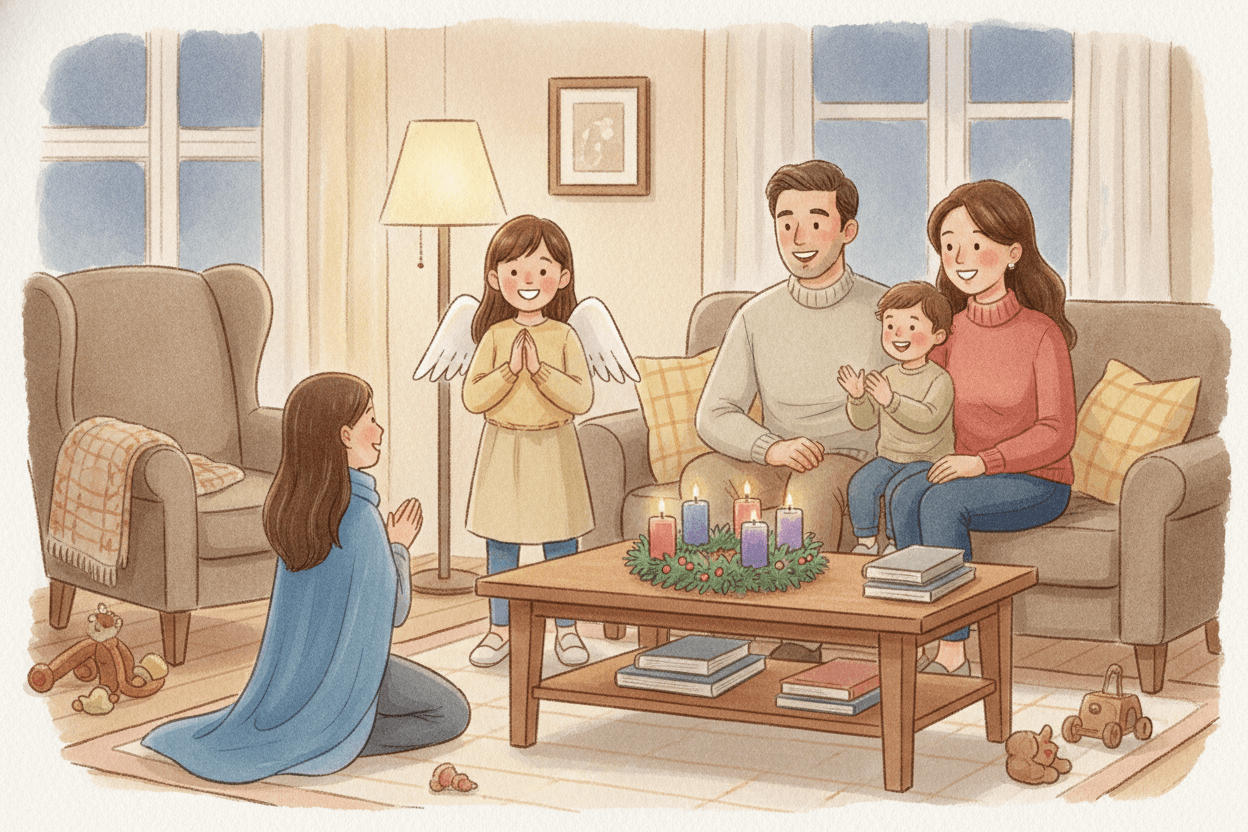
Then act it out. Assign Gabriel, Mary, a narrator, and—if your house has extra helpers—a very official angel-departure sound effect. A towel can become an angel sash. A kitchen chair can become Mary’s place in Nazareth. Nobody needs to memorize lines. Let the narrator read, and let Mary say the words that matter: “Behold, I am the handmaid of the Lord. May it be done to me according to your word.”
After the giggles settle, give each child paper and ask: “What is one everyday yes you can give God this week?” For a preschooler, it may be putting away toys when asked. For an older child, it may be including someone at recess, telling the truth, or helping a sibling without being asked twice. Parents can answer too. Kids notice when Mom and Dad need help saying yes before the coffee has done its job.
End by praying one Hail Mary together. That is enough. You are not trying to turn your living room into a classroom. You are helping your children see that Mary’s yes belongs in ordinary life—at school, in the car, at the sink full of dishes. If they want to stay with the story, read the BibleHeroes Annunciation comic aloud together, or leave it where they can pick it up again on their own. A small reread can keep a big truth close.
“Behold, I am the handmaid of the Lord. May it be done to me according to your word.”
Frequently asked questions
What is the Annunciation in simple words for kids?
The Annunciation is the announcement God sent through the angel Gabriel to Mary. Gabriel told her that she would be the mother of Jesus, the Son of God. The word “Annunciation” simply means an announcement.
Was Mary scared when the angel Gabriel appeared?
Luke says Mary was greatly troubled by Gabriel’s greeting, so it is fair to say she felt afraid or confused. She asked how God’s plan could happen instead of pretending she understood everything. Gabriel reassured her, saying, “Do not be afraid.”
Did God force Mary to say yes?
No. God chose Mary and invited her to take part in His plan, but Mary freely chose to trust Him. Her answer, “Let it be done to me according to your word,” was a real gift of love and faith, not something forced.
What does Mary’s yes mean for children today?
Mary’s yes was unique because it welcomed Jesus into the world, but children can copy her trust in everyday ways. They can tell the truth, help without complaining, include someone who is lonely, or pray when they feel worried. Small loving choices can be their own way of saying yes to God.
How can I teach my child about Mary’s bravery?
Explain that bravery does not mean never feeling scared; it means doing what is good while trusting God. Point out that Mary was troubled and had questions, yet she listened and trusted. Ask your child about a fear they have and one small good step they can take with God’s help.
What is a simple Annunciation activity for kids?
Try acting out the story together, with one person as Gabriel and one as Mary. Afterward, ask what Mary may have felt and why her answer mattered. End by having each child name one small “yes” they can offer God that day.
Sources: bible.usccb.org · vatican.va · vatican.va · wordonfire.org · catholicculture.org · jerseycatholic.org · thereligionteacher.com · orthodoxcatechismproject.org · loyolapress.com · barna.com
Scripture quotations in this article use the NABRE translation.