The Good Samaritan for Kids:Loving Our Neighbor
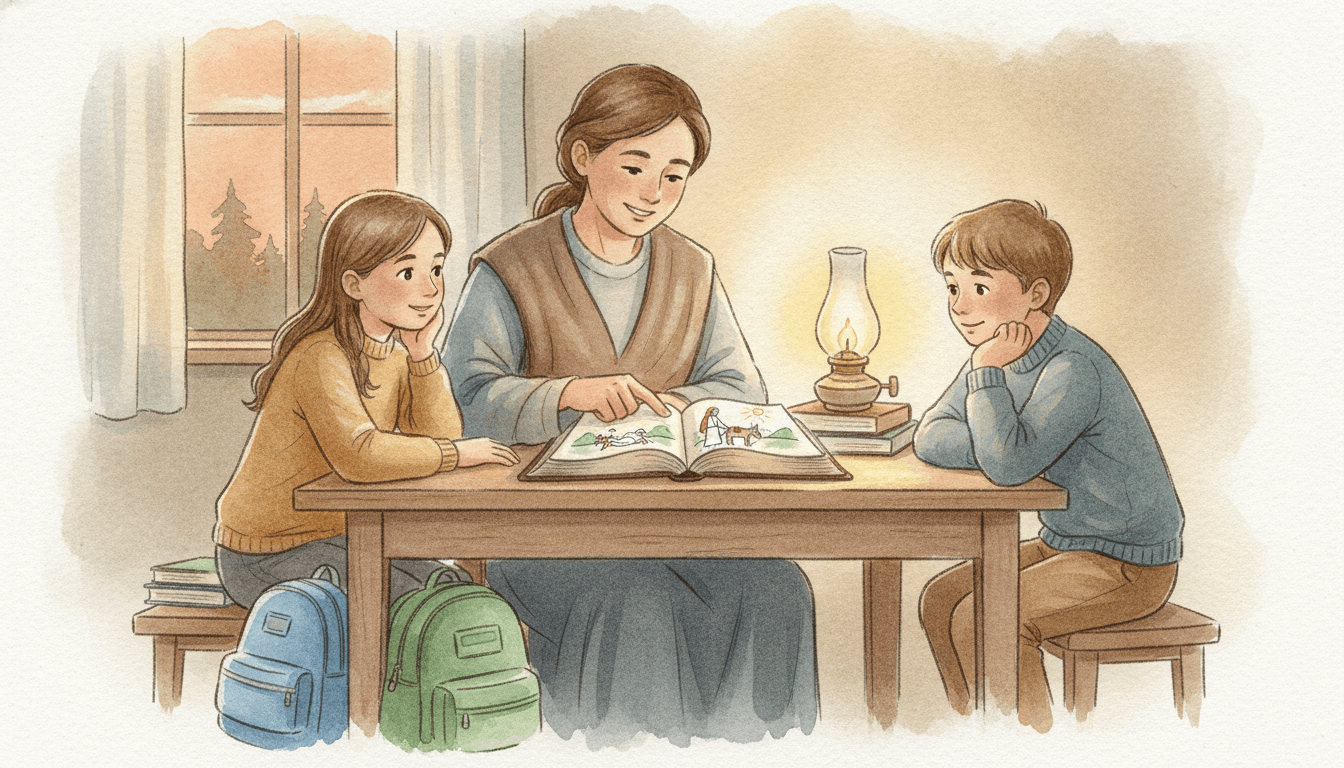
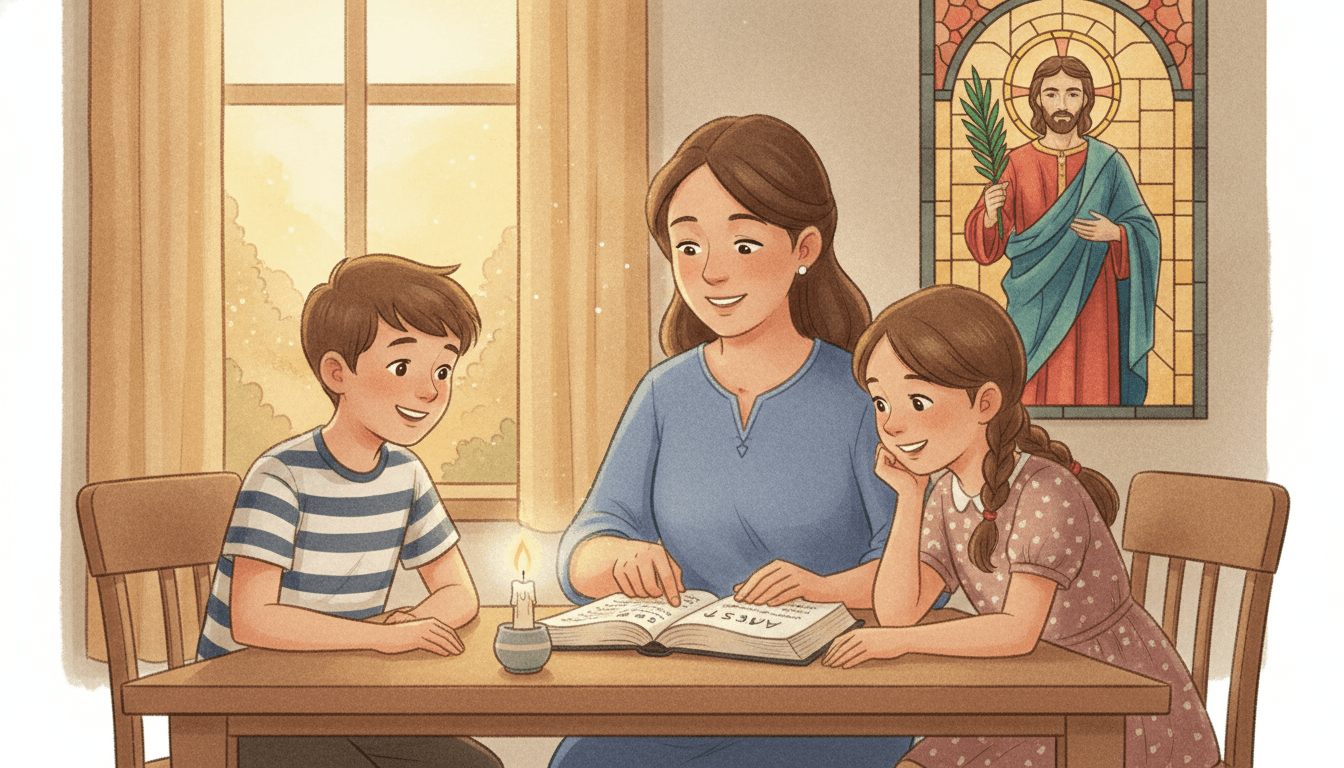
Help children discover how the Good Samaritan turns compassion into action. Through everyday conflicts, classroom moments, and playground scrapes, they’ll learn that loving our neighbor means noticing
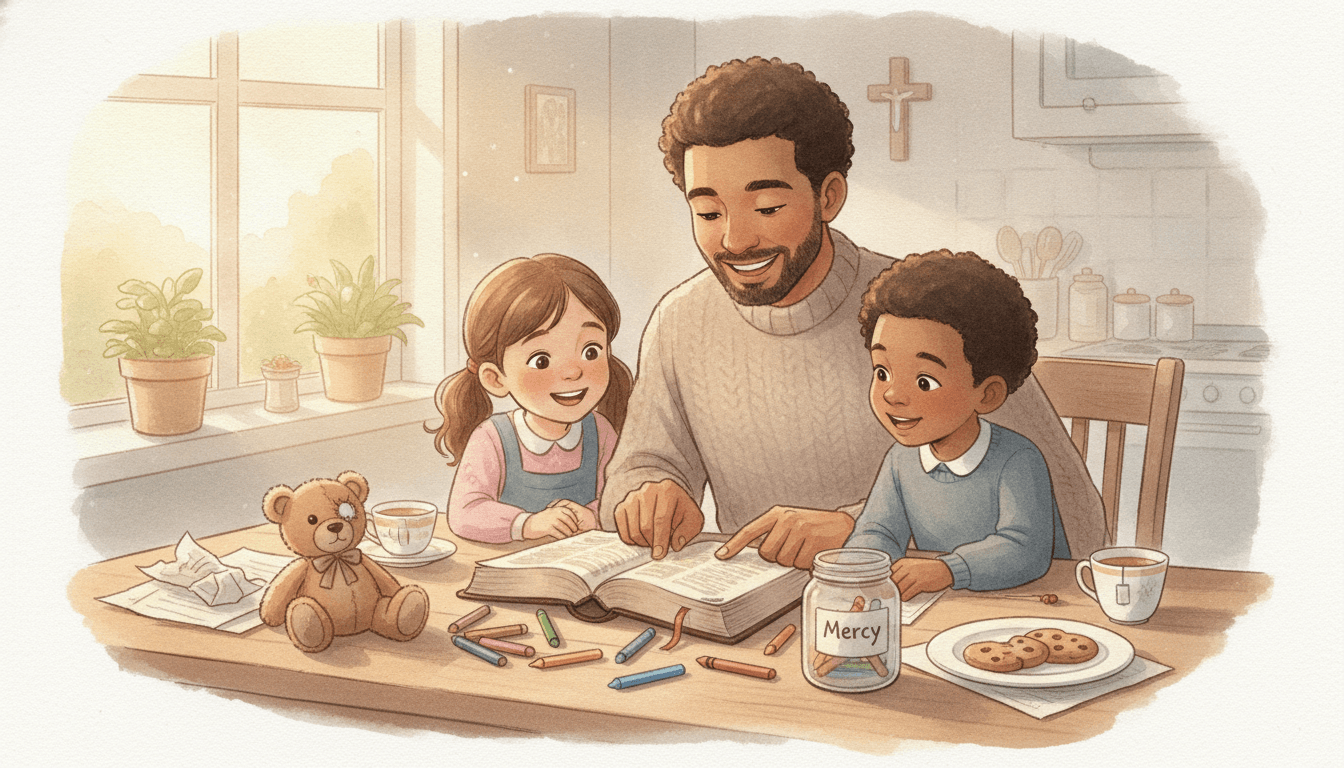
“He started it” is a familiar sentence at our table, usually arriving just before somebody needs a fresh cup of water and a parent needs fresh patience. The Good Samaritan gives kids a bigger question than who was right: when someone is hurting, will I stop and show mercy?
The Question Behind the Story: “Who Is My Neighbor?”
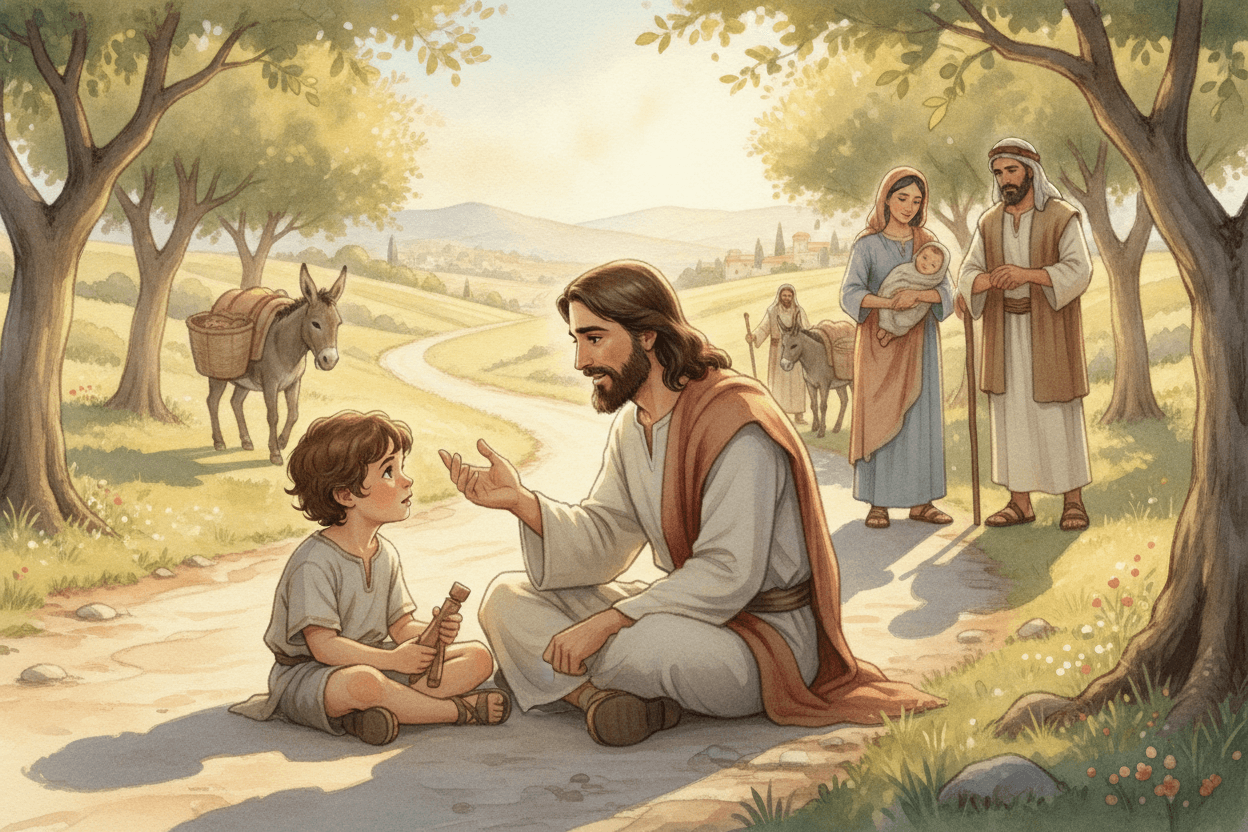
“Does Jesus mean my friends?” my son asked one evening after a disagreement over the last blue cup. He kept going before I could answer: “What about my brother? What about the kid at school who always says I’m out?” That is the child-sized question sitting underneath this story. Does loving my neighbor mean the people I already like? Or does it reach the sibling who borrowed my stuff, the classmate who bugs me, and the stranger I pass without noticing?
In Luke 10, a man who knew the religious law asks Jesus what he must do to receive eternal life. Jesus brings him back to the great command: love God with your whole self, and love your neighbor as yourself. The man gives the right answer. Then comes the turn. He asks who, exactly, counts as a neighbor. It is an honest question on the surface, but it also sounds a little like the question we ask when dinner cleanup begins: “Which dishes are mine?” We want the line to be clear and, if possible, small.
Jesus does not hand him a short list. He tells a story that makes the circle wider than the man expected. Before children can grasp all the history between Jews and Samaritans, they can understand the surprise: the person who stopped to help was not the person everyone expected to be kind. The neighbor was not defined by being familiar, popular, or part of the same group. The neighbor was the person in need, and the loving person was the one who chose mercy.
That gives us a simple way to talk about this at home. Ask, “Who was near you today who needed kindness?” It might be a friend who fell down at recess. It might be a younger sibling who cannot reach the sink. It might be the new child who sat alone. It might even be someone who was not especially nice first. Loving a neighbor does not mean pretending hurtful behavior is fine or ignoring wise boundaries. It means we do not use annoyance, difference, or inconvenience as an excuse to withhold ordinary care.
One small thing we tried was adding a question to bedtime: “Did you notice anyone who needed help today?” Some nights the answer is a shrug. Some nights it is, “I gave him a pencil,” said with the pride of someone who has just rescued a village. Good. Start there. Jesus takes a question that tries to make love smaller and turns it toward the kid in front of us.
The Good Samaritan Story, Told Clearly for Kids
Last week, someone dropped a whole cup of crayons under the kitchen table just as we were trying to start dinner. My first instinct was to keep moving. There was pasta boiling, a child asking for water, and crayons somehow reaching places crayons should never reach. But one of the kids got down on the floor to help another child gather them. It was a tiny thing. Still, it gave us a good picture for this story: seeing someone’s trouble, then stopping.
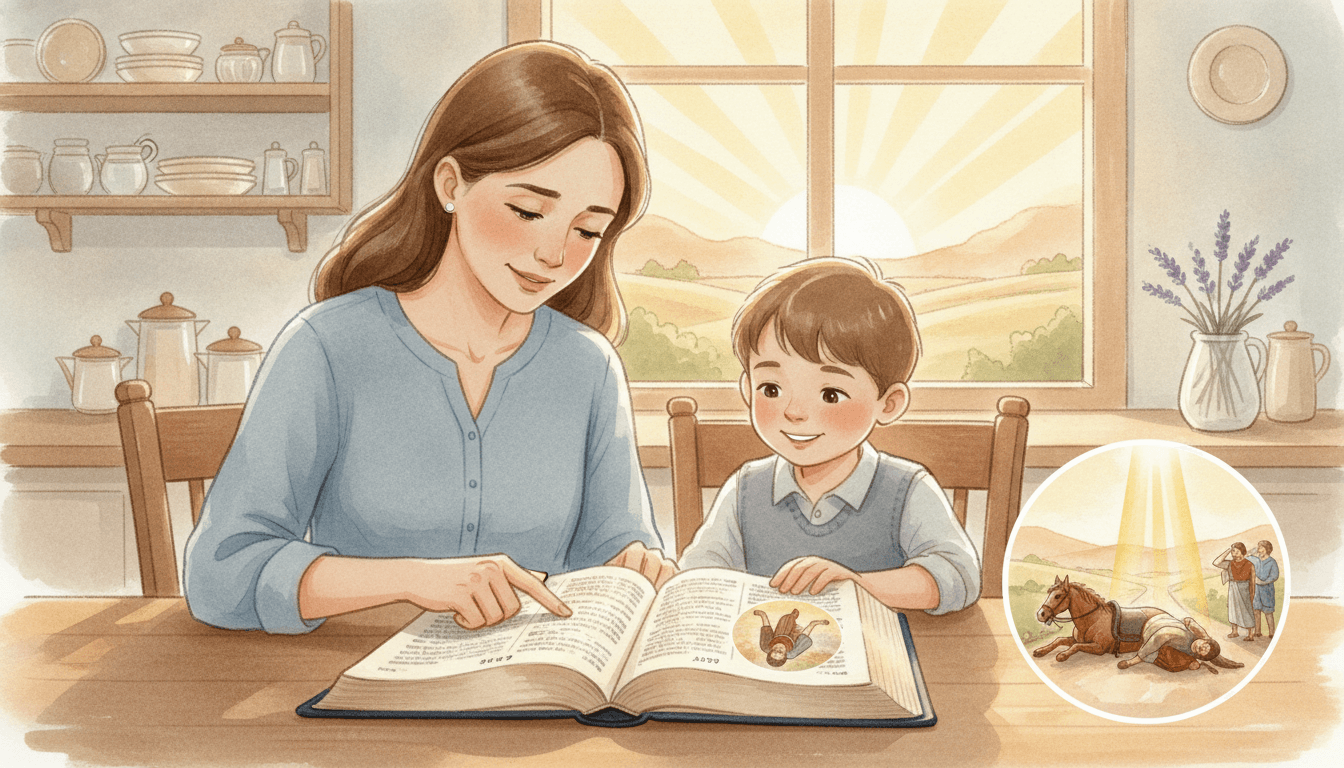
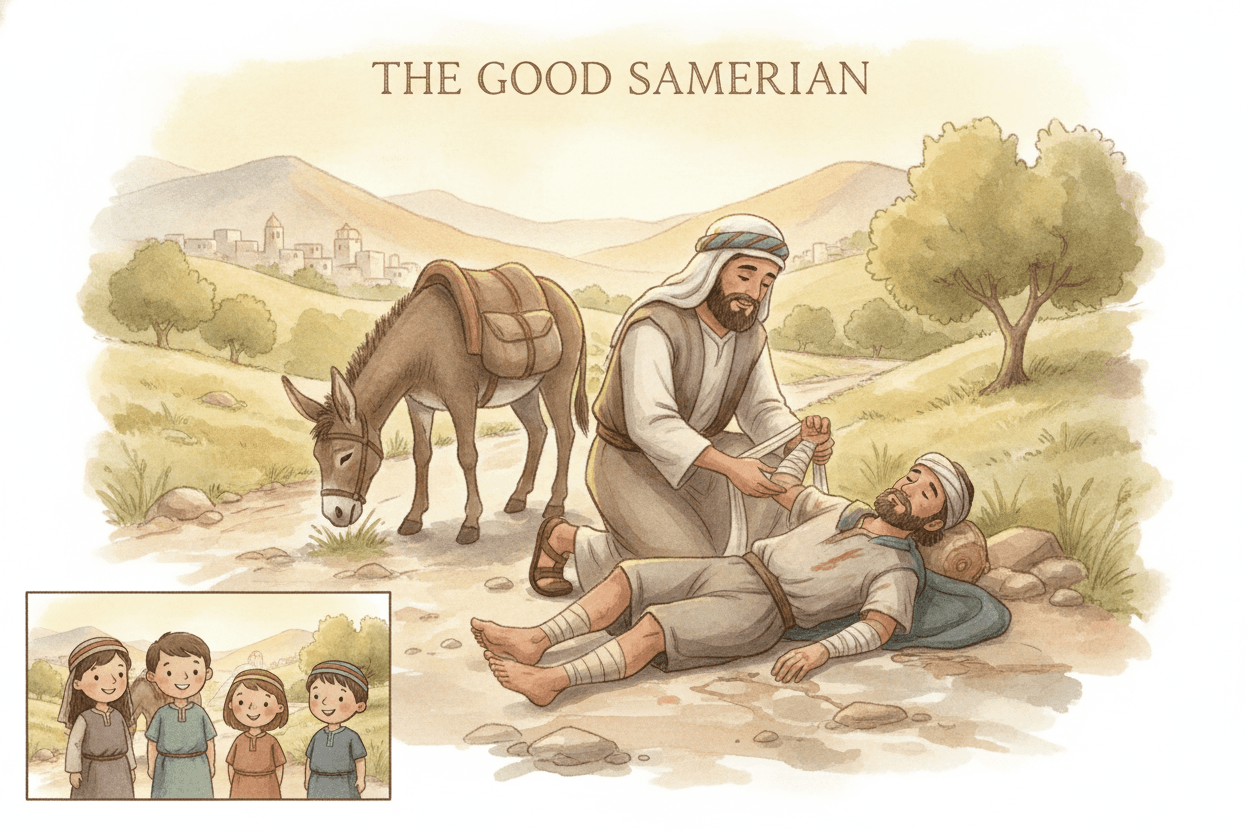
Jesus tells about a man traveling from Jerusalem down to Jericho. On the road, robbers attack him. They take his clothes, beat him, and leave him badly hurt. He is lying there, unable to care for himself. Then a priest comes along. He sees the wounded man—but passes by on the other side. Later, a Levite comes down the road. He sees the man too. He also passes by. For kids, that part can feel surprising. These were people others expected to do what was right. Yet they kept walking.
Then a Samaritan comes along. The Samaritan sees the injured man and feels compassion for him. He does not pretend not to notice. He goes over, treats the man’s wounds with oil and wine, and bandages them. Then he puts the man on his own animal and brings him to an inn. The Samaritan stays involved. He gives the innkeeper two coins and asks him to care for the man. He even promises to repay any extra expense when he returns.
That is mercy in sneakers, really. It is not only feeling bad that someone is hurt. The Samaritan gives his time. He gives his attention. He uses what he has. He changes his plans. At our table, we might put it this way: when you see someone who needs help, do not just say, “That’s sad.” Ask, “What can I do right now?” For a child, that may mean sitting with the lonely kid at lunch, helping a sibling clean up a spill, or telling a grown-up when someone is being left out. One small thing we tried was asking at bedtime, “Who did you notice today?” It helped the story move from a faraway road to the kid right in front of us.
Why Jesus Made the Samaritan the Hero
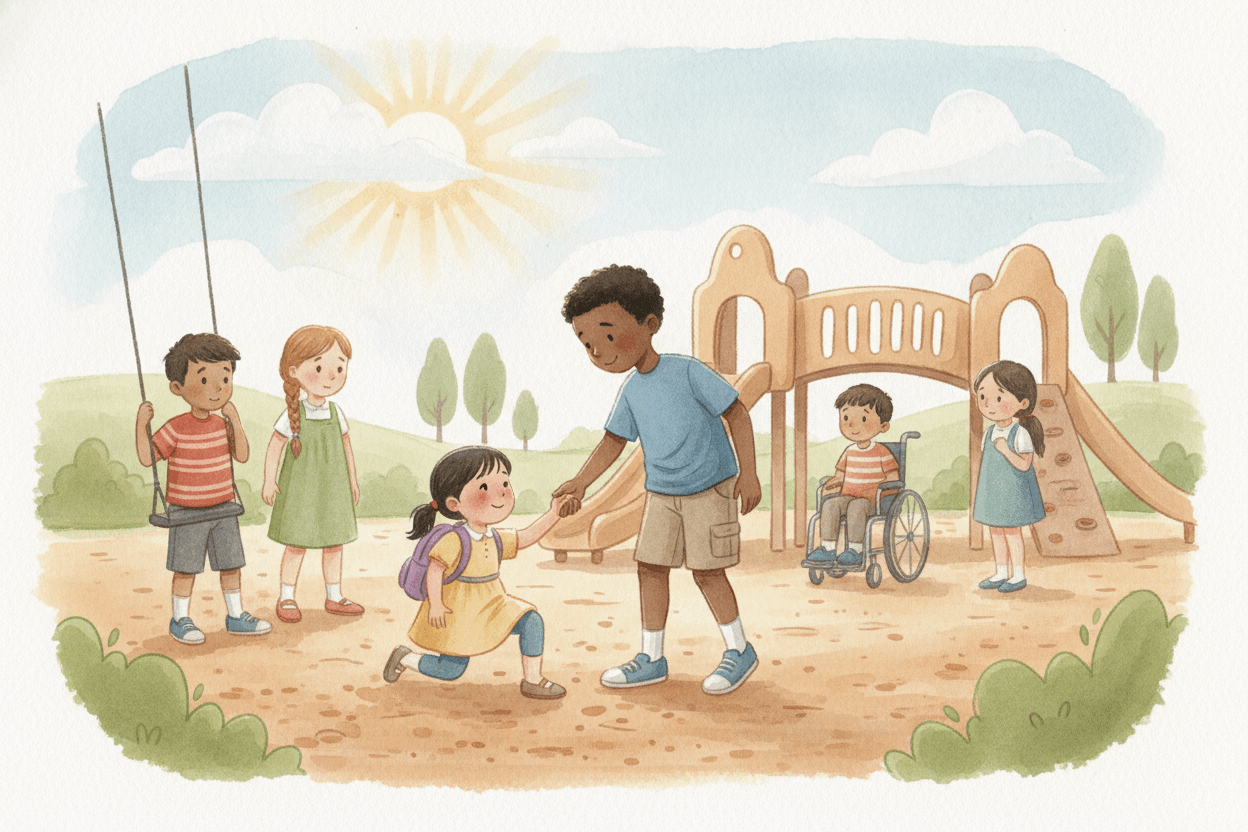
When we tell this story at our table, the part that makes the kids pause is not the bandages or the donkey. It is the helper. “Wait,” one of my kids once asked, “the Samaritan was the good guy?” Exactly. Jesus chose the person His listeners would have least expected. That surprise is the point.
In Jesus’ day, Jews and Samaritans lived near each other, but they did not get along. There was a long history of hurt, disagreement, and mistrust between them. So when the injured man was left on the road, people hearing Jesus’ story may have expected the Samaritan to keep walking too. They may even have expected him to make things worse. Instead, he stopped. He noticed the wounded man. He cared for him when nobody else did.
Jesus was showing that a neighbor is not only the person who looks like us, agrees with us, sits with us at lunch, or gets invited to our birthday party. Pope Francis has often pointed us back to this truth: we do not get to make up small categories for who deserves our care. A person’s need comes first. For kids, that can be as simple as seeing the child who dropped his crayons, the new student who has nobody to play with, or the sibling who is crying after a rough day. The person in front of us may not be our favorite person. That does not cancel our chance to love.
Here is what landed in our house: being kind is not the same as picking the easiest person to be kind to. It is easy to help your best friend. The Good Samaritan asks us to notice the person who might feel left out, embarrassed, or hard to love that day. One small thing we tried was asking at dinner, “Who might need a neighbor tomorrow?” The answers were usually ordinary and a little messy, like most family life. But they gave our kids a plan: sit by someone new, share a turn, help without being asked, or say, “Are you okay?” Jesus made the Samaritan the hero because mercy can come from the person nobody expected—and because He wants that mercy to come from us too.
Mercy Is More Than Being Nice
Last Tuesday, one of my kids spotted a classmate sitting alone near the playground fence. He told me about it while peeling a banana at our table, as if he were reporting the weather. “Nobody was playing with him.” Then came the question parents know well: “What was I supposed to do?” The Good Samaritan gives children a clear answer. Mercy is not just feeling bad for someone. It sees the hurt, moves closer, and does something helpful.
Being nice can mean sharing a crayon or saying, “Have a good day.” Those are good things. Mercy goes a little further when someone has a real need. The Samaritan did not keep walking and offer a cheerful wave. He stopped. He cared for the injured man’s wounds. He made sure the man had a safe place to rest. Jesus shows us that our neighbor is not only the friend we already like or the person who looks and talks like us. Every person has dignity and deserves care, especially when they are hurting or left out.
For children, this can sound big until it lands in Tuesday afternoon. A hungry sibling may need half your snack. A new family at Mass may need someone to say hello and show them where the bathroom is. A grandparent who is sick may need a drawing, a phone call, or a glass of water brought carefully with two hands. A child whose backpack spills open in the hallway may need help gathering pencils instead of laughter. These are small acts, but they train the heart to notice.
One small thing we tried in our house was asking at dinner, “Who needed help today?” Not, “Who was nice?” The different question mattered. Sometimes the answer was, “My brother couldn’t reach the cups.” Sometimes it was, “A kid was crying.” Sometimes there was a long pause, followed by a very honest, “I didn’t help anybody.” Fair enough. Tomorrow is still there. We talked about one thing they could do next time: bring water, share food, sit with someone, tell a teacher, or get an adult when the problem is too big for a child to handle alone.
Parents can keep this simple this week. Before school or bedtime, name one person your child might notice: the lonely kid, the tired teacher, the sick neighbor, the younger sibling. Then ask, “What would help them?” Mercy is not a performance, and kids do not need to fix every hard thing. They can learn to pause, see the person in front of them, and respond with the help they can give. That is a strong beginning.
Questions That Help Kids Notice the Hurt Person
Last Tuesday, one of my kids came home talking about a boy who ate lunch alone. The first report was quick: “He always sits by himself.” Then came the usual rush to the next thing—shoes off, snack crumbs everywhere, somebody asking where the good cup had gone. But we stopped for a minute. “Did anyone sit with him?” I asked. That small pause is where this story starts to become real for children.
Try asking the questions slowly, not like a quiz with one approved answer. “Who saw the injured man?” “What did each person do when they saw him?” “What do you think the priest and Levite might have been thinking?” Kids often notice something adults skip: they may have been scared, busy, or unsure what to do. Then ask, “Why might it have been hard for the Samaritan to stop?” The Samaritan did not merely have an errand interrupted. He chose to help someone from a group that did not welcome his people. That makes his mercy brave, not casual.
After that, bring the road from the story into your child’s own week. “Who might feel left out at school?” “Who could be embarrassed, lonely, or hurt at home, at church, or on a sports team?” Keep the examples concrete. Maybe it is the new child who does not know the playground rules. Maybe it is a sibling who got corrected in front of everyone. Maybe it is the teammate who missed an easy catch and hears groans from the bench. Children are usually better at naming these moments once they realize they are not being asked to point fingers.
Here is the question that landed in our house: “What help would actually be helpful, rather than what would make me feel heroic?” That question can gently change the whole conversation. Sitting beside a lonely child may help. Announcing to the whole cafeteria that you are rescuing the lonely child probably will not. A child who is hurt may need an adult, a Band-Aid, or someone to stay nearby—not a dozen friends crowding around with advice. Love pays attention to the person, not to its own applause.
One small thing we tried was choosing one person and one action before the school day began. Not a grand plan. Just: invite someone into the game, save a seat, ask a sibling if they want help, or tell a coach when someone is getting picked on. At our table, we sometimes ask at dinner, “Did you notice someone who needed care today?” There will be shrugging. There may be a report about a mysterious missing sock instead. Still, these questions train children to look up, notice, and take the next kind step.
Try a Family Mercy Plan This Week
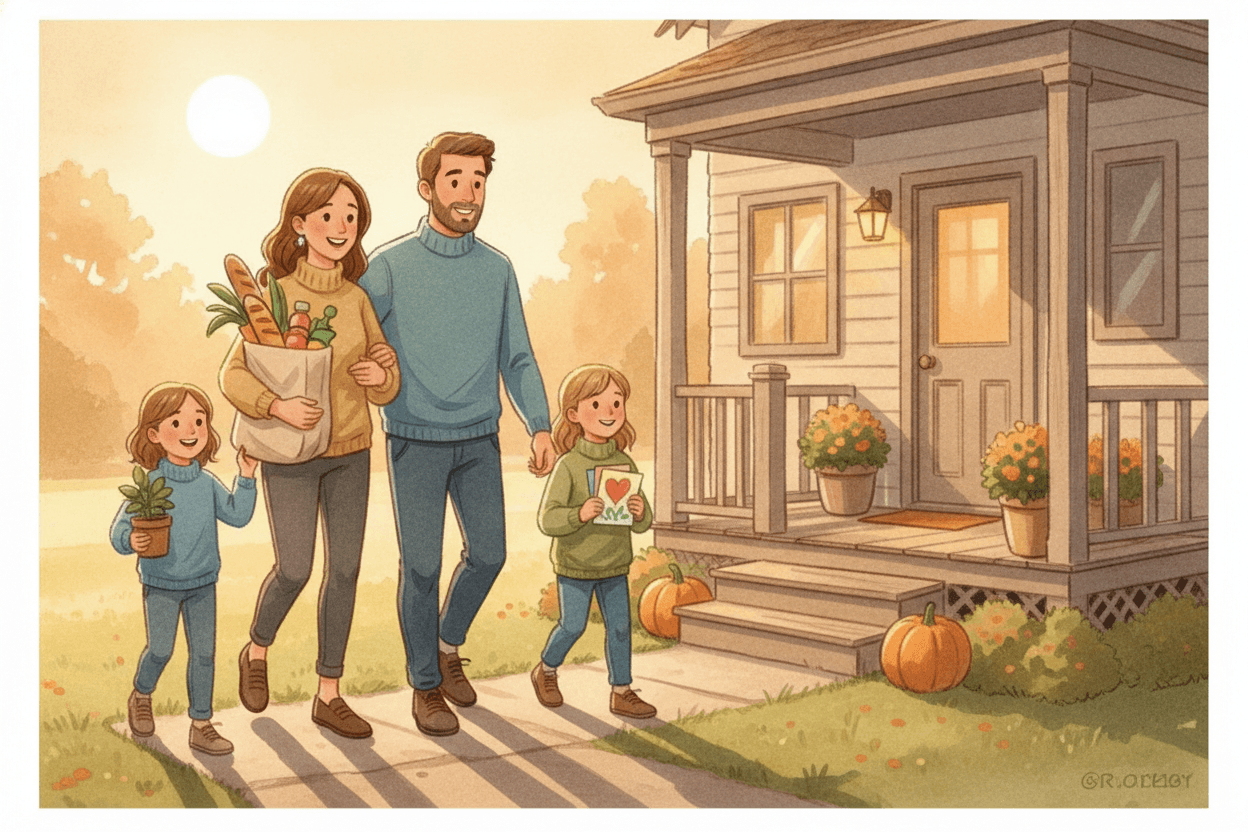
Tuesday afternoon is a good time to discover how quickly good intentions disappear. Someone is hungry, someone cannot find a shoe, and someone is crying because the blue cup is in the dishwasher. That is exactly why a small family plan helps. We do not need to wait for a big service project or a perfectly peaceful Saturday. Mercy can begin with the people and needs already in front of us.
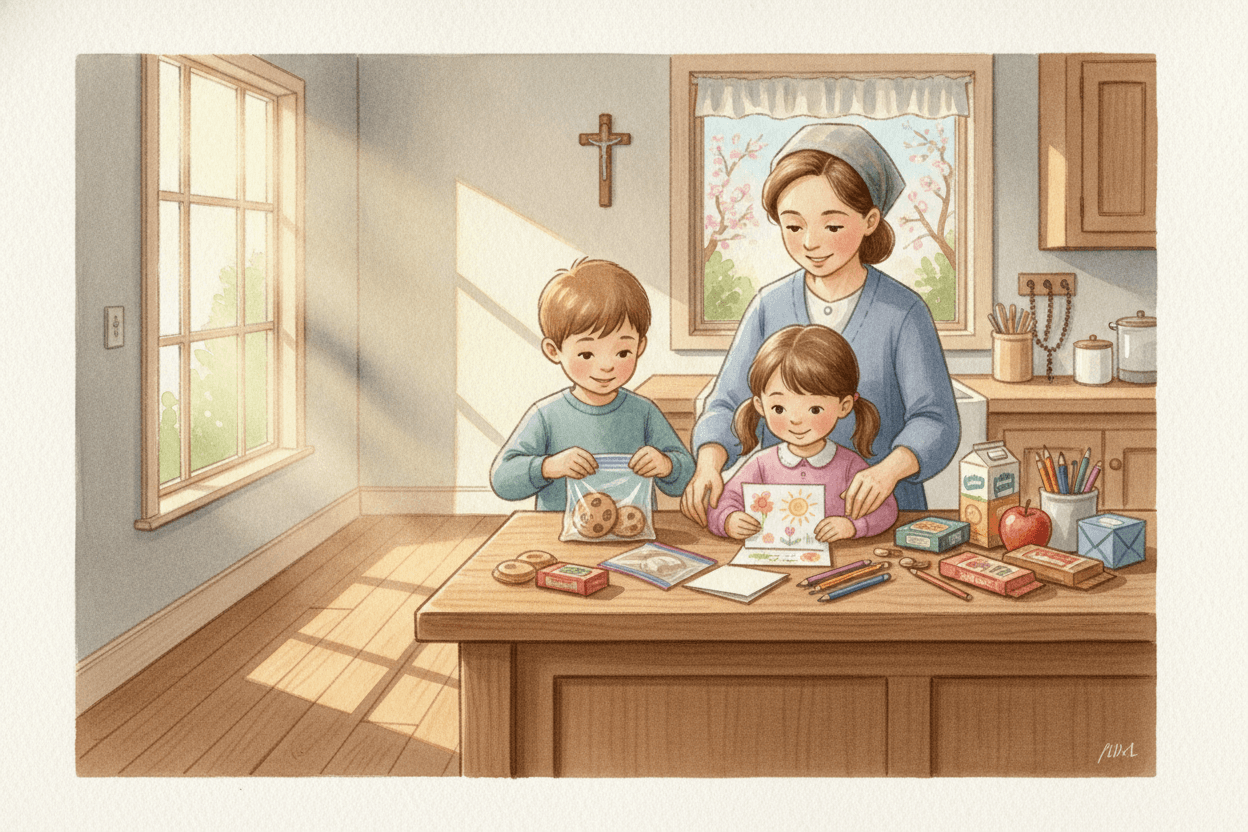
Try this: pick one person or one group your family can help this week. Pause long enough to notice what they might need. A sick neighbor may need dinner and a cheerful card from the kids. Your parish pantry may need a bag of shelf-stable food. A new child at school may need someone to say, “Want to sit with us?” A brother or sister may need help picking up blocks without having to ask three times. Keep the choice small enough that everyone can take part.
Then decide on one concrete act, not a vague promise. Write the card after breakfast. Choose two pantry items at the store. Set a reminder to bring the bag to church. Practice one welcoming sentence in the car before school. In our house, a plan works better when it is visible, so put it on the fridge or say it out loud at dinner. Kids learn that love is not only a feeling when they see it turn into a bag, a meal, a note, or a helping hand.
One small thing we tried was asking each child, “What would make this person’s day a little lighter?” Their answers were not always polished. One involved cookies, naturally. But they were learning to look outward. If your children are little, give them one job: draw the card, carry the food, stir the soup, or tape the note to the door. If they are older, let them help choose the person and make the call or delivery. Following through together matters more than doing it flawlessly.
When the week is over, take thirty seconds to pray: “Jesus, help us notice people who need help. Give us kind hearts and willing hands. Thank You for letting us love our neighbor today. Amen.” Then ask, “Who did we notice?” That simple question can stay with a child. For a gentle way to keep the conversation going, read the related Good Samaritan comic together and let the kids point out what they would do next.
“Go and do likewise.”
Frequently asked questions
What is the Good Samaritan story about for kids?
The story teaches children to notice people who are hurting and choose mercy instead of walking past. Jesus shows that a neighbor is not just a friend or someone like us, but anyone in need.
Who is my neighbor according to Jesus?
Jesus says our neighbor includes the person in front of us who needs care, even if they are unfamiliar, annoying, or different from us. For a child, that may be a sibling, a lonely classmate, a new student, or someone who has fallen down.
Why was the Samaritan helping the injured man surprising?
Jews and Samaritans had a long history of conflict and mistrust, so Jesus' listeners would not have expected a Samaritan to help. By making him the compassionate helper, Jesus teaches that mercy crosses social divisions and personal dislikes.
How can I teach my child to be a Good Samaritan at school?
Give your child small, specific ways to help: sit with someone alone, pick up dropped supplies, offer a pencil, include someone in a game, or tell an adult when a child is being left out. Ask at bedtime, “Who did you notice today?” and celebrate even simple acts of care.
Does loving my neighbor mean my child has to be friends with someone who is unkind?
No. Loving a neighbor does not mean ignoring hurtful behavior or giving up wise boundaries. It means your child can still offer ordinary care, seek help from a trusted adult, and refuse to let annoyance or difference become an excuse for cruelty.
What can kids learn from the priest and Levite passing by?
They show that seeing a need is not the same as responding to it. Help children practice asking, “What can I do right now?” when someone is hurt, excluded, or overwhelmed.
Sources: vatican.va · vatican.va · vatican.va · press.vatican.va · vatican.va · vatican.va · catholic.com · press.vatican.va · press.vatican.va · press.vatican.va
Scripture quotations in this article use the NABRE translation.