Why Joseph Wept:Grace in Genesis 45
Joseph’s tears in Genesis 45 do more than prove forgiveness. They expose years of betrayal, reveal transformed brothers, and show how grace faces real wounds without pretending they never happened.
The kitchen goes quiet after the fight—except for one child sniffing into a sleeve and another insisting, "But he started it." That is closer to Joseph’s reunion with his brothers than the neat version we sometimes tell: Genesis 45 gives us loud tears, a real wound, changed hearts, and grace strong enough to begin putting a family back together.
Why Did Joseph Weep So Loudly?
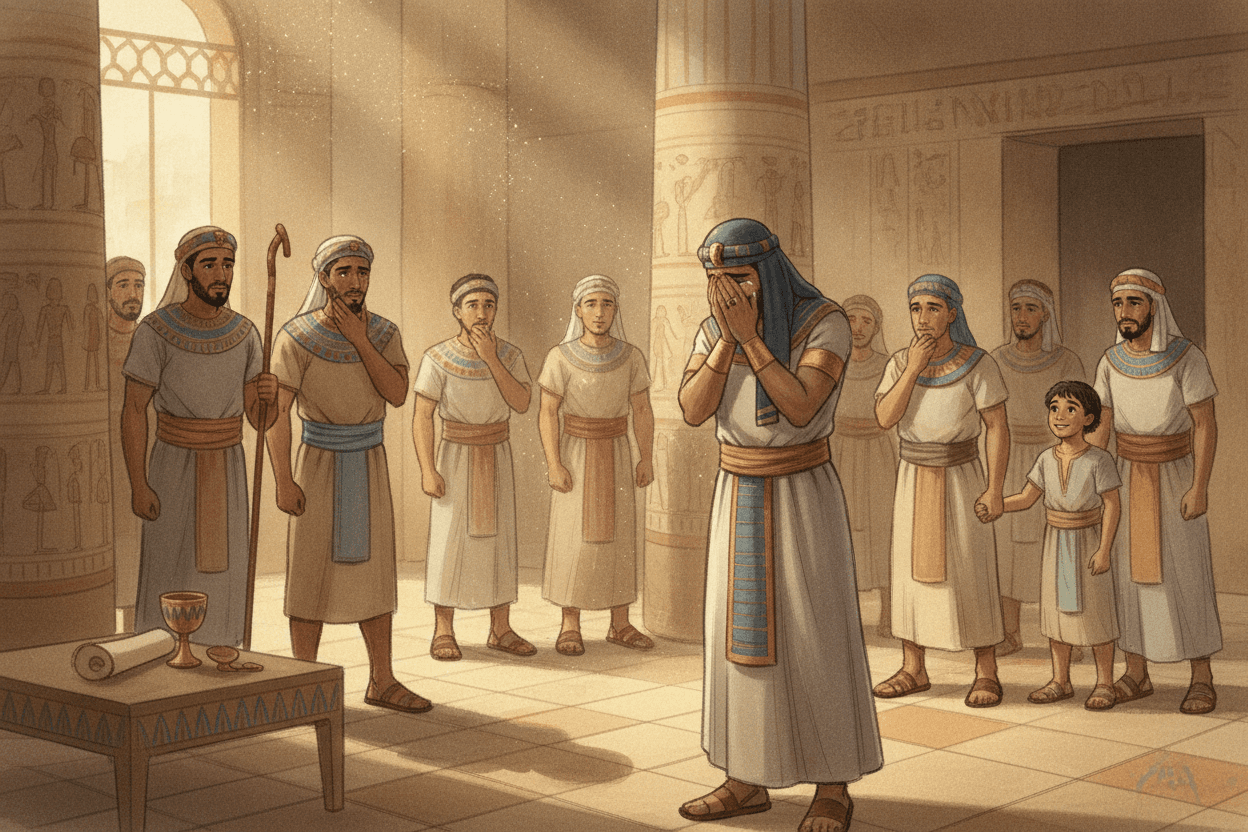
The juice box had spilled, somebody had taken somebody else’s blue crayon, and one of our kids stood there with that fierce little face that says, “I am never speaking to him again.” Five minutes later, the same two children were building a pillow fort together. Kids can turn fast. Grown-up hurts usually do not. Joseph had carried his brothers’ betrayal for years. They had sold him away from his father, his home, and his little brother Benjamin. So when he finally stood before them in Egypt, tears made sense.
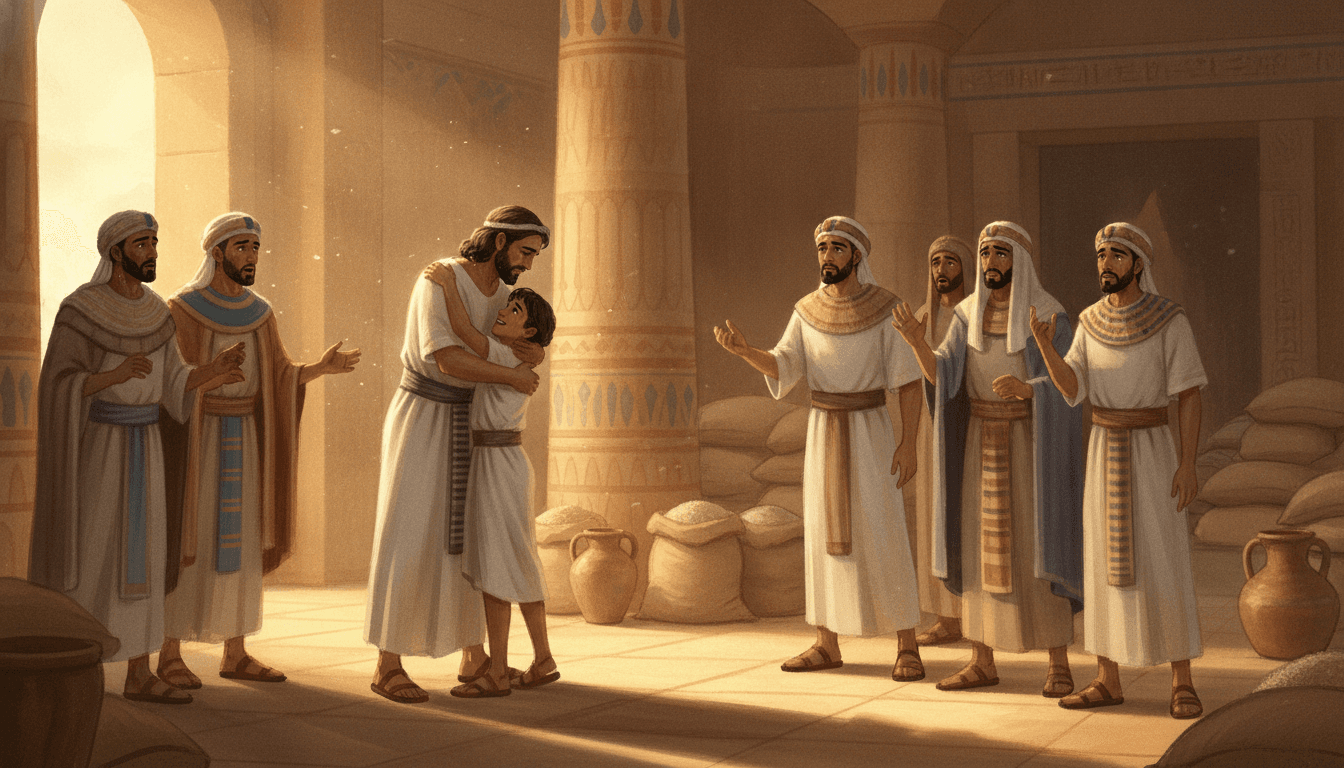
Joseph wept loudly because this was not one feeling. It was grief for what had been taken from him. It was relief that the brothers standing before him were alive. It was love, especially for Benjamin. It was the shock of seeing that his brothers had changed. And it was mercy breaking through after a long, painful wait. Genesis does not give us a neat, dry forgiveness scene. Joseph had tested his brothers first. He had watched to see whether they would protect Benjamin or abandon him too. When Judah offered himself in Benjamin’s place, Joseph saw something different in them.
The NABRE says, “But he wept so loudly that the Egyptians heard him, and so the household of Pharaoh heard him.” Joseph’s tears were not weakness, and they were not a loss of control in the childish sense. They showed that forgiveness cost him something. He did not pretend the pit, the slave traders, or the prison had never happened. He named the truth: “I am your brother Joseph, whom you sold into Egypt.” Then he chose not to use his power to crush them.
Here’s what landed for me: reconciliation is not the same as saying, “No big deal.” In our house, an apology sometimes comes with crossed arms, tears, or a long pause before a child can say the words. That does not mean the apology is fake. It means the hurt was real. Joseph’s brothers could not talk with him at first. His tears made room for the truth, for their fear, and finally for a new beginning. Grace often works like that—slowly, honestly, with a few tears on the kitchen floor.
One small thing we tried is asking two questions after a sibling fight: “What happened?” and “What can help make this right?” The first question lets the hurt be named. The second turns everyone toward mercy. Parents do not need to force a quick hug or demand cheerful faces. We can teach our children that forgiveness means refusing revenge and choosing the good of the other person, even when feelings are still catching up. Joseph wept because his broken family was beginning to come back together. That is a big thing. It is worth crying over.
Joseph could no longer control himself in the presence of all his attendants, so he cried out, “Have everyone withdraw from me!” So no one stayed with him when Joseph made himself known to his brothers. But he wept so loudly that the Egyptians heard him, and so the household of Pharaoh heard him.
Forgiveness Did Not Mean Pretending It Never Happened
The argument started over a blue cup. Not a big deal, unless you are six, tired, and certain your brother chose that cup specifically to ruin your life. Five minutes later, one child said sorry. The other child said, “Fine,” while holding the cup like a courtroom exhibit. Parents know that moment. An apology has been offered, but nobody is ready to act as if nothing happened. Joseph gives our kids permission to see the difference.
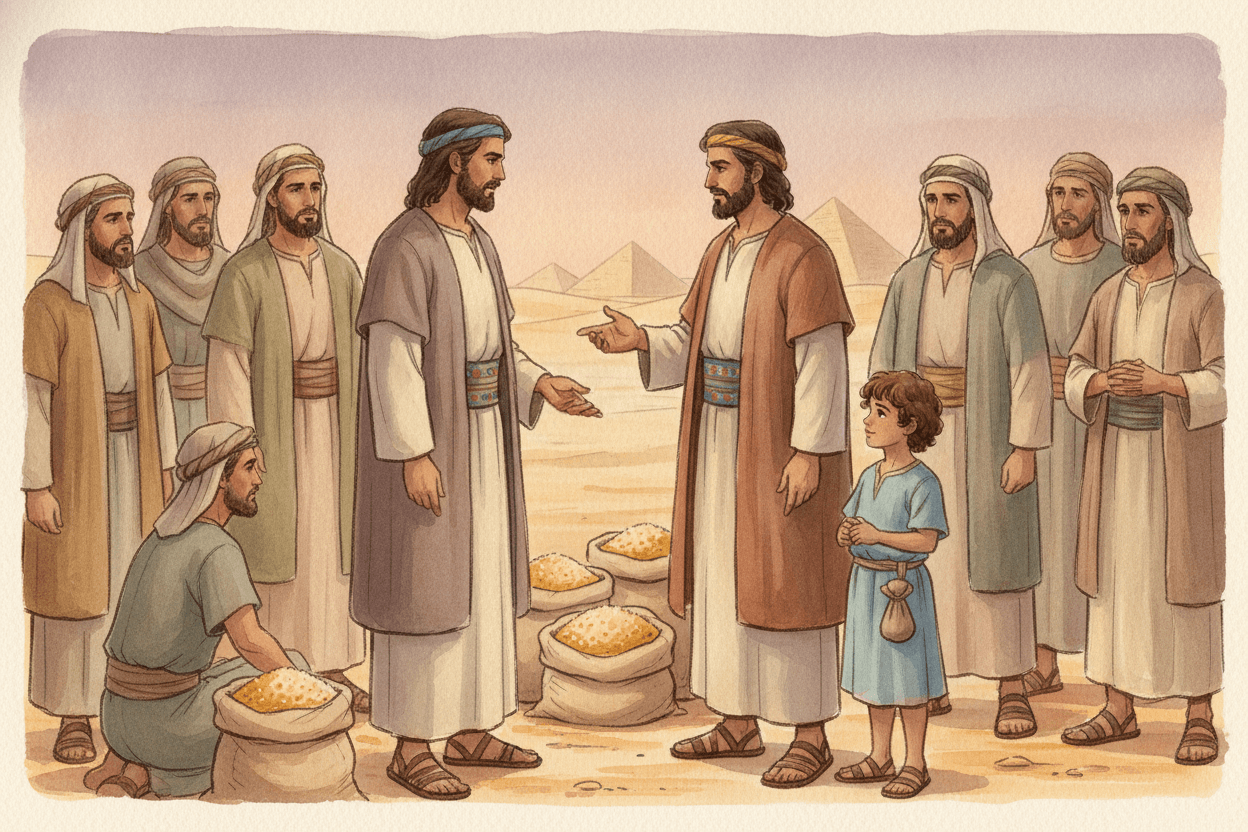
When Joseph finally tells his brothers who he is, he does not soften their sin into a misunderstanding. He says, “I am your brother Joseph, whom you sold into Egypt.” Those words matter. His brothers really sold him. They lied to their father. Joseph really lost years of home, freedom, and family. Forgiveness did not require Joseph to call evil good, harmless, or funny in hindsight. He named the wound plainly. Then, in the same breath, he spoke of what God had done through it: “for God sent me ahead of you to save lives.”
There is another detail tweens may miss. Joseph did not rush straight from seeing his brothers to a cheerful family reunion. Before Genesis 45, he watched them. He saw whether they would abandon Benjamin, the younger brother his father loved. Judah’s willingness to stand in Benjamin’s place showed Joseph something had changed. That was wisdom, not revenge. Forgiving someone can be real while trust is rebuilt slowly. A child can forgive a sibling for breaking a favorite Lego creation and still ask that sibling not to play with the next one alone for a while. At our table, that is not holding a grudge. That is learning what makes peace possible.
One small thing we tried is teaching our kids three short sentences: “That hurt.” “I forgive you.” “What can we do differently next time?” The first tells the truth. The second refuses to keep collecting payment from the other person. The third helps rebuild trust. For a bigger hurt, children need a parent’s help, and sometimes distance or clear boundaries are needed too. Joseph’s tears show that mercy is not cold or quick. His brothers were able to talk with him only after he had wept over them. Grace made room for truth, tears, and a new beginning.
Then Joseph said to his brothers: “Come closer to me.” And when they had done so, he said: “I am your brother Joseph, whom you sold into Egypt. But now, do not be distressed, and do not be angry with yourselves that you sold me here; for God sent me ahead of you to save lives.”
Frequently asked questions
Why did Joseph weep when he saw his brothers in Genesis 45?
Joseph's tears held more than one feeling: grief over their betrayal, love for Benjamin, relief that his family was alive, and mercy as he saw his brothers had changed. He had carried the wound for years, so reconciliation was deeply emotional. His tears showed that forgiveness was costly, not casual.
Does forgiving someone mean pretending they did not hurt you?
No. Joseph plainly named what his brothers had done: they sold him into Egypt. Forgiveness does not call sin harmless; it refuses revenge and chooses the other person's good while telling the truth about the wound.
How can I help my children make peace after a sibling fight?
Start with two simple questions: “What happened?” and “What can help make this right?” Let each child name the hurt before pushing for a solution. A forced hug or cheerful attitude is not necessary for a real beginning toward peace.
Can my child forgive a sibling but still need boundaries?
Yes. Joseph did not immediately assume trust had been restored; he watched to see whether his brothers would protect Benjamin. A child can forgive a sibling for damaging a special toy while still asking for help, supervision, or time before sharing another treasured item.
What can children say after someone apologizes?
Teach them three short sentences: “That hurt.” “I forgive you.” “What can we do differently next time?” These words make room for honesty, mercy, and a practical plan for rebuilding trust.
What does Joseph's story teach Catholic families about grace and reconciliation?
Grace does not erase painful feelings or demand instant repair. It helps families tell the truth, reject revenge, and take small steps toward a new beginning. For serious hurts, parents should help children set clear boundaries and create safety as trust is rebuilt.
Sources: bible.usccb.org · usccb.org · vatican.va · vatican.va · vatican.va · vatican.va · thegospelcoalition.org · cepreaching.org · workingpreacher.org · pewresearch.org
Scripture quotations in this article use the NABRE translation.