Teaching Kids Gratitude Prayers for Every Day
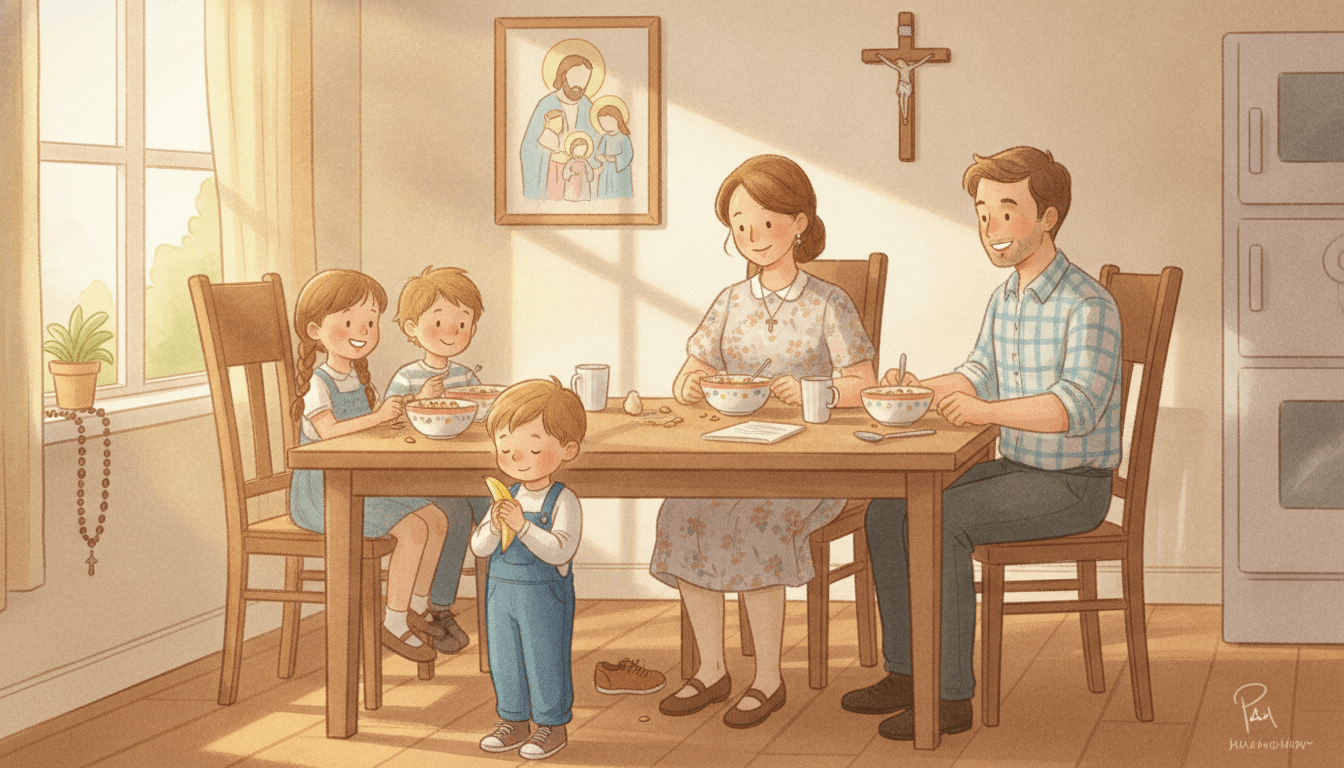
The cereal was getting soggy, someone had lost a shoe, and our youngest thanked God for the "really yellow banana." It was not a polished family devotion, but it was prayer—and a small opening to help a child notice that good gifts come from God.
Start With the Gift Right in Front of Them
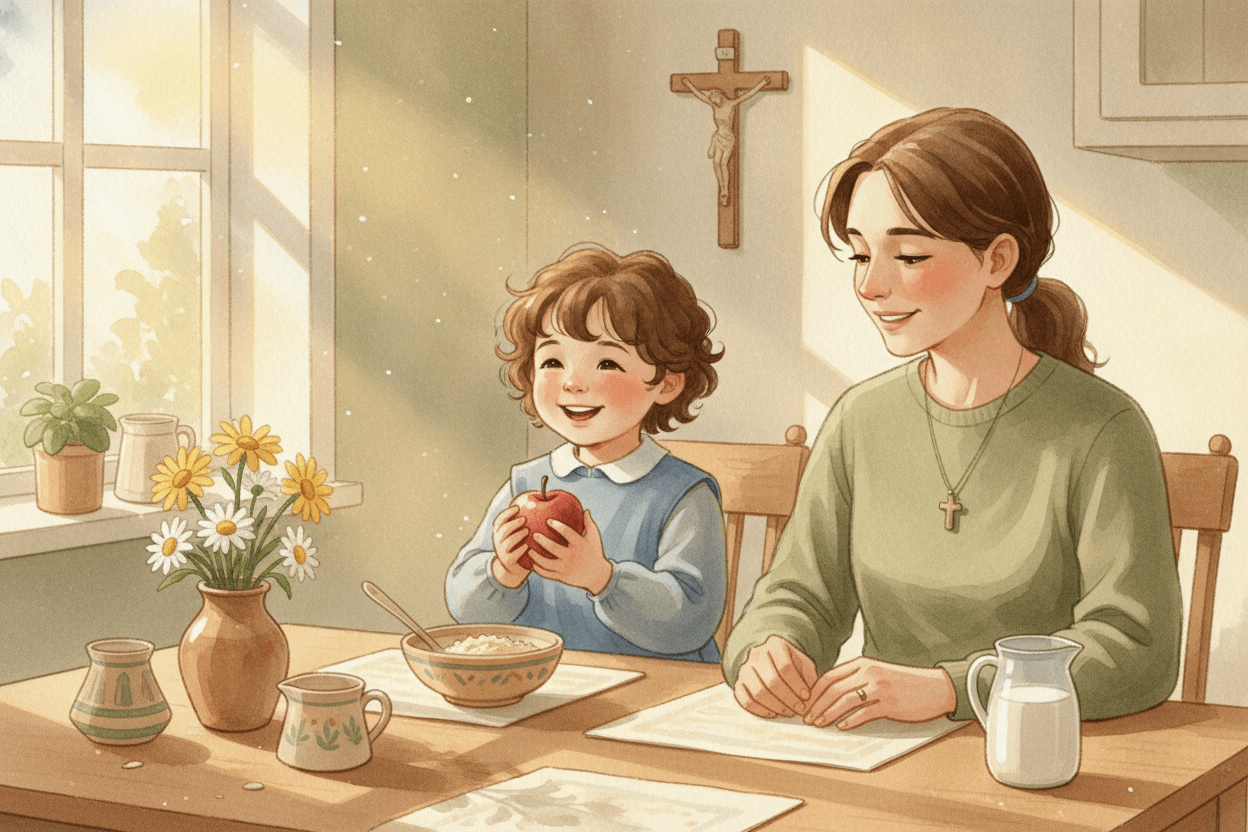
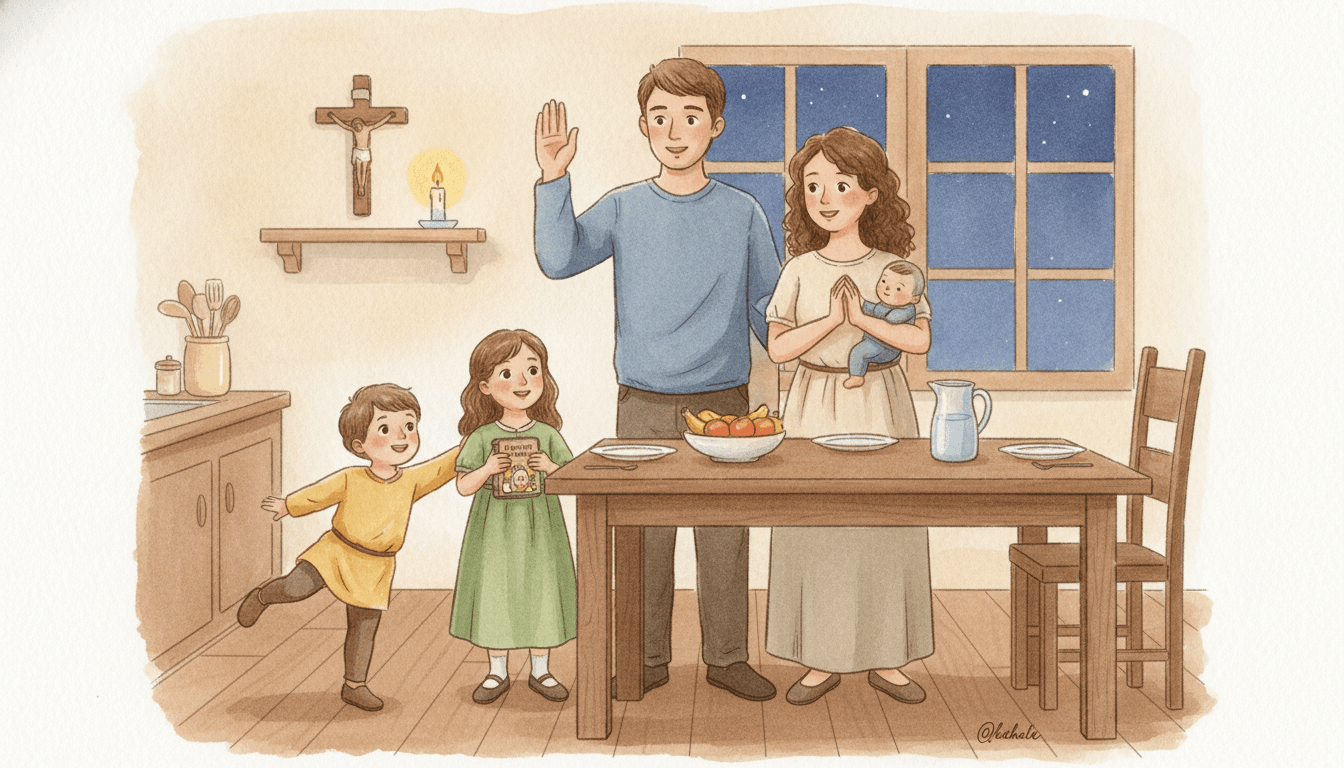
The apple was already half gone when my child remembered the prayer. There were crumbs on the counter, someone was asking for more milk, and the dog had stationed himself under the table for obvious reasons. So we kept it simple: “Thank you, God, for this apple.” That was enough. A child learns gratitude best with a real gift right in front of him, not a long list of ideas floating over his head.
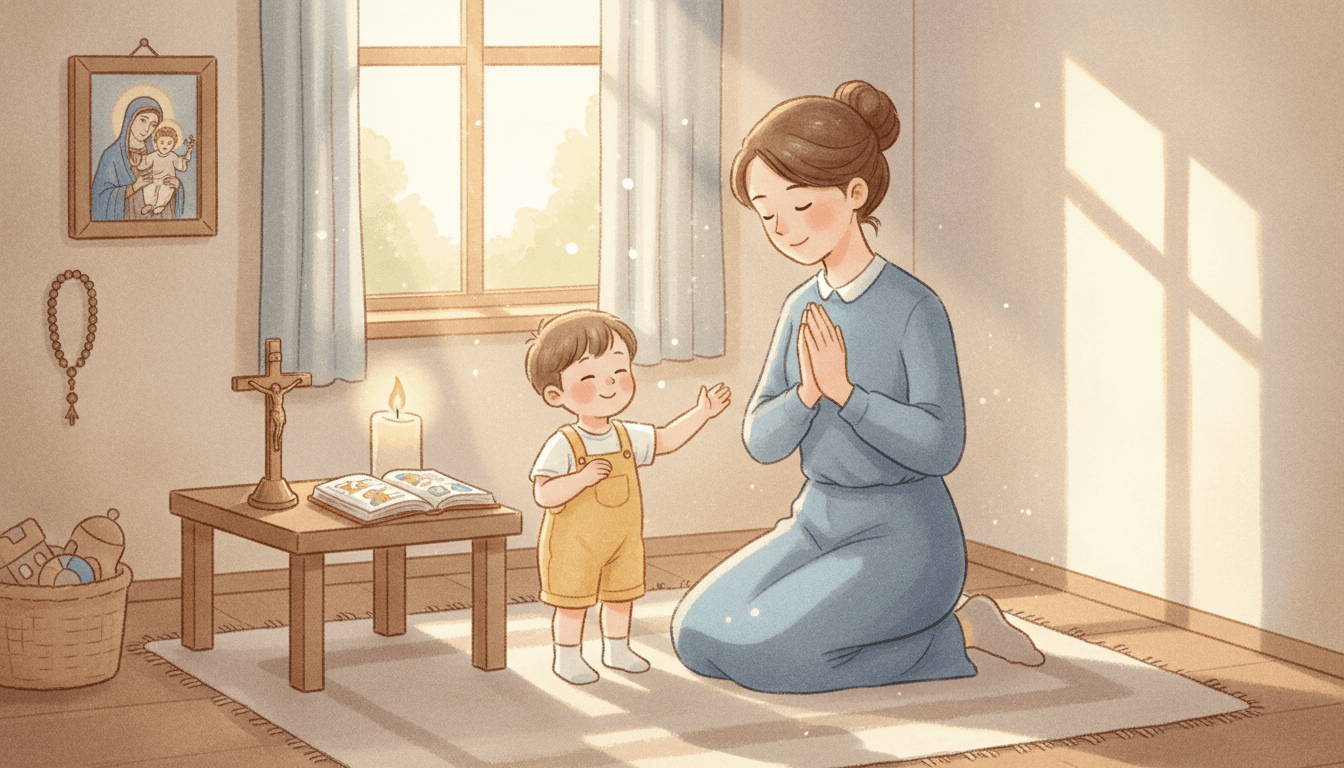
Start where their hands and eyes already are. A warm blanket after bath time. The friend who saved them a seat at school. Sunlight on the driveway. A bandage on a scraped knee. Say one clear sentence: “Thank you, God, for my blanket.” “Thank you, God, for my friend Mia.” “Thank you for the sunshine.” Little children do not need a polished prayer. They need to hear that God is part of the ordinary good things they notice all day long.
Then, when the moment is calm enough—and yes, that can be a very short window—add one more layer. “Thank you, God, for this apple, and for the people who grew it and put it on our table.” This helps children see that gifts are connected to people. Food did not simply appear in the fruit bowl. Someone planted, picked, packed, drove, bought, and served it. Gratitude begins with the apple, but it can grow into thanks for the hands that helped bring it there.
James gives parents the bigger truth behind these small prayers: “All good giving and every perfect gift is from above, coming down from the Father of lights, with whom there is no alteration or shadow caused by change.” We are not asking children to pretend every day feels easy. We are teaching them to notice that every good gift has a Giver. God is not only present at church or at bedtime. He is there when the toast pops up, when a friend shares crayons, and when a child finally finds the missing stuffed animal under the couch.
One small thing we tried in our house was to choose one visible gift before meals instead of asking, “What are you thankful for?” That big question can make a tired preschooler stare at you like you just assigned homework. Try pointing: “Can we thank God for these grapes?” After a few days, let your child point. Keep the words short, and let repetition do its quiet work.
As the habit settles in, let gratitude lead somewhere. After thanking God for a snack, invite your child to offer the last cracker to a sibling. After thanking God for a favorite toy, ask whether a friend may have a turn. After thanking God for feeling better, pray for someone who is sick. The child in front of you may not have a speech ready. But a whispered thank-you over an apple is a very good place to begin.
All good giving and every perfect gift is from above, coming down from the Father of lights, with whom there is no alteration or shadow caused by change.
Use Tiny Prayer Pauses, Not One Perfect Routine
The cereal was already getting soggy, one child wanted the blue cup, and somebody had dropped a spoon under the table. That was not the kind of morning that invited a long family prayer. So we tried something smaller: “Thank you, God, for breakfast.” Everyone could manage it, even with a mouth full of banana. The point was not a calm, picture-perfect start. The point was helping our kids notice that breakfast had a Giver.
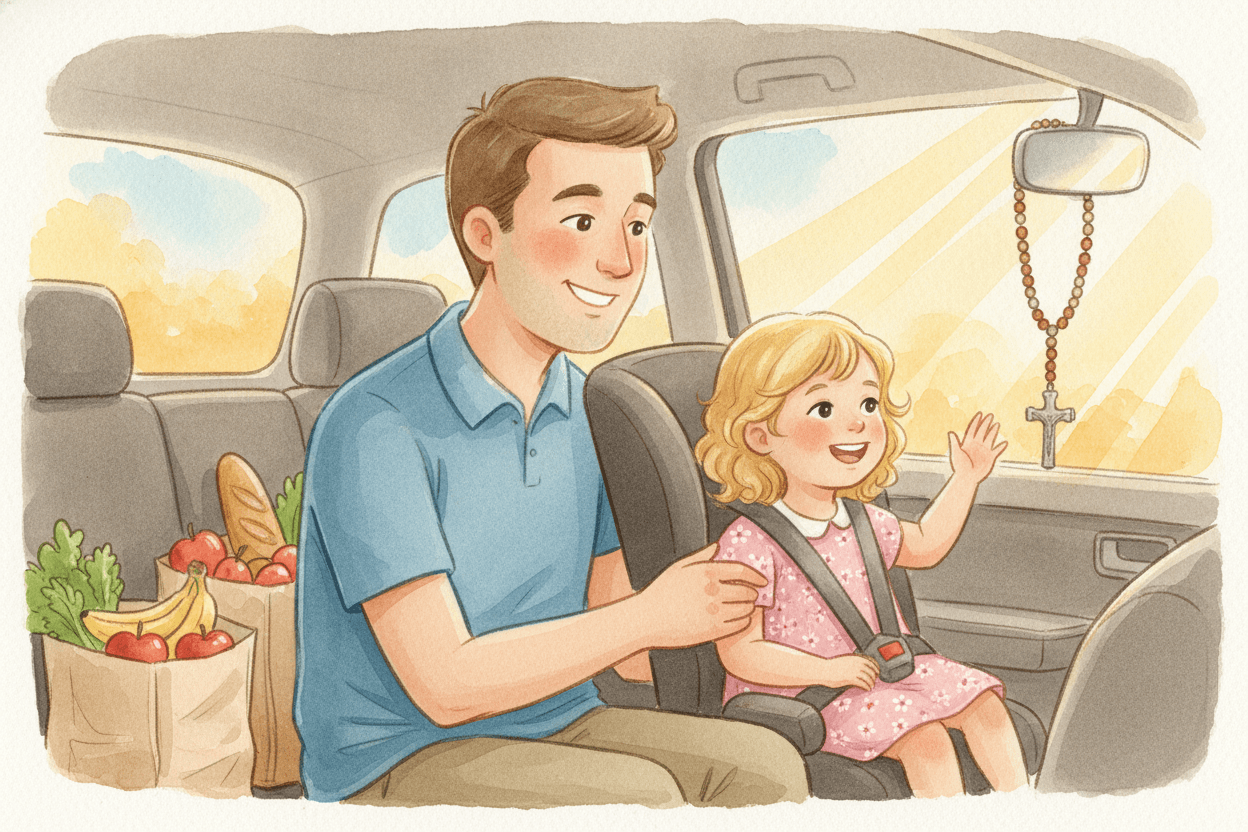
For children ages 3 to 5, five seconds is plenty. Before eating, try one sentence: “Thank you, God, for this food.” While buckling car seats: “Thank you, God, for our car and our safe trip.” At the playground, as shoes fill with wood chips for reasons known only to preschoolers: “Thank you, God, for strong legs and a fun place to play.” These little pauses fit into the life you already have. They do not require candles, quiet music, or children sitting like tiny monks.
Changing the moment helps. A fixed bedtime prayer is good, but gratitude does not have to wait for bedtime. When rain taps the windshield, say, “Thank you, God, for rain.” When the sun comes out after three indoor hours, say, “Thank you, God, for sunshine.” When a neighbor brings in a package or a sibling helps find a missing shoe, stop for a beat: “Thank you, God, for people who help us.” Then thank the person too. Kids learn that God gives good things, often through the hands of other people.
One small thing we tried was using the same response all week: “Thank you, God, for your gifts.” I would name one gift, and the kids would answer with that line. Some days they joined in loudly. Some days they stared at a cracker. Both days counted. Repetition and imitation do a lot of quiet work in a young child. You are not trying to produce a feeling on command. You are giving them words they can reach for later, when gratitude comes more naturally.
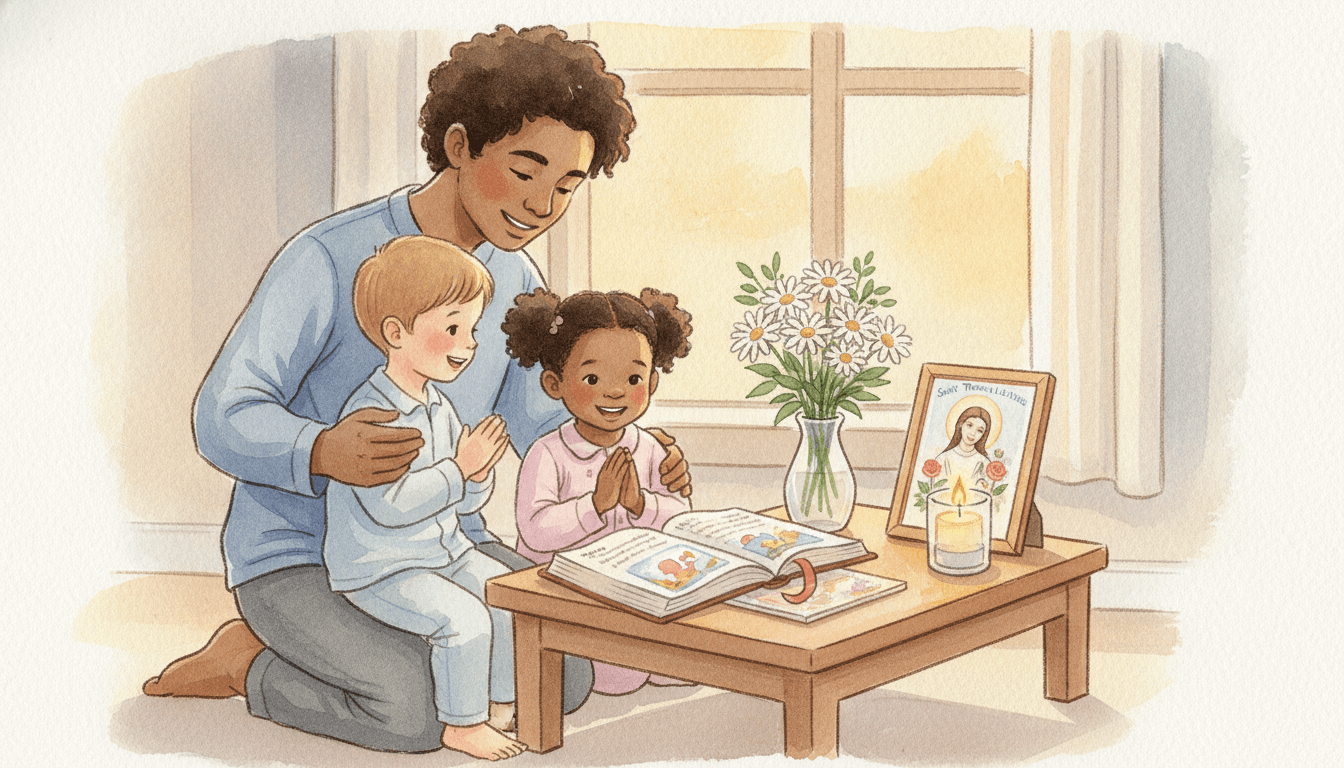
At bedtime, keep it just as simple. Ask, “What is one good thing from today?” A child might say pancakes, a friend, a Band-Aid, or the fact that Dad made a funny voice during a book. Receive the answer without correcting it, then pray: “Thank you, God, for pancakes and for our day. Please help anyone who is sick or sad tonight.” This gently opens their prayer beyond what they own. As St. Paul wrote, “Rejoice always. Pray without ceasing. In all circumstances give thanks, for this is the will of God for you in Christ Jesus.” Little prayers scattered through an ordinary day are one way a family begins to live those words.
Rejoice always. Pray without ceasing. In all circumstances give thanks, for this is the will of God for you in Christ Jesus.
Help Children Thank the Giver, Not Just the Gift

Last week, one of my kids held up a shiny new sticker sheet like he had discovered buried treasure. “Thank you for my stickers!” he said, mostly to the adult who bought them. Fair enough. Then we paused for a second and added, “And thank you, God, for a fun surprise.” It was not a big family devotion. There were crumbs on the counter and somebody was asking where his other shoe went. But it helped move the thanks one step deeper.
Children naturally thank the person handing them the cookie, the toy, or the bandage. We want to keep that good habit. Say thank you to Grandma. Thank the teacher. Thank your sister for finding the missing stuffed animal. Then gently help them see that God is the giver beneath every good gift. James says, “All good giving and every perfect gift is from above, coming down from the Father of lights, with whom there is no alteration or shadow caused by change.” A warm meal, a safe ride home, a friend who shares, the strength to try again after a hard moment—none of these are too ordinary to bring to God.
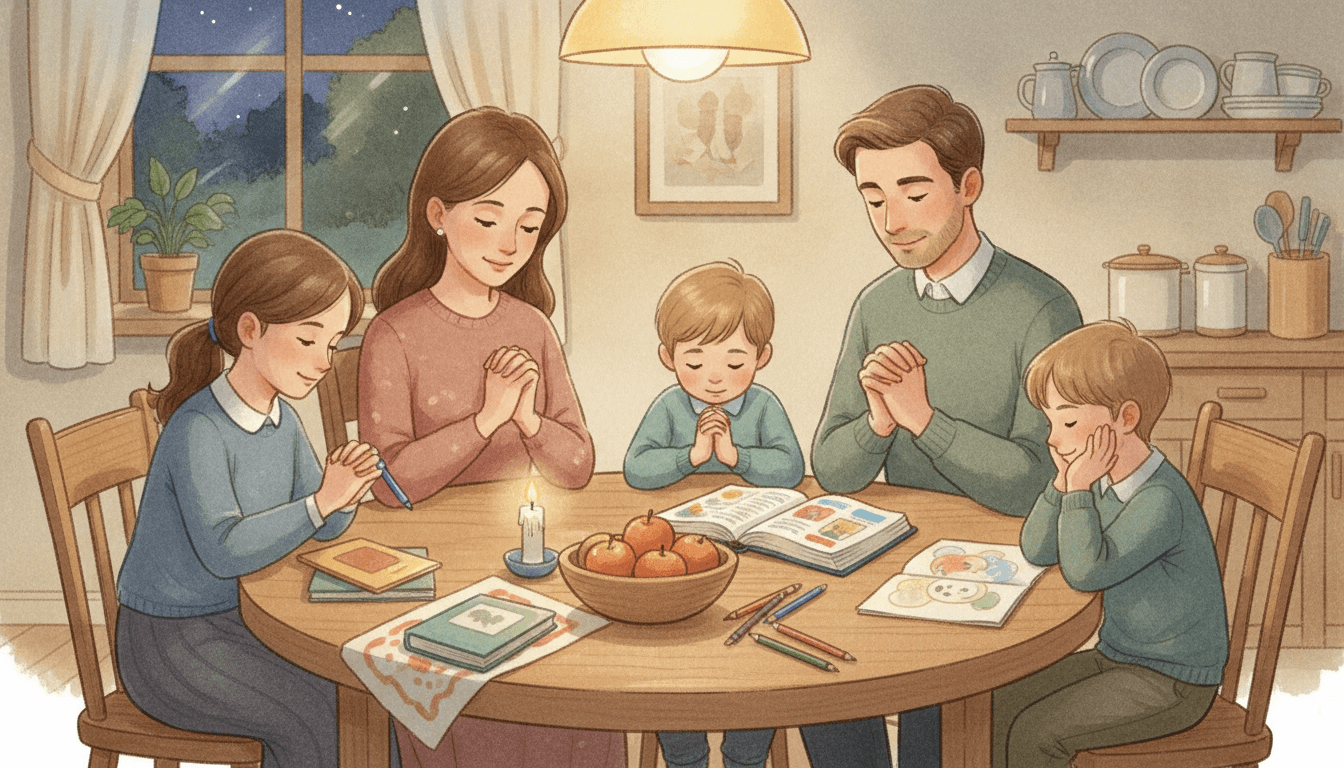
At our table, questions work better than speeches. After dinner, try, “Who helped us today?” A child may name Dad, a friend, the bus driver, or the person who grew the apples. Then you can pray, “Thank you, God, for all the people who cared for us today.” On a walk, ask, “What did God make that was beautiful?” You may hear “that bird,” “the pink sky,” or, if you have preschoolers, “a very large puddle.” Go with it. Thank God for creation and for eyes that can notice it.
Another helpful prompt is, “What kind thing happened?” This widens gratitude beyond stuff. Maybe a sibling forgave a mean comment. Maybe a child was brave at the doctor. Maybe a neighbor held the door when everyone had backpacks, lunch boxes, and approximately nine loose papers. Give the child simple words: “Thank you, God, for forgiveness.” “Thank you for keeping us safe.” “Thank you for helping me be brave.” “Thank you for my friend.” These prayers teach that gratitude is about people and love, not just getting more things.
The healed man in the Gospel gives us a small picture of this return to God: “And one of them, realizing he was healed, returned, glorifying God in a loud voice; and he fell at the feet of Jesus and thanked him. He was a Samaritan.” Your child does not need to feel extra cheerful or produce a long list every night. One honest sentence is enough: “Thank you, God, for my friend helping me.” Over time, those little returns of thanks can help a child recognize the Giver in the middle of an ordinary day.
And one of them, realizing he was healed, returned, glorifying God in a loud voice; and he fell at the feet of Jesus and thanked him. He was a Samaritan.
Let Your Children Hear You Say Thank You
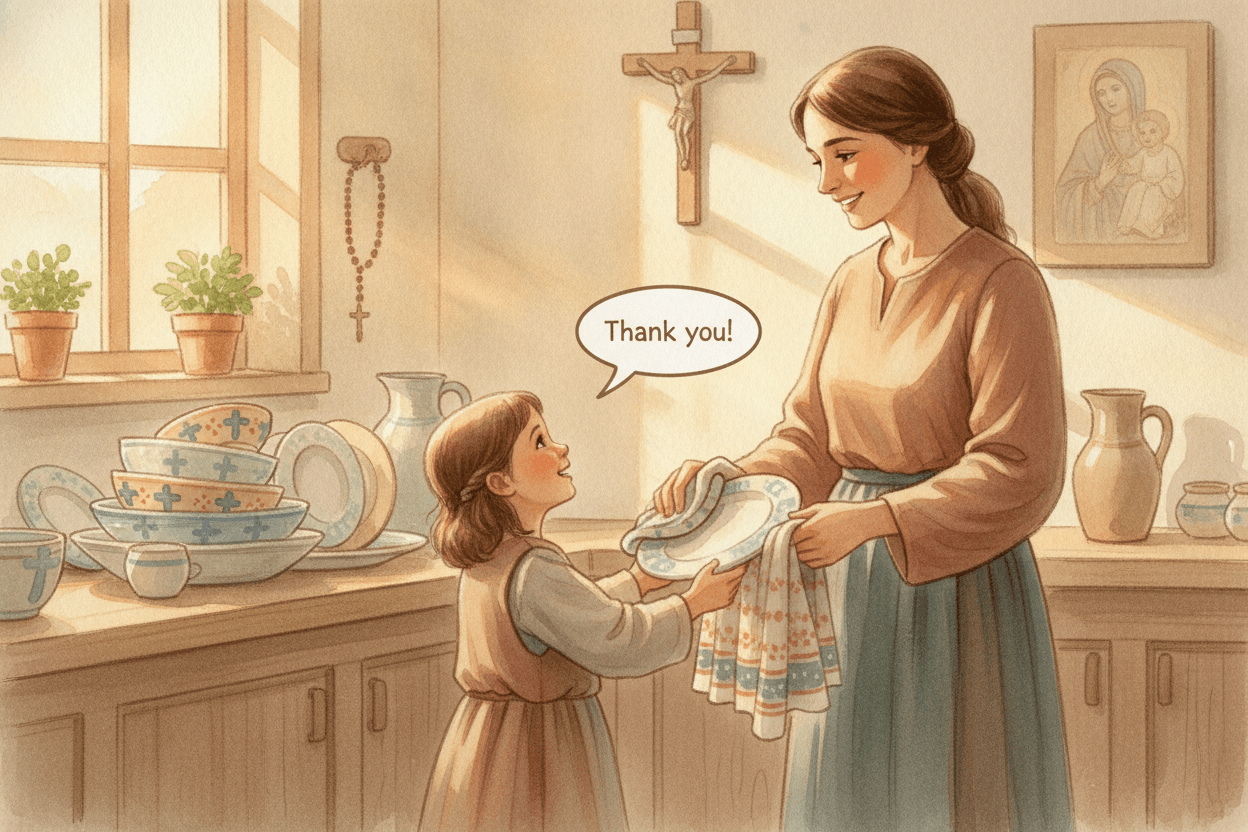
The other night, one of our kids carried his plate to the sink without being asked. This is not a daily miracle, but it was close. I said, “Thank you for helping, buddy.” Then, before moving on to the next spill, missing sock, or sibling dispute, I added, “Thank you, God, for giving us hands that can help each other.” He looked at me for about half a second, which is plenty of attention at the end of dinner.
Children learn gratitude first by overhearing it. They notice when Dad says, “Thank you, God, for this meal,” even if the meal is reheated leftovers. They notice when Mom says, “I’m thankful you are my son,” after a hard school morning. They notice when we thank a neighbor for bringing in a package or a grandparent for making the long drive. None of this needs to become a lecture. Just let the words be normal in the house.
At our table, I have found it helps to thank children for the actual good they do. “Thank you for putting the blocks away.” “Thank you for waiting while I helped your sister.” “Thank you for telling me the truth.” Specific thanks teaches them that gratitude is not only about stuff. It is about people, effort, kindness, courage, and forgiveness. And when we receive those things, we can point upward together: “God, thank you for helping us be patient today.”
Pope Francis puts it plainly: “Joy is born of gratitude for the gifts we have received and which we share in turn, and it grows in our relationships with others.” That is a good picture of family life. We receive help, name it, and pass it along. After thanking God for snack, a child can offer the last crackers to a sibling. After being grateful for a new toy, he can invite a friend to play. Gratitude that stays in our mouths can become polite. Gratitude that moves into sharing starts to shape the heart.
One small thing we tried was making the basic family words part of our reset after a rough moment: please, thank you, and I am sorry. They are little words, but they build communion at home. Parents need to say them too. Especially the last one. When I apologize for snapping, my child sees that gratitude is not pretending everything is fine. It is recognizing the gift of the person in front of us, even when everyone is tired.
Try saying one audible thank-you to God each day where your children can hear it. Keep it concrete: “Thank you, God, for Anna’s laugh.” “Thank you for the rain.” “Thank you that Grandpa is feeling better.” Your child may not join in right away. That is okay. They are listening. In a busy home, those small spoken thanks can become the steady background music of faith.
Turn Thanksgiving Into Sharing and Intercession
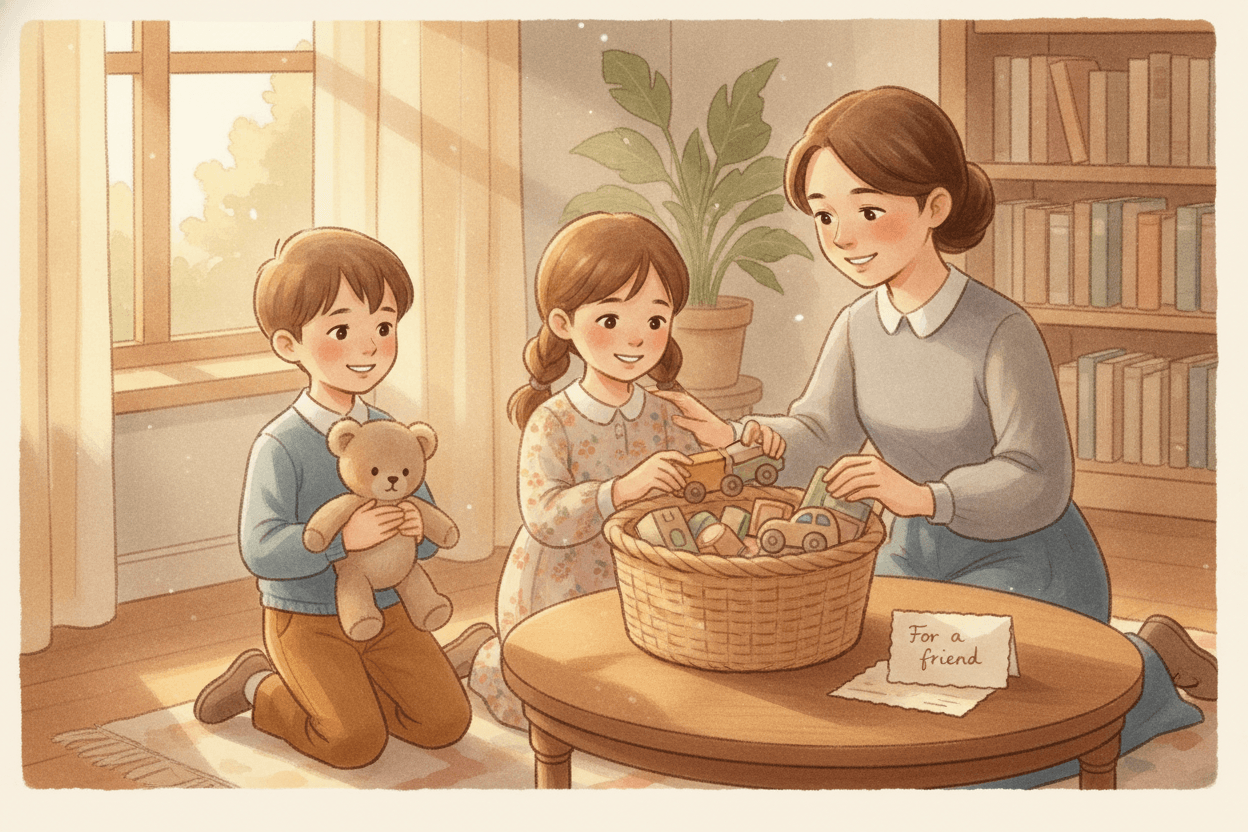
The other night, one of our kids thanked God for macaroni and cheese with great sincerity, then looked at the last scoop in the pot as if it were a matter for the Supreme Court. It was a small opening. We said, “We have enough. Who could we share some food with this week?” The answer was not immediate. That is fine. Children do not need a speech about generosity while their noodles are getting cold. They need to see that a thank-you can lead somewhere.
Gratitude can become an action, not just a list at bedtime. After thanking God for food, let your child help choose a few pantry items for a food drive. After thanking God for a favorite toy, ask whether there is one toy they could lend to a sibling or pass along to another child. After thanking God for a warm home, put a small blanket or coat donation in the car. Keep it concrete. A preschooler can carry the can. A school-age child can help pick the item. Nobody has to be thrilled about giving away the stuffed animal with one ear missing. Progress is progress.
Prayer can also turn our eyes toward people who need help. Pope Francis encouraged parents to help children pray with affection for grandparents, relatives, the sick and suffering, and all those who need God’s help. At our table, that can sound very simple: “Thank you, God, that Grandma is feeling better. Please help Grandpa at his doctor visit.” Or: “Thank you for our healthy bodies. Please help the children in the hospital.” If your child only says, “Help Aunt Maria,” that is a real prayer. Let it stand.
This is one small thing we tried: after each thank-you, we added one “please help.” “Thank you for our dinner. Please help families who do not have enough food.” “Thank you for our friends. Please help Jonah because he is sad.” The pattern helped our kids see that God’s gifts are not meant to stop at our own plate, toy box, or family circle. They also began to notice needs on their own, though usually right when we were trying to get everyone into pajamas.
St. Paul gives the family-sized version of this habit: “Rejoice always. Pray without ceasing. In all circumstances give thanks, for this is the will of God for you in Christ Jesus.” We will not do that perfectly. Some nights, the prayer will be rushed, somebody will be crying, and somebody else will be wearing a colander as a hat. Still, a child who learns to thank God and remember another person is learning a generous way to live. Try one pairing this week: every time your family gives thanks, name one person to help, pray for, or share with.
Rejoice always. Pray without ceasing. In all circumstances give thanks, for this is the will of God for you in Christ Jesus.
Connect the Habit to the Eucharist—Simply
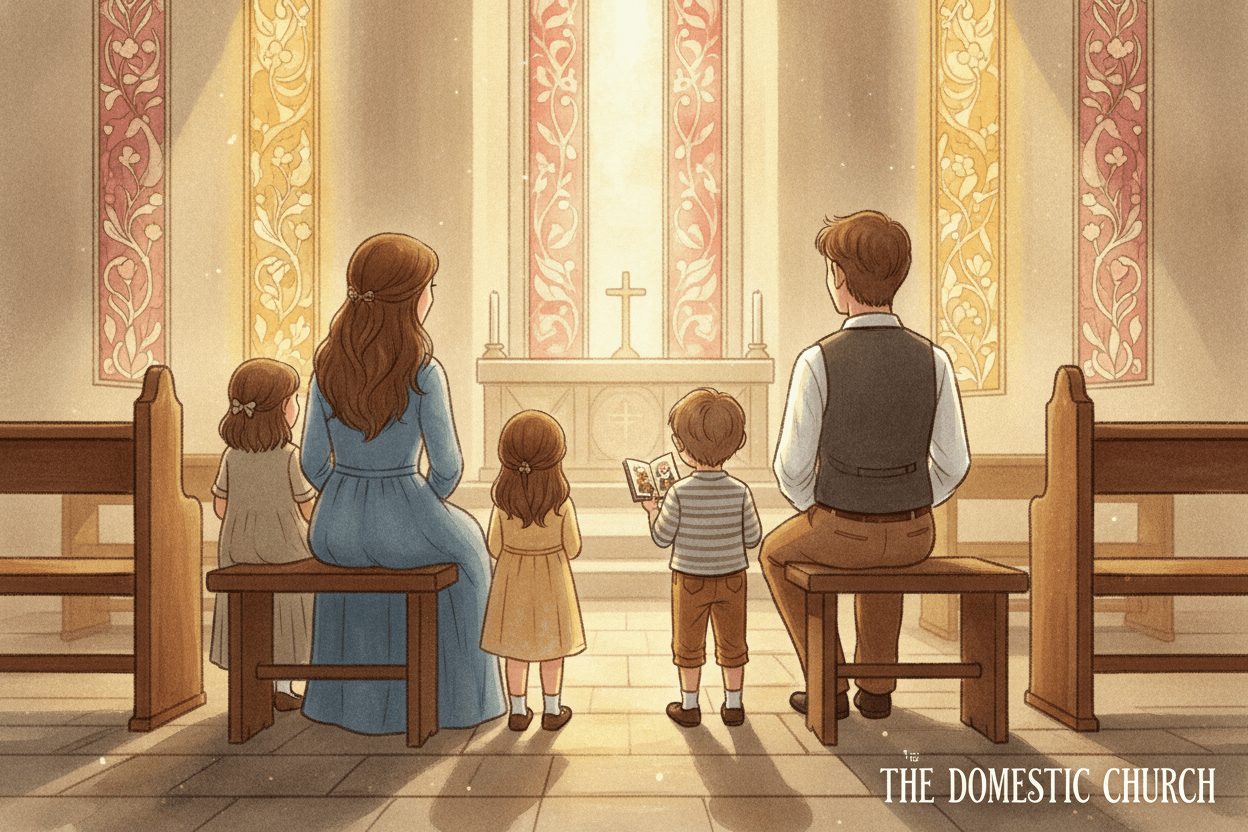
One Sunday, as we were finding our pew with the usual collection of sweater, water bottle, and one mystery crumb in someone’s shoe, a child asked, “Why do we have to go to Mass again?” It was an honest question. The short answer we gave was not, “Because we have to.” We said, “At Mass, we say thank you to God together.” That gave the child something solid to hold onto before the hymns began and somebody needed a bathroom break.
The word Eucharist means thanksgiving. Children do not need a long lesson on that word before they can begin to understand it. They can learn that the Church gathers to thank God for his greatest gifts, especially for Jesus. We thank him for loving us, for dying and rising for us, and for staying close to us. At our table, we might say, “Our little thank-yous this week are practice for the big thank-you we bring to Mass on Sunday.”
Try pointing out the familiar moments they already see. When the priest says, “Let us give thanks to the Lord our God,” whisper the child-sized translation: “Now we are thanking God.” When the family responds, “It is right and just,” explain later in the car, “Yes, it is good to thank him.” Do not worry if your child catches only one sentence. One sentence can stick. And if they are busy studying the back of the missal or dropping a crayon for the fourth time, well, they are still learning what it looks like for a family to come before God.
One small thing we tried was a Sunday ride-home question: “What is one thing you want to thank God for today?” The answers were not always lofty. A donut after Mass. Seeing a friend. Getting to press the elevator button. But those answers opened the door. “Yes, thank God for that. And thank him for giving us Jesus at Mass.” Over time, children start to connect their ordinary joys with the prayer of the whole Church.
Psalm 136 begins with the same plain truth we hope will settle into our children: “Praise the LORD, for he is good; for his mercy endures forever.” Our weekday prayers need not be separate from Sunday Mass. They are little rehearsals in noticing God’s goodness. Then, when your child hears the Church give thanks at Mass, the words will not be entirely new. They will sound like the family language they have been practicing all week.
Praise the LORD, for he is good; for his mercy endures forever.
Try One Week of Everyday Thank-Yous
Last Tuesday, one child was buckled into the car, the other was looking for a shoe that was somehow under the pantry shelf, and we were already late. Not exactly the setting for a peaceful family prayer moment. But before I started the car, I said, “Thank you, God, that we get to go see Grandma.” One child echoed it. The other asked if Grandma would have snacks. Honestly, both responses felt about right.
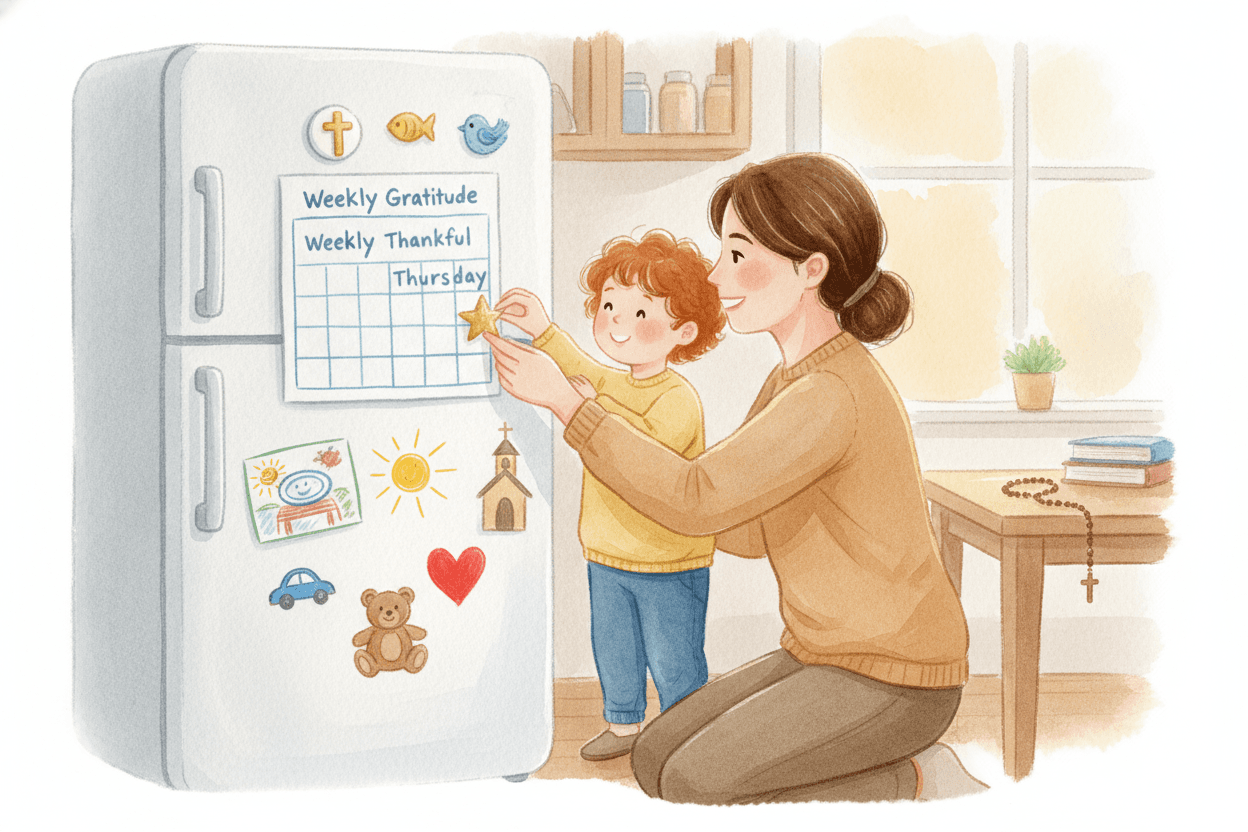
If daily gratitude has felt like one more thing to manage, try a week of small thank-yous instead. No chart required. No long discussion. Pick one ordinary moment each day, say one sentence together, and move on with life. The point is not to produce a child who looks deeply moved by a banana or a clean sock. The point is to help them notice that good things are received, and that we can answer the Giver.
Here’s what landed for us: Monday, at a meal, say, “Thank you, God, for this food and the people who made it.” Tuesday, in the car, say, “Thank you, God, for getting us where we need to go.” Wednesday, step outside and thank God for one thing you see: sunshine, rain, a bird, even the enormous puddle that apparently must be jumped in. Thursday, after someone helps, say, “Thank you, God, for people who help us,” and thank that person too. Friday, when a child gets a toy, treat, or turn with something fun, pray, “Thank you, God, for this gift; help me share it well.” Saturday, name someone who needs help: “Thank you, God, for caring for us. Please help Grandpa feel better.” Sunday, after Mass or on the way home, say, “Thank you, Jesus, for bringing us together to pray.”
Keep the sentence short enough that little voices can join in. If your child is tired, silly, grumpy, or fully committed to making spaceship noises during the prayer, do not turn gratitude into a test. Say the words calmly anyway. They are listening more than it seems. One small thing we tried was letting each child choose the thing or person to thank God for. The answers were sometimes tender, sometimes wildly random, and both were welcome. Try the seven days this week, then notice which moment your family naturally remembers. That may be the small opening worth keeping.
Frequently asked questions
How can I teach my preschooler to thank God every day?
Use very short prayers in moments that are already happening, such as meals, car rides, bath time, or playtime. Point to one visible gift and say, “Thank you, God, for this food,” or “Thank you, God, for sunshine.” For ages 3 to 5, a few seconds of prayer is enough.
What should I say when my child does not know what to be thankful for?
Avoid broad questions that may feel overwhelming, especially when your child is tired. Instead, name something they can see or hold: “Can we thank God for these grapes?” Over time, invite them to point out the gift themselves.
Can gratitude prayers be simple, or do they need to be formal?
Simple prayers are a good place to begin. A child can pray, “Thank you, God, for my blanket,” “Thank you for my friend,” or “Thank you, God, for breakfast.” The goal is to help children recognize God as the giver of ordinary good things, not to make their prayers sound polished.
How do I help my child thank both God and other people?
Teach children to thank the person who helped them while also thanking God for the gift. For example, after a neighbor returns a package, say, “Thank you for helping us,” and then pray, “Thank you, God, for people who help us.” This shows that God often provides through other people’s care and work.
How can family gratitude prayer lead children to care for others?
After noticing a gift, offer one small response of generosity or intercession. A child can share a snack after thanking God for it, take turns with a toy, or pray for someone sick after being grateful to feel better. Gratitude becomes more than words when it helps children love their neighbor.
What is a simple bedtime gratitude prayer for kids?
Ask each child to name one good thing from the day, such as pancakes, a friend, or a Band-Aid. Then pray together: “Thank you, God, for pancakes and for our day. Please help anyone who is sick or sad tonight.” Keep their answer welcome, even if it seems small or silly.
Sources: vatican.va · vatican.va · press.vatican.va · press.vatican.va · catholic.com · shop.catholic.com · vatican.va · press.vatican.va
Scripture quotations in this article use the NABRE translation.