A Six Days of Creation Devotional for Young Kids
Slow the week down with six brief Genesis 1 devotions, each centered on a day of creation and a simple family practice. Discover how noticing light, sky, land, creatures, and rest can reshape ordinary
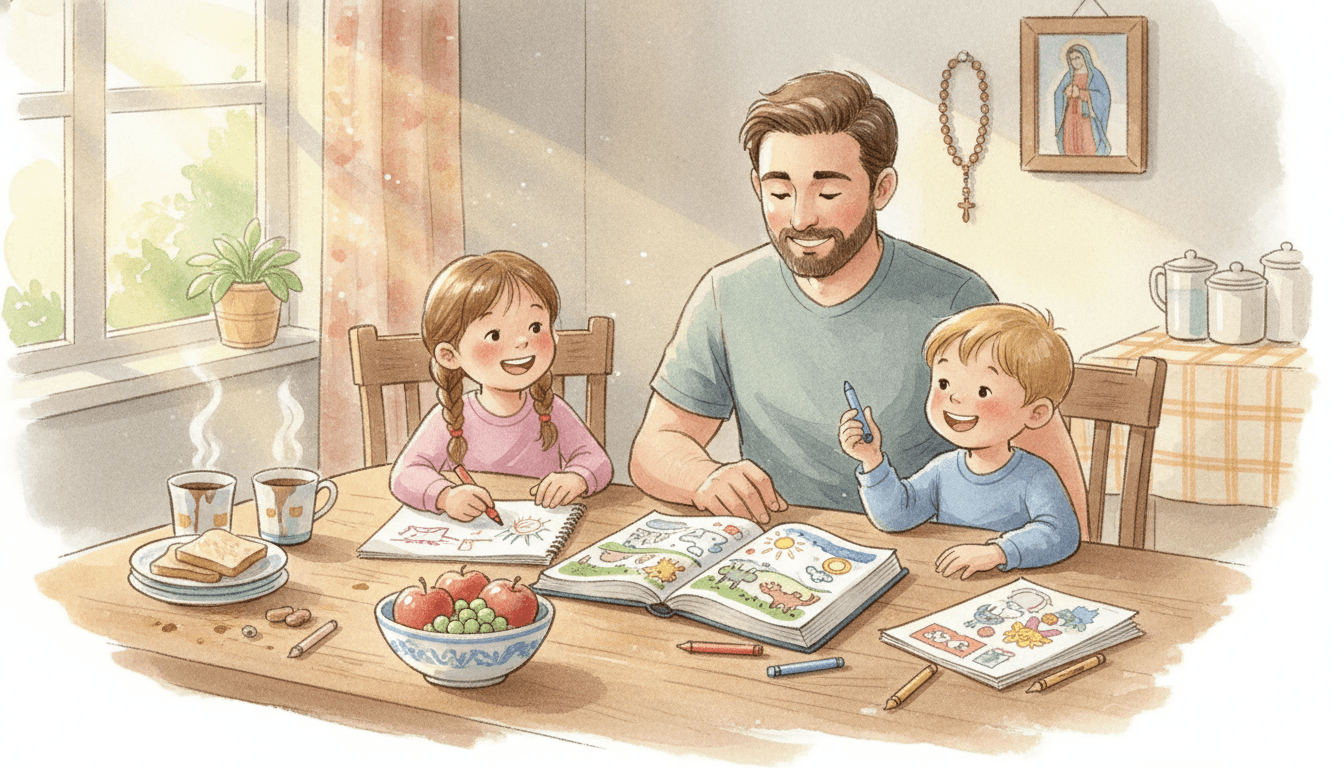
By breakfast, somebody has spilled milk, somebody cannot find a shoe, and the day is already moving too fast. This little Genesis 1 rhythm gives your family six small pauses to notice what God made good—then a Sunday pause to rest with him.
Keep the Week Small, Not Perfect
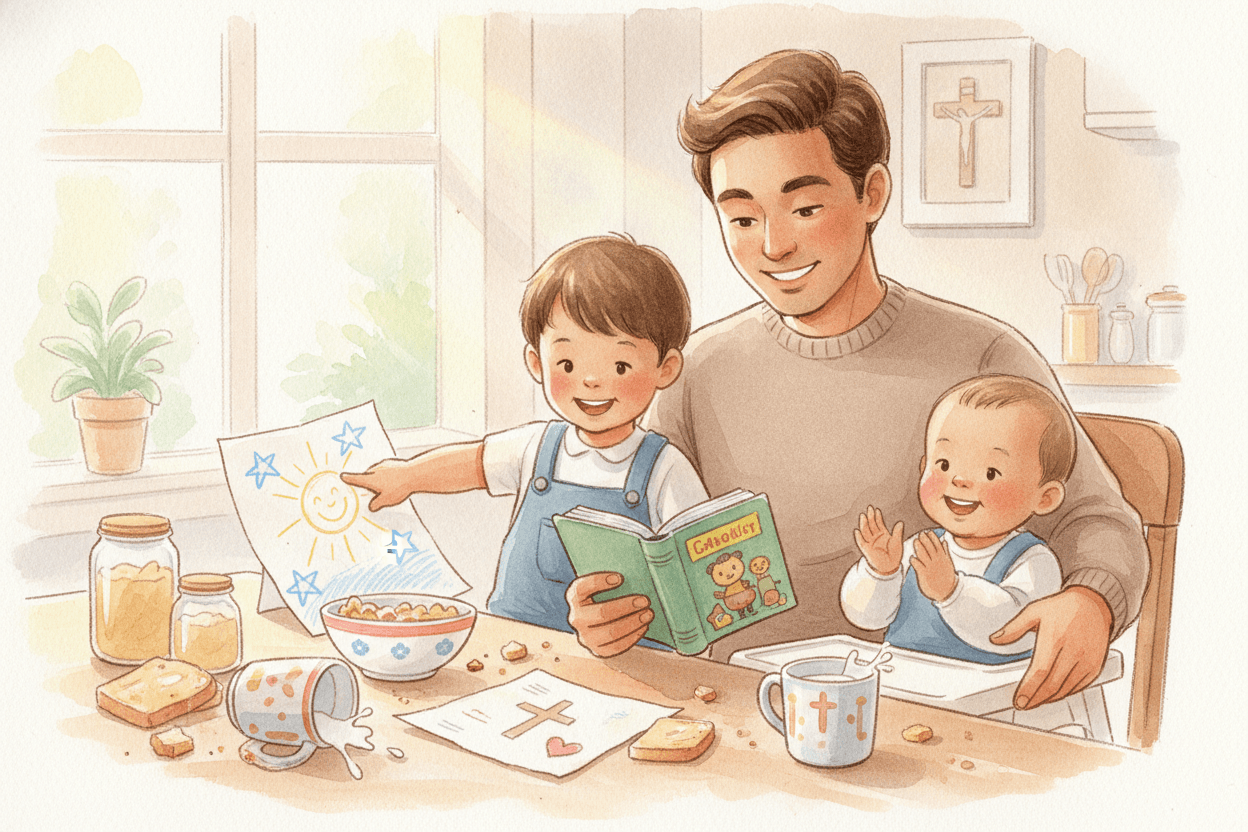
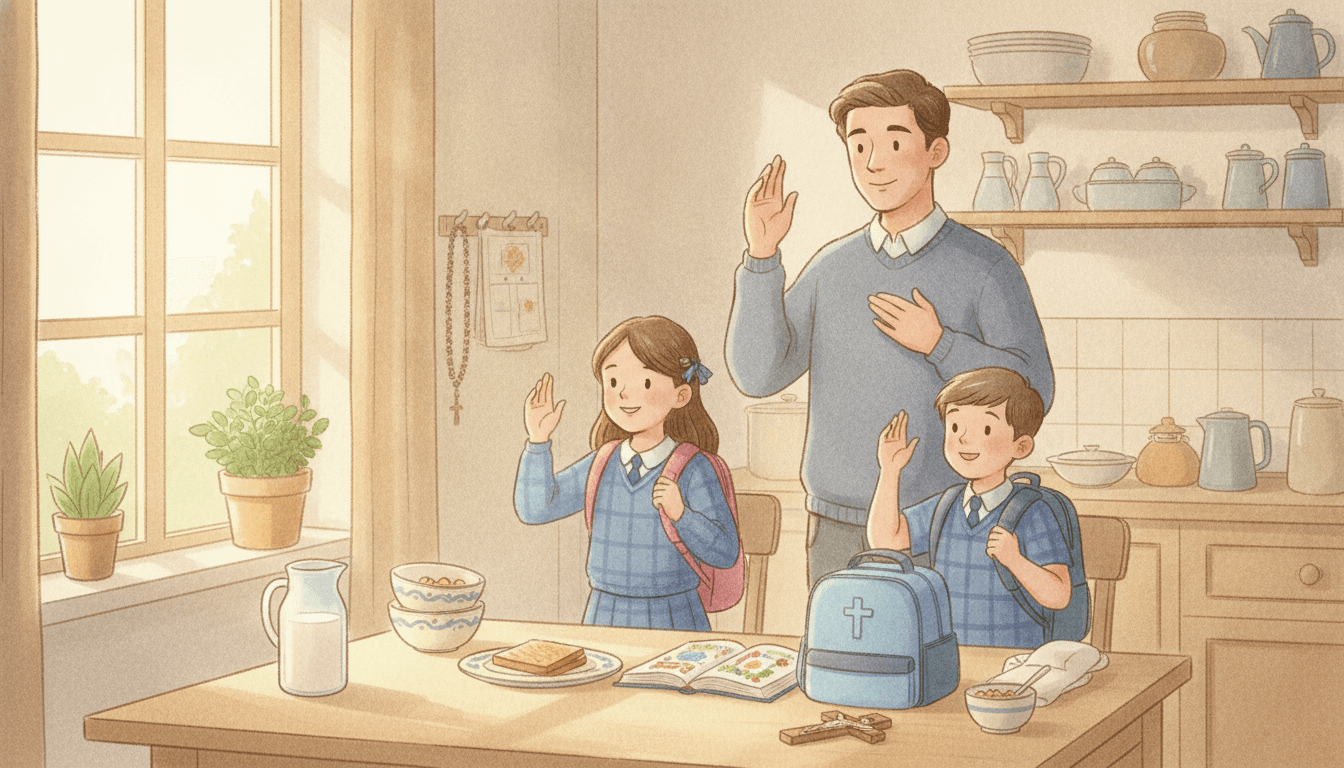
By 7:42 on a Tuesday morning, somebody had spilled cereal, somebody else could not find a shoe, and I was already wondering if family prayer had missed its chance. It had not. A creation devotional does not need a clean table, a color-coded craft, or a trip to the store for supplies you will use once and then step on later. It can take five minutes. Really. Read one line, notice one thing God made, say thank you together, and move on with the day.
Keep the week small. On the first day, turn on a lamp or open the curtains and thank God for light. Another day, look out the window at clouds, rain, or a glass of water. Then notice a plant, the moon, a dog on the sidewalk, or the very loud child asking for a second breakfast. Each day gives your child one concrete piece of the world to notice. You are not trying to cover every question they may someday ask about dinosaurs, galaxies, or how plants grow. Those questions can come later—and they probably will, usually while you are buckling a car seat.
Catholics do not receive Genesis 1 as a science timetable squeezed into six ordinary days. Scripture presents God’s work in a poetic order: six days of divine work, followed by rest. The point is not to make our kids pass a quiz. The point is to let them hear, again and again, that God made a world with goodness, order, and love. Light is good. Water is good. Plants and animals are good. People are good. That is a sturdy truth for a little heart.
At our table, one small thing we tried was a simple question: “What did God make that you saw today?” The answers were not always majestic. “A blue truck.” “My sandwich.” “The bug Daddy put outside.” Fine by me. A child who learns to notice receives the world as a gift instead of as background noise. Follow their answer with a short prayer: “God, thank you for making ___.” Let the pauses be short. Let the wiggling happen. God is not grading the presentation.
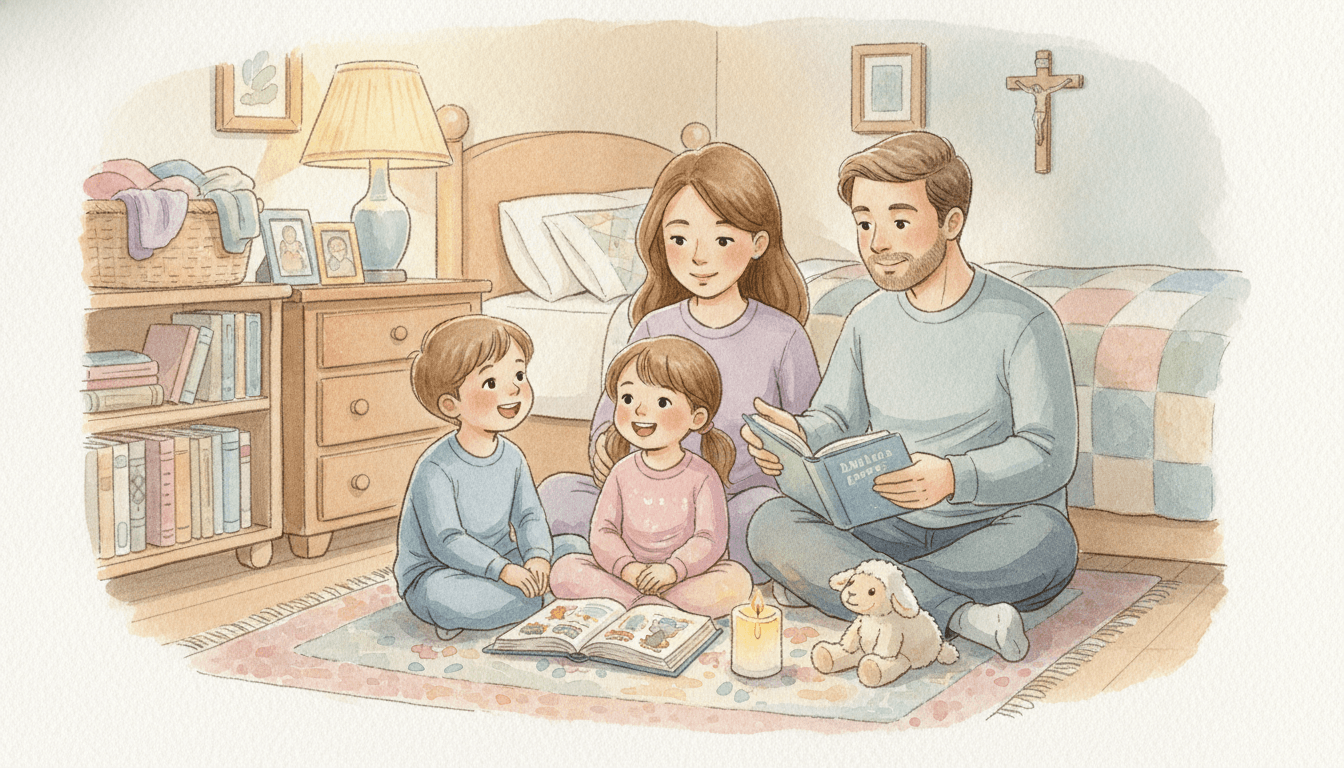
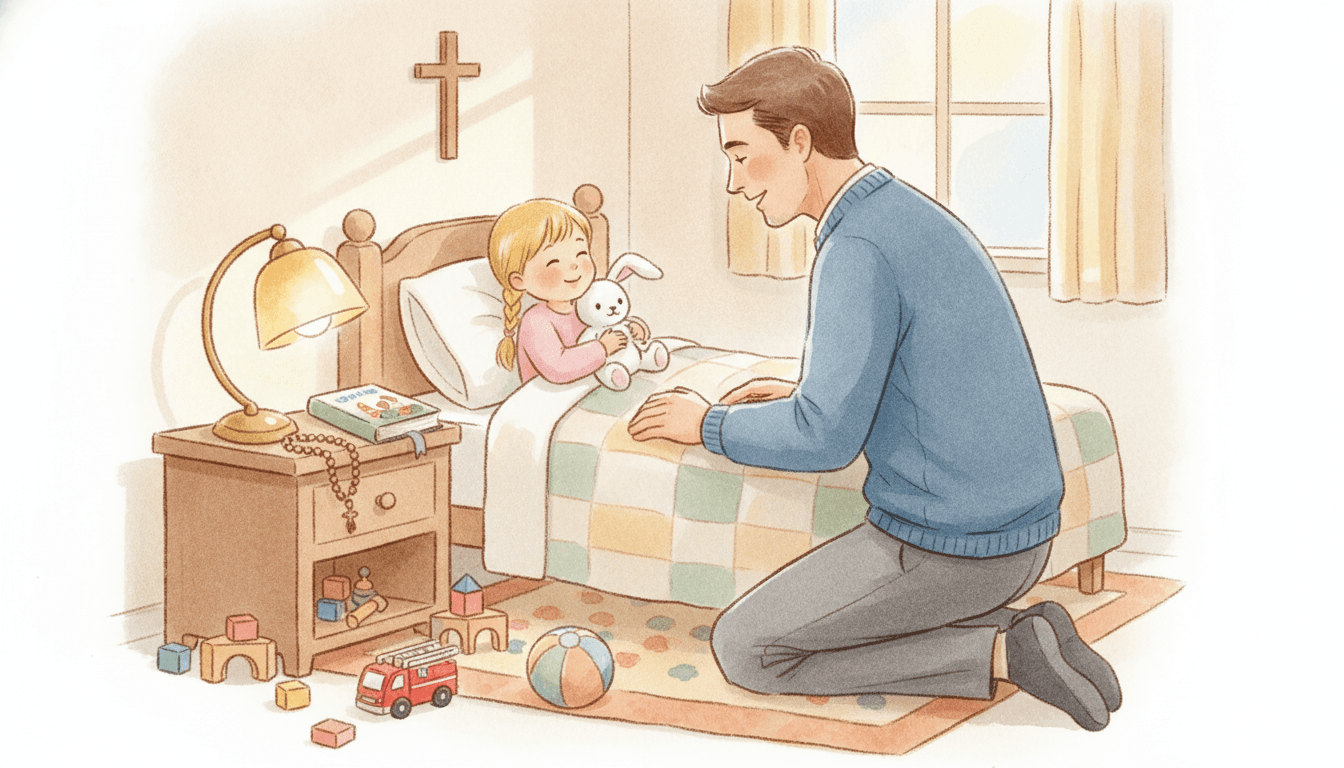
Begin wherever you are. If you miss a day, pick it up tomorrow; creation will still be there. If bedtime is a disaster, say one sentence in the dark: “God made this good world, and God made you.” The steady habit matters more than getting the sequence right. Here’s what landed in our house: children do not need us to make faith complicated. They need us to make room for it in the ordinary mess of family life.
In the beginning, when God created the heavens and the earth—
Monday and Tuesday: Thank God for Light, Sky, and Water
Monday morning usually arrives before anybody in our house is ready for it. A child calls from a dark room. Someone cannot find a sock. The kitchen light clicks on, and suddenly there are crumbs, backpacks, and faces to see. That little click is enough for the first day: God made light. You do not need a craft bin or a color-coded plan. Just pause by a lamp, at the window, or beside a sleepy child’s night-light. Say the memory words together: “Let there be light.” Then ask, “What good thing can we see because God made light?” Let the answers be wonderfully ordinary: my cereal, the dog, my brother’s silly pajamas, the trees. Genesis begins with God speaking light into the darkness, and calling it good. Our children can learn that the good things they notice did not begin with us rushing around to make breakfast.
Keep Monday’s prayer to one sentence. Try: “Thank you, God, for the light that helps us see.” If your child adds seventeen more things to thank God for, great. If he answers by licking the spoon, that is also fairly normal for a weekday morning. The point is not a polished family prayer time. It is helping the child in front of you connect a real thing he sees with the God who made it.
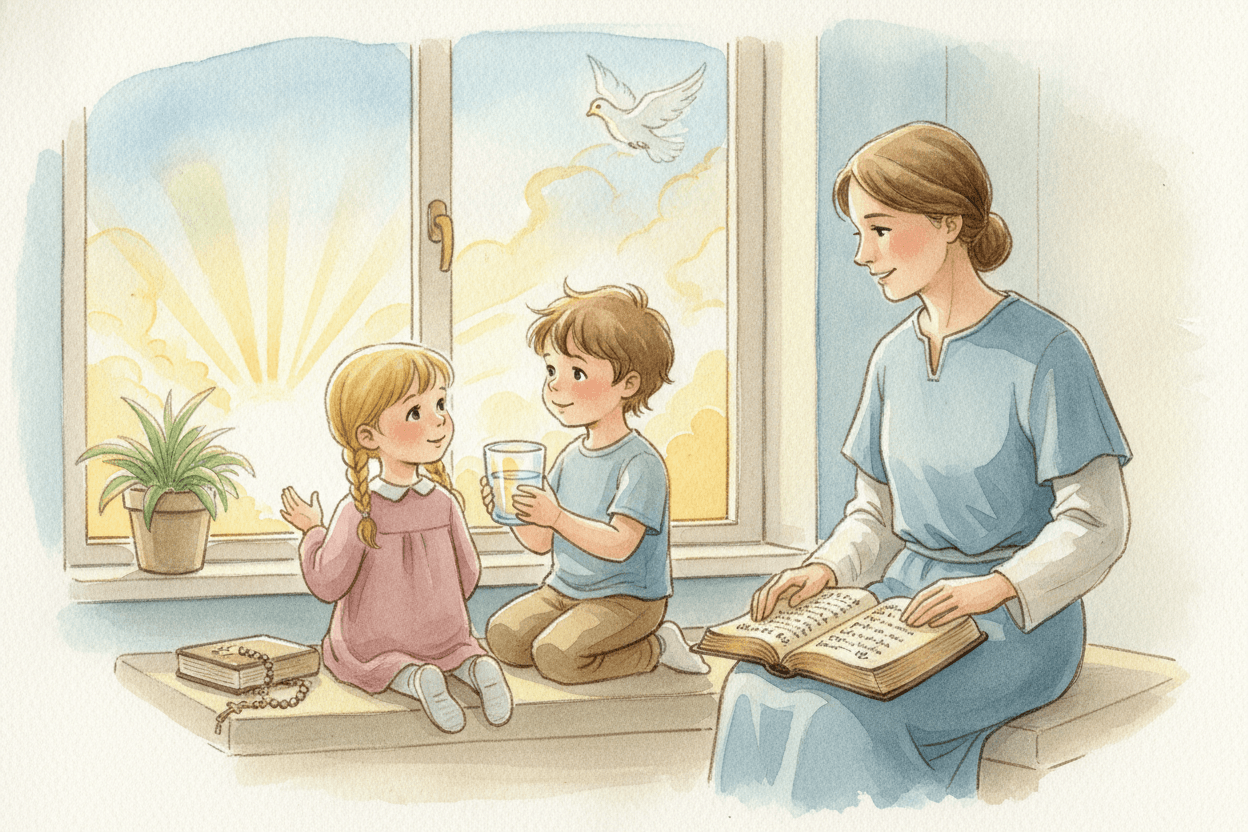
On Tuesday, let the window do most of the teaching. Point up at the sky while you buckle a car seat. Notice clouds on the walk to preschool. At bath time, let your child splash a hand in the water, or invite her to slowly fill a cup at the sink. In Genesis, God makes the space of the sky and orders the waters. For a young child, the big idea can stay simple: God made the sky over us and the water we use every day. Use a short memory phrase based on Genesis 1:6: God made the dome. Then ask, “Where do you see sky or water today?” A puddle counts. A drinking fountain counts. The blue patch between clouds counts.
Here’s what landed for us: children often notice more when we stop giving the answers first. Wait a few seconds after the question. Look with them. You may hear about rain, the bathtub, a fish tank, or the water bottle that has been rolling under the van seat since last Thursday. Receive the answer with a smile, then end with one sentence: “Thank you, God, for the sky and water.” These two small pauses teach something steady. The world is not just background noise to our busy family life. It is God’s good gift, waiting to be noticed.
Then God said, "Let there be light," and there was light. God saw that the light was good. God then separated the light from the darkness.
Wednesday and Thursday: Find God’s Care in Plants and the Sky
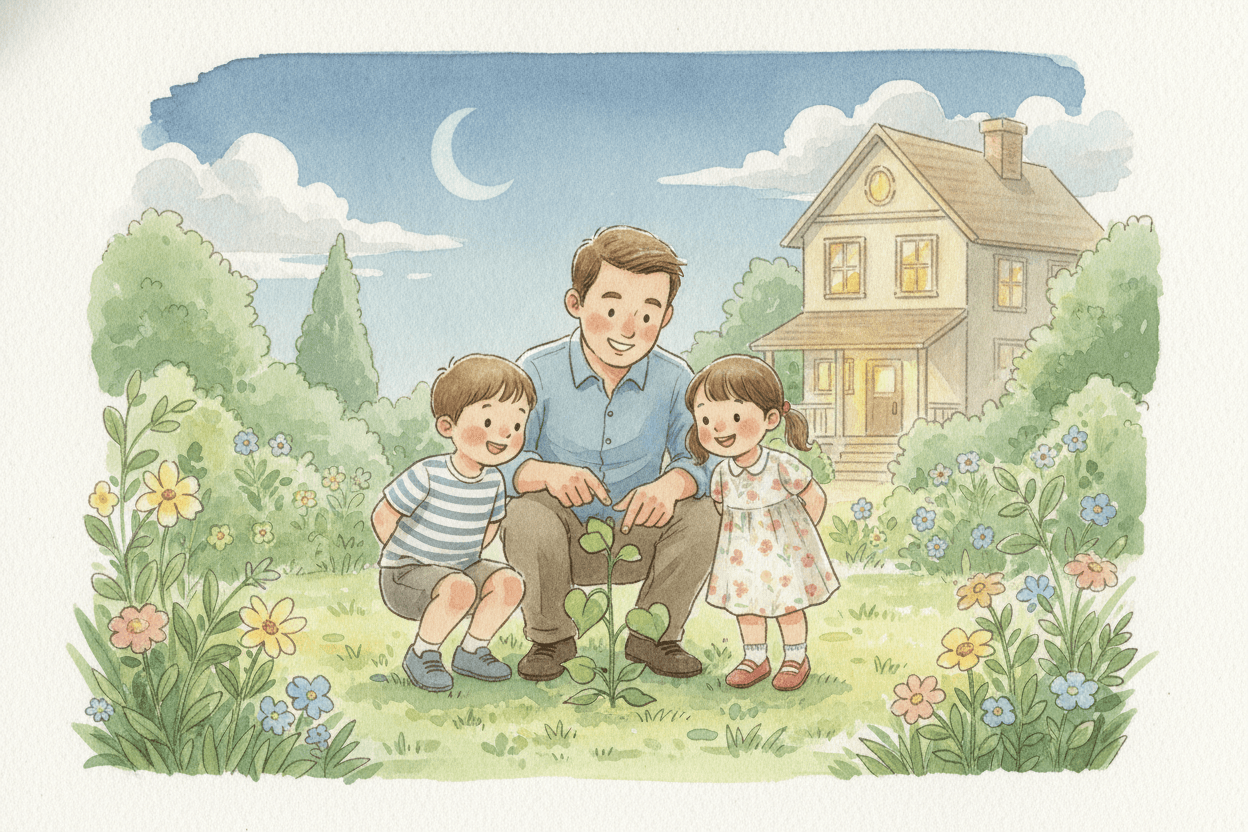
On Wednesday morning, a child can turn a grocery-store banana into a major discovery. At our table, that has happened more than once. Somebody notices the little brown spots, somebody else insists bananas grow in our backyard, and breakfast takes a detour. Let it. Day 3 is made for this kind of holy interruption. Pick up a piece of fruit, look at the grass by the driveway, or inspect the houseplant that has somehow survived another week. God made growing things. He called them good.
Keep the activity simple. Ask each child to notice one detail: the veins on a leaf, the seeds inside an apple, the smell of basil, the yellow of a dandelion. Then say the Day 3 memory line together: “God saw that it was good” (Genesis 1:12). You do not need a craft, a worksheet, or a perfect answer. Just ask, “What plant can we thank God for today?” A child may say strawberries. Another may say the giant weed by the fence. Both answers count.
Thursday can begin at the kitchen window and end outside after dinner, preferably before everyone gets too tired and somebody remembers they need water right now. Look for the moon. Look for one star, if the clouds and porch lights allow it. Genesis tells us that the lights in the sky mark the days and seasons. For little children, that truth lands in familiar ways: the sun helps us know it is morning; the moon comes out when bedtime is getting close; the changing sky tells us rain may be coming.
Read one short line, then look up: “Then God said: ‘Let there be lights in the dome of the sky, to separate day from night. Let them mark the seasons, the days and the years,’” (Genesis 1:14). Ask, “What do the sun and moon help us do?” You might hear, “Play outside,” “Go to sleep,” or “Know when Christmas is coming.” Here’s what landed in our house: God did not make a confusing world and leave us to figure it out alone. He made a world with rhythms we can see.
End both days with the same small prayer: “God, thank you for the plants that feed us and the sky that guides our days. Help us see that your creation is good.” That is enough. Children learn gratitude one ordinary object at a time—a leaf in a small hand, a moon over the mailbox, a banana getting softer on the counter.
Then God said: "Let there be lights in the dome of the sky, to separate day from night. Let them mark the seasons, the days and the years,"
Friday and Saturday: Animals, People, and the Big “You Matter”
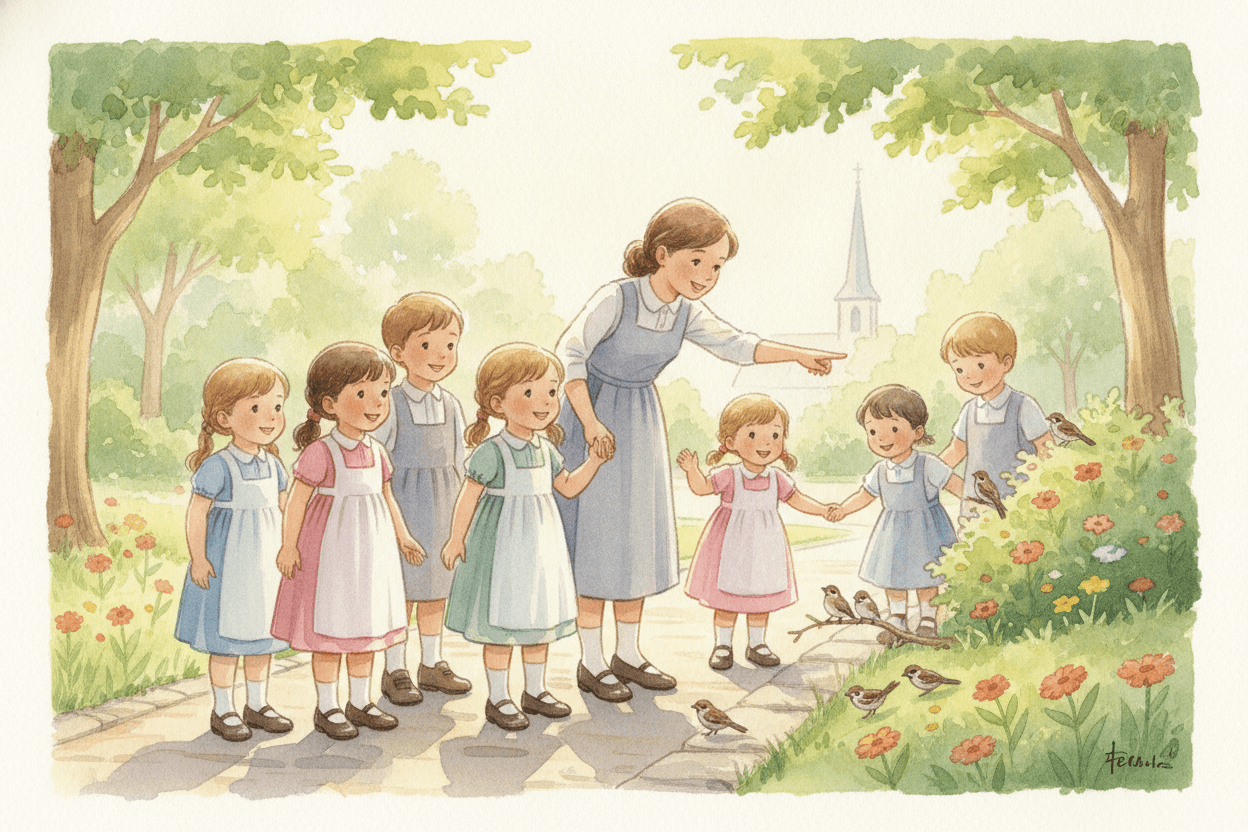
Friday can begin with a bird on the fence, the dog barking at absolutely nothing, or a child making his best lion sound before breakfast. In our house, animal noises tend to multiply fast. Let them. Day 5 is a good day to notice the creatures God made: fish, birds, and all the animals that creep, fly, swim, hop, and occasionally shed on the couch. On a short walk, ask your kids to spot three animals or signs of animals. A feather counts. An ant counts. Even the suspicious squirrel raiding the bird feeder counts.
Keep the memory verse small: “God saw that it was good” (Genesis 1:21). Say it when you see a bird lift off or when your child points out a bug with more excitement than you can quite match. Then ask, “Which animal makes you smile, and why?” There is no wrong answer. Maybe it is a goofy-looking pug. Maybe it is a giraffe because its neck is ridiculous. Their answer is a doorway into gratitude: “Thank you, God, for making animals.”
Saturday slows the pace a little. After spending a day looking at animals, we come to people. Not people who are fast, helpful, clean, or easy to get along with. People. Every child at your table. The sibling who grabbed the blue cup. The neighbor who seems lonely. The cashier whose name you do not know. God made human beings in his image. That means each person carries a dignity no report card, bad mood, disability, popularity contest, or messy mistake can take away.
One small thing we tried was looking each child in the eye at bedtime and saying, “You are made by God. You matter to Him.” It took about five seconds. It also felt a little awkward the first time, which is usually a sign that something important is happening. Let your child say the Day 6 memory verse with you: “God created mankind in his image” (Genesis 1:27). Then ask, “How can we show that someone is precious to God today?” Help them choose one plain answer: share a toy, make a card, include someone, refill the pet’s water, or speak without shouting. Yes, parents can choose that one too.
This is also a gentle way to teach care for the world God made. We care for animals because they are God’s good creation. We pick up our trash, treat pets kindly, and do not crush every bug simply because we can. But there is no need for a heavy lecture. Begin with thanks. God made this good world, and He made the people in it in his image. Here’s what landed for our kids: caring is not scary work. It is one way of saying, “Thank you, God, for what You made.”
Then God said: "Let us make human beings in our image, after our likeness. Let them have dominion over the fish of the sea, the birds of the air, the tame animals, all the wild animals, and all the creatures that crawl on the earth." God created mankind in his image; in the image of God he created them; male and female he created them.
Sunday: Let Sabbath Be the Last Lesson
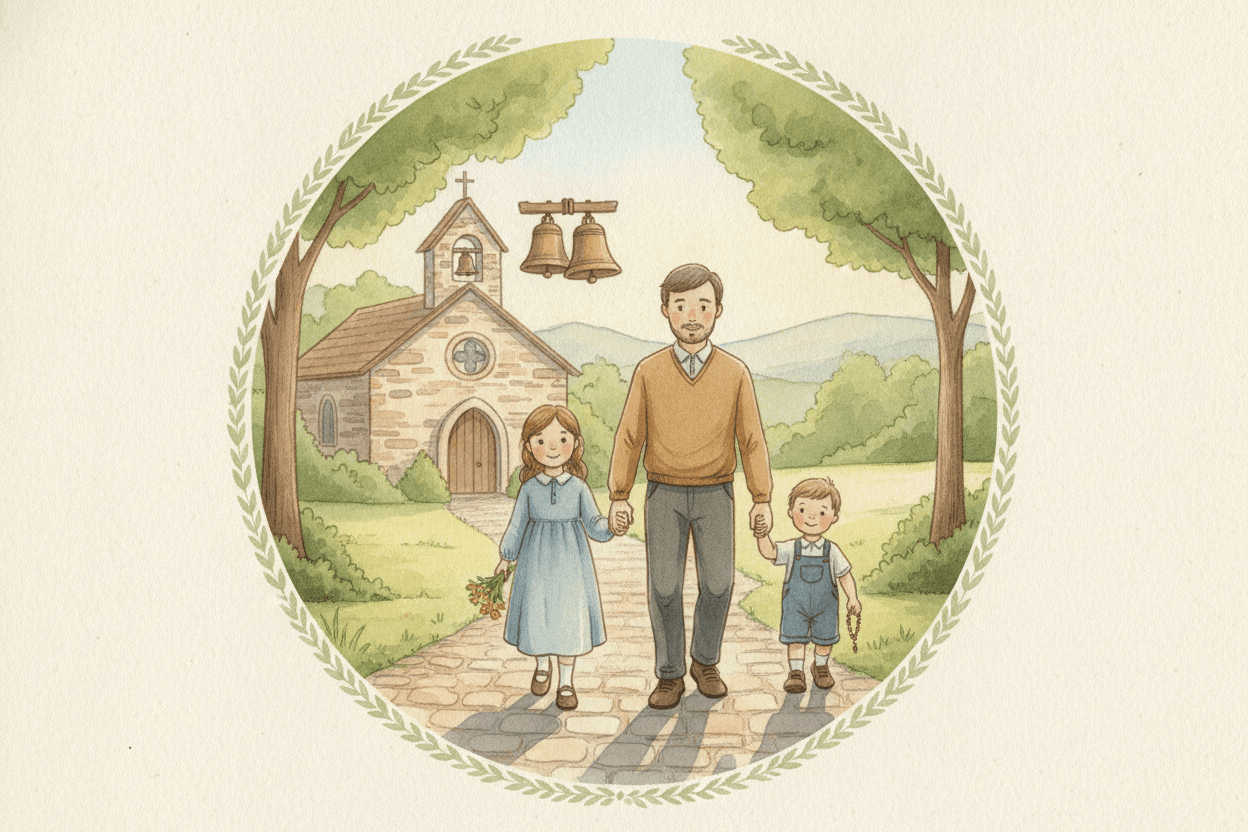
By Sunday afternoon, someone in our house is usually still wearing one sock, the kitchen has a small mountain of cups, and I am tempted to call the whole week a win if nobody spilled juice during breakfast. That is exactly why the last lesson matters. The point of walking through God’s creation is not to finish six little activities and earn a gold star from the family devotional police. The point is to notice that God made rest part of the plan.
God did not make a world that runs on endless hurry. After the work of creation, he blessed a day and made it holy. For young children, the memory verse can be wonderfully simple: “God blessed the seventh day and made it holy.” Ask, “What helps our family rest with God?” Their answers may be honest and slightly surprising: pancakes, no school, snuggling the dog, going to Mass, or not having to clean their room right this minute. Let them talk. Then connect those good gifts to the God who gives them.
Sunday Mass is the center of this rest for us as Catholics. We gather because Jesus rose from the dead on Sunday. His Resurrection began the new creation. That is a big truth, but it can land in a small way: Jesus is alive, and we belong with him. After Mass, try protecting one unhurried pocket of the day. Eat a meal that does not need to be fancy. Take a walk and point out one thing God made. Put away the screens for ten minutes. Say a short prayer before bedtime: “Thank you, God, for our week. Help us rest with you.” One small thing we tried was letting each child name one favorite creation from the week before that prayer. It took about two minutes, unless somebody chose “all dinosaurs” and needed a follow-up discussion.
Rest will not always look peaceful. A toddler may melt down before lunch. The baby may skip the holy nap. You may spend part of Sunday folding laundry because life is life. Still, we can receive the day instead of treating it as another race. At our table, that might mean lingering after a meal long enough to hear one story from each child. It might mean choosing gratitude over getting everything done. God calls his creation good, and he calls us to rest in his goodness too. That is a lesson worth carrying into Monday.
On the seventh day God completed the work he had been doing; he rested on the seventh day from all the work he had undertaken. So God blessed the seventh day and made it holy, because on it he rested from all the work he had done in creation.
Try This Creation Week at Your Table
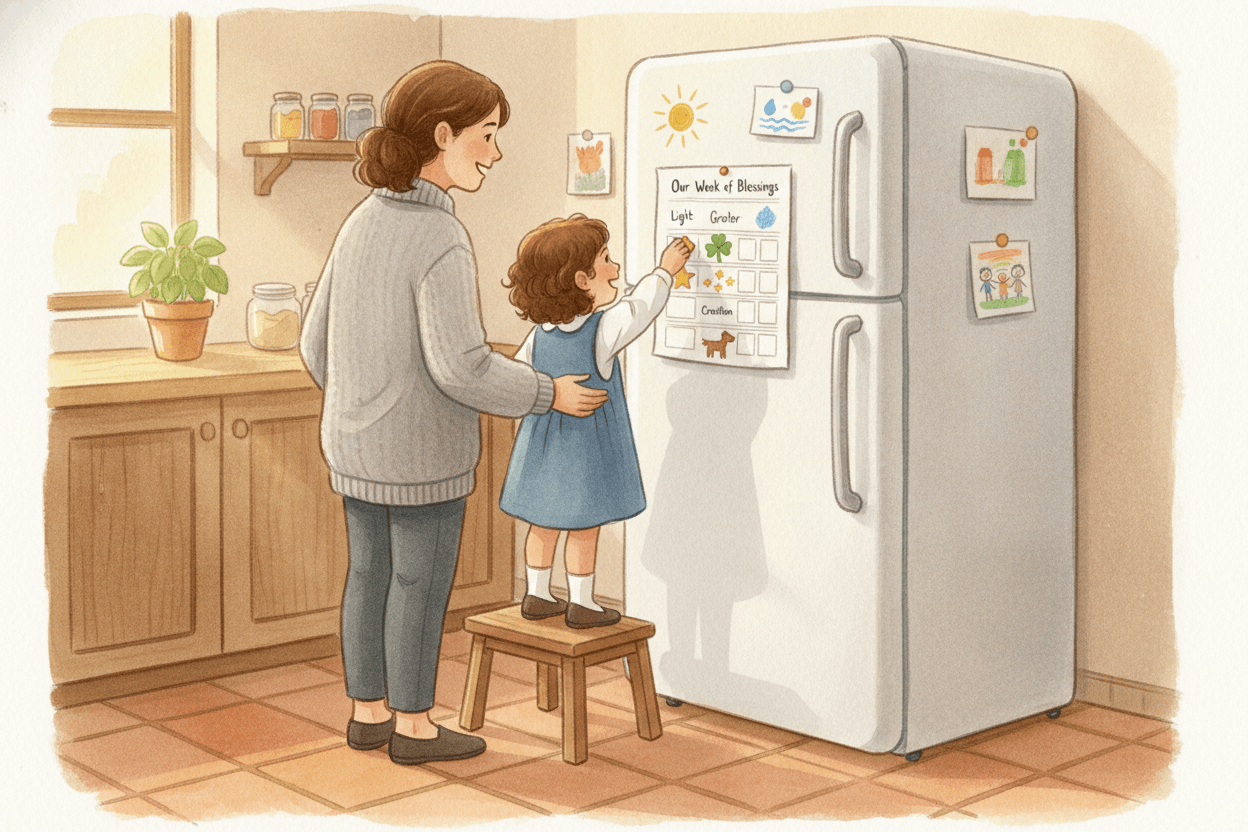
Last Tuesday, dinner was late, someone had dropped peas under the table, and our youngest was asking why the moon followed the car. It was not the kind of evening that makes you think, “Now we will have a meaningful family devotional.” But that question about the moon was enough. We thanked God for the sky, said a quick prayer, and moved on to baths. That counts.
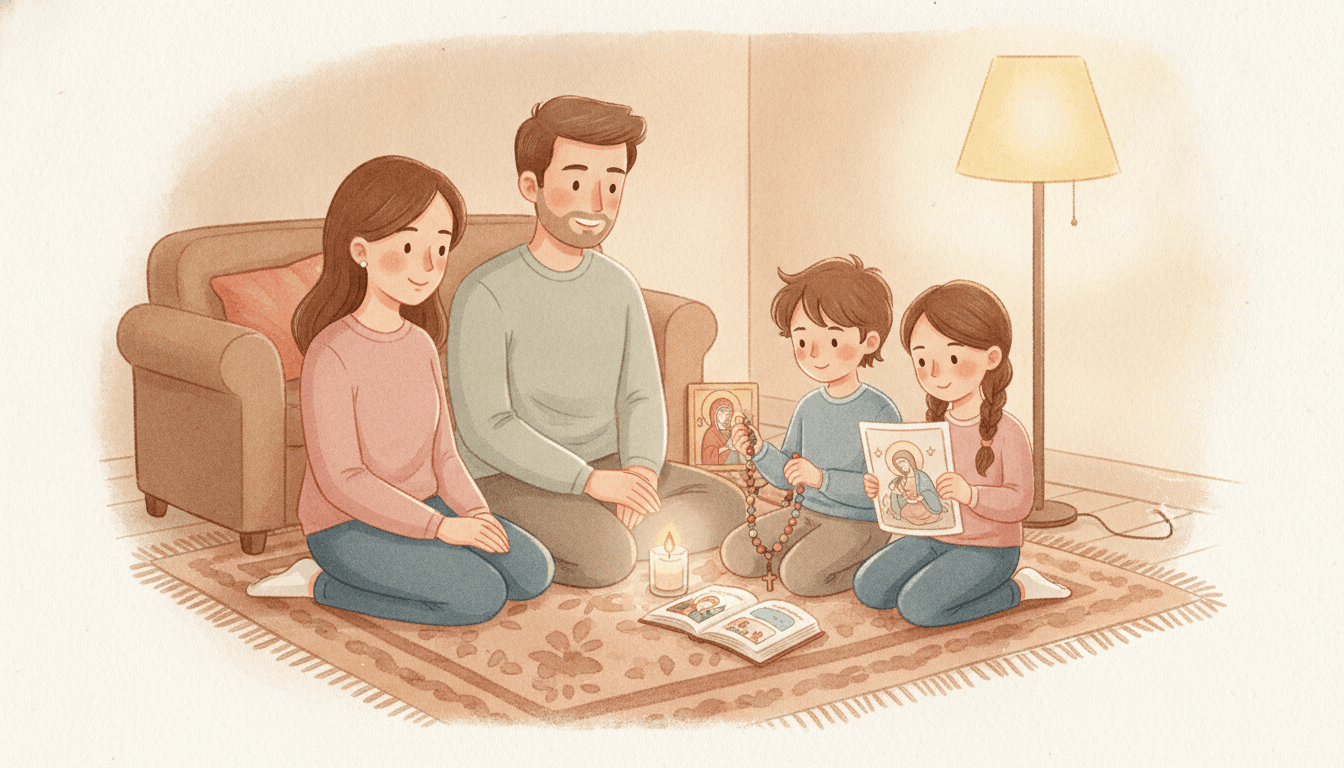
For this week, pick one regular moment you already have: breakfast, the ride to school, after dinner, or the two minutes before lights out. Do not add a complicated craft unless your family genuinely enjoys that sort of thing. One small thing we tried was putting the Bible on the kitchen table all week. Its presence helped us remember. When we forgot, we simply started again the next day. No guilt. No catching up.
Each day, read one short line from Genesis 1 in your Bible. Then ask one wonder-question. On the day of light, ask, “What light are you thankful for today?” For sky and water, try, “What did you see outside that God made?” For plants, sun, moon, stars, animals, and people, keep the questions just as simple. Let your child answer “my night-light,” “a dinosaur,” or “Daddy,” and resist the urge to improve the answer. Here’s what landed with our kids: God made it, God called it good, and we can thank him.
Finish with one sentence of prayer: “Thank you, God, for light.” “Thank you, God, for water.” “Thank you, God, for making people in your image.” If your child wants to add twelve more things, wonderful. If he says nothing because he is busy folding his napkin into a suspicious-looking airplane, that is okay too. You are building a small family rhythm, not staging a perfect lesson.
When life gets noisy again—and it will—come back to the same six days. Repetition is not boring to young children; it is how the words begin to feel like home. If pictures help your child pay attention, the BibleHeroes Creation comic can sit beside the open Bible as a visual companion. Read the line, look at the picture, ask the question, say thanks. At our table, that is enough for a week: a few ordinary minutes helping the kid in front of us notice that God’s world is good.
Frequently asked questions
How can I do a Genesis 1 devotional with young children when mornings are hectic?
Keep it to about five minutes: read or repeat one short line, notice one created thing, and pray one sentence of thanks. Use what is already in front of you—a lamp, the sky, a banana, or a pet—rather than adding crafts or supplies. The goal is a small, repeatable pause, not a polished lesson.
What should we do on each day of a six-day creation devotional?
Move through one part of creation each day: light; sky and water; plants; the sun, moon, and stars; animals; and people. Invite children to spot an example in daily life and thank God for it. On Sunday, set aside a quieter pause to remember that God rested and to rest with him.
How do Catholics understand the six days of creation in Genesis?
Catholics do not have to treat Genesis 1 as a scientific timetable made of six ordinary 24-hour days. The chapter uses a poetic pattern of God creating and calling creation good, followed by rest. For children, the central truth is that God made the world with order, goodness, and love.
What can I say for a simple family prayer about creation?
Start with a question such as, “What did God make that you saw today?” Then pray, “God, thank you for making ___.” For example, on the first day you might say, “Thank you, God, for the light that helps us see,” or after noticing rain, “Thank you, God, for the sky and water.”
Do I need to follow the Genesis creation days in order?
No. The devotional is meant to fit ordinary family life, so you can begin wherever you are and continue the next day if you miss one. A short bedtime reminder—“God made this good world, and God made you”—still helps build the habit. Steadiness matters more than completing every activity in sequence.
How can I answer my child’s big questions about Genesis, dinosaurs, or space?
You do not need to solve every question during the devotional. Receive their curiosity, answer simply when you can, and return to the day’s main idea: the world is God’s good gift. The practice is meant to help children notice and thank God, while leaving room for deeper questions as they grow.
Sources: bible.usccb.org · catholicculture.org · usccb.org · catholic.com · pewresearch.org · aleteia.org · catholicculture.org · files.kofc.org · catholicspirit.com · usccb.org
Scripture quotations in this article use the NABRE translation.