A Year of Feast Days at Home Kids Will Remember
Discover simple ways to celebrate Catholic feast days at home, from blessing pets to baking traditional treats. These memorable rituals help children recognize the Church’s calendar as a joyful rhythm
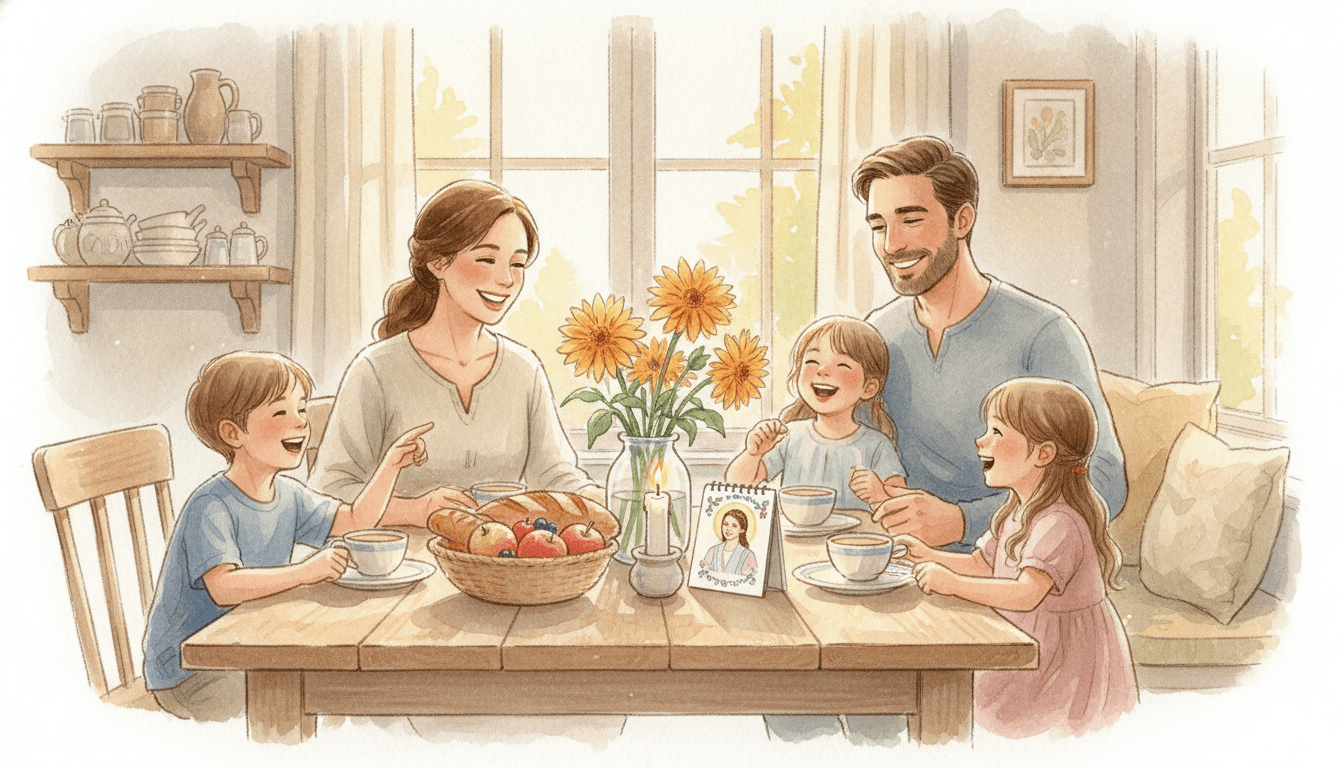
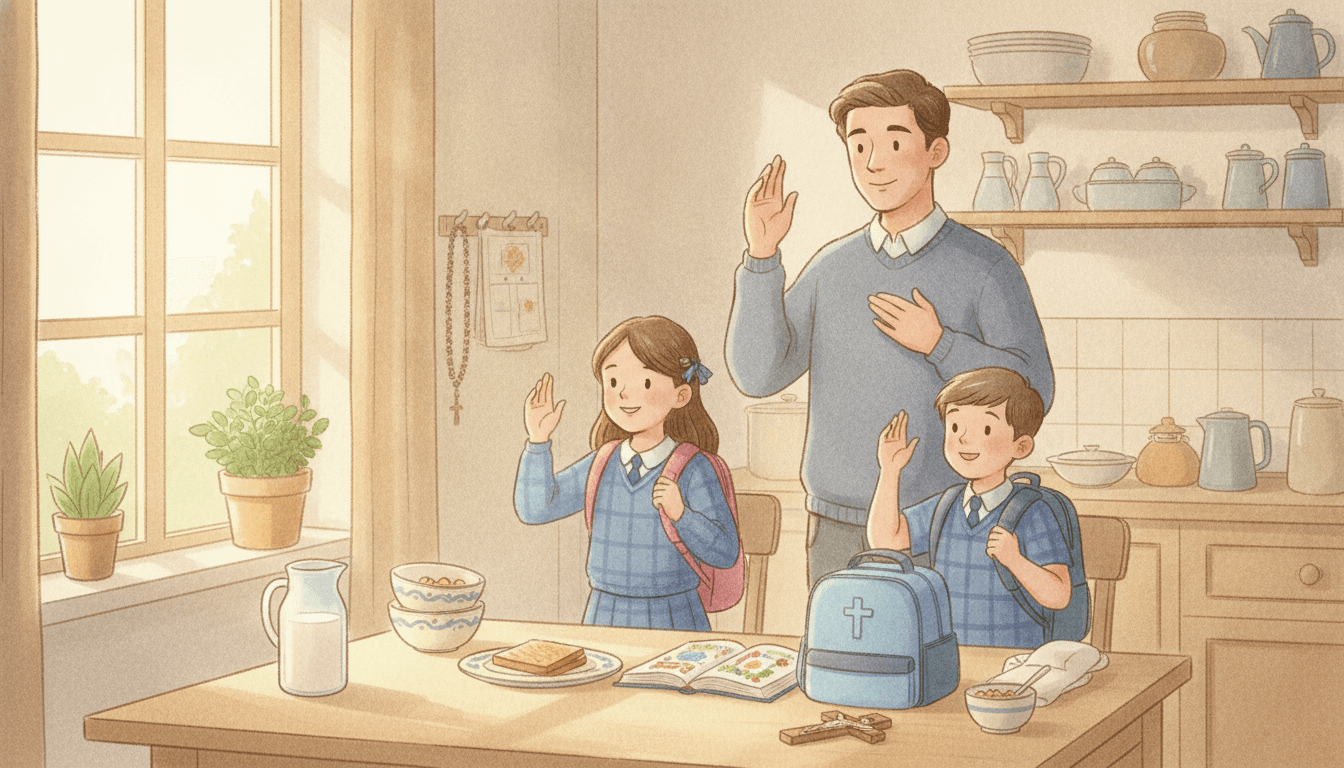
The calendar says an ordinary Tuesday; your child remembers that it is St. Francis’s day because the family prayed for the pets at breakfast. These small moments teach children that the Church’s year is not distant information but a living rhythm of Christ, his saints, and our own home.
Why Feast Days Belong in Ordinary Family Life
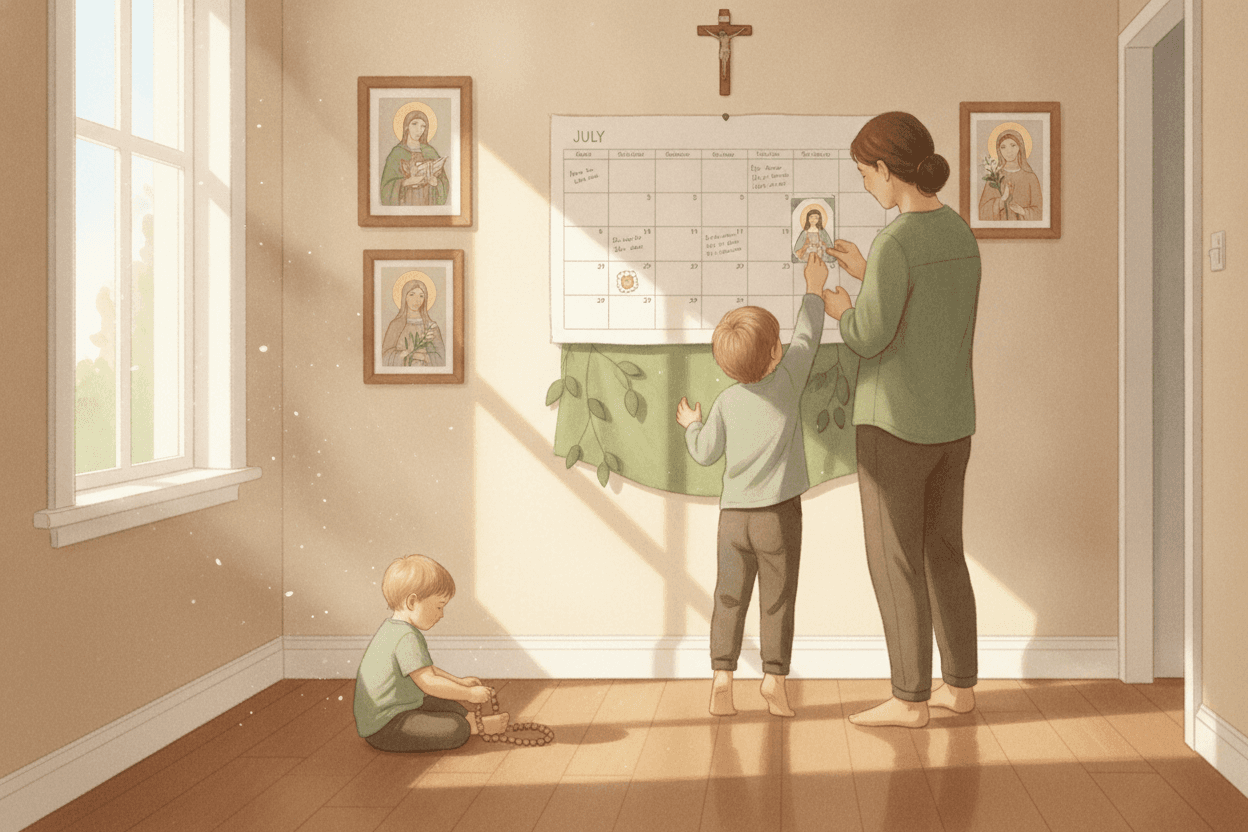
The calendar on the refrigerator already tells a family what matters: school concerts, dental appointments, soccer practice, birthdays. Adding a saint’s feast day does not mean creating another elaborate obligation. It means letting the Church’s calendar speak inside the ordinary places where children already learn what deserves attention. A candle at dinner, a two-minute story before bedtime, or a favorite food connected with a country or saint can quietly mark the day as different.
The USCCB explains that the liturgical year includes both the seasonal cycle, often called the Proper of Time, and the Proper of Saints. Children need both. The seasons place them within the mysteries of Christ: his birth, saving death, Resurrection, and gift of the Holy Spirit. The saints show what those mysteries look like in real human lives: a young martyr who chose Christ, a parent who practiced patience, a scholar who loved truth, a missionary who served the poor. This is not extra material beside the faith. It is the Church teaching us how the Gospel takes flesh across centuries and cultures.
Ordinary Time, then, is not blank space between the major seasons. The USCCB describes it as the period when the faithful consider the fullness of Jesus’ teachings and works. That makes it especially suitable for steady family habits. Here’s how I’d teach this to children: during Advent and Lent, we prepare intensely; during Christmas and Easter, we celebrate central mysteries; during Ordinary Time, we practice listening to Jesus and learning from his friends. A family might choose one feast each month, read a short account of the saint or the day’s Gospel, offer one prayer, and do one fitting act of service or celebration. Repetition gives children a framework without requiring parents to become event planners.
This belongs naturally to the domestic church. The Catechism calls the Christian home “a community of grace and prayer, a school of human virtues and of Christian charity” (CCC 1666), and it teaches that the home is the first place children receive the proclamation of faith (CCC 1655-1658). Scripture invites us to make God’s word part of daily life, not only parish programs: “Take to heart these words which I command you today. Keep repeating them to your children. Recite them when you are at home and when you are away, when you lie down and when you get up.” When feast days enter meals, car rides, family prayer, and conversation, children learn that the Church’s life is not confined to Sunday. It is a pattern for the whole year—and a pattern they can carry into adulthood.
Take to heart these words which I command you today. Keep repeating them to your children. Recite them when you are at home and when you are away, when you lie down and when you get up.
Use the Three-Part Feast-Day Pattern
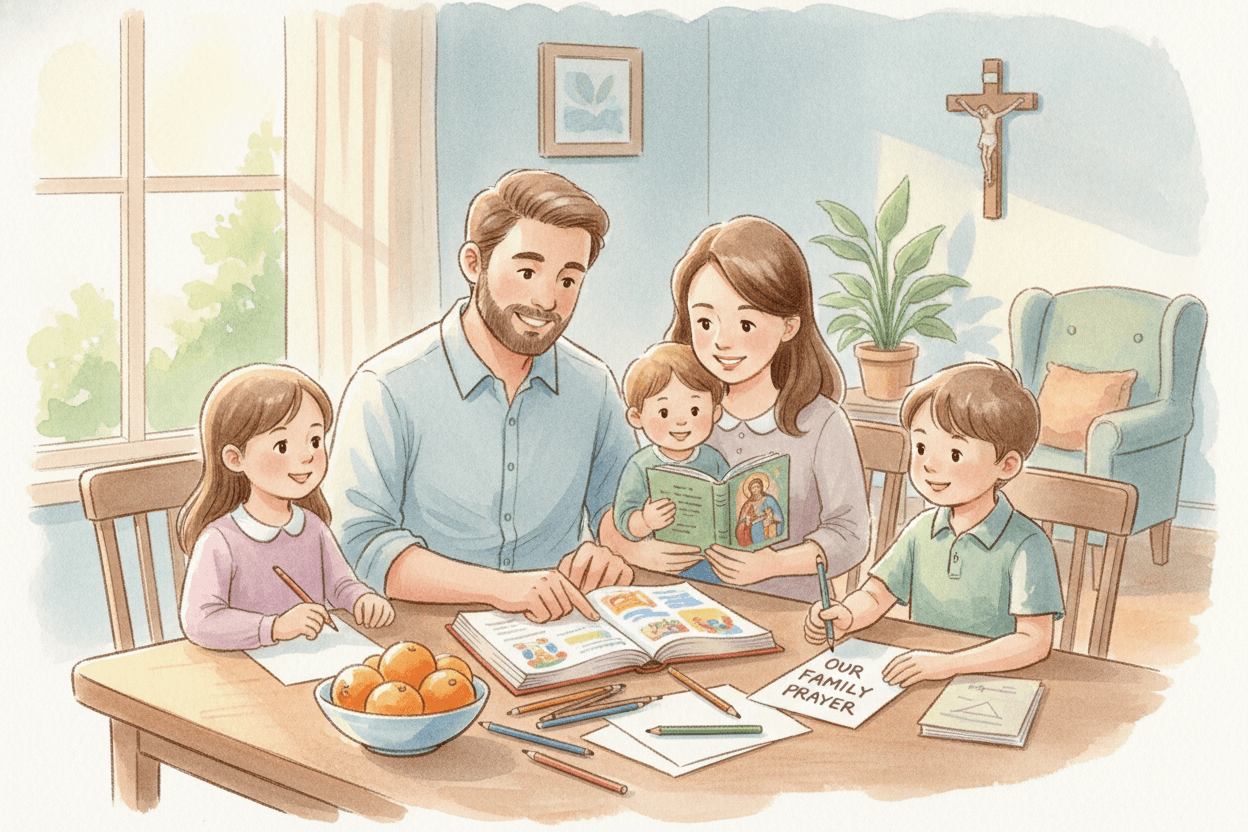
At supper on a saint’s feast day, a child does not need a themed table, a complicated craft, or a parent who has spent the afternoon preparing. He needs to hear, with some regularity, “Today the Church remembers Saint Joseph,” or “Today we thank God for Mary’s yes.” Then the family pauses, prays, and does one small thing differently because this day belongs to the Church’s calendar. That modest repetition is what makes a memory.
Here’s how I’d teach this pattern: one short prayer, one true story, and one concrete activity. Begin with a prayer that can be said before a meal or at bedtime: “Saint Francis, pray for us that we may love God’s creatures,” or “Lord Jesus, help us to serve as Saint Elizabeth Ann Seton served.” Keep it brief enough for the youngest child to join. Colossians gives the larger purpose: “Let the word of Christ dwell in you richly, as in all wisdom you teach and admonish one another, singing psalms, hymns, and spiritual songs with gratitude in your hearts to God.” A feast-day prayer places that word naturally on the lips of the family.
Next, tell one true story. On a Gospel feast, read a few verses from the day’s Gospel or recount the event carefully from Scripture. On a saint’s day, choose one reliable episode from the saint’s life: Saint Martin sharing his cloak, Saint Maximilian Kolbe offering his life for another prisoner, or Saint Thérèse doing an unnoticed act of charity. Children are capable of hearing real history and real Christian witness; they do not need every saint reduced to a cartoon character. Ask one plain question afterward: “What did this saint love about Jesus?” or “What might courage look like at school tomorrow?” This follows the Catechism’s understanding of the home as a place where parents teach their children to pray and discover their vocation (CCC 2226).
Finally, attach the feast to one concrete action. Make a simple Italian meal for Saint Joseph, put flowers near a Marian image on the Assumption, give pantry food on the feast of a saint known for serving the poor, or let each child choose one person to pray for at bedtime. The action should fit ordinary family life, not interrupt it. A family meal and the last five minutes before bed are dependable anchors because they already happen. Over a year, children begin to recognize the Church’s rhythm: prayer, story, response. That is more sustainable than trying to produce an elaborate project for every date on the calendar.
Let the word of Christ dwell in you richly, as in all wisdom you teach and admonish one another, singing psalms, hymns, and spiritual songs with gratitude in your hearts to God.
Choose a Manageable Year of Feasts
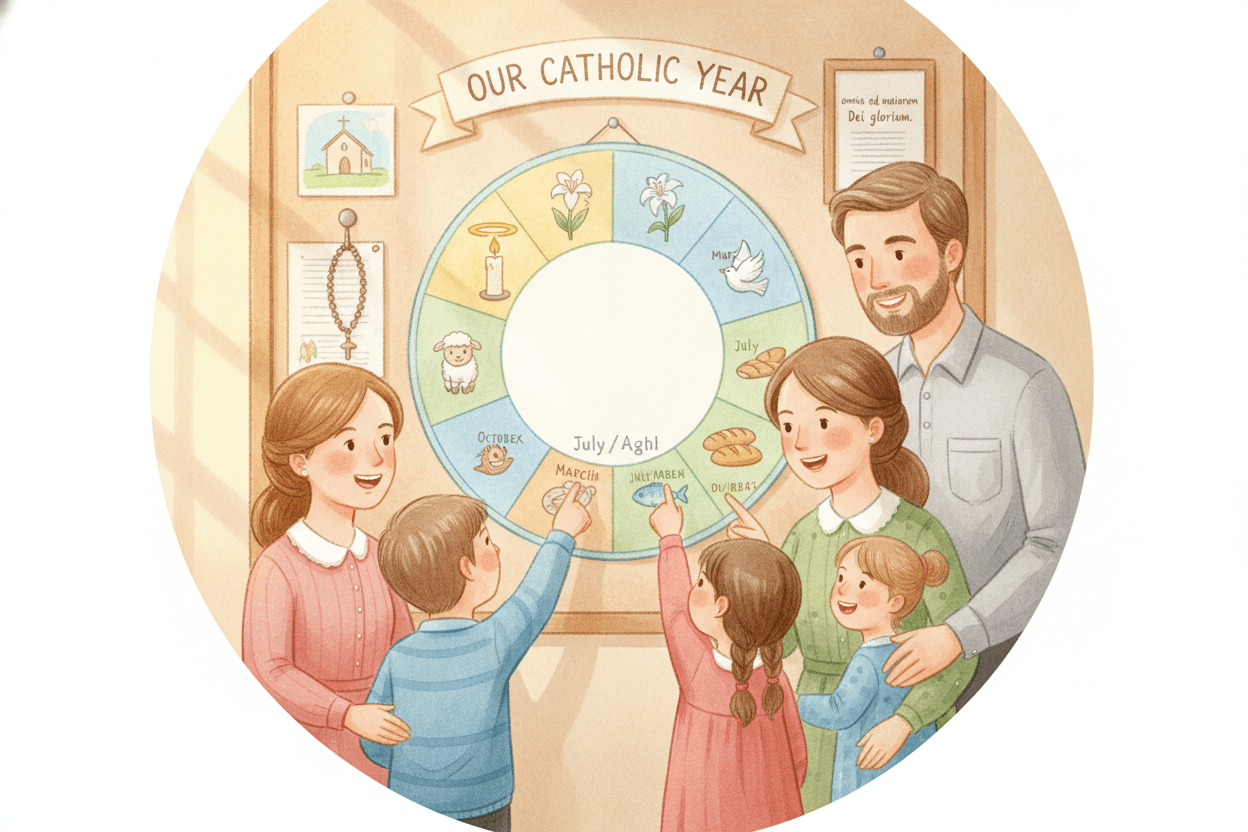
A crowded family calendar does not need another set of obligations. It needs a few dates that children can recognize when they arrive: the candlelight of February 2, the smell of bread on St. Joseph’s Day, the red streamers at Pentecost. Begin with eight feasts for the whole year, and let repetition do its quiet work. A child who knows, “This is what our family does on St. Nicholas Day,” is learning that the Church marks time with particular people, events, and promises.
Here is how I’d teach this to families: choose the same simple structure each time—a short prayer, one story, and one action—but do not try to make every observance equally elaborate. For All Saints on November 1, pray with the saints’ intercession, read a brief saint biography, and offer hospitality by inviting another family for soup or dessert. On St. Nicholas Day, December 6, pray for generosity, tell the story of the bishop who cared for those in need, and prepare small bags of food or toiletries for a parish pantry. At Christmas, pray before the Nativity scene, read Luke 2, and bake or deliver a treat to a neighbor.
The winter and spring dates give families a steady pattern after Christmas decorations come down. For the Presentation of the Lord on February 2, pray, “Jesus, light of the world, guide our home,” read about Simeon and Anna in Luke 2:22–40, and make a brief candlelit procession through the house. On March 19, St. Joseph’s Day, ask St. Joseph to protect fathers, workers, and families; share the Gospel account of Joseph’s obedience in Matthew 1:18–25; then bake bread or choose one practical act of service. These observances teach children that holiness is not vague. It takes shape in worship, work, obedience, and care for others.
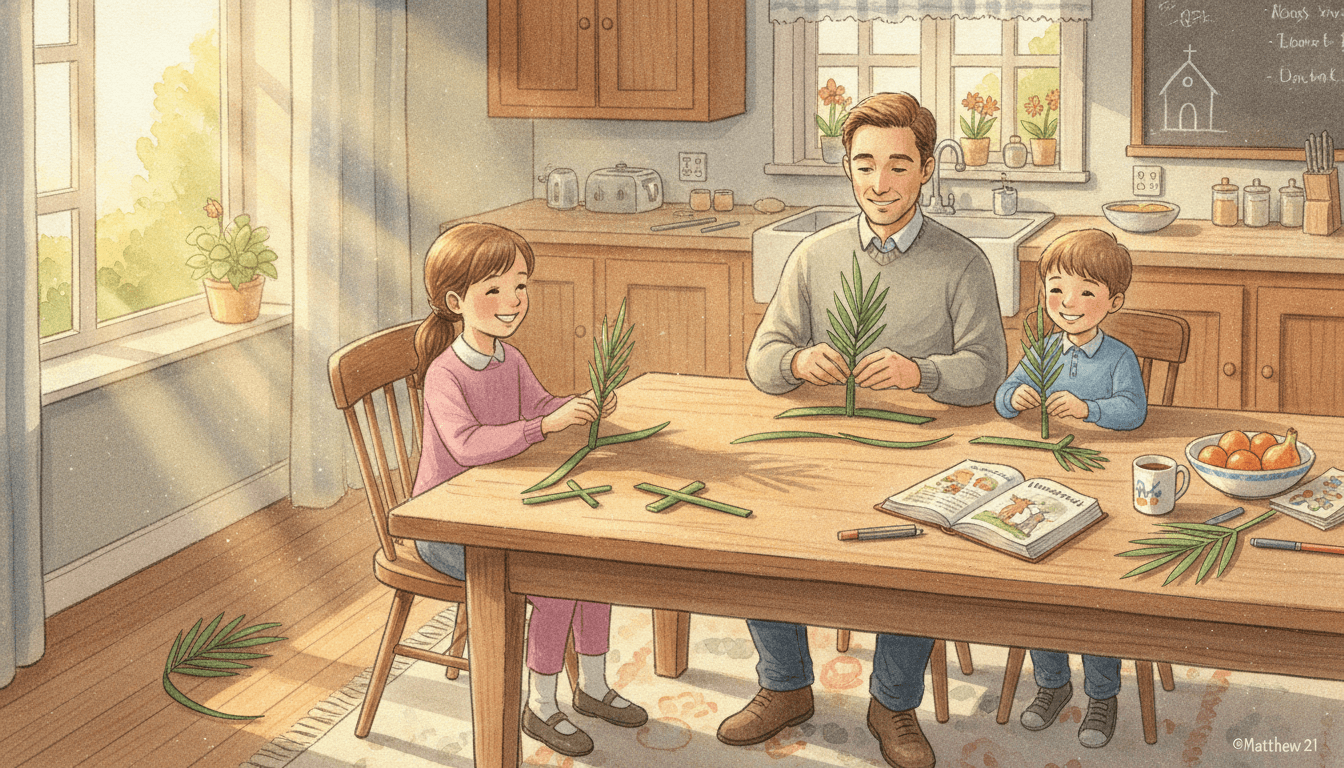
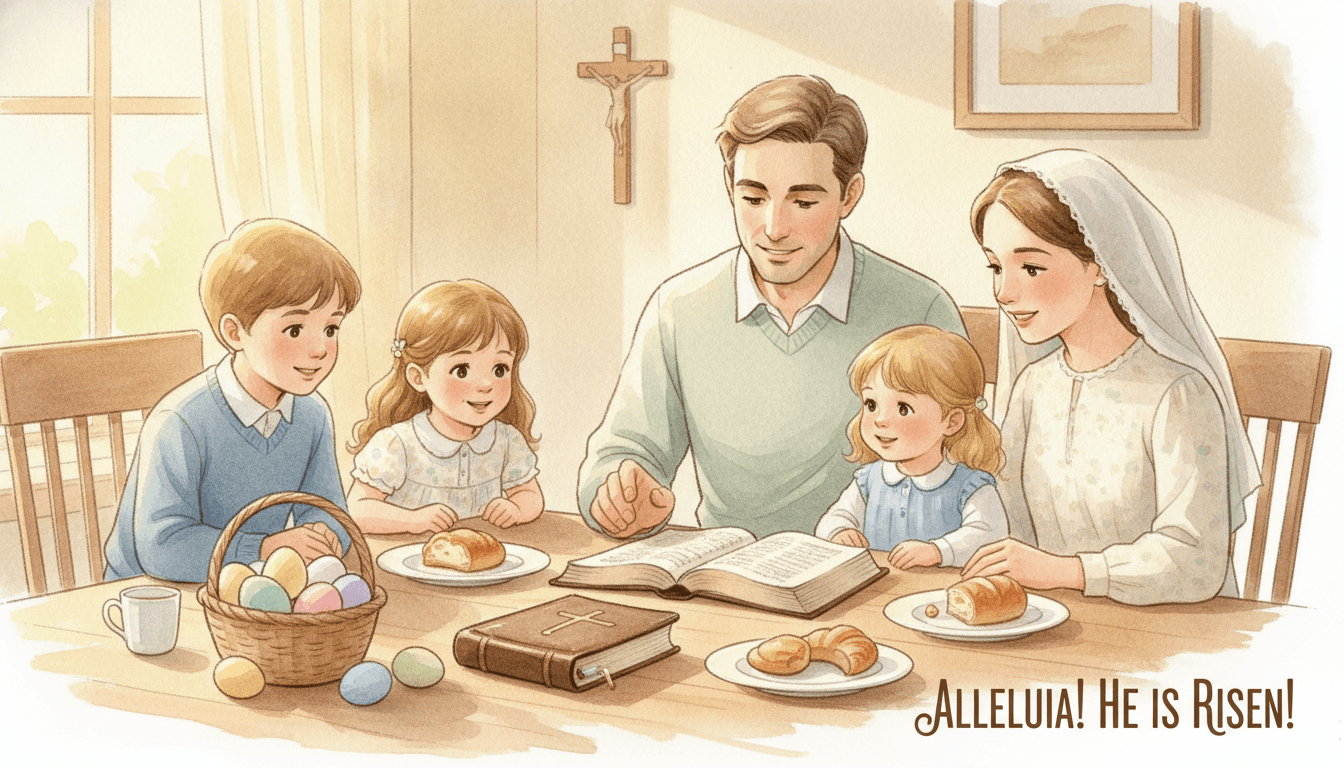
Easter and Pentecost should remain central, even if your family’s celebrations are modest. At Easter, proclaim the Resurrection from one of the Gospel accounts and share a festive meal. At Pentecost, pray for the gifts of the Holy Spirit, read Acts 2:1–11, and use red ribbons, streamers, or a family hymn at dinner. Finish the starter calendar with St. Francis of Assisi on October 4: thank God for creation, tell a true story from Francis’s life, and take a nature walk or arrange a simple blessing of pets. Children are capable of seeing the connection between a saint’s love for God and the way we treat animals, neighbors, food, and the natural world.
Psalm 78 gives parents the purpose beneath these small customs: “We will not hide them from their children, but will declare to the next generation the praises of the LORD, his power, and the wonders he has done.” The Catechism describes the home as a place where children receive their first proclamation of the faith (CCC 1666). Check the USCCB liturgical calendar and your diocesan calendar each year, since local observances and holy days of obligation can vary. Then keep your list manageable. A feast remembered with joy is far more useful than a calendar completed from pressure.
We will not hide them from their children, but will declare to the next generation the praises of the LORD, his power, and the wonders he has done.
Keep Christ at the Center When Celebrating Saints
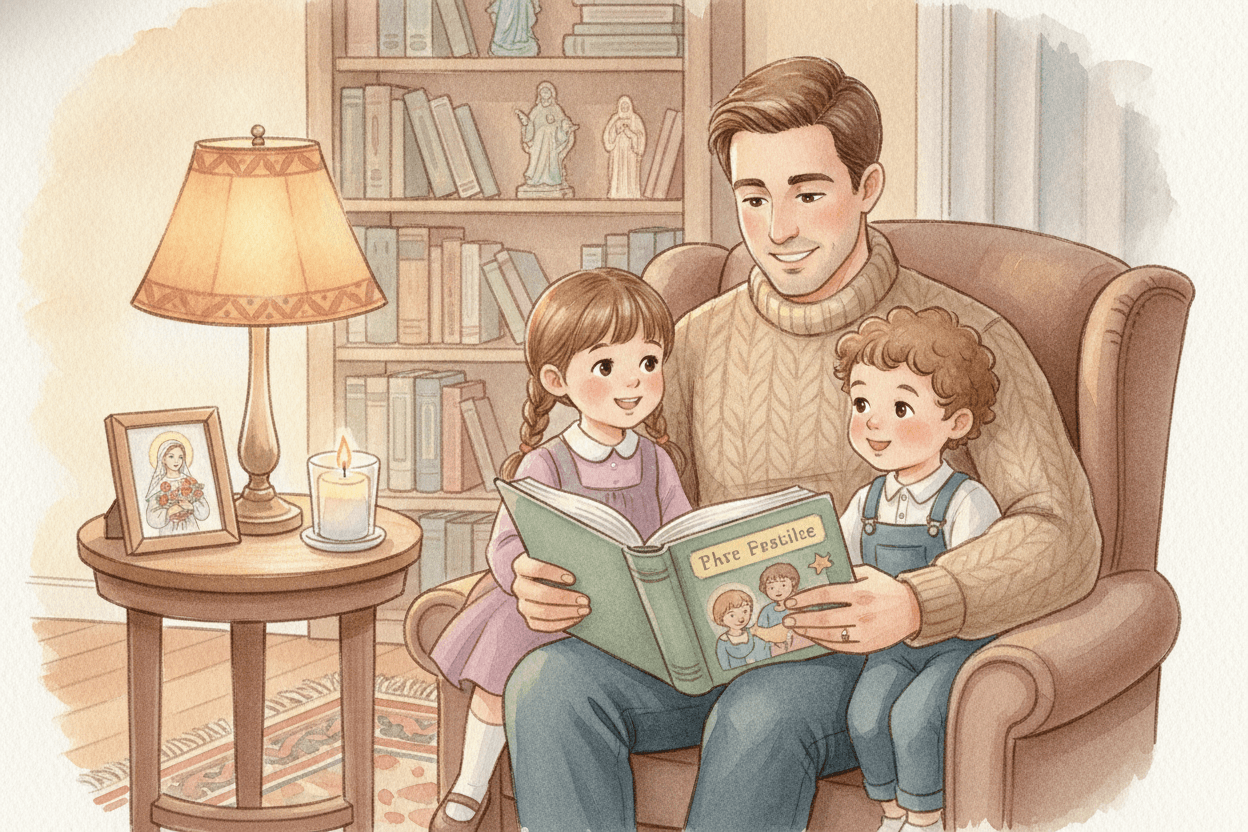
A child can easily come away from a feast-day craft thinking that St. Francis is mainly birds, St. Lucy is mainly candles, or St. Nicholas is mainly treats. Those details can help a day become memorable, but they are not its center. Begin with Jesus’ own welcome: "Jesus said, ‘Let the children come to me, and do not prevent them; for the kingdom of heaven belongs to such as these.’" A saint’s feast is successful at home when it makes that invitation easier for a child to hear and answer.
The saints do not compete with Christ. They are his disciples: men and women who received his grace, followed him in concrete circumstances, and now pray with the whole Church. The Catechism teaches that our communion with the saints joins us to Christ and that their intercession does not lessen his unique mediation (CCC 946-962). Here’s how I’d teach this to children: we do not stop at the saint. We look through the saint’s life toward Jesus, asking what his grace made possible in this particular person.
Keep the conversation suited to the child in front of you. After a brief, accurate saint story or Gospel reading, ask three dependable questions: What did this saint love about Jesus? What virtue did he or she practice? How can we imitate that this week? A younger child may answer, “She was kind,” while an older child may notice courage, fidelity in suffering, generosity, or care for the poor. Receive the simple answer, then help them make it specific: “What would kindness look like with your brother before bedtime?” This respects children’s intelligence and turns admiration into a small act of discipleship.
Let the activity serve that same purpose. If you bake bread for St. Elizabeth of Hungary, include a plan to share food. If you make a paper key for St. Peter, speak about trusting Jesus and praying for the Church. If a feast falls on a busy weekday, one sentence at dinner may be enough: “Today we thank God for St. ____. Jesus helped him or her to ____. This week, let us ask for the grace to ____.” Over time, children learn that the Church’s calendar is filled not with distant religious characters, but with fellow Christians whose lives declare the mercy and lordship of Christ.
Jesus said, "Let the children come to me, and do not prevent them; for the kingdom of heaven belongs to such as these."
Let Warm Repetition, Not Perfection, Form the Memory
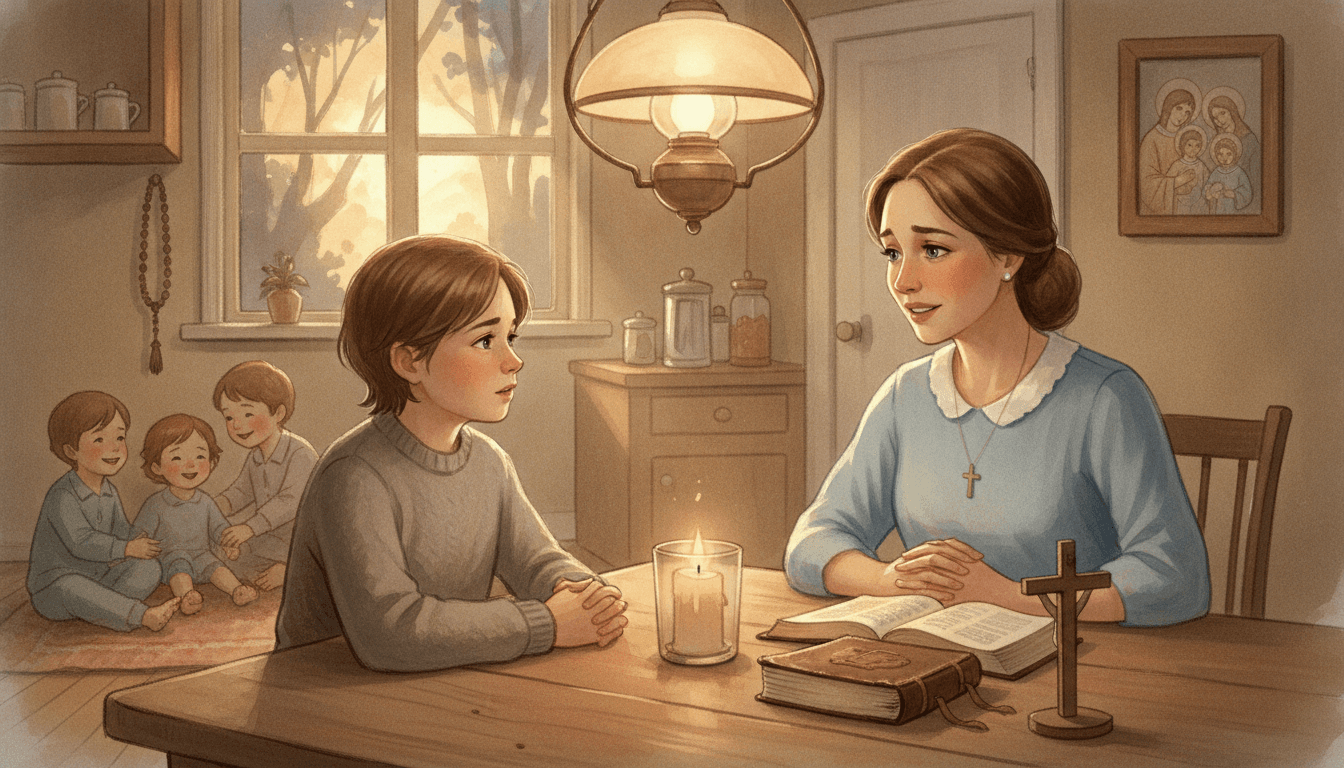
A child may not remember the full explanation of why you set a candle beside the dinner plate for a saint’s feast. But she may remember that the family paused before eating, that Dad told one true detail from the saint’s life, and that everyone asked for help with one particular virtue. A few years later, the candle, the prayer, and the familiar story can call the whole feast back to mind. This is how memory is formed in family life: not through elaborate production, but through warm repetition.
Scripture gives us a very ordinary picture of this kind of faith. “Every day they devoted themselves to meeting together in the temple area and to breaking bread in their homes. They ate their meals with exultation and sincerity of heart, praising God and enjoying favor with all the people.” The first Christians joined worship with home life. For Catholic families, a recurring feast-day practice can do the same. It does not need to compete with school, sports, work, or a tired Tuesday evening. It simply gives the Church’s calendar a recognizable place at the family table and in the family’s conversation.
That consistency matters. Pew Research Center reports that 58% of Christian parents pray or read Scripture with their children. You may already be among those families, praying before meals, reading the Sunday Gospel, or ending the day with a simple blessing. A saint’s feast can be a natural extension of what is already in place: add the saint’s name to intercessions, read a short account from a reliable source, or connect a small act of service to the saint’s mission. Research on religious upbringing also indicates that adults are more likely to retain their parents’ faith when religion was treated as important and discussed regularly at home. The point is not to make every conversation a lesson; it is to let children hear that faith belongs in real life.
Here is the leadership children need from us: clear, peaceful, and steady. Say, “Today is the feast of St. Joseph. We will ask him to pray for our family,” even if only two people are at the table and the meal is frozen pizza. If a planned activity falls through, keep the prayer. If no one has time to bake, tell the story anyway. As the Catechism reminds us, the Christian home is a place where children first receive the faith (CCC 1666). Bishop Robert Barron has similarly emphasized that the family is a first school of discipleship: faith is often caught through the recurring rhythms of prayer, the liturgical year, and parents who live it with gladness.
Children are perceptive enough to recognize the difference between a family custom offered as an invitation and one imposed in frustration. Let them choose which virtue to practice, color a saint image while you read, or lead the response to a brief prayer. Then return to the pattern next time without apology and without pressure. The feast-day memory they carry forward may be wonderfully simple: in our house, we knew the saints’ names; we spoke about Christ; we prayed together.
Every day they devoted themselves to meeting together in the temple area and to breaking bread in their homes. They ate their meals with exultation and sincerity of heart, praising God and enjoying favor with all the people.
This Week: Begin With One Feast and One Small Tradition
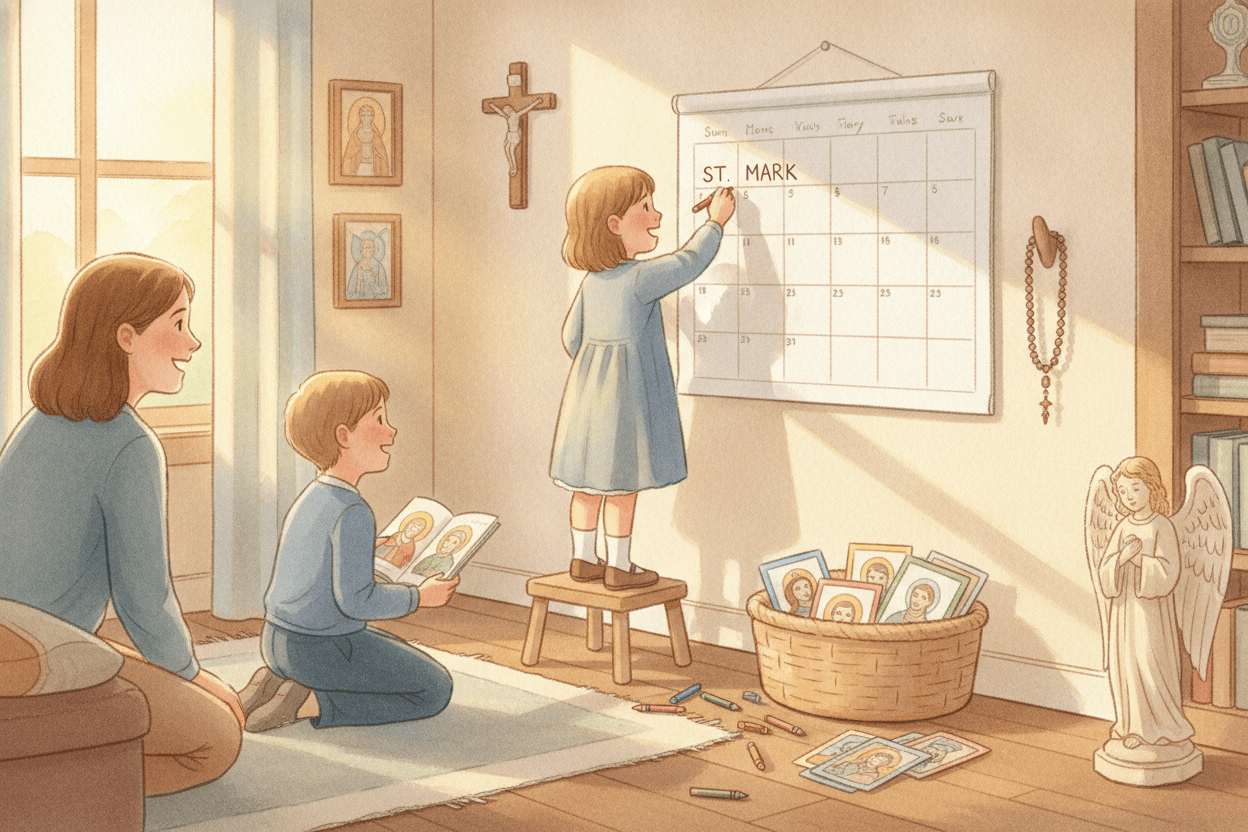
On a Tuesday evening, the easiest place to begin may be the refrigerator door. Before anyone clears the dishes, write the next feast day on the family calendar in a bright marker. Children do not need an elaborate lesson to notice that this date matters; they need to see that the Church’s calendar has entered the ordinary places where your family already lives. A feast kept with attention—even quietly—teaches that God meets us in the week ahead, not only at Sunday Mass.
Start small enough that you can repeat it. The Catechism calls the Christian home a domestic church (CCC 1666), and a domestic church is not a second parish program with crafts, handouts, and a packed schedule. It is a home where parents steadily hand on what they have received. Scripture invites us to make faith part of daily speech: “Take to heart these words which I command you today. Keep repeating them to your children. Recite them when you are at home and when you are away, when you lie down and when you get up.” That rhythm gives parents permission to teach in brief, ordinary moments.
Choose one feast that is actually coming, rather than beginning with a long list of favorites. Look at the saint or mystery honestly with your children: What did this person love? What did he or she do when following Christ cost something? What does this feast reveal about Jesus? For a solemnity, read a short portion of the day’s Gospel. For a saint, use a reliable, age-appropriate account and distinguish clearly between known history, pious tradition, and imaginative retellings. Catholic children can handle that distinction, and it helps them recognize that the saints are real members of Christ’s Body, not religious cartoon characters.
Keep the observance to a prayer, a story, and one fitting action. The prayer can be as brief as the saint’s name and an intention: “St. Elizabeth Ann Seton, pray for our teachers and students.” The story may take five minutes. The action can be a favorite fruit at supper, a candle beside the meal, a note to someone who is ill, or a bedtime decade of the Rosary. The point is not to match every feast with a themed event. It is to let a particular truth of the faith take a visible form your family can keep.
Here is a seven-day plan. Day 1: look up the next feast on your diocesan calendar or the USCCB calendar, then write it where everyone can see it. Day 2: choose a two-minute prayer. Day 3: find one short Gospel passage or trustworthy saint account. Day 4: choose one meal- or bedtime-sized action. Day 5: gather any simple item you need, without a special shopping trip. Day 6: tell the children what will happen and why. Day 7: celebrate the feast, then add one sentence to the calendar about what you did. Next year, repeat the same custom before adding anything new. Consistency will teach more than ambition, and the practice can grow when your family is ready.
Take to heart these words which I command you today. Keep repeating them to your children. Recite them when you are at home and when you are away, when you lie down and when you get up.
Frequently asked questions
How can I celebrate Catholic feast days at home without adding more stress?
Keep each observance to three small parts: a brief prayer, one true story from Scripture or a saint's life, and one simple action. Use moments already in your day, such as dinner or bedtime, rather than planning a separate event. A candle, a favorite meal, or praying for someone is enough.
Which Catholic feast days should my family start with?
Start with about eight dates spread across the year so the tradition remains manageable. Choose major celebrations your children can recognize, such as St. Joseph's Day, Pentecost, the Assumption, St. Francis of Assisi, and St. Nicholas Day. Repeating the same simple family custom each year helps those days become memorable.
What should I tell my children about Ordinary Time?
Explain that Ordinary Time is not a break from the Church's year; it is a season for listening to Jesus and learning from his teachings and works. It is also a good time to meet the saints, who show how ordinary people lived the Gospel. One feast day each month can give your family a steady, realistic rhythm.
How do I teach my children about a saint on his or her feast day?
Share one reliable, concrete episode from the saint's life instead of trying to cover every detail. You might tell how St. Martin shared his cloak or how St. Thérèse chose hidden acts of charity, then ask what that love or courage could look like at home or school. End with a short prayer asking the saint to pray for your family.
Do Catholic feast-day traditions need crafts or special foods?
No. Crafts and special foods can be enjoyable, but they are not necessary for meaningful family observance. What matters most is regularly naming the day, praying together, hearing a story, and making one small response such as serving others, giving pantry food, or praying for a person in need.
Sources: usccb.org · usccb.org · pewresearch.org · pewresearch.org · pewresearch.org · pewresearch.org · pdfs.semanticscholar.org · research.lifeway.com
Scripture quotations in this article use the NABRE translation.