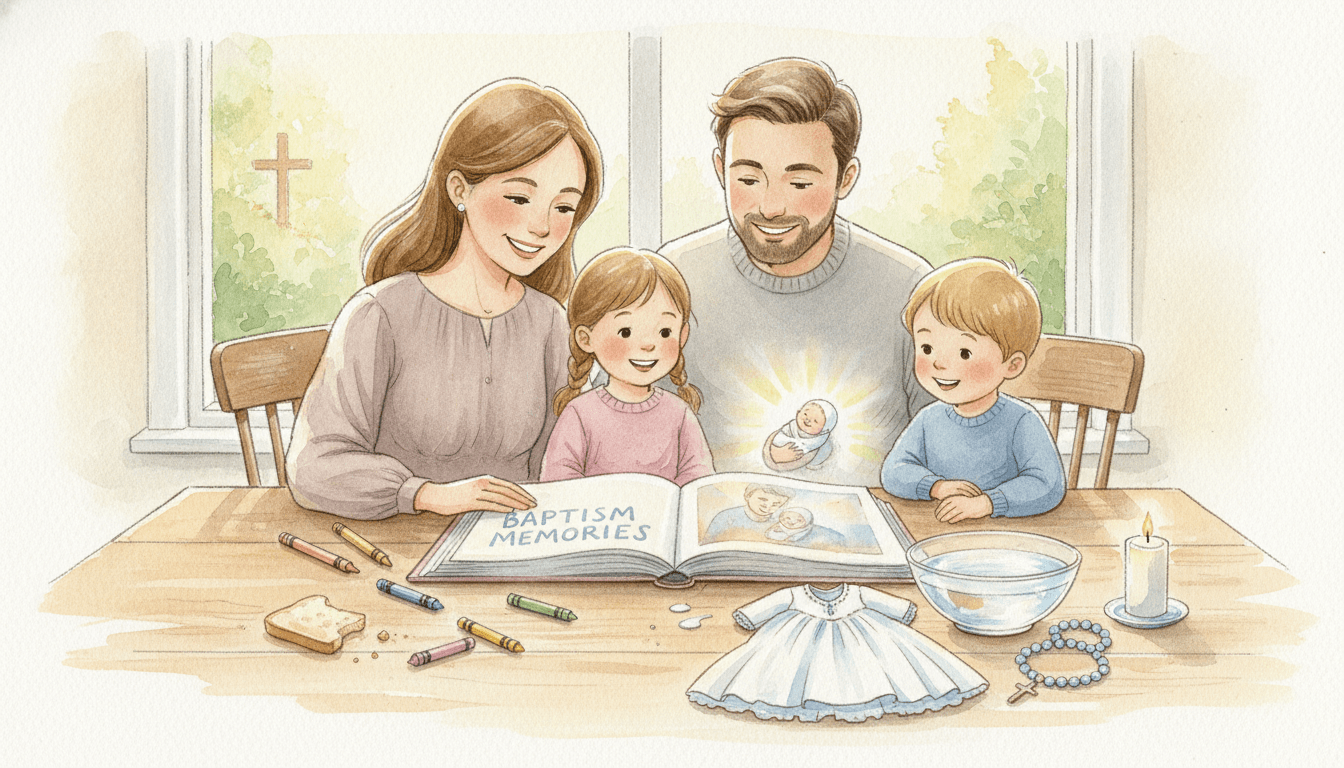
Fruits of the Spirit Kids Can Practice Every Day

The cereal bowl was upside down, someone had taken someone else’s spoon, and the school bus was due in six minutes. It was not a grand spiritual moment—until one child stopped, took a breath, and tried again with kinder words. That is where the fruits of the Spirit begin to look real for kids.
The Fruit That Shows Up Before the School Bus
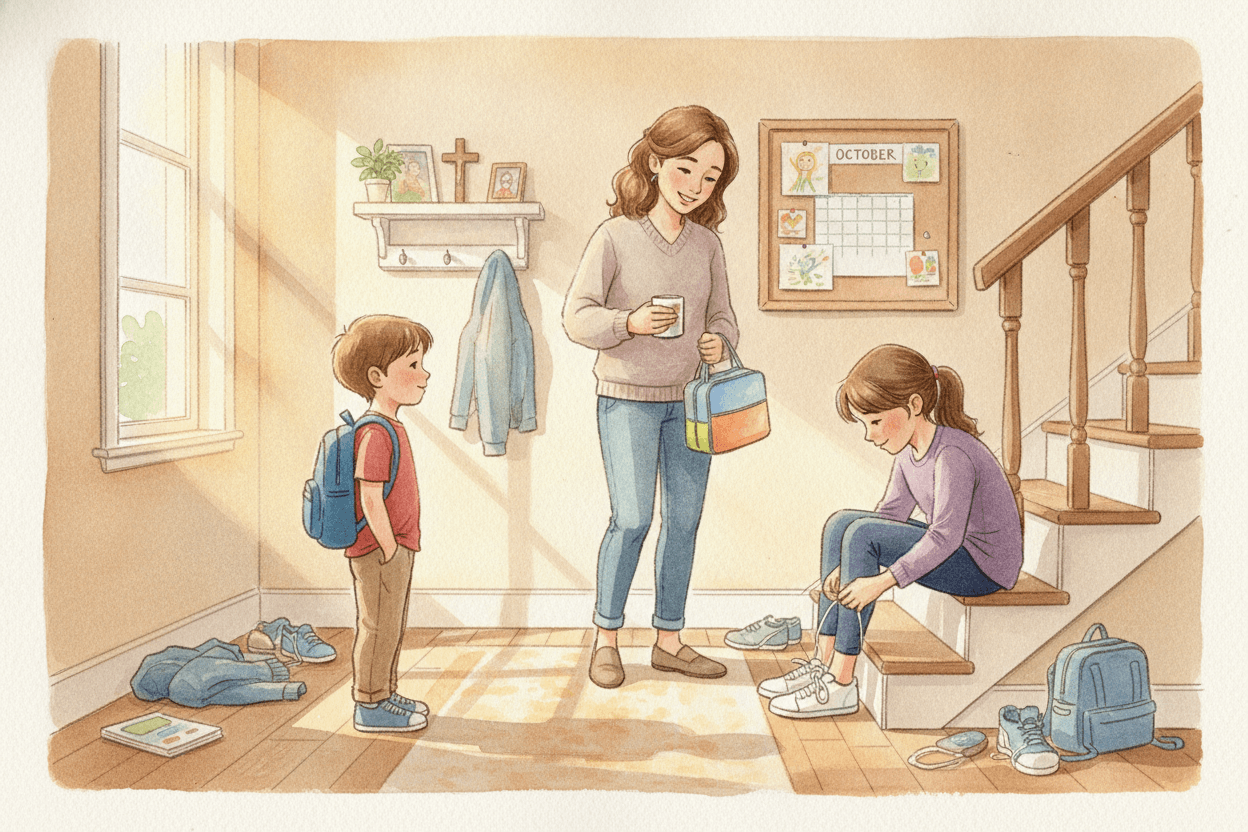
The shoes were on, the backpacks were zipped, and somehow one child had the exact yogurt pouch another child suddenly needed. It was five minutes before the school bus. Nobody was feeling especially holy. But there it was: a chance to share, to wait, to use a calm voice instead of a loud one. Most days, the fruits of the Holy Spirit show up before anyone has found the missing mitten.
That is good news for parents. Our children do not need a perfect response before they can begin to grow. A fruit of the Spirit is not a gold star for the child who never melts down or grabs the blue cup. It is a good habit the Holy Spirit helps grow in us, one small choice at a time. Patience can look like waiting for a turn. Kindness can look like making room for the kid who is alone at recess. Self-control can look like stopping, taking one breath, and trying again after angry words have already come out.
St. Paul gives us a clear list: “In contrast, the fruit of the Spirit is love, joy, peace, patience, kindness, generosity, faithfulness, gentleness, and self-control. Against such there is no law.” The list is big, but the next step does not have to be. One small thing we tried was choosing just one fruit for the week. If the fruit was patience, we named one visible job: wait without complaining once. If it was generosity, the job might be sharing a snack willingly or helping a sibling without being asked twice. (Once is a very realistic number before 8 a.m.)
Before school, at our table, a child can pray, “Holy Spirit, help me grow in patience today.” Then, at bedtime, ask three simple questions: When did you practice it? When was it hard? Where did God help you? Praise the effort, even if the morning included tears, arguing, and a yogurt pouch emergency. The Spirit works with our children’s real choices, not an imaginary perfect day. And those choices connect: self-control helps a child speak kindly; patience makes sharing easier; kindness brings a little more peace into a noisy house.
In contrast, the fruit of the Spirit is love, joy, peace, patience, kindness, generosity, faithfulness, gentleness, and self-control. Against such there is no law.
What Are the Fruits of the Holy Spirit for Kids?
The argument over the blue cup was already loud enough before breakfast. One child had it yesterday, another child was certain that made it permanently his, and I was standing at the counter wondering how a cup had become a family heirloom. Then came the small pause: “You can have it today.” Not perfect peace. There was still some grumbling. But it was a real choice toward peace and generosity, and that is a good place to start with the fruits of the Holy Spirit.
For kids, the fruits of the Holy Spirit are good habits that God helps grow in us. They are not stickers on a behavior chart, and they are not a list a child must finish before bedtime. A child practices patience by waiting for a turn without a meltdown. She practices kindness by sitting with the classmate who is alone. He practices self-control by taking a breath before yelling at his sister—yes, even if he only remembers after the first yell. These are ordinary choices, and the Holy Spirit meets children right there.
St. Paul names nine fruits: love, joy, peace, patience, kindness, generosity, faithfulness, gentleness, and self-control. Catholic tradition also lists twelve in the Catechism, adding charity, goodness, modesty, and chastity to the list. We do not need to make children memorize every word at once. The point is that these are signs of a heart learning to love God and other people. As the Catechism says, “The fruits of the Spirit are perfections that the Holy Spirit forms in us as the first fruits of eternal glory.”
The fruits are different from the seven gifts of the Holy Spirit, though kids do not need a long lesson on the distinction. Think of the gifts as help God gives us—like wisdom, courage, and understanding. The fruits are what begins to show in our lives when we receive that help and choose to cooperate with it. Pope Francis put it simply: “These fruits are the result of cooperation between grace and our freedom.” God gives grace. Our children still get to choose whether to share the snack, use a calm voice, or offer help.
One small thing we tried at our table was choosing one fruit for the week. Not twelve. One. Before school, we might pray, “Holy Spirit, help me grow in patience today.” Then, at bedtime, we ask: When did you practice it? When was it hard? Where did God help you? Praise the small effort, even if the day was messy. Patience can make sharing easier. Self-control can make kind words possible. Over time, those little choices become something children recognize: God is helping me grow.
In contrast, the fruit of the Spirit is love, joy, peace, patience, kindness, generosity, faithfulness, gentleness, and self-control. Against such there is no law.
Start With Four Fruits Children Can See
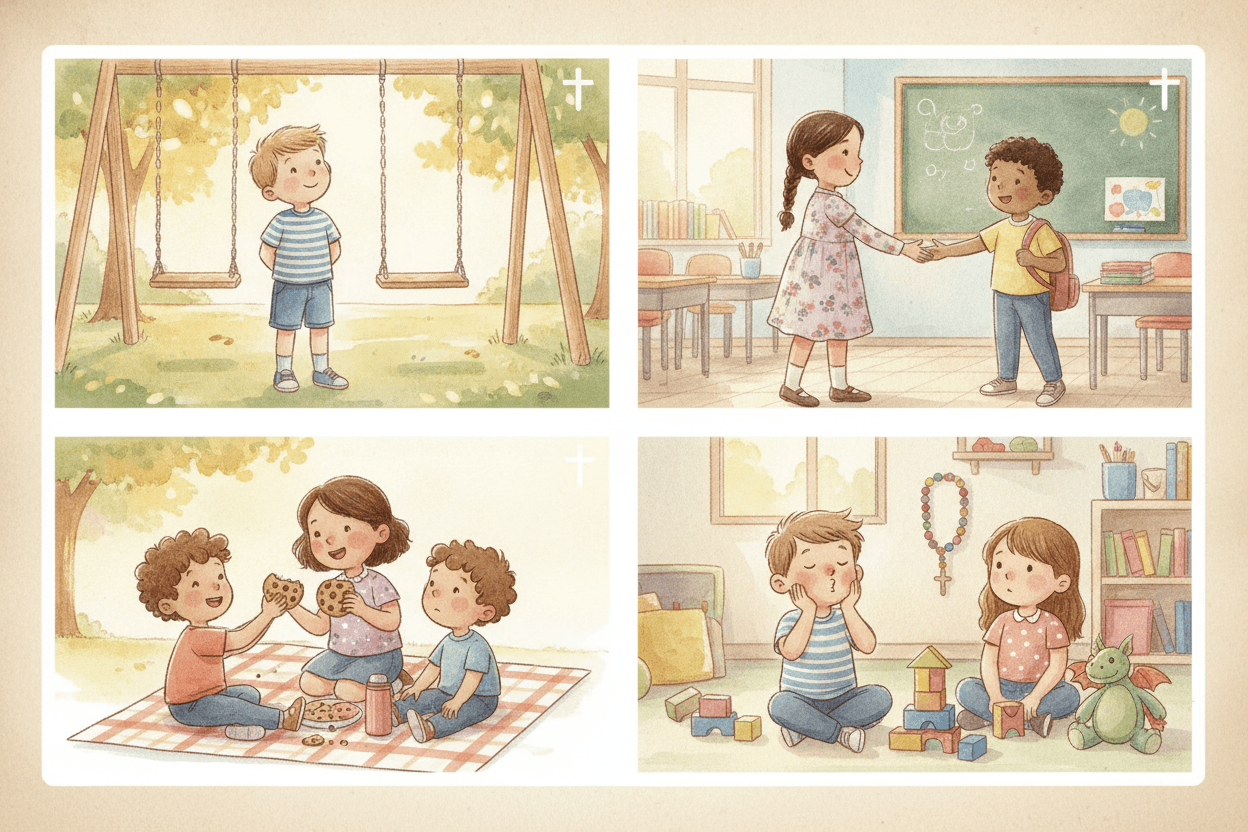
The last pancake was sitting on the plate, and both kids had suddenly become very interested in it. One reached first. The other took a breath, looked at me, and said, “I wanted that one.” No halo appeared over anyone’s head. But there it was: a chance to practice something real. The fruits of the Holy Spirit show up in moments like this—at breakfast, on the playground, in the back seat, and five minutes before we need to leave for church.
For younger children, it helps to start with four fruits they can actually spot. Patience is waiting for a turn on the swing or letting a sibling finish talking without complaining the whole time. Kindness is noticing the child sitting alone at lunch and asking, “Do you want to play with us?” Generosity is sharing the snack, the favorite marker, or even the last pancake willingly—or at least with less dramatic sighing. Self-control is stopping before the shout comes out, taking one slow breath, and choosing calmer words. These are not tests children must pass perfectly. They are small choices the Holy Spirit helps them make again and again.
Paul gives us the bigger list in Galatians: “In contrast, the fruit of the Spirit is love, joy, peace, patience, kindness, generosity, faithfulness, gentleness, and self-control. Against such there is no law.” We do not need to hand a child all nine words at once and expect a tiny saint by lunchtime. Pick one fruit for the week. Make it visible. “This week, we are practicing patience by waiting once without complaining.” Or, “This week, we are practicing kindness by inviting someone in.” One small thing we tried was saying a quick prayer at the door before school: “Holy Spirit, help me grow in kindness today.” It takes about five seconds, which is useful in a house where shoes are always missing.
The fruits also work together. A child often needs self-control before he can speak kindly when his tower gets knocked down. Patience can make generosity easier when a sister wants the toy right now. And kindness can bring a little peace to a noisy room. At bedtime, ask three simple questions: “When did you practice our fruit? When was it hard? Where did God help you?” Listen for effort, not a polished answer. Then praise the small cooperation you saw. God is growing something good in the kid in front of you, often right in the middle of the pancake dispute.
In contrast, the fruit of the Spirit is love, joy, peace, patience, kindness, generosity, faithfulness, gentleness, and self-control. Against such there is no law.
Help Kids See Grace, Not Just Good Behavior
The cereal was on the floor, someone had taken the blue bowl, and a child who had been asked to get dressed was suddenly very interested in building a fort. On mornings like that, it is easy to turn every hard moment into a behavior report: Who listened? Who shared? Who used a nice voice? Those things matter. But there is a deeper question for our kids: Did we remember to ask Jesus for help?
Jesus gives us a picture children can understand. A branch does not strain and yell at itself to make grapes appear. It stays connected to the vine. In the same way, a child does not grow patience, kindness, or self-control by grit alone. They grow as they stay close to Jesus—in a quick prayer before school, at Mass, in Confession, and in the next small choice after they have made a bad one. “I am the vine, you are the branches. Whoever remains in me and I in him will bear much fruit, because without me you can do nothing.”
That changes how we talk after a meltdown. Instead of saying, “Why can’t you ever control yourself?” we can say, “That was hard. You shouted. What can we do now?” Maybe the child takes a breath, says sorry, and tries the sentence again with calmer words. Maybe they admit that they grabbed the toy because they did not want to wait. Honesty is not a side issue. It is often the first little opening where grace can get to work.
One small thing we tried was praising the part of the moment that showed cooperation with grace. “You were angry, but you came back and apologized.” “You really wanted the last cookie, and you let your sister have it.” “You told me the truth even though you knew there would be a consequence.” This is not handing out trophies for basic decency. It is helping kids notice that God is working in them while they are still learning. Instant maturity would be convenient, of course. It would also make family life suspiciously quiet.
Choose a simple prayer your child can use when the day starts to wobble: “Jesus, stay close to me. Holy Spirit, help me choose kindness.” Then let mistakes become practice, not proof that they have failed. At bedtime, ask: Where did you try today? Where was it hard? How did God help you begin again? The fruit may look small at first—a softer answer, a returned toy, a truthful confession from behind the couch. But small fruit is still fruit.
I am the vine, you are the branches. Whoever remains in me and I in him will bear much fruit, because without me you can do nothing.
A Five-Minute Holy Spirit Fruits Activity for the Week
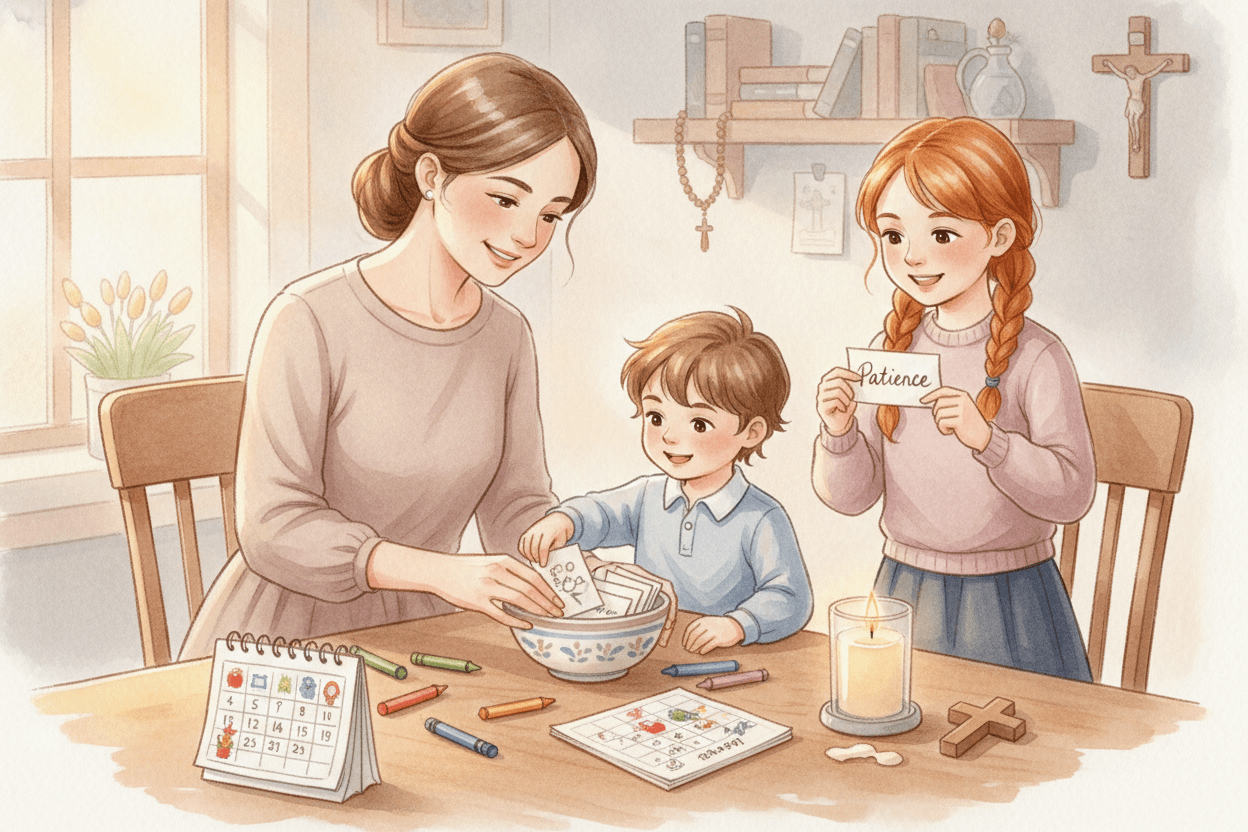
Monday morning is not usually when anyone at our table is eager for a lesson. Someone is looking for a shoe. Someone else has decided that oatmeal is suddenly unacceptable. That is exactly why this little practice works. It takes about five minutes, and it gives the kids one clear way to try loving God and others in the day right in front of them.
Pick one fruit of the Spirit on Sunday night or Monday morning. Do not try to cover the whole list. One is plenty. For children ages 6–9, name the fruit and attach it to an action they can actually see. Patience might mean, “I will wait for my turn without complaining once.” Kindness can be, “I will invite someone to play at recess.” Generosity could be, “I will share one thing willingly.” Self-control may be, “When I feel mad, I will stop, take one breath, and use calm words.” Keep the action small enough that a child can remember it after the backpacks zip up.
Then pray together before school, breakfast, or heading out the door: “Holy Spirit, help me grow in patience today.” If your fruit is kindness, simply switch the word. The prayer does not need a long introduction. In our house, a quick prayer is often the prayer that actually gets prayed. You can remind your child that the Holy Spirit helps us make good choices, but they still get to choose. Grace and effort belong together.
During the day, invite each child to notice one chance to practice. You might say, “Watch for your patience moment,” as they get out of the car. For a six-year-old, that moment may come while waiting for the bathroom or taking turns with a game. For an eight- or nine-year-old, it may be keeping a calm voice when a sibling changes the rules, helping carry groceries, or sitting beside a child who seems left out. The fruits connect, too. A pause of self-control can make room for kind words. Patience can make sharing less of a battle. Small choices add up.
At bedtime, take one minute for three questions: “When did you practice our fruit? When was it hard? Where did God help you?” Listen before correcting. If the answer is, “I forgot all day,” that is not a failed week; it is a chance to try again tomorrow. Praise the effort you saw: “You were frustrated, but you took a breath before you yelled.” Here's what landed with our kids: they began to see that holiness is not only for church or saints in pictures. It grows in the hallway, at the lunch table, and beside the toy bin with the missing pieces.
In contrast, the fruit of the Spirit is love, joy, peace, patience, kindness, generosity, faithfulness, gentleness, and self-control. Against such there is no law.
Three Bedtime Questions That Keep It Gentle
Some nights, bedtime at our table is less like a peaceful family prayer time and more like a small airport during a delay. Someone is yawning on the floor. Someone suddenly remembers a library book is due. One child cannot find a toothbrush that is, naturally, in his hand. That is exactly why a three-question check-in helps. It is short enough to fit into real family life, even when everyone is running on fumes.
If your family chose patience, kindness, or another fruit for the week, ask: “When did I practice this fruit?” Then ask, “When was it hard?” Finally: “Where did God help me?” These are not test questions. They are a way to help a child notice that faith belongs in the car line, at recess, during a sibling argument, and while waiting for the blue cup that apparently is the only acceptable cup.
Keep your own tone light. A child may say, “I didn’t do it at all.” Instead of correcting the answer or giving a mini-sermon, look for one tiny place of growth together. “You were mad when your brother grabbed the game, but you stopped before you hit him. That pause mattered.” Or: “You had a hard day. What could we try tomorrow when you feel that mad?” Maybe the plan is to take one breath, use calm words, or come get Mom or Dad. The Holy Spirit is not asking our kids for a perfect report card.
This small practice also lets children connect their choices to God’s help. Before turning out the light, you might pray, “Holy Spirit, thank you for helping us today. Please help us try again tomorrow.” Colossians tells us, “Put on then, as God's chosen ones, holy and beloved, heartfelt compassion, kindness, humility, gentleness, and patience.” Our children are already loved by God. We are simply helping them put on those good habits one ordinary choice at a time. And if the questions happen after the lights are out, with a missing toothbrush still on the counter, that counts too.
Put on then, as God's chosen ones, holy and beloved, heartfelt compassion, kindness, humility, gentleness, and patience.
Try One Fruit at Your Table This Week
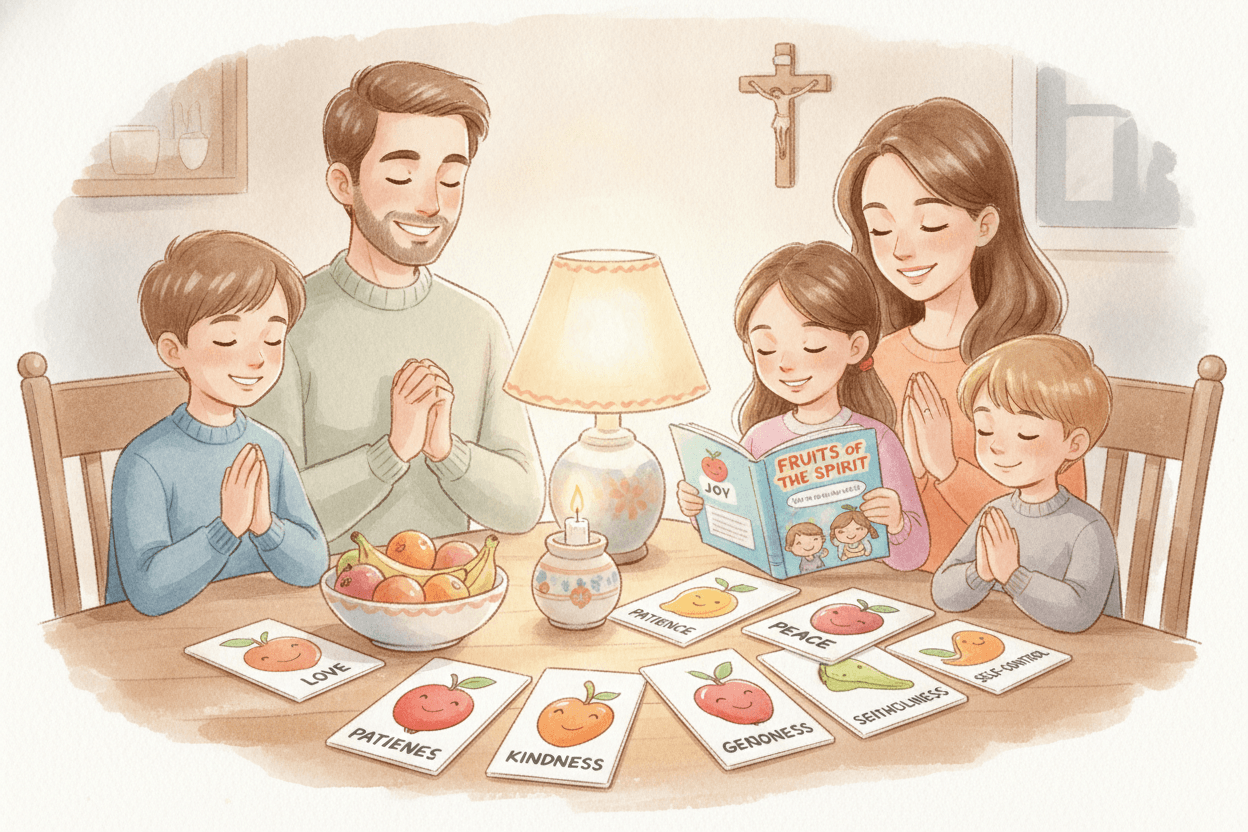
Tuesday dinner is often where our best plans meet a spilled cup, a missing fork, and one child who is absolutely certain he had the blue plate yesterday. That is not a failure of family prayer. It is a fine place to practice one small fruit of the Holy Spirit. At our table, we do better when we do not try to fix every attitude, sibling argument, and forgotten chore at once. We pick one thing.
Choose patience, kindness, generosity, or self-control for the next seven days. Then give it a visible shape. Patience might mean waiting for a turn without complaining once a day. Kindness might mean inviting a sibling into a game or speaking gently when someone makes a mistake. Generosity could be sharing the last cookie, a toy, or a little time helping Dad carry groceries. Self-control may look like stopping, taking one breath, and using calm words before shouting. Small enough to remember is usually better than impressive enough to forget.
Before school, a meal, or the drive to practice, say one short prayer together: “Holy Spirit, help me grow in patience today.” Change the fruit word as needed. The prayer is not a magic button that makes everybody cheerful by 7:15 a.m. If only. It is a way of helping children remember that they are not trying to be good all by themselves. They can ask for help, then make the next good choice in front of them.
At bedtime, keep the conversation gentle and brief. Ask: “When did I practice this fruit?” “When was it hard?” “Where did God help me?” Let children answer in their own words. A child may say, “I did not hit my brother,” and that can be an honest beginning. Notice effort. Thank God for one small step. If the day went sideways, as days sometimes do, simply begin again tomorrow. Grace and practice belong together.
The BibleHeroes Fruits of the Holy Spirit comic can be a cheerful companion here, especially for children who open up more easily while looking at pictures than while facing three questions from Mom and Dad. Read a page, point to a character’s choice, and ask what your child might do in a similar moment. Repeat this simple rhythm during ordinary weeks, not only when your family needs a reset. Lasting faith is often formed there: around a noisy table, after a hard day, with one fruit, one prayer, and one more chance to try.
In contrast, the fruit of the Spirit is love, joy, peace, patience, kindness, generosity, faithfulness, gentleness, and self-control. Against such there is no law.
Frequently asked questions
What are the fruits of the Holy Spirit for kids?
The fruits of the Holy Spirit are good habits and attitudes God helps children grow, such as love, patience, kindness, generosity, gentleness, and self-control. Kids practice them in ordinary moments, like sharing a snack, waiting for a turn, or using calmer words after getting upset.
What are the nine fruits of the Holy Spirit?
St. Paul names love, joy, peace, patience, kindness, generosity, faithfulness, gentleness, and self-control. Catholic tradition also speaks of twelve fruits, adding charity, goodness, modesty, and chastity. Families do not need to memorize every fruit at once; focusing on one can make it practical.
How can I teach my child the fruits of the Holy Spirit at home?
Choose one fruit for the week and give it a visible, realistic action, such as waiting without complaining once or helping a sibling without being asked twice. Pray briefly in the morning, then talk at bedtime about when it was practiced, when it was hard, and where God helped.
What is the difference between the gifts and fruits of the Holy Spirit?
The gifts of the Holy Spirit are God’s help, including wisdom, understanding, and courage. The fruits are what begin to appear in a child’s life when he or she cooperates with that grace, such as choosing patience, peace, or self-control.
How do I help my child practice patience and self-control after a meltdown?
Treat the moment as a chance to try again rather than as a failed test. Encourage your child to pause, take one slow breath, and use kinder words—even if they remember only after yelling. Praise the effort to repair and restart, because growth happens through repeated small choices.
Sources: vatican.va · vatican.va · vatican.va · vatican.va · vatican.va · vatican.va · bible.usccb.org · bible.usccb.org · bible.usccb.org
Scripture quotations in this article use the NABRE translation.