Easter Morning With Kids:Wonder at the Empty Tomb
When a child asks where Jesus went, John 20 offers a clear answer wrapped in holy mystery. Explore how to explain the empty tomb simply while preserving the joy and wonder of Easter morning.
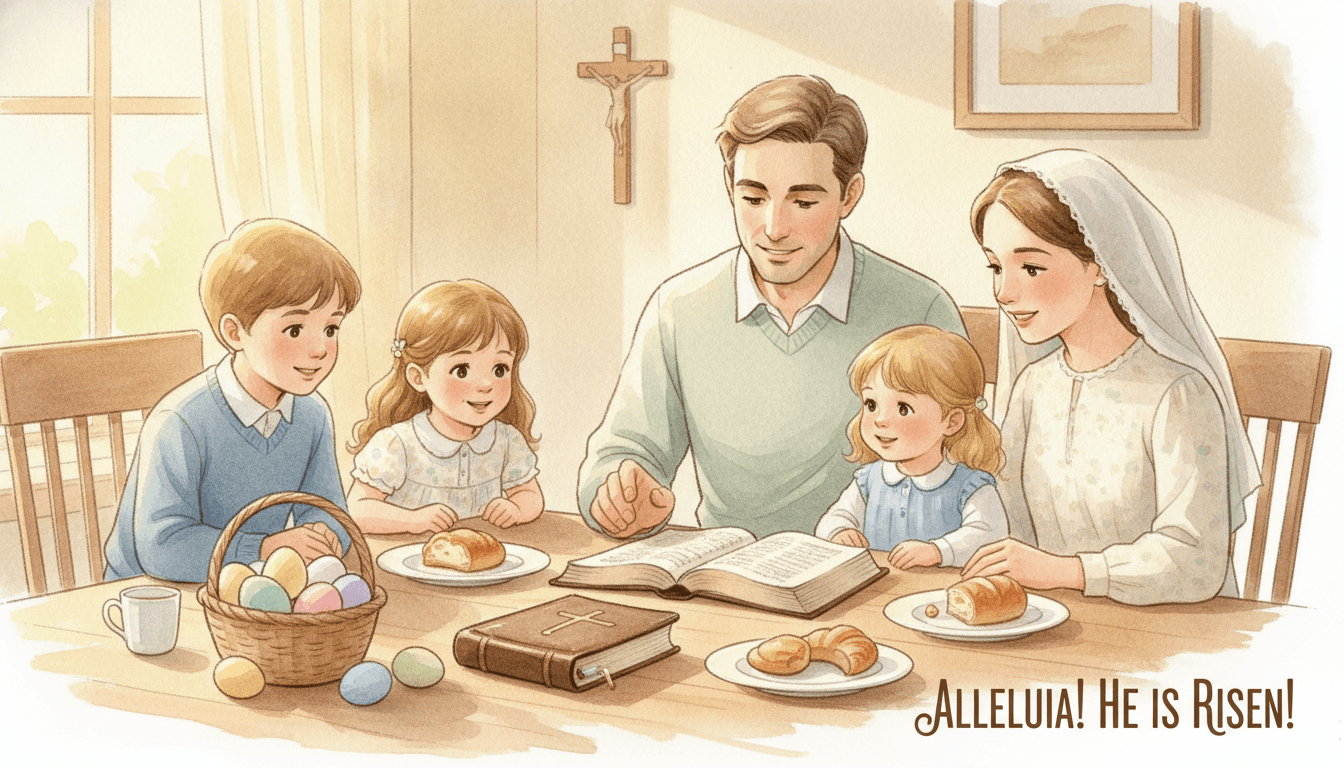
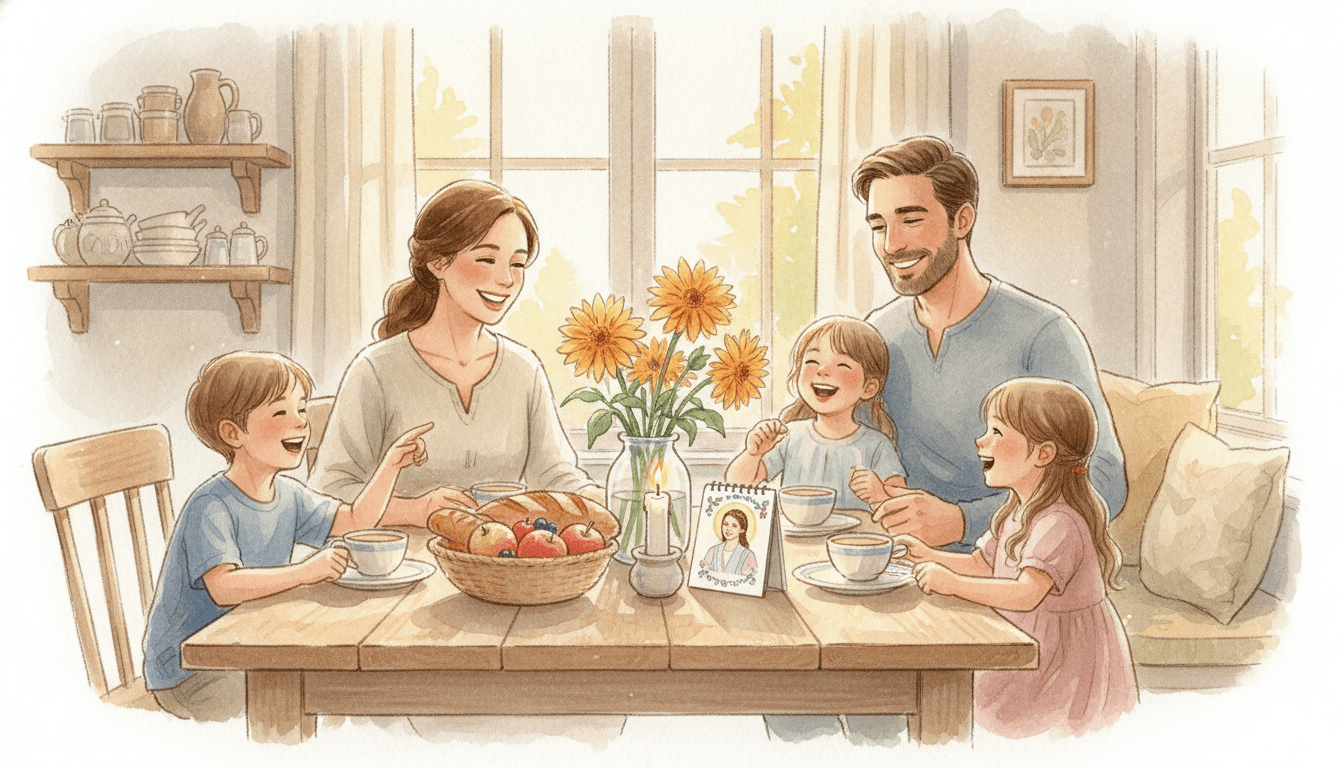
One Easter morning, a child at our table looked up from a half-peeled egg and asked, “But where did Jesus go?” That simple question gets to the heart of John 20. We can give our kids a clear answer without trying to explain away the wonder.
Start With One Clear Sentence
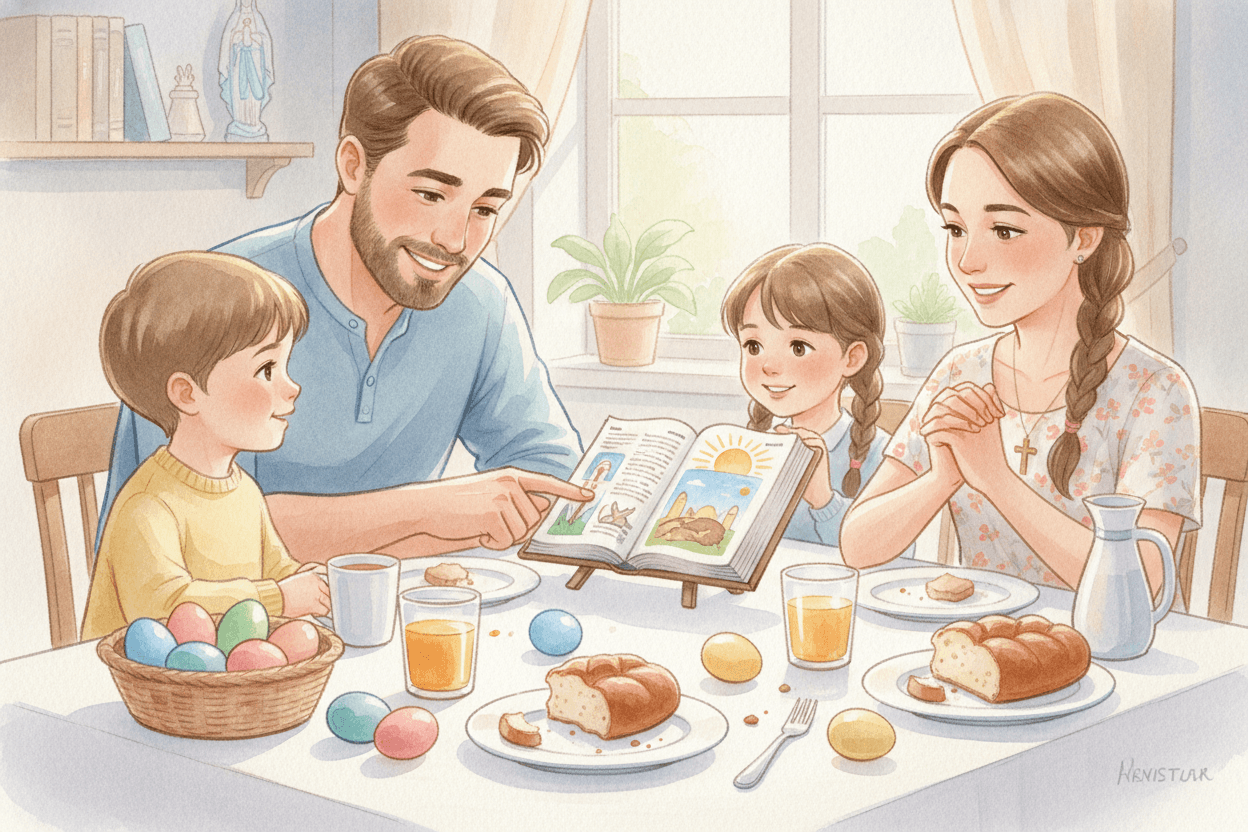
One Easter morning, one of my kids stood in the kitchen holding a chocolate egg and asked, “But where did Jesus go?” The ham was warming, someone had already lost a shoe, and we were supposed to leave for Mass in ten minutes. Not exactly the setting for a long theology lesson. So I gave the shortest answer I knew: “The tomb was empty because Jesus is alive.” He nodded, took another bite, and asked whether Jesus could walk through walls. Kids keep us humble.
That one sentence is a good place to begin. Jesus really died. His friends really placed his body in a tomb. A large stone closed the entrance. Then, on Easter morning, the stone had been moved and his body was not there. God had raised Jesus from the dead. This was not a trick, a pretend story, or a way of saying that the disciples remembered him fondly. Jesus was alive in a new and real way.
We do not have to explain every part at once. In Luke’s Gospel, the women arrive expecting to find Jesus in the tomb. Instead, they hear, “Why do you seek the living one among the dead? He is not here, but he has been raised.” There is surprise in that moment. There is fear, confusion, and joy. The first Easter morning was not calm and tidy. That makes sense to children—and, frankly, to parents trying to button a dress shirt while locating the missing shoe.
Here’s what landed in our house: tell the facts, then leave room for wonder. After saying that Jesus is alive, pause. Let your child ask the next question. If no question comes, try one simple prompt: “What do you think Jesus’ friends felt when they found the tomb empty?” You may hear “scared,” “happy,” or “confused.” All three fit the Gospel. You do not need to turn the conversation into a courtroom argument. The empty tomb points beyond itself. Jesus later appeared to Mary Magdalene and to his disciples. The Christian claim is not only that the tomb was empty. It is that Christ lives.
Parents can carry this sentence into Easter Mass too. Whisper it when your child notices the Easter candle. Repeat it after the Alleluia. Say it again at breakfast when everyone is tired and the candy wrappers have begun multiplying. “The tomb was empty because Jesus is alive.” Big truths often take root through small repetition. We say the truth plainly, answer what our children actually ask, and trust that wonder can grow without our forcing it.
Why do you seek the living one among the dead? He is not here, but he has been raised.
Let John 20 Tell the Story
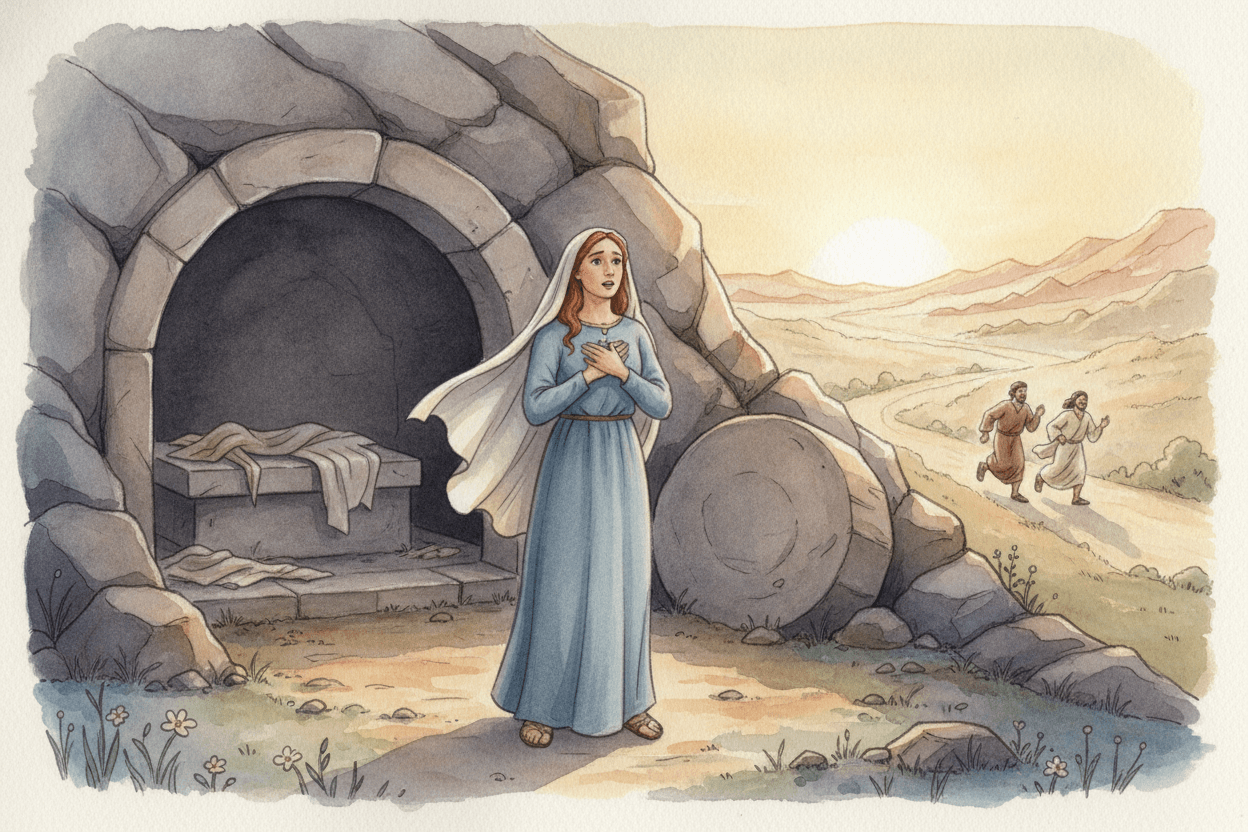
Last Easter, one of our kids was already asking about chocolate before breakfast. Another could not find a shoe. That is about when I opened the Bible to John 20. The room was noisy, but the first detail caught their attention: Mary Magdalene went to the tomb while it was still dark. Kids know what dark feels like. They know the hallway shadows before sunrise. So I asked them to picture Mary walking toward the place where Jesus had been buried, carrying her sadness with her.
Then she saw that the stone had been removed. John does not rush past this. There is a real tomb and a real stone, and something is wrong—or wonderfully right. Mary runs to Peter and the beloved disciple. Then they run too. One gets there before the other. Peter goes inside. The story has movement, questions, and breathless people trying to understand what they are seeing. Read it slowly enough for children to build the scene in their minds.
The burial cloths are still there. That detail matters. Jesus was really dead and really buried. On Easter morning, the tomb was really empty because God raised him from the dead. This was not a trick or a story the disciples invented to cheer themselves up. Still, John does not turn the scene into a tidy proof lesson. Mary is confused. The disciples are racing. Belief begins before they fully understand. There is room for wonder.
At our table, here’s what landed: I asked, “What do you think Peter felt when he stepped inside and saw the cloths?” The answers were better than a lecture. Scared. Confused. Excited. Maybe shaky. One child said Peter probably looked behind him to make sure John was there. That made sense to me. Questions like this let a child stand inside the Gospel scene. They are not being tested for the correct answer. They are being invited to look closely.
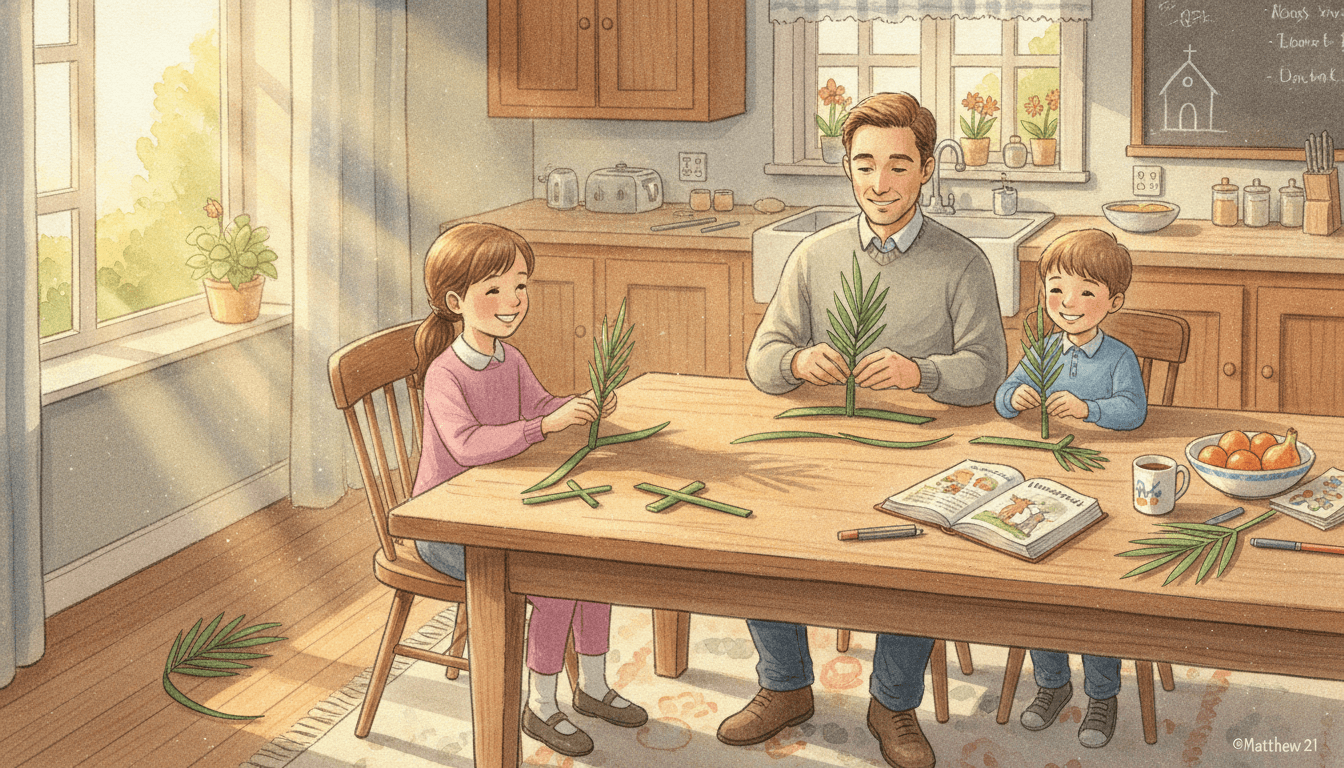
One small thing we tried was acting out the passage. A blanket became the burial cloth. A couch cushion became the stone. Two children raced down the hallway as Peter and John, which added a little too much realism. Afterward, we came back to the simple truth: the empty tomb points beyond itself. Jesus later appears to Mary Magdalene and to the disciples. He is not merely missing. He is alive. When children hear John 20 this way, the physical details carry the teaching. Darkness. A moved stone. Running feet. Cloth left behind. An empty place that opens into Easter joy.
he saw and believed.
Do Not Rush Past the Mystery
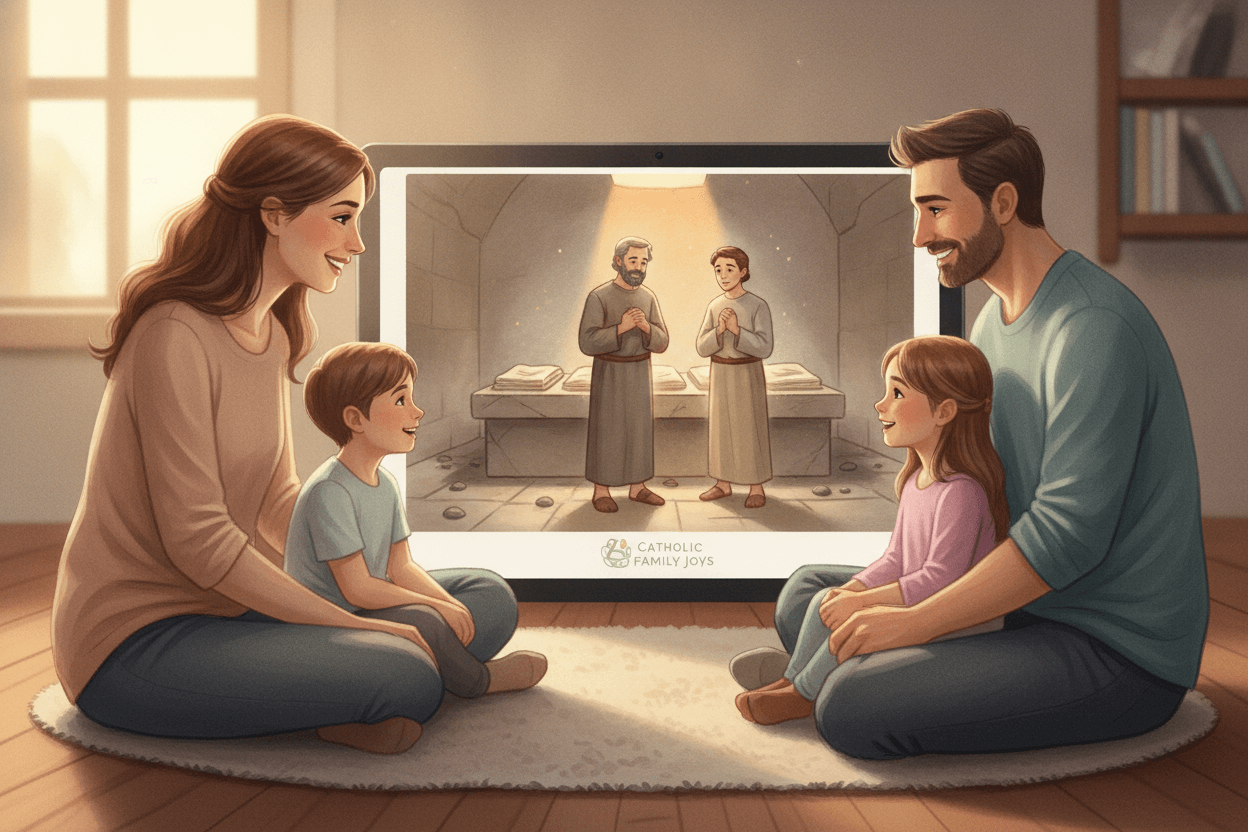
One Easter morning, one of my kids stared at the little wooden tomb on our table and asked, “But how did Jesus get out?” I started forming a long answer. Then I stopped. The eggs needed hiding, someone had lost a shoe, and my theology lecture was clearly not going to help the kid in front of me. So I said, “We do not know exactly how it happened. We know the tomb was empty because Jesus is alive.” He looked at the tomb again. That short answer gave him room to wonder.
Parents can feel pressure to explain every detail. We want the story to make sense. We may even worry that a child’s question is a test we have to pass. But John 20 does not read like a tidy proof lesson. Mary Magdalene arrives while it is still dark and finds the stone removed. Peter and the beloved disciple run. They look at the burial cloths. One believes, yet the disciples do not fully understand everything at once. Surprise, confusion, and growing faith are already part of the Gospel.
That means we do not need to rush our children from the empty tomb to a polished explanation. We can state what the Church teaches in simple, concrete words: Jesus really died. He was really buried. On Easter morning, his tomb was really empty because God raised him from the dead. Then we can pause. The empty tomb is not a riddle that adults must solve piece by piece. It is a real sign pointing beyond itself to the living Jesus, who later appears to Mary Magdalene and the disciples.
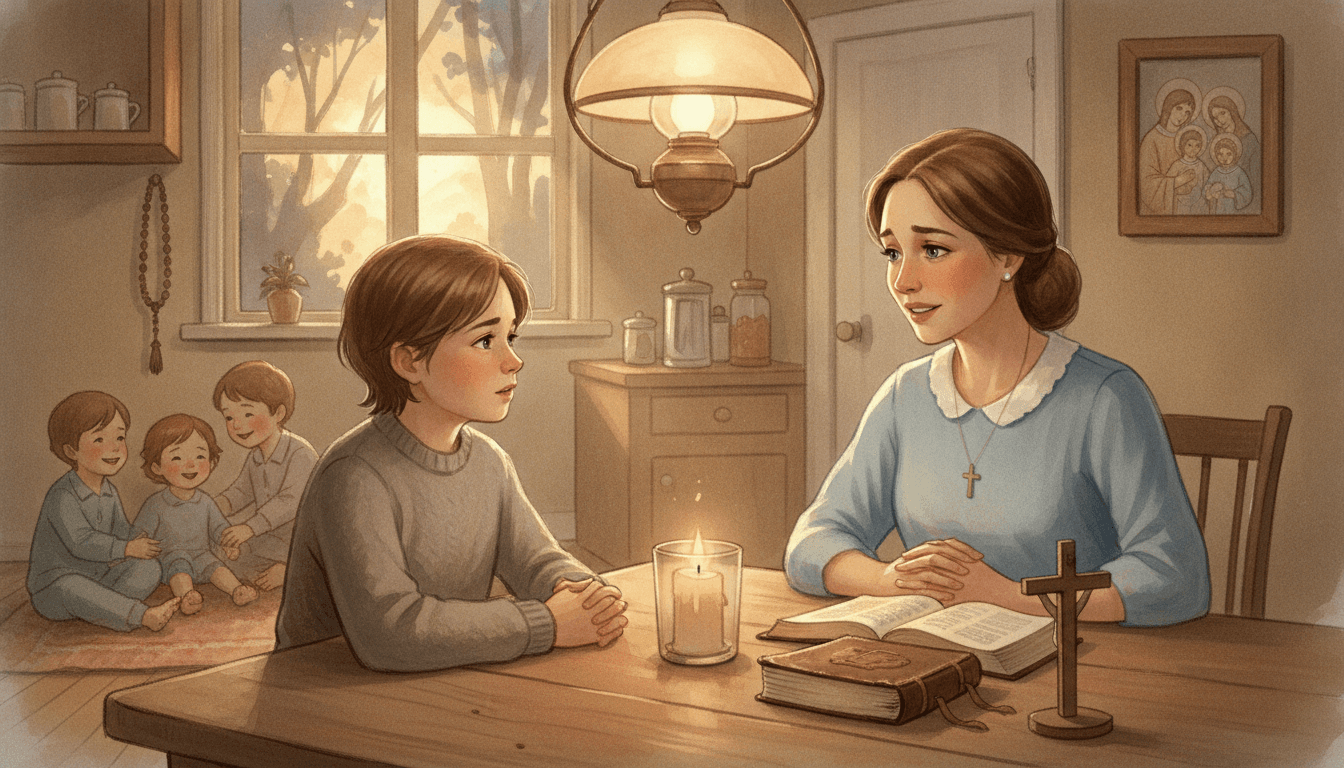
One small thing we tried was answering a question with a question. “What do you think Peter felt when he saw the cloths?” A child might say scared, excited, confused, or all three. Let that answer sit for a moment. If your child asks something you cannot answer, “I wonder about that too” is not a failure. It can be honest faith. We know what happened, but the Resurrection remains greater than our ability to picture every second of it.
You can carry that wonder into Easter Mass. Point out the Easter candle. Listen for the Alleluia. Notice how the church looks and sounds different. After Mass, ask each child to name one sign of Easter joy they noticed and one way they can bring that joy home. Their answers may be profound. They may also mention flowers, bells, or the doughnuts after Mass. That is fine. In our house, faith often arrives with crumbs on it. The goal is not to squeeze all the mystery out of Easter. It is to help our children stand before the empty tomb and know, with growing joy, that Jesus is alive.
Ask Questions That Open the Door to Wonder
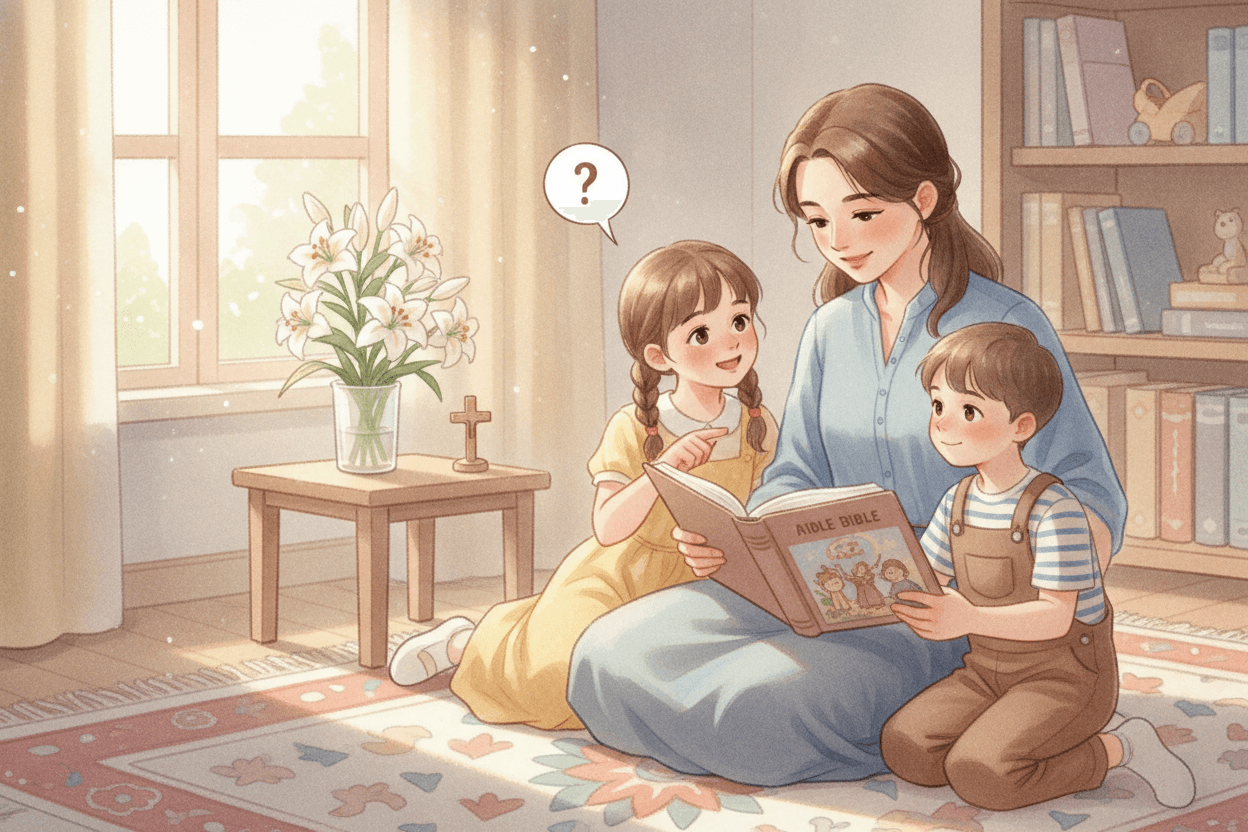
One Easter morning, one of my kids stared at the picture of the empty tomb and asked, “But where did Jesus put his clothes?” That was not the question I expected. I had prepared myself for something weighty about death, angels, or rising from the dead. Instead, we were discussing wardrobe logistics before breakfast. But that question told me something important. My child was inside the story. The tomb had become a real place, and the burial cloths were real enough to require an explanation.
Questions help children stay with the scene in John 20. Try asking, “What do you think Peter felt when he saw the cloths?” A younger child may say he was scared. Another may say he was surprised or out of breath from running. An older child might notice that Peter did not understand everything at once. All of those answers give you somewhere to begin. You do not need to correct every detail immediately. Listen first. Ask, “What makes you think that?” Then read the scene again together.
Another question we have tried in our house is, “Why do you think God used an empty tomb instead of showing Jesus immediately?” Children may offer answers that are imaginative, funny, or unexpectedly thoughtful. Let them wonder out loud. The Gospel gives us room for that. Mary sees the stone moved. Peter and the beloved disciple run. They find the cloths. Belief begins to grow, but understanding comes gradually. Easter morning is not presented as a neat classroom explanation. It is full of movement, confusion, clues, and surprise.
Still, wonder needs a firm place to land. After listening, return to one clear truth: the tomb was empty because Jesus is alive. Jesus was really dead and really buried. God raised him from the dead. The empty tomb was not a trick, and it was not the end of the story. The living Jesus later called Mary by name and appeared to his disciples. For older children, you can point out that the burial cloths and the disciples’ growing belief mattered. God gave real signs to real witnesses.
One small thing we tried was saving one question for after Easter Mass. At our table, each child named one sign of Easter joy noticed at church—the Easter candle, the Alleluia, the flowers, or the joyful readings. Then we asked, “How can we bring that joy home today?” The answers were modest: share candy, help a sibling, call Grandma, stop fighting over the plastic eggs. That is fine. Big truths often enter family life through small doors. Ask the question. Hear the answer. Smile when it takes an odd turn. Then gently bring the conversation back to Jesus, alive and calling each of us by name.
Jesus said to her, “Mary!” She turned and said to him in Hebrew, “Rabbouni,” which means Teacher.
Help Kids Find the Story at Easter Mass
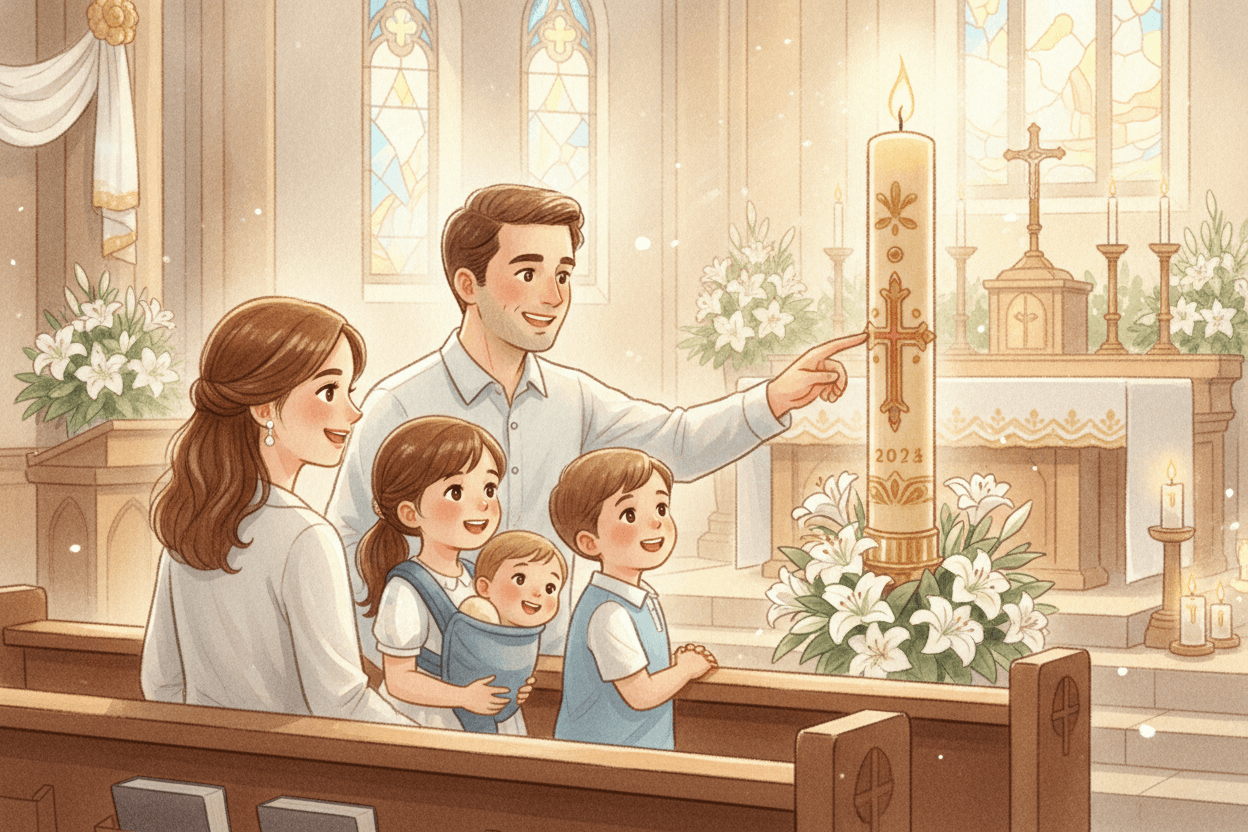
Last Easter, one of my kids spotted the tall Easter candle before we had even settled into the pew. Another noticed the flowers. A third was mainly concerned about whether we had brought enough snacks for the ride home. That is family Mass. Children take in the room one detail at a time, and those details can help them find the Gospel story happening all around them.
Before Mass begins, quietly point out two or three things. The large candle tells us that Jesus is alive and his light has overcome death. The flowers show joy and new life. The priest’s white or gold vestments mark this as a great feast. Keep it simple. You do not need to explain every symbol while also removing a dropped hymnal from under the pew. Give your child one thing to watch for, such as the candle, and one thing to listen for: the Alleluia.
That Alleluia matters. We have gone without it during Lent, and now it returns because Easter has come. You might whisper, “Listen. The Church is singing with joy because Jesus is alive.” When the Gospel is proclaimed, connect it to what they already heard at home. Mary saw the stone removed. Peter and the other disciple ran to the tomb. The burial cloths were left behind. The tomb was empty because Jesus is alive.
But Easter Mass is not a history lesson with nicer music and more lilies. We are not merely thinking about something that happened long ago. The risen Jesus gathered his disciples, stood among them, and gave them his peace. He still gathers his people. We hear his word, receive him in the Eucharist, and celebrate his victory together. The candle, readings, bells, colors, and songs are not decorations around the main point. They help our bodies and senses join the Church’s Easter praise.
One small thing we tried was asking two questions after Mass: “What sign of Easter joy did you notice?” and “How can we bring that joy home today?” The answers were not always lofty. We heard about bright flowers, loud singing, doughnuts, and a baby waving during the Alleluia. Fair enough. Then we chose one simple act: call a grandparent, forgive a sibling, share a treat, or sing the Alleluia again at our table. Big truths often land through small moments. Easter enters the home that way.
Jesus came and stood in their midst and said to them, “Peace be with you.” When he had said this, he showed them his hands and his side.
Try This Simple Easter Practice This Week
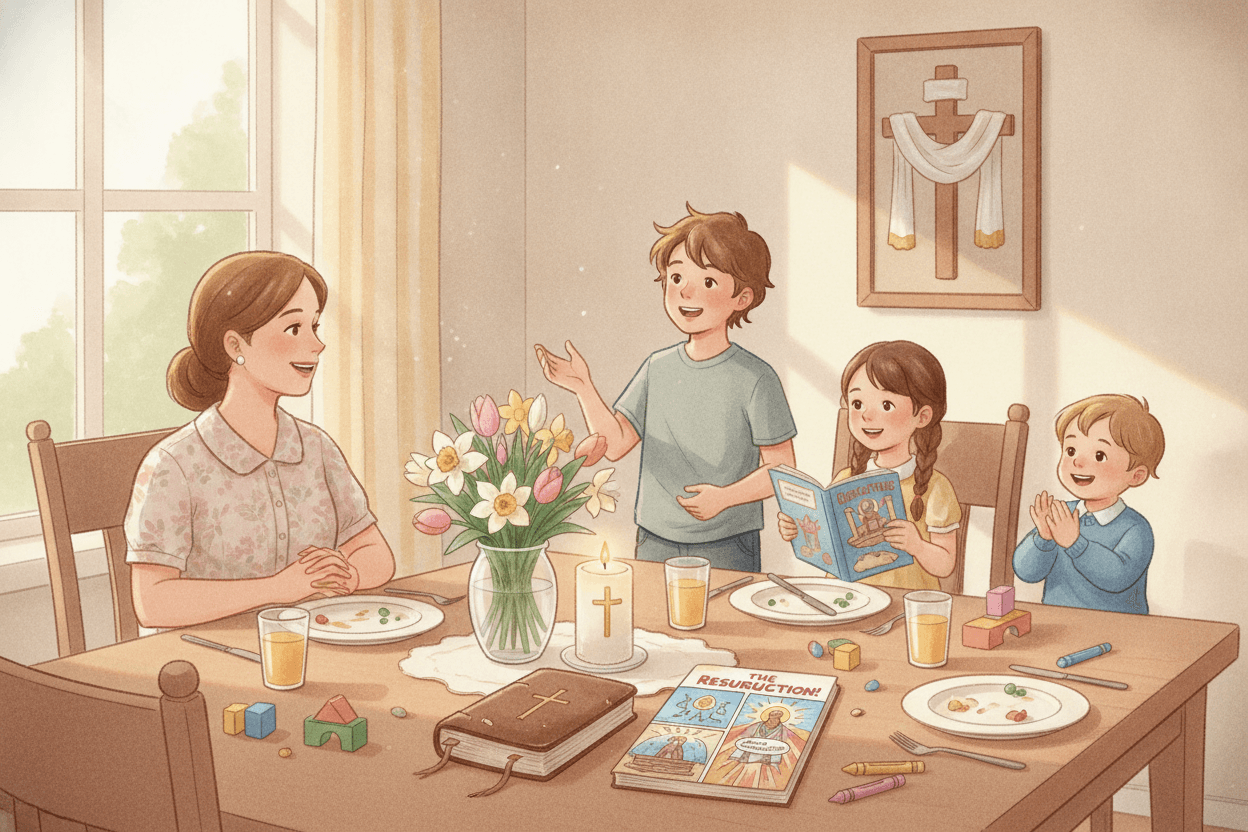
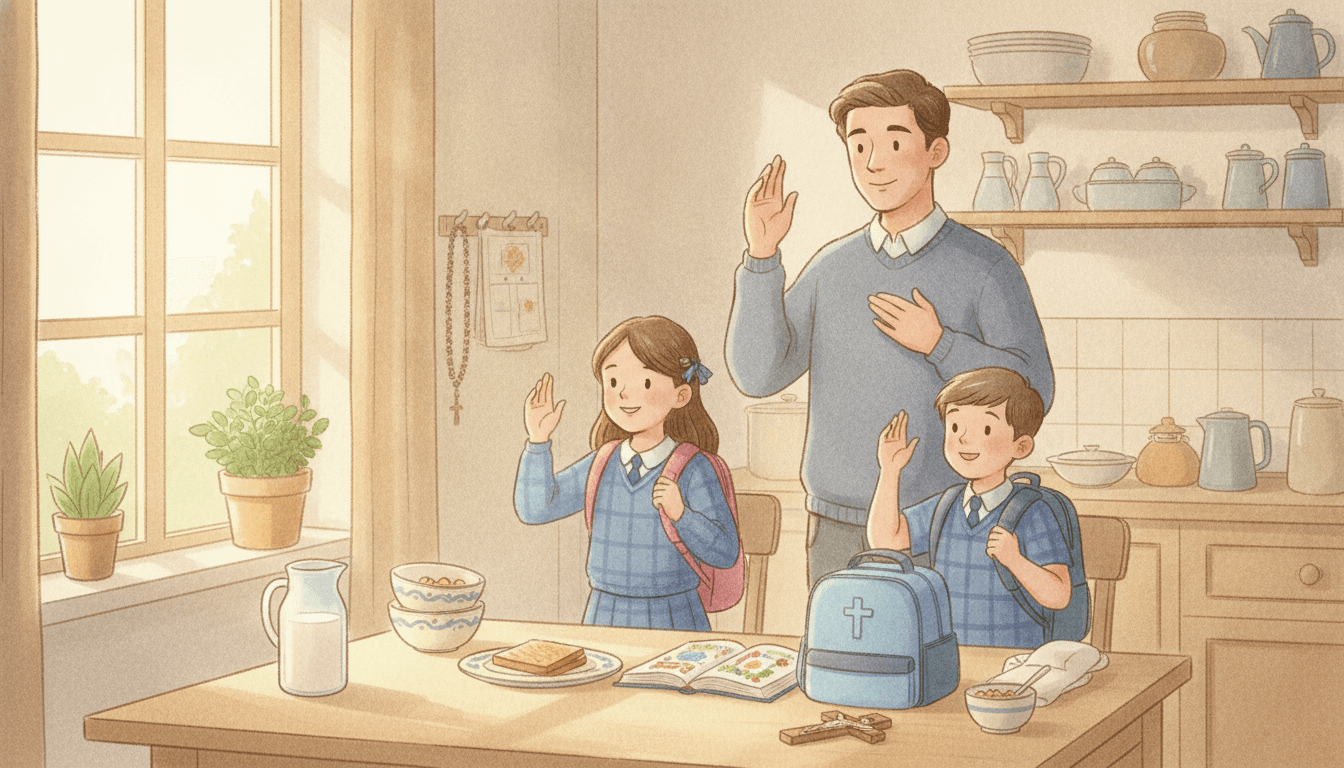
Last Easter, we were looking for one child’s missing shoe while another was asking whether chocolate counted as breakfast. So yes, I understand why adding a family practice before Mass can sound ambitious. But this does not need to be elaborate. Set aside five minutes before everyone gets dressed—or while they eat toast—and read John 20:1-9 aloud. Let the children hear about Mary Magdalene arriving in the dark, the stone moved away, and Peter and the beloved disciple running toward the tomb. Read it slowly. The running usually gets their attention.
After the reading, give them one simple assignment for Mass: notice one sign of Easter joy. Younger children may spot the Easter candle, flowers, white vestments, or a whole lot of Alleluias. Older children may notice how the readings sound different or how the music changes the room. You are not testing them. There is no prize for the most theological answer. Tell them that every person gets to choose one thing. This turns all that color, light, sound, and movement into something they are ready to receive.
Then let Mass do its work. Resist the urge to whisper explanations through every song and prayer. I have tried that. It mostly produces confused looks and an irritated spouse. Instead, offer one quiet reminder when you enter the church: “Remember to look for your sign of Easter joy.” If a child notices the candle and points at it with all the subtlety of an airport runway worker, that still counts. Faith is being formed even when the pew is crowded and someone drops the kneeler.
At the family meal, invite everyone to share what they noticed. At our table, adults answer too. One person might name the Alleluia. Another might say the bright flowers. A small child may report that Father looked happy. Receive each answer, then ask one more question: “How can we bring that Easter joy into our house this week?” Keep the answers doable. Call Grandma. Forgive a sibling. Bring cookies to a neighbor. Say thank you without being reminded. Put on a joyful song while cleaning the kitchen. Easter joy becomes easier to understand when children can practice it with their own hands.
One small thing we tried was writing everyone’s answer on a scrap of paper and placing the papers near our family Bible for the week. It gave us something to return to after the baskets were empty and the jelly beans had somehow reached every room. If your children want to keep following what happens after the empty tomb, read the BibleHeroes Resurrection comic together and let the pictures carry the conversation forward. Come back often to the sentence children can remember and parents can trust: “The tomb was empty because Jesus is alive.”
Frequently asked questions
How do I explain the empty tomb to young children?
Start with one clear truth: Jesus truly died and was buried, but on Easter morning the tomb was empty because God raised him from the dead. Keep the first explanation short, then let your child’s questions guide what you say next.
What should I say when my child asks where Jesus went?
Explain that Jesus was not simply missing or moved somewhere else—he was alive in a new and real way. The risen Jesus later appeared to Mary Magdalene and his disciples, showing that the Resurrection was more than an empty tomb.
How did Jesus get out of the tomb?
It is fine to tell children that we do not know exactly how the Resurrection happened. We know that the stone was moved, the burial cloths remained, and Jesus had been raised from the dead; the mystery is part of the wonder of Easter.
How can I teach kids about John 20 without giving a long theology lesson?
Read the scene slowly and draw attention to details children can picture: the early darkness, the moved stone, the running disciples, and the burial cloths. Ask what Mary, Peter, or John might have felt so children can enter the story without being quizzed.
Is it okay if my child feels confused by the Resurrection?
Yes. Mary Magdalene and the disciples also responded with confusion, fear, surprise, and growing faith, so children do not need to understand everything at once. Give an honest, simple answer and leave room for wonder.
What is a simple Easter activity for teaching the empty tomb story?
Use a cushion as the stone and a blanket as the burial cloth, then let children act out Mary’s visit and the disciples’ race to the tomb. Afterward, return to the central message: Jesus was not merely gone—the tomb was empty because he is alive.
Sources: bible.usccb.org · bible.usccb.org · vatican.va · usccb.org · usccb.org · catholic.com · wordonfire.org · formed.org
Scripture quotations in this article use the NABRE translation.