Catholic Family Service Ideas Kids Can Actually Do
Turn ordinary family routines into Catholic acts of service kids can truly manage, from assembling pantry bags and writing cheerful notes to visiting neighbors and praying for people in need—small, co
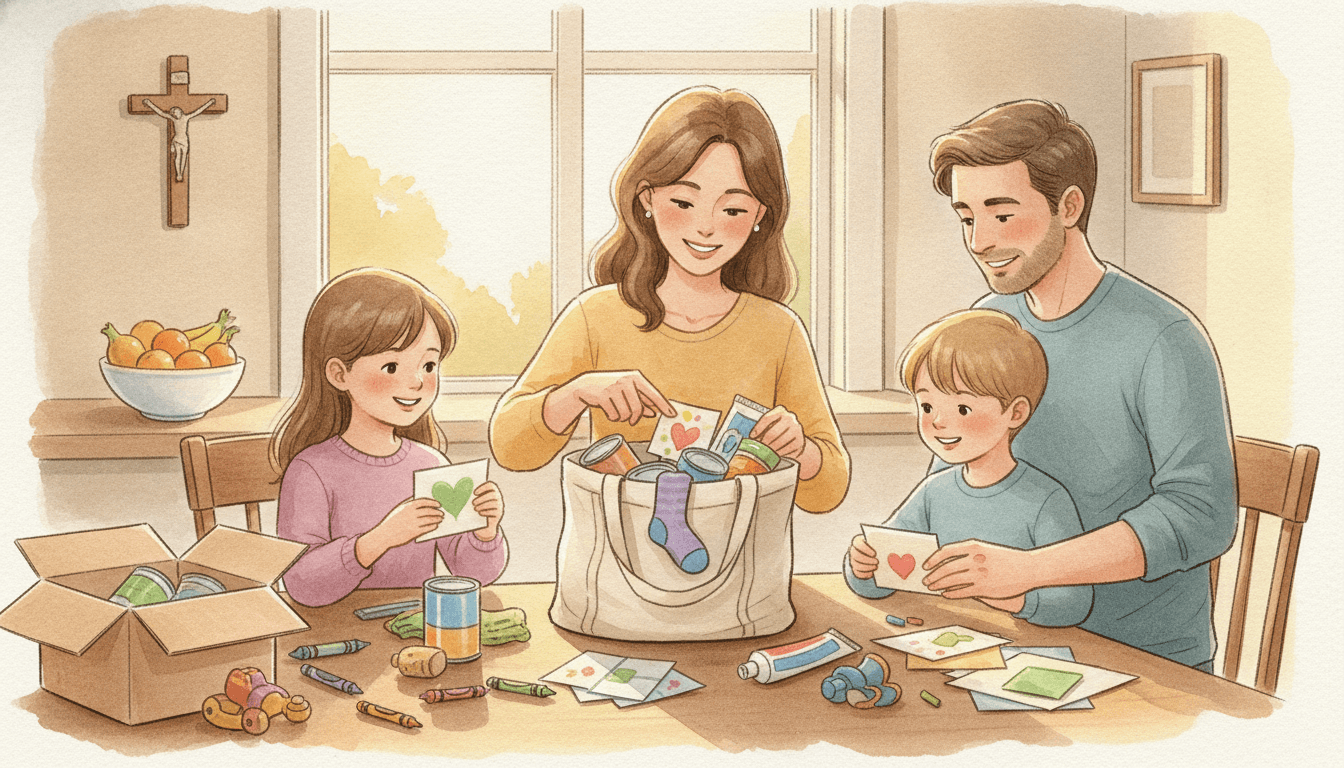
The last time we packed a bag of pantry food, one child carefully counted cans while another asked if granola bars counted as dessert. It was not a grand volunteer day. It was twenty messy minutes at our table—and it gave the kids a real way to love someone they would probably never meet.
Why Small Service Counts More Than a Big Plan
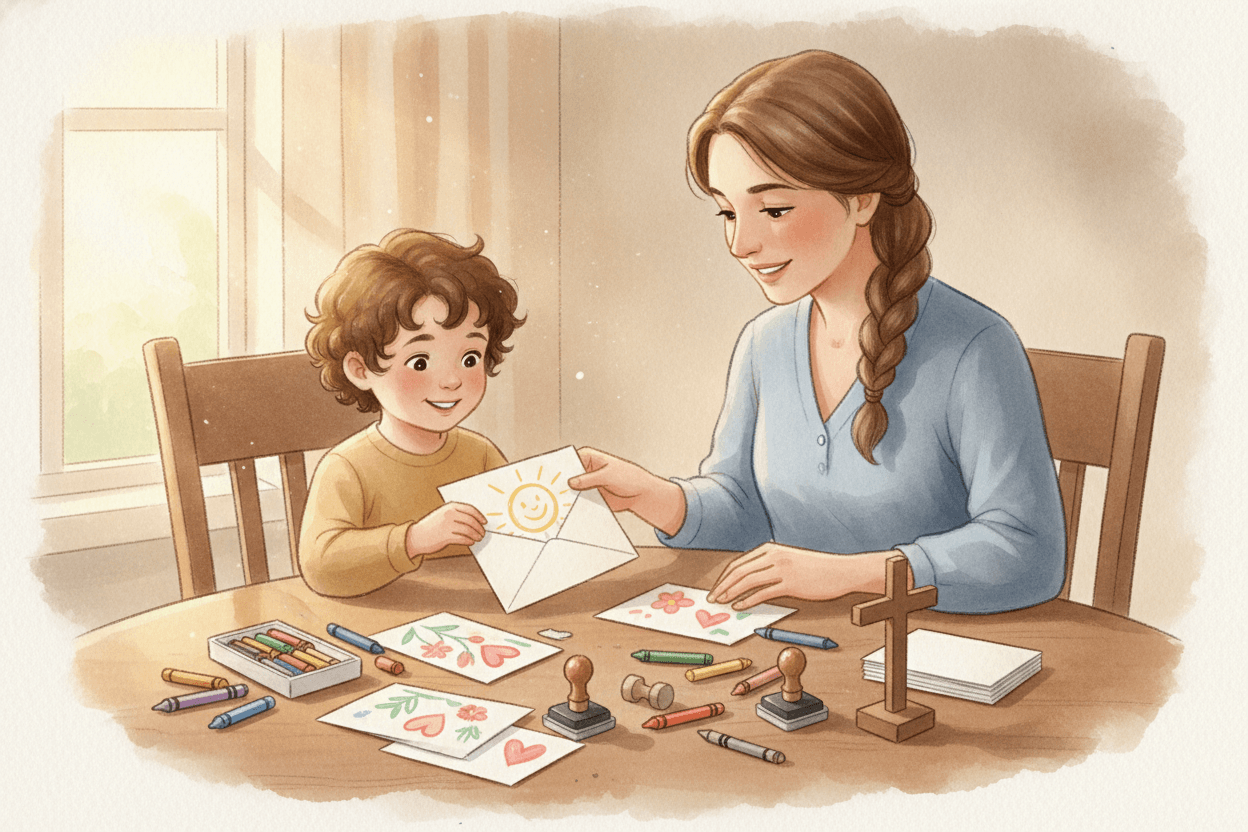
You do not need to recruit your seven-year-old for a three-hour shift at a soup kitchen before lunch. Honestly, some Saturdays, getting everyone into matching shoes is its own service project. A child can begin much closer to home: carrying a bag of groceries to an older neighbor’s door, drawing a card for someone who is sick, or placing cans in a box for the parish food drive. These are not pretend versions of service. They are real help, offered by real people.
The United States Conference of Catholic Bishops calls families “the first schools of compassion and mercy, of solidarity and justice.” That school often looks less like a grand plan and more like a child sorting socks on the floor while somebody asks, “Who might need these?” Kids ages 6–9 learn through what their hands can do and what their eyes can see. They can count canned goods, pack toothpaste and granola bars, water a neighbor’s plants, wipe tables after a parish event, or write two honest sentences in a card.
Small jobs also leave room for the part adults sometimes rush past: noticing the person behind the need. Before making a meal for a sick friend, tell your child who it is for. Before collecting pantry items, check what the pantry currently needs. If you visit someone who is lonely, arrange it with that person’s consent, stay with your child, and bring a drawing or a few prepared questions. We are not sending kids out to “fix” people. We are teaching them to see, listen, and treat every person with dignity.
Jesus gives the pattern plainly: “For the Son of Man did not come to be served but to serve and to give his life as a ransom for many.” A child may not grasp every word yet, but he can understand this: Jesus served people, so we can serve people too. At our table, that can sound like, “We have extra. Who could use it?” or, “Mrs. Garcia is having a hard week. What could we do?” Faith lands when it has a name, a face, and a next step.
One small thing we tried was making service a short family rhythm instead of an occasional big event. Pick one task for this week: collect five pantry items, make a card, bring in a neighbor’s bin, or add someone’s name to your family prayers. Then ask three questions afterward: What did we notice? Whom did we serve? Where did we see Jesus? The answers may be wiggly and incomplete. That is fine. The habit is growing, one ordinary act at a time.
For the Son of Man did not come to be served but to serve and to give his life as a ransom for many.
Start With a Need Your Kids Can See
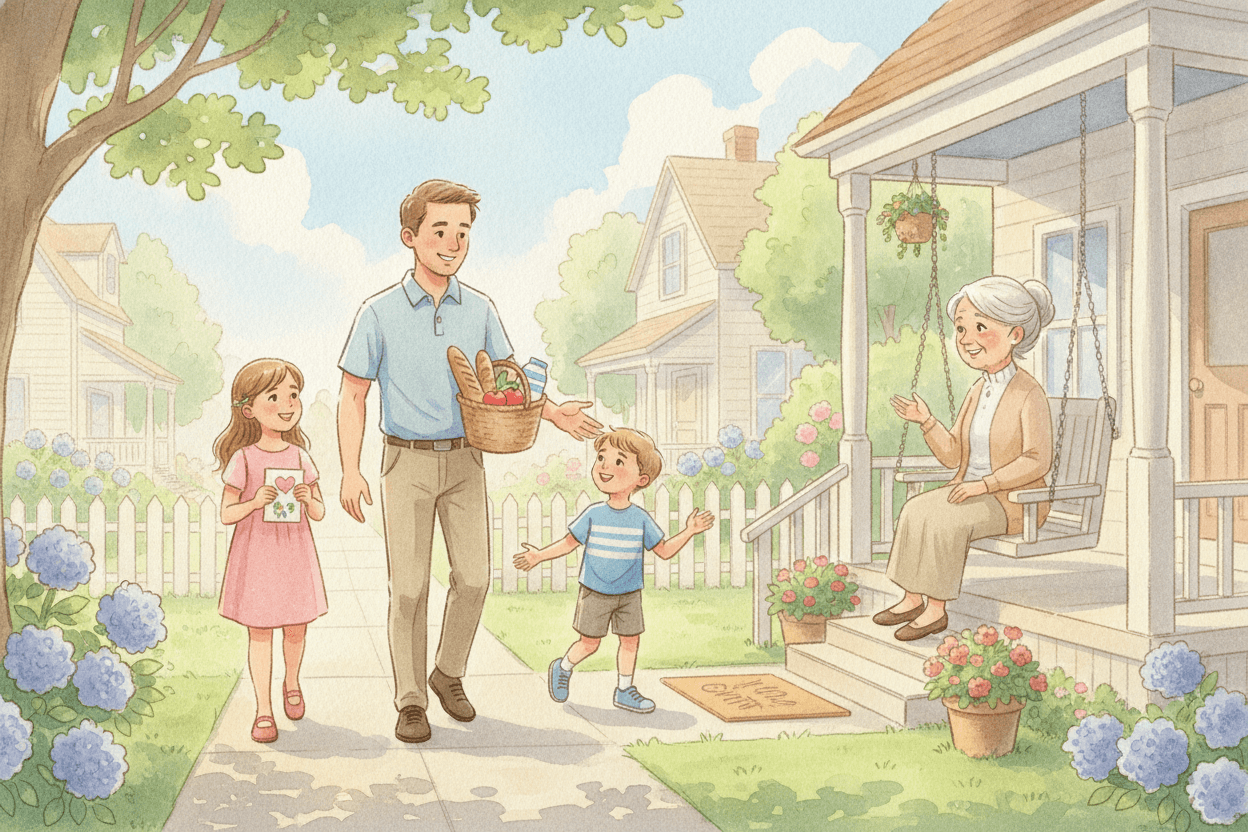
Last Tuesday, we noticed the porch light across the street was still on at breakfast. Our older neighbor had been away from her garden for a few days, and the pots by her steps looked tired. The kids filled two small watering cans, argued briefly over who got the blue one, and walked over with me. It took maybe ten minutes. Nobody needed matching T-shirts or a sign-up sheet. But they could see the need, and they could do something about it.
That is usually the best place to begin: close enough for your kids to understand. A family with a new baby or a bad cold may need dinner left at the door. An older neighbor may appreciate leaves raked, a trash bin rolled back up the drive, or a few plants watered while she is away. A parishioner who spends many days alone may welcome a card covered in crooked hearts and dinosaurs. Your parish food pantry may have a list of items it needs this month. Let the children help choose, count, sort, and pack the food. For ages 6 to 9, a real job with a clear finish line works wonders.
Ask before helping. This matters. A neighbor is not a family project, and a lonely person is not there to provide a lesson for our children. Call first. Ask what would actually be useful. Respect a no. If you visit someone, make sure the person wants company, bring an adult, and keep the visit simple. Your child can offer a drawing, ask a prepared question, listen to the answer, and say, “We are praying for you,” if that is welcome. No prying questions. No photos for social media. Just ordinary kindness with dignity.
One small thing we tried was keeping a paper on the fridge called “Who needs a hand?” When we heard that someone was sick, had a new baby, or needed prayers, we wrote it down. Then we picked one action: make soup, draw a card, collect canned beans, or pray one decade of the Rosary. This helped service stop feeling like a giant family assignment. It became part of the week, somewhere between homework, laundry, and finding the missing soccer cleat.
St. Paul gives the point in plain words: “rather, serve one another through love.” At our table, we can connect the action to a work of mercy without turning dinner into a lecture. Food for the pantry means feeding the hungry. A card and a visit can mean comforting the sorrowful. Watering a neighbor’s plants says, in kid-sized language, “We noticed you.” Afterward, ask: What did we notice? Whom did we serve? What can we do next? Their answers may be short. That is okay. The habit is taking root.
For you were called for freedom, brothers. But do not use this freedom as an opportunity for the flesh; rather, serve one another through love.
Five Catholic Service Projects for Ages 6–9
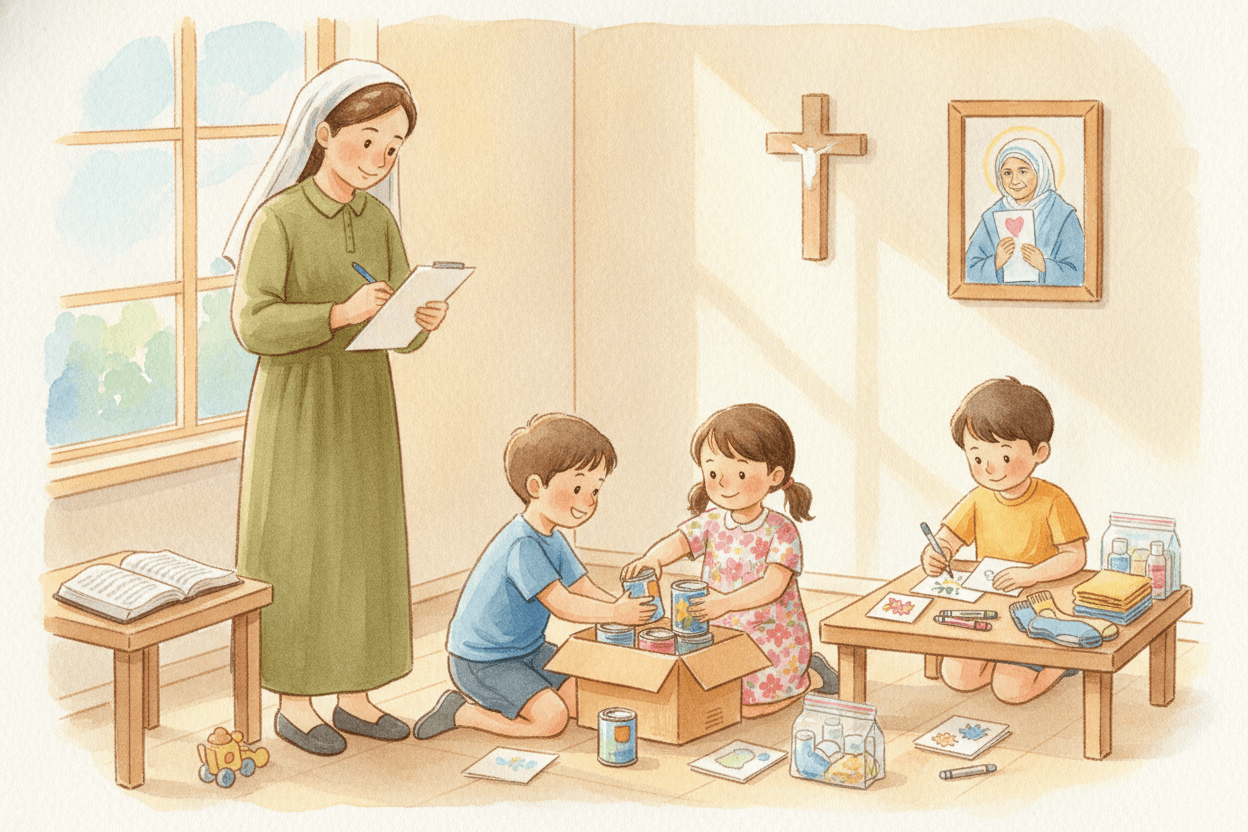
The kitchen counter was covered with granola bars, socks, and three markers with no caps. My youngest was very serious about drawing a smiley face on every bag. That is often what service looks like with ages 6–9: a small pile of useful things, a little mess, and a child learning that someone else’s hard day matters. James does not let us stop at kind words when a person needs food or clothing (James 2:15–16).
For the quickest project, make a neighbor-help basket. Prep takes about ten minutes, and close adult supervision is enough. Let children choose a few practical items: tea, crackers, tissues, a small bag of fruit, or a handwritten note. They can sort items, count them, decorate the basket, and carry light things to the door. This works well for an elderly neighbor, a new parent, or someone recovering from illness. Ask first if a drop-off would be helpful. A surprise is fun; an unwanted visit is not.
A food-pantry sort-and-pack project takes a little planning but gives kids clear jobs. Call the pantry before shopping or collecting donations, since current needs change. Then children can group shelf-stable food by type, count cans, check that packages are unopened, and pack bags with an adult. At our table, we sometimes make a simple list: pasta, sauce, peanut butter, cereal. Keep the focus on useful items, not on clearing out food nobody in the house wanted anyway. If the pantry allows family volunteers, follow its age and safeguarding rules.
Blessing bags are another good option when assembled for an agency that has approved them. Confirm exactly what the agency accepts before buying anything; some need socks and toiletries, while others cannot distribute certain items. Children can pack travel-size toothpaste, soap, wipes, socks, and agency-requested snacks into bags, then add a short encouraging note. They can also count each item before it goes in. The adult job is important here: work through the agency rather than handing bags out at random, and speak about the people receiving them with the same respect you would want for your own family.
For a quieter project, make cards for nursing-home residents. A child can draw a picture, write, “Thinking of you,” or sign only a first name. Call ahead to ask whether cards are welcome and whether there are rules about glitter, envelopes, or messages. Finally, bring a simple meal or snack to a sick family: children can wash fruit, pack crackers, decorate a bag, write a note, and carry a light container. Check for allergies and ask what would actually help. After any project, ask three questions on the ride home: What did we notice? Whom did we serve? What can we do next? That is how one helpful afternoon starts becoming a family habit.
If a brother or sister has nothing to wear and has no food for the day, and one of you says to them, 'Go in peace, keep warm, and eat well,' but you do not give them the necessities of the body, what good is it?
Use the Works of Mercy as Your Family’s Map
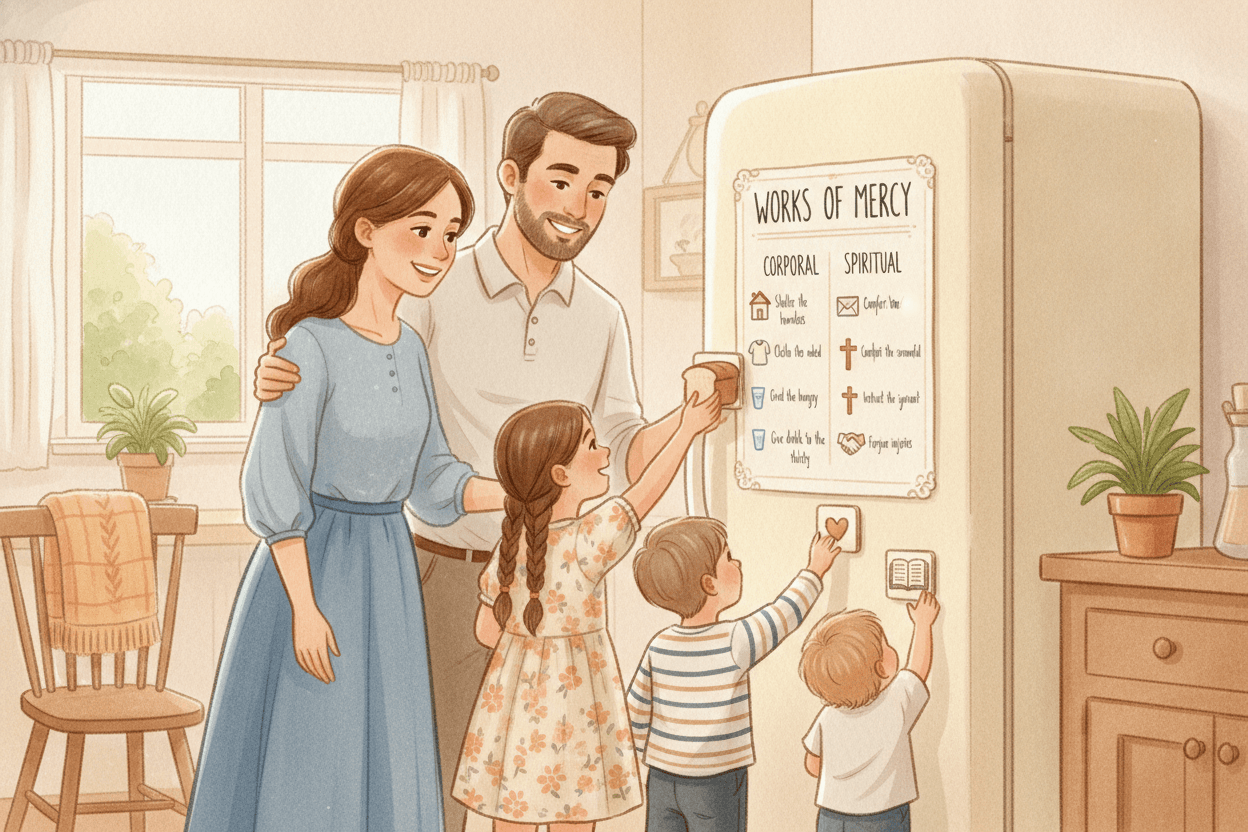
Last winter, our kids stood on kitchen chairs and sorted cans into grocery bags for the parish food drive. One child kept asking whether macaroni and cheese counted as a “good dinner.” Another was mostly interested in making the labels look fancy. Both were paying attention to someone else’s empty cupboard, and that was enough to begin.
The Church gives us a simple map for moments like this: seven corporal works of mercy and seven spiritual works of mercy. That can sound like a lot for a second grader with one shoe missing. But it is not a quiz to master. It is a way to notice people and respond with love. The corporal works deal with bodily needs: food, drink, clothing, shelter, care, visits, and material help. The spiritual works meet needs of the heart and soul: listening, teaching, comforting, forgiving, offering patient love, and praying.
For children ages 6–9, make the map small enough to hold. Feeding the hungry might mean choosing a few pantry items for a food collection and helping count them. Giving alms can look like placing toiletries and clean socks into a care package after you have checked what a local agency needs. Visiting the sick or lonely may be a drawing and a short, adult-arranged visit with a grandparent or neighbor. A child can carry a light bag, water a plant, or ask, “Would you like me to read you my book?”
The spiritual works often happen before anyone has found their coat. When a sibling is sad, your child can sit nearby and listen instead of rushing in with advice. When a younger child is stuck on a word, an older sibling can help him sound it out. When somebody spills juice for the third time before breakfast, forgiveness becomes very practical in our house. And when your family hears that someone is sick, worried, or grieving, pause for a short prayer by name. These are not tiny versions of mercy. They are mercy.
Jesus makes the direction plain in Matthew 25:35–36: people who are hungry, thirsty, ill, and alone are not interruptions to our faith. They are where love gets hands and feet. One small thing we tried was ending a service project with three questions: What did we notice? Whom did we serve? Where did we see Jesus? Then ask what can happen next. Maybe it is another bag for the pantry next month. Maybe it is a card this week. The habit matters more than a perfect family project.
For I was hungry and you gave me food, I was thirsty and you gave me drink, a stranger and you welcomed me, naked and you clothed me, ill and you cared for me, in prison and you visited me.
Help Kids Serve Without Making Anyone a Project
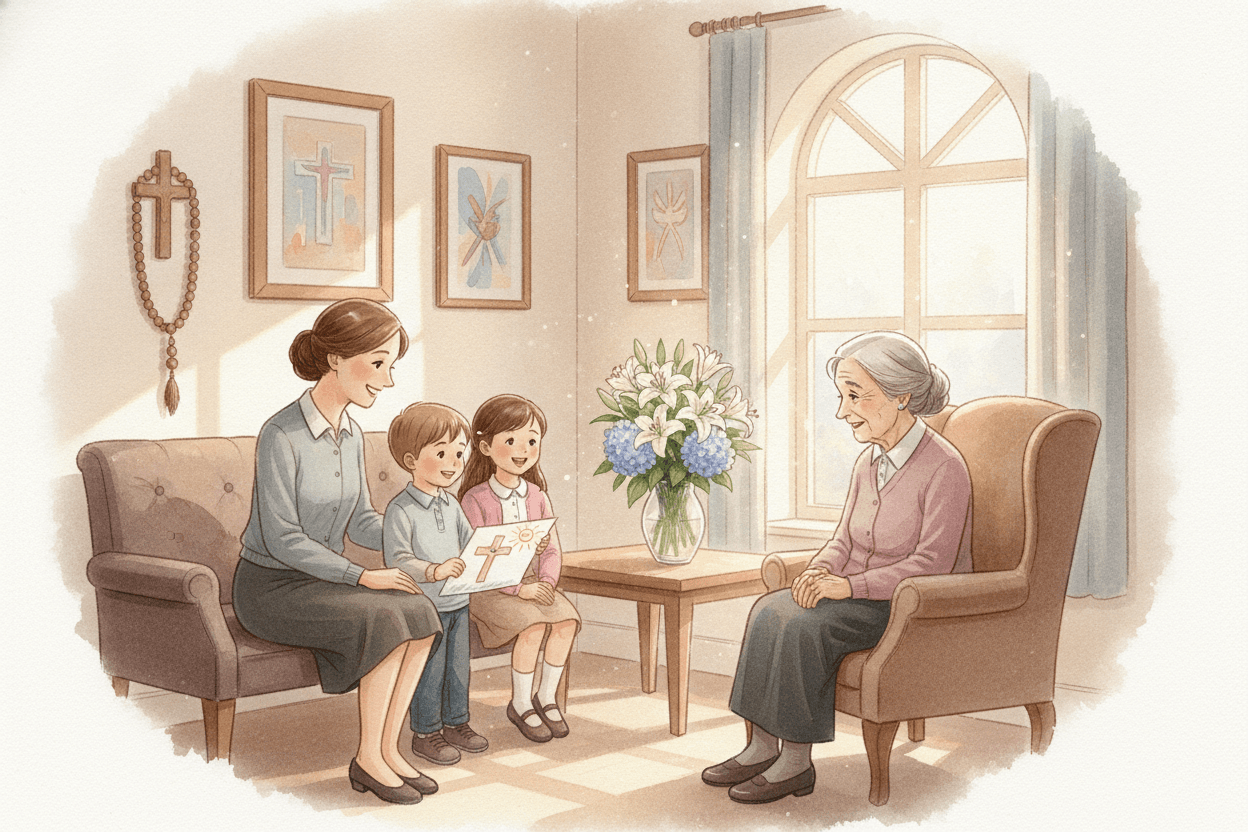
The first time we brought our kids’ drawings to an older parishioner, one of them asked, loudly and with complete innocence, “Why do you live here by yourself?” I wanted to disappear into the hallway. The woman smiled, thankfully. On the drive home, we talked about a simple rule: when we visit or help someone, we are not there to collect their story. We are there to be kind.
Before a visit, I give kids a few words they can actually use. “You can say, ‘I made this for you.’” “You can ask, ‘What was your favorite game when you were little?’” “You can ask, ‘Would you like to tell us about this picture?’” Those questions leave room for the other person to choose what to share. We skip questions about illness, money, family troubles, or why someone needs help. Kids do not need a long lecture. They need a few good sentences in their pocket.
It also helps to say this plainly: we do not serve people so they will praise us. The person receiving a meal may be tired. The pantry volunteer may be busy. A nursing-home resident may not feel like talking that day. That is okay. In our house, we practice listening more than talking. A child can offer a drawing, hold a door, carry a light bag, or sit quietly while an adult has a conversation. Quiet attention is not nothing. It is often the gift.
For any visit, start with permission. Arrange it ahead of time with the person, family member, parish staff, or agency. Keep an adult present, follow the parish or organization’s rules, and let staff guide the interaction. If a child is helping at a food pantry or parish project, give one clear job: sort cans, count boxes, wipe tables, or pack approved items. For care packages, check what the receiving organization currently needs before you shop. Socks and toiletries may be useful; so may not bringing items they cannot distribute.
Prayer needs the same respect. Rather than announcing a prayer over someone, teach children to ask, “Would you like us to pray for you?” If the answer is no, we smile and keep being kind. If the answer is yes, a child can say something short: “Jesus, please help Ms. Maria have a peaceful week. Amen.” Here’s what landed with our kids: serving is not about fixing somebody’s life. It is about seeing the person in front of us, treating them with care, and doing the next small helpful thing.
End Every Project With Five Minutes of Noticing
The drive home is usually where it happens. The kids have finished packing food bags or dropping off a meal, and somebody is asking for a snack before we have backed out of the parking lot. Somebody else has untied a shoe. The day can disappear under crumbs and seat belts unless we pause for five minutes and talk about what we just did.
At our table, a few simple questions work better than a speech. Ask: What did we notice? Whom did we serve? Which work of mercy did we practice? Where did we see Jesus? What can we do next? You can ask them in the car, while washing hands before dinner, or after bedtime stories. There is no need to force a perfect answer. A six-year-old may say, “I noticed the boxes were heavy.” An older child may say, “That lady was happy we made cards.” Both answers are a start.
If your family brought groceries to a pantry, name it plainly: we helped feed the hungry. If you made a card for a nursing-home resident, you practiced comforting someone who may be lonely. If you carried soup to a sick neighbor, you cared for the sick. The words help children connect the ordinary job in their hands with the works of mercy. They begin to see that sorting cans is not just sorting cans, even if half the cans rolled under the kitchen table first.
The question about seeing Jesus can feel big, especially after a busy Saturday. Keep it concrete. Maybe Jesus was in the neighbor who needed a meal. Maybe he was in the volunteer who patiently explained where the socks went. Maybe he was in your child who gave up the marker she wanted so her brother could finish his card. We do not need to manufacture a dramatic answer. We simply teach our children to look closely at people, not to look past them.
Then end with one next step small enough to survive a normal week. Put two pantry items on next week’s grocery list. Water the neighbor’s plants on Tuesday. Add a lonely person’s name to family prayers. One small thing we tried was letting each child choose that next step. The choices were not always practical—one child once proposed bringing “one hundred muffins”—but the instinct was right. Five minutes of noticing helps service become more than a completed task. It becomes a family habit of recognizing needs, responding with love, and learning to see Christ in the person in front of us.
Try One Family Work of Mercy This Week
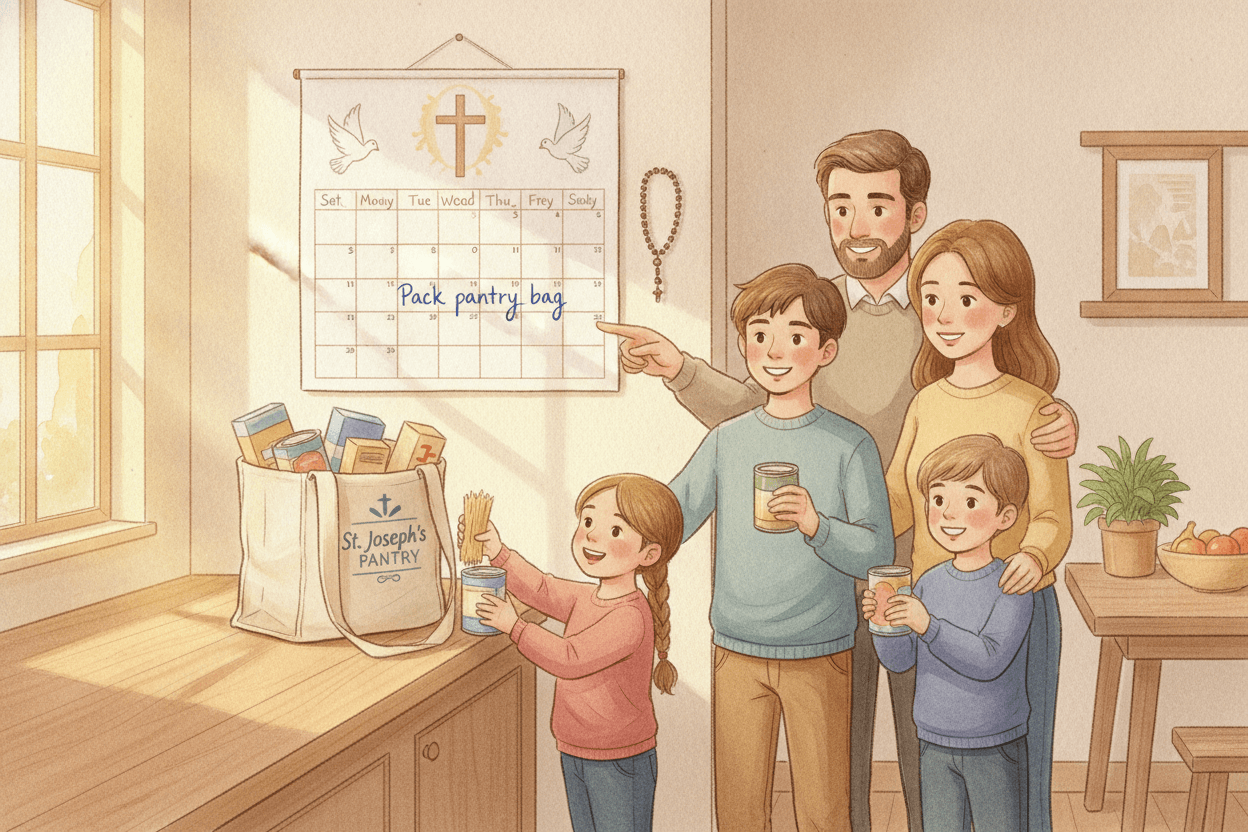
Last Saturday, our pantry gave us the plan. We had two cans of soup, a box of pasta, peanut butter, and a few snack bars that had somehow survived the school-lunch rush. The kids lined them up on the counter like a very serious grocery store crew. One counted. One checked expiration dates with intense concentration. I handled the bag and tried not to “help” so much that I took away their jobs.
Pick one person or one organization this week. That is enough. Maybe it is the older neighbor who could use her porch swept, a parish food pantry that has posted its current needs, or a family from school recovering from illness. Then choose one task that takes 20 to 30 minutes. Pack a small bag of shelf-stable food. Draw two cards for nursing-home residents. Water a neighbor’s plants. Put together a simple meal. Before collecting anything for a pantry or agency, make one quick call or check its website so the items are actually useful.
Give every child a small piece of the work. Ages 6 to 9 can sort, count, decorate, carry light items, write a short note, wipe a table, or choose a prayer intention. A child who cannot spell much can still sign a name, add a heart, or place socks in a bag. The goal is not a polished family service project with matching labels. The goal is for your child to be able to say, “I helped.”
This is a good place for the words of St. Paul to become very ordinary: “For you were called for freedom, brothers. But do not use this freedom as an opportunity for the flesh; rather, serve one another through love.” Service through love may look less like a grand event and more like your seven-year-old carrying a bag to the car with both hands and a determined face. That counts. It teaches the Gospel in a language kids understand.
Make it repeatable, not exhausting. Choose one neighbor-helping task each week, or one care package each month. Put it on the calendar after Saturday breakfast or before the first Sunday of the month. Begin with what is already in the pantry, the craft drawer, or the next conversation with a neighbor. Here’s what landed in our house: children remember the mercy they were allowed to practice, especially when they had a real job to do.
For you were called for freedom, brothers. But do not use this freedom as an opportunity for the flesh; rather, serve one another through love.
Frequently asked questions
What are simple Catholic service projects for kids ages 6–9?
Choose jobs with a clear, useful finish line: count and pack food-pantry items, make a card for someone who is sick, water a neighbor’s plants, or bring in a trash bin. Children can also sort socks or toiletries for a donation drive. Connect the task to serving Jesus and caring for the person who will receive the help.
How can I teach my child that service is more than just being nice?
Tell your child who the help is for and what that person may need before you begin. Afterward, ask, “What did we notice?” “Whom did we serve?” and “Where did we see Jesus?” These simple questions help children connect a concrete action with compassion, dignity, and the Catholic call to serve one another through love.
How do we help a neighbor respectfully with young children?
Ask first what would actually be helpful, and accept a no graciously. For a visit, make sure the person wants company, stay with your child, and keep it brief and simple. Do not ask intrusive questions or post photos; a drawing, a prepared question, or a small practical errand can be enough.
What can my family donate to a parish food pantry?
Check the pantry’s current list before shopping, since needs can change. Let children help choose, count, sort, and pack practical items such as canned foods, granola bars, toothpaste, or socks. Explain that this is a way of feeding the hungry, not simply clearing out extra things from home.
How can we make family service a regular habit instead of a big event?
Keep a simple list on the fridge of people or needs your family hears about, such as a sick friend, new baby, older neighbor, or pantry drive. Each week, choose one small action: deliver a card, collect five pantry items, pray a decade of the Rosary, or help with one outdoor chore. Short, repeatable acts fit family life better than waiting for a major volunteer day.
Sources: usccb.org · usccb.org · usccb.org · usccb.org · usccb.org · usccb.org · press.vatican.va · usccb.org
Scripture quotations in this article use the NABRE translation.