Teaching Kids Forgiveness the Catholic Way
When children hurt one another, Catholic parents can turn everyday conflicts into lessons on sincere apology, making amends, mercy, and the healing forgiveness Jesus teaches. Discover practical ways t
The block tower is broken, one child is crying, and the other insists, “I said sorry!” This familiar moment can become more than a demand for quick peace: it is a small, concrete lesson in truth, mercy, repair, and the kind of forgiveness Jesus teaches.
Start With the Hurt, Not a Forced “Sorry”
The block tower is scattered across the living-room rug, and one child is already saying, “Say sorry!” before anyone has asked what happened. This is the moment to slow the room down. A quick, forced apology may end the noise, but it does not necessarily teach repentance, mercy, or love of neighbor. Begin with the child who was hurt: “Your tower was knocked down. You worked hard on it, and you are upset.” Then ask the other child plainly, “What did you do?” Children learn forgiveness best when the wrong is named honestly, without exaggeration and without excuses.
For a preschooler, this can be very simple: “You grabbed. That hurt.” A child in the early grades can say, “I took your toy after you told me no. That was not kind.” By ages ten to thirteen, invite more moral clarity: “I embarrassed my brother in front of our cousins because I wanted them to laugh.” This is not shaming a child; it is teaching him to recognize that choices affect other people. As the Catechism reminds us, confession begins with truthfulness about sin, and “The confession of sins ... frees us and facilitates our reconciliation with others” (CCC 1455).
Mercy never requires a child to call a hurt acceptable. Nor does forgiveness mean that sadness, anger, or fear must vanish on command. You might tell a child, “You do not have to pretend that was fine. You may still feel hurt. But we will ask God to help you choose what is good rather than trying to hurt back.” That distinction protects children from a common confusion: forgiving someone is not approving what he did, and it is not the same as immediate trust. When harm is repeated, serious, or unsafe, parents must set firm limits and seek appropriate help; no child should be instructed to remain exposed to harm in the name of forgiveness.
Scripture invites us to hold truth and mercy together. Saint Paul writes, “And be kind to one another, compassionate, forgiving one another as God has forgiven you in Christ.” Kindness and compassion do not erase the need to tell the truth; they shape the way we tell it. In our home or parish classroom, I would ask four calm questions: What happened? Who was hurt? What needs to be said? What can help repair this? The child who caused harm should own it with “I did ...,” rather than “I’m sorry you feel sad” or “I’m sorry, but ...”
Only after the wrong has been acknowledged is an apology ready to mean something. The injured child may then be asked, never coerced, whether he or she is ready to forgive. If not, a parent can say, “You can take some time. We will keep working toward peace.” Meanwhile, repair can begin: rebuild the tower, return the taken item, give back a turn, or help clean up the mess. Here’s how I’d teach this as a family habit: pause, tell the truth, apologize, repair, ask forgiveness, and choose one next step that makes the home safer and more peaceful.
And be kind to one another, compassionate, forgiving one another as God has forgiven you in Christ.
Teach Forgiveness as Mercy We First Receive
After a child snaps at a sibling, throws a toy, and then stands at the edge of the room waiting to see whether anyone still wants him near, he is ready to learn something larger than good manners. Before we ask him to forgive, he needs to know what it is to be forgiven: the wrong is named truthfully, the harm matters, and he is still loved. This is the ordinary family doorway into God’s mercy. A child who hears, “What you did was not okay, but you belong here, and we will help you make it right,” has been given a small, concrete picture of the Father’s welcome.
Scripture invites us to begin with what God has done for us in Christ. Saint Paul teaches, “And be kind to one another, compassionate, forgiving one another as God has forgiven you in Christ.” Forgiveness is not chiefly a polished social response or a way to end an uncomfortable argument. It is our answer to mercy already received. The child does not forgive because the offense was insignificant; he forgives because God has not treated his own sins as an excuse to cast him away.
The Catechism states that “Forgiveness is the fundamental condition of the reconciliation of the children of God with their Father and of men with one another” (CCC 2845). That is strong language, and children can begin to grasp it without being given an adult-sized explanation. We might say, “When we sin, Jesus calls us back. We tell the truth, we are sorry, and God helps us start again. Because God is merciful to us, we ask him to help us be merciful too.” This connects family conflicts to the grace children meet in prayer and, as they are prepared for it, in the Sacrament of Reconciliation.
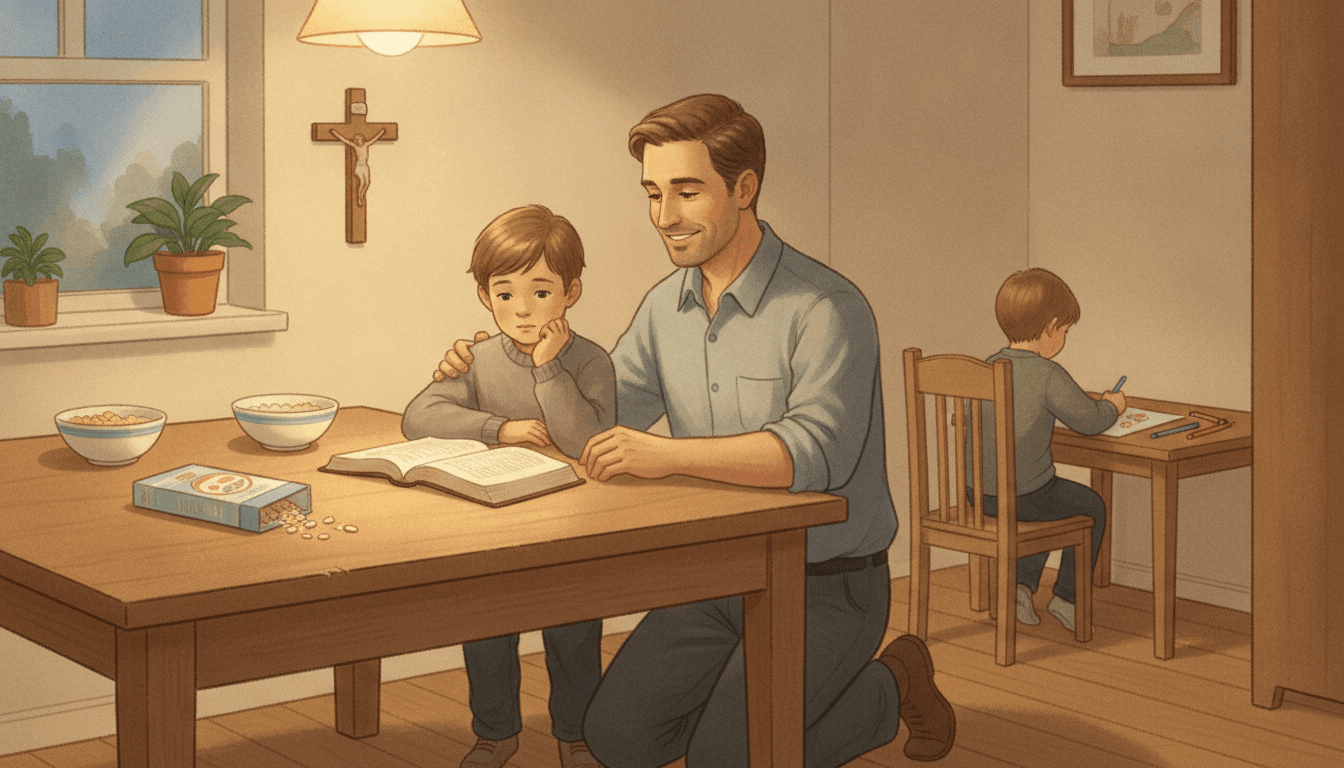
Here’s how I’d teach this after an ordinary quarrel. First, attend to the injured child: “That hurt. Tell me what happened.” Then speak privately with the child who caused the harm: “What did you choose to do?” Help him name it plainly: “I grabbed your game and yelled at you.” After he apologizes and begins a fitting repair, invite the other child to respond honestly: “I forgive you” may be possible today, or he may need time to settle. Neither response cancels the call to mercy; it simply respects that forgiveness grows in a real heart, not on command.
Jesus’ answer to Peter makes mercy a lifelong practice, not a one-time family rule: “I say to you, not seven times but seventy-seven times.” Parents teach this most credibly when we apologize in front of our children: “I spoke impatiently. That was wrong. Will you forgive me?” Then we repair what we can and pray together, “Jesus, thank you for forgiving us. Help us forgive with your mercy.”
Then Peter approaching asked him, “Lord, if my brother sins against me, how often must I forgive him? As many as seven times?” Jesus answered, “I say to you, not seven times but seventy-seven times.
Jesus Holds Mercy and Accountability Together
Two children are arguing over a broken Lego creation, and the first instinct is often to separate them, require a quick apology, and move on. Separation may be necessary for the moment, but a Catholic response does not end with “Be nice.” Jesus takes both the wound and the wrongdoing seriously. He teaches mercy without asking the injured person to pretend that nothing happened.
In Matthew 18, Jesus first gives a clear instruction for conflict: speak to the person directly and privately when possible. For children, that can sound like: “When you knocked down my tower after I said stop, I felt angry. That was not okay.” This is not tattling or name-calling. It is truthful speech aimed at peace. Parents can coach a child to name the action, its effect, and the needed change, rather than making sweeping claims such as “You are always mean.” Here’s how I’d teach this: calm bodies first, then honest words, then listening.
The child who caused harm also needs more than a vague “sorry.” Help him say what he did without excuses: “I grabbed the truck from you.” Then ask, “What can you do to repair this?” He may return the truck, help rebuild what he damaged, give back a turn, or make a plan for what to do when he wants something next time. The Catechism teaches that confession of sins “frees us and facilitates our reconciliation with others” (CCC 1455). Even at home, children can begin to see the pattern: tell the truth, express sorrow, repair what can be repaired, and ask forgiveness.
Jesus also describes what to do when a person refuses correction and the harm continues: involve others. In family life, this means a child should not be expected to handle persistent bullying, intimidation, cruelty, or unsafe behavior alone. He should tell a parent, teacher, pastor, or another trustworthy adult. Repeated forgiveness does not mean repeated access to harm. A child may forgive in his heart while a parent establishes supervision, separate spaces, consequences, or firmer boundaries. Reconciliation and restored trust require truth, repentance, and safety; they cannot be demanded from the child who has been hurt.
This balance gives children a sturdy Christian vision of mercy. They can forgive because God has forgiven them in Christ, and they can speak up because every person is accountable for his choices. When parents apologize after speaking harshly, repair what they can, and accept needed limits, children see that accountability is not the opposite of love. It is one way love protects the dignity and peace of the family.
If your brother sins against you, go and tell him his fault between you and him alone. If he listens to you, you have won over your brother.
Forgiveness Is Not the Same as Reconciliation or Trust
A child may say, “I forgive him,” and still not want to be alone with the cousin who keeps hurting him, or still refuse to lend a treasured toy to the sibling who broke it yesterday. That is not a failure in forgiveness. It may be good judgment. Children need clear words for a distinction adults often blur: forgiveness, reconciliation, and trust are related, but they are not the same thing.
Forgiveness means giving up revenge and placing the desire for justice in God’s hands. It does not mean pretending the wrong was small, denying anger, or saying that harmful behavior was acceptable. Scripture invites us to hold mercy and truth together: “Be on your guard! If your brother sins, rebuke him; and if he repents, forgive him. And if he wrongs you seven times in one day and returns to you seven times saying, ‘I am sorry,’ you should forgive him.” Jesus does not tell the injured person to ignore the sin; he says to name it, attend to repentance, and forgive.
Reconciliation is the restoring of a relationship, and it needs more than one person’s decision. It requires truth about what happened, genuine sorrow, a willingness to repair harm, and conduct that makes renewed closeness safe. In a sibling conflict, this may look ordinary but real: “I took your game after you said no. I was wrong. I will give it back and ask before I use it.” If a child only says, “Sorry,” then repeats the same act, parents can rightly say, “Forgiveness is offered, but reconciliation needs repair and a different choice next time.” The Catechism teaches that confession frees us and helps reconcile us with others (CCC 1455); honest acknowledgment is part of repair, not an optional extra.
Trust is rebuilt more slowly. A child may forgive a friend for sharing a secret and still decide not to share private information for a while. That boundary is not bitterness. Explain it this way: forgiveness is a gift in the heart; reconciliation is a relationship being repaired; trust is confidence earned through faithful behavior over time. Here’s how I’d teach this in a family: after an apology, choose one observable next step—return the item, replace what was damaged, give back a turn, or ask permission for the next week. Then notice whether the child follows through.
Most importantly, no child should be told that forgiveness requires staying available to ongoing or serious harm. Parents must protect children, keep prudent boundaries, and seek help from appropriate adults or authorities when safety is at risk. A child can pray, “Jesus, help me not to hate,” while a parent says, “You will not be alone with this person,” or “We are going to tell someone who can help.” This is not opposed to Christian mercy. It is the responsible care Christ gives to families: truthfully naming wrong, protecting the vulnerable, and leaving no child to carry danger in the name of forgiveness.
Be on your guard! If your brother sins, rebuke him; and if he repents, forgive him. And if he wrongs you seven times in one day and returns to you seven times saying, ‘I am sorry,’ you should forgive him.
Use a Simple Family Pattern: Tell the Truth, Repair, Begin Again
The block tower is broken, one child is crying, and the other is already saying, “But he took my piece first.” This is not the moment for a parent to demand a quick “Sorry.” It is a moment to slow the room down and teach a pattern children can use long after the tower has been rebuilt: pause, tell the truth, repair, and begin again.
Here’s how I’d teach this in a family: first, separate bodies if needed and let everyone take a breath. Then ask one simple question: “What happened?” Help each child name the particular act, not merely the feeling around it: “I grabbed the tower,” “I called you a name,” or “I hid your shoe.” Next comes ownership without a defense: “I did ___.” Teach children to avoid apologies that shift blame, such as “I’m sorry you got mad,” or “I’m sorry, but you started it.” A truthful apology sounds more like, “I pushed you. That was wrong. I am sorry.”
Then ask, “What can you do to repair this?” For a young child, repair may mean returning the toy, helping rebuild the tower, giving back a lost turn, cleaning up a mess, or replacing something damaged. After the action, the child may ask, “Will you forgive me?” The injured child should never be coached into pretending the hurt vanished. He or she can say, “I forgive you,” when ready, or, “I want to forgive you, but I still need some time.” Finally, choose one next step: “Next time I will ask for a turn,” or “We will play in separate spaces for ten minutes.” A boundary is not a failure of forgiveness; it can be part of a peaceful and safe beginning again.
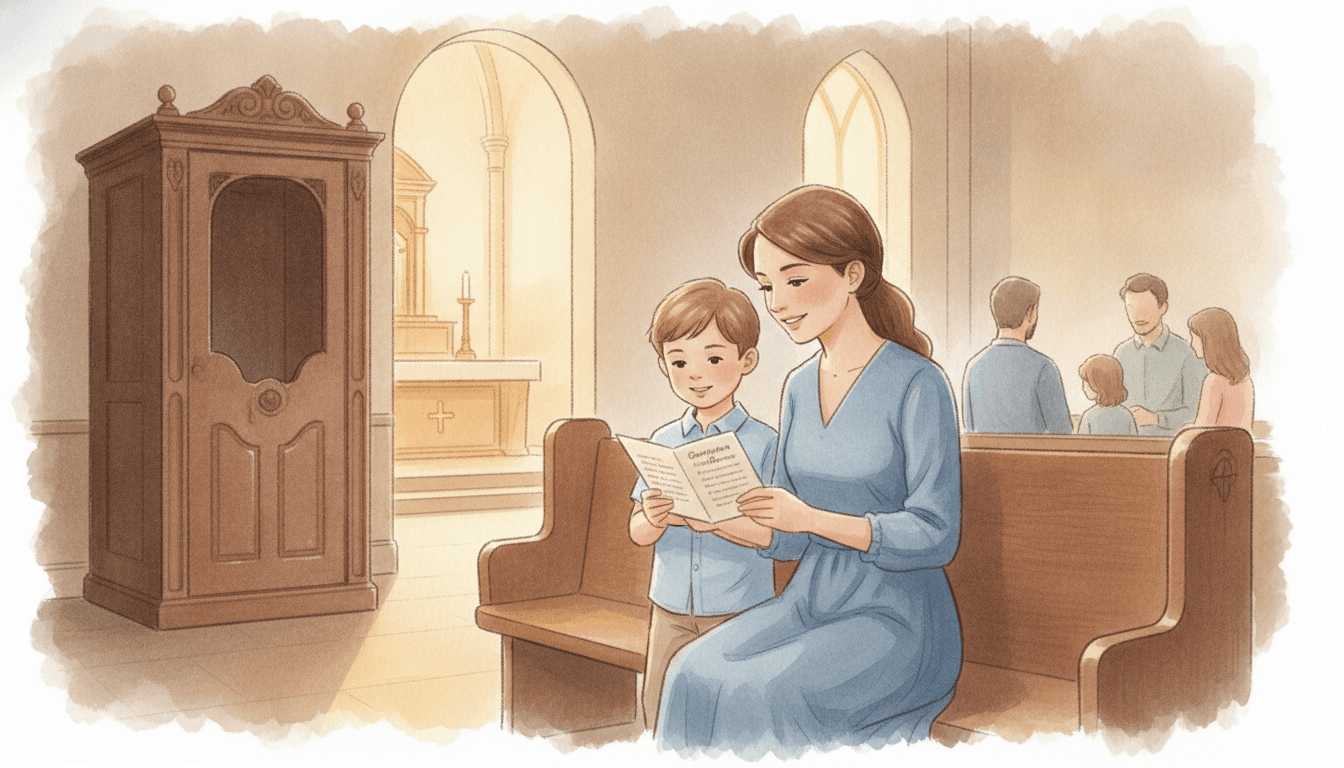
This small practice prepares children to understand the Sacrament of Reconciliation in an age-appropriate way. They learn that sin is real, that we speak honestly about what we have done, that sorrow leads toward repair, and that God’s mercy does not make our choices unimportant. As the Catechism teaches, “The confession of sins ... frees us and facilitates our reconciliation with others” (CCC 1455). Do not impose an adult examination of conscience on a preschooler, however. Use words a child can grasp: “What did you do?” “Who was hurt?” “What can help make it right?” Their understanding will grow with their age, experience, and formation.
Parents make this pattern credible when they use it themselves. “I raised my voice at you. That was wrong. I am sorry. Will you forgive me? Next time I will take a breath before I answer.” Children notice this kind of honesty. At bedtime, a brief prayer can gather the day: “Jesus, show us where we hurt each other. Help us tell the truth, make things right, and forgive from our hearts.” Matthew 18:35 reminds us that forgiveness is not a polite word we force from one another, but a disposition Christ forms within us.
Then in anger his master handed him over to the torturers until he should pay back the whole debt. So will my heavenly Father do to you, unless each of you forgives your brother from your heart.
Practice Forgiveness This Week as a Family
The next time someone grabs the last cookie, knocks over a sibling’s block tower, or answers sharply at the dinner table, resist the urge to settle it in thirty seconds. Wait until voices are calm, then use that small conflict as practice. Children learn forgiveness not chiefly from a lecture, but from seeing that a real wrong can be named, repaired, and placed before God without shame or pretending.
Here’s how I’d teach this at home. Gather the children involved and invite each one to say what happened in plain words: “I took your toy without asking,” or “I called you a name.” The child who caused the hurt should avoid excuses and say, “I am sorry I did that.” Then ask, “What can you do to repair this?” Repair may mean returning the toy, helping rebuild the tower, giving back a turn, or doing something practical to address the harm. Finally, the injured child can be given room to say, “I forgive you,” when he or she is ready. A parent can add a concrete next step: “Tomorrow, ask before you borrow it.”
Scripture invites us to connect this ordinary work of family life with the mercy God has shown us: “And be kind to one another, compassionate, forgiving one another as God has forgiven you in Christ.” Forgiveness does not erase the need for repair, nor does it require a child to ignore repeated harm. It does mean we refuse to train our hearts in resentment. As the Catechism reminds us, forgiveness stands at the center of our reconciliation with God and with one another (CCC 2845).
Parents, this lesson becomes credible when your children see you practice it. If you spoke impatiently, apologize specifically: “I raised my voice at you. That was wrong. Please forgive me.” If your distraction caused you to miss a promise, make repair where you can. Children are perceptive; they know the difference between a vague “Sorry, everyone” and an adult who takes responsibility without defensiveness. Visible repentance teaches them that confession is not humiliation. It is truth that opens the way to peace.
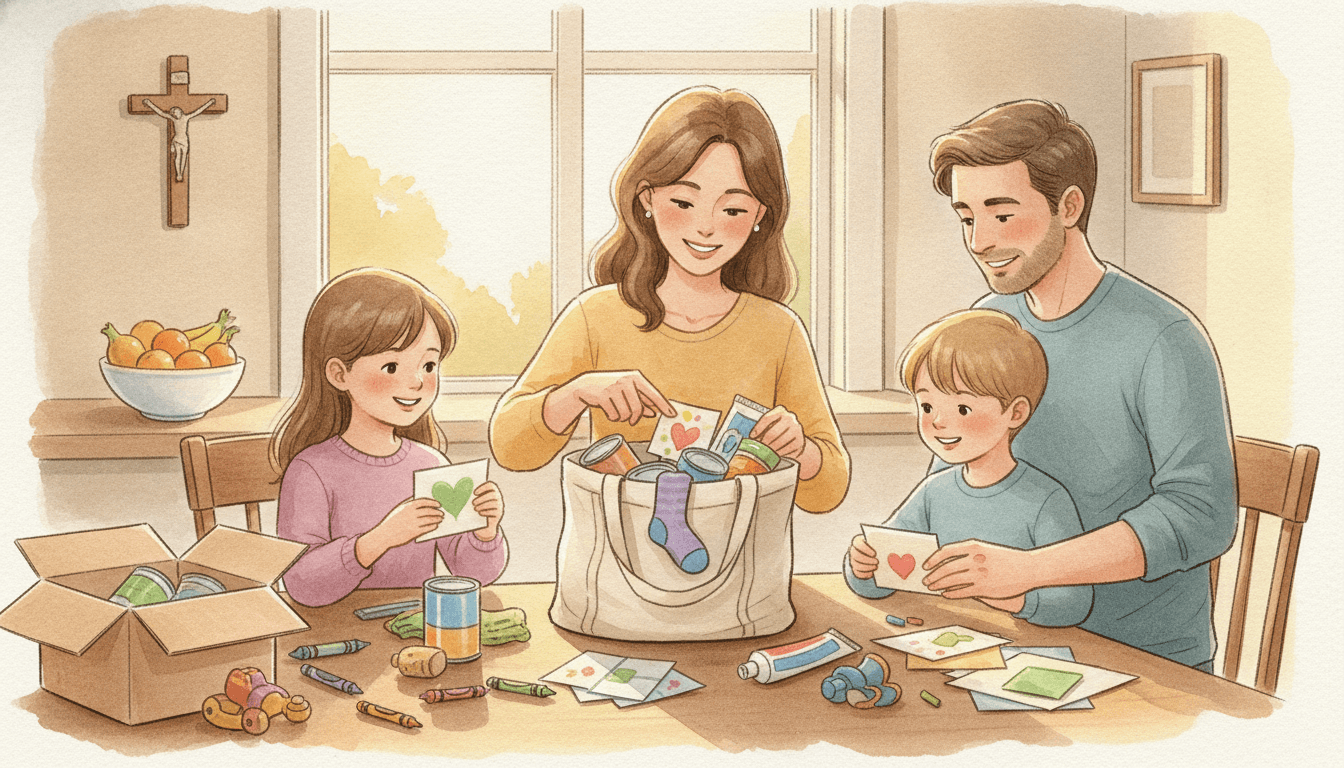
Close the moment with a brief prayer: “Jesus, thank you for forgiving us. Help us to forgive from our hearts, to make things right, and to choose what is good next time. Amen.” For a gentler conversation starter on a quiet evening, read the related Jesus Teaches Forgiveness comic together. Pause to ask what the characters did wrong, what repair might look like, and whether forgiveness would mean the same thing as immediate trust. These short, repeated practices give children words and habits they can carry into the larger conflicts of life.
And be kind to one another, compassionate, forgiving one another as God has forgiven you in Christ.
Frequently asked questions
How do I teach my child to apologize sincerely instead of just saying “sorry”?
Slow the conflict down and help your child name the specific choice: “I grabbed your toy after you said no.” Avoid excuses such as “but he started it” or apologies that blame the other child’s feelings. Then guide your child toward a fitting repair, such as returning the item, rebuilding something, or helping clean up.
Do I have to make my child say “I forgive you”?
No. Invite the hurt child to forgive, but do not force the words before he or she is ready. You can acknowledge the hurt and say that your family will keep working toward peace while asking God to help everyone choose mercy rather than revenge.
What does forgiveness mean for children in a Catholic family?
Forgiveness means responding to a real wrong with mercy because God has been merciful to us in Christ. It does not mean pretending the hurt was acceptable or that painful feelings disappear immediately. Children can learn that they are still loved while also being responsible for making things right.
How do I explain that forgiveness is not the same as trusting someone again?
Tell your child that forgiving does not make unsafe or repeated behavior okay. Trust can take time to rebuild, and parents should set clear limits when harm continues. A child should never be told to stay in a harmful situation simply to prove forgiveness.
How can I connect sibling conflicts with the Sacrament of Reconciliation?
Use everyday conflicts to practice the same basic movements: tell the truth about what happened, express sorrow, make repair, and ask for forgiveness. Explain simply that when we sin, Jesus calls us back and gives us grace to begin again. This helps children see confession as God’s mercy, not merely punishment.
What should I say when I lose my patience with my children?
Model the process yourself: name what you did without excuses, apologize, and repair what you can. For example, say, “I spoke impatiently, and that was wrong. Will you forgive me?” Praying together afterward shows children that the whole family depends on Jesus’ mercy.
Sources: vatican.va · bible.usccb.org · vatican.va · vatican.va · vatican.va · vatican.va · vatican.va · catholic.com
Scripture quotations in this article use the NABRE translation.