Esther’s Courage:Raising Kids Who Speak Up
Esther’s courage helps children see that speaking up is not about having perfect words or avoiding awkwardness. It’s choosing kindness, asking for help, and using their influence when someone else may
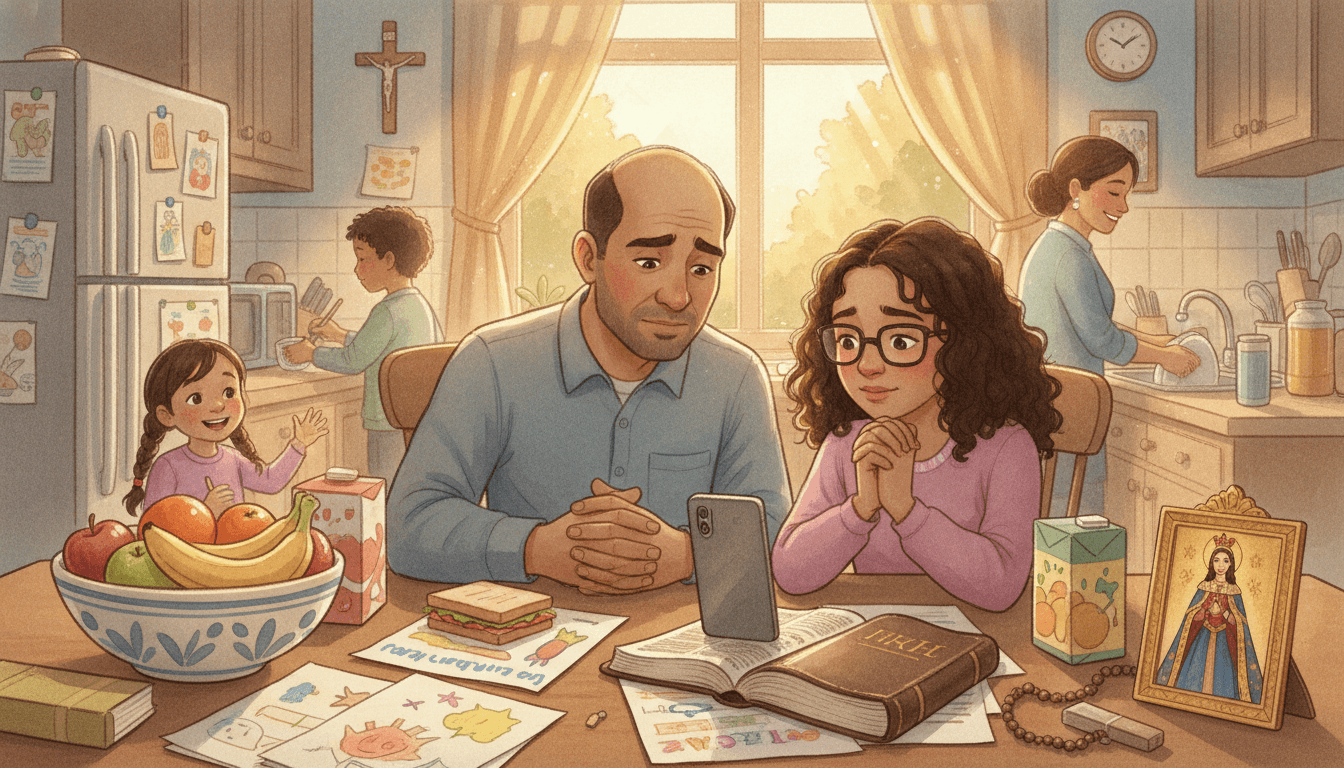
The group chat goes quiet after someone posts a mean joke. Your child sees it, feels the little knot in the stomach, and wonders whether saying something will only make things worse. Esther’s story gives families a better question than “Will this be awkward?”: “What good can I do from where I am?”
The Moment a Child Has a Choice to Make

The group chat was busy over something small—a missed shot in a game, a joke that went too far, a pile-on that gathered speed because nobody wanted to be the first one to stop it. Most kids know this feeling before they can explain it. Their thumbs hover over the keyboard. A classmate is being laughed at. Someone is left out at lunch. A rumor gets repeated in the hallway. Silence feels safer than saying, “That’s not okay.”
That is the choice Esther faced on a much bigger stage. She had a place in the palace, a measure of safety, and every reason to keep her head down. But her people were in danger. Mordecai asked her to see that her position was not only for her own comfort: “Even if you now remain silent, relief and deliverance will come to the Jews from another source; but you and your father’s house will perish. Who knows—perhaps it was for a time like this that you became queen?”
For a tween, “a time like this” may not look dramatic. It may be the kid with a seat at the popular table choosing to make room. It may be a friend saying, “Not funny,” when somebody makes a cruel comment. It may be telling a teacher or parent that a child is being threatened online. Speaking up is not about getting attention or delivering a speech worthy of a movie soundtrack. It is about protecting someone who is getting hurt.
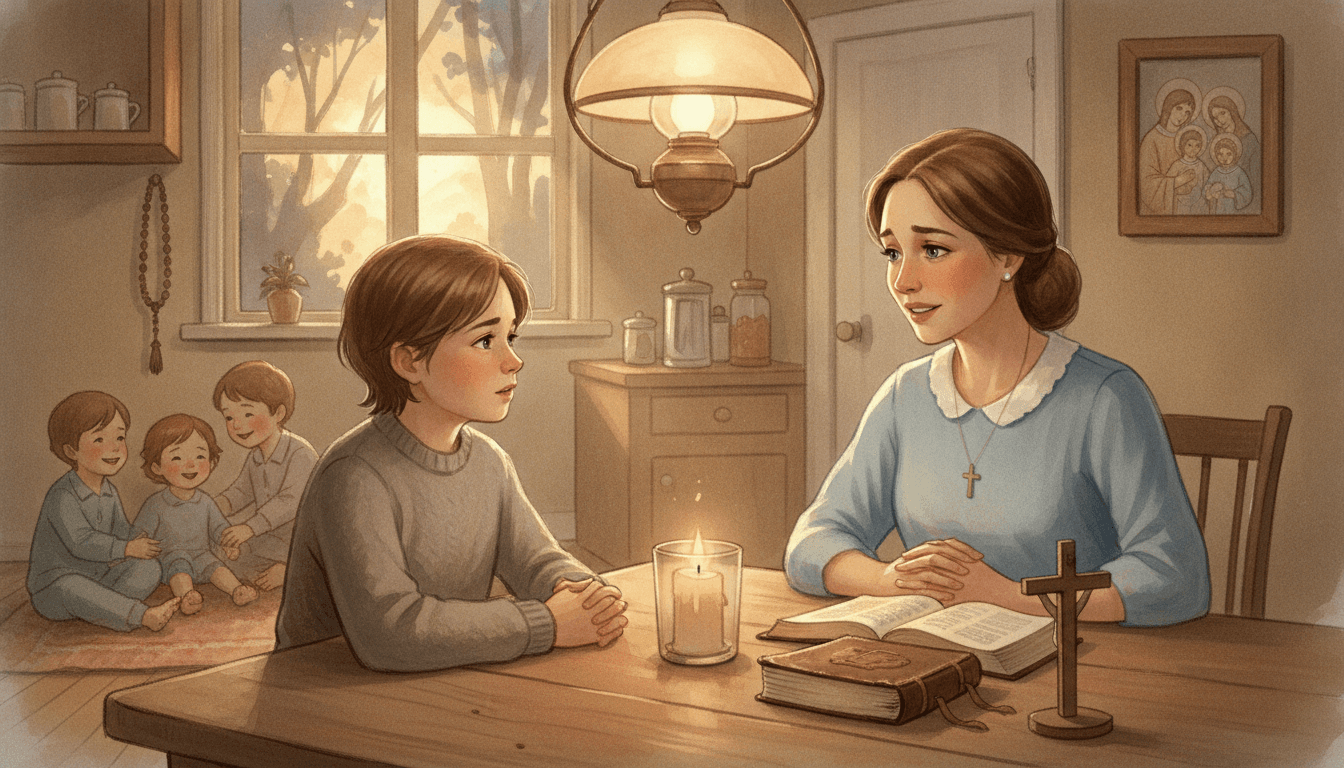
Courage, plainly put, is doing what is right when fear and social pressure tell you to stay quiet. Kids need to hear that being nervous does not mean they have failed. Esther was afraid too. Her courage was not loud confidence. She prayed, asked others to fast, and then acted. In our house, that gives us a simple question to ask after school: “Did anyone need a friend to speak up today?” Sometimes the answer is no. Sometimes it opens a door we did not know was there.
One small thing we tried was practicing short sentences before our kids needed them. “We don’t talk about people like that.” “Come sit with us.” “I’m not sharing that.” “I need to tell an adult because someone could get hurt.” Role-play can feel a little cheesy at first. So does practicing a fire drill—until everybody knows where to go. Teach your child the difference between tattling to get someone in trouble and reporting to get someone help. Then remind them: God may have given them that friend group, that seat in class, that online chat, or that small bit of influence for someone else’s good.
Even if you now remain silent, relief and deliverance will come to the Jews from another source; but you and your father’s house will perish. Who knows—perhaps it was for a time like this that you became queen?
Esther 4:14: Your Place Can Become Someone Else’s Help

The lunch table can feel like a tiny kingdom when you are eleven. One kid decides who gets a seat. Another starts the joke. Everyone else looks down at their pizza and hopes the attention lands somewhere else. That is why Esther’s story reaches right into middle school. She was queen, which sounded safe and shiny from the outside. But she was also living under a king whose law could cost her life if she approached him uninvited. Her place gave her access, but it did not remove her fear.
Mordecai did not flatter Esther or tell her everything would be fine. He asked her to see her place differently: “Who knows—perhaps it was for a time like this that you became queen?” A child may not be a queen, thankfully; our house has enough arguments about who gets to be in charge of the remote. But a tween does have places where his or her choices carry weight. Maybe it is the friend who can say, “Save her a seat.” Maybe it is the teammate who can stop a cruel nickname. Maybe it is the student who notices a new child sitting alone, the kid with a talent others admire, or the child who knows how to tell a trusted adult what is happening.
The Book of Esther faces something terribly serious: a people targeted for destruction because of who they are. We should not casually call every playground slight the same thing. But we can help our children recognize the smaller, real beginnings of the same ugly habits: excluding someone because of race, religion, language, disability, family background, or simply because the group has decided that person is “weird.” When a child hears a slur, watches someone get pushed out of a group chat, or sees a classmate mocked for being different, silence can make the lonely child feel even more alone.
One small thing we tried was turning vague advice into sentences our kids could actually say. “Not funny.” “We don’t talk about people like that.” “Come sit with us.” “I’m getting a teacher because this isn’t safe.” Practice them at dinner, even if everyone giggles the first time. Also make this distinction clear: reporting danger, repeated cruelty, threats, or prejudice is not tattling. It is getting help for someone who needs it. A child does not have to confront every problem alone. Esther gathered her people, asked them to fast, and then acted. Courage often includes asking for backup.
At our table, we can ask a simple question after school: “Did you see anyone who needed help today?” Then wait. The answer may be small. That is fine. God often works through the child who shares notes, includes someone in a game, tells the truth, or brings a hard situation to an adult. Esther’s place became help for her people when she chose not to protect only herself. Our children are learning the same lesson in much smaller rooms, one brave sentence at a time.
Even if you now remain silent, relief and deliverance will come to the Jews from another source; but you and your father’s house will perish. Who knows—perhaps it was for a time like this that you became queen?
Teach the Difference Between Being Brave and Being Loud
Last week, one of my kids came home with the kind of story that makes a parent stop loading the dishwasher. A child in the class had said something mean. A few kids laughed. My child did not join in, which was good. But then came the harder question: “What was I supposed to do?” That is where Esther’s courage gets very practical. Speaking up does not always mean making the biggest speech in the room.
Being brave and being loud are not the same thing. Loud can draw attention to ourselves. Brave puts attention on the person who needs help. A child can say, “Not funny.” He can move over and make room at lunch. She can change the subject instead of feeding the joke. They can check on the child afterward: “Are you okay? Want to sit with me?” None of that requires a microphone, a cape, or a dramatic hallway showdown. Thank goodness, because most school hallways have enough drama already.
At our table, one small thing we tried was practicing a few short sentences before anyone needed them. “We don’t talk about people like that.” “Come sit with us.” “Stop. That’s mean.” “I’m going to tell an adult because he could get hurt.” Role-playing may feel a little silly at first. It is also helpful. When children feel nervous, they often cannot find words quickly. A simple sentence they have already said out loud can give them a path forward.
We also need to clear up the confusion around tattling. Tattling is often about getting someone in trouble over a small matter: “She got an extra cookie,” or “He made a face at me.” Telling a trustworthy adult is different. It is what a child should do when someone is unsafe, humiliated, threatened, excluded again and again, or being targeted online or at school. We can tell our kids plainly: if someone may be hurt, you do not have to carry that secret alone. Get a teacher, coach, parent, or another safe adult. That is not betrayal. That is protection.
Esther did not act carelessly. She prayed, considered the danger, and then took the next faithful step. Our children can learn that same steady courage. Proverbs tells us to speak for people who cannot easily speak for themselves. This week, ask your child about one place where someone might be left out—the bus, lunch table, group chat, soccer practice—and help them choose one calm, direct way to help. Here’s what landed in our house: courage can sound quiet, but it does not stay silent when someone needs help.
Open your mouth in behalf of the mute, and for the rights of the destitute; open your mouth, judge justly, defend the needy and the poor.
Give Kids Words Before They Need Them
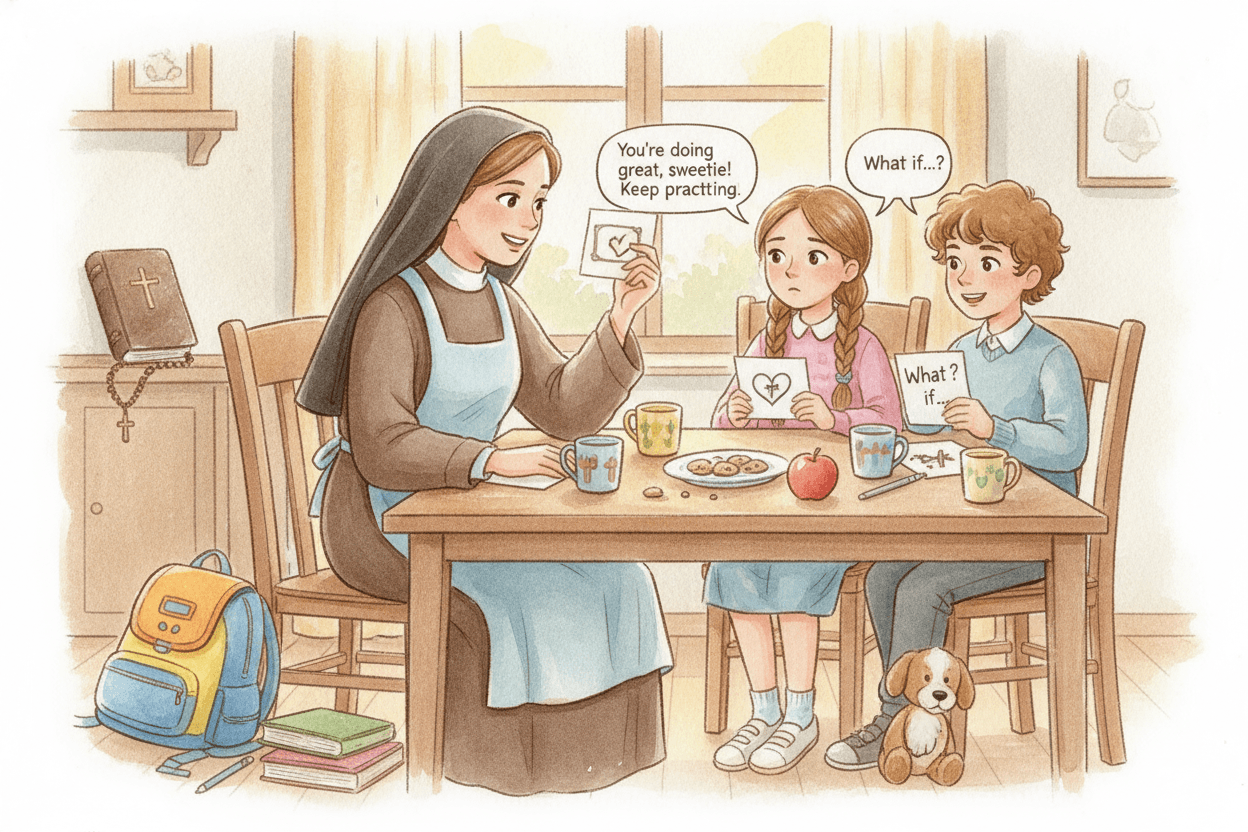
The other night, somebody at our table said a sibling’s drawing looked “weird,” and the room went quiet for half a second. Then the offended artist announced that he was never drawing again, which lasted until dessert. Small moments, yes. But they are good practice. When children feel the pressure of a real lunch table, group chat, or locker room, they rarely invent brave words on the spot. They reach for words they have already practiced.
One small thing we tried was turning dinner into a two-minute role-play. No speeches. No one has to perform like they are in a school play. I name a situation: “A kid in your class makes fun of someone’s accent.” Then I ask, “What could you say?” Short sentences are best: “Not funny.” “We don’t talk about people like that.” “Come sit with us.” The goal is not to win an argument or sound clever. It is to interrupt cruelty and let the person being pushed aside know they are not alone.
Try a few situations across the week. Someone is left out of a game. A friend shares an embarrassing photo in a group chat. A classmate is being teased because of how she looks, prays, talks, or learns. Let your child practice saying, “I don’t think that’s okay,” or “Take that down.” For a situation that feels unsafe, help them say, “Stop—I’m getting an adult.” Kids need to hear this clearly: telling a trusted adult is not tattling when someone is being hurt, threatened, humiliated, or excluded. It is helping.
After each little practice round, ask two questions: “What would make it hard to speak?” and “What is the safest helpful next step?” Their answers may be honest and uncomfortable. “My friends might laugh at me.” “They might turn on me.” Don’t rush to correct that. Speaking up can cost something. Esther knew that. But children also need options beyond confronting the loudest kid in the room. They can sit with the isolated child, save evidence from a chat, invite another friend to help, or report what happened to a teacher, coach, or parent.
At our table, we also practice the tone. A steady “Not funny” usually goes farther than a shouted lecture. And if a child freezes in the moment, that does not mean he failed. He can still check on the person later and tell an adult. Courage grows through repeated, ordinary reps: a sentence tried at dinner, a conversation after school, a parent who listens without making the kitchen feel like a courtroom. Give them words now. By God’s grace, those words may be there when somebody needs them.
Let Prayer Come Before the Hard Conversation
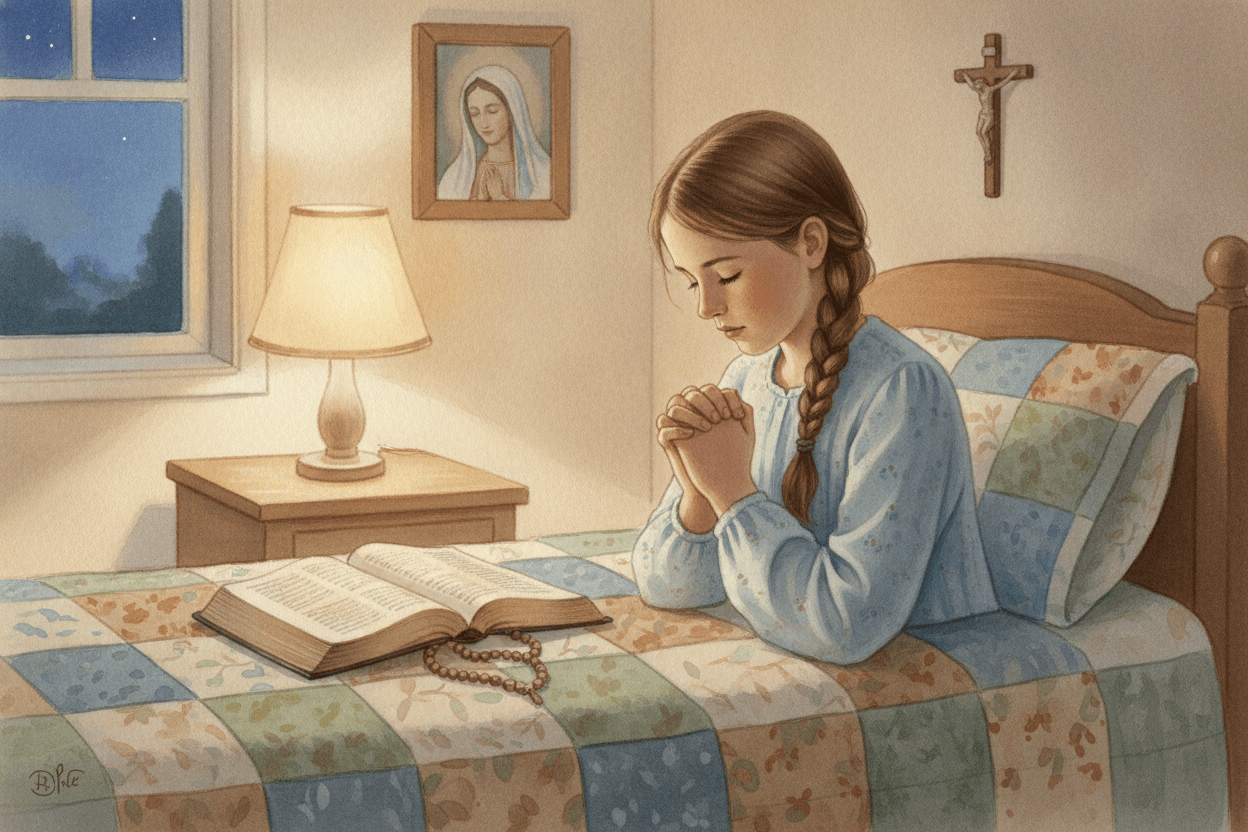
The lunchbox was still on the counter when my child said, “I don’t know what to say tomorrow.” A classmate had been picked on, and he wanted to help but did not want the jokes turned on him. Fair enough. Most adults know that feeling too. We can hand kids a good sentence, but first we want them to know they do not have to manufacture bravery all by themselves.
Esther did not march toward the king pretending she was fearless. She stopped. She asked her people to fast with her. Then she fasted with her maids before taking a step that could cost her dearly. Her courage had company, and it had prayer underneath it. That matters for our children. Speaking up is not about being the toughest kid in the room. It is about bringing fear to God, asking for help, and doing the next right thing.
At our table, one small thing we tried was making a short prayer part of the rehearsal. Before we practiced what a child could say to a bully or to a friend who was being left out, we prayed: “Holy Spirit, give me clear words and wise timing. Protect the person who is being hurt. Help me be brave and kind. Show me which adult can help. Amen.” It takes about ten seconds. That is good, because ten seconds may be all you get before somebody spills milk or remembers an overdue project.
Then talk through what “getting help” looks like. A child can say, “That’s not funny,” or “Come sit with us.” But if someone is being threatened, repeatedly targeted, or pressured to keep a harmful secret, he should find a teacher, coach, parent, or another trusted adult. That is not tattling. It is protecting someone. Esther gathered people around her before she went forward; our kids can learn that wise courage often means refusing to stand alone.
Try this before school one morning this week: ask, “Is there a hard conversation, a lonely kid, or an unfair moment you might face today?” Do not force an answer. Just leave the door open. Pray the little prayer together, name one adult your child could go to, and remind him that God is already present in the hallway, the group chat, and the cafeteria. Those are ordinary places. They are also places where a child can choose love when it costs something.
Go, assemble all the Jews who are in Susa; fast on my behalf. Do not eat or drink for three days, night or day. My maids and I will also fast. After that I will go to the king, even if it is against the law; if I perish, I perish!
This Week: Practice One Esther Moment at Home

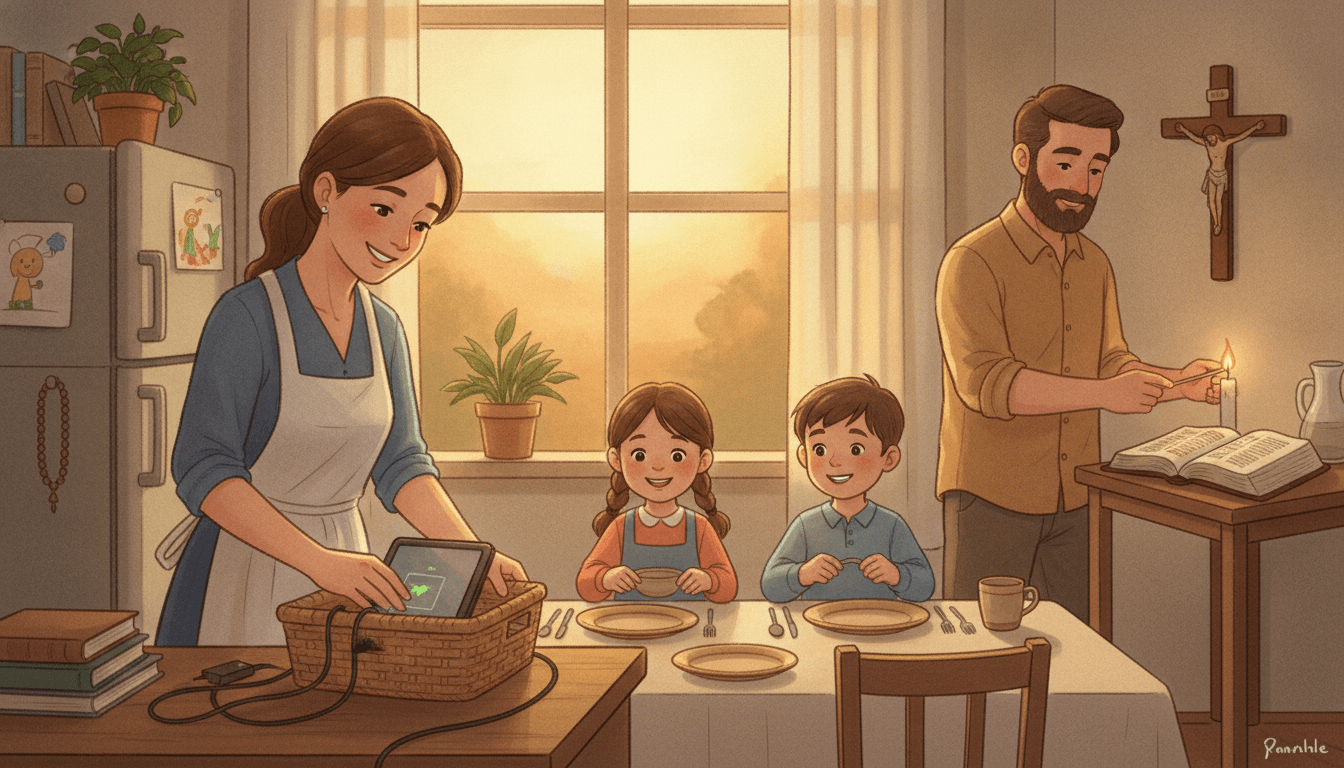
Tuesday night, somebody drops a backpack in the hallway, somebody else wants a snack five minutes before dinner, and you are wondering when exactly character formation was supposed to fit into this house. Good news: it can fit right there. You do not need a long family meeting or a perfectly quiet living room. Pick one evening this week and give your kids ten minutes to practice one Esther moment.
Start by reading Esther 4:14 aloud. Then ask each child, “Where do you have a little influence?” For one child, it may be the lunch table. For another, the soccer bench, the class group chat, the bus, or a younger sibling who copies everything he does. Keep it concrete. Being “queen” does not mean being famous. It means having a place, a voice, a friendship, or a skill that can be used to help someone else.
Next, role-play one situation. Maybe a classmate is being left out of a game. Maybe someone posts a mean comment online. Maybe a friend wants everyone to laugh at a kid’s mistake. Let your child try a simple line: “Not funny.” “Come sit with us.” “I don’t want to be part of that.” Then switch roles and let them hear those words coming toward them. It may feel a little awkward. That is okay. Awkward practice at our table is much easier than finding words for the first time in a crowded hallway.
Make one important distinction while you practice: telling an adult is not tattling when someone is being hurt, threatened, targeted, or pressured to do wrong. Help each child name one trusted adult they can contact—a teacher, coach, school counselor, youth leader, or family member. Put that person’s name somewhere easy to remember. Courage is not always confronting the problem alone. Esther sought help, called her people to fast, and then took the next right step.
Here’s what landed for us: notice the small brave things. “I saw that you included him.” “You told the truth even though you were worried.” “You came and got help. That was the right call.” Those words teach children that courage is not reserved for dramatic movie scenes. It grows through ordinary choices, one small thing at a time.
Before the week gets away from you, read the BibleHeroes Esther Reversal comic together. Ask your kids, “Which choice did Esther make when it counted?” Then ask, “What might an Esther choice look like for you this week?” You may get a shrug at first. You may also get a very honest story after the dishes are done. Either way, you have opened the door.
Let no one have contempt for your youth, but set an example for those who believe, in speech, conduct, love, faith, and purity.
Frequently asked questions
How can I teach my child to speak up when someone is being bullied?
Practice a few short, usable phrases at home, such as “That’s not funny,” “Come sit with us,” or “I’m not sharing that.” Role-play common situations like a cruel group chat or a child sitting alone so the words are easier to find under pressure. Remind your child that speaking up can also mean quietly including someone or getting a trusted adult.
What does “for such a time as this” mean for kids today?
Esther’s words can help children see that their place in a class, team, lunchroom, or online group gives them opportunities to do good. They do not need a dramatic role to make a difference; a seat saved, a cruel joke challenged, or a concern reported can protect someone. The point is not to seek attention, but to use their influence for another person’s good.
How do I explain the difference between tattling and reporting bullying?
Tattling is usually meant to get someone in trouble over a minor issue, while reporting is meant to get help when someone may be hurt. Teach children to tell an adult about threats, repeated cruelty, unsafe behavior, slurs, prejudice, or online harassment. They are not expected to handle serious situations alone.
What should my child do if a mean joke is posted in a group chat?
Your child can avoid liking, forwarding, or adding to the pile-on, then use a simple response such as “We don’t talk about people like that.” If the post is threatening, targeted, or keeps happening, they should save the evidence and tell a parent, teacher, or other trusted adult. They can also privately check on the child being targeted rather than leaving that child alone.
How can I help my tween be brave without pressuring them to confront everyone?
Explain that courage is doing the right thing even when they feel nervous, not being the loudest person in the room. Give them options: include the excluded child, refuse to participate, tell an adult, or ask friends for backup. Esther prayed, gathered support, and acted, which shows children that asking for help is part of courage.
What are good questions to ask my child after school about kindness and courage?
Try asking, “Did anyone need a friend to speak up today?” or “Did you see anyone who needed help?” Ask gently and give your child time to answer rather than expecting a big story. These conversations can help you notice concerns early and celebrate small acts of kindness, truthfulness, and inclusion.
Sources: bible.usccb.org · bible.com · bible.usccb.org · wordonfire.org · wordonfire.org · fdu.edu · apa.org · tandfonline.com · pewresearch.org · research.lifeway.com
Scripture quotations in this article use the NABRE translation.