Forgiveness Like Joseph:A 4-Week Family Devotional
Turn family conflicts into opportunities for grace with a four-week devotional journey through Joseph’s story. Each week helps children and adults name hurt, seek truth, release resentment, and practi
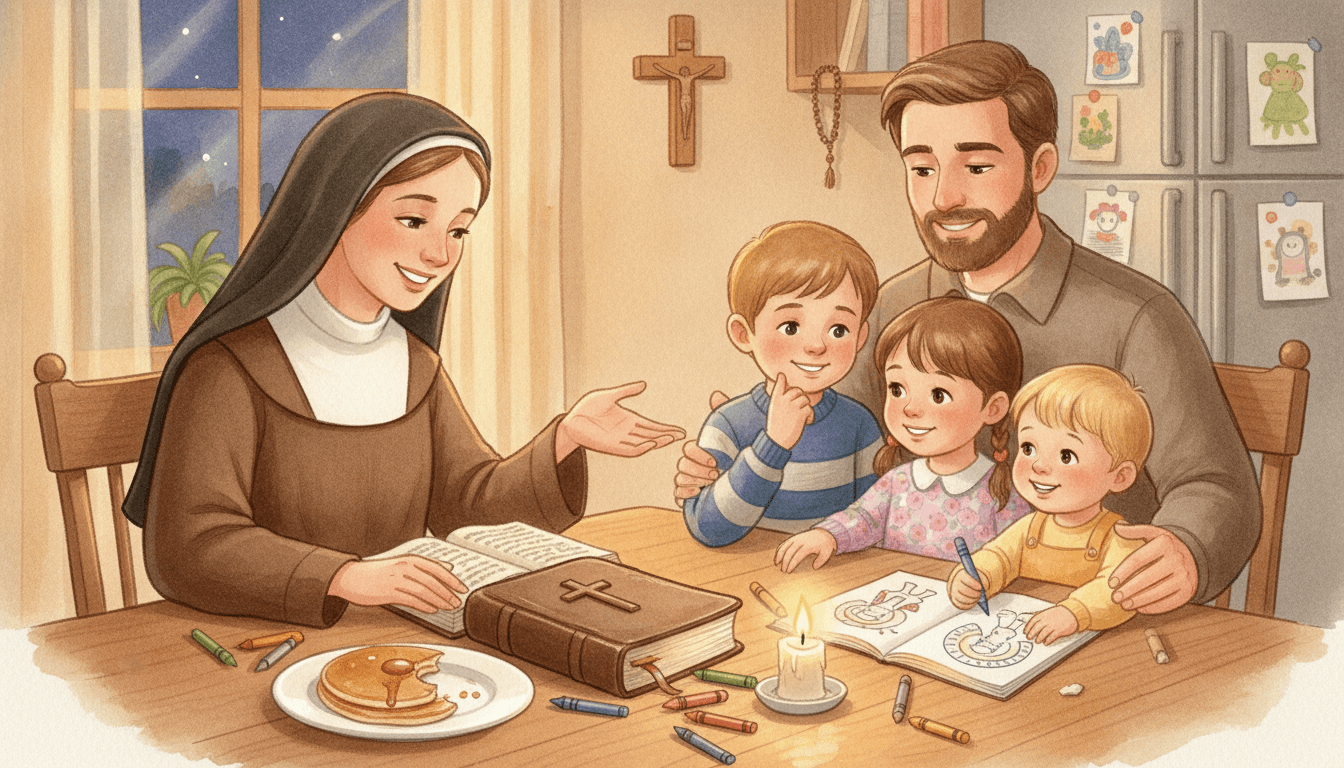
Someone takes the last pancake, somebody says, “It wasn’t me,” and suddenly the kitchen feels like a very small courtroom. Joseph’s brothers did far more damage than a sibling squabble, yet his story gives families a sturdy, honest way to practice mercy—one small choice at a time.
Why Forgiveness Belongs at the Family Table
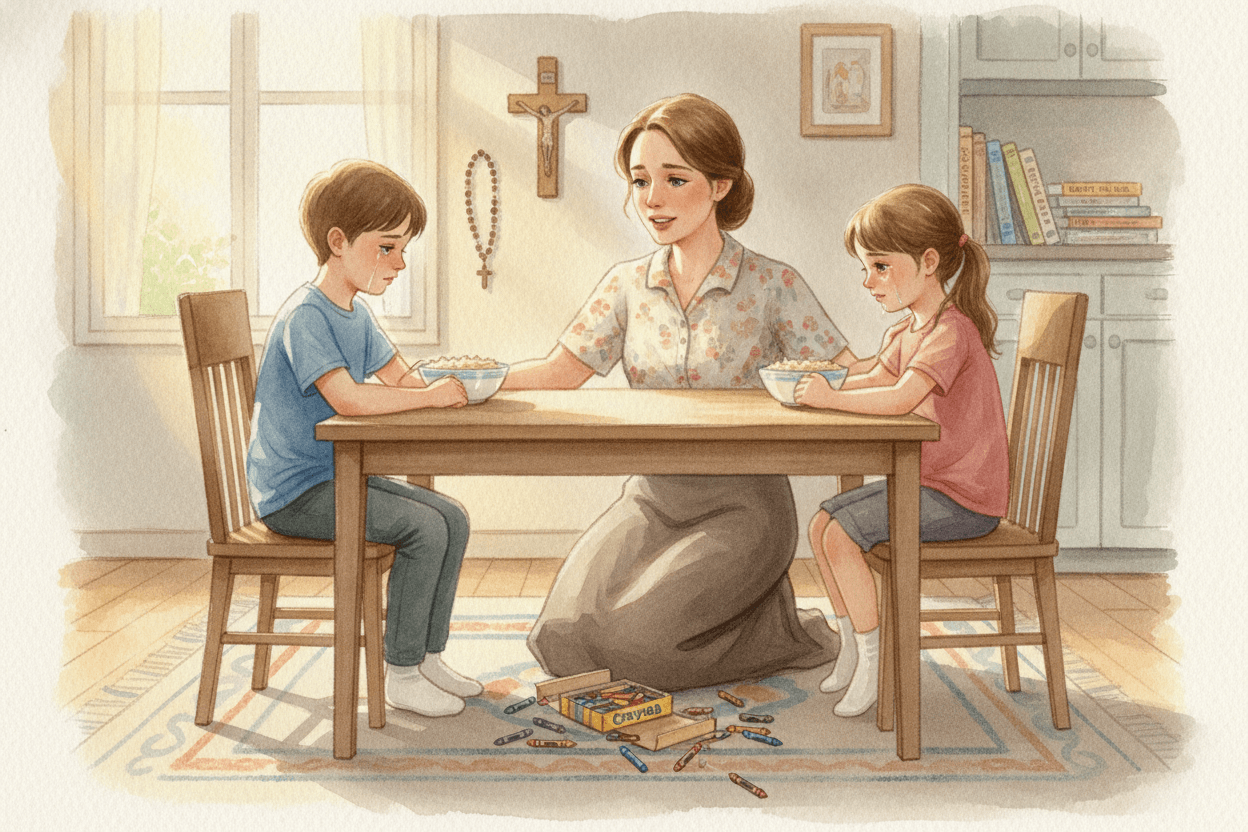
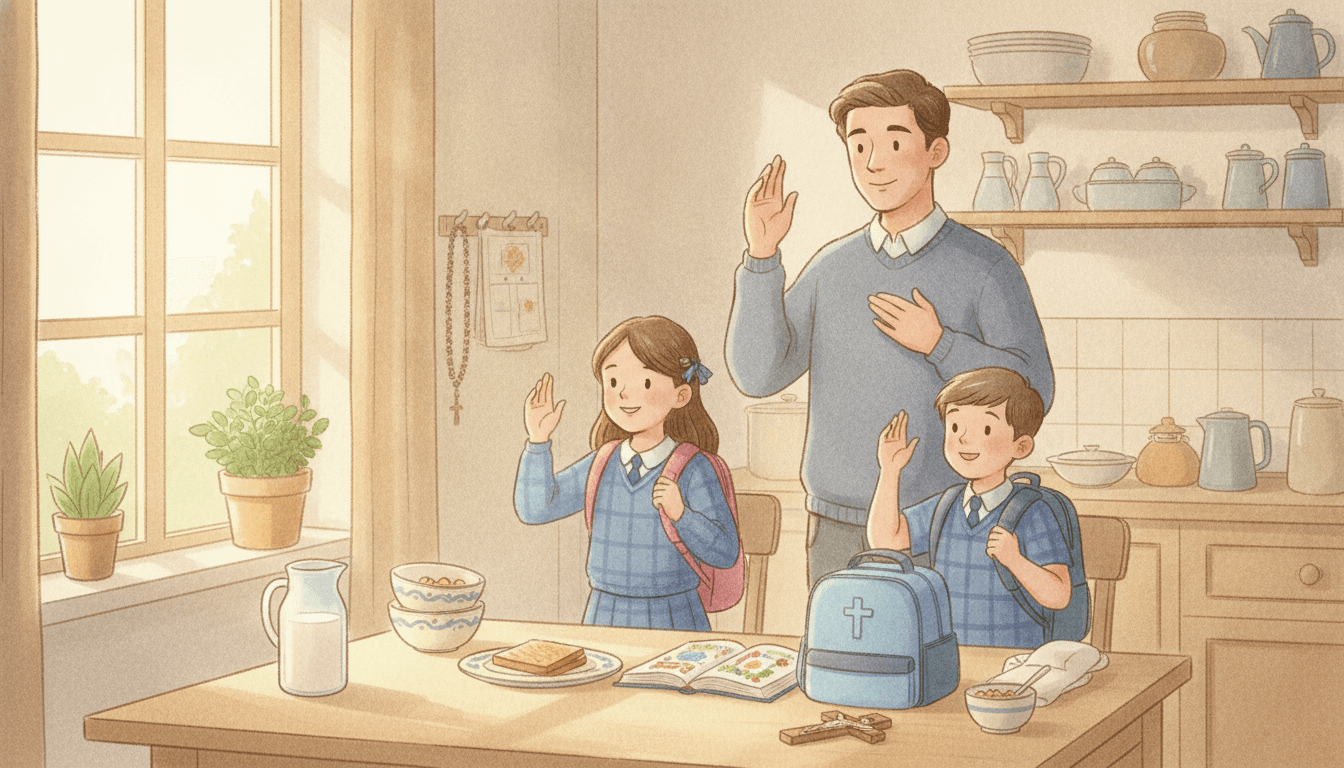
The fight usually starts over something tiny. A blue cup. The spot closest to Dad. A toy truck that suddenly becomes priceless the moment a sibling touches it. Then come the sharp words, the stomp down the hallway, maybe a door that gets slammed harder than necessary. Afterward, there is that long silence. Every parent knows it. Nobody is ready to talk, and nobody wants to be the first one to soften.
That is why forgiveness belongs in family life, not as a polished lesson for Sunday afternoon, but as a habit we practice while dinner is getting cold. Home is where children learn that saying “I’m sorry” is more than a way to get out of trouble. They learn to name what they did: “I grabbed it.” “I yelled.” “I said something mean.” And they learn the brave next words: “Please forgive me.”
They also need to hear forgiveness spoken back to them. “I forgive you.” Those words do not pretend the hurt was nothing. They do not mean the broken Lego set magically rebuilds itself—if only. They mean love is not cancelled by a bad choice. Sometimes a child needs to repair what was damaged, give back what was taken, or wait until a brother or sister is ready to talk. Reconciliation can be slow. But mercy keeps the door open.
Jesus gives us the direction in plain words: “Be merciful, just as [also] your Father is merciful.” At our table, that can look very small. Before anyone leaves the room after a conflict, help each child say what happened. Ask the hurt child, “What do you need to say?” Ask the other, “What can you do to make this right?” Then pray one simple line together: “Jesus, help us forgive as you forgive us.”
Pope Francis called the family a “training ground for the mutual giving and forgiving without which no love can last for long.” That sounds big, but the training often happens beside spilled milk and unfinished homework. One small thing we tried was making apologies specific instead of forcing a quick “sorry.” It changed the conversation. Not every quarrel ended neatly. Still, our kids began to see that mercy is something we do again tomorrow. And, frankly, so do Mom and Dad.
Be merciful, just as [also] your Father is merciful. Stop judging and you will not be judged. Stop condemning and you will not be condemned. Forgive and you will be forgiven.
Before You Begin: Make This Devotional Small Enough to Keep
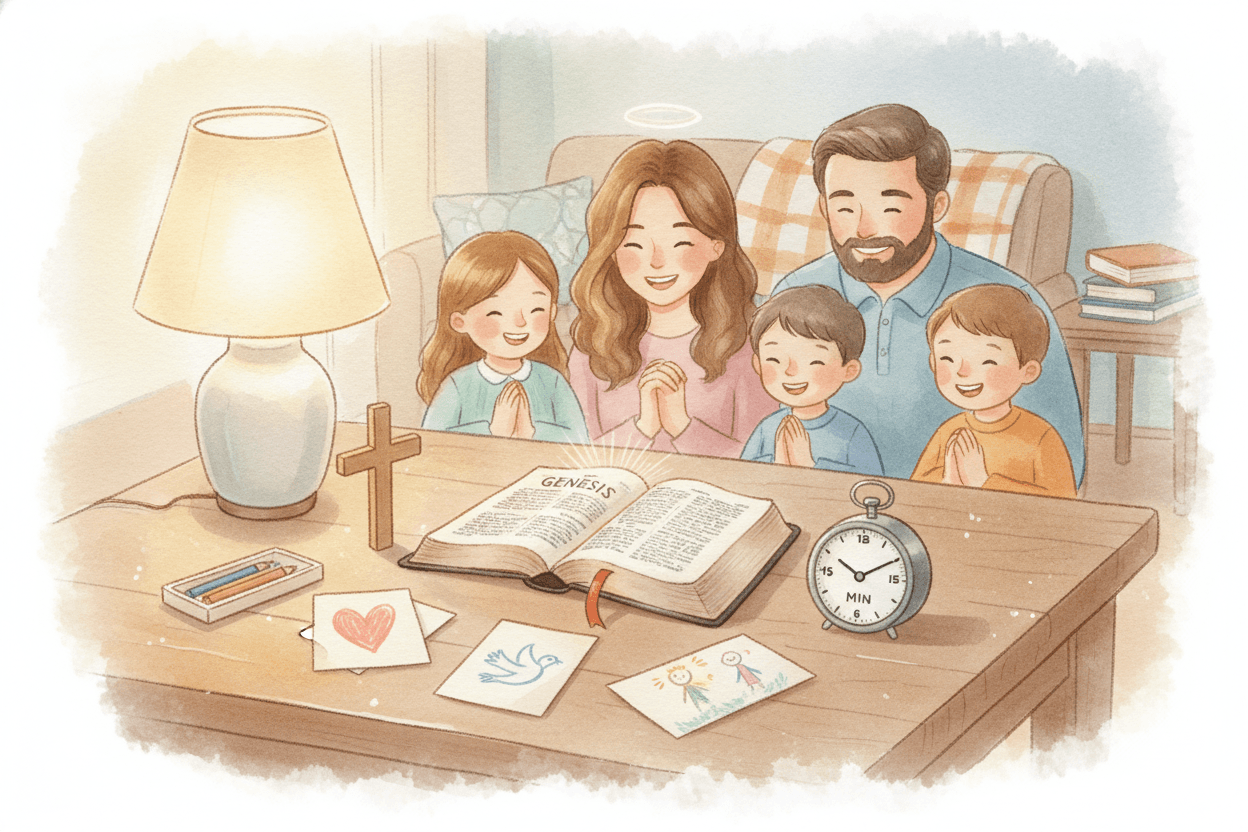
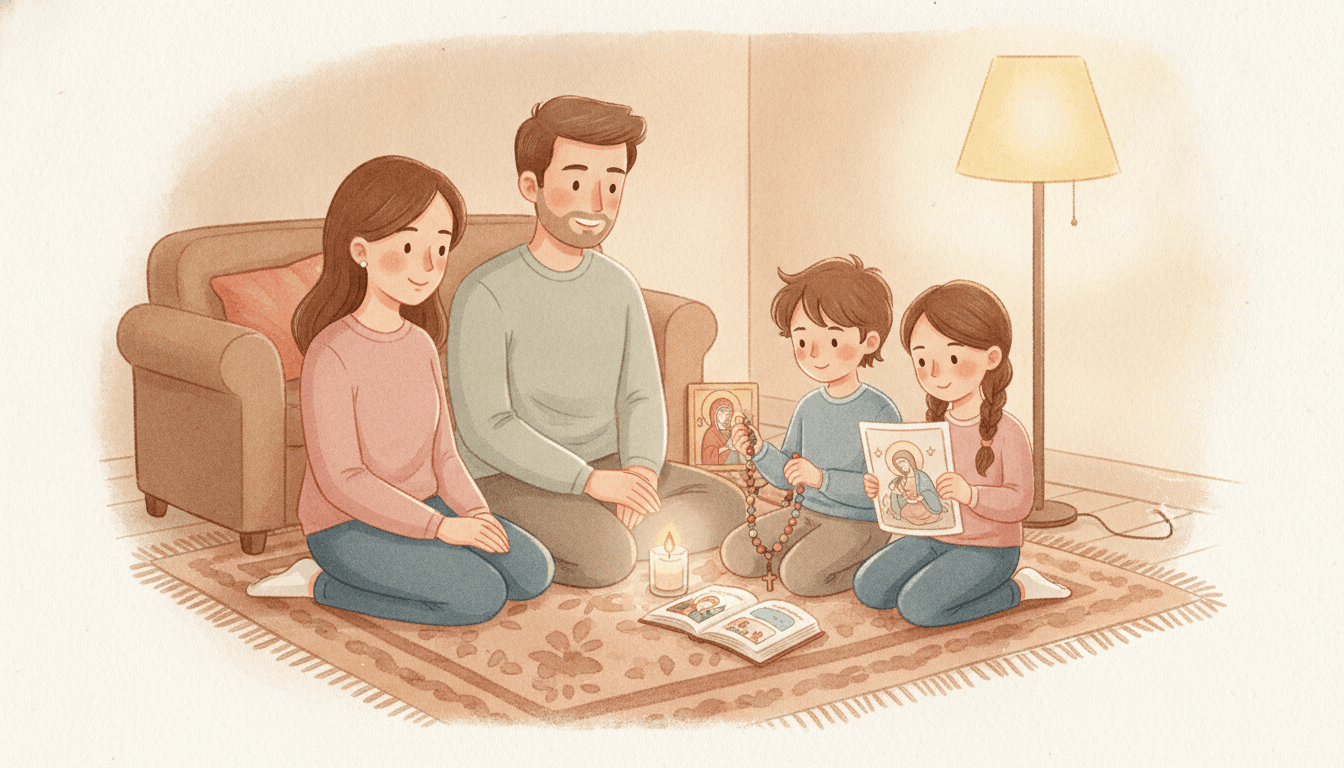
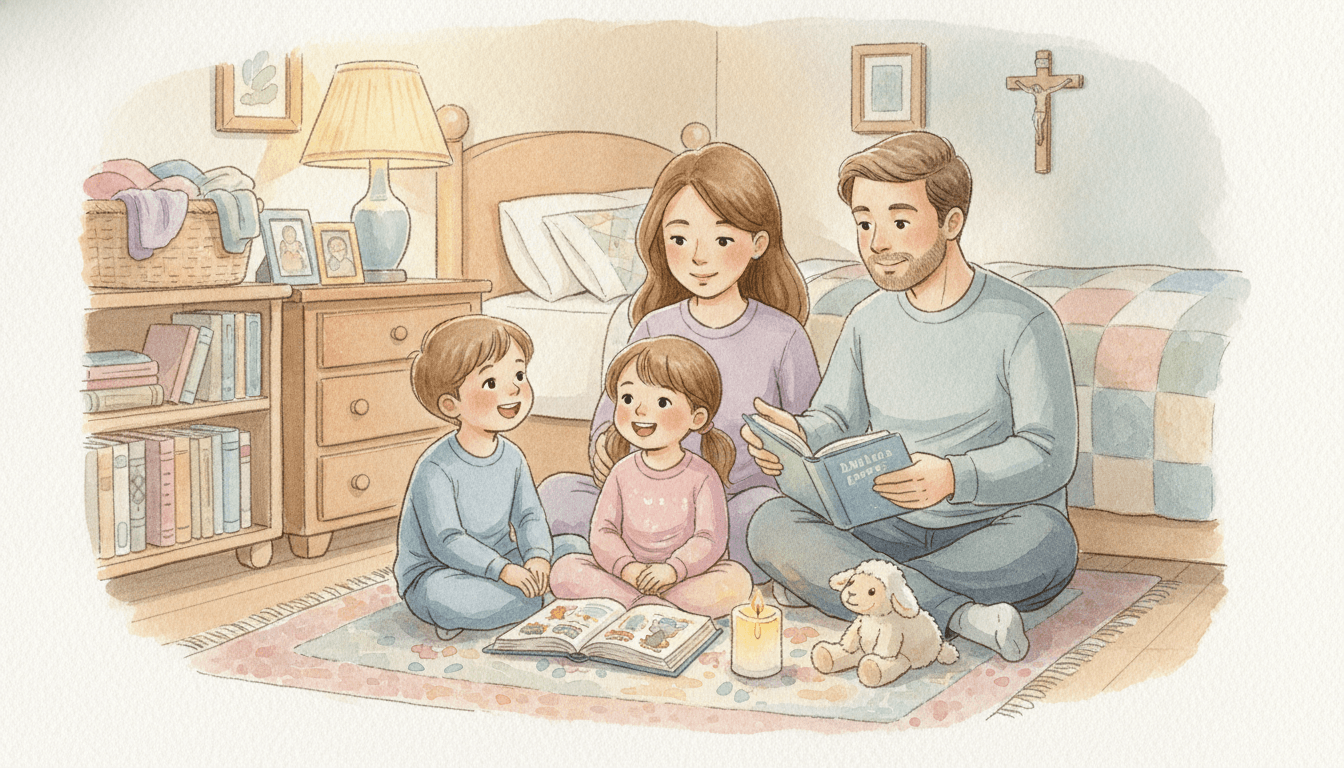
The plates are still on the table. Someone has dropped a fork for the third time. One child is asking for fruit, and another is suddenly very interested in why Joseph’s brothers threw him in a pit. That is a perfectly good time for this devotional. You do not need candles, color-coded folders, or a family discussion that lasts longer than everyone’s attention span. Ten to fifteen minutes after dinner or before bed is enough.
Keep the same simple rhythm each week. First, read a short passage from Joseph’s story. A few verses are plenty. Then ask one or two questions: “What happened here?” and “Where do we need this at home?” Let the little kids answer in little-kid language. Let the older ones be quiet for a minute if they need to. You are not trying to pull off a polished lesson. You are helping God’s word meet the kid in front of you.
Next, choose one small action for the week. After reading about Joseph seeing God at work in a hard situation, a child might draw or tell about one hard moment that turned out okay. During the week on reconciliation, each person can practice saying, “I’m sorry for…” without adding “but you started it.” For the week on daily habits, put “please,” “thank you,” and “sorry” on a note by the kitchen table. In the final week, invite everyone to do one kind thing for a person who annoyed them. Small is not shallow. Small is repeatable.
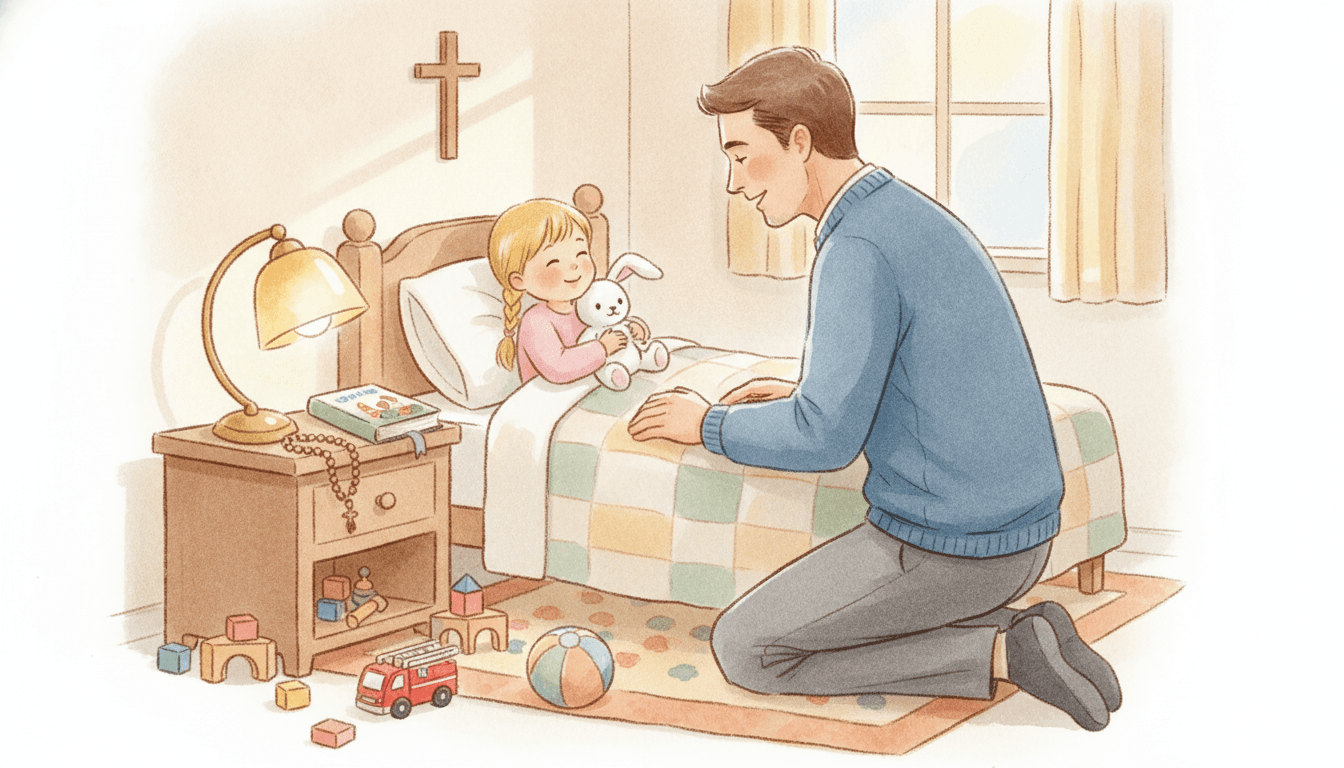
End with a short prayer, even if it is only one sentence from each person: “Jesus, help me forgive my brother.” “Help me say sorry.” “Help our family be kind when we are mad.” Then say Amen and get on with bedtime. In our house, the prayer sometimes comes with a yawn, a wiggle, or a complaint about pajamas. God is not bothered by the mess around the prayer.
If you miss a night, do not turn it into a family guilt project. Pick it up the next day, or simply return the following week. The point is not to finish four flawless sessions. The point is to give forgiveness a regular place in family life. As Pope Francis says, “The family is a training ground for the mutual giving and forgiving without which no love can last for long.” A little practice at the table can shape the words your children reach for when the next real argument comes.
If you forgive others their transgressions, your heavenly Father will forgive you. But if you do not forgive others, neither will your Father forgive your transgressions.
Week 1: God Is Still at Work When We Are Hurt
Last Tuesday, someone got the blue cup after someone else had clearly announced that it was “my blue cup forever.” The tears were real. The offense was apparently historic. By bedtime, the cup was forgotten, but the tight feeling was not. That is often how hurt works with children—and with us. The event may look small from across the room, yet it can sit in a child’s heart all day.
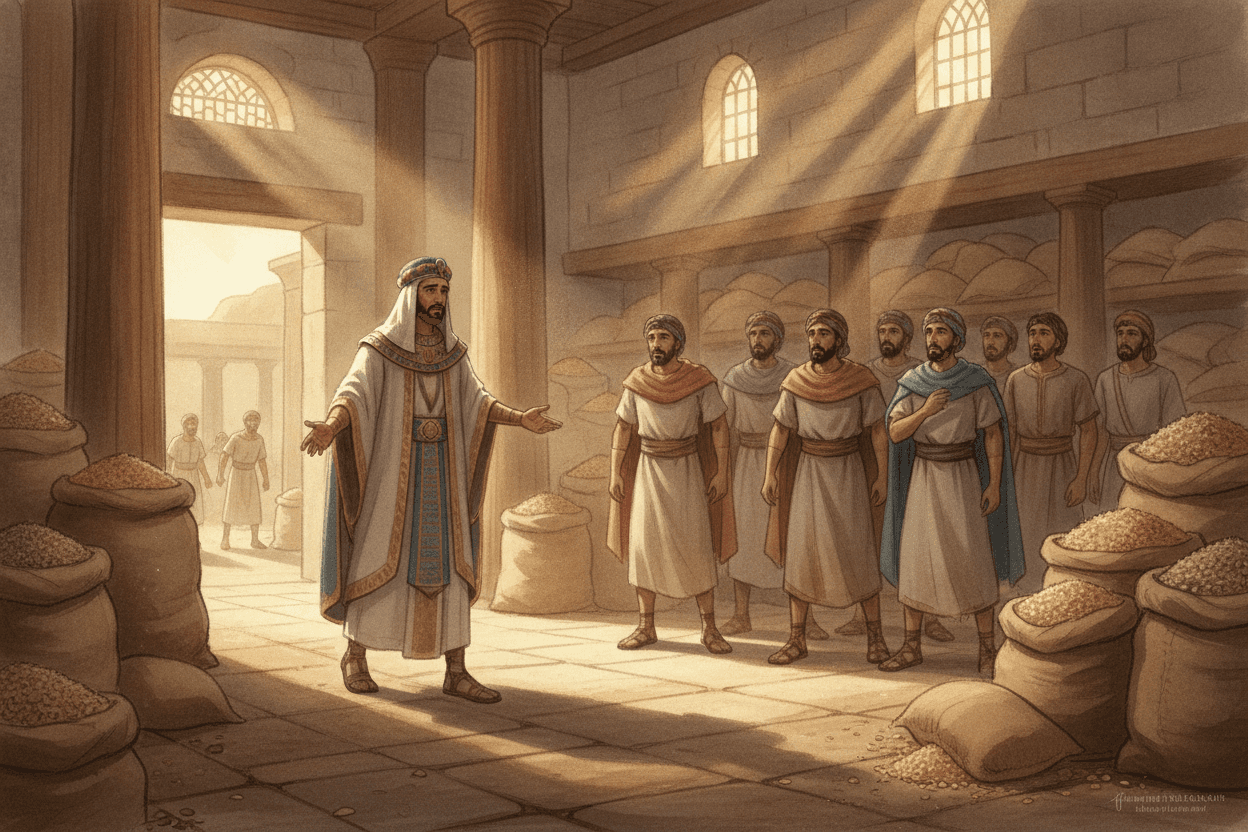
This week, gather after dinner or before bed and read Joseph’s words to his brothers in Genesis 45. Joseph had every reason to be angry. His brothers had sold him and left him far from home. Years later, when they stood before him, Joseph did not pretend their choice was fine. He named it: “I am your brother Joseph, whom you sold into Egypt.” Then he told them that God had been working for the sake of saving lives. That is a hard and hopeful truth. God can bring good from what hurts us. But the hurt itself is not good, and forgiveness never means saying that a wrong did not matter.
Ask each child: “Can you think of a time this week when someone hurt your feelings, left you out, or said something unkind?” Keep the examples close to their world: a sibling knocking down a block tower, a friend refusing to share, a harsh word in the car ride home. Let them answer without rushing to fix it. If they cannot think of anything, that is okay. You can share a small, honest example from your own day. Then ask, “What good might God grow from this? Could He help us become kinder, braver, or better at telling the truth?” Here’s what landed with our kids: God does not waste our tears, even when we do not yet see what He is doing.
One small thing we tried was putting paper and crayons on the table. Invite everyone to draw a hard moment from the week, or simply write a few words if drawing feels too little-kid-ish. No one has to show their page. Under the picture, help them add: “Jesus, be with me in this.” Parents, this is not a project to force a happy ending. The child whose feelings were hurt may still be sad. The child who caused the hurt may need to apologize and repair what he or she damaged. Both things can be true: we take wrong seriously, and we bring it to God.
Close with this simple prayer: “Jesus, You see the things that hurt us. Help us tell the truth about them. Help us not to hurt others when we are hurt. Show us the good You can grow in our family, and give us patient hearts while we wait. Amen.”
Then Joseph said to his brothers, “Come closer to me.” And when they had done so, he said: “I am your brother Joseph, whom you sold into Egypt. But now do not be distressed, and do not reproach yourselves that you sold me here; it was really for the sake of saving lives that God sent me here ahead of you.”
Week 2: Tell the Truth About the Hurt—and Take the First Step
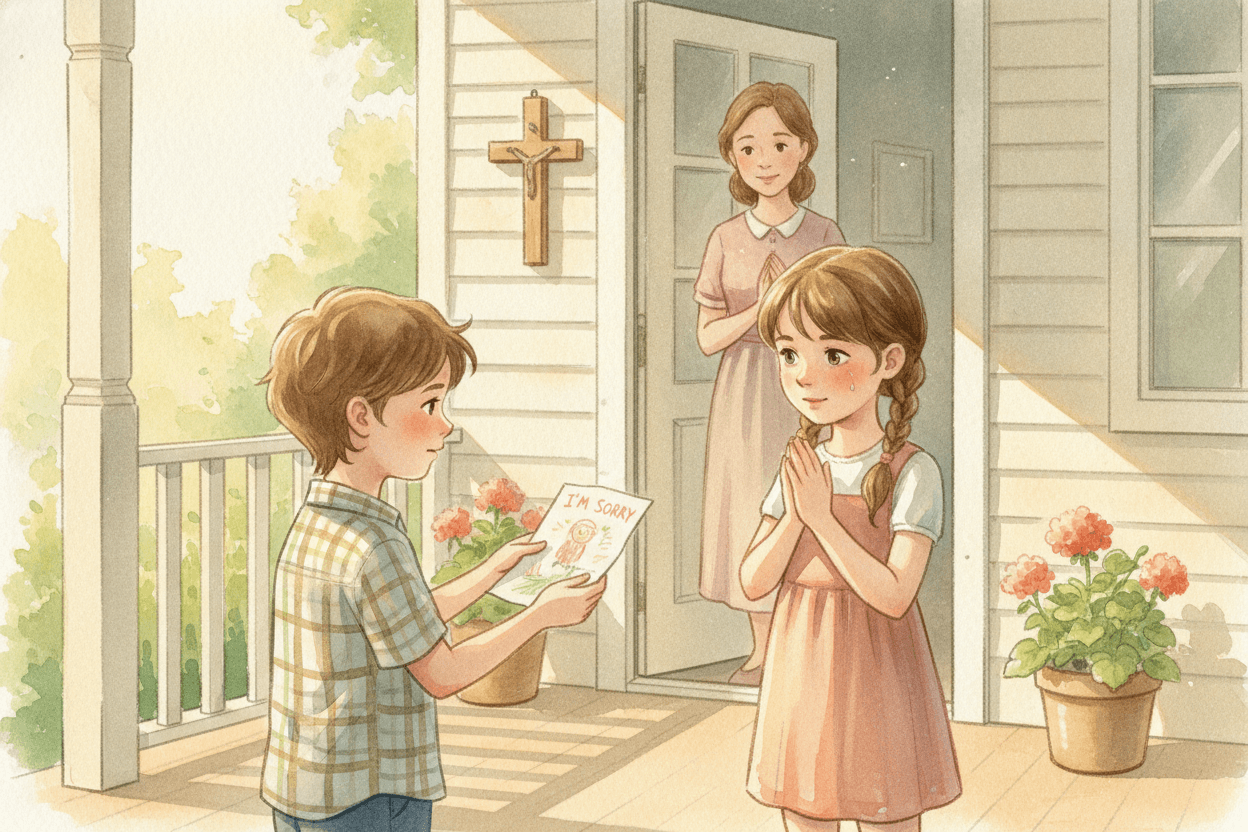
One of our kids can say “sorry” at top speed while still holding the toy he grabbed. You have probably seen a version of this. The words come out, but nobody feels settled. The other child is still crying. The block tower is still down. And the parent is standing there, trying not to turn a two-minute squabble into a courtroom drama before breakfast.
Joseph shows us a truer way. When he finally stands before the brothers who sold him, he does not act as if it was no big deal. There are tears. There is an embrace. There is time for his brothers to speak. Forgiveness is not pretending a hurt never happened. It is bringing the hurt into the light without using it as a weapon. That is a big lesson for children, and honestly, for their parents too.
This week, give your children a few plain sentences to practice. The child who was hurt can say, “That hurt me when you ___,” or “I felt sad when you ___.” The child who caused the hurt can say, “I am sorry I ___,” without adding “but you started it.” Then comes the brave question: “Will you forgive me?” If the child is not ready to answer right away, that is okay. We can say, “I need a minute, but I hear your apology.” Forgiveness should not be forced on command, like putting shoes on for Mass.
One small thing we tried is asking each child to repair one hurt before the week is over. Repair might mean returning something they took, helping rebuild what they knocked down, doing a sibling’s small chore, or writing a short note with a crayon heart on it. A note does not erase the wrong. Neither does an apology. But these are ways of saying, “I want to help make this right.” Pope Francis says children need to be trained firmly to ask forgiveness and repair the harm they have done. That training happens in the ordinary mess of home.
At our table, you might ask: “What is the difference between saying sorry and trying to make things right?” Then pray simply: “Jesus, help us tell the truth when we hurt each other. Help us be sorry, help us forgive, and help us make peace.” Keep it short. A child may offer only a shrug at first. That still counts as being present. Tomorrow, there will likely be another spilled cup, another sharp word, and another chance to begin again.
Then Joseph threw his arms around his brother Benjamin and wept, and Benjamin wept in his arms. Joseph then kissed all his brothers and wept over them; and only then were his brothers able to talk with him.
Week 3: Practice the Three Little Words That Keep Peace Moving
The blue cup was missing again. One child had it, another child wanted it, and suddenly breakfast sounded less like a peaceful start to the day and more like a tiny courtroom. We stopped the shouting long enough to find out what happened. Yes, there was an apology. But the real turn came when the child who grabbed the cup washed it and brought it back. The words mattered. The repair made the words believable.
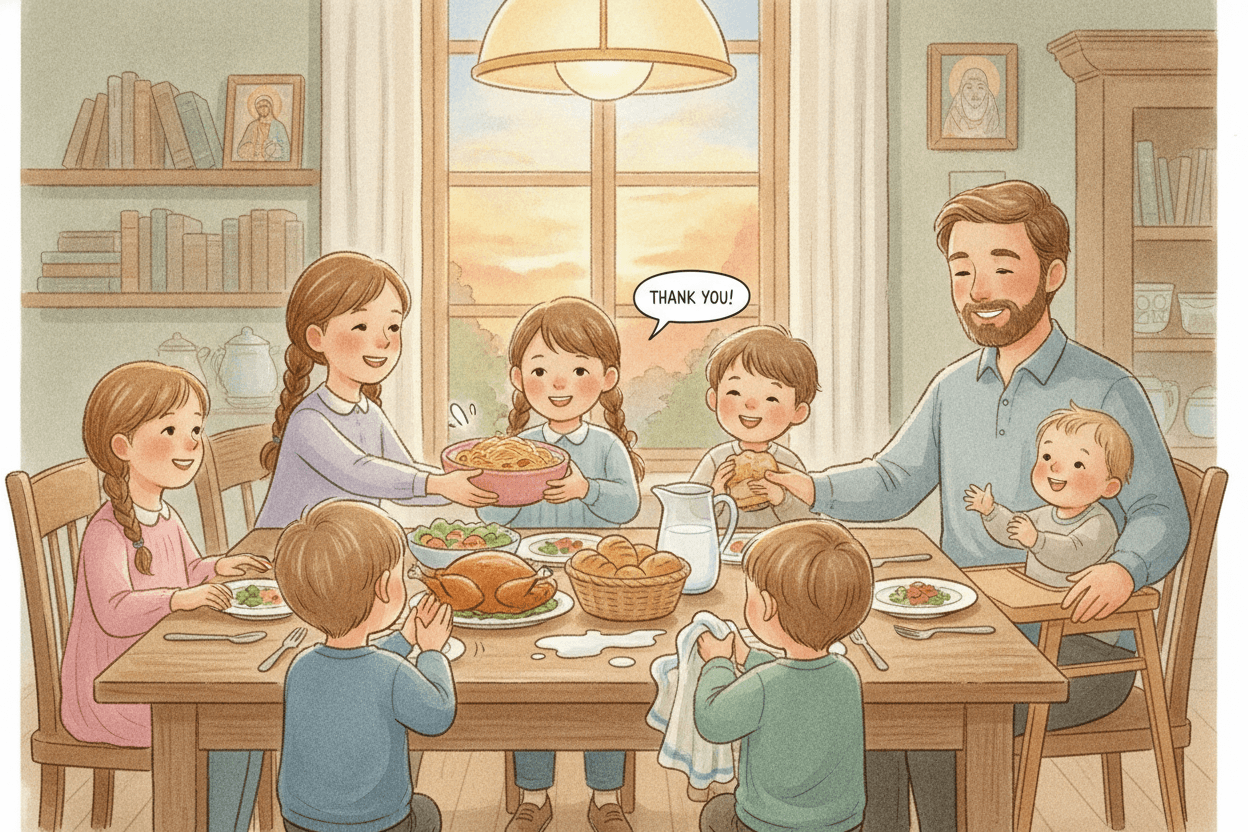
This week, keep three little words within easy reach: please, thank you, and sorry. They are not magic words that make a problem disappear. They are small ways of noticing another person. “Please” admits I am not the center of the house. “Thank you” sees the good someone else has done. “Sorry” tells the truth when my choice has hurt someone. At our table, those words can get lost under requests for more milk, spilled cereal, and somebody’s urgent report that a sibling is looking at them. That is exactly why we need to practice them.
Pope Francis says, “It is important to train children firmly to ask forgiveness and to repair the harm done to others.” Repair is the part we parents can help make concrete. If your child takes a toy, returning it is a start. If he dumps blocks in anger, he helps pick them up. If she leaves a sibling out of a game, she makes room and tries again. If harsh words were spoken, the child can offer a kind word later, without being forced to perform a fake smile on demand. An apology is not a shortcut out of trouble. It is the first step toward making things right.
One small thing we tried is a three-word check at dinner. Go around the table and let each person share one “please,” one “thank you,” or one “sorry” from the day. Little kids may need help: “Did anyone help you today?” “Is there something you need to ask for more kindly tomorrow?” “Did you hurt someone and need to repair it?” Parents should answer too. When Dad says, “Sorry I snapped when everyone was taking forever to put on shoes,” children learn that asking forgiveness is not just for the smallest person in the room.
Make the family challenge simple: notice and use all three words every day this week. Put the words on the fridge if that helps. Praise the effort when you hear them, especially when they cost something. And when a child says sorry, receive it warmly while still guiding the repair. Peace in a family rarely arrives with a trumpet blast. More often, it moves forward through a returned cup, a cleared-up mess, a gentler sentence, and three little words said like we mean them.
Week 4: Choose Mercy Instead of Keeping Score

The fight had ended twenty minutes earlier, but nobody had moved on. One child was still building a case from the back seat: “And yesterday he took my blue marker.” Another had a counterclaim ready. Parents know this courtroom well. The evidence is real enough, but everyone is also keeping score. By the time we get home, the original spilled drink or grabbed toy has somehow collected three weeks of history behind it.
Joseph’s brothers were doing something similar when their father died. They remembered what they had done to Joseph. They feared that he had been waiting all those years to make them pay. Joseph had every reason, humanly speaking, to bring out the ledger. Instead, he said, “Do not fear. Can I take the place of God?” He did not call their betrayal good. He named the harm plainly. But he refused to appoint himself judge, jury, and payback committee. Then he made a concrete promise: “I will provide for you and for your children.” That is mercy with work boots on.
This is an important distinction for our children, and for us. Forgiveness does not mean what happened was harmless. It does not mean a child must keep playing with someone who is being cruel, or that a parent should ignore repeated lying, hitting, or unsafe behavior. Trust can take time to rebuild. Consequences can still be needed. Mercy means we do not feed revenge in our hearts. We tell the truth, get help when we need it, set a wise boundary, and choose the next good thing instead of plotting how to get even.
For this week’s conversation, ask: What is one thing you are still holding over someone’s head? Little kids may mention a broken Lego creation. Older kids may have a sharper answer: a friend who excluded them, a sibling who told a secret, a parent who said no. Let the answer sit for a moment. Do not rush to fix it. Then ask, “What would keeping score make you want to do? What could mercy look like instead?” Here’s what landed in our house: mercy was not always a big hug. Sometimes it was returning the marker without a speech. Sometimes it was letting a sibling choose the game after an argument.
Try one small thing this week. When someone says, “But he did it first,” help them name the scorekeeping thought: “I want him to hurt because I hurt.” Then replace it with one concrete act of mercy: speak without a jab, share one item, offer help, or pray quietly for that person. If repair is needed, include it. “I forgive you, and the blocks still need to be picked up.” That is honest. That is kind. Over time, children learn that mercy is not pretending the mess is gone. It is refusing to make a bigger mess with our response.
But Joseph replied to them: “Do not fear. Can I take the place of God? Even though you meant harm to me, God meant it for good, to achieve this present end, the survival of many people. So now, do not fear. I will provide for you and for your children.” By thus reassuring them and speaking kindly to them, he put them at ease.
This Week’s Family Practice: One Apology, One Repair, One Prayer
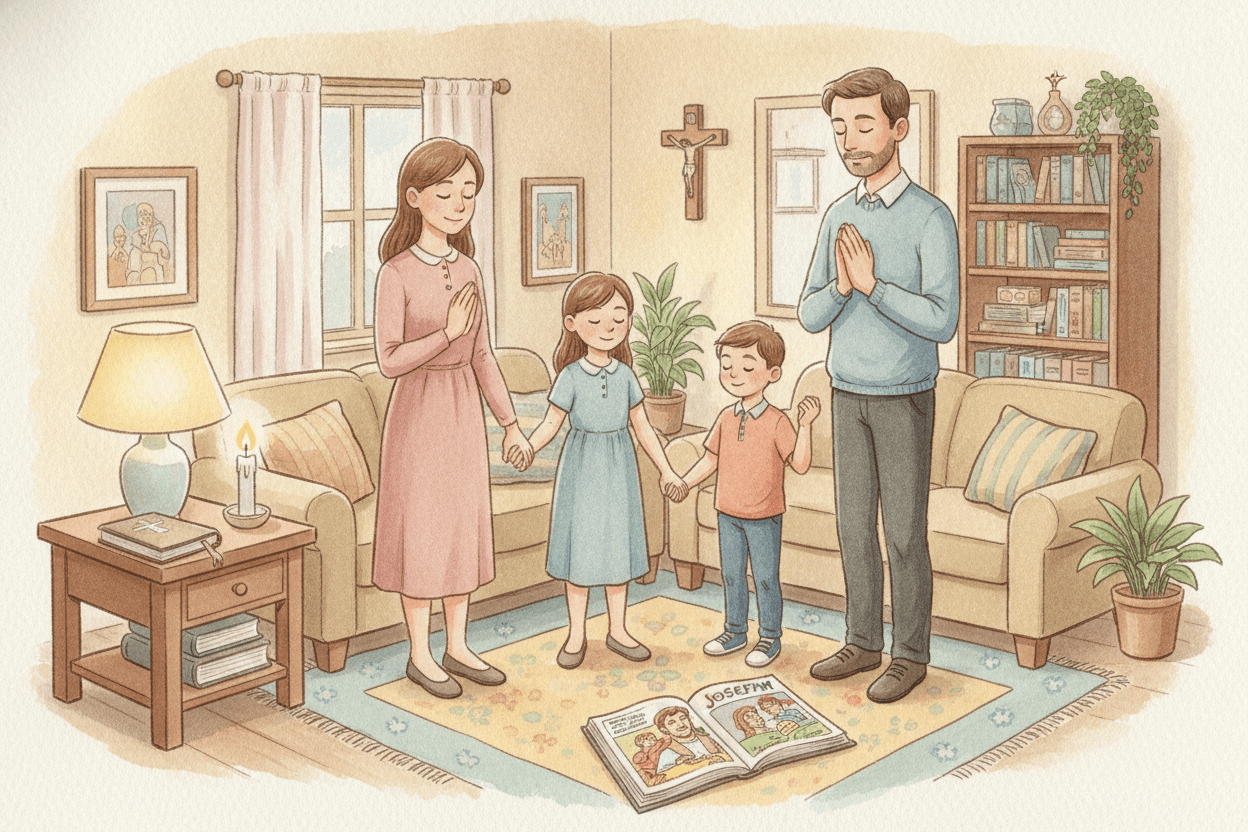
Yesterday’s fight might still be sitting under the surface when the cereal bowls come out. One child got the blue cup. Another child says, “That’s not fair,” as if the blue cup has been handed down from heaven. Then somebody shoves, somebody yells, and suddenly everyone is late. This is exactly the kind of small, ordinary mess where forgiveness becomes real—not as a speech, but as the next thing we do.
For this week, choose one unresolved small conflict. Keep it small on purpose: the toy grabbed from a sibling, the unkind name, the mess left for someone else, the argument that ended with a slammed bedroom door. Ask each person to name what happened without turning it into a courtroom. “I was building with that.” “I got mad and pushed.” “I felt left out.” Parents can go first when needed. A calm, specific apology teaches more than a long lecture: “I was impatient and raised my voice. I am sorry.”
Then make one repair. An apology is not a magic eraser, but it can open the door. The child who knocked down the block tower can help rebuild it. The one who said something cruel can bring a glass of water, draw a note, or give the other person some needed space. If you were the one who snapped after a long day, maybe the repair is coming back to your child, getting down low, and owning it plainly. Here’s what landed in our house: children notice when grown-ups apologize without adding a “but.”
After the repair, pray together in one or two simple sentences. “Jesus, give us merciful hearts. Help us forgive each other and speak kindly.” That is enough. Nobody needs to manufacture a warm feeling on command. Joseph’s brothers had done real harm, and his reunion with them included tears before there were easy words. Mercy can be honest about the hurt while still refusing to keep score.
If your family needs a picture to return to, read Genesis 45 together and revisit Joseph’s reunion through the BibleHeroes comic “Joseph’s Reunion.” Let the children see Joseph weep, embrace his brothers, and choose care instead of payback. Keep this four-week rhythm nearby for the next round of sibling battles. They will come back—probably before breakfast. But every small apology, repair, and prayer gives your children practice in the kind of love that lasts.
Frequently asked questions
How can I teach my children to forgive after sibling fights?
Start with the actual conflict, even if it seems small. Help each child name what happened, invite the one who caused harm to say, “I’m sorry for…,” and let the hurt child respond when ready. End with a brief prayer asking Jesus to help your family forgive.
Does forgiving mean my child has to act like the hurt never happened?
No. Joseph did not deny what his brothers did, and children do not need to pretend a broken toy or cruel word was fine. Forgiveness keeps love and reconciliation possible, while repair, consequences, and time to calm down may still be needed.
What Bible passage should we read for a family devotional on forgiveness?
Genesis 45 is a strong starting point because Joseph meets the brothers who sold him into Egypt and speaks honestly about their wrongdoing. Read only a few verses, then ask what happened and where your family needs mercy at home. Keep the discussion connected to ordinary hurts children recognize.
How long should a family forgiveness devotional take?
Ten to fifteen minutes after dinner or before bed is enough. Use a simple pattern: read a short Scripture passage, ask one or two questions, choose a small practice for the week, and pray one sentence together. Consistency matters more than a perfect or lengthy lesson.
What are practical ways to practice forgiveness at home during the week?
Practice specific apologies without excuses, such as “I’m sorry for grabbing your toy,” rather than “Sorry, but you started it.” Put reminders like “please,” “thank you,” and “sorry” near the table, or invite each family member to do one kind thing for someone who annoyed them. Small repeated habits make mercy more natural in the next disagreement.
What should I do if we miss a day of our family devotional?
Do not turn a missed night into another source of guilt or conflict. Resume the next day or move on to the following week’s reading. The goal is to make forgiveness a regular part of family life, not to complete every session flawlessly.
Sources: bible.usccb.org · vatican.va · vatican.va · vatican.va · vatican.va · vatican.va · vatican.va · barna.com · workingpreacher.org · sunderlandcatholic.com
Scripture quotations in this article use the NABRE translation.