Helping Kids Find Holy Ground in Ordinary Places
From spilled milk to bedtime routines, ordinary family moments can become invitations to notice God’s presence. Discover simple ways to help children recognize holy ground in kitchens, cars, bedrooms,
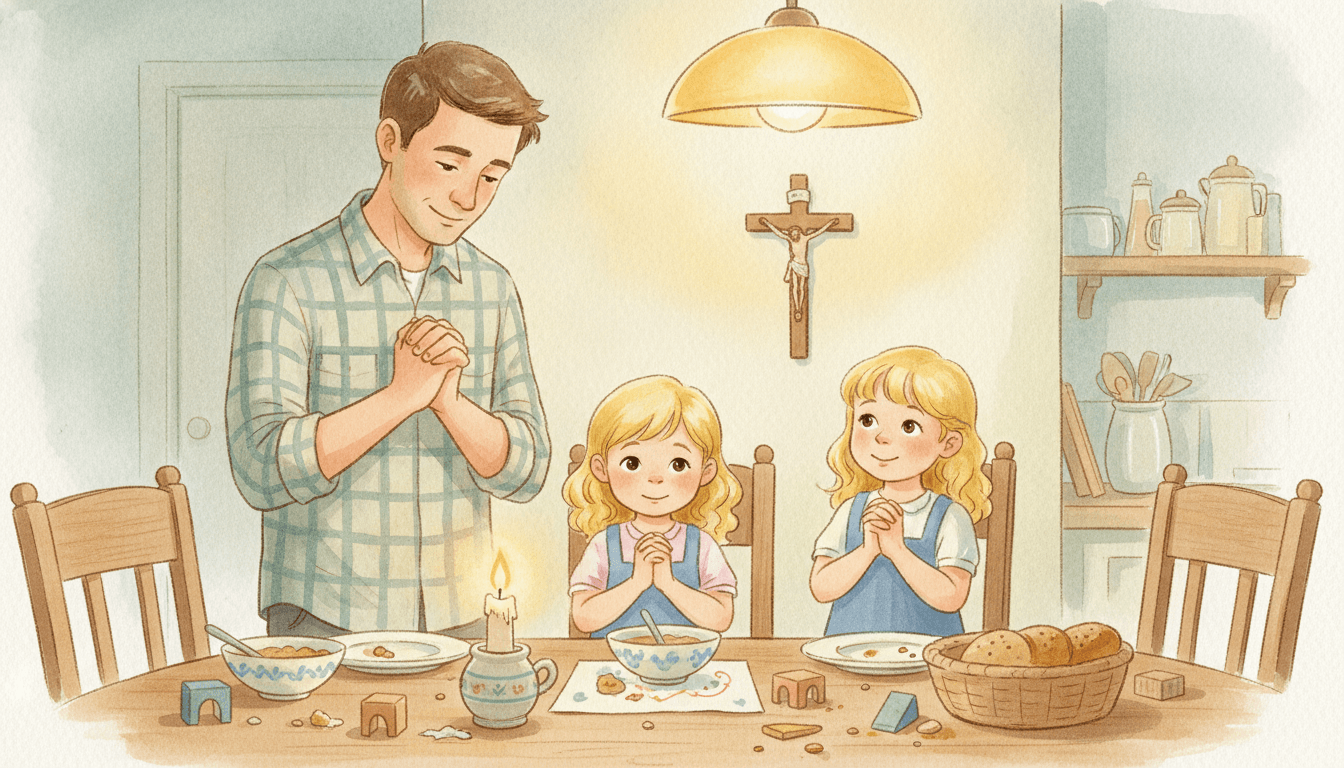
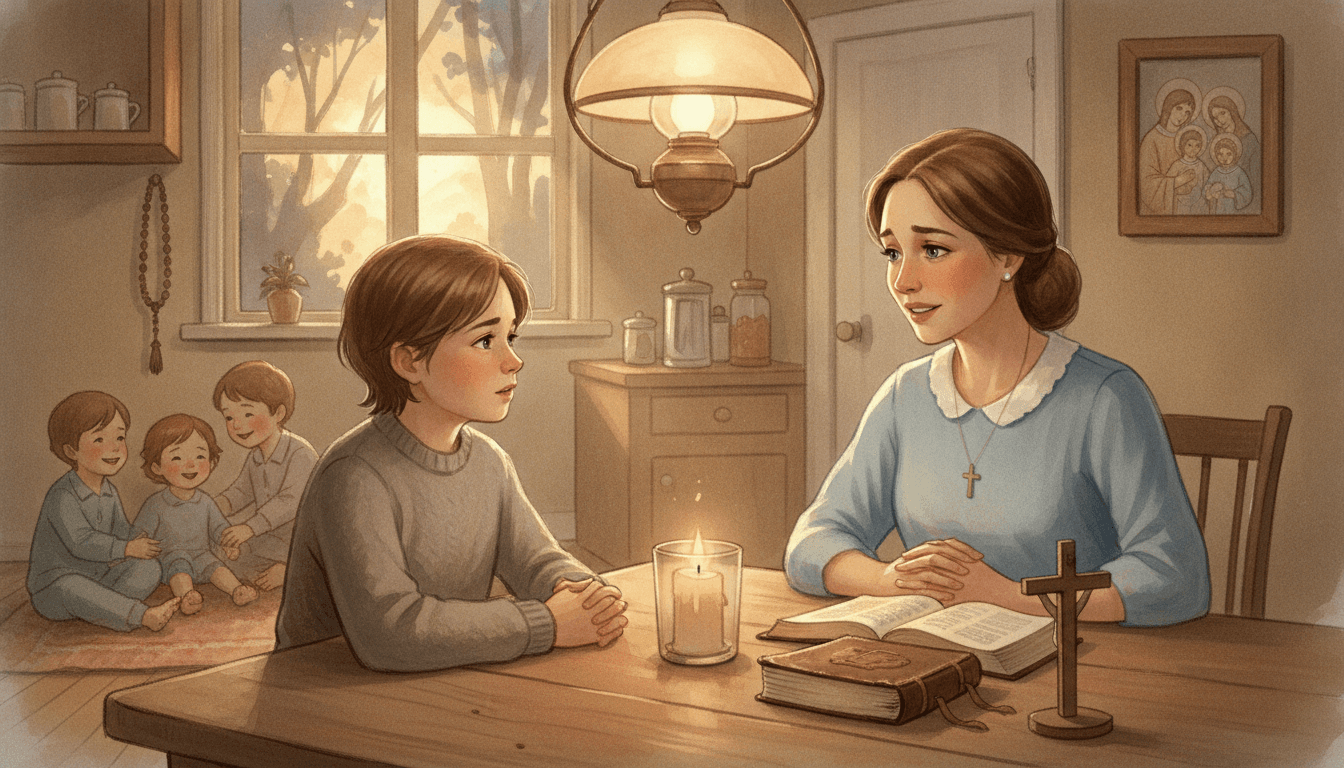
The other night, someone spilled milk just as we were trying to say grace. Again. We cleaned it up, folded our hands, and tried one more time—and that small reset felt like a reminder: God is not waiting for our house to become quiet before he meets us there.
Holy Ground Can Start in a Messy Kitchen
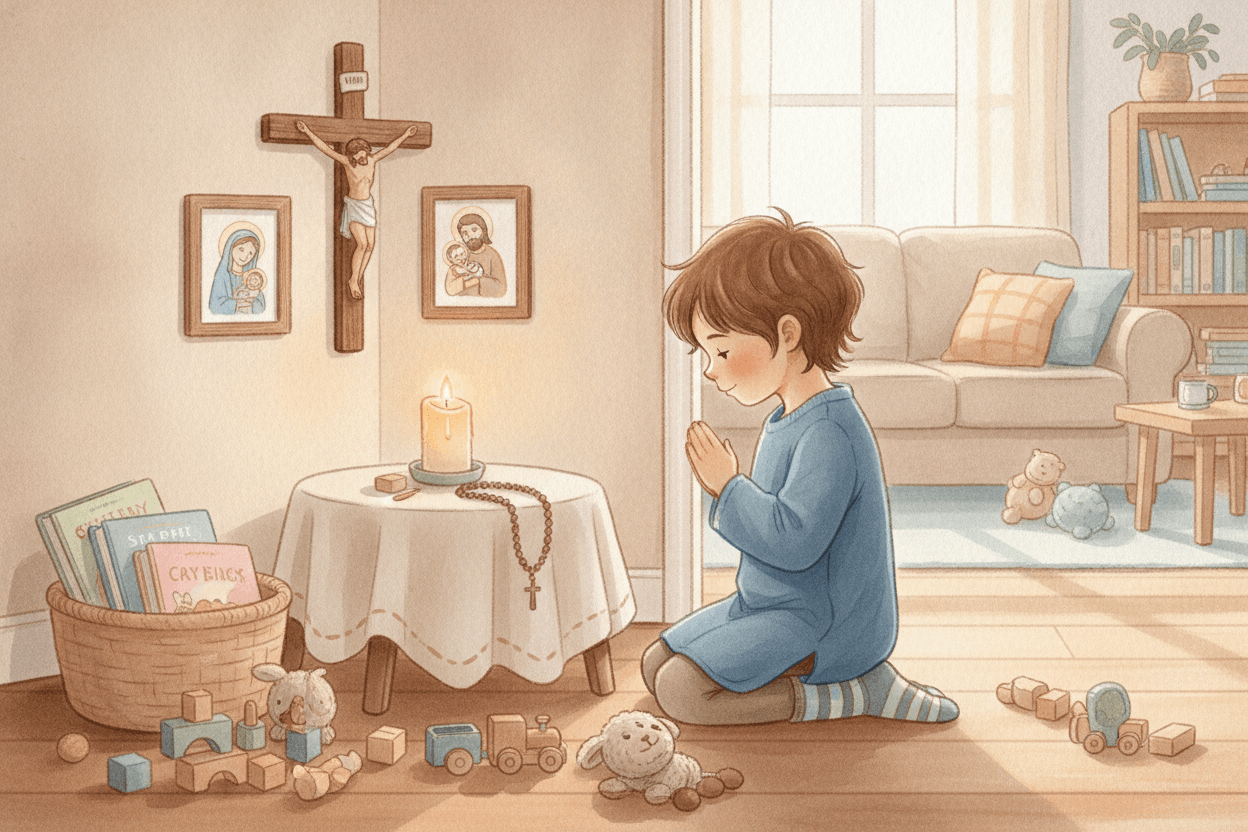
Moses met God beside a burning bush, but most of us meet the morning with a burning toaster waffle and somebody crying because the blue cup is dirty. That can still be a place to notice God. Holy ground is not reserved for a silent church, a candlelit chapel, or the one corner of the house that stayed clean for seven whole minutes. Young children learn reverence when we help them stop, even briefly, and remember: God is near here too.
At our table, that pause might happen before breakfast. Not a long speech. Just folded hands, a breath, and, “Thank you, Jesus, for this food.” A child may wiggle, peek, or announce that his banana has a bruise. Fine. We are not trying to produce tiny monks before school. We are teaching a simple truth through repetition: meals, scraped knees, car rides, and bedtime all belong to God.
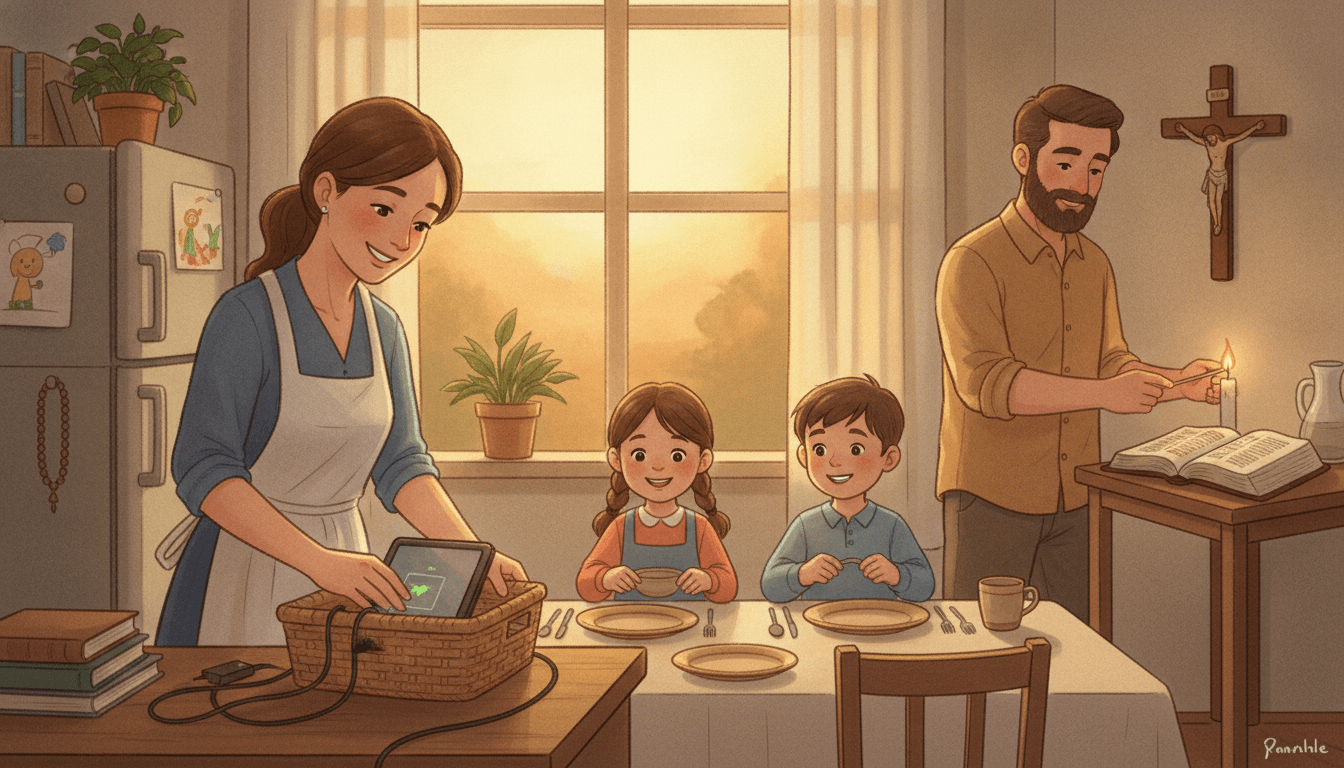
One small thing we tried was making the kitchen crucifix part of the rhythm of the day. On the way out the door, the kids touch their fingers to their lips and blow Jesus a kiss. Before dinner, they take turns naming one good gift from the day. After somebody has had a hard moment—and this happens with impressive regularity—we can say, “Jesus, help us begin again.” These little acts do not make the house quiet. They make God familiar in the middle of the noise.
This is how the family becomes the domestic church: not by turning every ordinary moment into a lesson, but by giving ordinary moments a small turn toward heaven. St. John Paul II wrote that parents are responsible for creating a family atmosphere marked by love and reverence for God. That sounds big, but it lands in very small places: the way we apologize, the way we speak when we are frustrated, the quick grace before pizza, the sign of the cross at bedtime.
When Moses heard that the ground beneath him was holy, he had to notice where he was standing. Our children need help doing the same. This week, choose one repeatable moment in your kitchen: before meals, while packing lunches, or after everyone gets home. Keep the prayer short. Keep it real. Then let your child see that God is not waiting somewhere beyond the mess. He is already present in the kid in front of you, the dishes in the sink, and the grateful pause you make together.
God said: "Do not come near! Remove your sandals from your feet, for the place where you stand is holy ground."
For Little Kids, Reverence Looks Like a Body Habit
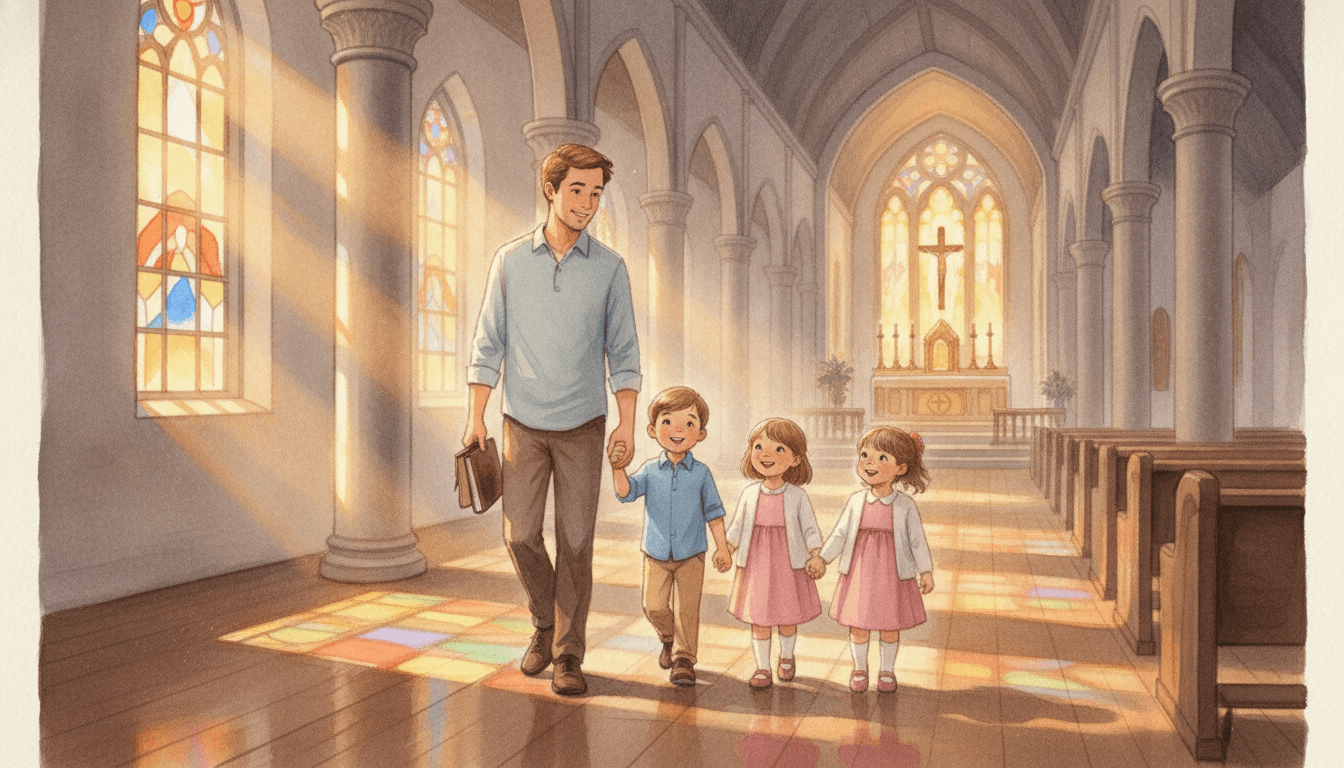
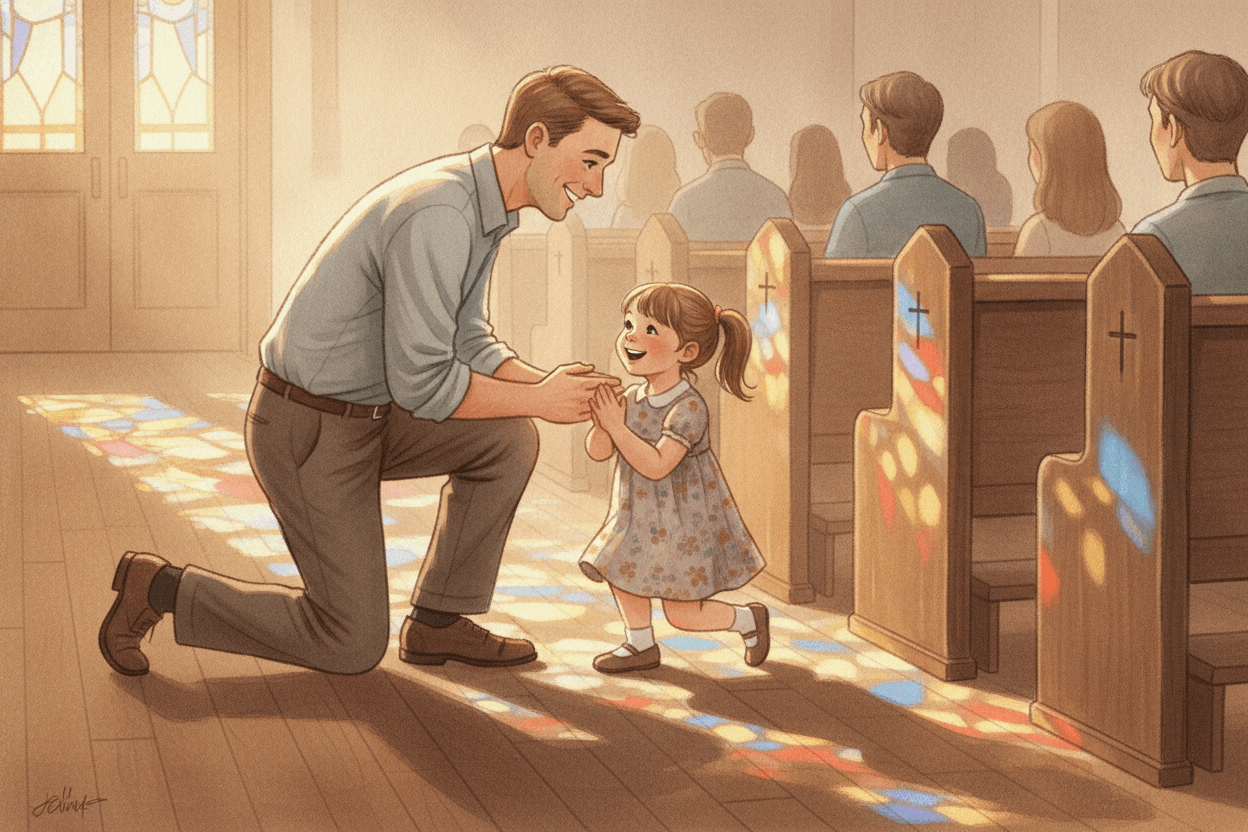
Last Sunday, our youngest made a full-speed run down the church aisle just as the opening hymn began. I caught up with him near the front, slightly out of breath and definitely not looking like a father in a stained-glass window. On the way back to our pew, I did not give a speech about reverence. I knelt, made the Sign of the Cross slowly, and whispered, “Jesus, help us be with you.” He copied the sign with great seriousness. His fingers went everywhere. It still counted.
For little kids, reverence is not mainly a feeling they can explain. It is a body habit they can practice. “Be good” is too foggy. “Be quiet” can sound like church is a place where nobody is glad to be there. Give them one clear action instead: walk slowly when we enter; dip one finger in holy water and make the Sign of the Cross; genuflect with Dad; fold hands for ten seconds; whisper, “Hi, Jesus.” A three-year-old can understand that.
The key is to show before you correct. If we rush into the pew while digging for wipes, crackers, and the one toy that has apparently become essential to salvation, our children learn rushing. If we pause, face the tabernacle, and genuflect, they learn that something different is happening here. They may not know every word about Christ’s presence yet. But their knees, hands, and voices are beginning to learn respect. That is a real beginning.
One small thing we tried was choosing just one Mass habit for a few weeks. Ours was a quiet bow toward the altar before we stepped into the pew. We practiced it once in the parking lot: “When we get inside, we bow because this is God’s house.” No pressure. No scorekeeping. When a child forgot, we simply did it ourselves the next time. When he remembered, we smiled and said, “You showed love to Jesus.” Here’s what landed: small children usually respond better to a simple repeatable rhythm than a long correction after they have already melted down.
This same rhythm belongs at home. Let them touch a crucifix gently, not like an action figure. Let them fold their hands before a two-sentence meal prayer. Let them whisper, “Thank you, Jesus,” when they see a sunset or hear thunder. Moses gave parents an everyday pattern: “Keep repeating them to your children. Recite them when you are at home and when you are away, when you lie down and when you get up.” We are not trying to produce tiny adults who never wiggle. We are helping the kid in front of us learn, little by little, that love for God has a shape.
Keep repeating them to your children. Recite them when you are at home and when you are away, when you lie down and when you get up.
Teaching Kids Reverence at Mass Without Expecting Perfection
The holy-water font is usually where our best Mass intentions meet a child who suddenly needs to inspect his shoe. Still, we start there. A little finger in the water, a slow Sign of the Cross, and a quiet sentence: “We are coming into God’s house.” It takes about ten seconds. Some Sundays it takes thirty because somebody has forgotten which hand makes the sign. That is fine.
For young kids, reverence at Mass does not begin with sitting perfectly still for an hour. It begins with a few repeatable cues. Before we enter the pew, we genuflect together when the tabernacle is present. If a child cannot manage it yet, a small bow is a good start. We tell them plainly, “Jesus is especially present here.” Not as a long lesson at the church door. Just a true sentence, said often enough that it becomes familiar.
Then we keep the expectations small. We use a quiet voice. We fold our hands for a short prayer at a few moments. Before Communion, even if the line is moving and someone is trying to count the backs of people’s heads, we make a little bow and whisper, “Jesus, I love you.” A child not receiving Communion can cross his arms for a blessing or simply stand close and watch. These are body habits that teach the heart where it is.
Of course, there will be wiggles. There will be whispers. There may be an emergency snack negotiation conducted with the intensity of an international summit. We do not treat those moments as proof that Mass is failing. We handle what needs handling, step out when we need to, and come back. The goal is not a polished performance for the people in the next pew. The goal is that our children slowly learn: this place is different, Jesus is here, and our bodies can help us show love.
One small thing we tried was choosing only two cues to practice for a month: holy water at the door and a genuflection before the pew. Once those felt normal, we added the small bow before Communion. That pace helped. Jesus did not push children away because they were noisy, restless, or unfinished. He said, “Let the children come to me, and do not prevent them.” So bring them. Teach them the next small act of love. Then bring them again next Sunday.
But Jesus said, "Let the children come to me, and do not prevent them; for the kingdom of heaven belongs to such as these."
Make One Small Corner of Home a Place to Pause
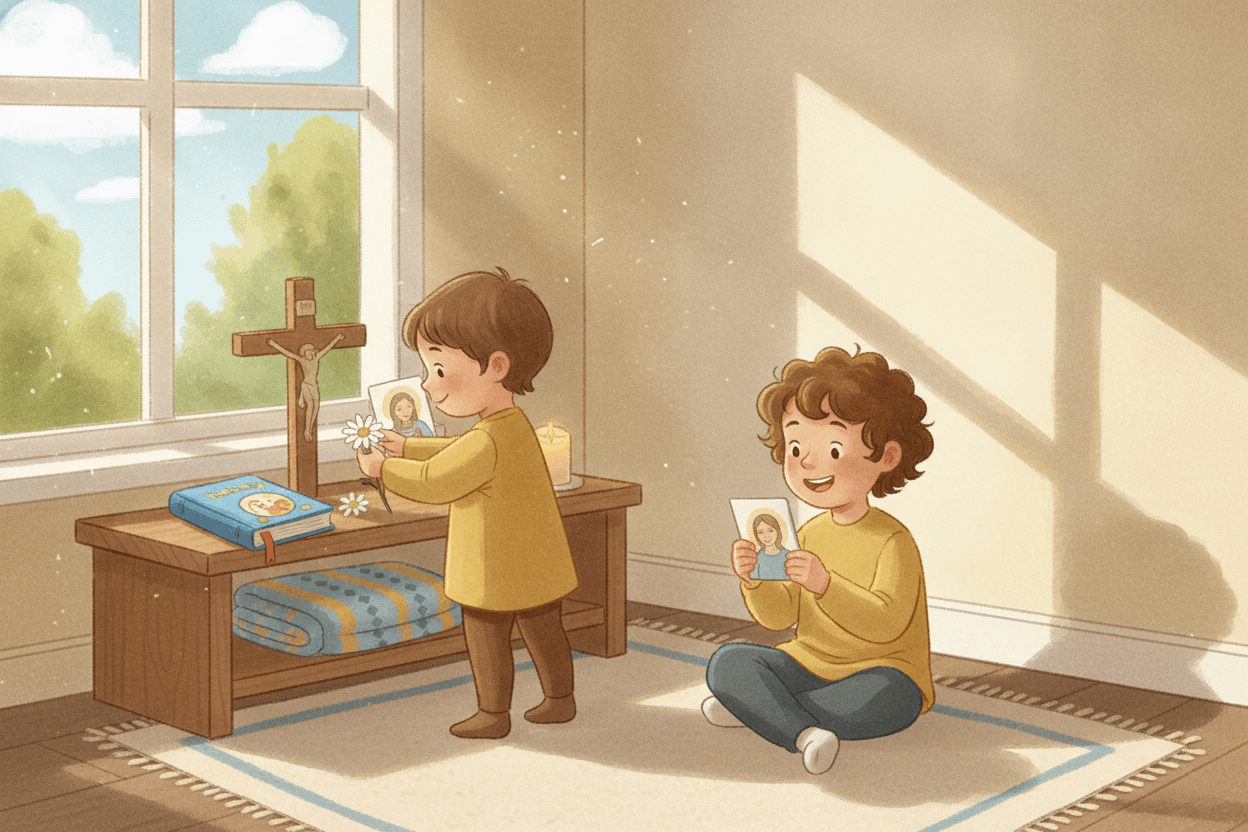
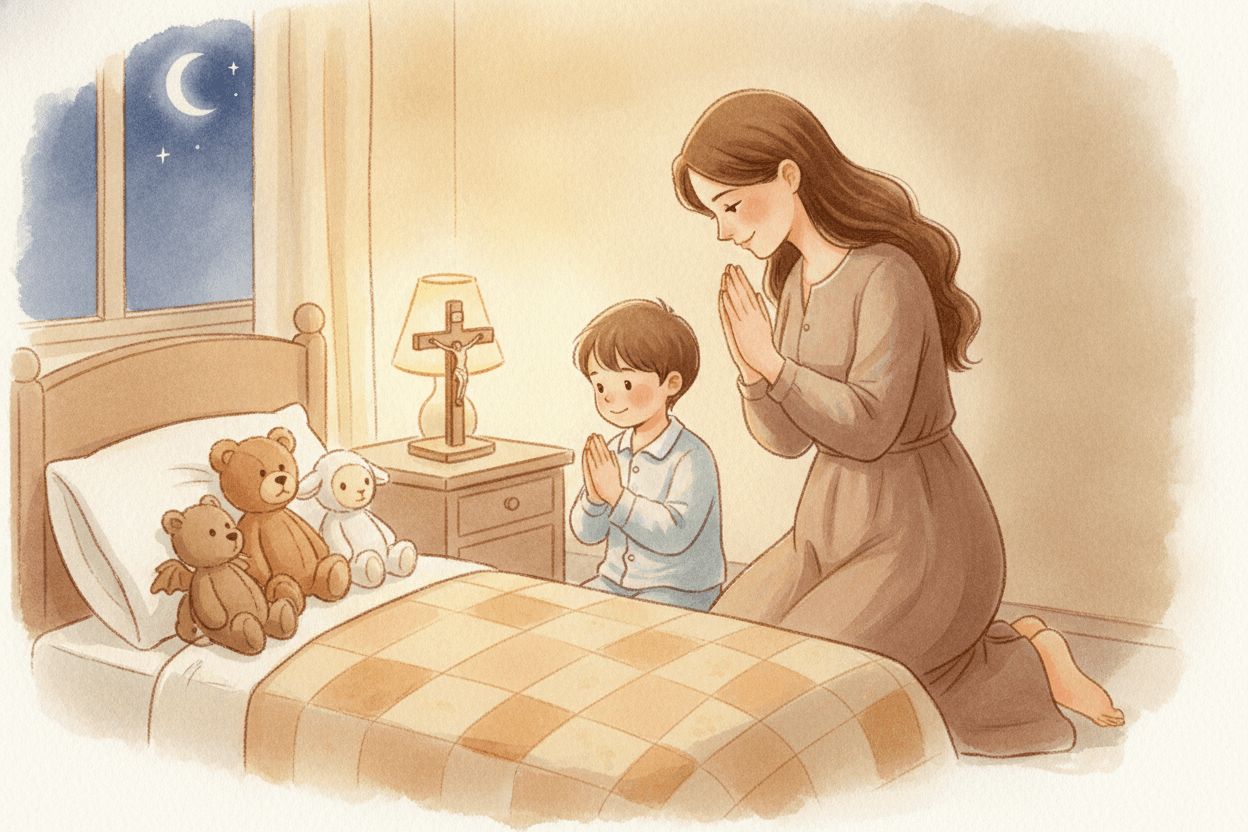
The other morning, one of our kids was already upset before breakfast. Wrong cup. Wrong chair. Apparently the banana had been peeled in a personally offensive way. Nobody was ready for a long lesson about patience. So we stood by the little shelf in our dining room, looked at the crucifix, and said, “Jesus, help us begin again.” It took maybe twenty seconds. The banana was still peeled, but the room got quieter.
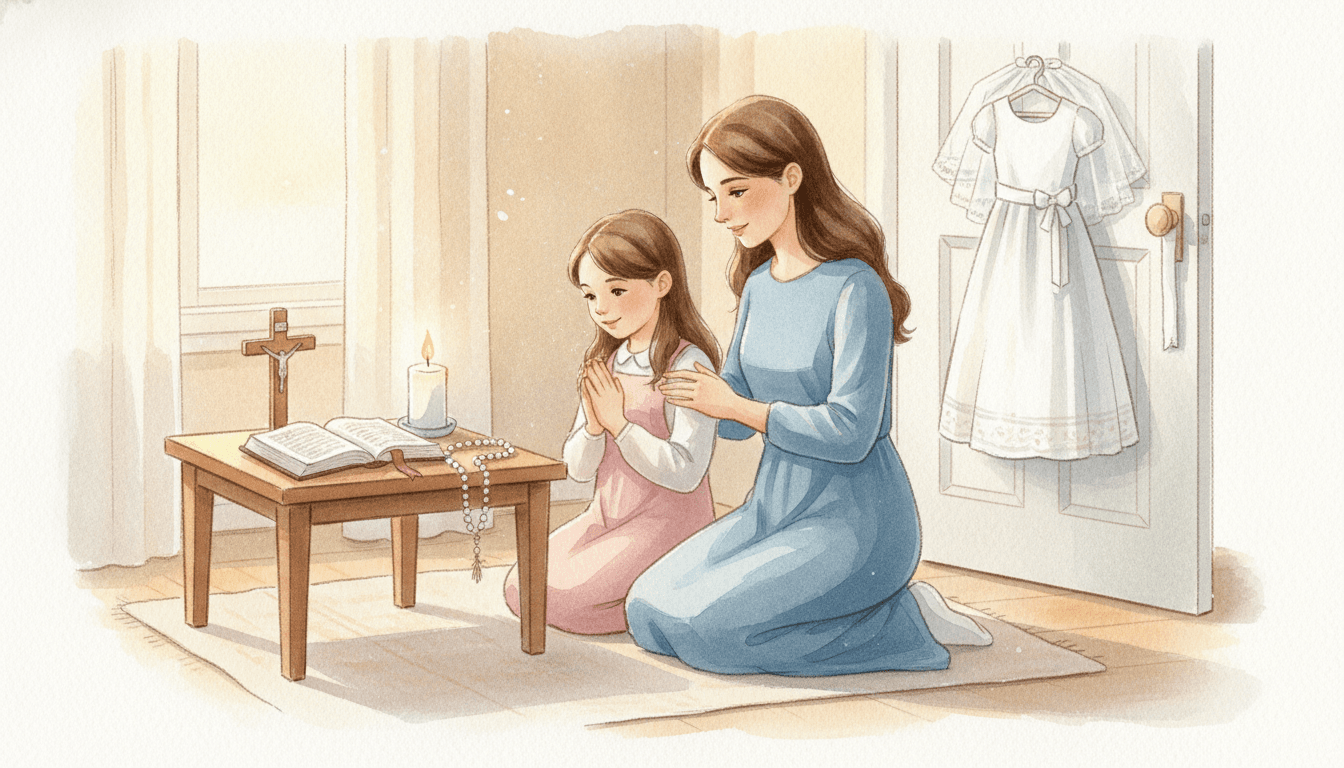
A prayer corner does not need to be a Pinterest project. In our house, it can be one small spot on a low shelf, the end of a bookcase, or a sturdy little table where children can actually see it. Put up a crucifix or a holy image at child height. Add a Bible or children’s Bible, a battery candle, and maybe one prayer card with a saint your child knows. That is enough. Keep the real candles for a grown-up-only moment; small fingers and open flames are not always a peaceful combination.
What matters is returning to that spot often enough that your children connect it with turning toward God. In the morning, make the Sign of the Cross and ask, “Jesus, stay with us today.” After a hard moment—an argument, a scraped knee, a bad dream—go there together and say, “Jesus, help my heart.” At bedtime, let each child offer one quiet thank-you. No speeches required. If they wiggle, whisper, or abruptly thank God for dinosaurs, that still counts.
This is part of what the Church means when it calls the family a domestic church. Parents are the first people who show children what faith looks like in daily life, not because we perform it perfectly, but because we make room for it. A small corner says, without many words: God belongs here. He belongs near our school papers, our spilled cereal, and our very loud feelings.
One small thing we tried was letting the child who remembered first turn on the battery candle. It gave them a job, and here’s what landed: they began asking for prayer on their own. Not every day. Not in a movie-scene way. But sometimes, before bed or after somebody had been unkind, a little voice would say, “Can we go by Jesus?” That is a good beginning. The place is ordinary. The pause teaches them otherwise.
These words I command you today shall be on your heart. Take to heart these words which I command you today. Keep repeating them to your children. Recite them when you are at home and when you are away, when you lie down and when you get up.
Let the Dinner Table Teach Kids to Notice Gifts
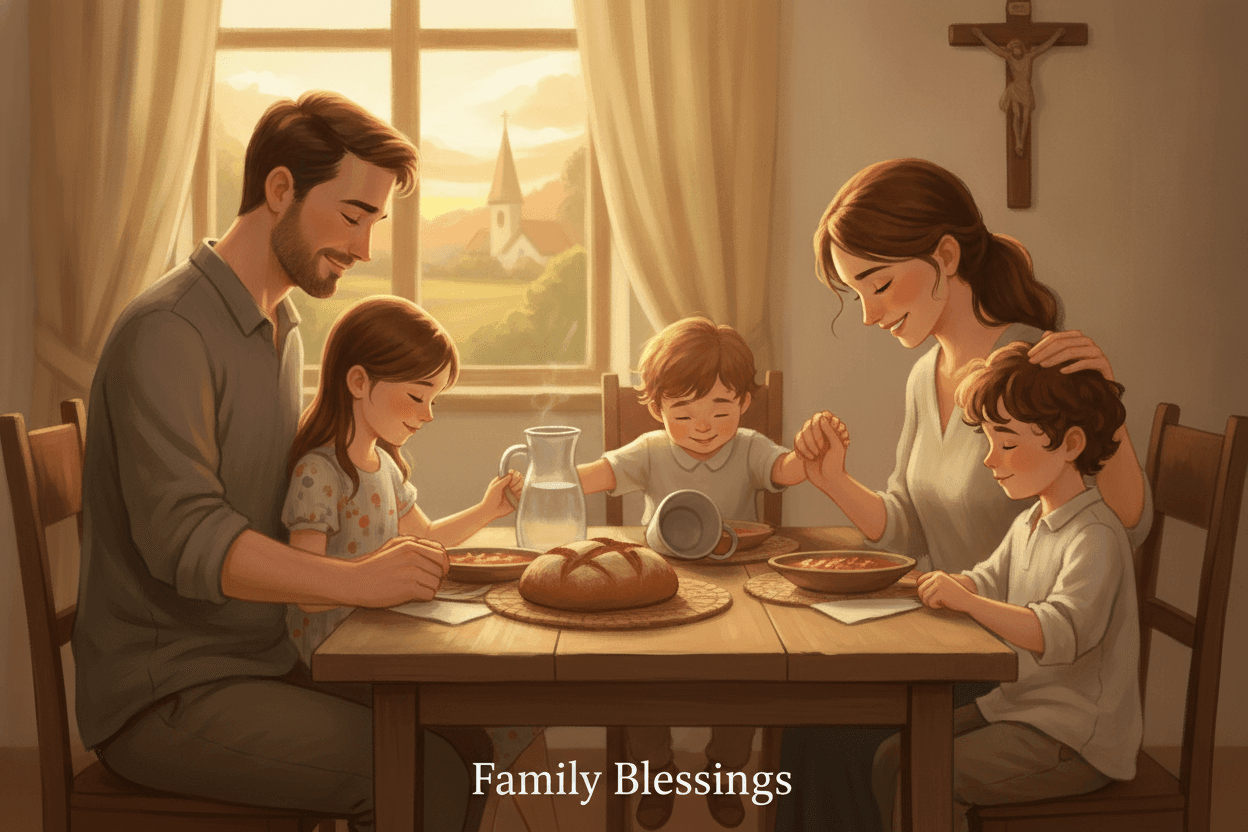
Some nights, dinner begins with a child announcing that the chicken is “too chicken-y,” another asking for a different cup, and a parent standing up for the third time before taking one bite. That is not exactly a monastery. But it can still be a place where children learn to notice that they have received something. Food. People. A day worth thanking God for.
At our table, the pause does not need to be long. In fact, short is usually better. Before anyone reaches for the rolls, we put our hands together and say, “Jesus, thank you for this food and our family. Amen.” Then we ask each child to name one gift from the day. A friend shared a toy. The rain stopped before recess. Dad came home. Sometimes the answer is “dessert,” which is honest enough. The point is not to produce impressive answers. It is to help little eyes look back over the day and see gifts they might have missed.
This is one small thing we tried when dinner felt rushed: we let the youngest child go first and gave everyone permission to keep it to one sentence. No speeches. No correcting. If a child says, “My gift was my blue spoon,” we do not explain why a more spiritual answer would be better. We simply say, “Thank you, God, for the blue spoon.” Gratitude grows through repetition. A preschooler learns that ordinary things can be received, not just grabbed.
Jesus met his disciples at a table after the Resurrection. He took bread, blessed it, broke it, and gave it to them. Then they recognized him. Our family dinners are not that moment, of course. They are often loud, sticky, and interrupted by someone dropping a fork. Still, the pattern can point in the same direction: we receive, we give thanks, and our eyes are opened a little. The table becomes a daily school of attention.
Try it for one week. Keep the prayer the same each night so children can join in. Ask for one gift, not three. If everyone forgets until halfway through the meal, pause then. God is not grading the timing. Over time, your children may begin to bring their own notices to the table: the ladybug on the sidewalk, the warm blanket, the sibling who saved them a seat. Here’s what landed for us: when children practice saying thank you for small things, they become more ready to notice the Giver, too.
And it happened that, while he was with them at table, he took bread, said the blessing, broke it, and gave it to them. With that their eyes were opened and they recognized him, but he vanished from their sight.
Try a Three-Pause Week
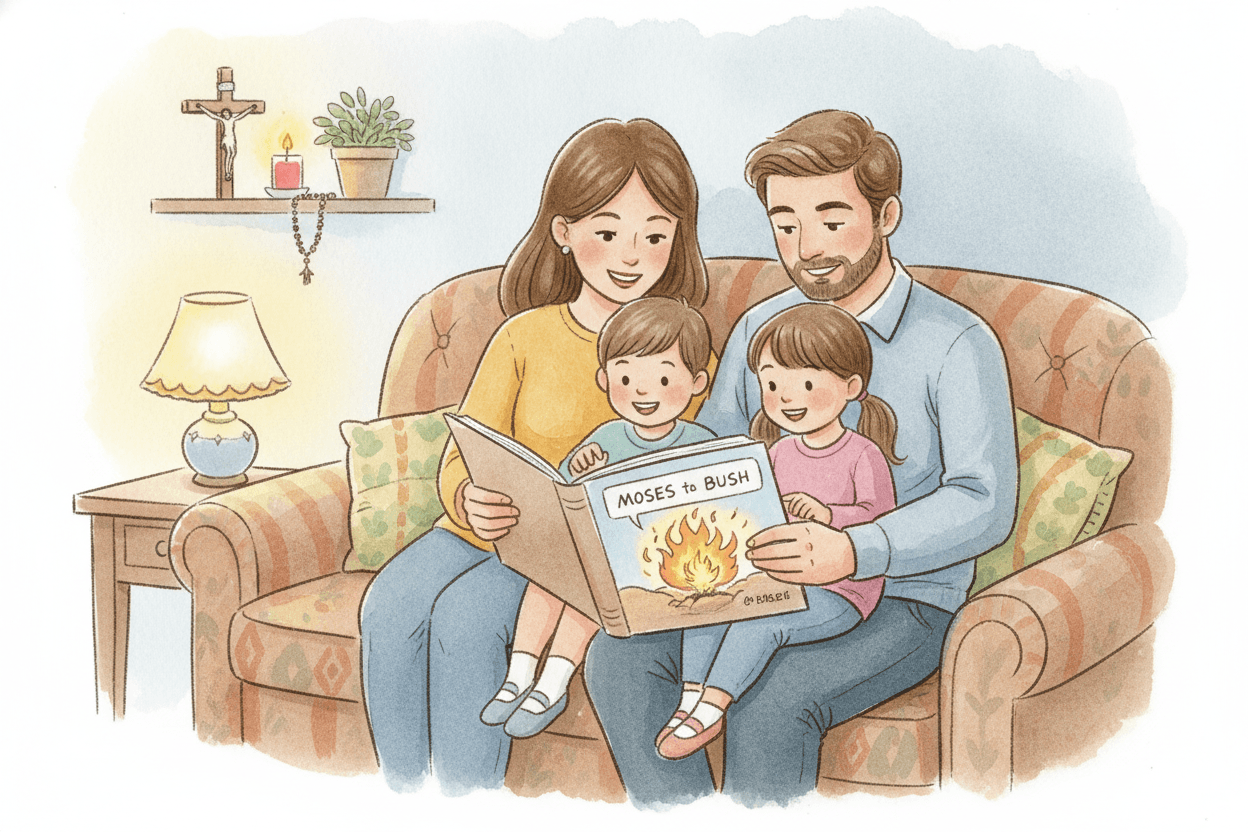
Monday morning can begin with a spilled cup of milk and a child asking for the blue spoon that is already in the dishwasher. That is not usually when I feel especially prayerful. But children do not need a quiet monastery to learn that God is near. They need a few repeated moments that tell them, in the middle of real life, “We stop. We notice. We belong to God.”
Try this for seven days: pick only three pauses. First, at one meal each day, say the same short words: “Thank you, Jesus, for this food.” Have everyone place a hand on the table or fold their hands. Keep it brief, even when someone is wiggling or protesting the peas. Second, at bedtime, make the Sign of the Cross and say, “Jesus, stay with us tonight.” A hand on the heart can help little ones join in. Third, when you enter church, pass the prayer corner, or walk by the crucifix in the hallway, pause and whisper, “Jesus, you are here.” Add a small bow, a genuflection in church, or a kiss toward the crucifix at home.
Use the same words and the same gesture all week. That sameness is not boring to young children; it is how the lesson gets into their bodies. Do not turn it into a test. If your child forgets, just do it yourself. If the toddler bows so hard he nearly topples over, count it as a win and help him back up. The point is not a polished performance. The point is that, little by little, your child sees Mom and Dad make room for God in places they already know.
One small thing we tried was reading the BibleHeroes Moses and the Burning Bush comic during the week, then asking one simple question: “Where can we stop and notice God today?” Moses did not make the ground holy. God was already there, and Moses learned to pay attention. Your kitchen, bedroom, hallway, and parish church are not burning bushes. Still, they can become places where a child learns to pause before the God who is near. Begin small. Repeat without pressure. By Sunday, those three tiny pauses may feel like part of the family’s rhythm.
God said: "Do not come near! Remove your sandals from your feet, for the place where you stand is holy ground."
Frequently asked questions
How can I help my young children notice God in everyday family life?
Choose one ordinary moment that happens every day, such as breakfast, packing lunches, or bedtime, and add a very short prayer. A folded-hands “Thank you, Jesus,” a Sign of the Cross, or naming one good gift from the day teaches children that God is present in the middle of normal family noise.
What are simple ways to teach reverence at Mass to toddlers and preschoolers?
Give children one concrete action instead of asking them to “be good” or stay still for the entire Mass. They can dip a finger in holy water and make the Sign of the Cross, walk slowly into church, genuflect or bow before entering the pew, fold their hands briefly, or whisper, “Hi, Jesus.”
How do I teach my child why we genuflect or bow in church?
Use one short, true explanation and repeat it calmly: “Jesus is especially present here,” or “We bow because this is God’s house.” Then model the gesture yourself, especially when facing the tabernacle; a child who cannot genuflect yet can begin with a small bow.
What should I do when my child is disruptive at Mass?
Avoid turning the moment into a long correction or expecting perfect stillness from a little child. Offer a simple reset, such as kneeling, making the Sign of the Cross slowly, and whispering, “Jesus, help us be with you,” then let your child imitate you.
How can our home become a domestic church without making every moment a lesson?
Build small, repeatable turns toward God into the rhythms you already have rather than adding elaborate activities. Pray briefly before meals, apologize and begin again after hard moments, touch a crucifix gently, or thank Jesus for a sunset; these habits create an atmosphere of love and reverence.
How long should family prayers be for young children?
Keep them short enough that children can succeed, often just one or two sentences. Consistency matters more than length: a quick grace before pizza or a bedtime Sign of the Cross can form a lasting habit of turning to God.
Sources: vatican.va · vatican.va · catholicculture.org · usccb.org · pewresearch.org · pewresearch.org · barna.com · barna.com · aleteia.org · hallow.com
Scripture quotations in this article use the NABRE translation.