Joshua and Jericho for Kids:An Honest Catholic Guide
Explore Joshua and Jericho with honesty and care: celebrate the trumpets, explain the hard parts in age-appropriate language, and help children understand the difference between God’s judgment in Scri
What do you say when your child loves the trumpets and falling walls—but then asks, "Did people get hurt?" Joshua 6 deserves more than a cheerful retelling or a nervous skip over the difficult verse. Scripture invites us to tell the truth calmly, place the story within God’s larger plan, and help children see that Jesus calls us to fight sin, never people.
Start With the Story Children Can Clearly Follow
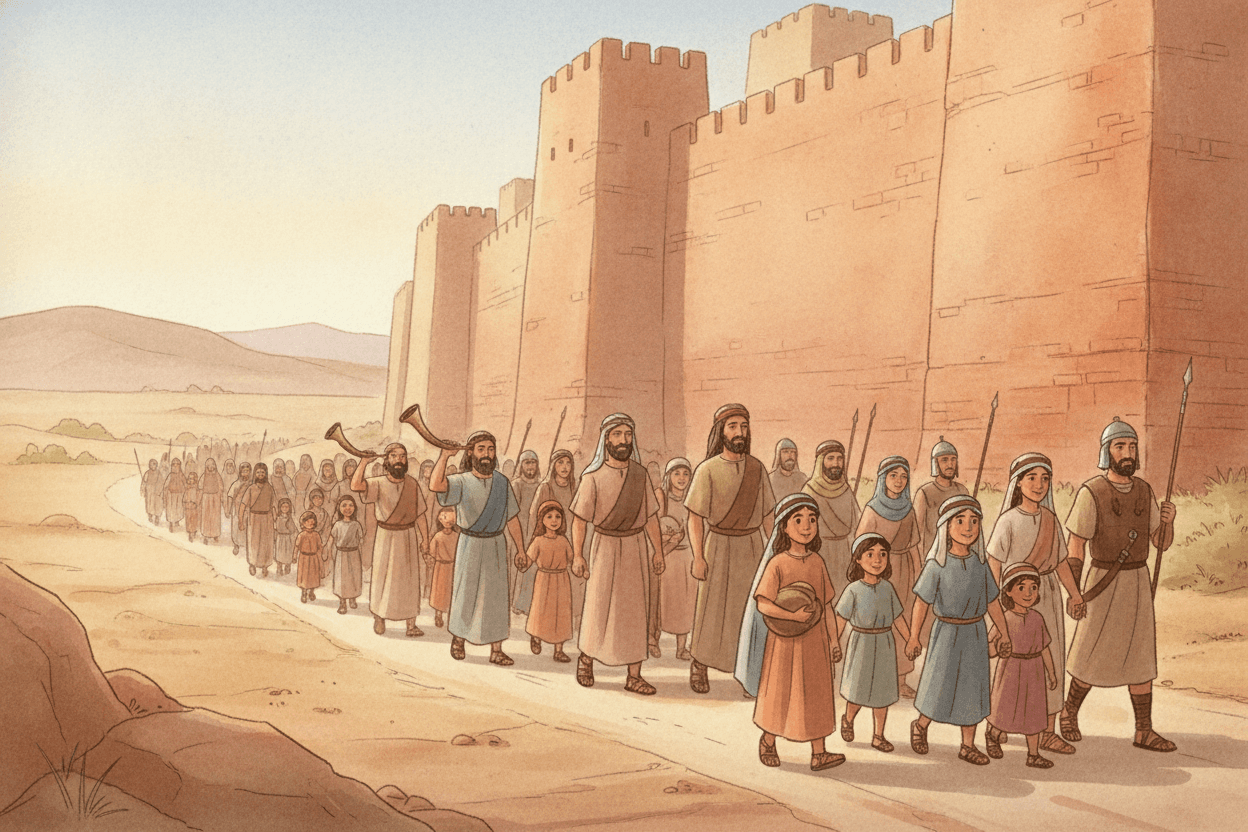
Picture a whole city shutting its gates tight: no one going out, no one coming in. Jericho stood in the way as Joshua led the Israelites into the land God had promised them. Its walls looked like the kind of problem an army would solve with ladders, weapons, and a clever plan. But God gave Joshua instructions that sounded nothing like an ordinary battle plan.
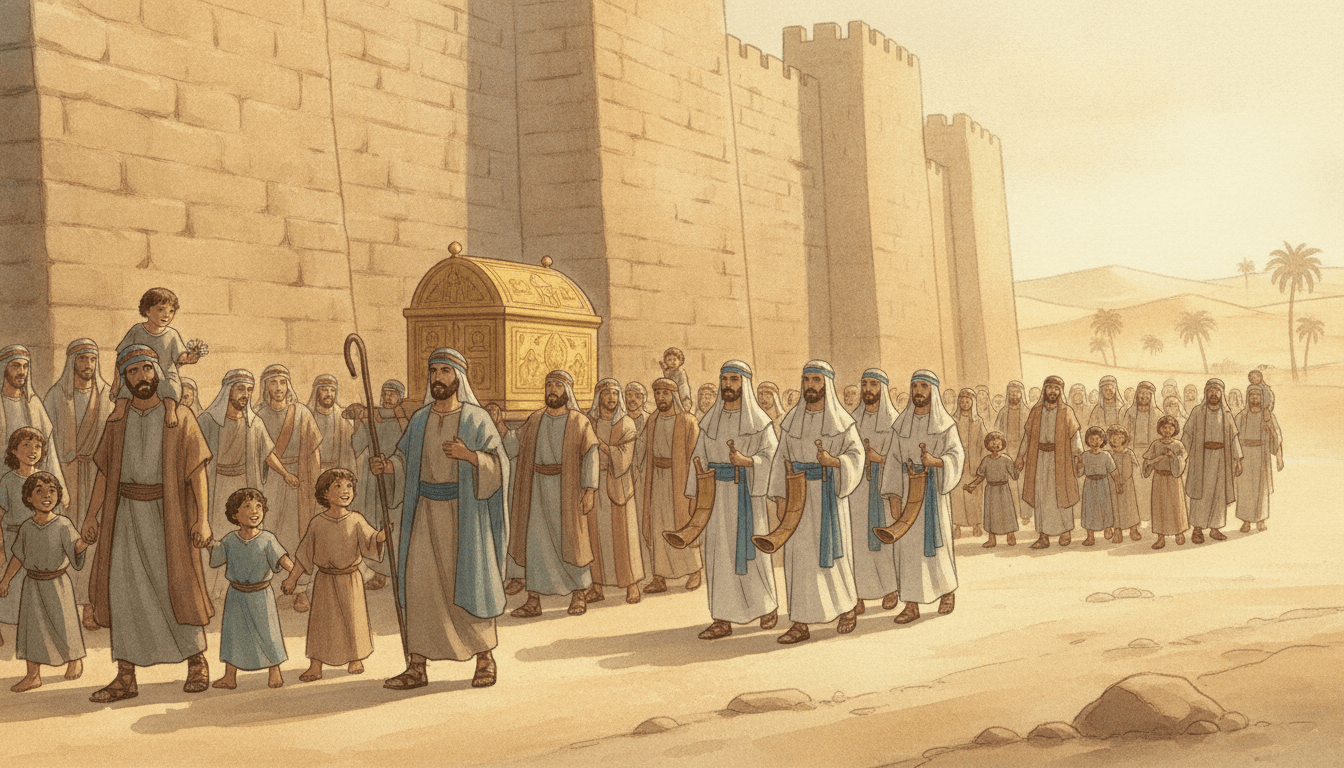
Here’s how I’d teach this to children ages six to nine: God told the Israelites to march around Jericho once each day for six days. Seven priests carried ram’s horns, called shofars, in front of the ark, the holy sign of God’s presence among His people. The soldiers did not attack the wall. They did not argue about a better idea. They listened and obeyed. The quiet marching gave everyone time to see that this was God’s work, not a display of Israel’s strength.
On the seventh day, the people marched around the city seven times. Then the priests blew the horns, and Joshua told the people to shout. The wall fell, just as the Lord had said it would. For Joshua and Jericho for kids, that is the central point to keep clear: God kept His promise and gave the victory. The Israelites participated by trusting Him and doing what He asked, even when His instructions seemed unusual.
Children often notice the strange details right away: “Why did they have to be quiet?” or “Why walk around so many times?” Those are good questions. We do not know every reason for each detail, but Scripture shows us a people learning to depend on God. They could not claim that their own muscles knocked down Jericho’s walls. The victory belonged to the Lord. Joshua 6:16 records Joshua’s words at the crucial moment: “Shout, for the LORD has given you the city.”
You might invite your child to act out the scene with blocks for a wall, a homemade paper trumpet, and seven slow walks around the room. Afterward, ask, “What is one hard thing where we need God’s help instead of only our own ideas?” A friendship problem, fear at bedtime, or the habit of refusing to share can feel like a wall. Scripture invites us to trust God, pray, and obey in small daily choices. And as we continue the story, we should also be honest that Jericho includes a difficult part, which deserves calm and truthful attention.
Shout, for the LORD has given you the city.
The Main Lesson: God Is Faithful When We Trust Him
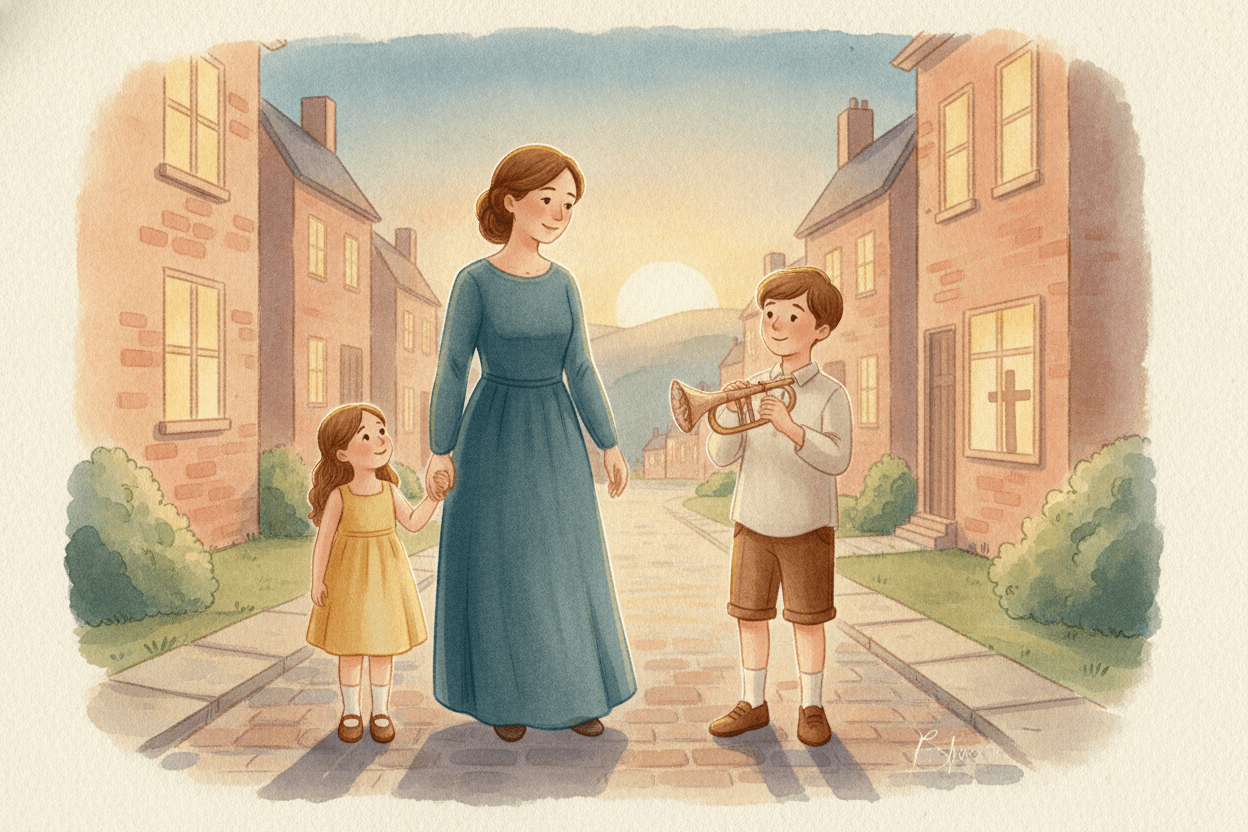
A child may look at Joshua’s instructions and ask, “March around a wall? How could that possibly work?” That is exactly the right question. Jericho was a fortified city, and God gave Joshua a plan no commander would have invented: the people would march, priests would carry ram’s horns before the ark, and the people would wait for the signal to shout. Joshua did not pretend the plan was ordinary. He listened to God and carried out what God said.
The first lesson is not that we can make anything happen if we pray hard enough. God is not a vending machine for miracles, and trust is not a way to get our preferred outcome. Joshua trusted because God had already shown Himself faithful: He had rescued Israel from Egypt, cared for them in the wilderness, and kept His promise to bring them to this land. Scripture invites us to notice where the victory came from. The walls fell because of God’s power, not because Israel had a clever military strategy.
Here’s how I’d teach this to children: “Trusting God means doing the next right thing He asks of us, even when it feels hard or when we cannot see why it matters yet.” For a child, that may mean telling the truth after breaking something, saying prayers when worried, forgiving a sibling, refusing to join in unkind teasing, or speaking courageously about what is right. These ordinary choices do not force God to give us the result we want. They form us to rely on Him rather than on our own strength.
This also helps children hear the story without turning it into a lesson about defeating other people. Our real battle is against sin: the lying, selfishness, fear, and resentment that can build thick walls around a heart. Jesus teaches us to love our enemies, not hurt them. As the Catechism reminds us, the Old Testament is inspired Scripture, but its events are read within the whole plan of God, which reaches its fullness in Christ (CCC 122, 128–130). Joshua’s obedience points forward to the deeper obedience of Jesus, who conquered sin and death by giving Himself in love. When children meet a hard choice this week, ask: “What is one small way we can trust God and do what is right?”
As the seventh time they marched around the city and the priests blew the horns, Joshua said to the people, “Shout, for the LORD has given you the city.”
Do Not Skip the Hard Part of Joshua 6
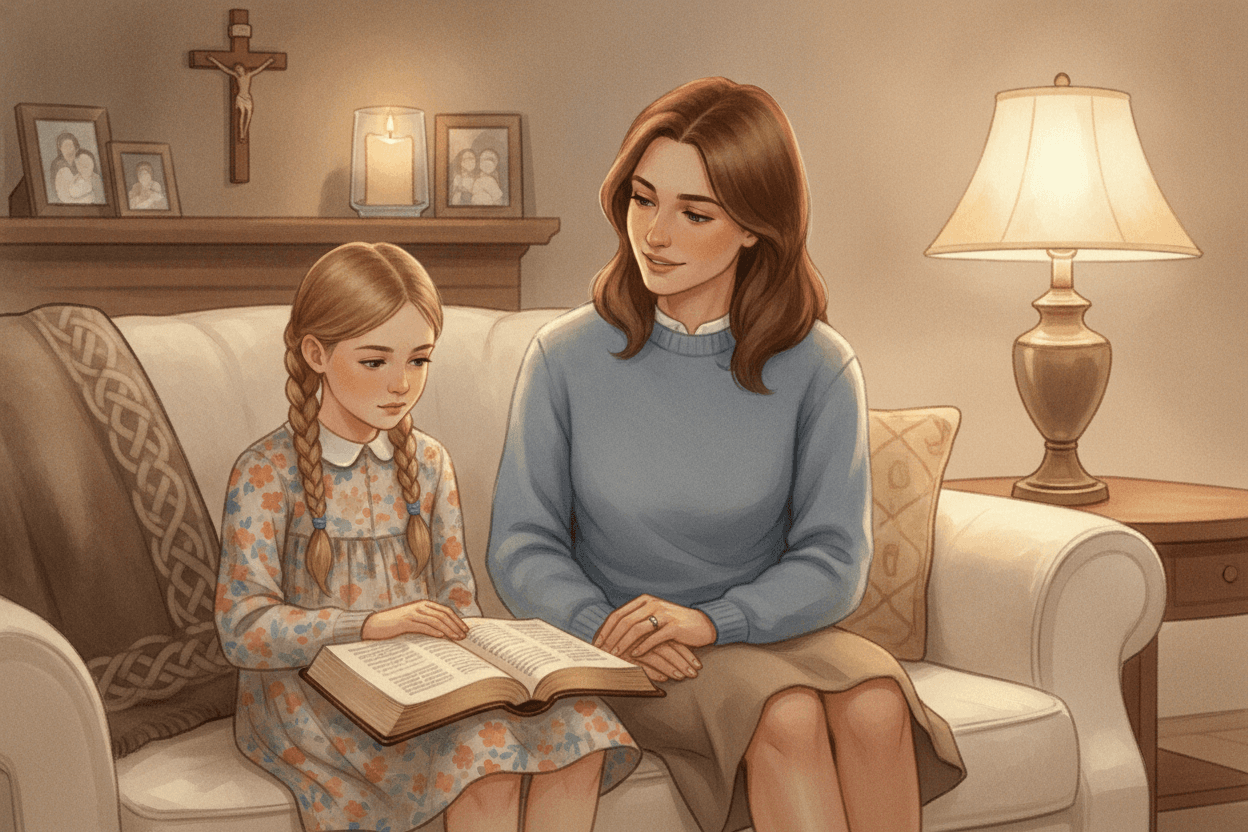
A child may hear that the walls fell and immediately ask, “What happened to the people inside?” That is not a question to brush aside or answer with a quick change of subject. Joshua 6 says that, after Jericho fell, the city’s people and animals were killed. It is sad, serious, and hard to hear. Catholic children do best when we tell the truth calmly: the Bible does say this, and grown-ups also have to keep learning how to understand this difficult passage faithfully.
Here is how I’d teach this to a child ages six to nine: “Jericho was an ancient city whose people had done grave wrong over a long time. God brought judgment on that city in a war long ago. People died, and that is very sad. This is not something God asks us to do today. We never hurt people because of a Bible story. Jesus teaches us to love our enemies, forgive, and make peace.” This wording neither hides the verse nor hands a child details he or she cannot carry. If a child asks for more, answer the actual question, then pause. “What part feels scary or confusing?” is often more helpful than a long lecture.
Scripture invites us to read every part of the Bible in light of its whole story, especially in light of Jesus. The Catechism teaches that the Old Testament contains elements that are “imperfect and provisional,” while still being truly inspired Scripture (CCC 122). God was patiently preparing his people for the fullness of his law and mercy in Christ (CCC 1961–1964). At Jericho, Israel did not win by stronger weapons or a clever military plan; God acted. Yet Jesus shows God’s victory in its fullest form: he defeats sin and death by giving himself on the Cross, not by teaching his followers to harm their enemies.
Rahab also belongs in the answer. She trusted the God of Israel, protected the spies, and asked that her family be spared; Joshua kept that promise. Her rescue shows that God sees a person who turns toward him, even in a troubled city and a troubled life. You might close family prayer with a simple application: “Jesus, pull down the walls of lying, selfishness, and fear in my heart. Make me brave enough to do what is right and gentle enough to make peace.” The battle for Christians is against sin, never against other people.
They observed the ban by putting to the sword all living creatures in the city: men and women, young and old, as well as oxen, sheep and donkeys.
How Catholics Read a Difficult Old Testament Story
A child may look up after hearing what happened at Jericho and ask, “But why did people die?” That is not a question to brush aside or answer with a cheerful craft. Catholic children deserve calm truth: Joshua 6 describes a real and painful act of violence, and it is all right to feel sad or confused about it. A parent can say, “I do not know every answer about this ancient story, but we can ask God for wisdom and keep reading the Bible with Jesus at the center.”
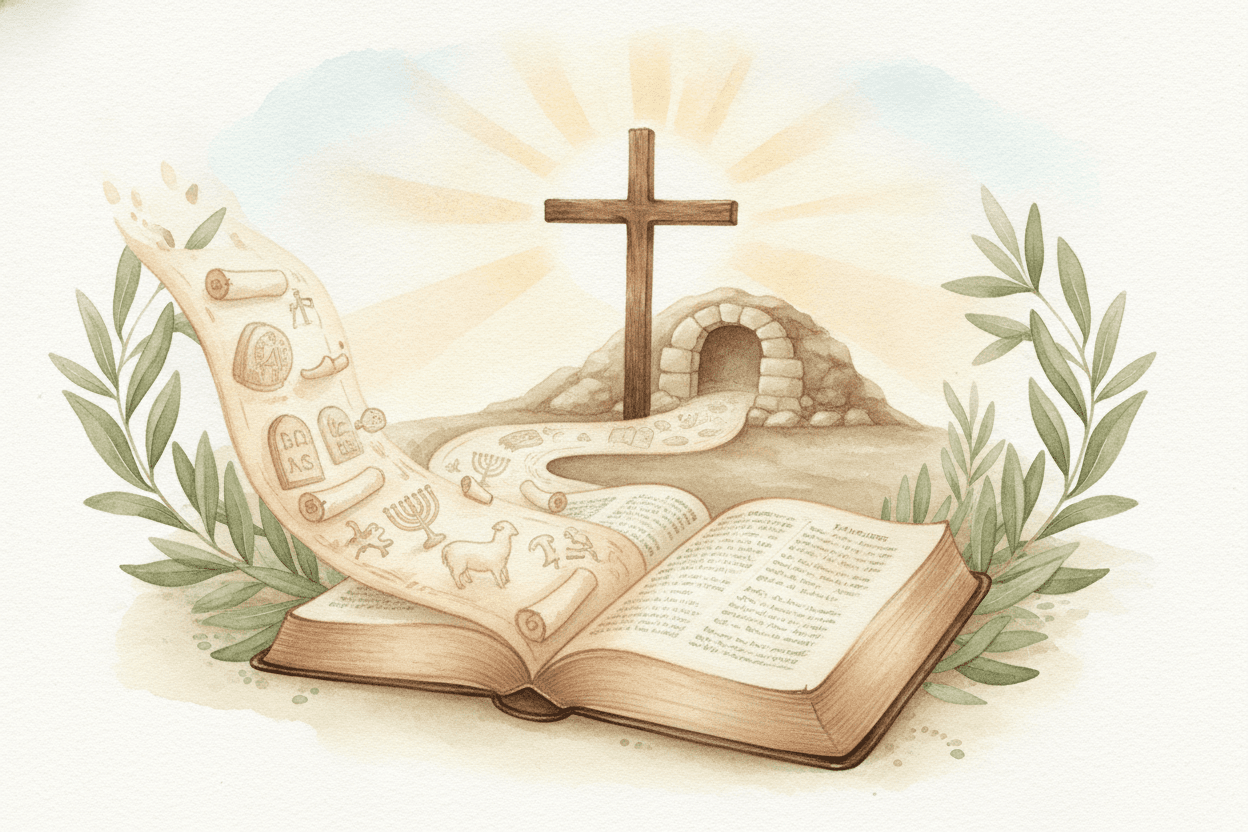
Catholics do not cut difficult pages out of the Old Testament. They are truly inspired Scripture, given to teach us about God’s plan of salvation. But we read each part within the whole Bible, not as though one chapter were the final word. As the Catechism reminds us, the Old Testament contains elements that are “imperfect and provisional” (CCC 122). It prepares God’s people for Christ; its fullest meaning becomes clearer in the light of Jesus (CCC 128–130).
Here’s how I’d teach this term to a child: in Joshua 6, the city and its goods were placed under the “ban,” sometimes called herem. This meant a total dedication to God in the setting of an ancient war, not ordinary fighting for land, money, or revenge. Scripture tells us this happened, but it does not require us to pretend that every historical question is easy to answer. We can say plainly that God judges serious evil, while also refusing to make guesses about details Scripture does not explain. God sees every person, including every child, with a care deeper than ours.
Then bring the lesson to Jesus, who tells his disciples to love their enemies and pray for those who persecute them (Matthew 5:43–44). Christians do not copy Israel’s ancient battles or hurt people in God’s name. Our battle is against sin: lying, cruelty, selfishness, and fear. When a child asks whether God is good, return to what Christ has shown us on the Cross. Jesus meets evil not by teaching us to hate people, but by giving himself to save sinners. That is the lens through which Catholic families read even the hardest Old Testament stories.
Rahab Shows That Mercy Is Not Missing From the Story
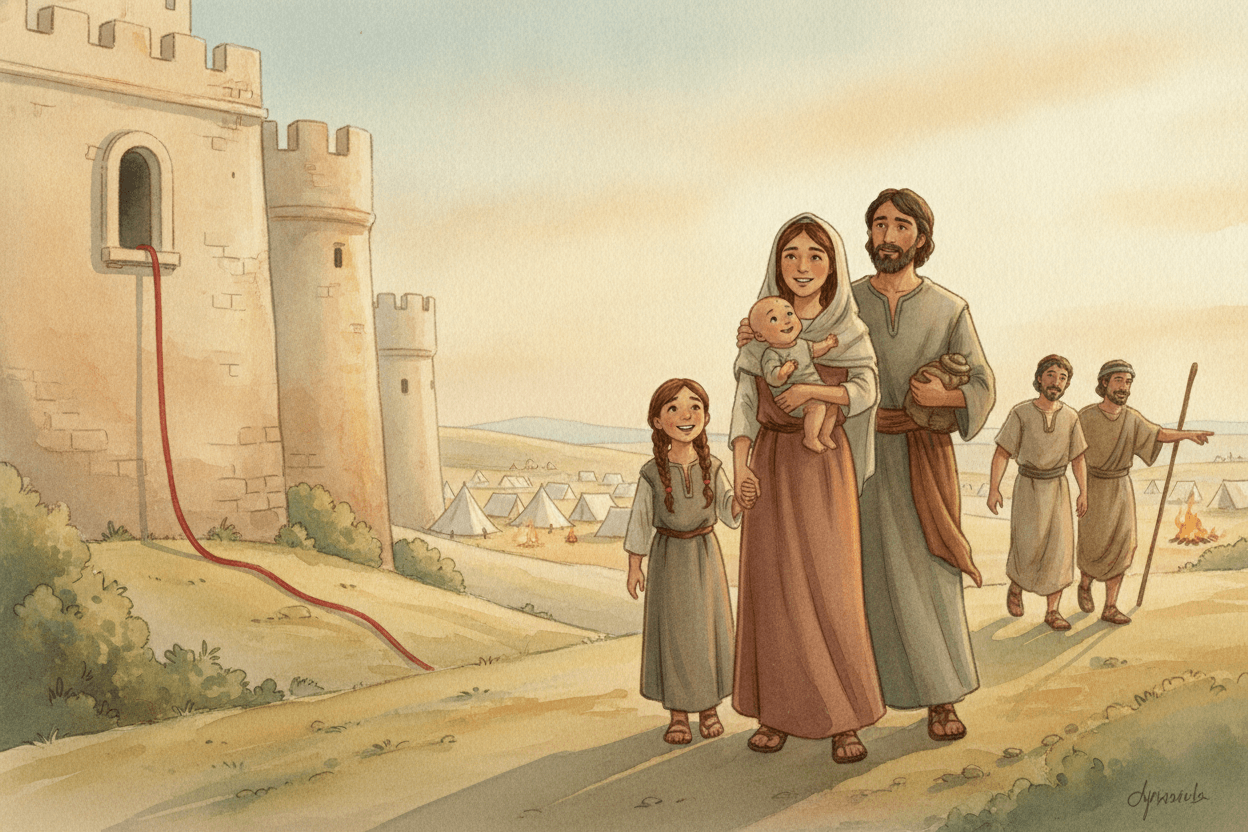
When children hear that Jericho’s walls fell, they may picture a loud victory and then stop there. But Scripture asks us to notice one household that was not forgotten: Rahab’s. She lived in Jericho, yet she chose to trust the God of Israel. Earlier, she had hidden the Israelite spies when doing so placed her own safety at risk. Then she asked that her father, mother, brothers, sisters, and all who belonged to them would be spared (Joshua 2:8-14). Her courage was not pretend courage. She acted on what she believed about God.
Here’s how I’d teach this to children: Rahab did not have everything figured out, but she recognized that the Lord was the true God and asked for mercy. God saw her faith. The spies made a promise, and Joshua later made sure that promise was kept. After the walls fell, he sent the same men back for Rahab and her family. This is important in a chapter that can feel frightening. Mercy is not an extra detail tucked into the corner of the story; it is part of what God wants us to see.
Ask your child, “Who did Joshua remember when the battle was over?” Let the answer be specific: Rahab and her family. Then ask, “Why?” Not because Rahab had earned a prize by being perfect, but because she turned toward the Lord in faith, helped his people, and trusted the promise she had received. Children understand promises very well. They know the relief of hearing, “I said I would come back,” and then seeing a parent at the school gate. Joshua’s faithfulness to the promise gives them a concrete picture of God’s faithfulness.
We should also be clear that Rahab’s rescue does not make the difficult parts of Joshua 6 disappear. It does show that God’s judgment is never careless or blind. He sees persons, hears cries for help, and honors faithful promises. As the Catechism reminds us, the Old Testament must be read in light of Christ (CCC 128–130). In Jesus, we see God’s mercy fully revealed: he comes to save, and he teaches his disciples to love rather than harm their enemies. So when children remember Rahab, help them name a simple response: “Jesus, help me trust you, tell the truth, and care for my family.”
To the two men who had spied out the land, Joshua said, “Go into the prostitute’s house and bring out the woman with all her family, as you swore to her you would do.” The spies went in and brought out Rahab, along with her father, mother, brothers, and all her family. They led her and all her family out of the city to a place outside the camp of Israel.
Teach the Battle We Fight Now: Sin, Not People
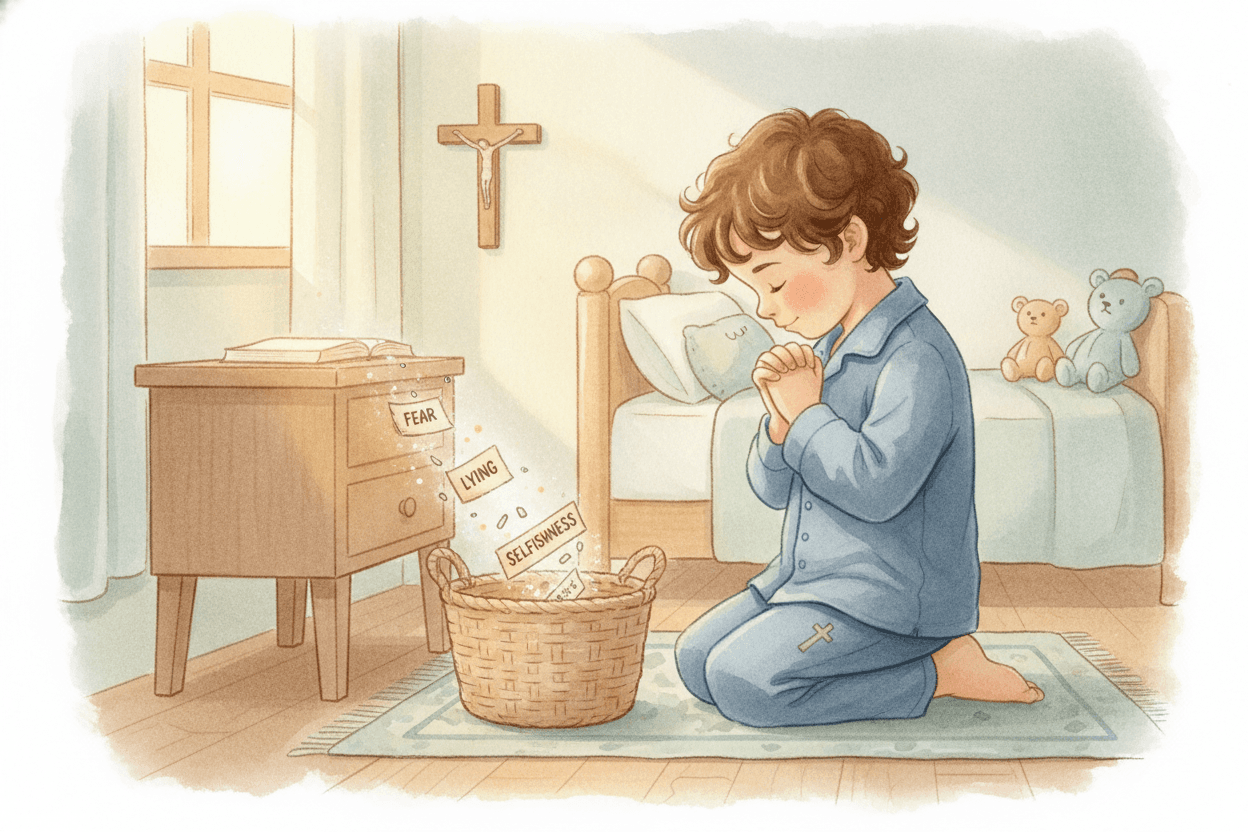
A child may understand walls better than adults expect. Ask, “What can make your heart feel closed up?” In a parish classroom, children often name the answers quickly: refusing to share, telling a lie and then hiding it, staying angry at a sibling, feeling too afraid to pray, or deciding, “I will not forgive.” These are not walls made of stone, but they can keep us from loving God and one another freely.
Here is how I’d teach this: Jericho is not a reason to think of other people as enemies. The battle Christians fight now is against sin—beginning in our own hearts. We do not knock down people; we ask God to tear down the habits that keep us from loving people. A child can name one small “wall” without shame: “I get selfish with my toys,” “I make excuses when I disobey,” or “I stay mad for a long time.” Naming sin honestly is the beginning of freedom, not a reason to despair.
Jesus shows us what God’s victory looks like. He did not conquer sin and death by hurting His opponents or gathering an army. He gave Himself for us on the Cross and rose again. So Christian courage has a different shape from the fighting in an ancient Bible story. It looks like stopping before saying something cruel, admitting the truth after a lie, asking forgiveness, forgiving someone who has hurt us, and choosing peace when we want to strike back. Jesus teaches his disciples to love their enemies, not harm them (Matthew 5:43-44).
This is also a helpful place to be very clear: no child should use Joshua and Jericho to pretend that hitting, bullying, revenge, or cruelty is acceptable. It is not. When someone is unsafe, children should get help from a trusted adult. When there is ordinary conflict at home or school, they can learn to use words, seek reconciliation, and pray for the grace to do what is right. As the Catechism reminds us, Christ’s work frees us from sin and forms us in the new life of grace (CCC 1691-1698).
Try a simple family practice at bedtime. Let each person silently name one wall in his or her heart, then pray: “Jesus, help bring down the wall of ___ in me.” Parents can begin with their own honest example: impatience, worry, or resentment. Then choose one concrete act for tomorrow: tell the truth, share without complaining, apologize, or pray for someone difficult. This keeps the lesson where it belongs: trusting Christ’s strength to make us peacemakers.
Try a Gentle Jericho Lesson at Home This Week
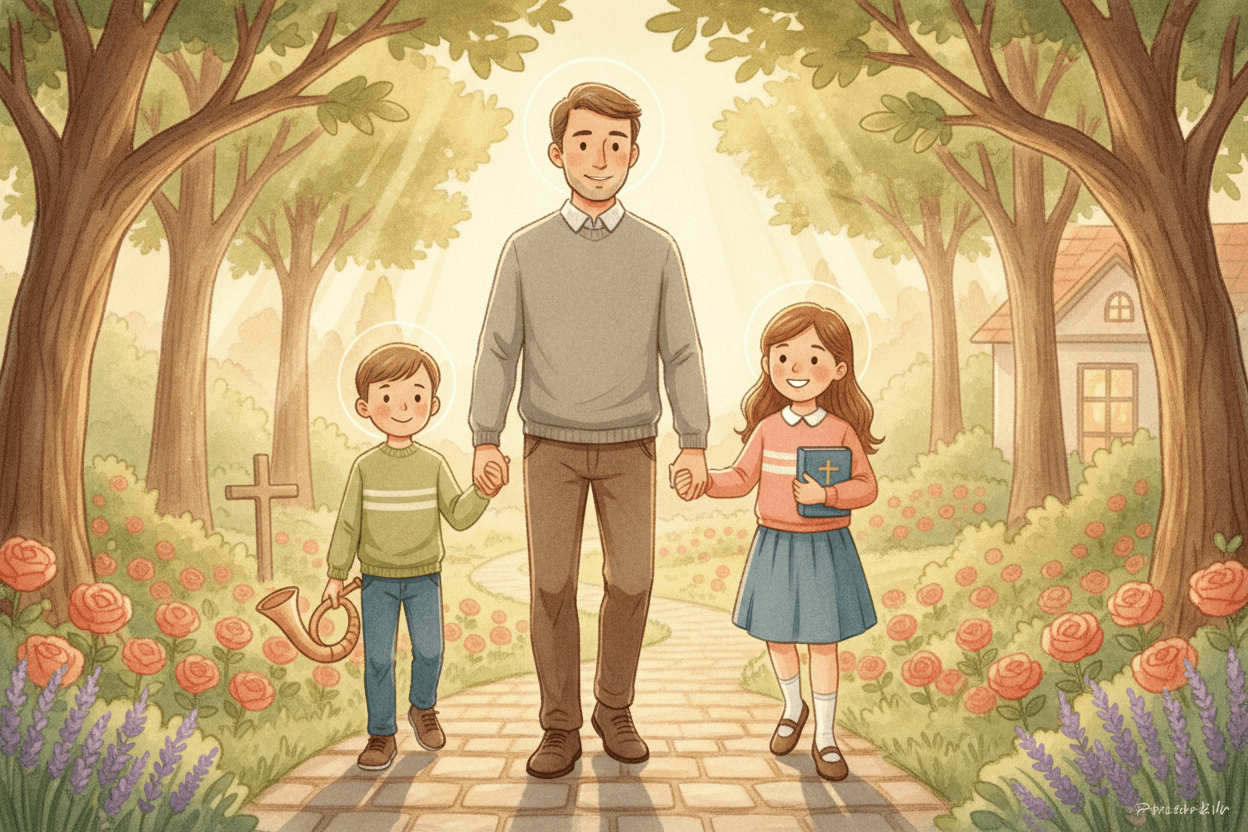
On an ordinary evening, give each child a job before you open the Bible: one can hold a toy trumpet, another can count to seven, and another can listen for the words that show God gave the victory. Children remember what their hands and ears are doing. Here’s how I’d teach this at home: begin by saying that Joshua and the people received unusual instructions, but they listened to God carefully. Then read Joshua 6:1-5, 6:16, and 6:20 from the NABRE. These verses keep the focus where Scripture places it: not on Israel’s military cleverness, but on God’s faithfulness and power.
When the reading ends, pause rather than rushing to explain everything. Ask, “What part felt surprising, confusing, or scary?” Let each child answer without being corrected too quickly. If a child raises the painful part of the chapter, answer calmly: this is an old and serious story about God’s judgment, and it includes real violence. We never use this story as a reason to hurt anyone. Jesus teaches us to love our enemies, and our battle now is against sin in our own hearts. Catholic children can handle an honest answer when they know a parent is listening and that no question is unwelcome.
Next, invite every person to name one “heart-wall” he or she wants Jesus to help remove. For a younger child, offer concrete choices: lying, selfishness, angry words, refusing to share, or fear. Adults should name a wall too; children notice when faith is presented as something parents need as much as they do. Write the words on small slips of paper or simply say them aloud. As the Catechism reminds us, the Old Testament is part of God’s true and inspired Word, even where its events are imperfect and provisional; we read it within the whole story that leads to Christ (CCC 122, 128–130).
Then take a quiet seven-minute “Jericho walk” around the house, yard, or block. You do not need to make noise or reenact a battle. Walk slowly, remembering that God can bring down what seems too strong for us. Finish by praying: “Jesus, give us courage to obey you and peace toward every person. Help us tear down the walls of sin in our hearts. Amen.” Afterward, use the related Joshua and Jericho comic as a visual retelling, especially for children who understand stories best through pictures. Invite them to draw Rahab’s scarlet cord, or draw a wall and label one habit they want God to help change. Keep the drawings somewhere visible for the week, then return to them at bedtime and ask what small step of trust each person practiced that day.
Frequently asked questions
How do I explain the battle of Jericho to my child without making it scary?
Start with the main point: God kept His promise, and the Israelites trusted and obeyed Him when the walls of Jericho fell. Then be honest that Joshua 6 includes a sad, difficult part in which people died. Reassure your child that this was an ancient event and that Jesus teaches us now to love enemies, forgive, and make peace.
Did people get hurt when the walls of Jericho fell?
Yes. Joshua 6 says that the people and animals in Jericho were killed after the city fell, and it is right to say that this is sad and hard. For younger children, answer simply, listen to what worries them, and emphasize that no one should ever hurt others because of this Bible story.
Why did the Israelites march around Jericho instead of fighting?
God gave Joshua an unusual plan so the victory would clearly come from God’s power, not Israel’s military strength. The people marched, waited, and obeyed, while the priests carried shofars before the ark, a sign of God’s presence. This can help children see that trusting God sometimes means doing the next right thing even when they do not understand everything.
What does the story of Joshua and Jericho teach Catholic kids?
It teaches that God is faithful and that we can rely on Him rather than only on our own plans or strength. It does not mean prayer guarantees the outcome we want. For children, trusting God can look like telling the truth, praying when afraid, sharing, forgiving a sibling, or refusing to be unkind.
How does Jesus change the way we understand Joshua and Jericho?
Catholics read the Old Testament as part of God’s larger plan fulfilled in Jesus. Joshua’s obedience and God’s victory point beyond themselves to Jesus, who conquered sin and death through self-giving love. Our battle is not against other people, but against sins such as selfishness, lying, fear, and resentment.
What activity can help my child learn the Jericho story?
Build a small wall with blocks, make a paper trumpet, and take seven slow walks around the room before knocking the wall down. Afterward, ask what “wall” in daily life needs God’s help, such as bedtime fears, a friendship problem, or trouble sharing. Connect the activity to a practical choice to pray, trust God, and do what is right.
Sources: bible.usccb.org · catholic.com · usccb.org · pewresearch.org · catholic.com · tabletalkmagazine.com · wtctheology.org.uk · shereadstruth.com
Scripture quotations in this article use the NABRE translation.