Memorize 1 Samuel 17:45 With Your Kids in One Week
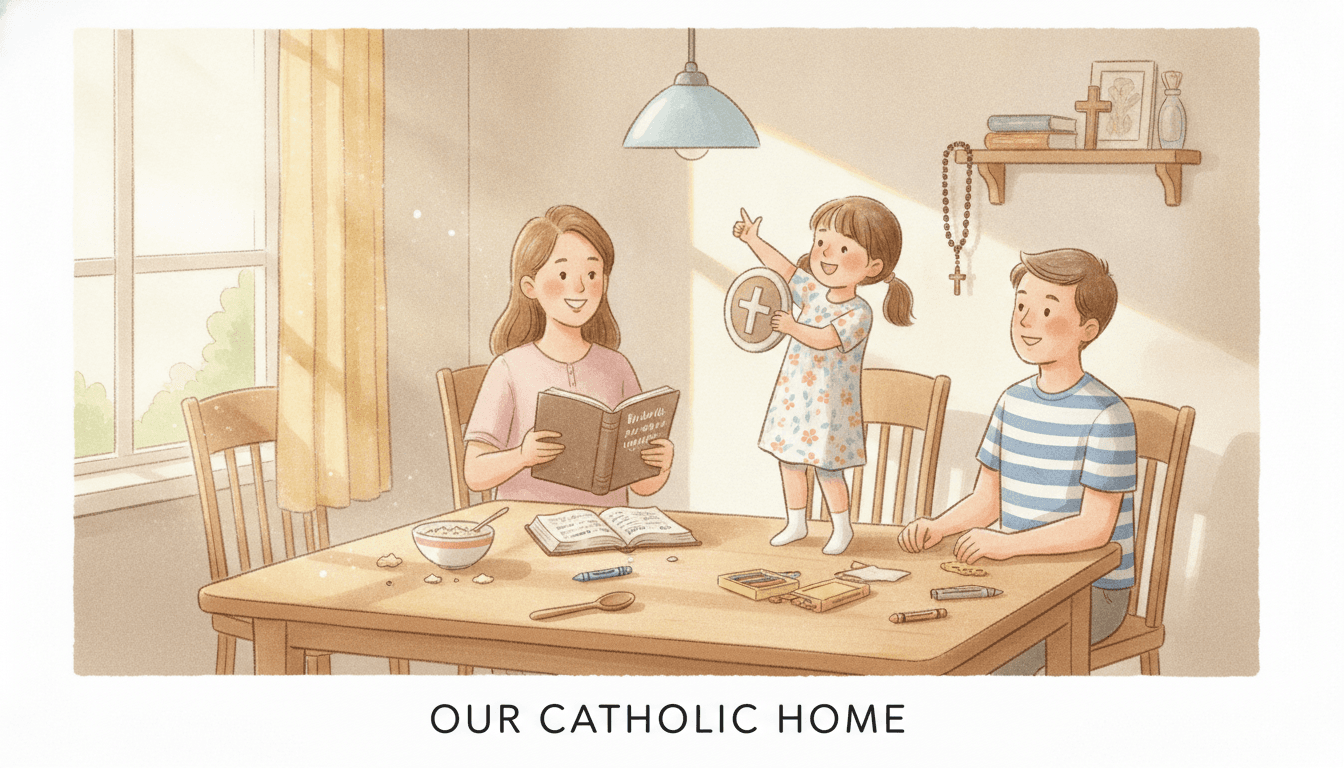
At our table, a wooden spoon became Goliath’s sword before anyone had finished breakfast. That small burst of chaos gave us an opening: Could we help the kids carry David’s brave words in their hearts, not just act out the battle? Here is a simple seven-day plan built for real families and short attention spans.
Why David’s Brave Words Belong in a Child’s Heart
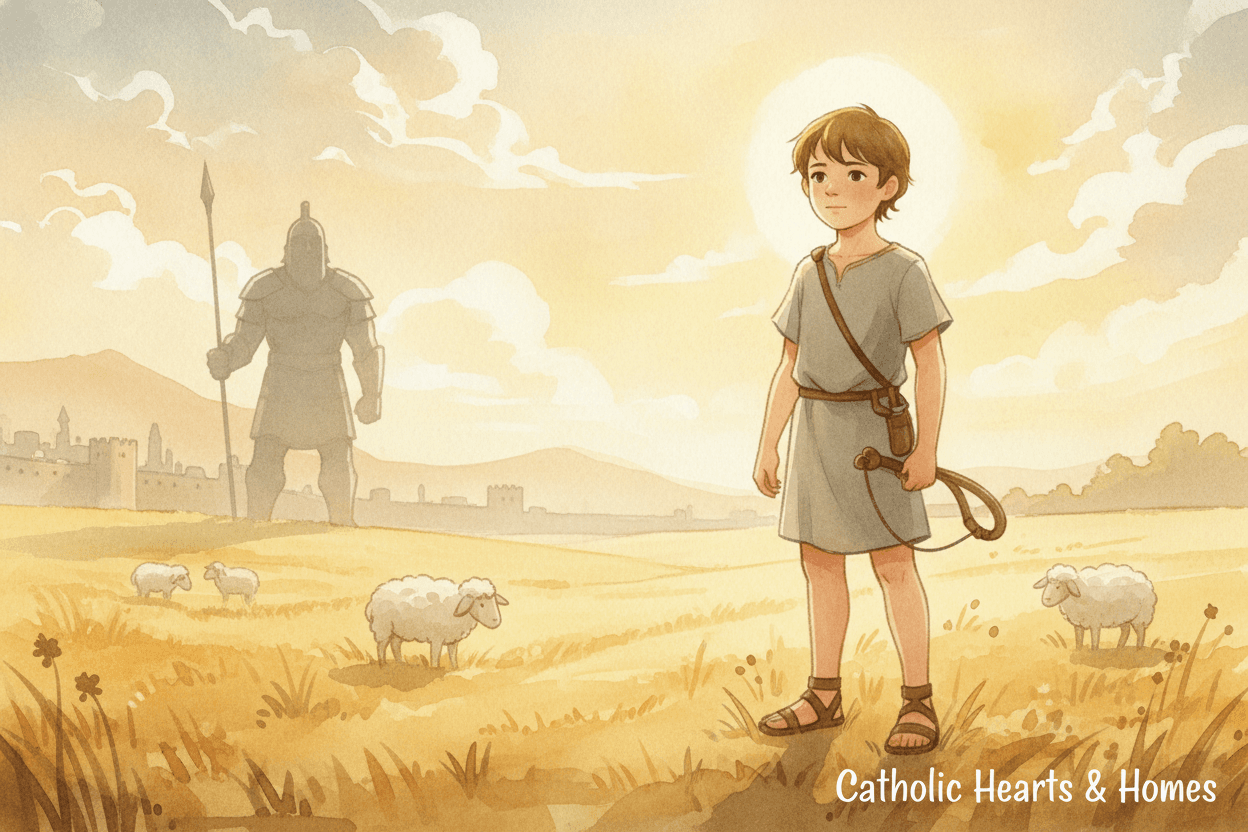
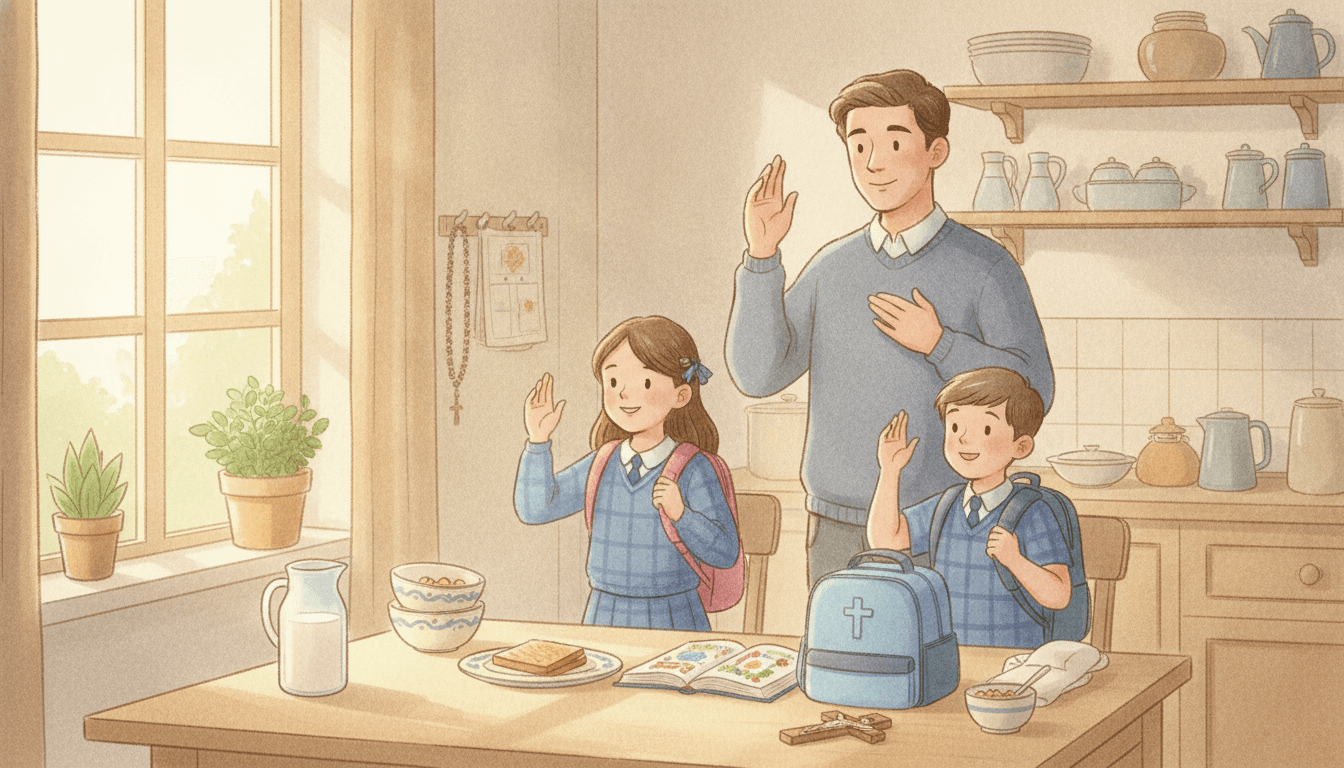
The butter knife became Goliath’s sword before breakfast was over. One child held it high. Another stood on a chair to look taller. The youngest yelled, “I’m David!” while wearing only one sock. This is how Scripture often enters family life—not through a silent classroom, but through toast crumbs, loud voices, and somebody pretending to be nine feet tall.
At the center of David’s words is a contrast children can understand. Goliath points to his sword, spear, and scimitar. He trusts what he can carry and what everyone can see. David has no impressive weapon to point toward. He trusts the Lord of hosts. David is not saying that Goliath is small. He is saying that God is greater.
That matters because children often feel small. The dark bedroom feels big. The first day at a new school feels big. A barking dog, a hard assignment, or an older kid’s cruel words can feel very big. We should not tell our children that faithful people never feel afraid. Courage is not pretending the giant is tiny. Courage is remembering who stands with us when our knees shake.
The words “I come against you in the name of the LORD of hosts” are not a magic password. They are a declaration of belonging. David knows whose people he belongs to and whose help he can trust. For our children, that can sound as simple as this: “I feel scared, but God is here.” They may still want Dad to check under the bed. That is fine. Trust in God and a quick monster inspection can live together in a Catholic home.
One small thing we tried was naming ordinary giants after saying the verse. Each person finished the sentence, “I feel small when…” Then we answered together, “God is with you.” Keep it brief. Preschoolers do not need a long explanation before the cereal gets soggy. They need words they can carry into the next hard moment.
Memorizing this verse gives a child more than a Bible fact. It places a sturdy sentence in the heart before fear arrives. We parents cannot remove every giant from the road. We can help our children remember that they never meet one alone. That is why David’s brave words belong not only in a storybook, but on our children’s lips this week.
David answered him: “You come against me with sword and spear and scimitar, but I come against you in the name of the LORD of hosts, the God of the armies of Israel whom you have insulted.”
Keep the Plan Short, Playful, and Repeatable
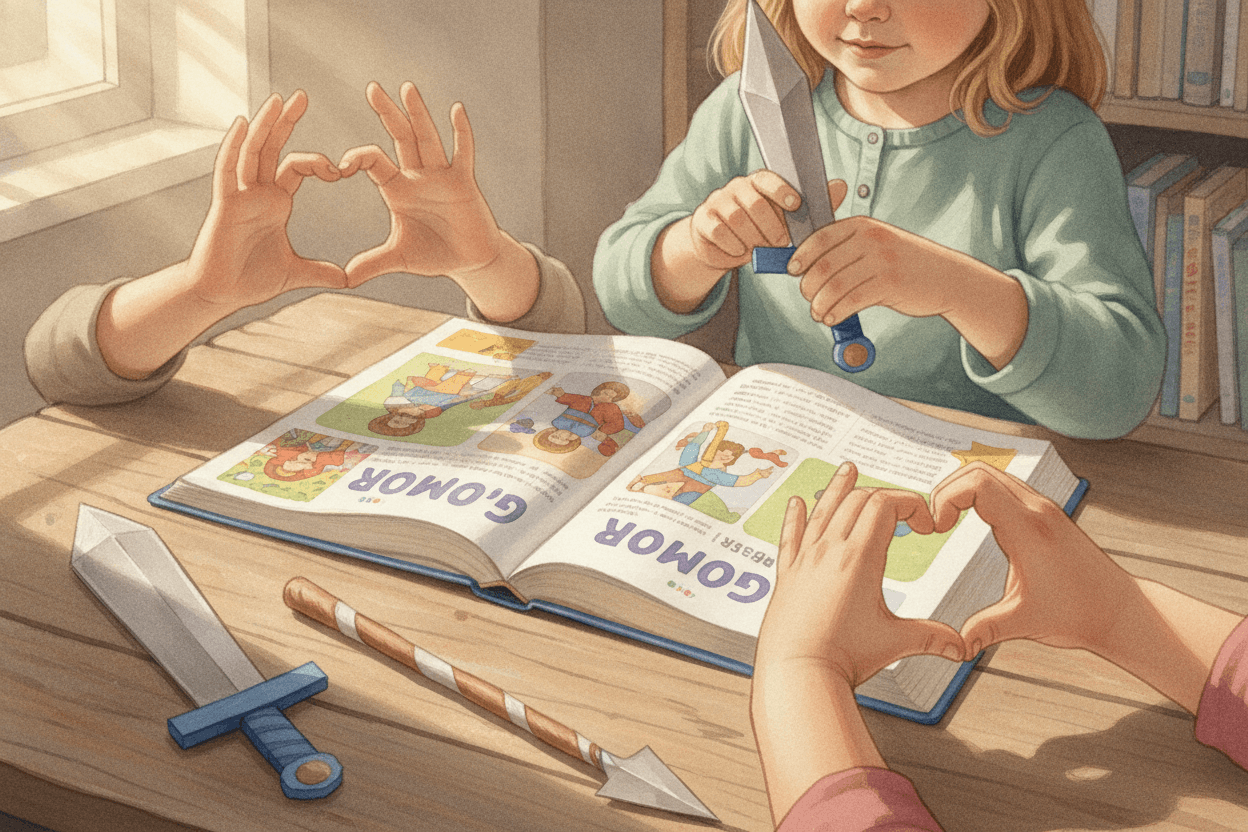
The first night we tried this at our table, one child was still chewing and another had turned a napkin into a cape. That was our classroom. I read 1 Samuel 17:45 once, and we all said the first phrase together. Five minutes later, we stopped. Nobody had mastered the verse, but nobody dreaded doing it again the next day either. That counts as a win.
Pick one daily cue that already happens in your home. Try breakfast, the drive to school, bath time, or the moment before bedtime prayers. Keep the whole session to five minutes. Read the verse aloud. Let the kids echo one phrase at a time. Say it together once more, then finish. Deuteronomy tells us to keep repeating God’s words to our children at home and away, morning and night. Repetition does not have to mean a long lesson.
For ages three to five, let movement do much of the work. Mime a sword for “sword.” Hold an imaginary spear for “spear.” Sweep one hand through the air for “scimitar.” Point to the chest for “I come,” then lift both hands for “in the name of the LORD of hosts.” Preschoolers may remember the motions before the words. That is fine. Their version may also include a dramatic fall like Goliath. Make room for it.
Children ages six to nine can usually handle a little more. Have them read a phrase, cover it, and say it from memory. Write the verse on index cards and remove one card at a time. Let siblings take turns being David while the rest of the family supplies any missing words. Keep corrections light. If a child says “big sword” instead of “scimitar,” simply repeat the right phrase and continue. This is family prayer, not a spelling bee.
Set a realistic goal for the week. A younger child might learn the key line, “I come against you in the name of the LORD of hosts.” An older child may memorize the whole verse. One small thing we tried was ending every session with the same question: “Who was David trusting?” The kids answered, “God.” That answer matters more than a flawless performance. Short, playful practice gives the words time to settle into the child in front of you—and it makes tomorrow’s five minutes much easier to begin.
Take to heart these words which I command you today. Keep repeating them to your children. Recite them when you are at home and when you are away, when you lie down and when you get up.
Days 1–2: Hear the Story and Echo the Words
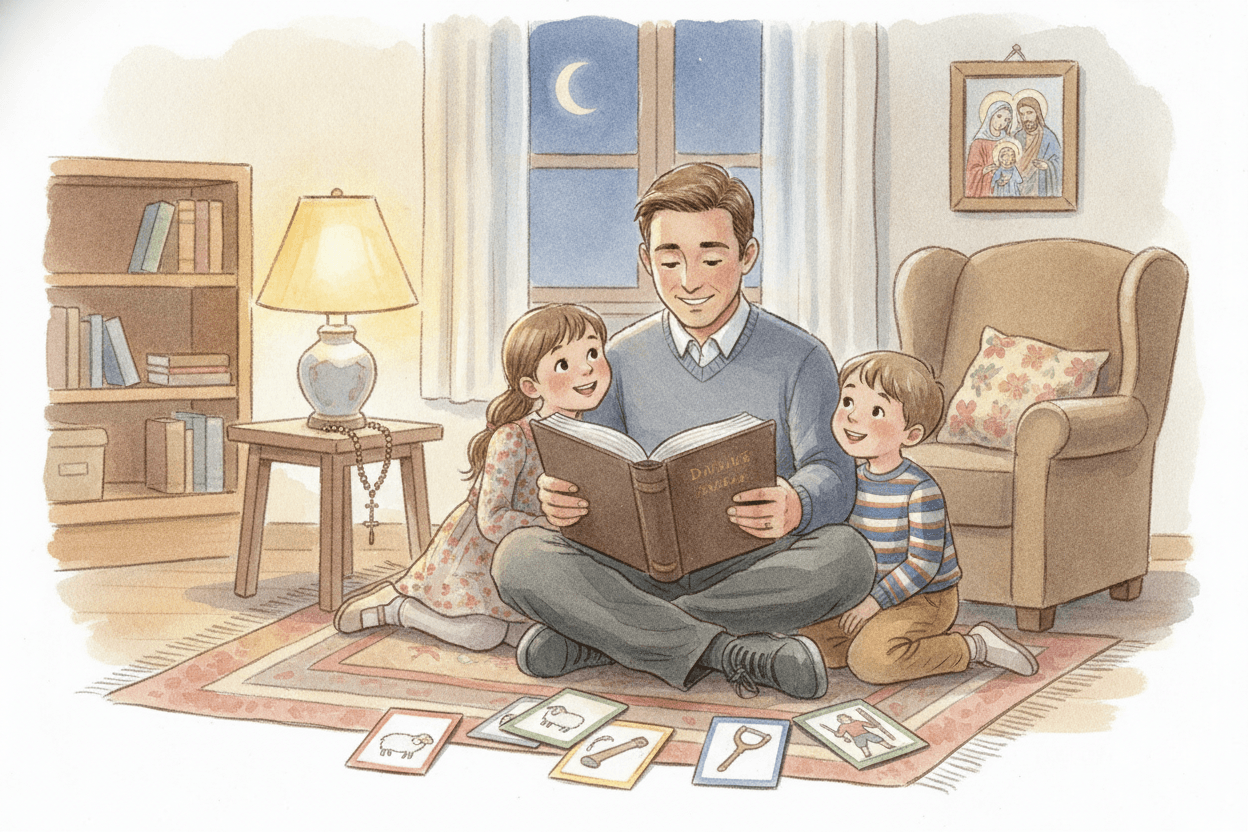
On Monday evening, I put a wooden spoon on my shoulder like a sword and stood beside the kitchen table. That got the kids looking up. One was still chewing. Another immediately asked if he could fight me. Close enough. I told them that Goliath was a huge warrior with armor and weapons, while David was a young shepherd carrying a sling. Everyone expected David to lose. But David knew the size of the enemy mattered less than the strength of God.
For Day 1, keep the story brief. Five minutes is plenty. Then read the verse slowly, twice: “David answered him: ‘You come against me with sword and spear and scimitar, but I come against you in the name of the LORD of hosts, the God of the armies of Israel whom you have insulted.’” Do not worry if your preschooler gets distracted by the word “scimitar.” In our house, unusual weapon names tend to become the main event. Just explain that it is a kind of sword and keep moving.
Ask one question: “What did David trust more than weapons?” Let the kids answer in their own words. God. The Lord. God’s name. All of those land in the right place. David was not pretending Goliath was harmless. He was saying that Goliath’s weapons did not have the final word. That is the big idea we want the kid in front of us to carry.
On Day 2, switch to call-and-response. Say only a few words at a time and have the children echo you: “You come against me.” Then, “with sword and spear.” Next, “but I come against you.” Finally, “in the name of the LORD of hosts.” Repeat the sequence two or three times. Add a pretend sword swing for “sword and spear” and place a hand over the heart for “I come against you in the name of the LORD.” Keep the motions simple enough that you can remember them too.
Children ages three to five may only manage one short phrase. That counts. Ages six to nine can read the verse aloud, write its phrases on separate cards, and arrange them in order. If an older child wants to lead the echoes, hand over the job. Kids often listen more closely when a sibling is in charge—at least for thirty surprising seconds.
Stop before the practice becomes a battle of its own. End with a quick prayer: “Lord, help us trust you like David did.” These first two days are not about perfect recitation. They are about hearing the story, speaking God’s Word, and connecting courage with trust. That is one small thing we tried, and it gave us a strong start without turning the dinner table into a classroom.
David answered him: “You come against me with sword and spear and scimitar, but I come against you in the name of the LORD of hosts, the God of the armies of Israel whom you have insulted.”
Days 3–5: Add Motions, Games, and Real-Life Courage
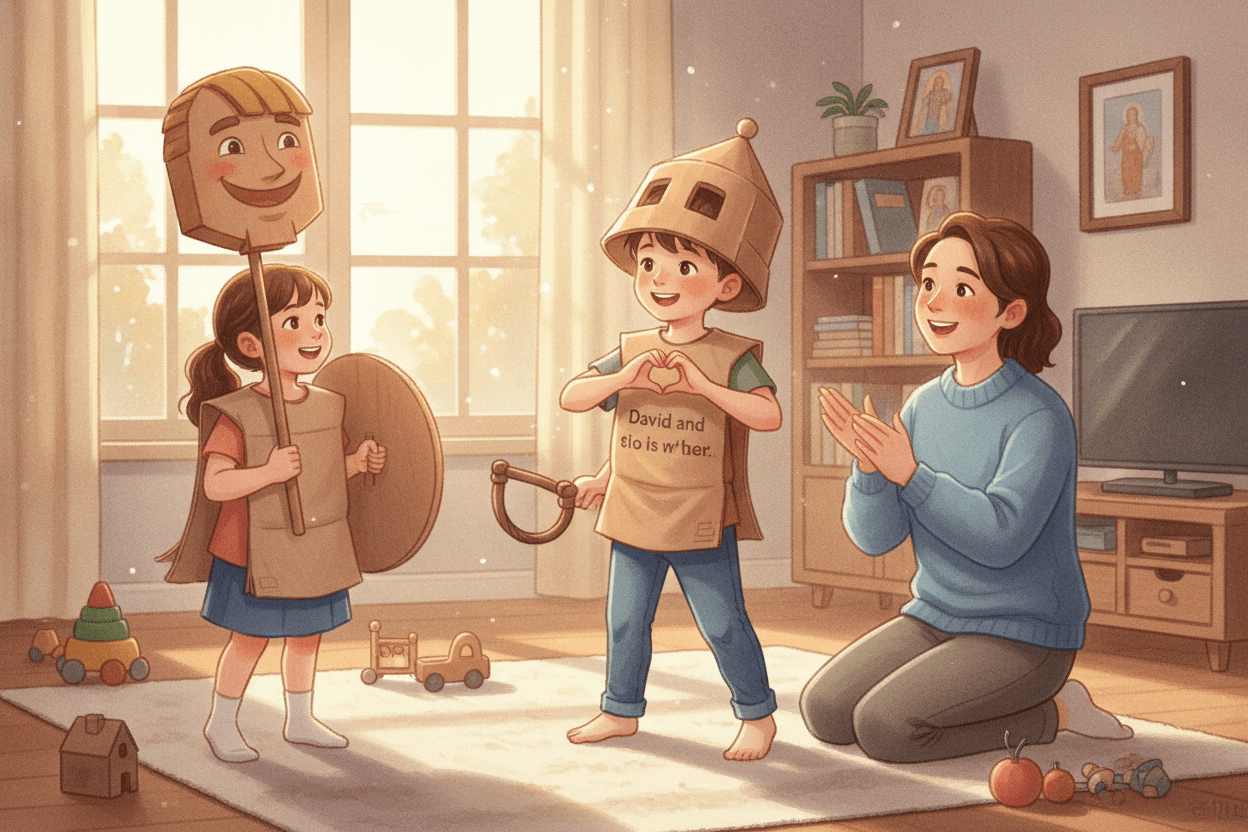
On Wednesday morning, one of my kids turned a butter knife into David’s sword before breakfast was over. Not exactly the plan. Still, it gave us an easy opening for Day 3: add motions. We mimed a sword, held an imaginary spear, and swept one arm sideways for the scimitar. Then we placed a hand over the heart for David coming in the name of the LORD. For “LORD of hosts,” we stretched both arms wide, as if a great army stood behind us. Say the verse slowly while everyone copies the motions. Then try it again with less help. Five minutes is plenty.
Adjust the motions to the child in front of you. A three-year-old may only remember “sword,” “spear,” and the hand over the heart. That counts. A five-year-old may enjoy leading the family or inventing better motions than yours. An early reader can hold the Bible and point to each phrase. Keep the tone light. If a child performs the motions backward and accidentally salutes the toaster, carry on. The goal is to give the words something concrete to stick to.
For Day 4, write the verse in short phrases on separate cards. Read them together, then turn one card over and ask what is missing. Keep hiding cards until the children can say most of the verse. Older kids can mix up the cards and put them back in order. For preschoolers, use three picture cards instead: a sword, a spear, and a heart with God’s name above it. One small thing we tried was letting the child who found the missing phrase ring a little bell. This made the game far more exciting than it had any right to be.
On Day 5, act out the scene without hitting, throwing, or reenacting the more graphic parts of the story. One person plays Goliath and stands tall with a paper shield. Another plays David, takes a few brave steps forward, and recites the verse. At the end, Goliath simply backs away or sits down. Switch roles. A shy child can move a toy figure instead. An older child can narrate why David was confident: not because he was bigger or better armed, but because he trusted God. That is the part we want to land.
After the game, ask one short question: “What feels giant to you right now?” You may hear about a dark bedroom, a hard school day, apologizing after a fight, or meeting someone new. Resist the dad instinct to fix everything in thirty seconds. Listen first. Then ask, “How can we remember that God is with us?” Explain that courage does not mean we never feel afraid. It means we tell the truth, do the next good thing, and ask God for help. At our table, these kid-sized worries are where memorized Scripture begins to move from the mouth into the heart.
In my heart I treasure your promise, that I may not sin against you.
Days 6–7: Practice Together and Bring It to Sunday
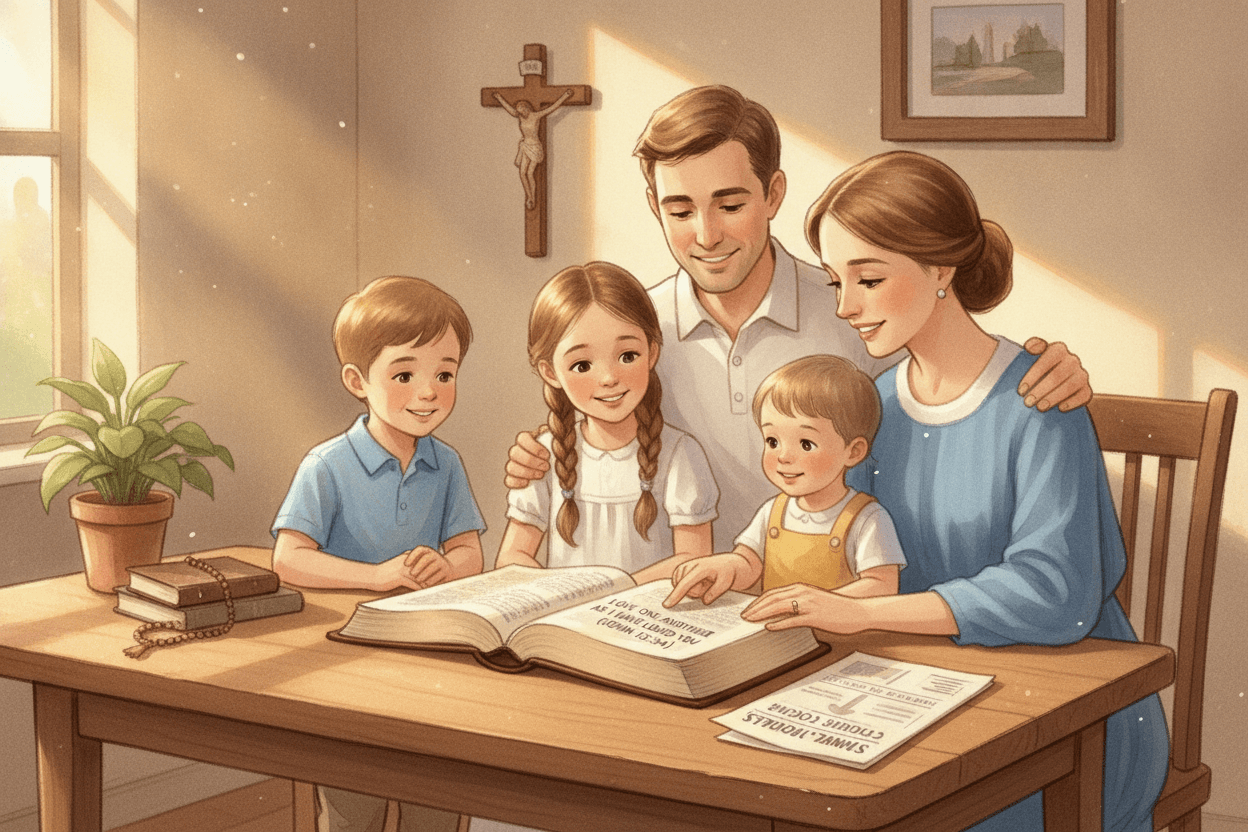
By Day 6, the verse may come out in pieces. One child remembers “sword and spear” but forgets “scimitar.” Another starts confidently, gets distracted by a cereal box, and begins again from the middle. That is normal. At our table, memory work rarely looks like a polished classroom recital. It sounds more like a family trying, laughing, and helping one another find the next word.
Invite each child to say as much of 1 Samuel 17:45 as possible. Keep the mood light. When someone pauses, let a sibling supply one missing word or make the motion that goes with it. Then have the child continue. We want brothers and sisters to act like teammates, not judges. Saint Paul’s advice to fathers belongs here: “Fathers, do not provoke your children to anger, but bring them up with the training and instruction of the Lord.” A sharp correction may produce the right word, but patient encouragement helps a child want to return to Scripture tomorrow.
Celebrate the progress when everyone has had a turn. Clap. Offer a high five. Let the children choose dessert or place a sticker on a homemade chart. You are not rewarding perfect performance. You are marking the good work of keeping God’s Word close. If your three-year-old can only shout, “I come against you in the name of the LORD,” celebrate that. If your older child remembers the whole verse, ask that child to lead the family once more. The goal is not competition. It is shared confidence in God.
On Day 7, bring David’s story into Sunday. Before Mass, give a two-minute retelling in the car: Goliath trusted his weapons, while David trusted the Lord. Ask one simple question: “What did David know about God?” If the drive to church is already full of missing shoes, spilled water, and negotiations over who sits where, save the conversation for lunch. After Mass, ask whether anyone heard a word or idea that reminded them of the verse. This helps children see that listening to Scripture in our house and hearing God’s Word in the liturgy belong together.
Close the week by praying the verse for one real concern. Maybe a child is worried about school. Maybe someone in the family is sick. Maybe Dad has a hard meeting on Monday. Name that concern without pretending it is small. Then say together, “I come against you in the name of the LORD of hosts.” Explain that we are not challenging a person to battle. We are asking God for courage when fear feels very large. That is a fine Sunday send-off: one remembered verse, one honest prayer, and a family ready to trust God in the week ahead.
Fathers, do not provoke your children to anger, but bring them up with the training and instruction of the Lord.
One Small Thing to Try This Week
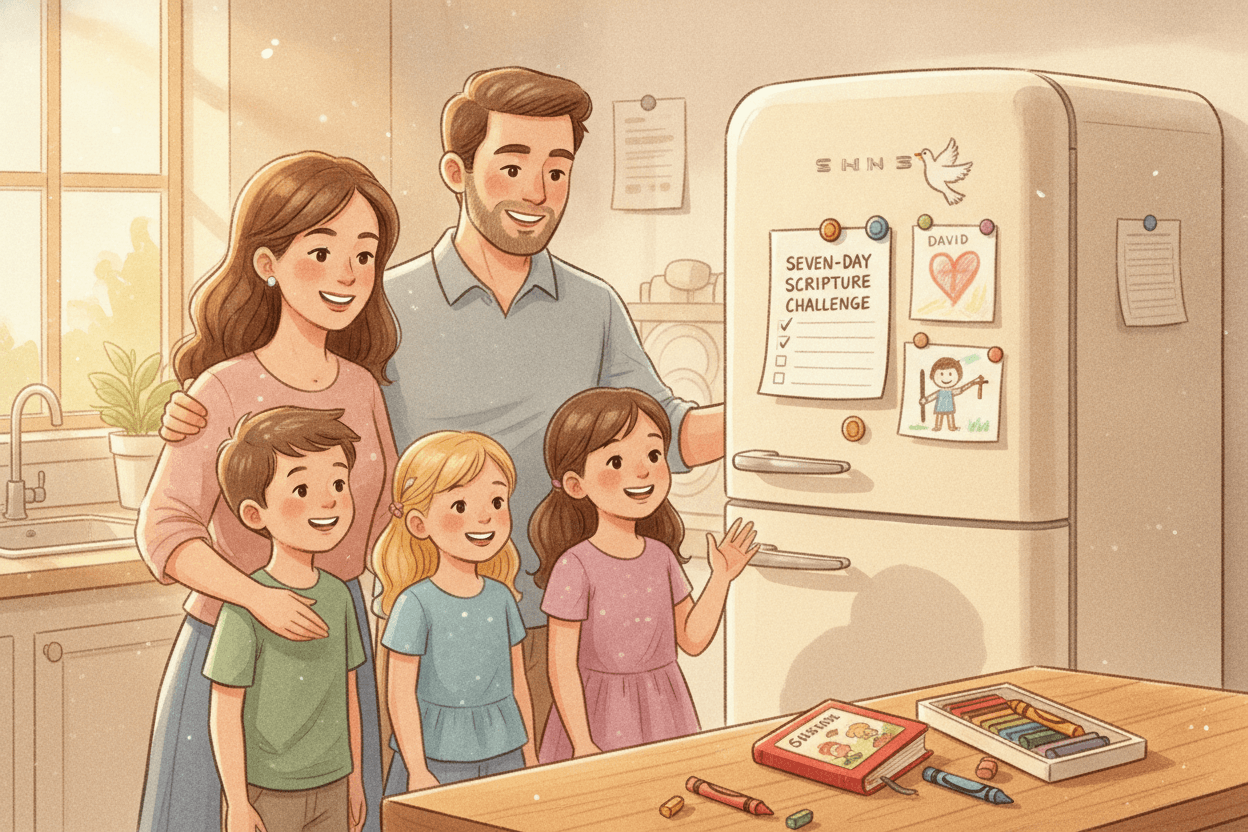
On Monday morning, put the verse beside the cereal bowls. That is it. No elaborate setup. No expectation that everyone will sit still and look holy before the milk spills. Choose one five-minute stretch that already exists in your day—breakfast, the drive to school, bath time, or bedtime—and attach the verse to it. Five minutes is short enough to begin and long enough for a child to hear the words more than once.
Write or print 1 Samuel 17:45 in large letters. Keep it where small eyes can see it. Then practice five simple motions: swing an imaginary sword, thrust an imaginary spear, sweep a hand for the scimitar, place a hand over the heart for “I come against you,” and point upward for “in the name of the LORD of hosts.” Preschoolers may turn the whole thing into a dramatic battle scene. In our house, imaginary swords have a way of appearing even when nobody asked for them. Let the movement help the words stick.
Here is the compact checklist: choose a five-minute time; print or write the verse; practice the five motions; repeat one phrase at a time; miss a day without guilt; celebrate effort rather than perfect recall; and bring the verse back when your child faces something hard. That last step matters. When a child fears a dark room, a doctor visit, a difficult class, or walking into a new activity, remind him that David did not pretend Goliath was small. David remembered that God was greater.
Scripture gives parents a wonderfully ordinary pattern: “Take to heart these words which I command you today. Keep repeating them to your children. Recite them when you are at home and when you are away, when you lie down and when you get up.” That sounds less like a formal lesson and more like family life. We repeat God’s words while tying shoes, clearing plates, and finding the missing library book. The repetition may feel small, but it teaches our children where to turn when courage runs thin.
Parents are their children’s first teachers of faith. That does not mean we need every answer or a perfectly quiet prayer corner. It means our children first learn that Scripture matters by seeing us open it, say it, and return to it. If you forget Tuesday and remember again on Wednesday, you are still teaching something important: faithfulness includes beginning again.
At the end of the week, celebrate. Offer a high five, let the kids perform the verse for Grandma, or make a snack worthy of a giant-slayer. Then keep the story alive by reading the BibleHeroes David and Goliath comic together. Ask each child to point out the moment David shows courage. The goal is not simply to finish a memory challenge. It is to help the kid in front of you remember that God is present when something big stands in the way.
Take to heart these words which I command you today. Keep repeating them to your children. Recite them when you are at home and when you are away, when you lie down and when you get up.
Frequently asked questions
How do I help my kids memorize 1 Samuel 17:45 in one week?
Choose a daily cue such as breakfast, the school drive, bath time, or bedtime prayers, and practice for no more than five minutes. Read the verse, have the children echo short phrases, and then say it together once. Consistent, playful repetition is more important than mastering it immediately.
What does 1 Samuel 17:45 teach children about courage?
David does not deny that Goliath is dangerous; he trusts that God is greater than the danger. Children can learn that courage means remembering God is with them even when they still feel afraid.
How can preschoolers memorize David and Goliath’s words?
Pair key words with simple motions, such as miming a sword, holding an imaginary spear, and raising both hands for “the LORD of hosts.” A younger child may memorize only the central line, “I come against you in the name of the LORD of hosts,” and that is a worthwhile goal.
What memorization activities work for children ages six to nine?
Let children read a phrase, cover it, and repeat it from memory, or write the verse on cards and remove them one at a time. Siblings can take turns playing David while the family supplies missing words. Correct mistakes gently so the practice continues to feel like family prayer rather than a test.
How can I connect 1 Samuel 17:45 to my child’s fears?
After reciting the verse, invite each person to finish the sentence, “I feel small when…” and respond together, “God is with you.” Explain that trusting God does not mean children never feel scared or cannot ask a parent for help; it means they do not face their fears alone.
What does “the LORD of hosts” mean in 1 Samuel 17:45?
The title points to God as the powerful Lord whom David trusts instead of relying on visible weapons. David’s words are not a magic formula but a declaration that he belongs to God and depends on God’s help.
Sources: pewresearch.org · pewresearch.org · pewresearch.org · vatican.va · vatican.va · vatican.va · catholic.com · growingupcatholic.com · biblegateway.com
Scripture quotations in this article use the NABRE translation.