Praying Like Daniel:A Family Prayer Routine for Kids
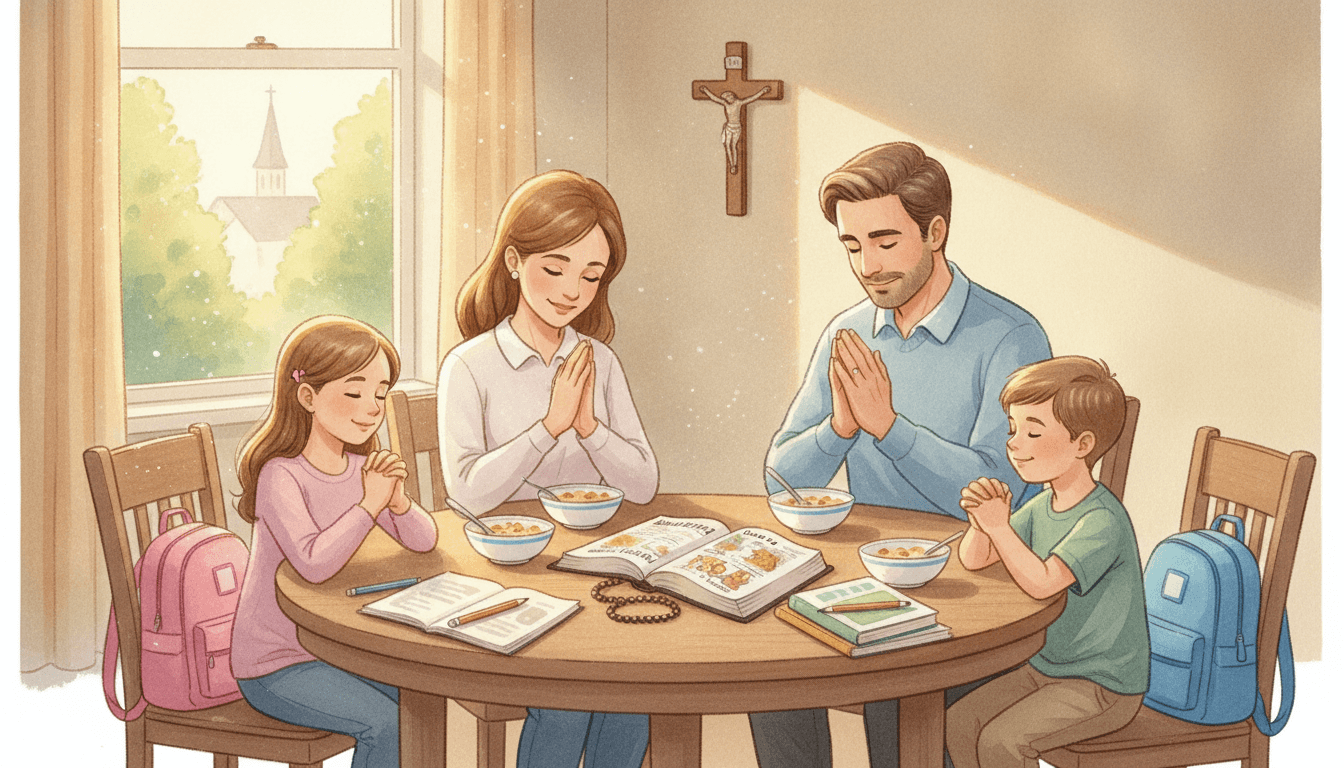
One morning, we tried to pray while a cereal bowl tipped over and someone announced that a shoe was missing. It did not feel especially holy, but we prayed anyway. Daniel’s three-times-a-day habit gives busy families a simple pattern that can work even when the kitchen table is sticky.
Daniel’s Prayer Habit Was Simple and Steady
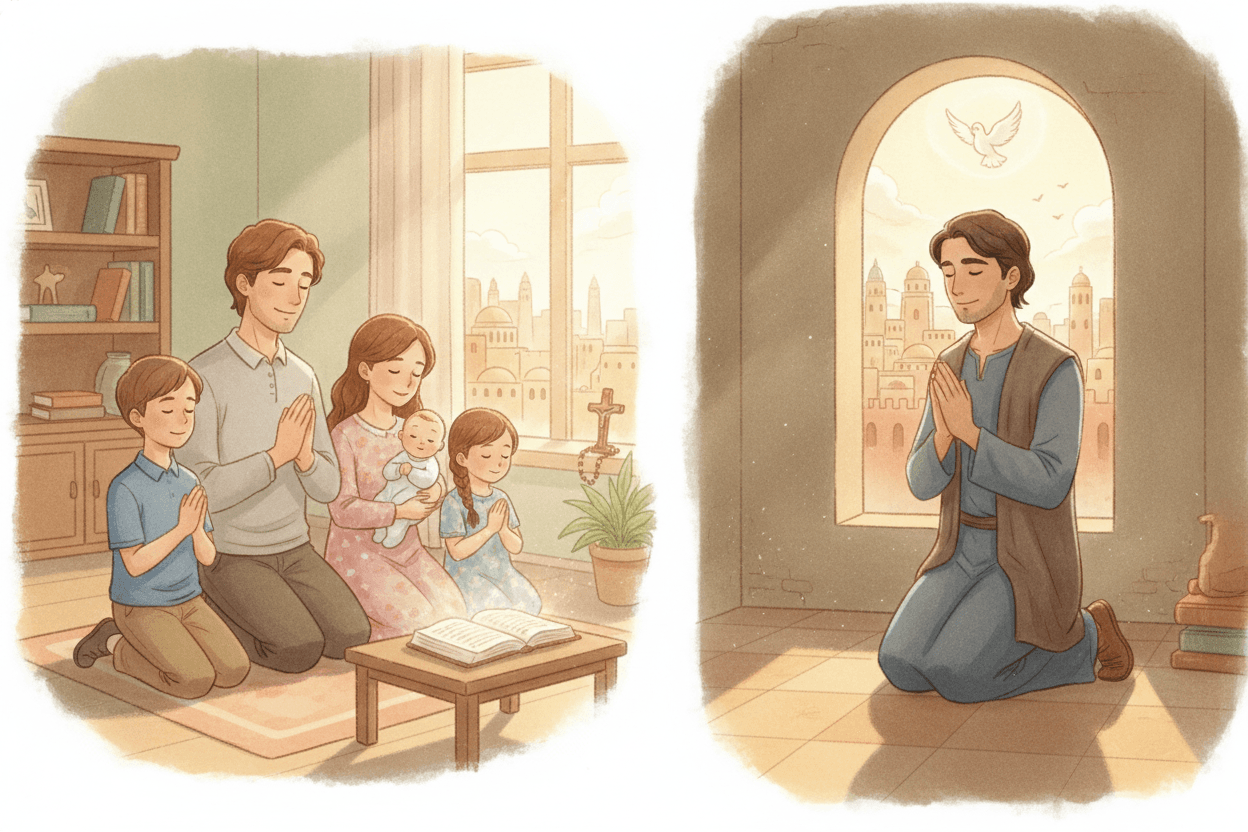
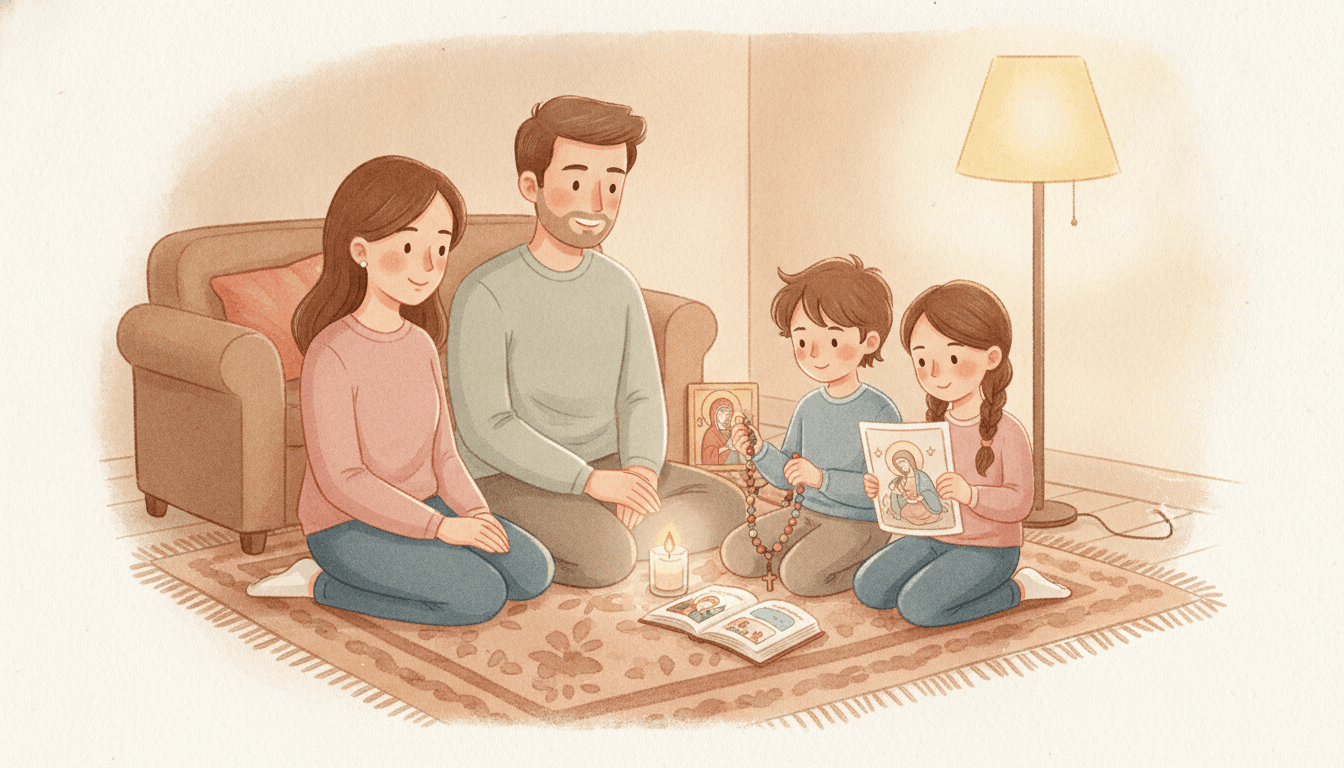
Our youngest once knelt beside the couch for prayer, then immediately crawled under it to retrieve a missing block. That is family prayer with little kids. Knees bend. Heads bow. Someone remembers a toy. Still, we begin again. Daniel’s story helps because his prayer life was not built on getting every moment just right. It was built on returning to God, day after day.
Daniel lived far from his homeland and served a powerful king. Some officials were jealous of him, so they convinced the king to make a terrible law: for thirty days, no one could pray to anyone except the king. Anyone who disobeyed would be thrown into a den of lions. Daniel heard the law. He understood the danger. Then he went home, opened his windows toward Jerusalem, knelt down, and prayed as he always had.
Scripture tells us Daniel prayed three times each day and gave thanks to God. That last detail matters. He did not only pray when life felt safe. He did not wait until the lion problem was solved. He thanked God while trouble was already at the door. The officials caught him praying, and Daniel was thrown to the lions. God protected him through the night, and the king found him alive the next morning. Kids tend to remember the lions. Parents should also help them remember the habit that came first.
Daniel’s courage did not suddenly appear beside the lions. It had been growing during ordinary mornings, noons, and evenings. His repeated prayer had taught his heart where to turn. We are not trying to recreate Daniel’s dangerous circumstances in our house, thankfully. We are borrowing his steady rhythm. Morning, mealtime, and bedtime give a family three natural places to pause. The prayers can be very short. A child might offer the school day to God in the morning, thank him for one good thing at dinner, and ask his help for someone at bedtime.
One small thing we tried was keeping each prayer brief enough that nobody dreaded it. We were not aiming for silence worthy of a monastery. We were aiming to show up. Some days the prayer was thoughtful. Some days one child whispered and another inspected the ceiling fan. Daniel’s example takes the pressure off perfection. The goal is not a flawless performance three times a day. It is to help our children learn, through simple repetition, that God is there in the morning rush, at our table, and when the lights go out.
Even after Daniel heard that this law had been signed, he continued his custom of going home to kneel in prayer and give thanks to his God in the upper chamber three times a day, with the windows open toward Jerusalem.
Build the Rhythm Around Moments You Already Have
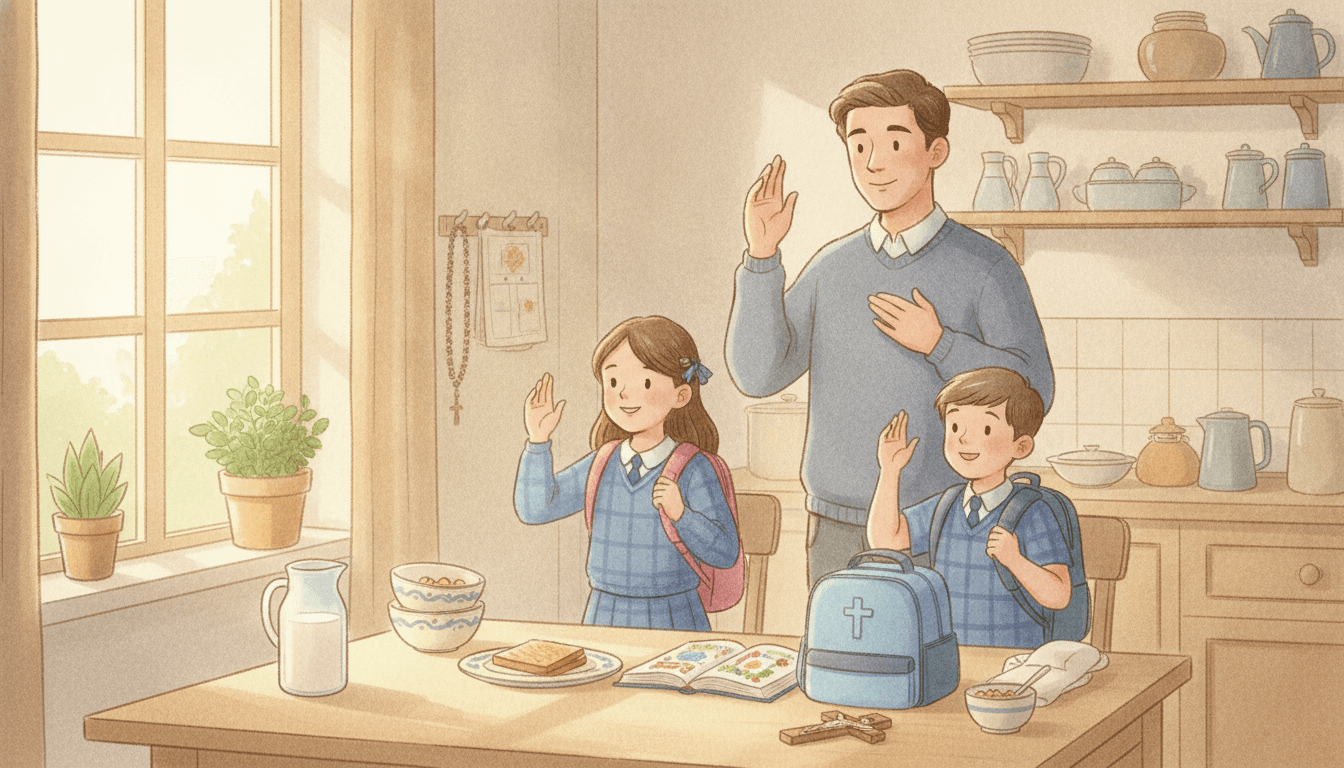
The cereal bowls were still out when one of our kids announced that we had forgotten morning prayer. I was already looking for a missing shoe, packing a lunch, and wondering why the backpack smelled like a wet towel. Still, we stopped. We made the Sign of the Cross and each named one thing coming that day. It took about a minute. Nobody sat perfectly still. God was invited into the morning anyway.
For children ages six to nine, morning, mealtime, and bedtime are useful prayer anchors because those moments already happen. You do not need to create a new family event or find a quiet room with perfect lighting. In the morning, offer the day to God and ask each child what they are excited or worried about. At a meal, pray grace and let everyone name one reason to thank God. At bedtime, ask for one thank-you, one sorry, and one person who needs prayer.
This ordinary pattern has deep roots. Scripture says, “Keep repeating them to your children. Recite them when you are at home and when you are away, when you lie down and when you get up.” Faith is meant to enter the regular movement of family life. The Church calls the family the domestic church. That can sound grand when there are cracker crumbs under the table, but it means our homes are real places where children meet God, hear his Word, and learn to pray.
Parents teach prayer most effectively by praying with their children. We do not have to give a speech first. A child learns the Sign of the Cross by watching our hand move. A child learns gratitude by hearing Dad thank God for dinner. A child learns to bring fear to Jesus when Mom says, “I am nervous about tomorrow, so I am going to ask God for help.” Our children need to see that prayer belongs in real life, not only at Mass or when something goes wrong.
One small thing we tried was starting with only one prayer anchor instead of all three. Pick the moment your family can keep most easily this week. Set a goal of one minute, and keep it under five minutes for younger children. Use the same simple pattern each day until it feels familiar. If someone giggles, forgets the words, or starts discussing dinosaurs halfway through, gently return and finish. Consistency matters more than length. Once that first anchor becomes normal, add another. Little by little, the day itself begins reminding your family to pray.
Keep repeating them to your children. Recite them when you are at home and when you are away, when you lie down and when you get up.
Morning: Offer God the Day Before Everyone Scatters
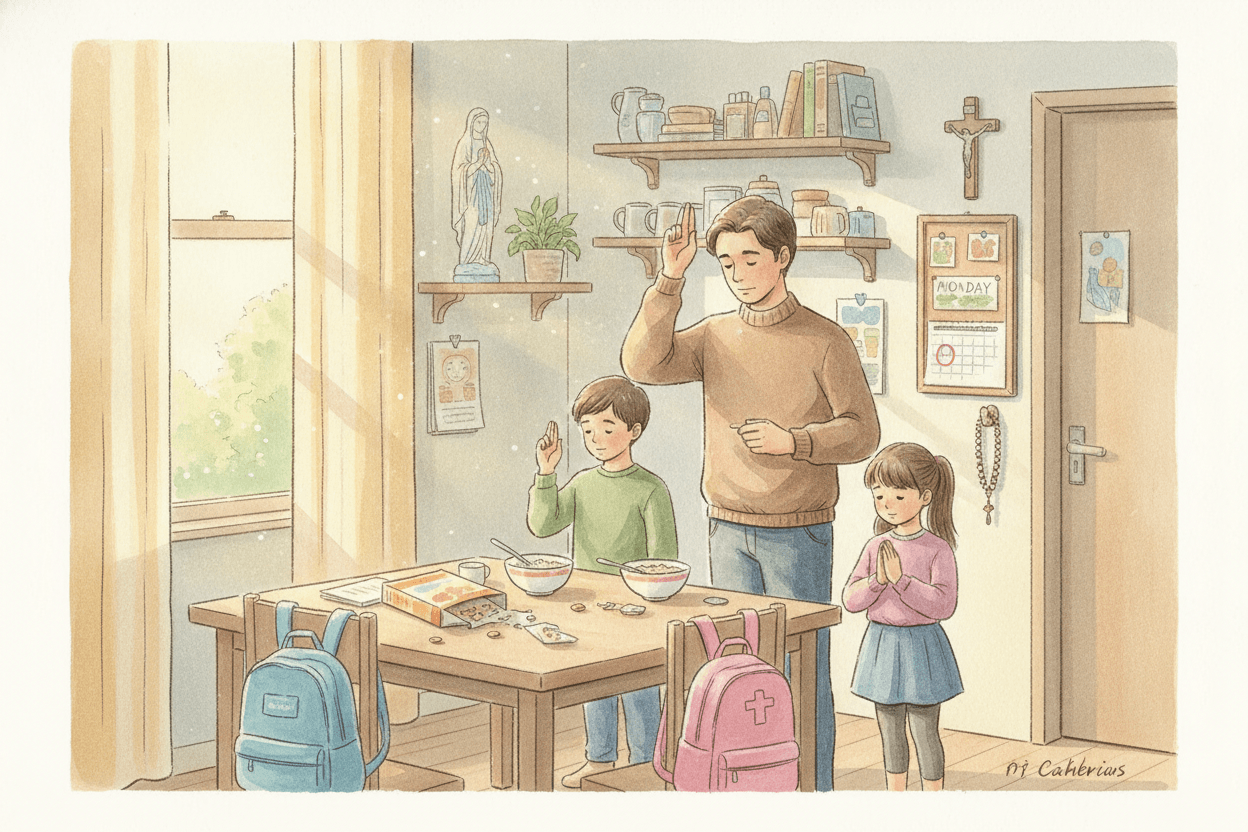
At 7:18 on a school morning, one child is looking for a shoe, another is staring into a cereal bowl, and someone has just remembered the permission slip. This is not the moment when family prayer feels easy. It may, however, be the best moment to pray. Before backpacks go on and everyone scatters, gather for one minute. Do not wait for perfect silence. In our house, that could mean waiting until nobody is actively brushing their teeth.
Here is a simple routine. Make the Sign of the Cross together. Pray, “Come, Holy Spirit.” Then offer the day to Jesus. Each child names one thing that feels exciting or one thing that feels worrying. A preschooler might say, “Playground.” An older child might mention a test or a hard conversation. Parents can answer too. Keep each response short. The goal is not to solve every problem before breakfast. It is to place the real day, with its hopes and nerves, in God’s hands.
Then pray: “Jesus, thank you for this day. Help us love you and the people we meet. Stay close to us in everything we do. Amen.” That is enough. The whole routine can take less than two minutes. Younger children may only manage the Sign of the Cross and one word. That still counts. Faith is being practiced right there beside the toast crumbs and the missing water bottle.
Saint Paul connects prayer with both our worries and our gratitude. Children need to hear that they can bring God the spelling test, the new classroom, the soccer game, and the friend who has been unkind. Nothing is too ordinary. When a child says, “I’m worried about lunch,” resist the urge to rush past it. Simply say, “Jesus, please stay close to her at lunch today.” That brief response teaches a child what prayer is for.
One small thing we tried was putting a small cross near the place where backpacks wait. It became our visual cue. Cross, “Come, Holy Spirit,” one hope or worry, and the short offering. Try it every school morning this week. If the routine falls apart on Wednesday, begin again on Thursday. Consistency does not mean never missing. It means returning without making everyone feel guilty. A warm, brief prayer repeated often can become part of how a child understands the day: God is already with me before I walk out the door.
Have no anxiety at all, but in everything, by prayer and petition, with thanksgiving, make your requests known to God.
Mealtime: Turn Grace Into a Gratitude Check-In
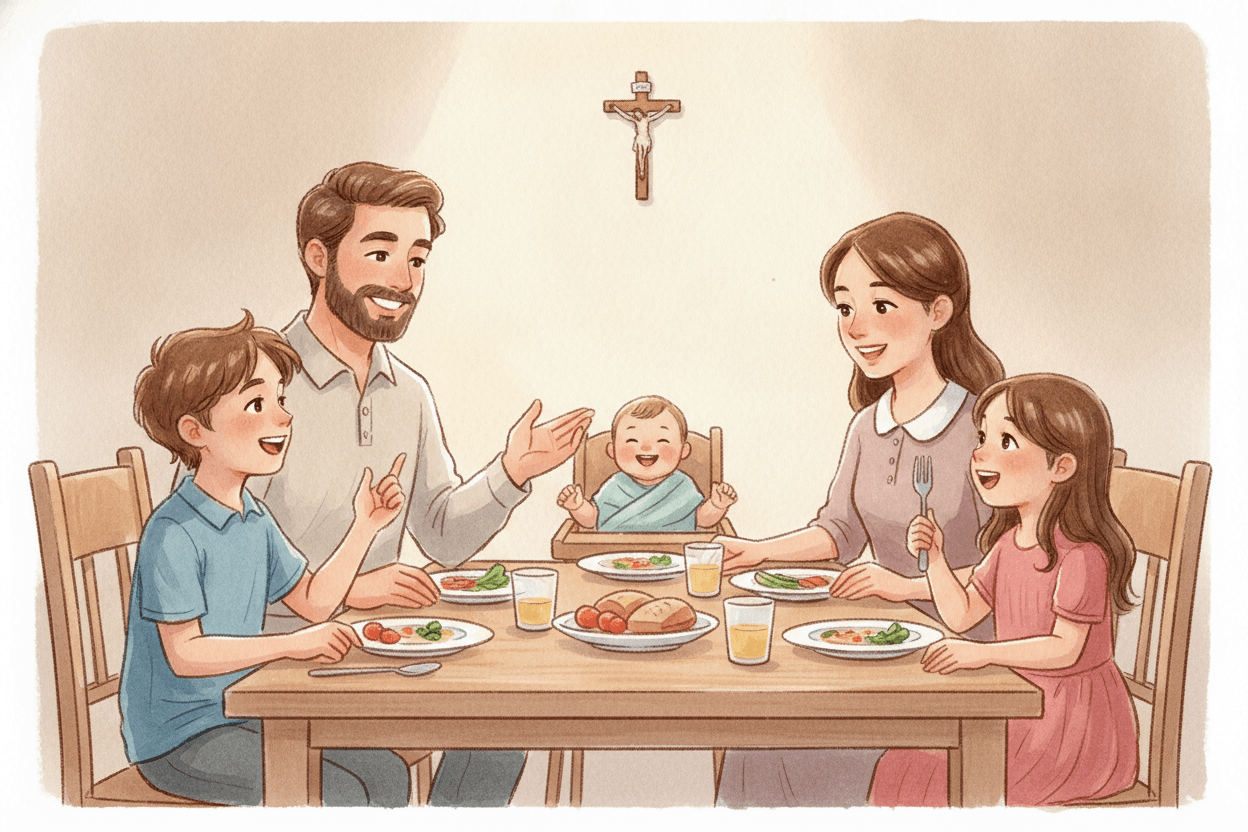
Dinner had barely reached the plates when one child asked for ketchup, another knocked a fork onto the floor, and the youngest announced that the green beans looked suspicious. This is usually the moment when a parent wonders whether family prayer should happen somewhere quieter. But this is the family we actually have. So we made the Sign of the Cross, prayed our usual grace before meals, and kept going. No candles. No perfect silence. Just God meeting us at a noisy table.
After grace, invite each person to name one good thing from the day. Keep it simple. A child might thank God for recess, a kind teacher, or the fact that dinner is not soup. Parents should answer too. Children need to hear that Dad noticed a helpful coworker or that Mom was grateful for five quiet minutes in the car. Gratitude becomes more natural when they hear us practice it out loud.
At our table, here’s what landed: we go around once, and nobody has to produce a profound answer. One good thing is enough. If a child says, “I don’t know,” we offer a choice: “Was there something funny today? Did anyone help you? Did you eat something good?” The goal is not to test their memory or measure their holiness. We are helping them notice that God’s gifts show up in ordinary places.
Some evenings are too restless for a full check-in. On those nights, ask for one-word thank-yous: “Grandma.” “Soccer.” “Cookies.” You can also let one child lead the Sign of the Cross or choose who starts grace. Little responsibilities help children feel that prayer belongs to them, not only to the adults. If dinner together rarely works because of shifts, practices, or homework, use breakfast, lunch, or the snack everyone grabs after school. Choose the shared meal that is realistic in your house.
Try this for one week: begin with your normal grace, then have everyone name one good thing. Stop while the children are still willing. Two minutes is plenty. The rhythm matters more than the length. St. Paul gives the pattern clearly: prayer, petition, and thanksgiving all belong together. Over time, that quick question—“What was one good thing?”—teaches children to look back on the day and recognize that God was already there, even beside the spilled milk.
Have no anxiety at all, but in everything, by prayer and petition, with thanksgiving, make your requests known to God.
Bedtime: Thank, Ask Forgiveness, and Bless
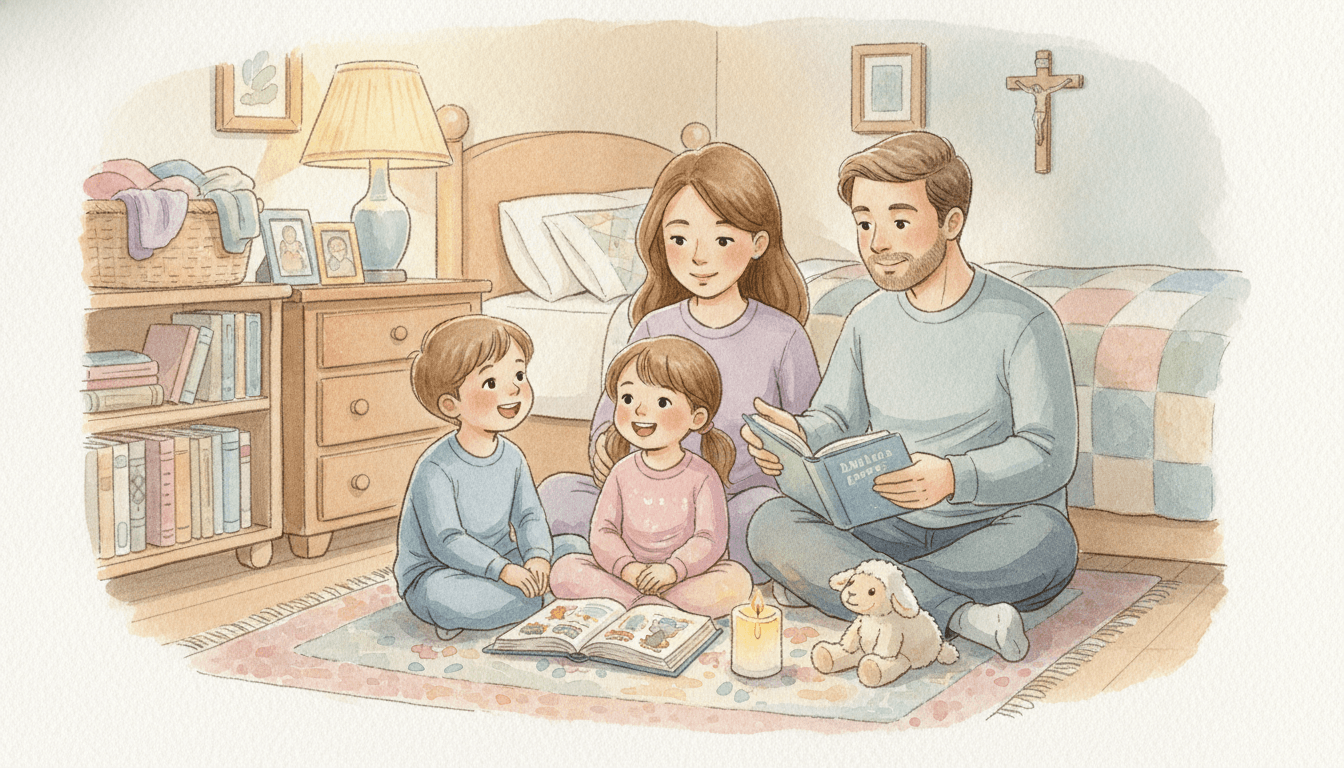
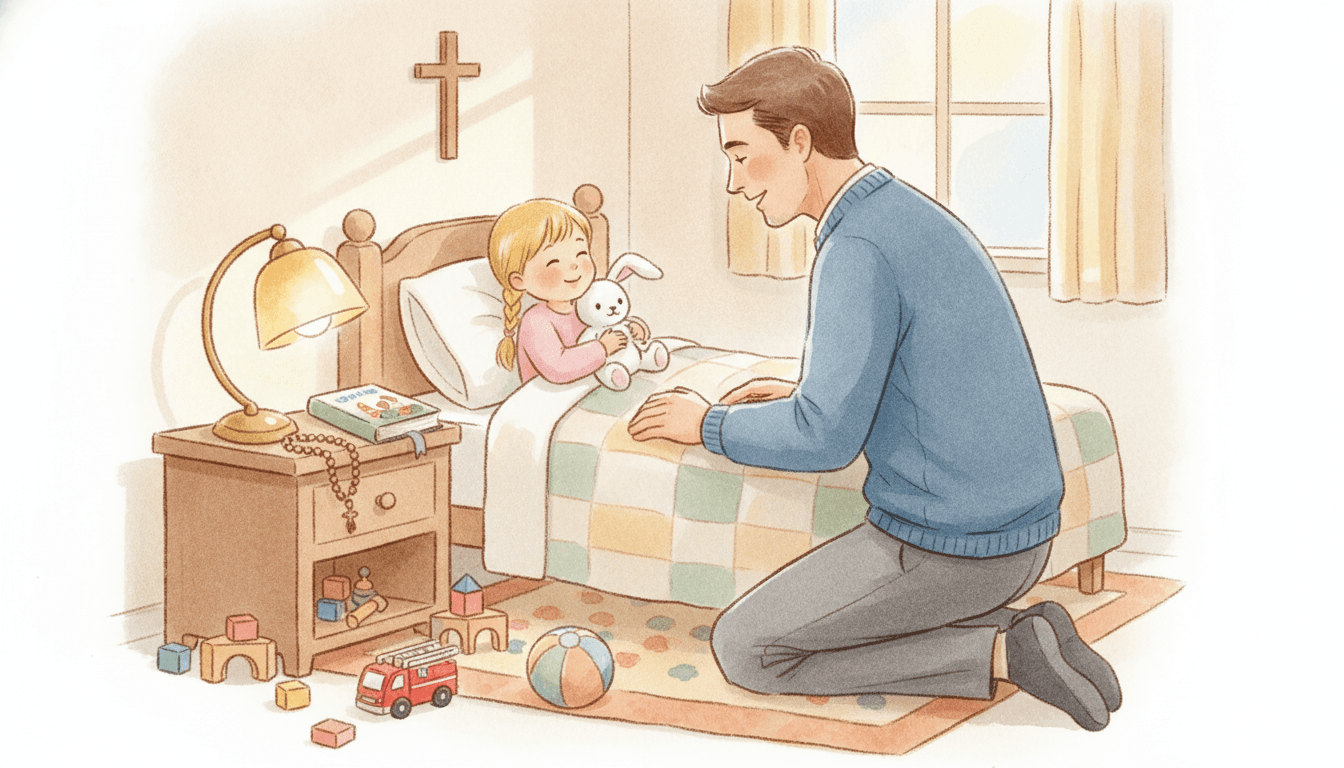
By bedtime, our kids can be equal parts sleepy, silly, and suddenly desperate to discuss a toy they have not touched in six months. This is not always the quietest hour in our house. Still, once the lights are low and everyone has found the correct stuffed animal, we have a small opening. The day has slowed enough for a child to notice what happened inside it.
One small thing we tried was a three-question bedtime prayer. We ask, “What are you thankful for? What are you sorry for? Who needs prayer tonight?” That is the whole check-in. A child might thank God for recess, admit to yelling at a sibling, and pray for Grandma’s sore knee. Another might be thankful for macaroni and sorry for absolutely nothing. That answer usually means we need patience, not a lecture.
Keep the questions gentle. We are not conducting a courtroom investigation from the edge of the bunk bed. If a child cannot think of something, offer a simple example from your own day: “I’m thankful we ate dinner together. I’m sorry I was impatient in the car. I want to pray for our neighbor.” Hearing a parent speak honestly teaches children that prayer is a place for truth. It also shows them that adults need God’s mercy too.
The “sorry” question is not meant to create fear or replace the Sacrament of Reconciliation. It simply helps a child recognize a wrong choice, ask God’s forgiveness, and think about making things right. You can add one practical question: “Is there anything you need to fix tomorrow?” Maybe that means apologizing to a brother, returning something, or trying again with kinder words. Keep it concrete and brief.
After the three answers, close with an Our Father or Hail Mary. On especially tired nights, choose one short line from the Gospel that your children already know. There is no prize for stretching bedtime prayer past everyone’s ability to stay kind. For younger kids, two or three peaceful minutes can be plenty. Consistency matters more than length.
Then trace the Sign of the Cross on your child’s forehead with your thumb. Say something simple: “May God bless you and keep you safe tonight. May Jesus give you peace. In the name of the Father, and of the Son, and of the Holy Spirit. Amen.” This small blessing gives the day a clear ending. The spilled milk, hurt feelings, laughter, and unfinished chores are placed in God’s hands. Then comes the final act of faith: leaving the room without stepping on a plastic brick.
Try Daniel’s Rhythm for Seven Days
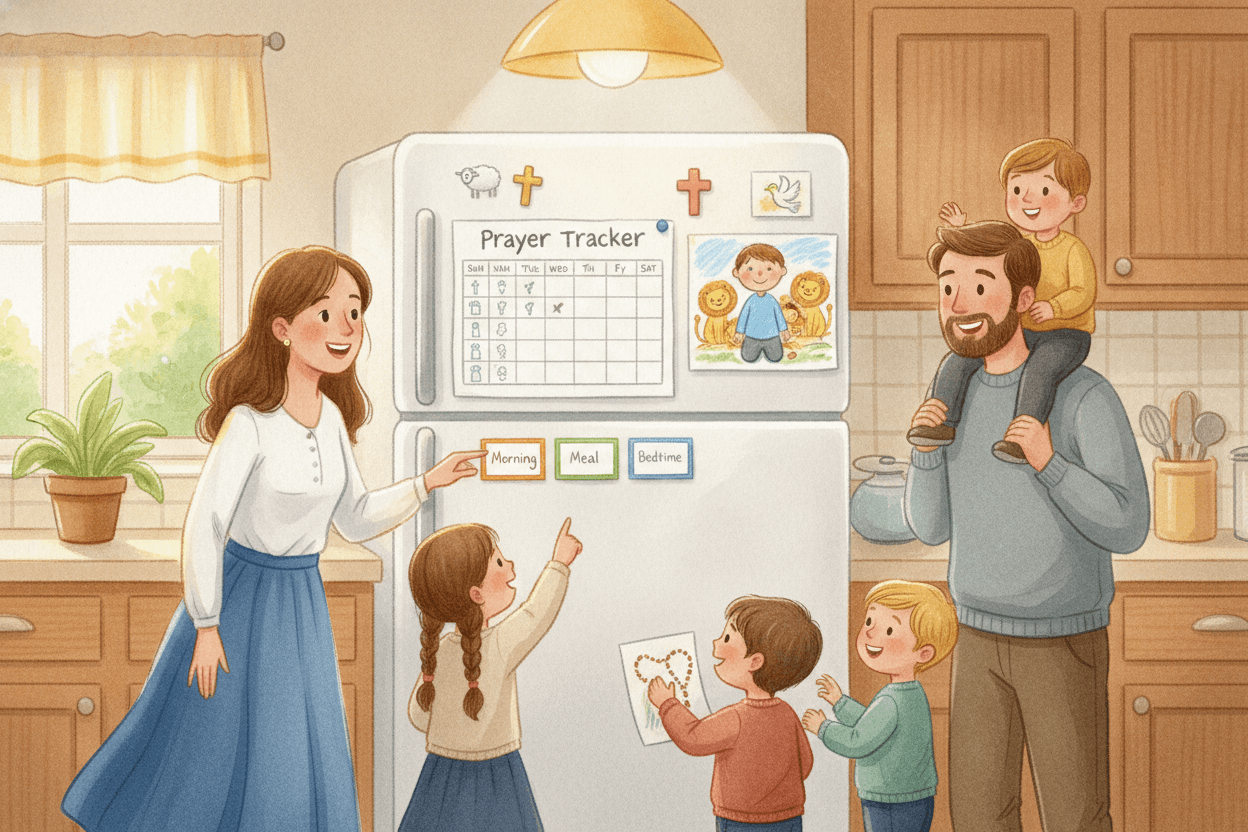
Last Monday, I found our prayer card under a cereal bowl, slightly sticky and decorated with a purple crayon. That was not the plan. But it was also proof that the card had made it to the table, which is where family faith has to live. If you want to try a steadier prayer rhythm, give it seven days. Not a month. Not forever. Just one ordinary week with its missing shoes, late dinners, and bedtime negotiations.
Start by choosing three cues that already happen in your house. Pick moments you do not have to create from scratch: when the kids put on their shoes, when everyone sits down to eat, and when the bedroom light goes off. Then write one short prayer for each cue on an index card. You might use, “Jesus, help us love you and others today.” At the table: “Thank you, God, for this food and for one good thing today.” At night: “Jesus, thank you, forgive me, and bless the people I love.” Keep each prayer short enough that a beginning reader can lead it.
Let the children take turns. A preschooler may hold the card upside down and repeat after you. An older child may add a request for a friend, a sick grandparent, or the class hamster. Let that happen. The point is not polished delivery. The point is helping each child discover, “I can speak to God, and God listens.” Parents set the pattern, but children need room to make that pattern their own.
One small thing we tried was putting a check mark on the card after each prayer. The mark helped us remember without turning prayer into another sticker contest. Keep it simple. No prizes. No comparing siblings. No dramatic speech when Wednesday evening goes sideways and everyone forgets. Just begin again at the next cue. A missed prayer is not a failed week. Calm restarts teach children something important about the Christian life: we return to God without hiding or giving up.
Aim for warmth and consistency, not length. With young children, even one or two attentive minutes can be plenty. If someone wiggles, laughs, or asks whether lions brush their teeth, you have not ruined prayer. You are praying with the actual child God gave you. Finish the prayer, answer the lion question if you can, and carry on. In our house, the prayer that happens amid the noise is usually better than the impressive prayer that never gets started.
At the end of the seven days, read Daniel 6 together. If a full chapter feels like too much for your crew, read the BibleHeroes Daniel and the Lions comic and let the kids retell the story. Ask one question: “What helped Daniel keep praying?” Then look back at your slightly bent, possibly sticky card. You are not measuring spiritual achievement. You are showing your children that prayer belongs in regular life. Saint Paul gives the whole challenge in three words: “Pray without ceasing.” This week, let three small pauses help your family begin.
Pray without ceasing.
Frequently asked questions
How do I start a daily prayer routine with my kids?
Choose one dependable moment, such as breakfast, dinner, or bedtime, and pray for about one minute. Use the same simple pattern each day; once it becomes familiar, add another prayer time.
What is a kid-friendly prayer schedule based on Daniel?
Daniel prayed three times a day, so families can use morning, mealtime, and bedtime as natural prayer anchors. Children can offer their day in the morning, thank God at a meal, and bring their gratitude, mistakes, and concerns to God at bedtime.
How long should family prayer be for young children?
For younger children, begin with one minute and generally keep prayer under five minutes. A short prayer your family can repeat consistently is more helpful than a long routine that everyone dreads.
What should I do when my children get distracted during prayer?
Expect some movement, giggling, and off-topic comments, especially with little children. Gently redirect them and finish the prayer without treating distraction as failure; the goal is to keep returning to God together.
How can we pray together during a busy school morning?
Pause briefly before everyone leaves, make the Sign of the Cross, and pray, “Come, Holy Spirit.” Let each person name one excitement or worry, offer the day to Jesus, and then close with a short prayer for help.
What does Daniel’s prayer life teach Catholic families?
Daniel’s courage grew from returning to God regularly, even when life was difficult. His example shows children that prayer and gratitude belong in ordinary family life, not only at Mass, in quiet moments, or during emergencies.
Sources: biblegateway.com · biblegateway.com · biblegateway.com · biblegateway.com · usccb.org · usccb.org · hallow.com · vatican.va · st-bart.org · vatican.va
Scripture quotations in this article use the NABRE translation.