Praying Like Daniel:A Simple Prayer Rhythm for Kids
Discover how Daniel’s faithful prayer rhythm can fit busy family life, from rushed breakfasts to bedtime. With simple, kid-friendly practices, ordinary moments become meaningful opportunities to talk

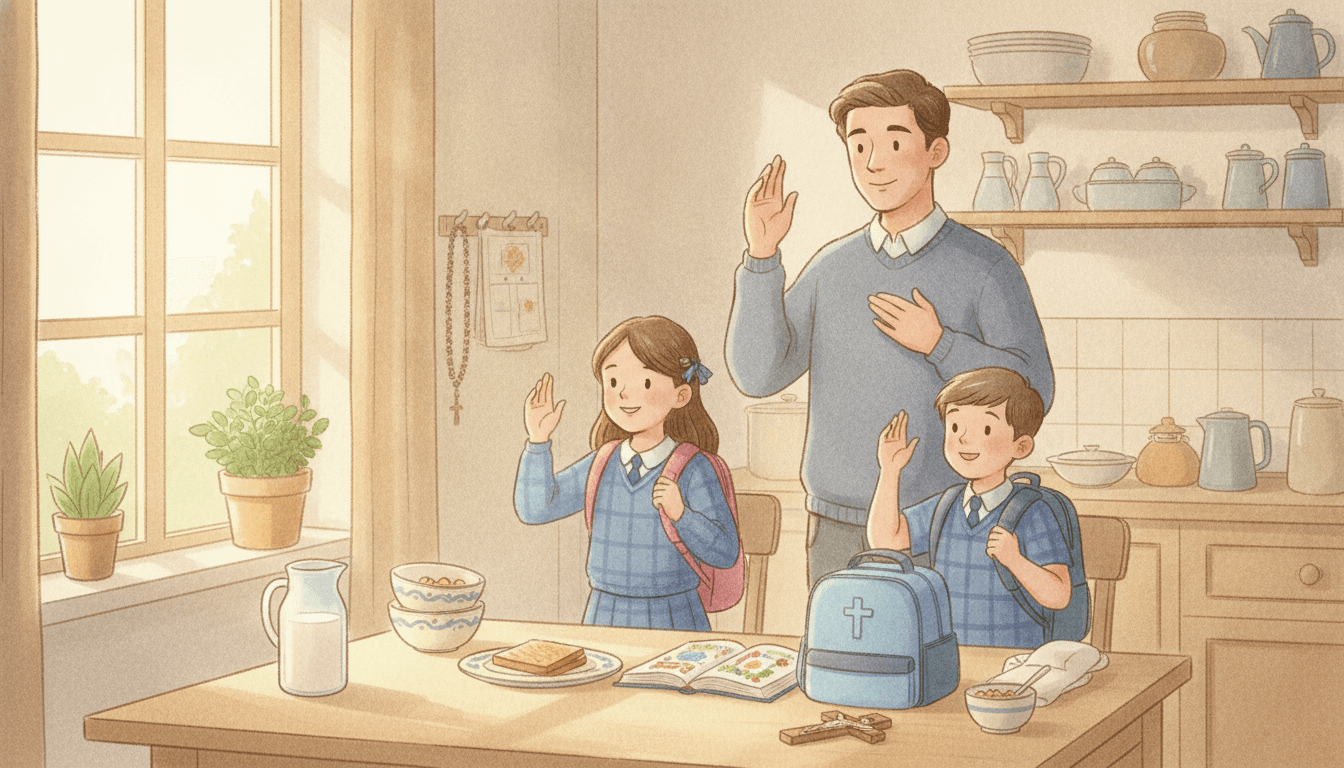
The breakfast bell is ringing, someone cannot find a shoe, and the school bag is still half-packed. That ordinary rush can become a one-minute meeting with God: Daniel’s steady habit of prayer gives families a biblical pattern for morning, meals, and bedtime.
Daniel’s Open Window Shows What a Prayer Rhythm Can Be

The danger was already real when Daniel went upstairs: a new law had made prayer to anyone but the king a crime. Yet Daniel did not invent a dramatic response for the moment. He returned to the practice that had shaped his ordinary days. “Even after Daniel heard that this law had been signed, he continued his custom of going home to kneel in prayer and give thanks to his God in the upper chamber three times a day, with the windows open toward Jerusalem” (Daniel 6:10, NABRE).
Notice the phrase “continued his custom.” Daniel’s prayer was not a performance meant to impress observers, nor was it an emergency measure pulled out only when life became frightening. It was a settled habit: he stopped, knelt, gave thanks, and turned his attention toward God. Scripture invites us to see that faithful prayer often has this quiet, repeatable character. Children are quite capable of understanding the difference between praying only when something goes wrong and returning to God throughout a normal day.
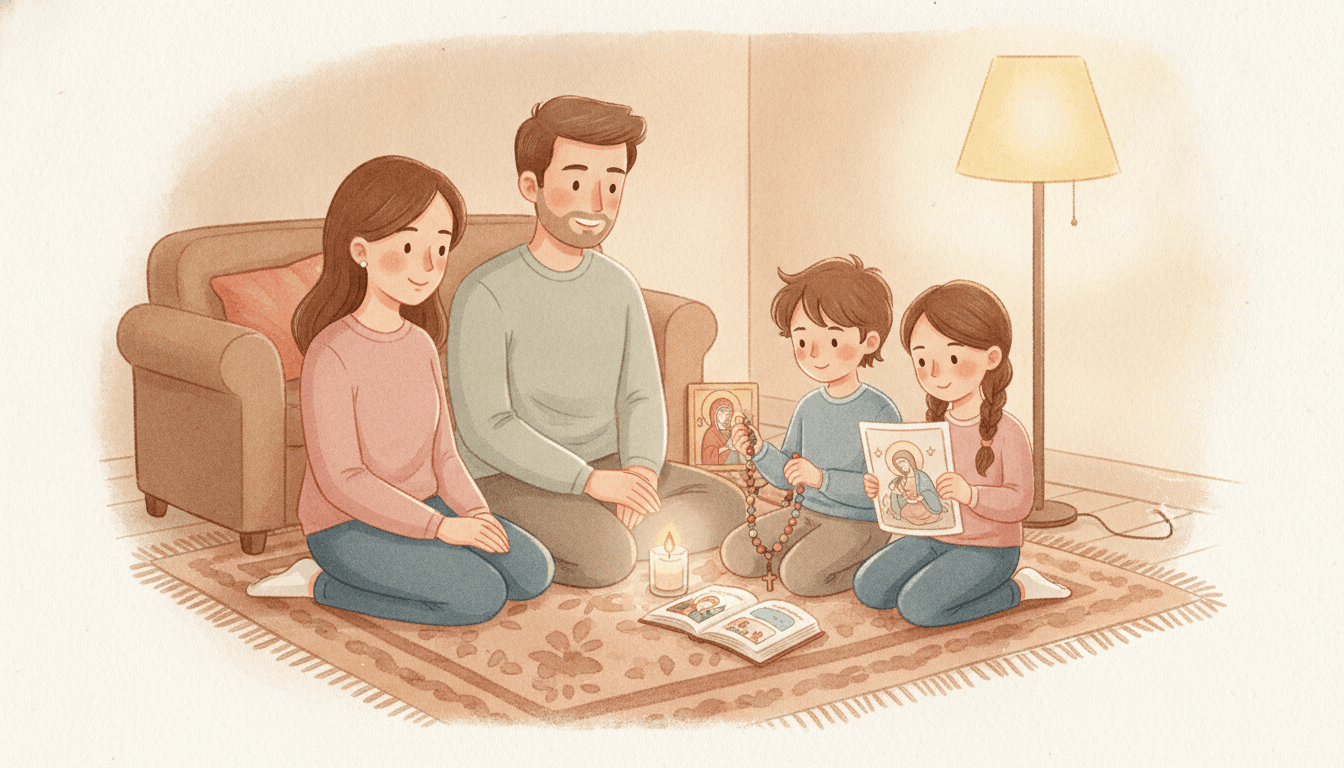
The open window toward Jerusalem also matters. Daniel’s prayer had a direction. Jerusalem was the place of the Temple, the sign of God’s covenant presence among his people. While Christian families do not need a literal window facing a particular place, a home benefits from visible, ordinary signs that prayer belongs there: a crucifix by the table, a children’s Bible within reach, a prayer card on a bedside table, or a small corner with a candle and a sacred image. These are not decorations for show. They gently teach, day after day, that God is not kept outside family life.
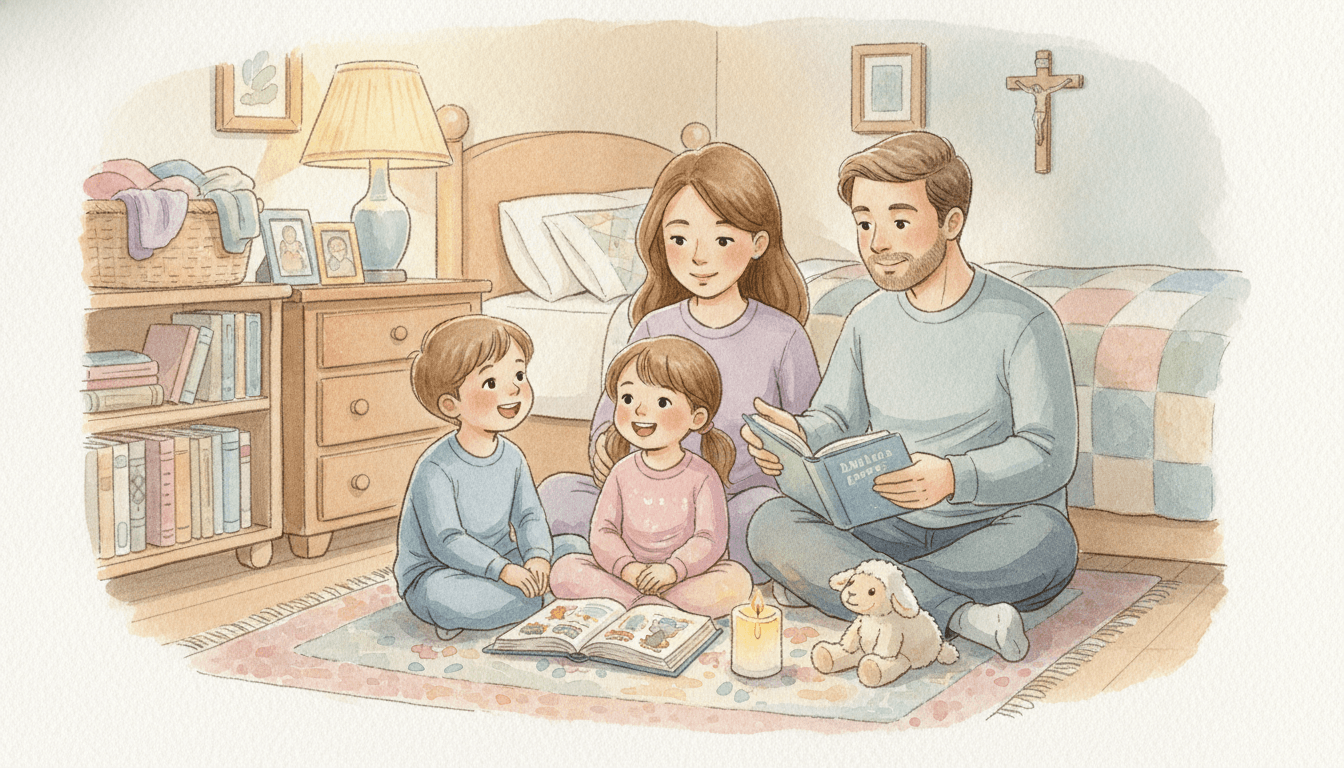
Here’s how I’d teach this at home: give the day three dependable pauses. In the morning, make the Sign of the Cross, offer the day to God, and let each child name one hope or concern. At a meal, pray grace and invite one word of thanks. At bedtime, ask for one gratitude, one sorrow, and one person who needs prayer, then finish with a familiar prayer or a parent’s blessing. For younger children, these moments may last only two or three minutes. The goal is not lengthy speeches; it is a pattern they can recognize and eventually claim as their own.
The Daniel and the Lions comic can help children return to the story without making the lions its only point. After reading it together, ask: “What did Daniel do before he was in the lions’ den?” and “What is one time in our day when we can stop and pray?” Those questions place the emphasis where Daniel 6 places it: on a man who gave thanks and kept praying before the crisis arrived. As the Catechism reminds us, the Christian family is called a “domestic church” (CCC 1656). A steady household rhythm of prayer makes that truth concrete for children.
Even after Daniel heard that this law had been signed, he continued his custom of going home to kneel in prayer and give thanks to his God in the upper chamber three times a day, with the windows open toward Jerusalem.
Keep the Family Prayer Routine Short, Steady, and Real

The breakfast plates are still on the table, one child cannot find a shoe, and another suddenly remembers a spelling test. This is not the moment for a ten-minute reflection. It may be the moment for everyone to make the Sign of the Cross, say, “Come, Holy Spirit, help us today,” and name one concern to place before God. For children ages six to nine, one or two attentive minutes can teach more than a longer prayer time that leaves everyone frustrated.
Begin with the anchors your family already has: getting up, sitting down to eat, and preparing for bed. In the morning, offer the day to God and let each child name one hope or worry. At a meal, pray grace and invite one sentence of thanks. At bedtime, ask for one gratitude, one sorrow, and one person who needs prayer; then close with an Our Father, Hail Mary, or a parent’s simple blessing. If one of these moments is consistently difficult, do not force three daily stops at once. Choose one anchor, keep it for several weeks, and add another when it has become ordinary.
Scripture invites us to teach faith in the ordinary movements of home: “Keep repeating them to your children. Recite them when you are at home and when you are away, when you lie down and when you get up.” This is not a demand that parents produce perfect religious lessons from dawn to dusk. It is a call to let children see that God belongs in the actual day: in the rushed morning, the ordinary meal, the apology after a hard moment, and the quiet before sleep. A child who learns to say, “Thank you, Jesus,” or “Please help Grandma,” is learning that prayer is truthful conversation with God.
Parents teach this chiefly by praying with their children, not by assigning prayer as another task to complete. The USCCB rightly calls parents the most effective catechists of prayer for young children. The Catechism describes the Christian family as the domestic church, a place where children first learn to pray (CCC 2685). St. John Paul II likewise taught that family prayer naturally introduces children to the liturgical prayer of the whole Church. Here’s how I’d teach this: keep the words Catholic and concrete, let children participate without putting them on display, and return faithfully after missed days. Short, steady prayer forms a habit of turning toward God; from there, children can gradually grow in attention, confidence, and love for the Church’s prayer.
Keep repeating them to your children. Recite them when you are at home and when you are away, when you lie down and when you get up.
Morning Prayer: Offer the Day Before It Gets Busy
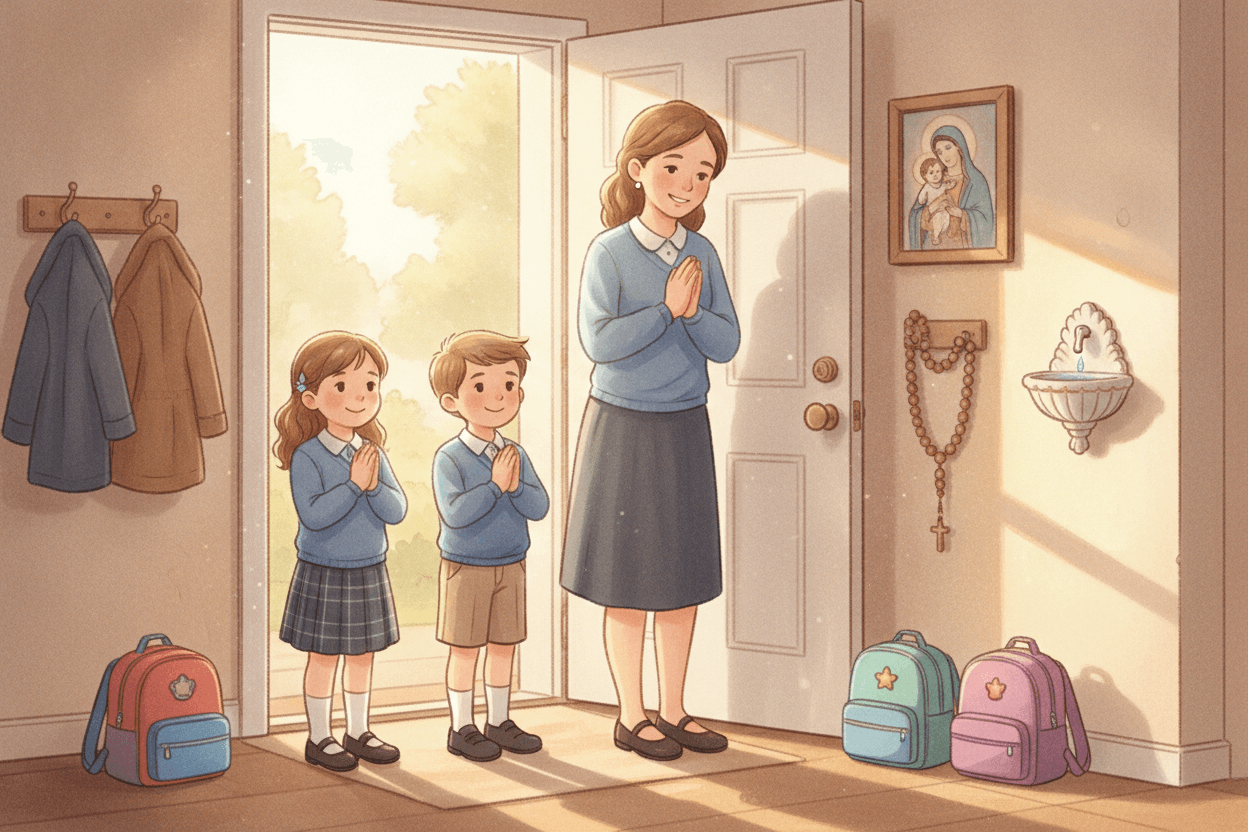
The backpacks are by the door, someone cannot find a shoe, and the first reminder to hurry has already been spoken. That is precisely why morning prayer should be small enough to survive a real school-day morning. Do not wait for a perfectly quiet house. Gather at the kitchen table, in the car before pulling out, or beside the door, and take sixty to ninety seconds to place the day before God.
Here’s how I’d teach this pattern to children: begin together with the Sign of the Cross. Then say, “Come, Holy Spirit.” A parent may add one plain sentence: “Lord, thank you for this new day. Help our family to do your will.” Then everyone can pray the same short offering: “Jesus, I give you this day. Help me to love, learn, and choose what is good.” Repetition is not empty when children are learning what the words mean; it gives them language they can carry into a spelling test, a difficult friendship, or an ordinary afternoon.
Add one quick check-in: “What are you looking forward to today, or what are you worried about?” Each person may answer in a few words, and the family responds, “Jesus, be with you.” This is not a time for solving every problem before breakfast. It is a time to teach children that concerns belong in prayer. Scripture invites us to bring both our needs and our gratitude honestly to the Lord. A child who says, “I’m worried about my presentation,” has already begun to learn petition; a child who says, “I’m excited for recess,” has begun to recognize thanksgiving.
Keep the pattern steady for a week before adding anything else. Younger children can make the Sign of the Cross, repeat the offering line by line, and name one feeling. Older children can lead the invocation or add an intention for a classmate. As the Catechism reminds us, Christian prayer is a relationship with the living God (CCC 2565), not a performance measured by length. This brief beginning also prepares children for the Church’s wider prayer: they learn to listen, to give thanks, and to intercede for others. If one morning goes badly, simply begin again the next day. The goal is not an impressive family ritual; it is the dependable habit of turning the first moments of the day toward Christ.
Have no anxiety at all, but in everything, by prayer and petition, with thanksgiving, make your requests known to God.
Mealtime Prayer: Teach Children to Notice and Give Thanks
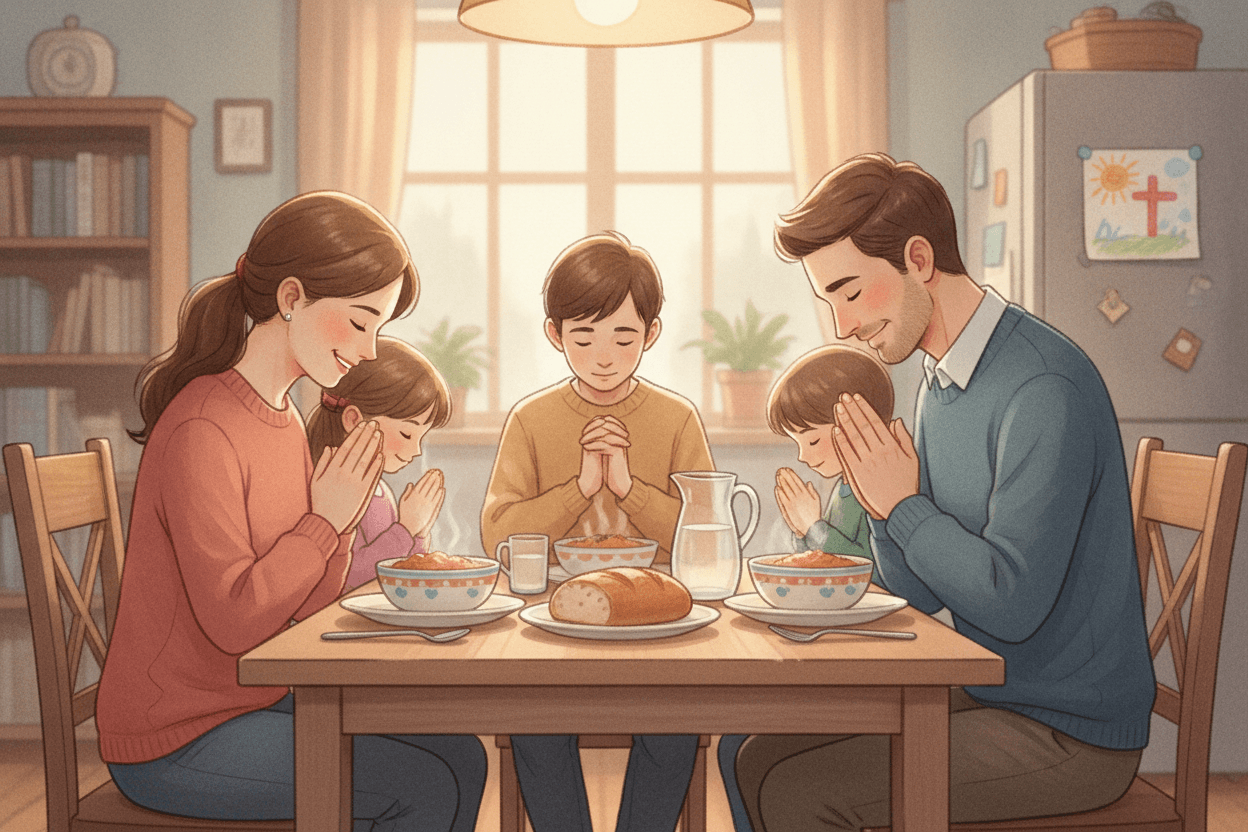
The lunch plates are already on the table, someone has remembered he does not like the sandwich he packed, and another child is halfway through telling a story from school. That is precisely why grace before meals matters. It does not require a quiet house, special materials, or a long stretch of attention. The meal itself is the cue: before we receive what is on the table, we receive it as a gift.
A middle-of-the-day pause belongs to the biblical pattern of prayer. The psalmist says, “At dusk, dawn, and noon I will grieve and complain, and my prayer will be heard.” Even when the day carries frustrations, noon is a fitting time to turn again toward God. For children, this teaches an important truth: prayer is not reserved for Sunday Mass or for moments when everyone feels peaceful. We bring God our ordinary hunger, gratitude, disappointments, and needs.
Here’s how I’d teach this at home: begin with the familiar traditional grace before meals. Then invite one child—not every child, every time—to name one gift from the day: a friend who shared, a good test grade, recess, a favorite book, or simply this food. Finally, add one brief intention: “Jesus, help Grandpa at his appointment,” or “Mary, pray for our neighbor who is sick.” End with “Amen,” and eat. This can take less than two minutes. Keeping the pattern steady matters more than requiring everyone to speak.
Do not turn the table into a performance. A child may offer “pizza” as the day’s gift; receive that answer warmly and, over time, help him notice the people and care behind it. A child who is upset may have no gratitude ready to name. She can simply listen, or the family can pray, “Lord, be with us in our hard day.” Scripture invites us to make our requests known to God with thanksgiving, but thanksgiving is learned through repeated, concrete practice rather than pressure.
School lunches will look different. A child need not make a public display or recite a full prayer if that feels difficult in a busy cafeteria. Teach a modest lunchbox rhythm: make the Sign of the Cross, whisper or think, “Thank you, God, for this food,” and begin. Parents are the first teachers of this habit in the domestic church; as the Catechism reminds us, the family is the first school of Christian prayer (CCC 2685). A brief grace at the table and a quiet thank-you at school teach children that God is present in both places.
At dusk, dawn, and noon I will grieve and complain, and my prayer will be heard.
Bedtime Prayer: Gratitude, Mercy, and Intercession
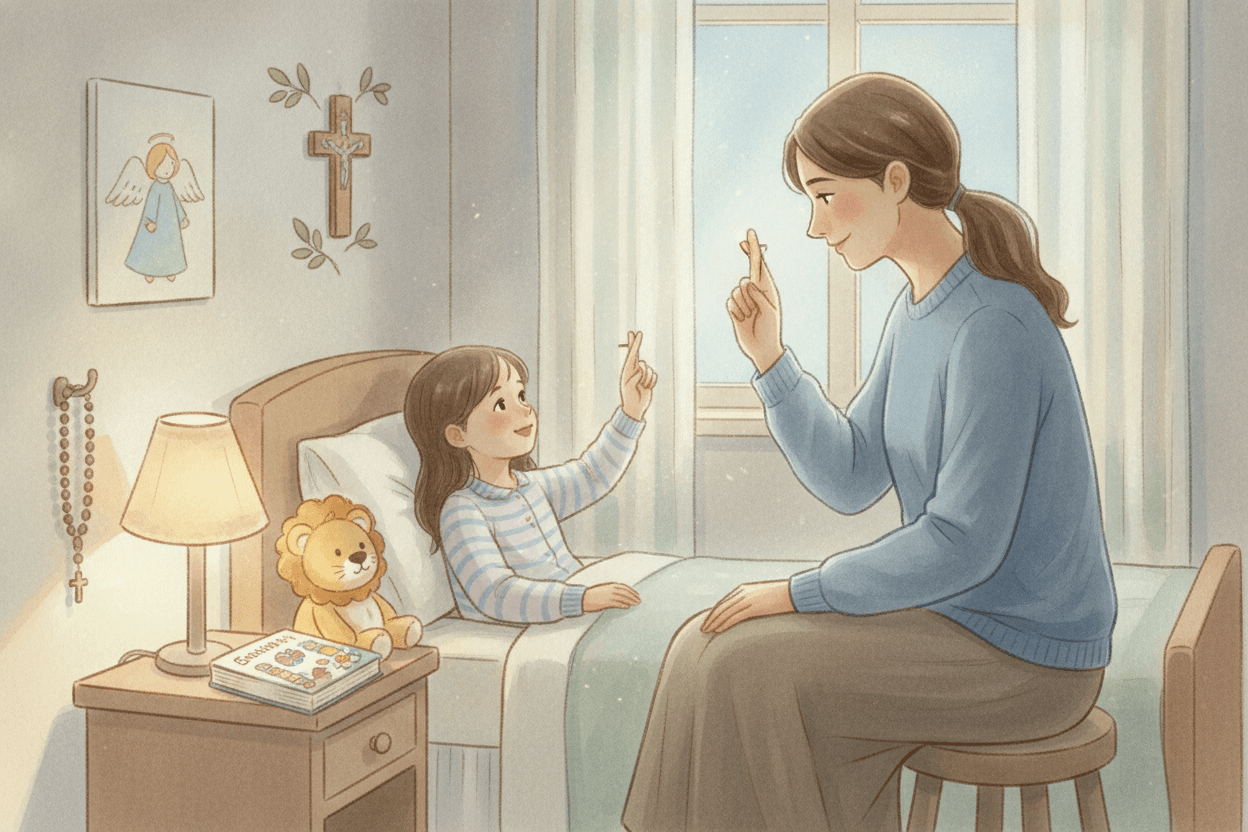
The hallway is finally quiet, the backpacks are dropped, and a child who seemed to have endless energy at dinner suddenly has one more question: “Can we pray?” Bedtime is often the most natural place for a family to practice honest prayer. The day is over; there is no need to perform. A child can bring God what was good, what went wrong, and what still feels heavy.
Here’s how I’d teach this in a parish classroom and at home: keep the pattern simple enough to remember. Ask each child three questions: What is one gift you received today? What is one thing you are sorry for? Who or what do you want to place in God’s care? The answers may be small—“My friend shared crayons,” “I yelled at my brother,” “Please help Grandma at the doctor.” Do not rush past them. Gratitude teaches children to recognize God’s goodness; sorrow teaches them that mercy is real; intercession teaches them that love turns outward.
A parent can respond briefly: “Thank you, God, for this gift. Forgive us and help us tomorrow. Please care for…” Then allow the child’s intention to be named. This is an age-appropriate beginning of an examen: noticing one’s day before God, receiving mercy, and asking for grace. If a child cannot think of an answer, offer a quiet prompt rather than supplying one. Catholic children are capable of real self-examination when we ask clear, concrete questions without making prayer into an interrogation.
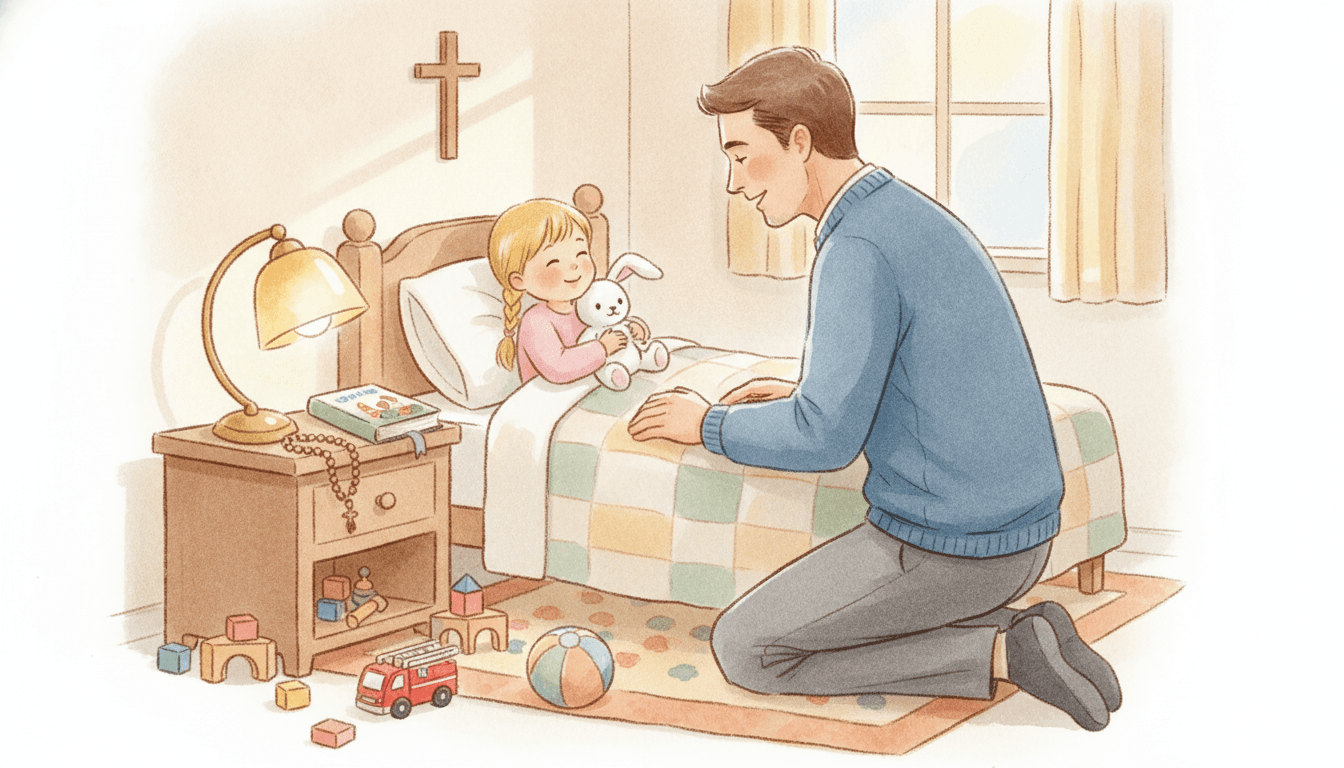
On some nights, conclude with the Our Father or Hail Mary. On other nights, especially when everyone is tired, the three answers and a simple “Amen” are enough. A parent may also trace the Sign of the Cross on the child’s forehead and use the USCCB’s Daily Blessing of a Child. That small gesture tells a child, in a language they can feel, that they belong to Christ and remain held in the Church’s prayer even as they sleep.
Scripture invites us to make prayer part of ordinary life, not an extra task reserved for unusually holy days. “Pray without ceasing” does not require children to speak formal prayers every moment; it means helping them turn naturally toward God throughout the day. The Catechism identifies the Christian family as a place where prayer is learned and practiced (CCC 2654). A steady bedtime rhythm forms that habit: God receives our thanks, our failures, and the people we love.
Pray without ceasing.
When the Routine Falls Apart, Begin Again Without Guilt
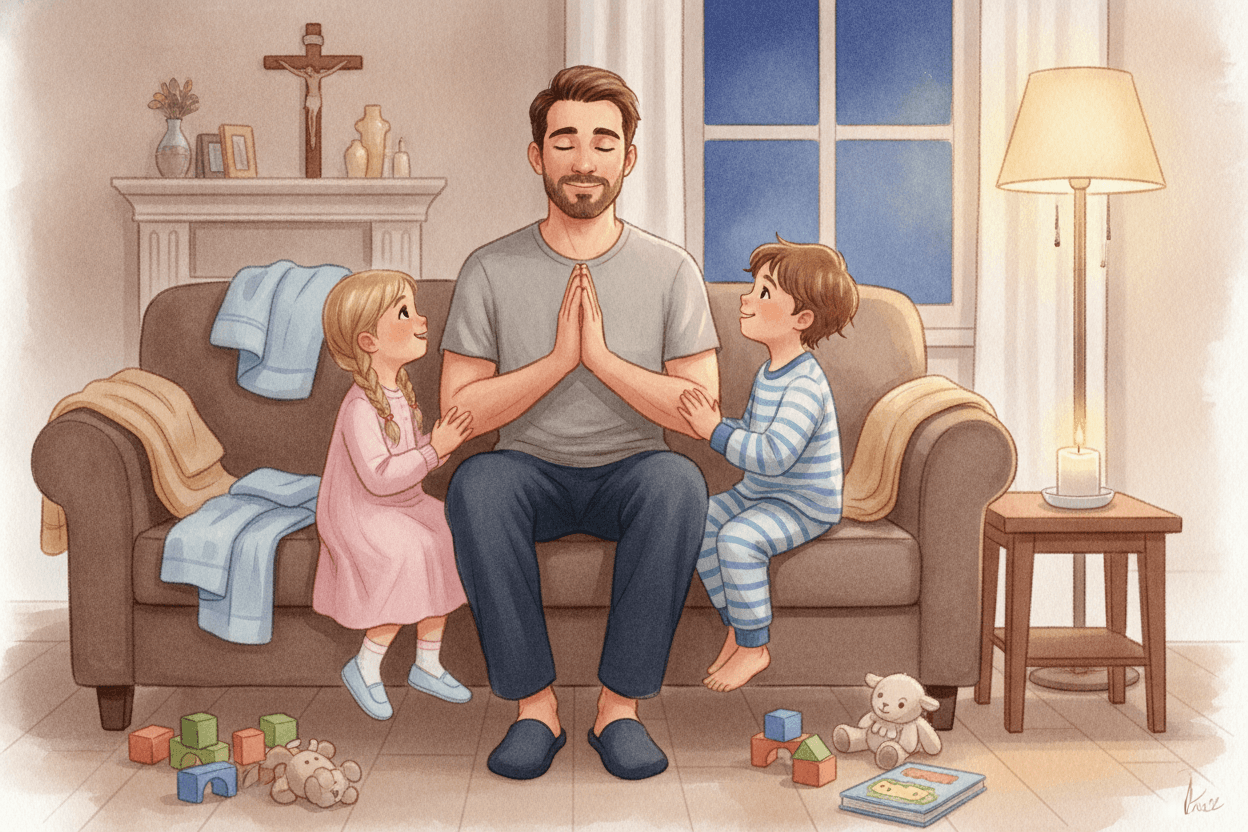
The soccer cleats are still by the door, one child is crying because the toothpaste tastes “wrong,” and you realize nobody prayed before school. This is not evidence that your family has failed at prayer. It is evidence that you are a family living an ordinary day. The next faithful step is not a long correction or a guilty speech. It is simply to pray at the next available anchor: in the car before practice, around the table, or beside a pillow that night.
Daniel’s pattern was steady, but Scripture does not present prayer as a performance measured by uninterrupted success. Daniel returned to God three times a day, even under pressure. That is the lesson to give children: we return. A missed morning does not cancel bedtime prayer. A distracted grace before dinner does not make the family insincere. Fidelity is not never losing the routine; fidelity is turning back to God when we notice we have lost it.
Here’s how I’d teach this in a parish classroom and at home: keep a few “restart prayers” ready. If everyone is late, make the Sign of the Cross and say, “Jesus, be with us today.” If practice runs long, pray one Our Father in the car. If bedtime has unraveled, invite each child to name one thank-you and one person who needs help. These are not inferior versions of prayer. They are real acts of trust, offered within the limits of the day.
Do not scold a child for fidgeting, whispering, or forgetting the words. Calmly redirect: “Let’s try that again,” or give the child a job—holding a small crucifix, choosing the intention, or leading the response. Nor must every prayer time produce a tender silence or an impressive insight. Children learn that prayer is dependable when they see adults pray through tiredness, distractions, and ordinary imperfection. The Catechism calls the Christian family a domestic church (CCC 1656); a church is a place where people are welcomed, taught, forgiven, and called again to worship.
Jesus’ words set the tone for the whole household: “Let the children come to me, and do not prevent them; for the kingdom of heaven belongs to such as these.” Make room for the child who participates eagerly and the child who sighs, interrupts, or says nothing. Warmth and repetition will teach more than pressure. Tomorrow morning is another opening; so is the next meal, the next ride home, and the next goodnight kiss.
But Jesus said, “Let the children come to me, and do not prevent them; for the kingdom of heaven belongs to such as these.”
Try Daniel’s Three Prayer Stops This Week
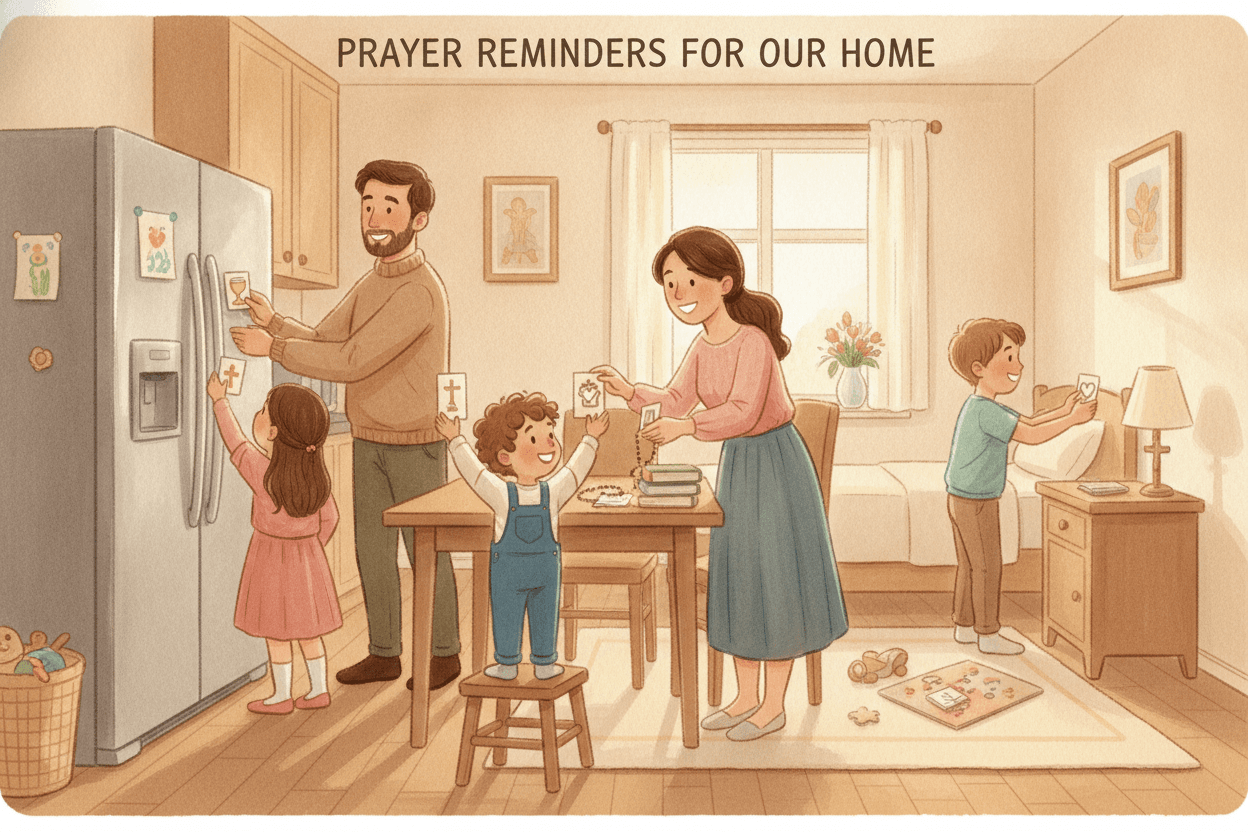
On Monday morning, do not begin by trying to create a twenty-minute family devotion. Begin at the place where backpacks are zipped, shoes are found, and everyone is already standing near the door. Make the Sign of the Cross and pray one sentence together: “Jesus, we give you this day.” At the table, use a familiar grace before eating. At bedtime, let each person name one thank-you, one sorrow, and one person who needs prayer. Three small stops are enough to begin.
Daniel did not pray only when circumstances were easy. Scripture records that he “continued his custom of going home to kneel in prayer and give thanks to his God in the upper chamber three times a day, with the windows open toward Jerusalem.” His pattern gives parents a sensible framework: morning, meals, and evening. The goal is not to copy Daniel’s setting or length. It is to establish a faithful return to God within the ordinary shape of family life.
For the next seven days, choose one brief prayer for each stop and keep the words stable. In the morning: “Come, Holy Spirit, guide our thoughts, words, and actions.” At meals, pray grace and invite one child to add a thank-you. At bedtime: “Thank you, Jesus, for this day. Forgive us where we failed to love. Watch over the people we name now.” Children learn words by praying them repeatedly, but they also learn that prayer includes praise, repentance, and intercession. As the Catechism reminds us, the home is a place where children first learn to pray with the Church (CCC 2685).
Give the routine a visible help. Put a small cross or holy card near the exit door, a prayer card on the table, and a crucifix or battery candle near the bed. These are not decorations meant to pressure anyone; they are quiet prompts for memory. By the end of the week, let every child lead one line. A preschooler may say, “Thank you, God, for my dog.” An older child can voice an intention for a friend, a teacher, or someone who is sick. Here’s how I’d teach this: parents begin the prayer, then gradually make room for children to supply their own words.
Read Daniel 6 together sometime this week, perhaps one short portion after dinner, and ask: “What did Daniel keep doing when he was afraid?” If your children respond more readily to pictures, begin with a Daniel and the lions comic and return to the biblical chapter afterward. Then bring the habit to Sunday Mass: point out the times the Church prays, listens, gives thanks, and intercedes. Family prayer is not a private replacement for the Church’s worship. It prepares children to recognize that the prayer offered at home belongs within the wider prayer of Christ’s Body.
Even after Daniel heard that this law had been signed, he continued his custom of going home to kneel in prayer and give thanks to his God in the upper chamber three times a day, with the windows open toward Jerusalem.
Frequently asked questions
How can I start a family prayer routine when mornings are rushed?
Keep morning prayer to sixty or ninety seconds and attach it to something that already happens, such as gathering at the table, getting in the car, or standing by the door. Make the Sign of the Cross, say “Come, Holy Spirit,” offer the day to God, and let each child name one hope or worry.
What are three simple times for children to pray each day?
Morning, meals, and bedtime are dependable anchors because they are already part of family life. In the morning offer the day, at meals pray grace and share a brief thanks, and at bedtime name a gratitude, a sorrow, and someone who needs prayer.
How long should prayer time be for young children?
For children around ages six to nine, one or two attentive minutes can be enough, especially on busy days. The goal is a recognizable, peaceful habit of turning to God, not a long prayer that makes everyone frustrated.
What does Daniel praying three times a day teach Catholic families?
Daniel 6:10 shows that Daniel continued a regular practice of kneeling, giving thanks, and turning to God before the crisis of the lions’ den. Families can follow that pattern by building small, repeatable pauses for prayer into ordinary days rather than praying only in emergencies.
How do I help my child participate in prayer without putting them on the spot?
Offer simple invitations instead of requiring a speech: ask for one word of thanks, one worry, or one person to pray for. Let children join in familiar prayers, and use concrete phrases such as “Thank you, Jesus” or “Please help Grandma.”
What should we do if we miss family prayer for a few days?
Return to the next natural prayer time without guilt or a big reset. If three prayer stops feel unrealistic, begin with one anchor for several weeks and add another only when the first has become ordinary.
Sources: biblegateway.com · biblegateway.com · biblegateway.com · biblegateway.com · usccb.org · usccb.org · hallow.com · vatican.va · st-bart.org · vatican.va
Scripture quotations in this article use the NABRE translation.