Ruth and Naomi:Teaching Kids Loyal Friendship
One child is left out at recess. Another promises to save a seat, then gets distracted by the louder game. These small moments are where friendship gets real—and where Ruth and Naomi can give our kids a sturdy picture of love that stays.
The Friendship Lesson Hiding in an Ordinary Hard Day
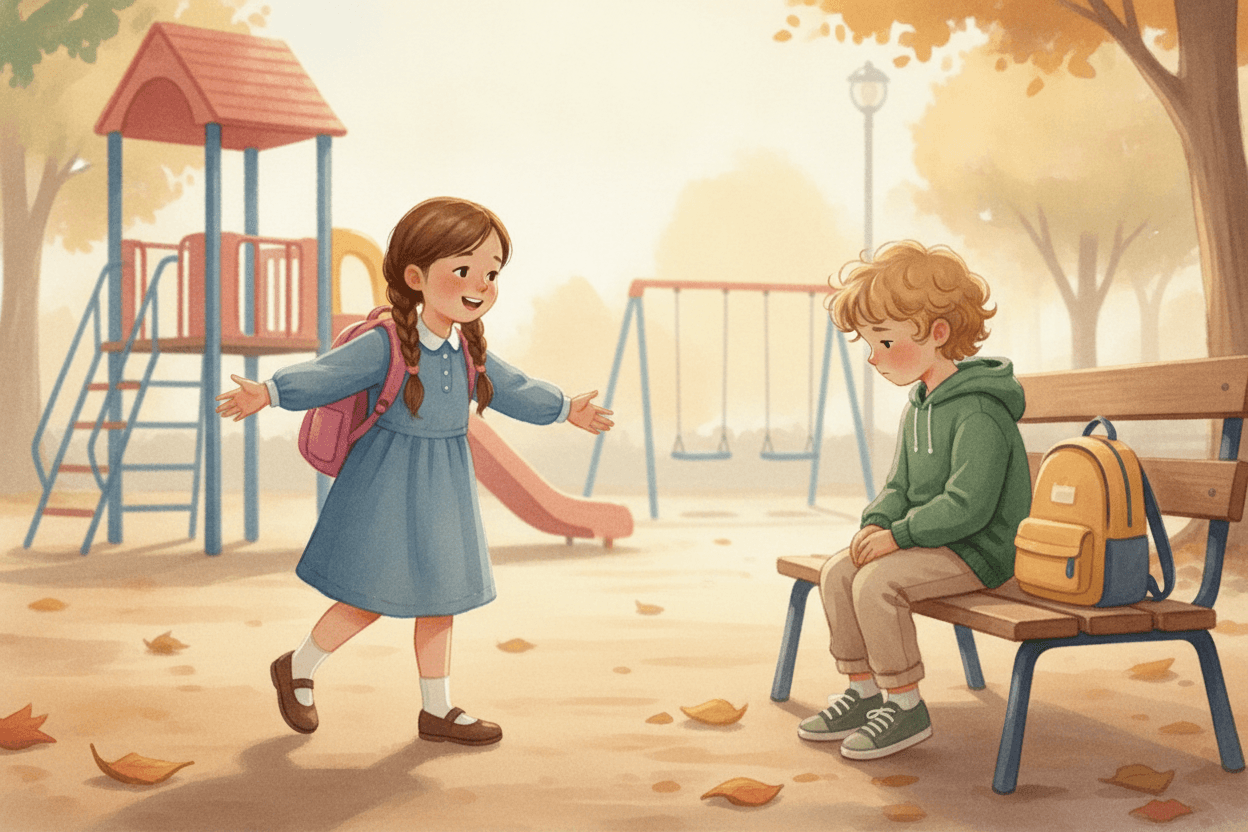
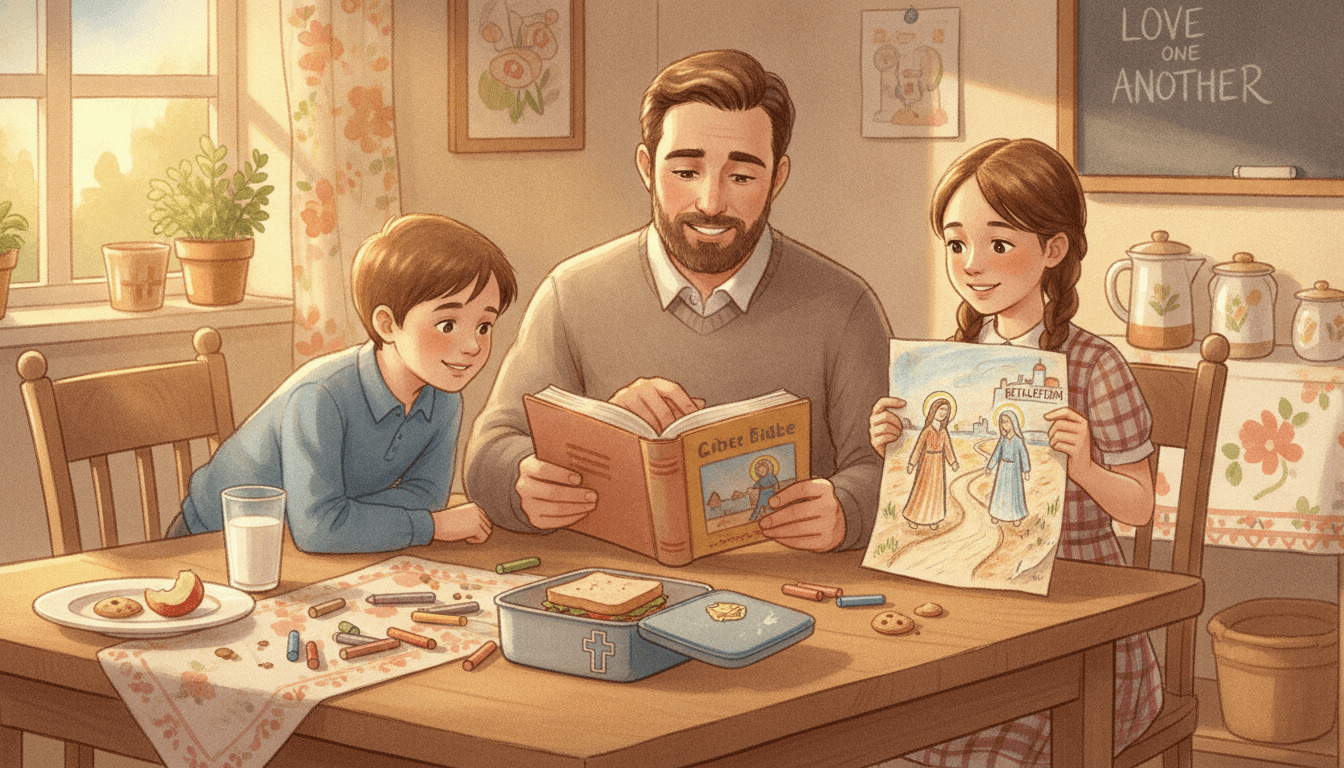
On Tuesday, your child may come home with the look that says something happened before the backpack even hits the floor. A friend picked a different partner. The lunch-table group made room for everyone except one kid. Or a brother promised to help build the blanket fort, then disappeared the moment it was time to carry cushions. These are small problems to us, perhaps. To a seven-year-old, they can feel like the whole playground tipped sideways.
This is where Ruth and Naomi for kids becomes very real. Loyalty is not a fancy word. It means sticking with someone, keeping a good promise, and choosing kindness when it costs a little. Ruth had every reason to return home after loss turned Naomi’s life upside down. Naomi even urged her to go. But Ruth chose to stay. She did not know exactly how they would eat, where they would sleep, or what tomorrow would bring. She simply would not leave Naomi alone in her grief.
At our table, I would keep the question plain: “What would Ruth do at recess?” Not every friendship is healthy, and children should always tell a trusted adult when someone is unsafe, cruel, or asking them to keep a harmful secret. But ordinary loyalty has a shape kids can recognize. It can mean sitting beside the child who is alone. It can mean refusing to pile on when classmates laugh. It can mean saying, “I said I would help,” even when the job has become very boring. Folding laundry has a way of testing every noble promise in our house.
Jesus gives us the measure in one short sentence: “The second is like it: You shall love your neighbor as yourself.” A loyal friend notices, stays kind, and does not make every choice based on what is easiest or most fun. Ruth loved Naomi that way. Her friendship also led her toward Naomi’s God. That matters. Our children learn that loving people and trusting God are not separate lessons with separate worksheets. They belong together.
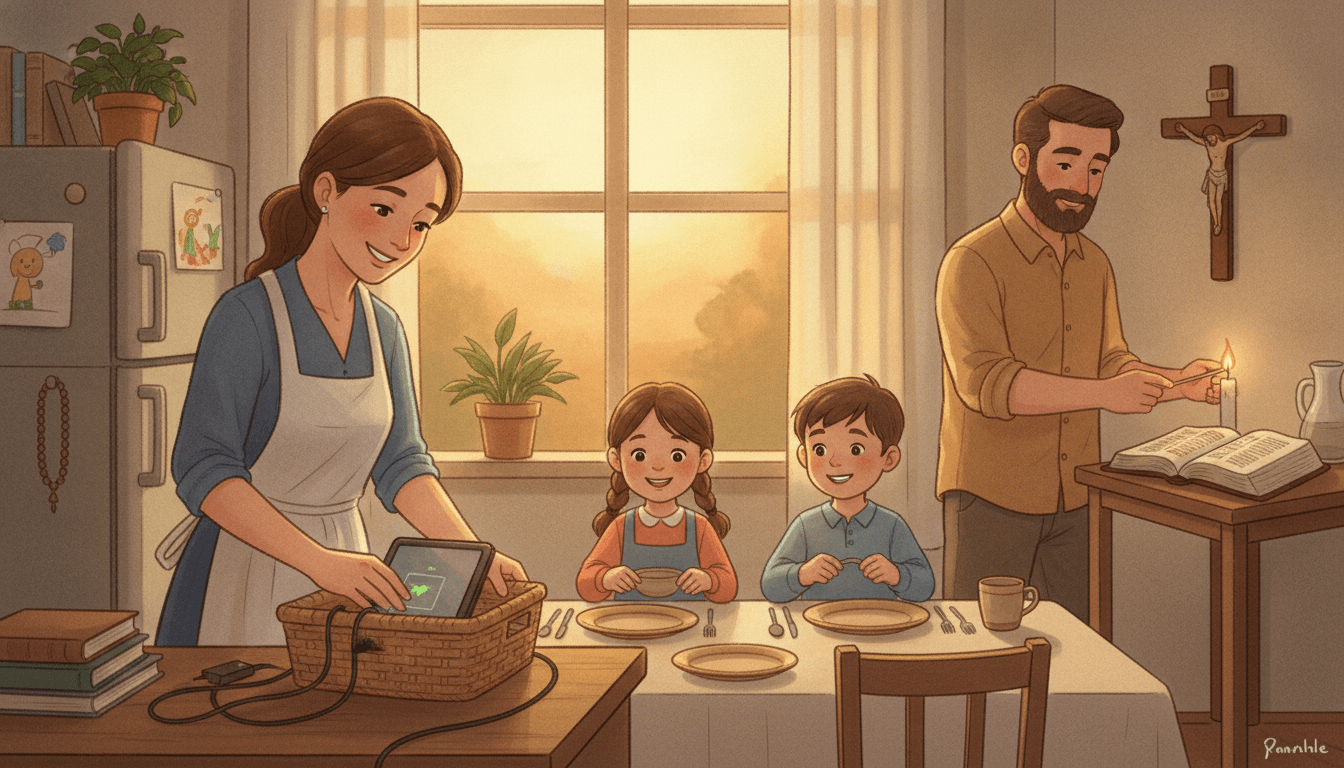
One small thing we tried is a weekly “Be a Ruth” choice. Ask each child to pick one person they can stick with this week: a sibling struggling with homework, a friend having a rough day, or a classmate who is often left out. Make the action specific: invite them into a game, pray for them each night, or offer help without being asked twice. Then talk about it at dinner on Sunday. The report may be brief, silly, or interrupted by somebody spilling milk. That is fine. Faithfulness grows in those ordinary hard days, one small choice at a time.
“The second is like it: You shall love your neighbor as yourself.”
Ruth and Naomi for Kids: What Happened in Ruth 1

One person is putting on her sandals to leave. Another is standing by the door with a choice to make. That is where Ruth 1 begins to feel real for kids. Naomi was heading home to Bethlehem after a very hard time. Her husband had died, and both of her sons had died too. She was grieving. She was tired. She did not know what would happen next.
Ruth was Naomi’s daughter-in-law. That means Ruth had been married to Naomi’s son. Ruth was not Naomi’s daughter by birth, but grief had made their family bond even stronger. Naomi told Ruth and her other daughter-in-law, Orpah, to return to their own mothers and begin again. Naomi was trying to care for them, even while her own heart was hurting.
Orpah said goodbye. Ruth did something different. She stayed close to Naomi and chose to travel with her to Bethlehem. That meant leaving her own home, her own people, and what she already knew. Ruth could not see the whole road ahead. She simply knew Naomi should not have to walk it alone.
Here’s what landed with our kids: loyalty is not always a giant movie moment. Sometimes it is sitting beside someone who is sad. Sometimes it is staying kind when a friend is having a rough day. Sometimes it is not ditching your brother when he cannot figure out the zipper on his coat for the forty-seventh time. Ruth showed love with her feet. She went with Naomi.
When you tell this story to a child, keep the question simple: “Who might need someone to stick with them this week?” It could be a lonely kid at recess, a sibling facing a hard chore, or a friend who needs prayer. Ruth and Naomi teach us that family love and friendship can overlap. We can be the kind of people who do not turn away when someone needs company.
Again they wept aloud. Then Orpah kissed her mother-in-law goodbye, but Ruth clung to her.
“I Will Go”: Loyalty Is Love With Shoes On

The lunchbox came home nearly full again. My son had spent recess watching two friends play a game that somehow had no room for him. He was sad, but also a little embarrassed about being sad. That is often where friendship gets real for kids—not in the big birthday-party photos, but on an ordinary Tuesday when somebody feels left out.
Ruth had every reason to think first about her own future. Naomi was grieving. Ruth was grieving too. Naomi was heading back to Bethlehem with no clear plan, no husband, and no easy road ahead. Ruth could have returned to what was familiar. Instead, she stayed. She did not just tell Naomi, “I feel bad for you.” She put on her sandals and went with her. That is loyalty in language a child can understand: love that shows up, stays kind, and does the next helpful thing when the day is not fun.
For ruth and naomi for kids, this is the part worth slowing down. Ruth chose Naomi’s people and Naomi’s God. She chose an uncertain future because she would not abandon the person in front of her. We do not need to make this complicated. Loyalty does not mean a child must stay in an unsafe situation or keep a harmful secret. It means we teach them to be steady and truthful: do not drop a friend because someone cooler comes along; do not laugh when others are picking on someone; do not disappear when a sibling is struggling with a hard job. Real friends are not perfect. Goodness knows, none of us are before breakfast. But they keep trying to love well.
At our table, one small thing we tried was asking, “What would it look like to put shoes on your love today?” The answers were wonderfully practical. Sit by the new kid. Help your brother clean up the blocks he dumped and then regretted dumping. Pray for the friend who is home sick. Tell the truth kindly when a friend is making a bad choice. A child may not be able to move to Bethlehem with someone, but he can carry a backpack, save a seat, or refuse to join the teasing.
This week, invite each child to pick one “Be a Ruth” action and name it out loud. Keep it small enough to do: include someone at recess, check on a friend, finish a chore with a sibling instead of wandering off, or pray each night for someone who needs help. Then ask about it at dinner. Not to hand out gold stars. Just to help children notice that following God often looks like the next loving thing, done with our actual hands and feet.
But Ruth said, "Do not press me to go back and abandon you! Wherever you go I will go, wherever you lodge I will lodge. Your people shall be my people and your God, my God. Where you die I will die, and there be buried. May the LORD do thus to me, and more, if even death separates me from you!"
What Loyal Friendship Looks Like at Recess and at Home
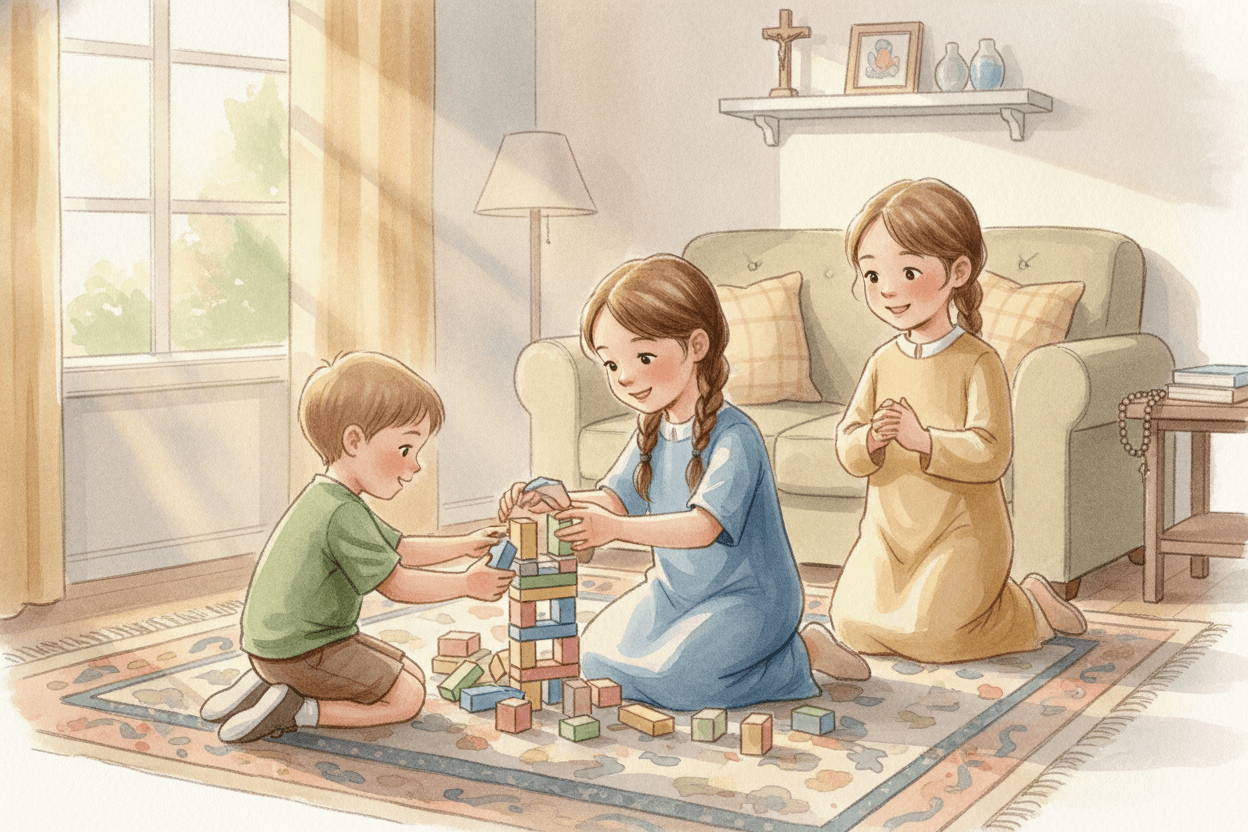
The lunchbox zipper was stuck, the bell had already rung, and one child stood near the wall pretending to be very interested in his shoes. Kids notice these moments. They also notice who walks past. Loyal friendship at recess can look as simple as saying, “Want to play with us?” It may mean saving a spot in the kickball line or sitting beside the child who is eating alone. Nobody has to make a grand speech. Ruth did not make loyalty complicated either. She stayed close when Naomi’s road became hard.
At our table, we talk about loyalty as sticking with someone and helping them choose what is good. That second part matters. A friend who says, “Come on, nobody will know,” when someone is being left out or teased is not asking for loyalty. He is asking you to join something unkind. A loyal friend can say, “No, that’s not nice,” or simply walk away and bring the left-out child along. That can feel risky for a second. It is also how children learn courage with their sneakers on.
Gossip is another recess-sized test. Kids may not call it gossip. They might say, “Guess what she did?” or “Don’t tell anyone, but…” We can give our children a few plain sentences to practice: “I don’t want to talk about her when she isn’t here.” “Maybe we should ask her.” “Let’s talk about something else.” These are small words, but they can stop a pile-on before it starts. Here’s what landed with our kids: you do not have to be loud to be loyal.
There is an important exception to keeping a confidence. If a friend says someone is hurting them, frightening them, asking them to keep an unsafe secret, or making them want to hurt themselves, a child should tell a trusted adult right away. That is not tattling. That is being a real friend. We tell our children, “You may keep a surprise, like a birthday gift. You never keep a secret that makes someone unsafe.” A loyal friend does not protect wrongdoing; a loyal friend gets help.
Home gives children plenty of practice, usually before breakfast. Loyalty can mean apologizing after snapping at a sibling instead of blaming the missing socks. It can mean staying with a brother who is learning a frustrating game, even when quitting would be easier. One small thing we tried was a weekly “Be a Ruth” choice: each child picked one person to include, encourage, help, or pray for. At the end of the week, we asked what happened. The answers were sometimes wonderfully ordinary. That is the point. Love grows strong through ordinary choices.
"The second is like it: You shall love your neighbor as yourself."
A 15-Minute Family Conversation About Ruth

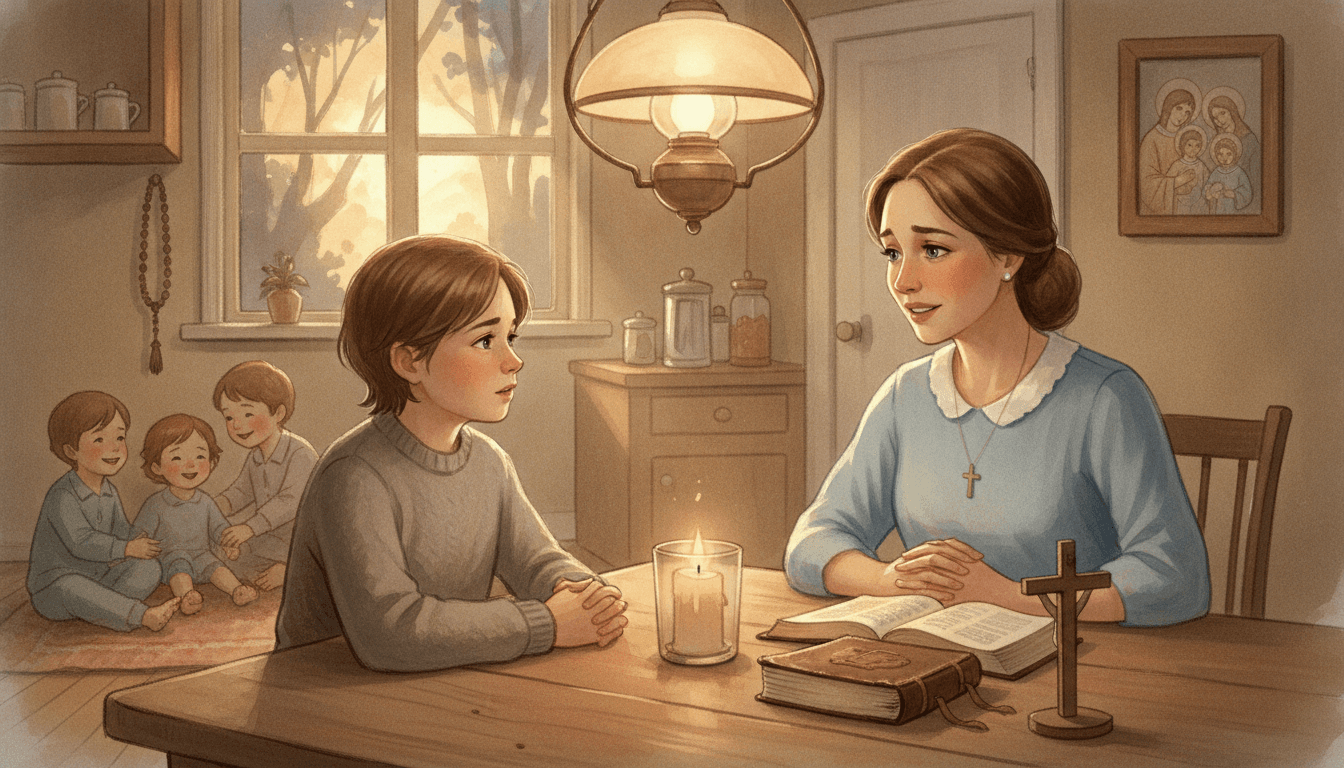
The plates are mostly cleared. Someone is asking for a second cookie. Someone else has spilled water in the exact spot where a water spill can reach everybody. This is a fine time to talk about Ruth and Naomi. Really. You do not need candles, a printed worksheet, or children sitting like tiny monks. You need about fifteen minutes and the kid in front of you.
Start by saying, “Tonight we’re talking about what it means to stick with someone when things get hard.” Read Ruth 1:14 aloud, then read Ruth 1:16–17. If your younger child gets lost in the longer words, pause and put it plainly: Naomi had lost a lot. She was going home. Ruth could have gone back to her own family, but she chose to stay with Naomi. Ruth did not know the whole plan. She just knew Naomi should not be alone.
Then ask three questions, one at a time. First: “How do you think Naomi felt when Ruth stayed with her?” Let the silence sit for a moment. A child may say “happy,” “less scared,” or “confused.” All fair. Next ask: “What was hard about Ruth’s choice?” Help them notice that loyalty is not always easy or popular. Ruth was leaving what she knew. Finally ask, “What could sticking with someone look like at school this week?” This is where the story comes down to recess, lunch tables, group projects, and the sibling who is having a rough afternoon.
At our table, one small thing we tried was having each child name one real situation. Not a grand promise to be the world’s nicest person by Friday. Something small and specific. “I can sit with Ben if he is alone at lunch.” “I can keep being kind to my sister while she learns to ride her bike.” “I can pray for my friend who is worried about moving.” If a child says, “I don’t know,” give two choices and let him pick. Parents need that option sometimes too.
Close simply: “Jesus, thank you for the friends you have given us. Help us be loyal and kind this week. Help us notice someone who needs a friend. Be with ___.” Let each child fill in a name, even if it is the family dog at first. Ruth and Naomi for kids does not need to become a lecture. It can be a small, regular practice: hearing a story, naming one hard moment, and asking God for help before the dishes are done.
Again they wept aloud. Then Orpah kissed her mother-in-law goodbye, but Ruth clung to her.
Try the “Be a Ruth” Challenge This Week
Last Tuesday, one of my kids came home talking about a classmate who had eaten lunch alone. The report came between spilled water and a debate about who had taken the blue cup. I asked, “What did you do?” He looked down and said, “I didn’t know what to do.” Fair enough. Most of us have had that feeling. Loyalty sounds big until it shows up as an empty seat at a noisy lunch table.
That is why one small thing we tried is a family “Be a Ruth” challenge. Nobody needs a costume or a long speech. Each child picks one quiet act of loyal friendship to practice for the week. It can be sitting with someone who is left out at recess, encouraging a friend having a hard day, finishing a helpful task with a sibling instead of wandering off halfway through, or praying each day for one person by name.
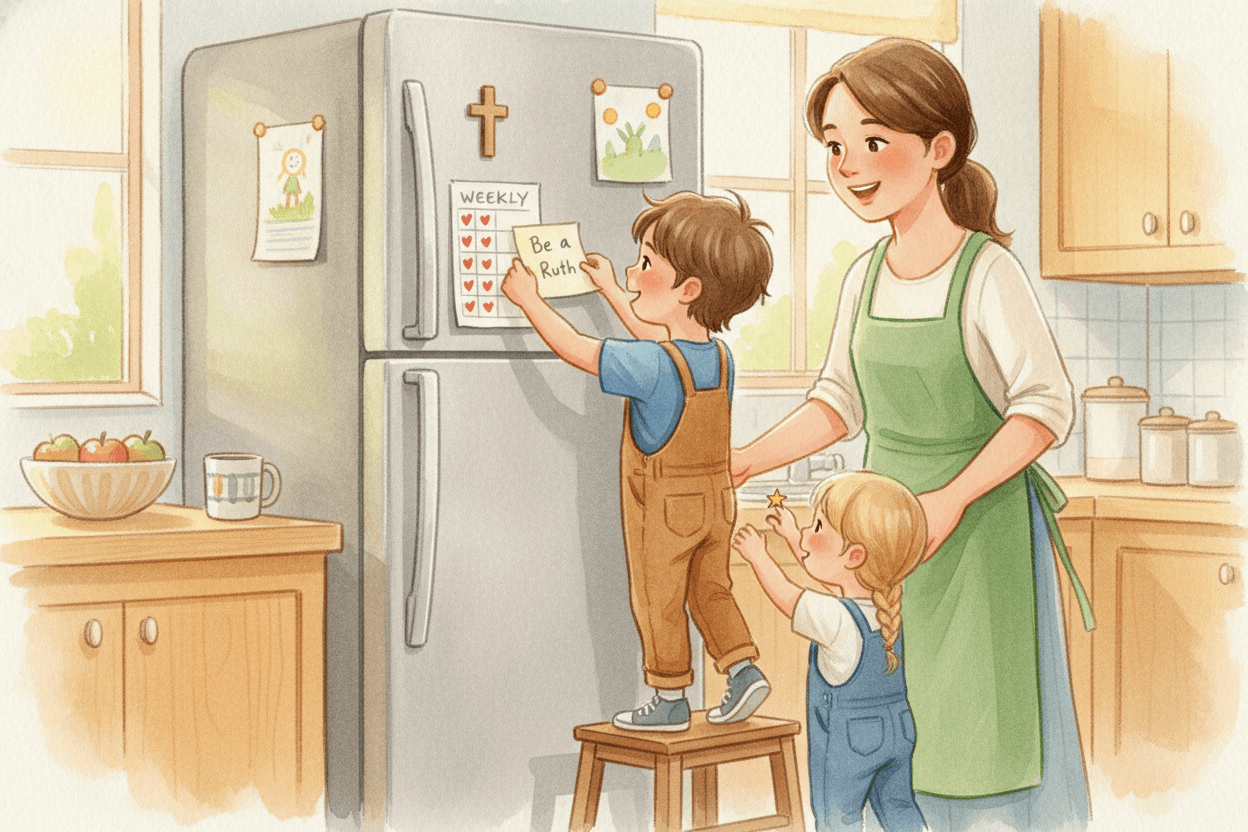
Let your child choose the action if you can. A child who picks his own mission usually owns it a little more. Keep the choice small and clear: “I will ask Mateo to play at recess on Thursday,” or “I will pray for Grandma before bed each night.” Write it on a slip of paper and put it on the fridge. Ours tends to share space with crooked magnets, school notices, and at least one mysterious sticky spot. That is fine. Faith grows in real houses.
The goal is not to produce a perfect little hero by Friday. Some kids will forget. Some will get shy when the moment comes. Some will discover that being kind to a sibling is hardest precisely when that sibling is touching their stuff. Check in briefly at the end of the week: What did you try? What was hard? Did you notice anything? Celebrate the effort to love, not a polished result or a dramatic story.
Ruth did not stay with Naomi because the road looked easy. She chose to stay near, to help, and to keep going. Our children can practice that same steady kind of love in kid-sized ways this week. After your check-in, keep the story going with the BibleHeroes Ruth comic. Read it together, then ask one simple question: “Who could use a Ruth-like friend from you next week?”
Thus it was that Naomi came back with her Moabite daughter-in-law Ruth, who accompanied her back from the plateau of Moab. They arrived in Bethlehem at the beginning of the barley harvest.
Frequently asked questions
How can I explain Ruth and Naomi’s story to my child?
Tell your child that Naomi was grieving and traveling home to Bethlehem, while Ruth had to decide whether to leave or stay. Ruth chose to go with Naomi so she would not be alone. This shows children that loyal love means showing up for someone who is having a hard time.
What does loyalty in friendship mean for kids?
For children, loyalty can mean keeping a kind promise, including someone who is alone, and helping when it is inconvenient. It does not require grand gestures; sitting with a sad friend or finishing a promised chore can be acts of faithfulness. Ruth showed loyalty by staying close to Naomi when the future was uncertain.
How can I teach my child to be a loyal friend at school?
Ask, “What would Ruth do at recess?” Help your child choose one specific action, such as inviting an excluded classmate into a game, refusing to join teasing, or checking on a friend having a difficult day. Talk later about what happened and praise the effort to be kind, even if it felt awkward.
Does being loyal mean my child should stay in an unhealthy friendship?
No. Loyalty never means accepting cruelty, unsafe behavior, or requests to keep harmful secrets. Teach your child to tell a trusted adult when a friend is bullying, pressuring, or hurting them, while still treating others with truth and kindness.
What is a simple family activity for teaching loyalty from Ruth and Naomi?
Try a weekly “Be a Ruth” choice at home. Each child chooses one person to support through a concrete act, such as helping a sibling with homework, praying for a friend, or inviting someone to play. At the end of the week, share briefly at dinner how everyone practiced staying kind and faithful.
Sources: bible.usccb.org · bible.usccb.org · bible.com · catechist.com · childrensministry.com · ministryark.com · ministry-to-children.com · seedsoftruthministries.com · workingpreacher.org · preceptaustin.org
Scripture quotations in this article use the NABRE translation.