Fire on Mount Carmel and the Gods Competing for Kids’ Hearts
Elijah’s showdown on Mount Carmel offers a vivid way to help kids recognize modern idols—status, sports, screens, or approval—while inviting honest family conversations about what captures their atten
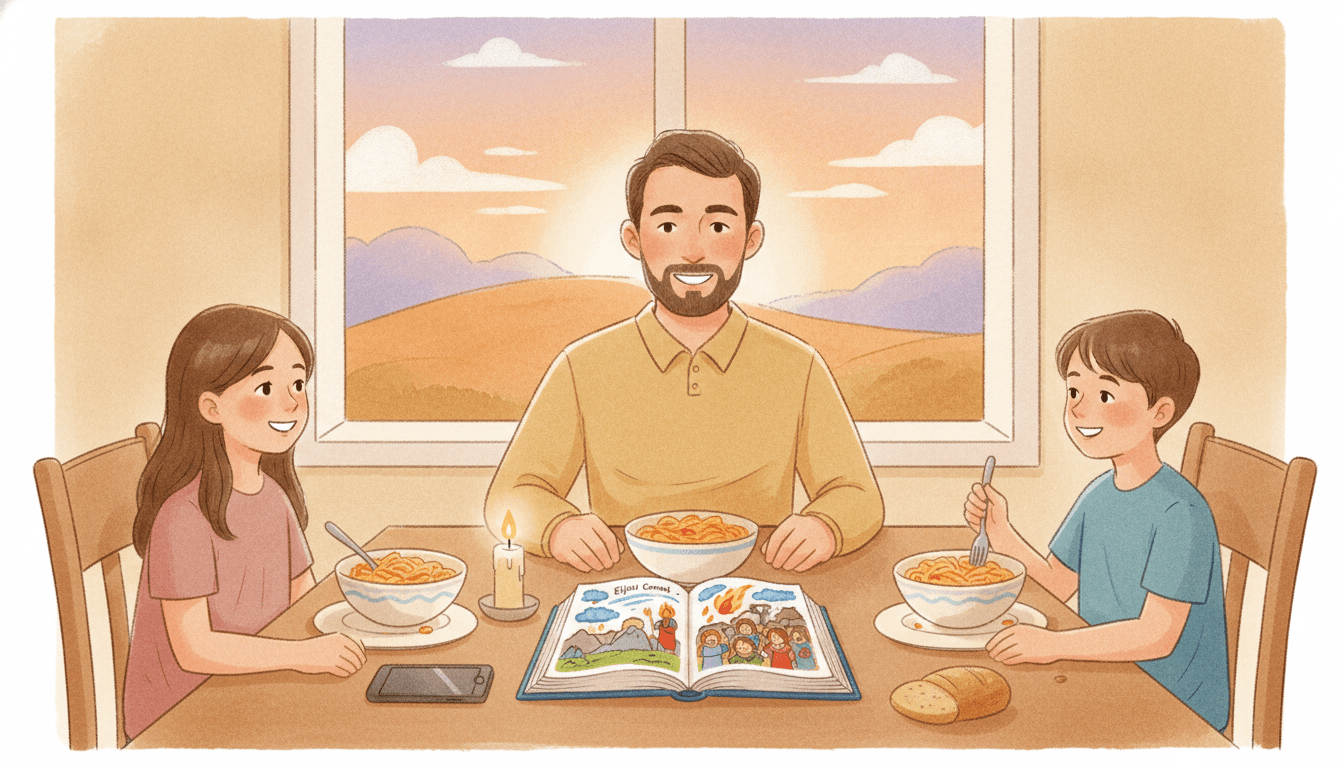
The phone buzzed during dinner, and suddenly the question on the table was not what happened at school. It was who texted, what they said, and why it could not wait five more minutes. Elijah’s question on Mount Carmel can help us talk with our tweens about modern idols without turning family life into a lecture—or treating every screen like Baal.
When a Good Thing Starts Asking for First Place

The phone was face-down beside the cereal bowl, but our child’s eyes kept drifting toward it as if it might start ringing with important news. There was no news. Just a group chat, a game, and the usual mysterious urgency of being nine years old. At our table, that little moment gave us a chance to talk about something bigger: phones, teams, grades, and fitting in are not bad things. They can be gifts. But a good thing can start asking for first place.
A modern idol is anything we begin to treat like the source of our worth, safety, or happiness instead of God. For a child, it may sound like this: “If I do not make the team, I am nobody.” Or, “If my friends do not like my post, something is wrong with me.” Or, “If I get an A, then I matter.” Kids may not say those exact words. Usually, they say them with tears after a bad game, a slammed backpack after school, or a very long argument about screen time. We adults are not entirely innocent either. The family calendar has a way of exposing what gets our best energy.
God is not trying to make children less joyful, less talented, or less interested in the things they love. He gave them their interests and abilities. He simply will not pretend that a trophy, a streak in a game, or the approval of classmates can carry the weight of a human heart. “You shall not have other gods beside me.” That command is not God spoiling the fun. It is a Father protecting His children from handing their hearts over to things that cannot truly love them back.
One small thing we tried was asking a simple question when emotions ran high: “Is this a good thing that is acting like the most important thing?” Then we named what was good about it. Soccer is good. Friends are good. Learning is good. A phone can be useful. But none of them gets to tell us who we are. This week, try a short prayer before screen time or practice: “Jesus, thank you for this gift. Help me love you first.” It takes about ten seconds. In our house, ten seconds is sometimes all we can manage before someone spills milk. It is still enough to begin.
You shall not have other gods beside me.
1 Kings 18 Explained: Elijah’s Question for a Divided Heart

The altar was soaked. Not damp—soaked. Elijah had water poured over the offering again and again until it ran into the trench around it. For a kid hearing this story, that detail matters. This was not a magic trick with a hidden match. On Mount Carmel, Elijah stood before a crowd that had spent too long trying to keep everybody happy: the Lord on one side, Baal on the other. They wanted rain, crops, safety, and perhaps a little divine insurance from whichever god seemed useful that day.
Then Elijah asked the question nobody wanted to answer: “How long will you straddle the issue?” He was not asking whether the people had ever made a mistake. He was asking who truly had their hearts. The people went quiet. That quiet is almost funny in a painful way. A whole crowd, and nobody has an answer. They knew the Lord’s name. They had heard the stories. But knowing about God is different from choosing him when another voice promises an easier way.
The prophets of Baal shouted and danced for hours. Nothing happened. Elijah repaired the Lord’s altar, laid out the sacrifice, and prayed simply. He asked God to show the people that the Lord was God and that he was turning their hearts back. Then fire came down and consumed the offering, the wood, the stones, even the water in the trench. The people fell down and cried, “The LORD is God!” God’s fire was not there to make people feel small. It was God calling wandering hearts home.
That is where this old mountain story meets the kid sitting at our table. Most children are not bowing to a statue of Baal before school. But a phone can start feeling like the thing that decides whether I am happy. A winning goal can feel like proof that I matter. Good grades, a streak in a game, being invited to the right group chat, getting laughs from friends—these are not bad things. They become a problem when they pull so hard that prayer gets brushed aside, Sunday Mass becomes optional, or being liked matters more than being kind. The gentle question is: What do I listen to first when it calls my name?
One small thing we tried is pausing before screen time and asking, “Who gets first place today?” The answer does not need to be dramatic. A child can say, “God does,” make the Sign of the Cross, and then use the device with a clear limit. Parents can answer the question too. Sometimes the thing pulling at my heart is not a game or a phone. Sometimes it is my need to finish one more task while my child is talking to me. Elijah’s question is not a threat. It is an invitation to stop splitting ourselves in two and trust the living God, who wants our hearts back.
Elijah approached all the people and said, “How long will you straddle the issue? If the LORD is God, follow him; if Baal, follow him.” But the people did not answer him.
The Phone Is Not Baal—and That Matters
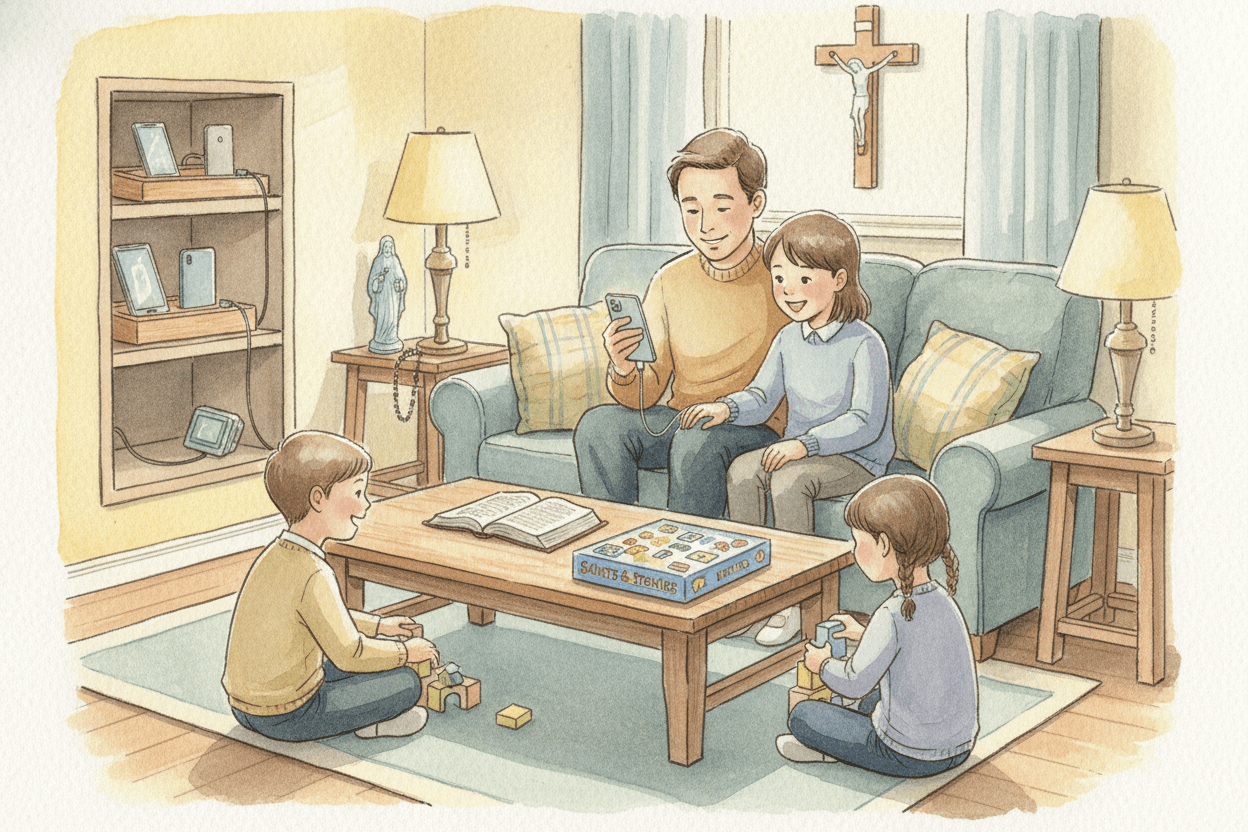
The phone was face-down beside the cereal bowl, and somehow it was still running breakfast. One child kept asking to check a game update. Another wanted to show us a video. I caught myself reaching for it between bites, which is not exactly the leadership speech I hope to give before school. In our house, the little glowing rectangle is useful. It is also very good at asking for more attention than it deserves.
The phone is not Baal. Neither is soccer, the report card, the friend group, or the college application someday waiting far down the road. These can all be gifts. A child can enjoy a game, work hard at math, love a team, and care what friends think without doing anything wrong. The question is not, “Do we have this thing?” The question is, “What is this thing asking of us?”
Pope Francis, drawing on the Catechism, describes idolatry as “divinizing what is not God.” That sounds big, but kids understand it quickly. An idol is a good thing we start treating like the thing that will make us okay. If I need likes to feel worthwhile, winning to feel lovable, or my phone nearby to feel calm, that gift is beginning to sit in God’s seat. It cannot carry that weight. And it will make a child anxious long before it makes him happy.
Here is a simple way to tell the difference. Healthy enjoyment leaves room for prayer, family, rest, honesty, and kindness. An unhealthy attachment starts pushing those things aside. Does screen time make it harder to come when called? Does practice turn every family conversation into a postgame review? Does a grade lead to cheating, panic, or harsh words? Does a friendship require a child to hide, mock someone, or do what she knows is wrong? We do not need to shame our kids for wanting good things. We can help them notice when a good thing is becoming a boss.
One small thing we tried was asking a question before screens came out: “Can we enjoy this without letting it run us?” Then we made the answer concrete: a short prayer first, devices away during meals, and a real bedtime even when the next video promises it is only thirty seconds. Parents need the same guardrails, of course. Jesus says, “No one can serve two masters.” He is not trying to make family life smaller or less fun. He is showing us where freedom begins: with God first, and every other gift in its proper place.
“No one can serve two masters. He will either hate one and love the other, or be devoted to one and despise the other. You cannot serve God and mammon.”
Name the Quiet Competitors Without Shaming Your Child
Last Tuesday, one of my kids checked a game score, saw that he had missed a message from a friend, and suddenly the whole kitchen felt like a crisis center. His snack sat untouched. His face fell. “What if they think I ignored them?” he asked. We did not need a lecture about idolatry at that moment. He needed help naming the fear underneath: I do not want to be left out. I want to matter.
That is often where the quiet competitors show up. A child may need likes or group-chat replies to feel okay. Another may panic after a missed practice because sports has started to carry more weight than it can bear. A disappointing grade can feel like proof that a child is not smart enough, not good enough, not worth much. And peer approval can tempt a kid to laugh at what is wrong, hide his faith, or change his convictions just to stay inside the circle. These are not silly concerns. They point to real desires: to belong, to achieve, to be seen, to be safe.
At our table, it helps to say plainly: “Wanting friends is good. Working hard is good. Loving your team is good. Getting a good grade is good.” Then add the important part: “But none of those things gets to tell you who you are.” God does. An app cannot promise steady love. A score cannot hold a child after a hard day. A crowd can cheer on Friday and move on by Monday morning. The Lord does not look away when our children fail, lose, or feel invisible. He sees them before they perform anything for Him.
John ends his first letter with a short, almost fatherly sentence: “Children, be on your guard against idols.” That is not a threat to hang over a child’s head. It is a loving heads-up. Be careful, because good things can start making big promises. One small thing we tried was asking after a hard moment, “What was this thing promising you?” Maybe the answer is, “It promised I would be popular,” or, “It promised I would be the best.” Then we can ask, “Can it really keep that promise?” Usually, after a little pause, the answer is no.
Try this conversation this week when the temperature is low, not in the middle of the meltdown. Tell your child, “You never have to earn your place in this family, and you do not have to earn God’s love.” Then choose one small practice together: a brief prayer before opening an app, putting the phone aside during dinner, or saying, “God, help me remember who I am,” before a test or practice. The goal is not to make kids feel guilty for caring about friends, grades, or games. The goal is to help them put those good gifts in their proper place—behind the God who knows their name and loves them first.
Children, be on your guard against idols.
God’s Fire Is Love That Turns Us Back

One evening, a child at our table heard the word “fire” in the Carmel story and stopped chewing. “Is God mad at them?” he asked. It was a fair question. The story has a mountain, shouting prophets, a soaked altar, and then fire falling from heaven. That is a lot for a small person to carry before bedtime, especially if he already knows he has chosen a video or a game over being helpful more than once this week.
But listen closely to Elijah’s prayer. He does not ask God to embarrass the people or make them squirm. He asks the Lord to answer “that this people may know that you, LORD, are God and that you have turned their hearts back to you.” The point is return. Israel had wandered toward Baal, and God called them home. His fire shows that he is not one more option on a crowded shelf. He is the living God who wants his children back.
That changes how we tell this story to our kids. We do not point to Mount Carmel and say, “See what happens when you love your phone too much.” Shame may make a child hide a problem for a while, but it does not teach him where to bring his heart. Instead, we can say, “Sometimes we all get pulled by things that promise to make us happy. When that happens, God is not waiting to blast us. He is calling us back.” Parents need that sentence too. I know I do, usually while checking one more thing on my own screen.
God’s fire can help children picture his love as strong enough to burn through lies: “If I do not win, I am nobody.” “If my friends do not like my post, I do not matter.” “If I cannot play right now, I will fall apart.” Those thoughts do not deserve the last word. A child belongs to God before the score, the grade, the group chat, or the little red notification bubble makes its opinion known. The Lord turns hearts back because he knows what they were made for.
One small thing we tried was a simple reset after a hard screen-time moment. No lecture while everyone is hot. We put the device down, take a breath, and pray: “Jesus, turn my heart back to you.” Then we choose the next right thing: help clear dishes, apologize for the grumpy tone, step outside, or sit with a Bible story for two minutes. It is not dramatic. There is no altar in the backyard—our neighbors would have questions. But these small returns teach our children that God’s power is never meant to crush them. It is love calling them home.
At the time for offering sacrifice, Elijah the prophet came forward and said, “LORD, God of Abraham, Isaac, and Israel, let it be known this day that you are God in Israel and that I am your servant and have done all these things at your command. Answer me, LORD! Answer me, that this people may know that you, LORD, are God and that you have turned their hearts back to you.” The LORD’s fire came down and devoured the burnt offering, wood, stones, and dust, and lapped up the water in the trench. Seeing this, all the people fell prostrate and said, “The LORD is God! The LORD is God!”
Try a One-Week ‘God First’ Family Reset
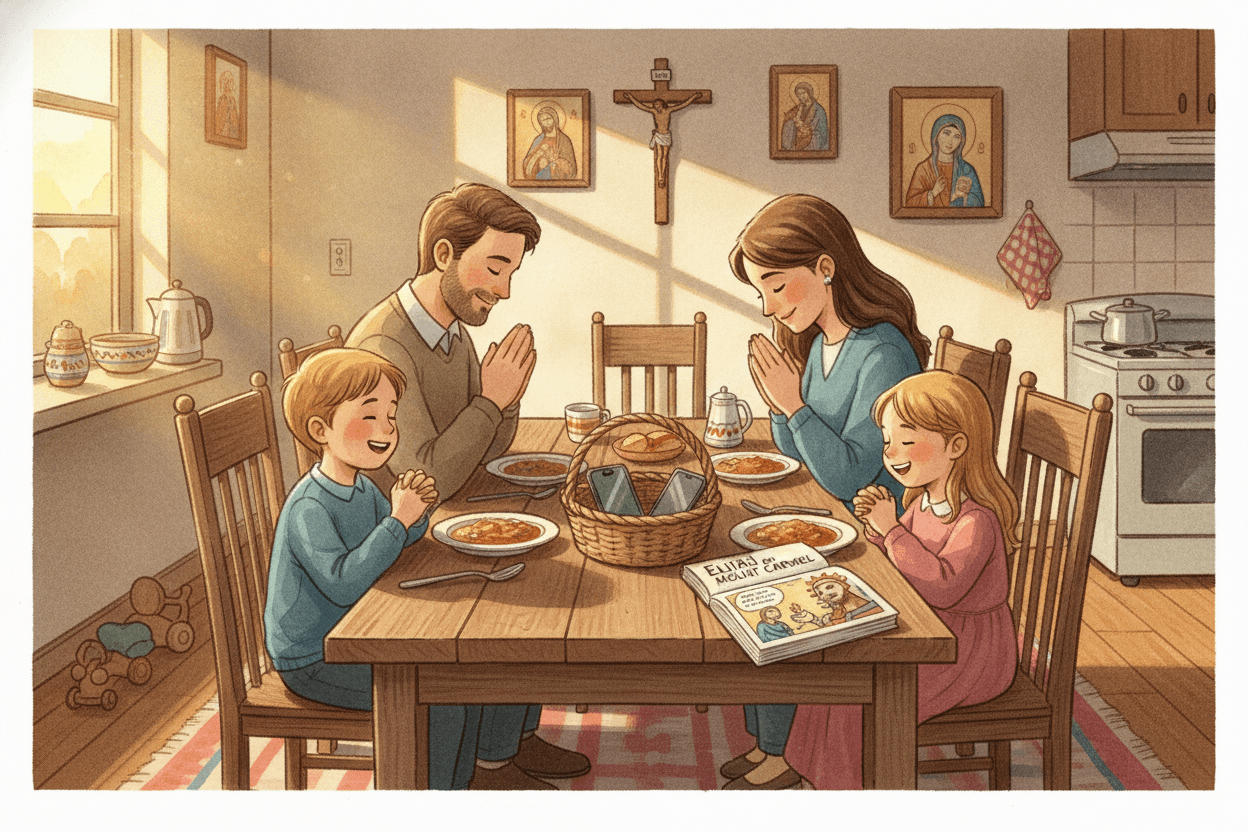
Last Tuesday, the dinner bell rang while one child was still bargaining for “two more minutes” of a game and another was looking for a charger as if we had misplaced oxygen. Nobody was being wicked. They were being kids. And, honestly, the adults at our table know that same tug when a notification lights up. A family reset does not begin with a dramatic speech about idols. It begins by noticing what has become hard to put down.
For one week, pick one device boundary together. Keep it small enough that everyone can actually keep it. Maybe devices charge overnight in the kitchen. Maybe there are no phones at the table. Maybe gaming happens only after homework, chores, and a short prayer are finished. Keep devices in shared spaces when you can, especially for younger children. This is not about treating a phone like Baal or making screens the enemy. It is about guarding the heart and helping our children learn that a tool is a tool, not a boss.
One small thing we tried was a ten-second prayer before screen time: “Jesus, help us use this well. Keep You first in our hearts.” On rushed days, say it at dinner instead. Then protect two anchors for the week: Sunday Mass and one screen-free family meal. The meal does not need candles, a perfect conversation, or food nobody complains about. Ours rarely has any of those. It just needs a little room for faces, stories, and gratitude.
At bedtime, ask one gentle question: “What got first place in my heart today?” Ask it of yourself too. A child may say a game, a friend, a soccer goal, a snack, or nothing at all. Do not pounce. Thank them for telling the truth. You can answer honestly: “I think my work got first place for a while today.” Then remind them that wanting to do well, have fun, and be liked is not wrong. God gave us those desires. He simply does not want any good gift to carry the weight that belongs to Him alone.
If you need a way into the conversation, read the Elijah on Mt. Carmel comic together. Let the pictures do some of the work. Ask, “What do you think Elijah meant?” or “What pulls people away from God now?” Then listen. Elijah’s question is not meant to corner a child; it is an invitation to choose the God who turns hearts back. A week like this will not make your home perfectly peaceful. Someone will forget the rule. Someone may protest like the charger is a constitutional right. Begin again anyway. Small choices, repeated with love, teach a child where freedom lives.
Elijah approached all the people and said, “How long will you straddle the issue? If the LORD is God, follow him; if Baal, follow him.” But the people did not answer him.
Frequently asked questions
How do I explain modern idols to my child without making them feel guilty about phones or sports?
Explain that a phone, team, grade, or friendship is a good gift, not a bad thing. It becomes an idol only when a child starts treating it as the source of their worth, happiness, or safety instead of God. Ask gently, “Is this a good thing acting like the most important thing?”
What does the story of Elijah on Mount Carmel teach kids about idols today?
Elijah asked the people to stop trying to give their hearts to both God and Baal. The story helps children see that knowing about God is different from choosing Him first when popularity, entertainment, or success calls for their attention. God’s response was an invitation for wandering hearts to come home to Him.
How can I tell if screen time is becoming too important to my child?
Notice whether a device causes outsized anger, anxiety, or constant distraction, or whether it regularly pushes aside prayer, family attention, kindness, or Sunday Mass. The issue is not simply owning or enjoying a screen. It is whether the screen begins to tell your child who they are or what matters most.
What is a simple Catholic prayer before screen time or sports practice?
Try: “Jesus, thank you for this gift. Help me love you first.” Your child can make the Sign of the Cross and say it in a few seconds before opening a game, checking messages, or heading to practice. Pairing the prayer with a clear time limit makes the habit more practical.
How do I talk to my tween when they are upset about grades, tryouts, or friends?
Start by naming the good thing they care about: learning, playing well, or belonging with friends. Then remind them that a disappointing grade, lost game, or ignored post does not decide their value. Their identity comes from being loved by God, not from a trophy, an A, or group-chat approval.
How can parents model putting God first in family life?
Let children see you ask the same questions of your own habits, especially work, schedules, and your phone. Put devices aside during conversations when possible, make room for Mass and prayer, and admit when you have been distracted. A parent’s honest effort shows that this invitation is for the whole family, not just the kids.
Sources: bible.com · biblegateway.com · biblegateway.com · vaticannews.va · vatican.va · faithandsafety.org · pewresearch.org · apa.org · usccb.org · usccb.org
Scripture quotations in this article use the NABRE translation.