Marching Around Our Problems:A Joshua 6 Family Activity
Turn a family struggle into a Joshua 6-inspired activity: write the worry down, march around it together, and pray for God’s help. This simple exercise makes overwhelming problems feel approachable wh
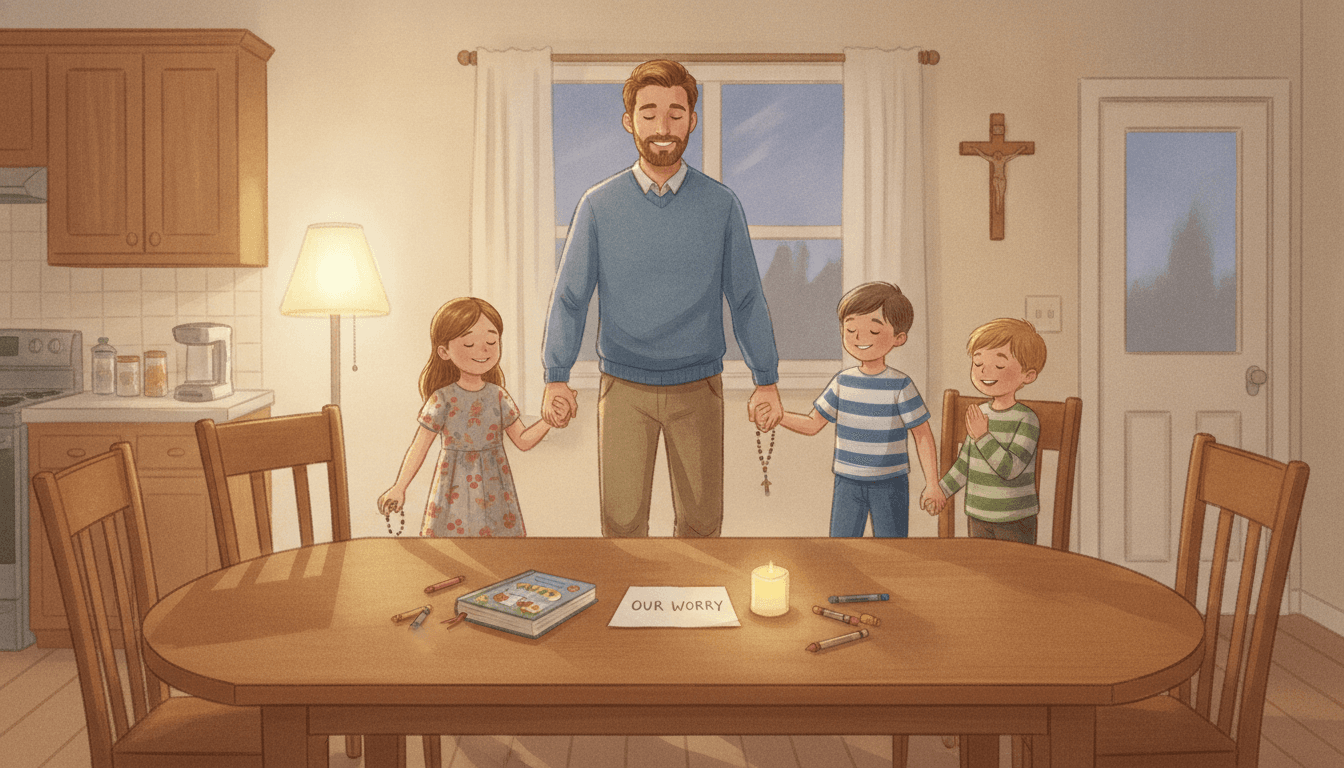
Last week, one child was upset, another was under the table, and the problem in front of us felt much bigger than it really was. So we tried something simple: we put the worry on a piece of paper, walked around the table, and asked God to help us.
When Kids Need to Move Before They Can Pray
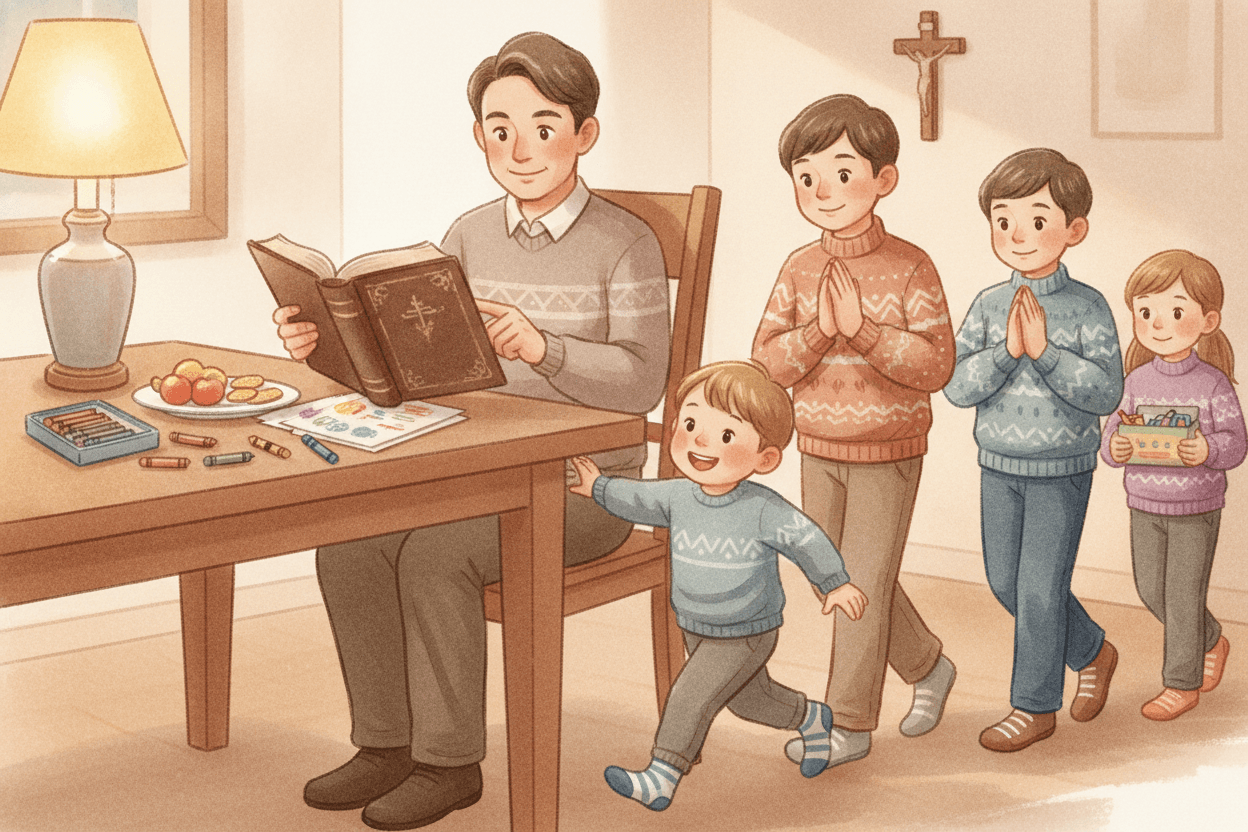
By late afternoon, one of my kids can hear the words “let’s pray” and suddenly remember an urgent need to hop, spin, or inspect the crumb under the chair. Sitting still for one more family devotional is sometimes just too much. I used to read that as a lack of reverence. Most days, it is simply a child being a child. Their bodies are still buzzing, and their hearts may need a way in.
That is why a Joshua 6 activity can work so well with younger kids. Put a chair in the middle of the room, or tape a piece of paper to the floor with one simple problem written on it: “scary dreams,” “Mom’s appointment,” “my fight with my brother,” or “school tomorrow.” Read a few verses from Joshua 6, then explain it plainly: God told His people to march, but God was the one who brought down Jericho’s wall. We are not doing a trick to make our problems disappear. We are bringing our worries to God and trusting Him to help us.
Then walk. Keep it very simple: one lap around the chair or paper for each prayer request. A parent can say, “Jesus, we bring you Noah’s worry about school,” and everyone answers, “Help us trust you.” Little ones can carry a toy trumpet, clap softly, or just march with very serious marching faces. At our table, serious faces usually last about four seconds, but that is fine. The point is not a perfect activity. The point is that a child hears his worry named and sees his family carry it to God together.
Finish with one loud family shout of praise, or a spoken sentence such as, “God, we trust you with this.” The shout is memorable because Joshua’s story has a shout. But it should not become the main event. Before the noise, remind the kids that prayer is not a way to boss God around. He hears us, loves us, and knows what help we need. Afterward, ask three quick questions: What problem did we bring to God? What was it like to keep walking and praying? What do we trust God to do?
Jesus made room for children, saying, “Let the children come to me, and do not prevent them; for the kingdom of heaven belongs to such as these.” A wiggly child does not need to become a tiny adult before he can pray. One small thing we tried was moving prayer earlier, before everyone was overtired, and keeping it under five minutes. A lap around a chair may not solve the hard thing on the paper. But it can teach a lasting habit: when something feels too big, our family can move toward God together.
Let the children come to me, and do not prevent them; for the kingdom of heaven belongs to such as these.
Joshua 6 Shows Us What Trust Can Look Like
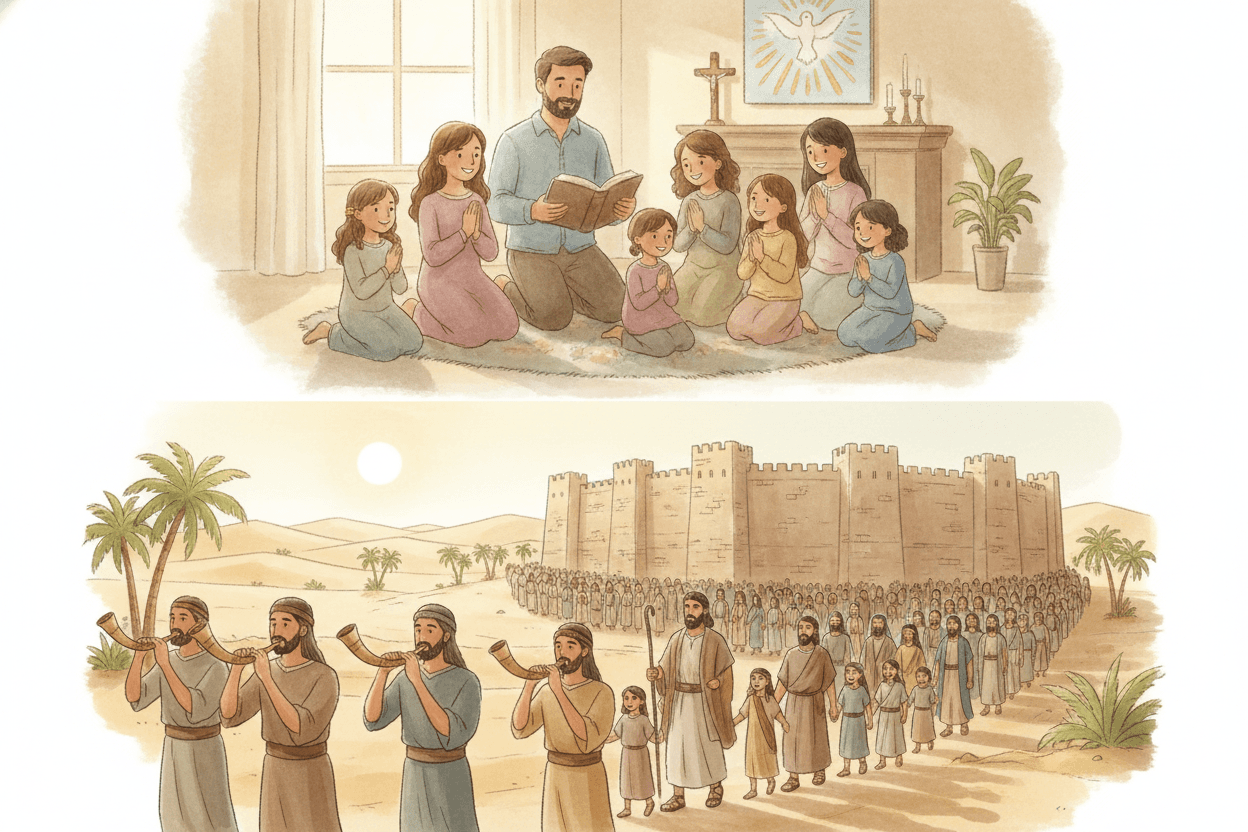
The first time we tried a marching prayer at our house, one child carried a toy trumpet, another insisted the dining chair was “the wall,” and someone started marching backward. It was not exactly a solemn procession. But it gave us a way to talk about Joshua and Jericho that made sense to small people with busy feet.
Joshua faced a real city with real walls, and God gave him a surprising plan. The people were to march around Jericho, listen carefully, and do what God said. They did not bring a giant ladder or a clever machine. They walked. They waited. Then, at God’s command, they shouted. The walls came down because God acted. The marching was their response of obedience and trust.
That distinction matters when we bring this story to our children. We are not teaching them that walking around the kitchen table makes a hard thing disappear. A family problem may still take time. A sick relative may still need care. A friendship may still need an apology. But we can teach our kids that when a problem feels bigger than they are, they can bring it to God and keep taking the next faithful step.
For children ages 6 to 9, I would say it plainly: “Joshua’s people marched because God told them to. God was the one who brought down the wall. When we pray and walk, we are telling God, ‘We trust You with this.’” Here’s what landed with our kids: they understood that trust is not sitting still and wishing. Trust listens to God, prays honestly, and obeys in the small things we can do today.
Before you begin the activity, read just a few verses, then name one “wall” together. Maybe it is worry about school, repeated arguing between siblings, or fear before a doctor visit. Let each child offer one short prayer while the family makes one circle. End with a simple shout of praise—or, if your toddler is already shouting for unrelated reasons, call it a win—and remind everyone that God hears us even when the answer takes longer than one trip around the table.
March around the city once with all the soldiers; this you shall do for six days. Seven priests shall carry seven ram’s horns in front of the ark. On the seventh day you shall march around the city seven times, while the priests blow the horns. When you hear the blast of the horn, all the people shall shout loudly, and the city wall will collapse.
Set Up Your Family Prayer Walk in Two Minutes
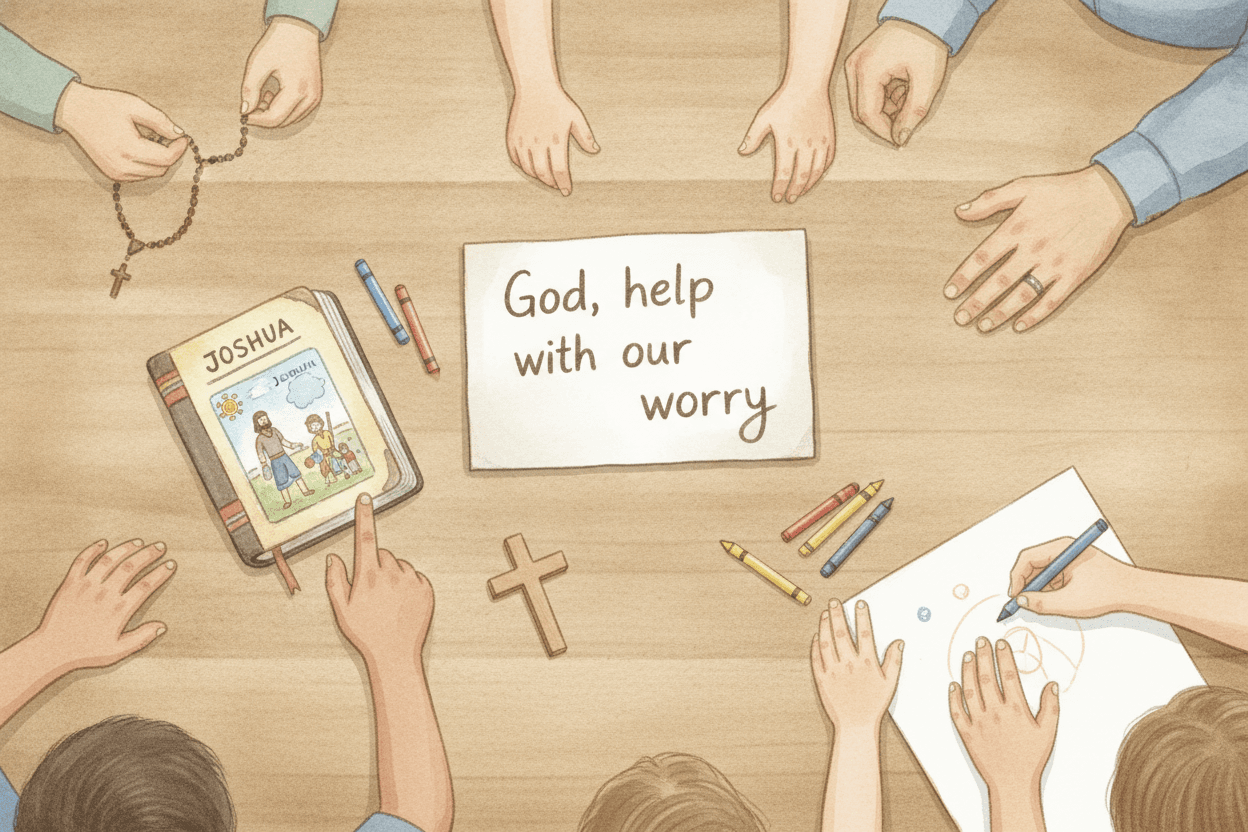
Last Tuesday, a permission slip, two crayons, and somebody’s missing shoe were spread across our kitchen table. It was not a peaceful-looking prayer corner. But it was a real family moment, which is usually where prayer has to begin. You do not need supplies, music, or a perfectly quiet house for this. You need a scrap of paper, something to walk around, and two minutes before bedtime or after dinner.
Write one worry in big letters on the paper. Keep it simple enough for a child to recognize: “Nervous about school,” “Grandpa is sick,” “Stop fighting with my brother,” or “Help with my friendship.” Put the paper in the middle of the table or on the seat of a chair. That paper is not a magic object. It simply gives little eyes and busy feet a clear place to focus while the family brings a real concern to God.
Then choose one short reading. Philippians 4:6-7 works especially well because it tells us to bring everything to God with prayer, petition, and thanksgiving. Read it slowly once. You might say, “The people in Joshua’s story marched because God told them to trust and obey. We are walking as we pray because we trust God with this problem. God is the one who helps us.” That last part matters. We are not trying to make a wall fall down in the dining room. Thank goodness, honestly. I am not ready to explain that to the landlord.
Decide on one lap around the table or chair for each prayer intention. Start with the child whose worry is on the paper. As you walk, he can say, “Jesus, help me feel brave at school.” The next lap might be for a sick grandparent. Another can be for peace between siblings. Invite each child to offer one sentence. If a child only says, “Help,” that counts. At our table, short prayers are often the truest prayers we get.
Parents can add a grown-up concern too, but name it with care. “Help Mom with her work meeting” is plenty; children do not need the full weight of the family budget or a difficult phone call. After the last lap, stand together and say, “God, we trust You with these worries. Thank You for hearing us.” If your children are ready, finish with one loud shout of praise. Then ask three quick questions: What did we bring to God? What was it like to keep walking and praying? What do we trust God to do? One small thing we tried can become a steady habit.
Have no anxiety at all, but in everything, by prayer and petition, with thanksgiving, make your requests known to God. Then the peace of God that surpasses all understanding will guard your hearts and minds in Christ Jesus.
A Short Script for Marching Around the Problem
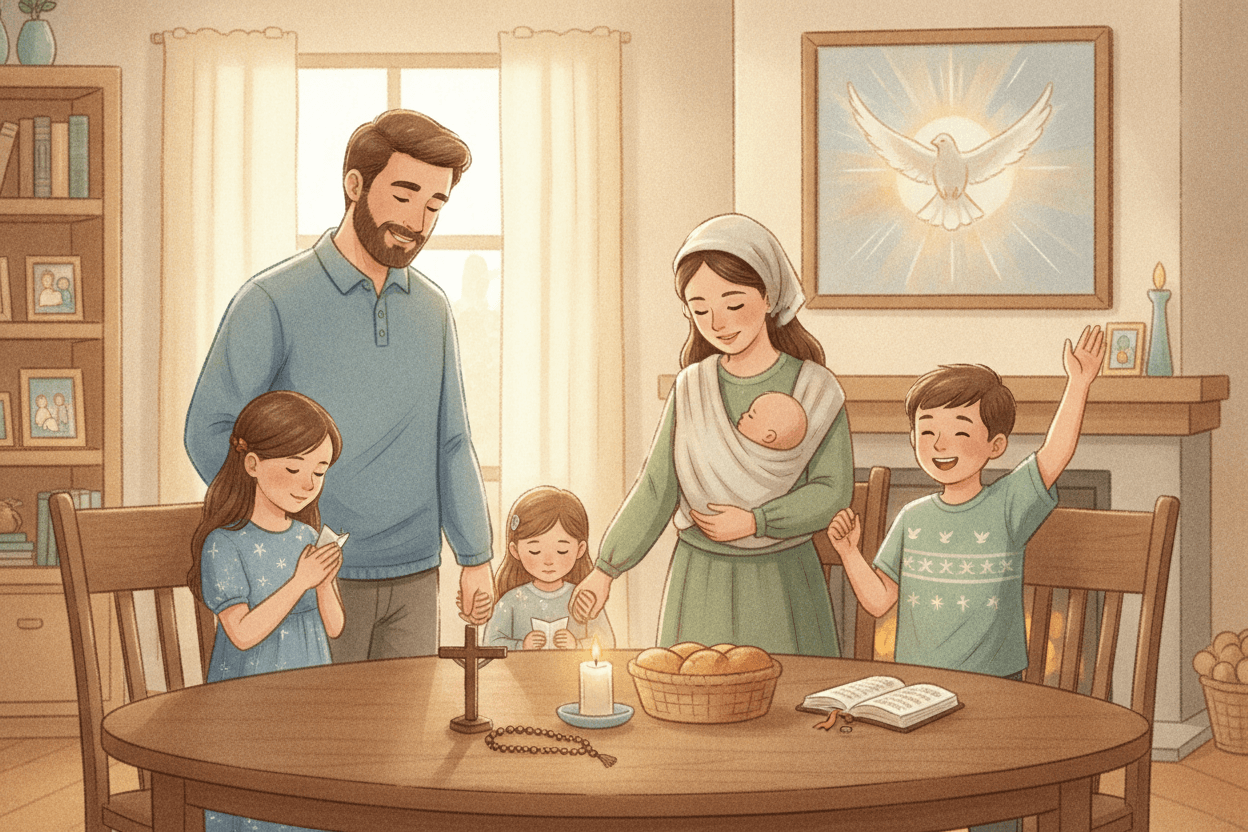
Last Tuesday, the problem was a spelling test, a missing library book, and one child who was very sure both were disasters. We cleared a spot by the kitchen table, put a scrap of paper in the middle, and wrote: “Things worrying us.” It took less than a minute. That is important, because family prayer usually happens somewhere between homework, dishes, and somebody asking for a snack they already had five minutes ago.
Start by reading one verse from Joshua, or give the short version: God told His people to march, obey, and trust Him. Then read, “Shout, for the LORD has delivered the city into your power.” Tell the kids plainly: “The walking did not make Jericho’s walls fall down. God did that. We walk and pray because we need to remember that God hears us and helps us.”
Next, let each person name one problem. Keep it simple: “I am worried about my test.” “Grandma is sick.” “I keep fighting with my brother.” Write the requests on the paper if your children are old enough to enjoy that part. Then walk quietly around the table once. No need for seven trips. One circle gives little legs something to do and gives everyone a turn to bring a real concern to Jesus.
As you walk, each person says one short sentence. You can lead the first few times: “Jesus, please help me with my spelling test.” “Jesus, be close to Grandma.” “Jesus, help us be kind when we are upset.” If a child freezes or gets silly, that is normal. Let him repeat what you say, or simply say, “Jesus, help us.” At our table, simple prayers are still prayers.
When you stop, stand together and say: “Jesus, we cannot fix everything, but we trust you are with us.” Then add one specific act of trust: “We trust you with this test,” or “We trust you with Grandma.” Finish with a cheerful praise shout—something like “Thank you, Jesus!”—at a level that will not alarm the neighbors or wake the baby. Ask just two questions afterward: “What problem did we bring to God?” and “What do we trust God to do?” One small thing we tried like this can help children see that prayer is not pretending problems are small. It is bringing our real problems to the God who is bigger.
On the seventh time, when the priests blew the horns, Joshua commanded the people, “Shout, for the LORD has delivered the city into your power.”
Keep the Lesson Honest: God Is Not a Vending Machine
The first time we tried a prayer walk, one child put “my scary dream” on the paper and another put “no broccoli at dinner.” Both papers went in the middle of the kitchen floor. That is about right for family prayer: a real worry beside a very determined vegetable opinion. We brought both to God. But we also needed to say something important before anybody expected the walls to tumble before bedtime.
Joshua’s story ends with a real wall falling. “The people shouted, the priests blew the horns; when they heard the blast of the horn, the people gave a great shout and the wall collapsed.” God did that. The marching was an act of obedience and trust, not a trick that made God do what they wanted. Our children need that distinction in plain words: We pray because God loves us and hears us. We do not pray to press a button and get our preferred answer.
So when your family finishes the walk, say it directly: “God can help with this problem. Sometimes he changes the problem quickly. Sometimes he helps us be brave, patient, or kind while it is still hard.” A child worried about a test may still need to study. A child upset with a sibling may still need to apologize. A parent carrying a hard work situation may still need to make the phone call. Prayer does not replace the next faithful thing. It helps us take it.
Here’s what landed in our house: after the shout, we name one small step. “Lord, help me sleep. I will ask Mom to sit with me for two minutes.” “Lord, help me with school. I will pack my folder now.” “Lord, help our family. We will speak gently at dinner.” This keeps the activity from ending in a burst of noise and a pile of forgotten papers. It gives little feet somewhere honest to go next.
And if nothing seems different tomorrow, return to the paper anyway. Thank God for hearing you. Ask again. Notice one bit of help—a calmer voice, a good conversation, the courage to try. Faith in a family is often built that way: not by getting every answer on our schedule, but by learning that God is with us while we wait and act.
The people shouted, the priests blew the horns; when they heard the blast of the horn, the people gave a great shout and the wall collapsed. The people attacked the city straight on and captured it.
Three Questions to Ask After the March
The marching was over, but my kids were still doing laps around the kitchen table. One was pretending to blow a trumpet with a paper towel tube. Another announced that his problem was “when my banana breaks.” It would have been easy to hurry everyone along. Instead, we sat down and asked a few small questions. That is often where the prayer starts to stick.
First ask, “What problem did we bring to God?” Let each child answer in his own words. A child might say, “My spelling test,” “Grandma’s cough,” or “I don’t like sleeping when it is dark.” Write the answers down if that helps. You do not need to correct a problem for being too little. To the kid in front of you, a broken banana can feel very big at 7:15 on a school morning.
Then ask, “What did it feel like to keep walking and praying?” Some children will say it felt good. Some will say their feet hurt. One may say, “I felt silly.” All fair answers. In our house, honest answers are better than the answer we think sounds churchy. You can simply say, “Thanks for telling me.” The point is not to make them report a certain feeling. It is to help them notice that they can bring a worry to God, even while they are wiggling, laughing, or wondering when the snack is coming.
Last, ask, “What can we do while we wait for God’s help?” This is a good place to keep the lesson grounded. We can pray again tomorrow. We can apologize if we hurt someone. We can study for the test, take medicine, help a sibling, or tell a grown-up when we are scared. God hears us, and we still take the next faithful step we can see. Saint Paul puts it plainly: “Have no anxiety at all, but in everything, by prayer and petition, with thanksgiving, make your requests known to God.” End with one sentence together: “Jesus, thank you for hearing us. Help us trust you and do the good we can do today.” That is enough for a Tuesday night.
Have no anxiety at all, but in everything, by prayer and petition, with thanksgiving, make your requests known to God.
Try One Small March This Week
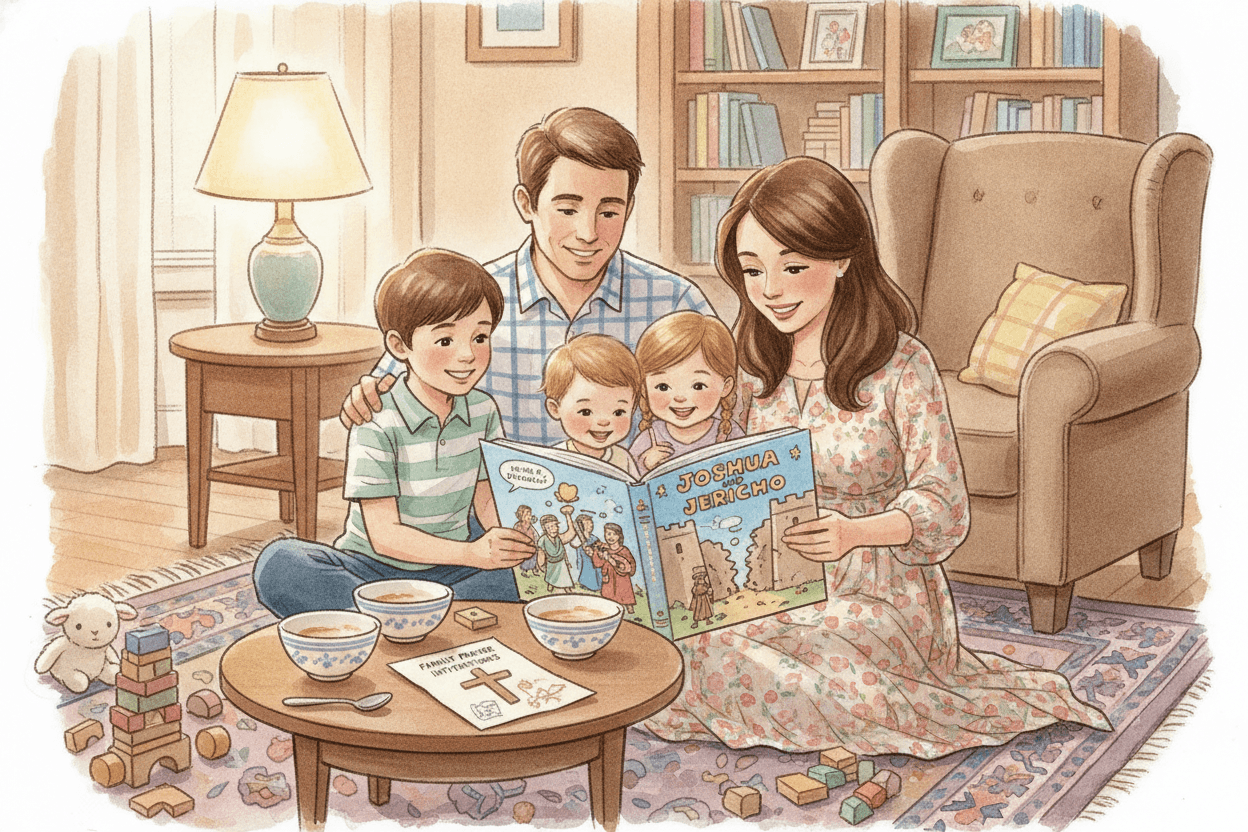
Pick one ordinary evening this week. Not the evening when everyone is cheerful, freshly bathed, and somehow finished with homework early. That evening may never arrive. Pick a real one: after dinner, before pajamas, while somebody is still asking for a snack they definitely do not need. Keep the whole thing under ten minutes.
Put a chair in the middle of the room or lay a piece of paper on the floor with one family concern written on it: “Grandma’s appointment,” “a hard day at school,” or simply “our worries.” Invite each child to name one thing that feels heavy, or one help from God they want to thank Him for already receiving. Then take one slow lap together. A small child can carry a toy trumpet if you have one. He will probably toot it at the wrong time. That is fine.
As you walk, keep the words simple: “Jesus, we bring you this worry. Help us trust you.” At the end, stop and say together, “Thank you for hearing us.” If your family has the energy, give one cheerful shout of praise. Joshua told the people, “Shout, for the LORD has delivered the city into your power.” The point is not that our shout makes hard things disappear. God was the one who gave Jericho to Israel. Our little march is a way of bringing what we cannot control to the God who can.
One small thing we tried in our house was letting each child choose whether to share a worry or a thank-you. That gave the quieter child a place in the prayer without putting him on the spot. Afterward, read the BibleHeroes Joshua and Jericho comic together and ask what Joshua’s people did before the walls fell. Then let the discussion be as short as the attention span allows. A messy lap around the table will not fix every problem by bedtime. But repeated often enough, it can become a real family habit: when life feels too big, we turn toward God together.
On the seventh time, when the priests blew the horns, Joshua commanded the people, “Shout, for the LORD has delivered the city into your power.”
Frequently asked questions
How do I do a Joshua 6 marching prayer activity with my kids?
Write one family worry on a piece of paper and place it on the floor or a chair. Read a few verses from Joshua 6, then take one lap around the paper while each person offers a short prayer. End by saying or shouting together, “God, we trust you with this.”
What should I say to children about Joshua marching around Jericho?
Explain that the Israelites marched because God asked them to trust and obey Him. God—not the marching or shouting—brought the walls down. In the same way, your family walks and prays to bring a problem to God, not to make something happen by magic.
Is it okay if my child cannot sit still during family prayer?
Yes. A wiggly child is still able to pray, and movement may help younger children participate more fully. Keep the prayer brief, invite simple responses such as “Help us trust you,” and let them march, carry a toy trumpet, or clap softly.
What family problems can we use for a marching prayer?
Choose one concrete concern a child can understand, such as nervousness about school, scary dreams, a sibling conflict, a sick grandparent, or an upcoming doctor visit. Name the concern plainly and avoid trying to cover every worry at once. This helps children see that God cares about real parts of their daily lives.
Does marching and praying mean God will fix our problem right away?
No. The activity teaches children to trust God and take faithful next steps, even when an answer takes time. A friendship may still need an apology or a sick relative may still need care, but the family can bring the situation to God together.
What Bible verse can I read for a short family prayer time about worries?
Philippians 4:6-7 is a helpful choice because it invites us to bring everything to God through prayer, petition, and thanksgiving. Read it slowly, then remind children that God hears their worries and gives His peace. Pair it with a few verses from Joshua 6 to connect prayer with trust and obedience.
Sources: bible.usccb.org · catholic.com · pewresearch.org · pewresearch.org · pewresearch.org · pewresearch.org · vatican.va · vatican.va
Scripture quotations in this article use the NABRE translation.