Teaching Kids:“Speak, Lord, Your Servant Is Listening”
Help young children practice listening to God through a simple bedtime prayer, Scripture, Mass, and everyday family guidance. Discover gentle, age-appropriate ways to nurture quiet attention, trust, a
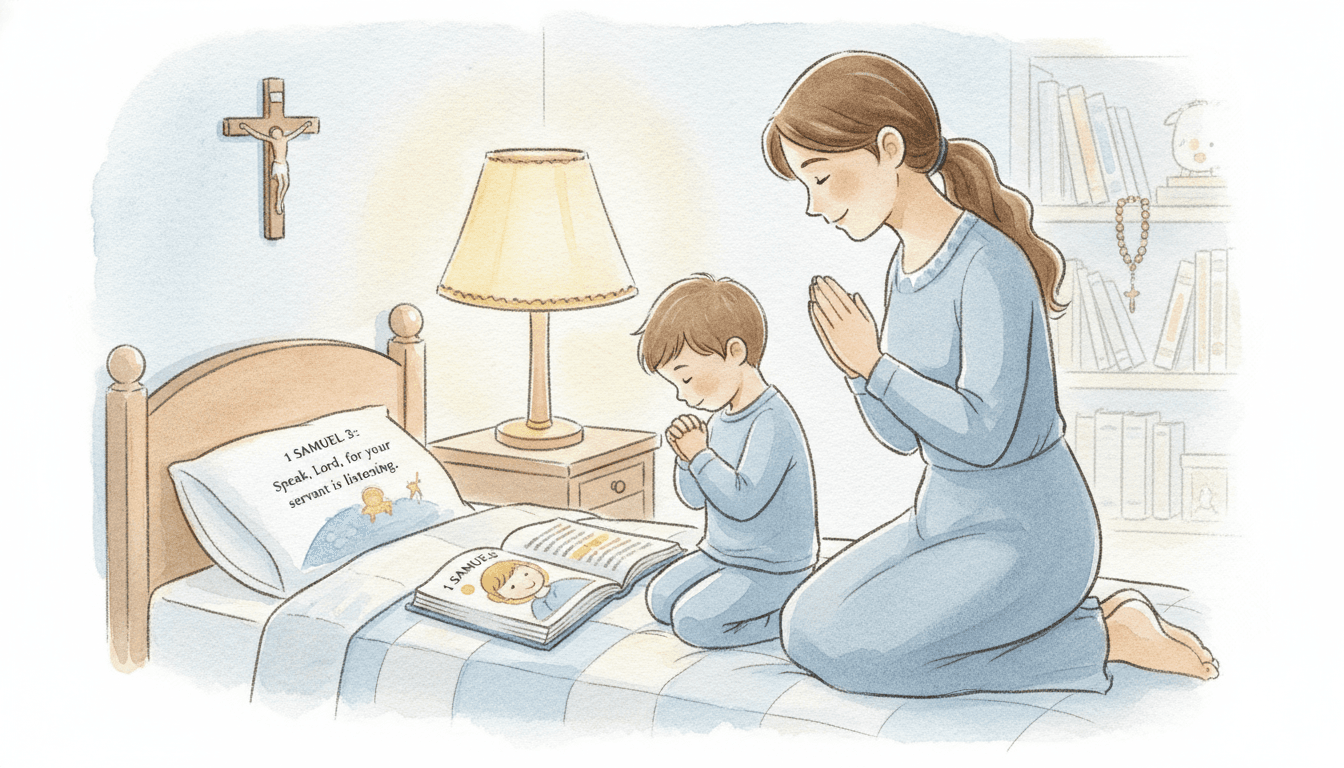
The lights are low, the last glass of water has been delivered, and your child is finally still enough to hear one short sentence: “Speak, Lord, your servant is listening.” This small bedtime prayer gives children ages 3–5 a Scripture-shaped way to grow quiet before God—not waiting for a mysterious voice, but learning to attend to him in his Word, at Mass, and in the loving guidance of home.
Why This Little Prayer Gives Children a Real Way to Listen

At bedtime, many children can recite the Sign of the Cross, an Our Father, or a familiar guardian-angel prayer without hesitation. Then a parent says, “Now let us be quiet with Jesus for a moment,” and the room suddenly feels unfamiliar. That small pause reveals something important: children often learn the words of prayer first, but they also need to learn that prayer includes receiving. “Speak, Lord, your servant is listening” gives them a concrete, Catholic way to begin.
This is not a formula for getting a private message, hearing an audible voice, or discovering secret instructions. God is free, and He usually forms us through the ordinary means He has given His Church: Sacred Scripture, the Mass, wise parents, the teaching of the Church, and the quiet movement of grace in a well-formed conscience. As the Catechism reminds us, prayer is a living relationship with God (CCC 2558), not a technique for producing a certain feeling. A child may experience peace, remember something from Scripture, think of someone who needs prayer, or simply notice the quiet. Any of these can be received calmly, without exaggeration.
The words themselves teach a sturdy spiritual posture. “Speak” expresses trust that God is not distant or indifferent. “Lord” names who God is: not a friend we control, but the One we worship. “Your servant” teaches humility without making a child feel small or afraid; we belong lovingly to the God who made and saves us. “Is listening” asks for attention and readiness to obey. Scripture gives us this pattern in Samuel, who needed Eli’s patient guidance before he understood who was calling him. Children need the same kind of guidance from the adults entrusted with their formation.
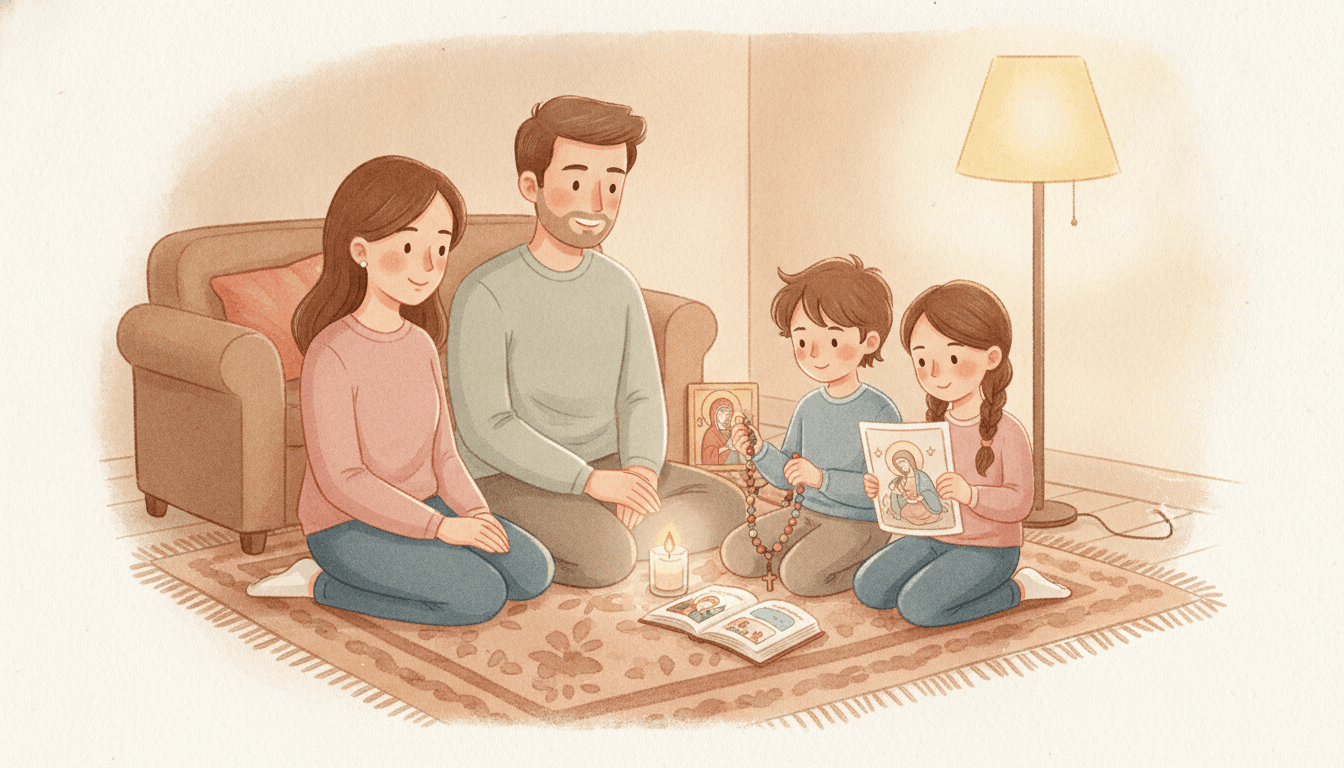
Here’s how I’d teach this: tell the Samuel story simply, then say the phrase together slowly. Invite your child to place both feet still, rest hands in the lap, and listen for thirty seconds. Afterward, ask an open question: “What was it like to be quiet with God?” Do not press for an impressive answer. If a child says, “I heard nothing,” answer, “That is okay. We were still with the Lord, and He is with us.” If the child says, “I thought of Grandma,” you might add, “Let us pray for her.” Repeated at bedtime or after hearing Scripture, this brief practice respects a child’s intelligence while teaching that silence before God is real prayer.
When the LORD came and stood there, calling out as before: Samuel, Samuel! Samuel answered, “Speak, for your servant is listening.”
Begin With Samuel: A Child Learns From a Wise Adult

A child calls from the bedroom for the third time, and the adult in the hallway finally realizes this is not another request for water. That small scene helps us enter 1 Samuel 3. Samuel was serving in the sanctuary under Eli when he heard his name called. He assumed Eli needed him, so he got up and ran to the older man. Twice, Eli told Samuel that he had not called and sent him back to sleep. The story does not portray Samuel as instantly knowing what was happening. He was a child, learning.
Then Eli understood. He did not shame Samuel for his confusion or leave him to work it out alone. He gave him words to use: “Go to sleep, and if you are called, reply, ‘Speak, LORD, for your servant is listening.’” That is patient religious formation in miniature. An experienced believer recognizes what a child cannot yet name, offers a truthful response, and makes room for the child to answer God. Scripture invites us to notice that Eli’s guidance was specific. He did not merely tell Samuel, “Try harder to listen.” He taught him a prayer.
Parents and caregivers can take up this Eli-like work without pretending that every passing thought, feeling, or dream is a message from God. Children need calm, trustworthy adults who teach them where God has surely spoken: in Sacred Scripture, in the prayers and worship of the Church, and in the loving moral instruction they receive at home. As the Catechism reminds us, parents have the first responsibility for the education of their children (CCC 2223). One clear way they exercise that responsibility is by teaching a child what listening prayer looks like: becoming still, speaking honestly to the Lord, and remaining ready to do what is good.
Here’s how I’d teach this at bedtime or after a Gospel reading. Tell the Samuel story in a few sentences. Say the prayer slowly, and invite your child to repeat it with you. Then keep silence brief—perhaps thirty seconds for a preschooler. Afterwards, ask, “Was it hard to be quiet?” or “What would you like to tell Jesus?” Receive simple answers without forcing a spiritual experience. Over time, the child learns that silence is not empty, prayer is not only talking, and a faithful adult will help him or her return to God’s Word when questions arise. Like Eli, we give children the words first; with steady practice, they gradually learn to make the prayer their own.
So he said to Samuel, “Go to sleep, and if you are called, reply, ‘Speak, LORD, for your servant is listening.’”
Explain What “God Speaks” Means in Catholic Life
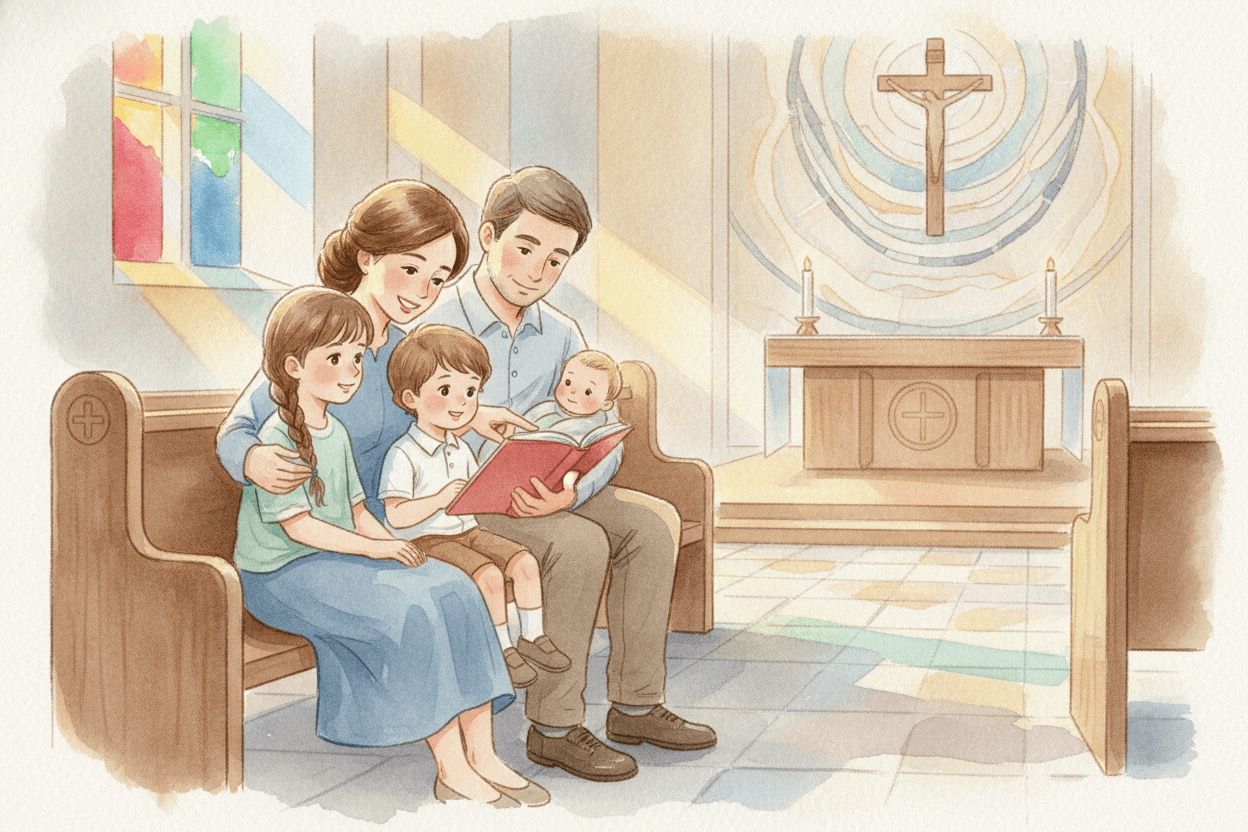
A four-year-old sits quietly after the bedtime prayer, then opens one eye and asks, “Did God say something?” That is the moment to give a calm, truthful answer: “God speaks to us, and we learn to hear Him in the ways He has given His Church.” We do not need to tell children to wait for a voice in the room. Their faith deserves language that is both reverent and clear.
Here’s how I’d teach this: “God speaks most clearly in the Bible. He also teaches us through the prayers and readings at Mass, through what the Church teaches, and through Mommy and Daddy when they help us choose what is good.” Sacred Scripture is truly God’s Word: “In the sacred books, the Father who is in heaven comes lovingly to meet his children and talks with them” (CCC 104). A preschooler can understand this without confusion. When the Gospel tells us that Jesus forgives, welcomes children, or teaches us to love, God is teaching us something true.
Then explain that listening prayer is not a game of guessing messages. After saying, “Speak, Lord, your servant is listening,” a child may feel peaceful, remember a line from Scripture, think of someone who needs kindness, or simply notice the quiet. Each can be received simply: “Thank You, Jesus.” If a child says, “I think God wants me to share,” help him test that thought against what he already knows: sharing is loving, and Jesus teaches us to love. If she hears nothing at all, reassure her that she has still prayed well. Silence is not failure.
This protects children from carrying a burden they were never meant to carry. God’s definitive Revelation has been given in Christ and handed on in Scripture and Tradition; a child’s passing thought does not add a new teaching for the family or the Church. Parents can say, “God will never tell us to do something unkind, unsafe, or against what Jesus and His Church teach.” If a child reports something troubling, receive it calmly, ask a gentle question, and return to the dependable places where God forms us: Scripture, prayer, the sacraments, and wise Christian guidance.
The goal is a conscience gradually trained to recognize the good. As the Catechism teaches, we form conscience through “assimilation of the Word of God in faith and prayer and by putting it into practice” (CCC 1785). Keep the practice brief: read one sentence from a children’s Bible or recall Sunday’s Gospel, say the Samuel prayer together, hold thirty seconds of quiet, and close with, “Jesus, help us do what is loving tomorrow.” Over time, children learn that God is not distant or mysterious; He faithfully meets them in the Word, the Church, and the ordinary loving instruction of home.
Samuel grew up, and the LORD was with him, not permitting any word of his to be without effect.
Teach the Words Without Rushing Past “Servant”
When I ask a room of children to say the prayer slowly, they often race through the middle: “Speak, Lord, your servant is listening.” The word servant can sound old-fashioned, or worse, like a person who has no voice and no freedom. Do not hurry past it. This is the word that gives the prayer its honest shape: we are not telling God what to do; we are placing ourselves before Him with trust.
Here’s how I’d teach this, one small phrase at a time. “Speak, Lord” means, “Jesus, I am ready to pay attention.” Children already know what it feels like to turn toward someone who is speaking: they stop playing, look up, and listen. Explain that in prayer we turn our minds and hearts toward God. We are not waiting for a spooky sound or a secret message. We are making room for God to form us through Scripture, the prayers of the Mass, the teaching of the Church, and the loving guidance He gives through parents and other trustworthy adults.
Then pause over “your servant.” You might say: “It means, ‘I belong to you, Lord. I want to love you and obey you.’” Christian obedience is never fear, silence in the face of wrongdoing, or doing whatever another person demands. God is good; He knows and loves His children. Obeying Him is a loving answer to the One who made us, saved us, and calls us by name. As the Catechism reminds us, Baptism makes us children of God and gives us a real dignity and vocation: to live as His beloved sons and daughters (CCC 1692). A child can understand this: “Because I am God’s child, I can choose what is good.”
Finally, “is listening” means, “I will be quiet for a little while.” Keep that little while realistic. For a preschooler, begin with ten or fifteen seconds; for an older child, try thirty seconds. Invite them to sit still, place a hand over their heart if that helps, and then say the prayer together. After the quiet, ask a gentle question: “What did you want to tell Jesus?” Accept simple answers without trying to turn every thought into a message from God. “I thought of my grandma,” “I felt calm,” or “I was distracted” are all honest places to begin.
Samuel learned this response from Eli, who gave him the actual words and sent him back to rest. Parents and catechists can offer the same calm instruction, again and again. At bedtime, before reading Scripture, or before Sunday Mass, say the prayer slowly and let its words become familiar. Over time, children learn that listening to the Lord is not a performance. It is the steady, loving posture of a baptized child who knows whose voice deserves attention.
So he said to Samuel, “Go to sleep, and if you are called, reply, ‘Speak, LORD, for your servant is listening.’”
Use a 30-Second Listening Prayer at Bedtime

The lights are low, the toothbrushes are put away, and a preschooler is suddenly ready to discuss everything except sleep. That small window can become a steady school of prayer. Rather than asking a tired child for a long, silent meditation, offer the same brief pattern each night: a few words of Scripture, a familiar response, half a minute of quiet, and one closing prayer. Children learn that listening to God is not mysterious or frightening; it is part of coming to Him with attention and trust.
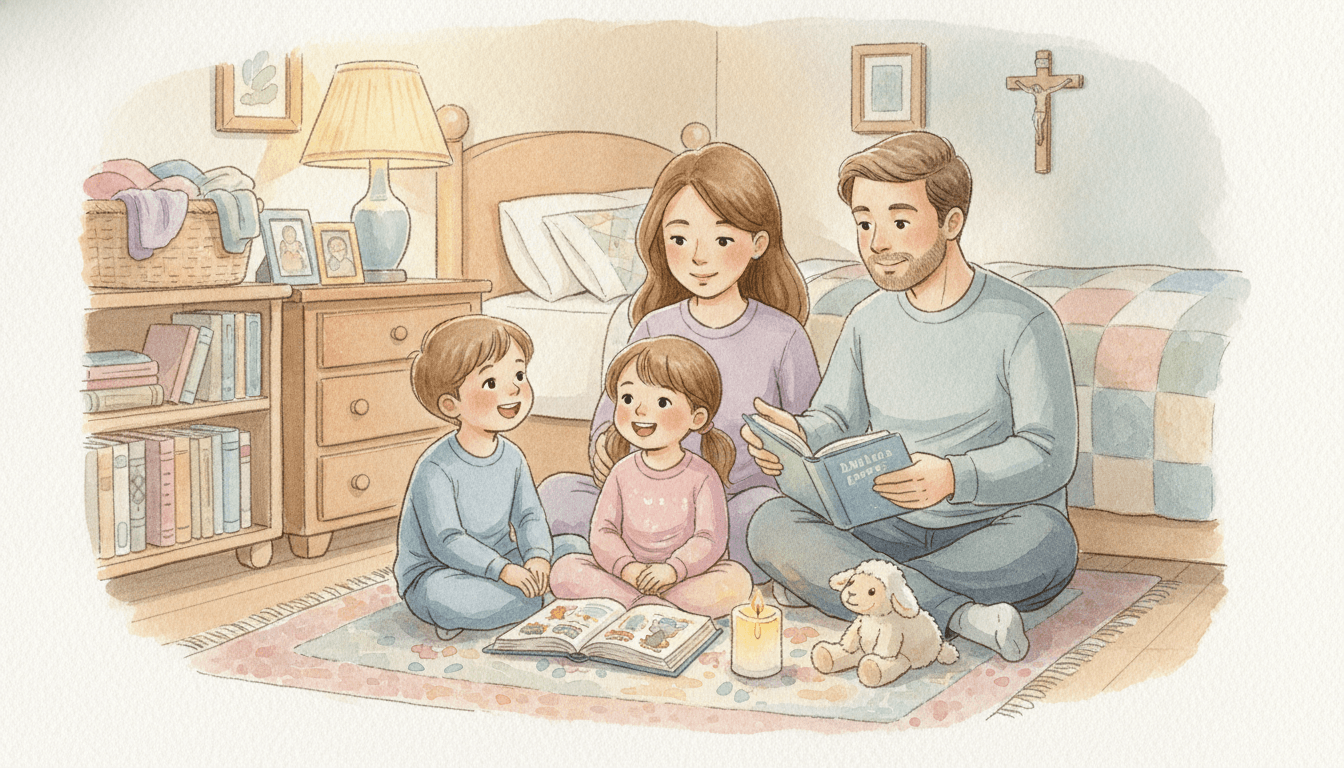
Here’s how I’d teach this. Retell Samuel’s call in two or three sentences: “Samuel was sleeping near the tabernacle when he heard his name. At first, he thought Eli was calling him. Eli taught Samuel to answer God: ‘Speak, LORD, for your servant is listening.’” Then say the refrain together twice, slowly: “Speak, Lord, your servant is listening.” The parent should say it with the child, not merely direct the child to say it. Your own calm voice teaches that this is a real prayer, not a performance.
Next, set a gentle 30-second timer, preferably one without a jarring alarm, or count slowly to thirty. A child may close his eyes, look at a crucifix, hold folded hands, or simply sit beside you. Do not insist on a particular posture. The point is peaceful attention. At the end, pray: “Jesus, help us hear and do your Word tomorrow. Amen.” If the child offers a simple thought—“I thought about Jesus,” or “I felt quiet”—receive it warmly. There is no need to interpret every response as a message from God. We are teaching reverence, availability, and the habit of bringing our attention to the Lord.
Repetition matters because preschool children are still learning how prayer has a shape. The same sequence each evening gives them security: story, words, quiet, closing prayer. Thirty seconds is enough. Long silence can feel confusing or burdensome to a young child, especially at bedtime. Brief silence, practiced faithfully, gradually forms the capacity for longer prayer as the child grows. Scripture invites us to notice that Samuel himself needed patient instruction; Eli gave him words to say and a clear next step.
This routine also keeps listening rooted where Catholic children need it to be rooted: in God’s Word, received within the Church, rather than in guesses or feelings alone. As the Catechism reminds us, prayer involves listening to the God who speaks (CCC 2567). At bedtime, parents gently show children that God speaks through Scripture, through the Mass, and through the faithful guidance of those who love them. The child is not being asked to produce an extraordinary experience—only to answer the Lord with a willing heart.
When the LORD came and stood there, calling out as before: Samuel, Samuel! Samuel answered, “Speak, for your servant is listening.”
Respond Gently to Whatever Your Child Says—or Does Not Say
The thirty seconds end, and your child immediately asks for water, points to the ceiling fan, or says nothing at all. Resist the urge to fill that moment with questions. A child’s quiet attention is already a real response to prayer. In the Samuel story, the setting is not dramatic at first: “During the time young Samuel was minister to the LORD under Eli, the word of the LORD was rare and visions were not widespread” (1 Samuel 3:1, NABRE). God was at work even in a time that seemed uneventful. Our children do not need to report a spiritual experience for listening prayer to matter.
After the silence, offer one warm, unpressured sentence: “Thank you for being quiet with Jesus.” If your child seems ready to talk, ask a small, concrete question: “Did a word from our story stay with you?” A child may answer, “Samuel,” “God,” “I was sleepy,” or “Nothing.” Receive each answer calmly. You might simply say, “Thank you for telling me,” and move on. In parish classrooms, this response keeps prayer from becoming a performance in which children try to produce the answer an adult wants.
Be especially careful not to label every passing thought as a message from God. Children have active imaginations, and ordinary thoughts belong in prayer too. If a child says, “I thought about my friend,” a parent can answer, “Let’s ask Jesus to help us be kind to your friend tomorrow.” This teaches discernment without embarrassment. God ordinarily forms us through Scripture, the teaching of the Church, prayer, conscience, and the loving guidance of those responsible for us—not through pressure to find a private message in every moment.
Nor is this the time to correct a simple answer into a more religious-sounding one. If a child says, “I heard the dog,” you can smile: “Yes, we heard the dog. Now we can tell Jesus thank you for our home.” Then close simply: “Jesus, help us listen to you and love you tomorrow. Amen.” As the Catechism reminds us, prayer is a living relationship of God’s children with their Father (CCC 2565). Faithful presence, a short routine, and patient repetition teach that relationship more surely than a polished response ever could.
For another way to return to this scene together, read the BibleHeroes Boy Samuel comic as a family. Let the pictures help your child retell how Samuel heard his name, asked Eli for help, and learned how to answer. Then, when bedtime quiet comes again, your child will know that listening does not mean accomplishing something impressive. It means coming before the Lord, ready to belong to him.
During the time young Samuel was minister to the LORD under Eli, the word of the LORD was rare and visions were not widespread.
Try This Listening Prayer for Seven Nights This Week

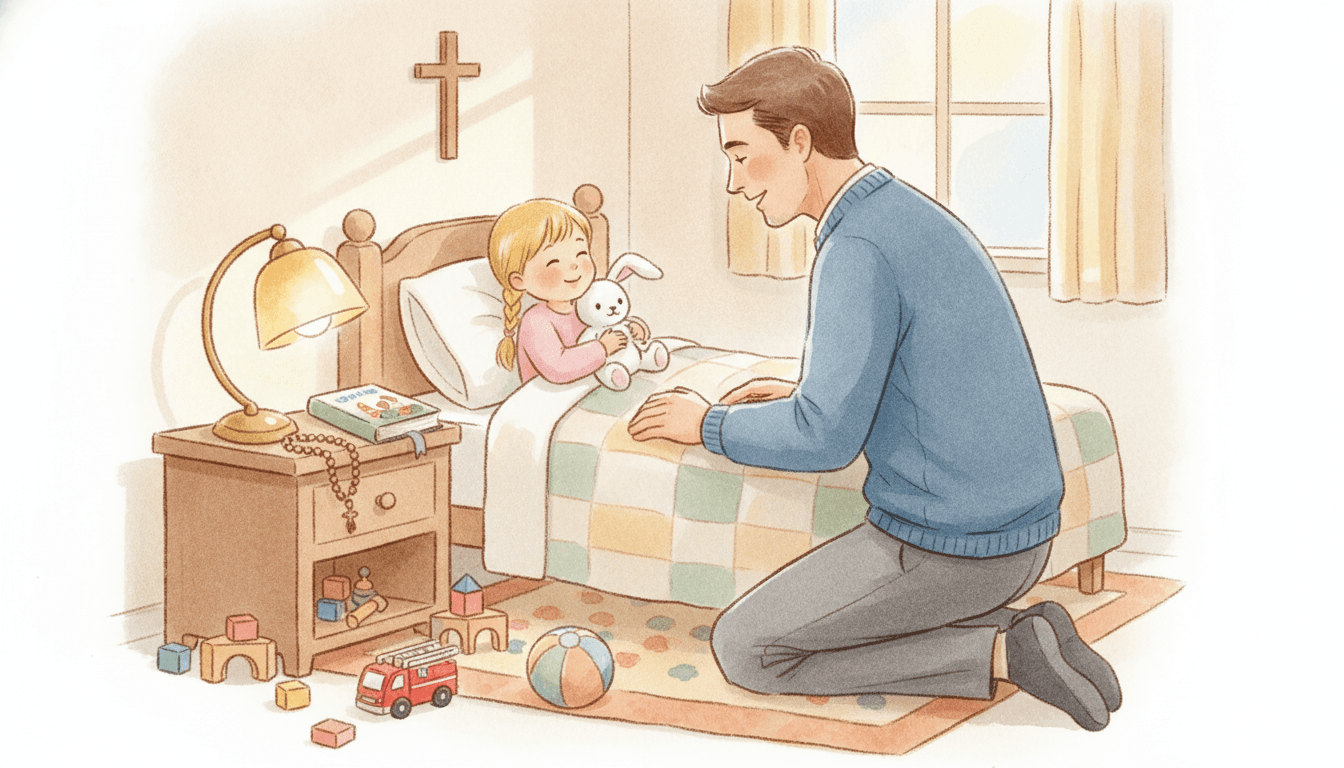
At the end of a long day, the most realistic prayer may happen after the toothbrush has been put away and before the last request for water. Do not wait for a perfectly peaceful evening. Choose one small, repeatable moment—perhaps after your child is tucked in, with the lamp dimmed—and keep it for seven nights. Children learn prayer partly by recognizing its shape: these are the words we say, this is the quiet we keep, this is the God to whom we belong.
Begin by making the sign of the cross and praying the Samuel refrain together: “Speak, Lord, for your servant is listening.” If your child is very young, say one phrase at a time and let him or her echo it. Explain once, simply and accurately, that we are not trying to make God produce a sound in the room. We are offering Him our attention. God ordinarily forms us through Scripture, the teaching and worship of the Church, conscience rightly formed, and the loving guidance of those responsible for us. As the Catechism reminds us, prayer is a covenant relationship in which God takes the initiative (CCC 2567).
Then keep thirty seconds of silence. A child may place a hand over the heart or open both palms on the blanket. These small bodily gestures say something real: I am ready to receive; I belong to the Lord; I want to listen. Parents, pray the refrain aloud too. Your child needs to see that this is not an exercise adults assign to children, but a posture the whole family is learning. If thirty seconds feels long on the first night, quietly count in your own mind rather than filling the space with more words.
For the next seven nights, follow the same simple plan at the same bedtime moment: sign of the cross, “Speak, Lord, for your servant is listening,” hands over the heart or open palms, thirty seconds of quiet, and a brief closing prayer such as, “Jesus, help us to love you tomorrow. Amen.” At the end of the week, notice one concrete fruit without interrogating your child or measuring success by feelings. Perhaps there is a little more calm at bedtime, a remembered phrase from Scripture, or a more ready act of kindness toward a sibling. These are gifts to receive gratefully, not results to demand. Samuel’s answer was a beginning: “Speak, for your servant is listening.” A family’s faithful repetition can become the same kind of beginning.
When the LORD came and stood there, calling out as before: Samuel, Samuel! Samuel answered, “Speak, for your servant is listening.”
Frequently asked questions
How do I teach my preschooler to pray, “Speak, Lord, your servant is listening”?
Tell the story of Samuel in simple words, then say the prayer slowly together. Invite your child to sit still with hands in the lap for about thirty seconds, especially at bedtime or after a Bible story. Afterwards, ask a gentle question such as, “What was it like to be quiet with God?”
What should I say if my child says they did not hear God during silent prayer?
Reassure them that hearing nothing is completely okay. You can say, “We were still with the Lord, and He is with us.” The purpose is not to produce a special feeling or message, but to help children grow comfortable being quietly present to God.
Does “Speak, Lord, your servant is listening” mean my child should expect to hear God’s voice?
No. Teach children that God does not usually speak to us through an audible voice or secret instructions. He speaks reliably through Sacred Scripture, the Mass, the Church’s teaching, loving parental guidance, and grace that helps us choose what is good.
What if my child says they thought about someone during quiet prayer?
Receive the answer calmly without treating every thought as a direct message from God. If your child thinks of Grandma, for example, simply invite them to pray for her. This helps them connect their concerns with prayer while staying grounded in God’s Word and the Church.
Why is silence part of prayer for young children?
Children often learn spoken prayers first, but prayer is also a relationship in which we receive from God. A short, supported silence teaches that prayer is not only about saying words. With regular practice, children learn that quiet with Jesus is meaningful even when it feels ordinary.
How long should a preschooler be quiet during prayer?
Keep it brief and realistic: about thirty seconds is a good starting point for ages three to five. Use simple physical cues, such as feet still and hands resting in the lap. Consistency matters more than extending the silence.
Sources: bible.usccb.org · bible.usccb.org · acatholic.org · catholicexchange.com · stjohncatholic.buildingthroughhim.com · ministry-to-children.com · clearbible.blog · trinitycc.com · digital.group.com · bible.usccb.org
Scripture quotations in this article use the NABRE translation.