Why Jonah Ran From God:A Kid-Friendly Catholic Guide
When children ask why Jonah ran, his story opens a bigger conversation about difficult obedience, unfair-feeling forgiveness, and God’s patient pursuit. Explore how a storm, a fish, and a second chanc
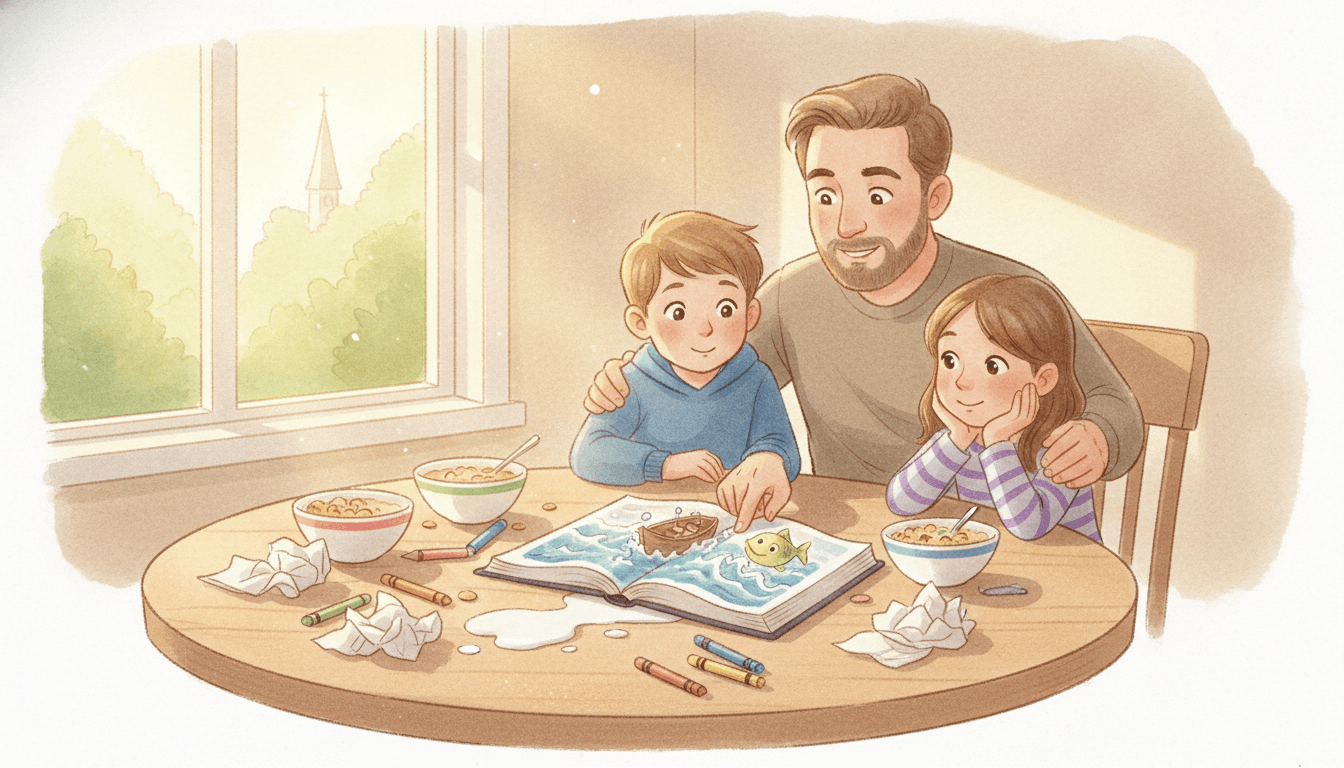
“Why did Jonah run from God?” is the kind of question that can arrive between spilled cereal and missing shoes. The short answer is that Jonah did not want a hard job—or for God to forgive people he thought did not deserve it—but his whole story gives kids something even better: when we run, God patiently calls us back.
Start With the Question Behind the Question

"Why did Jonah run away from God?" It’s a question that can catch you off guard during a busy dinner, like when you accidentally spill sauce on your shirt. Kids are curious, and they often dig deeper than we expect. Maybe their little faces are asking not just about Jonah. Maybe they want to know if it’s okay to disobey God sometimes or if He still loves us even when we mess up. And let’s be honest, there are days when we all feel a bit like Jonah, wanting to flee from tasks we don’t want to tackle.
Jonah took off when God asked him to preach to Nineveh. Just like any kid can relate to avoiding chores, Jonah ran away because he was scared. He didn’t want to go to a place filled with people he saw as enemies. He feared God’s mercy would extend to them, forgiving those he thought didn’t deserve it. It’s a classic case of wanting to stick our heads in the sand and pretend the issues in front of us don’t exist. Kids know that feeling well — whether it’s about facing a difficult subject in school or confronting a situation where they’ve made a mistake.
Here’s a truth for your kitchen table: Jonah's story reveals God’s unwavering love. Even when Jonah runs, God doesn’t pack up His love and take it away. Instead, God chases after Jonah, just like we pursue our little ones when they venture too close to a busy street. God’s love is steadfast. Jonah gets tossed overboard, and rather than facing some ultimate punishment, he finds himself in the belly of a great fish. This isn't just a punishment; it’s a unique opportunity for reflection and prayer. How many times do our kids find a time-out or limits on screen time to be a painful lesson but an opportunity to think about their choices?
When I talk to my kids about Jonah, I frame it in a way that hits home. I tell them that when they make mistakes, it doesn’t mean they're unloved. Instead, they should think about how to make it right. It’s not enough to say sorry; they need to show they mean it through their actions. In fact, that’s what happened when Jonah finally preached — the people of Nineveh changed their behavior because they truly repented. And the best part? God forgave them. I remind my kids that no one is beyond God's mercy, just like they aren’t beyond our love when they mess up.
This week, make it a goal to discuss times when they might feel afraid to do the right thing or worried about not being loved after a mistake. Try to transform the dinner table into a safe space where no one is mocked for their fears or mistakes. We can share our own 'Jonah moments' — those times we didn’t want to do what God asked of us and how we overcame those feelings. It’s these conversations that build resilience and a heart open to God’s grace.
The word of the LORD came to Jonah, son of Amittai: "Set out for the great city of Nineveh, and preach against it; for their wickedness has come before me." But Jonah made ready to flee to Tarshish away from the LORD.
Jonah Ran Because God’s Job Felt Too Hard
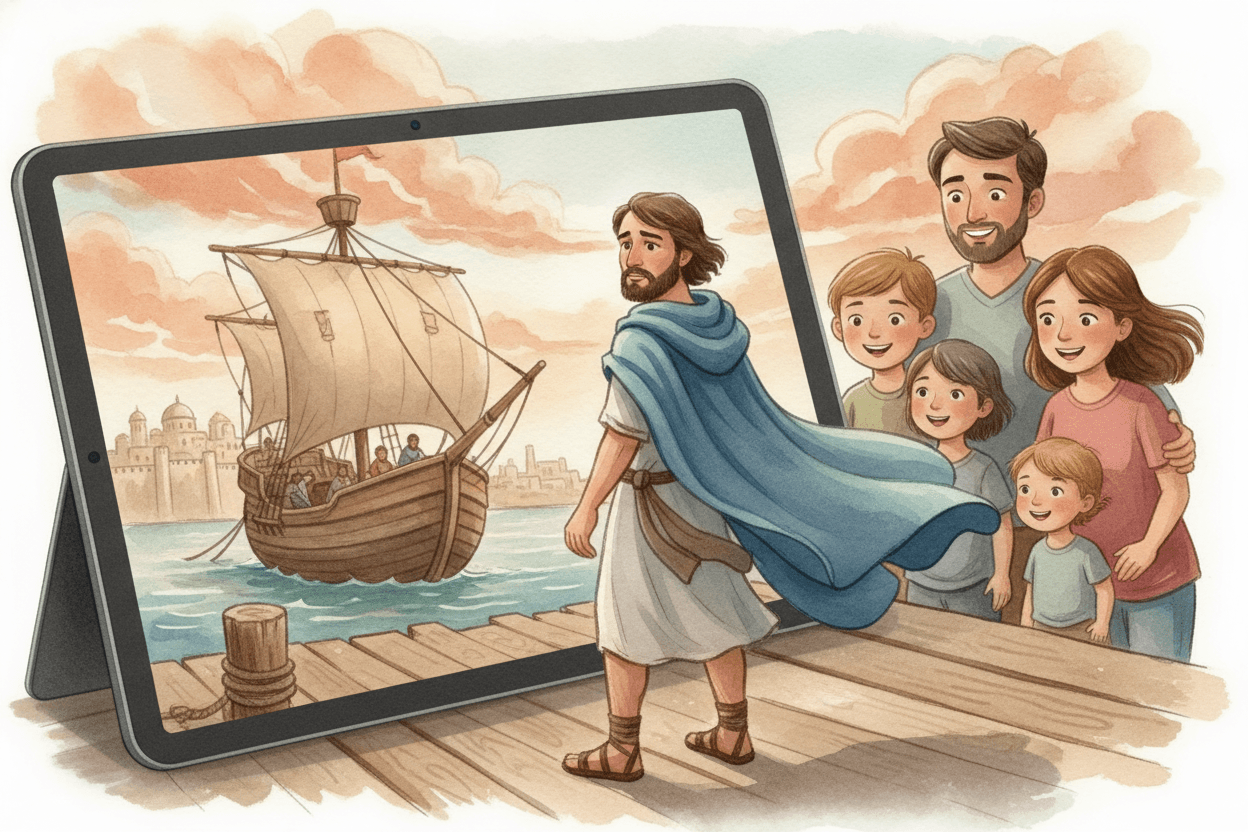
I remember a day when my son, Thomas, bravely faced a huge spider in the corner of our living room. I watched as he took a deep breath, squaring his shoulders to confront it. But when he finally got close, he backed away, saying, 'Dad, I don’t want to deal with that right now!' Jonah was a lot like Thomas in that moment. When God called him to go to Nineveh, he felt that urge to take a step back. The thing was, Nineveh was no regular city; it was infamous for being wicked and dangerous, a place that made Jonah feel afraid, much like that spider made Thomas feel uneasy. So, he ran away instead of obeying God. It’s one thing to be brave; it’s another when you’re scared and don’t want to handle something difficult or uncomfortable.
Think about Nineveh through a child’s eyes. It's like when they're asked to share a toy with a friend who has been mean to them. They might wonder, 'Why should I be nice to someone who’s not nice to me?' Jonah had that exact fear. He worried that God would show mercy to a city known for its evil. His fear made him think that running away was a better option than showing kindness, which reminds me of how we sometimes run from conversations about forgiveness when we want to avoid the hard stuff too.
When I talk to my kids about Jonah, we often take a moment to think about how he felt. 'Would you want to go somewhere that makes you feel scared or uncomfortable?' I ask them. I find that this opens up a dialogue. They realize that Jonah's story isn't just about being swallowed by a fish; it’s about confronting fear and the idea of compassion for our enemies. It’s challenging for kids to get their minds around this, but they understand injustice. They know that a kid who is mean shouldn't just get another chance. Yet, God was asking Jonah to see beyond that; He wanted Jonah to extend His mercy.
The reality is, God often calls us to do tough things. He wants us to be brave and show love, even when it feels unjust or scary. So when you’re sitting at the table, ask your kids about times they’ve felt this way. Maybe they can think of moments when they didn’t want to be friends with someone or didn’t want to forgive a sibling. It makes the story of Jonah come alive as they find little connections, and they begin to see that not wanting to follow God’s wishes is something we all struggle with.
At our house, we like to keep things real about these topics. When we talk about repentance with our kids, it’s an opportunity to connect their everyday choices back to Jonah’s journey. They might not yet understand the depths of mercy like adults do, but they can relate to saying sorry when they’ve hurt someone. Whether it’s over a toy or a harsh word, these moments reflect the struggle Jonah faced. If they can see the parallels of this prophet's story in their own lives, then they learn to recognize the heart of God’s kindness, even in difficult situations.
The word of the LORD came to Jonah, son of Amittai: "Set out for the great city of Nineveh, and preach against it; for their wickedness has come before me." But Jonah made ready to flee to Tarshish away from the LORD. He went down to Joppa, found a ship going to Tarshish, paid the fare, and went aboard to journey with them to Tarshish, away from the LORD.
The Storm Shows That Our Choices Touch Other People
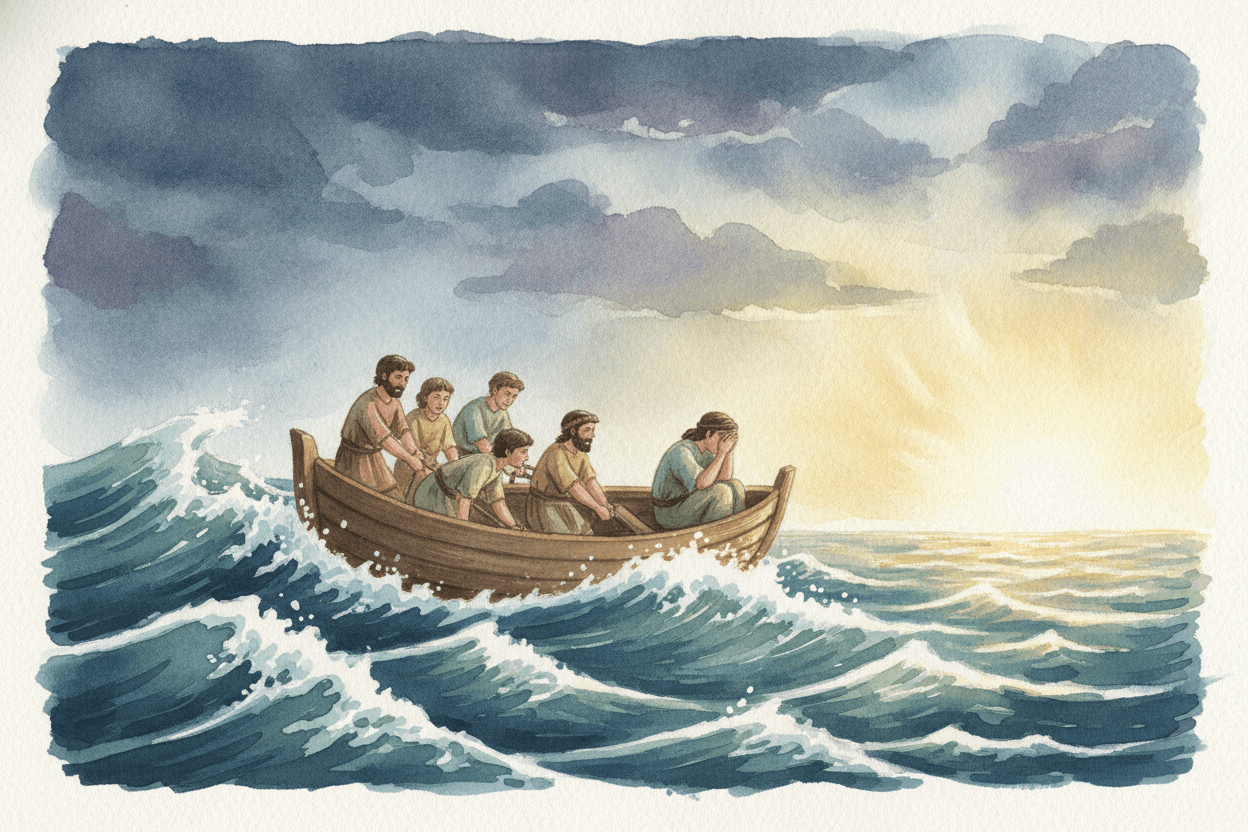
As I was rinsing out the kids' lunchboxes last week, it hit me how the little things we do ripple out like a stone dropped in a pond. That’s just what Jonah’s actions did on that stormy sea. His choice to run from God didn’t just put him in danger; it put everyone else on that ship at risk, too. When he decided to disobey, there was chaos, not only in his life but in the lives of the sailors who had no idea what was happening beneath the surface.
You see, Jonah wasn't just sitting alone on the ship. The storm that followed was powerful and scary. Those sailors—real men with hands roughened from hard work—found themselves caught up in a situation they never asked for. They prayed to their gods and tried their best to keep the ship steady, but the waves kept crashing. Each sailor was struggling, fearing for his life, all because Jonah chose to flee instead of following through with his mission. It’s a vivid reminder for our families: our actions, whether big or small, often impact those around us.
When Jonah finally confessed that the storm was his fault, it was a gut-wrenching moment. 'Pick me up and throw me into the sea,' he pleaded, understanding that his choice had led to danger. Just like when my kids bicker over a toy and disrupt the whole room, Jonah’s decision brought turmoil to the ship. This teaches our children that disobedience or lying doesn’t just stay with us; it can create storms in our families or friendships, too.
Interestingly, what struck me is how the sailors reacted. They showed respect for Jonah—even in the chaos. Instead of tossing him overboard immediately, they rowed harder, trying to save him. In a way, they prayed together for guidance amidst the storm. It's a beautiful picture of how, even in our worst moments, there’s a chance for care and compassion. We can remind our children that when someone does something wrong, the response to help, rather than to hurt, is always better.
As we sat around the table, I used Jonah's story as a springboard to talk about our own everyday choices. Late homework, not telling the truth, or being unkind to a sibling—these small decisions have consequences that can ripple out in ways we might not see right away. At dinner, I asked, 'What happens when we don’t listen or help each other?' It opened up a conversation that was rich with understanding and insights from their little hearts. It’s important for our kids to see that just like Jonah, their actions can affect the people they love.
Each time we encourage our kids to own up to their mistakes, remind them of Jonah’s journey. Yes, there's grace and a chance to make things right, just as Jonah found mercy even amid his disobedience. The chaos doesn’t have to win. Our family can step forward, own our wrongs, and strive to help each other as best we can.
They said to him, "What shall we do with you, that the sea may calm down for us?" For the sea was growing more and more tempestuous. Jonah said to them, "Pick me up and throw me into the sea, that it may calm down for you; for I know that this great storm has come upon you because of me."
The Fish Was a Place to Stop, Pray, and Turn Around
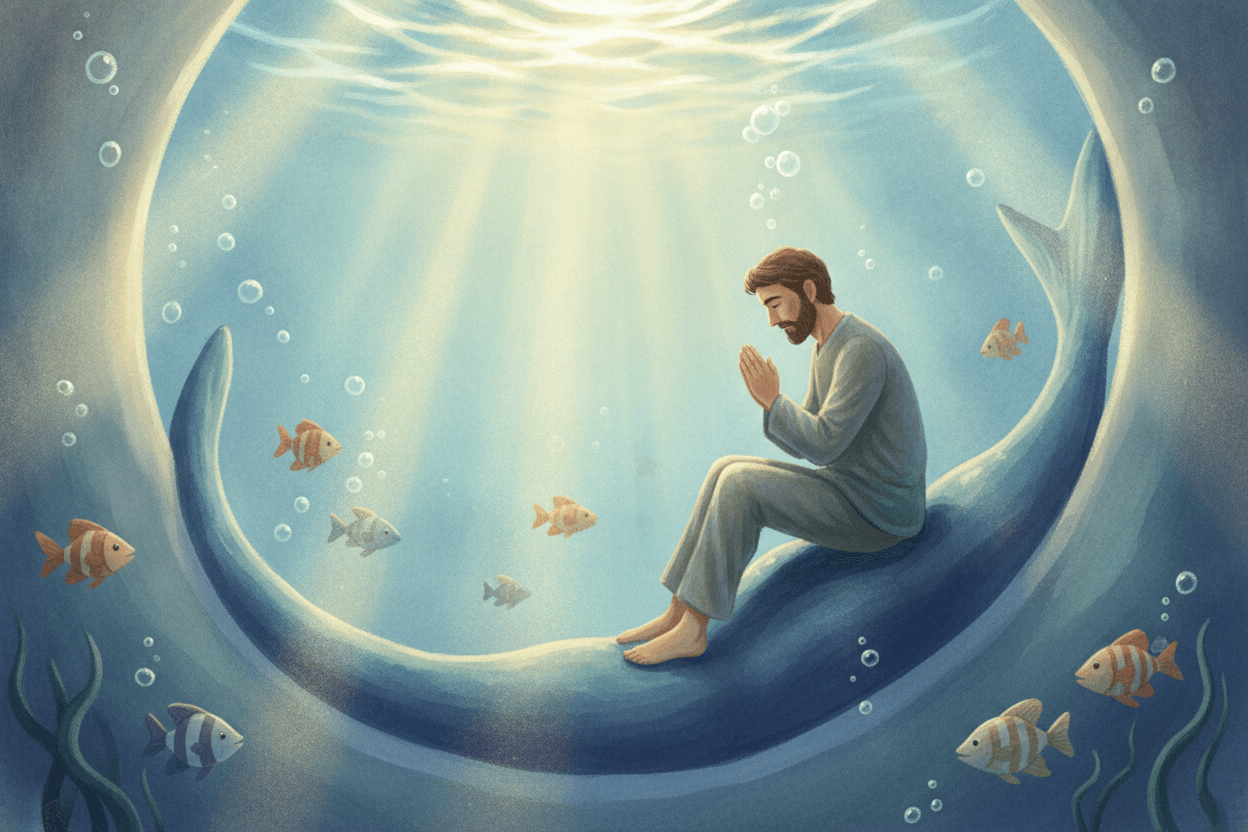
When Jonah found himself in the belly of that great fish, it’s easy to picture him flailing in despair, but let’s pause there. What if that fish was more than just a wacky plot twist? What if it was actually a strange kind of rescue? A chance for Jonah to stop running, to breathe, and to confront the reality of his situation? It’s the kind of moment we might share at our kitchen table, reflecting on the odd twists of parenting and life choices. Sometimes, God gives us an unexpected pause to help us gather our thoughts and align our hearts with His plans.
In the chaos that often surrounds our family dinners, I sometimes notice my kids getting overwhelmed with their tasks—homework, chores, or even sharing toys. When they do, I find it’s essential to introduce a ‘quiet moment’ where they can step back, take a breath, and think about how to move forward. This is where Jonah found himself. Three days and three nights were not just a punishment; they were an invitation to pray and reflect. Jonah’s initial reaction was far from reverent, but God used that stillness to speak to his heart.
Jonah prayed from within the fish: "Out of my distress I called to the LORD, and he answered me; from the womb of Sheol I cried for help, you heard my voice." It’s like a child reaching out to a parent after a difficult day, recognizing they need help. Jonah, stuck in this isolated belly, begins to realize he can't keep fleeing from God's call. He acknowledges what he did wrong and expresses genuine sorrow, which mirrors the Catechism’s teachings on interior repentance. As the Church reminds us, this kind of contrition is a turning back to God with our whole heart.
At our table, when my kids make mistakes—whether they argue or fail to listen—I remind them that repentance is simple yet profound. First, we notice the wrong. Second, we let ourselves feel that twinge of regret. Next, we call out to God, which could be as simple as a quiet prayer for help and wisdom. Finally, we choose to turn around, just like Jonah did inside that fish. It’s a foundational lesson that can help them navigate life’s challenges with grace and compassion, understanding that mistakes are part of growing up.
Jonah’s time in the fish represents more than regret. It’s about recognizing that God’s love never fades, even in our darkest moments. God patiently waits for us to turn back, just as we patiently guide our kids when they stray. Jonah’s effective prayer is a perfect model for children. It teaches them that turning back to God isn’t just about feeling bad—it’s about moving toward a life that honors Him and the people around us, a lesson we hope sticks as they grow and face their own challenges.
Next time your child asks about Jonah’s adventure, remind them that the fish was both a place of safety and reflection, leading to a powerful transformation in Jonah. Just like us, Jonah learned that it’s always okay to come back, to start fresh, and to follow God’s voice, which is constantly calling us through prayer and love.
Out of my distress I called to the LORD, and he answered me; from the womb of Sheol I cried for help, you heard my voice.
Nineveh Teaches Kids What ‘I’m Sorry’ Looks Like
Last week, as we gathered around the kitchen table for our dinner prayers, the kids were unusually quiet. I could tell something was brewing. After the Amen, my youngest piped up, 'Dad, how do you know if someone really means it when they say they’re sorry?' It hit me like a bolt of lightning. It was a perfect moment to talk about Jonah and how he learned to say 'I’m sorry.'
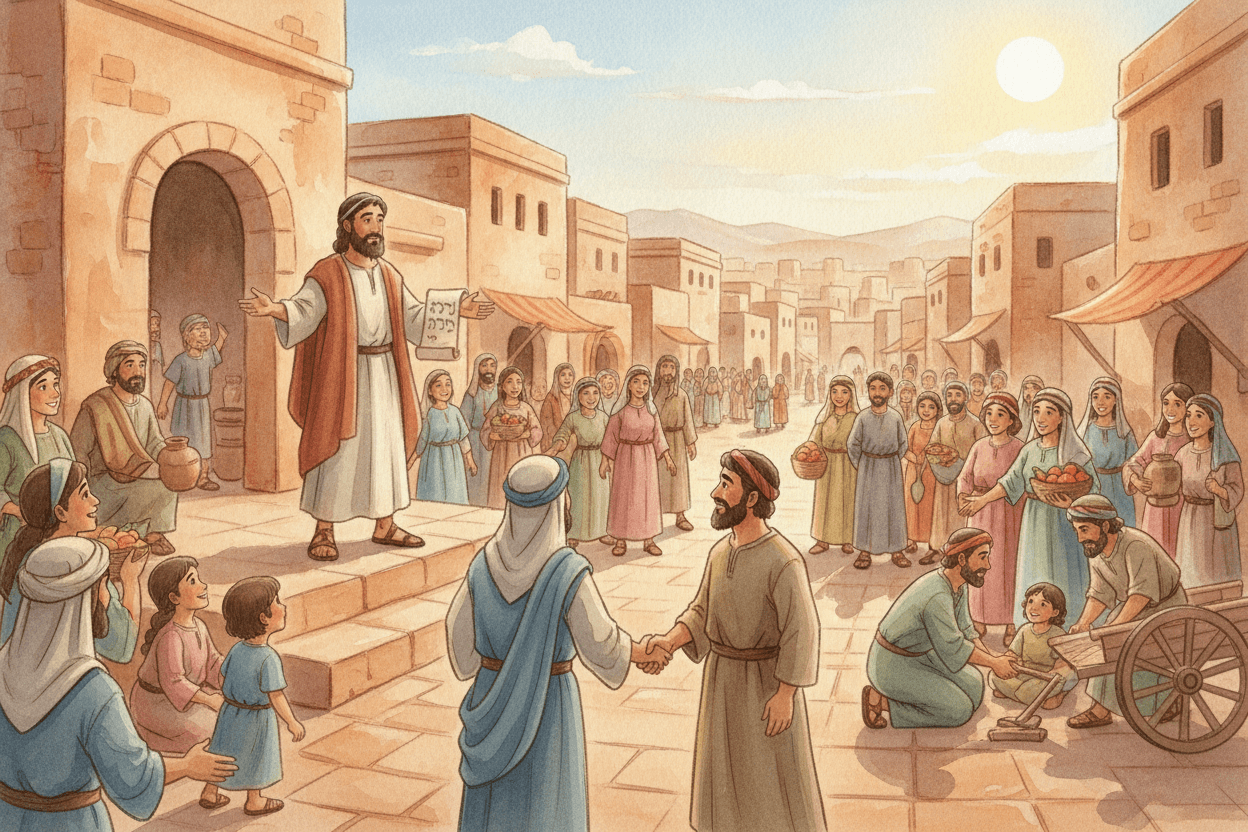
When Jonah finally mustered the courage to go to Nineveh, it wasn’t just about delivering words. It was about a total shift in how the people acted afterward. We see this when Jonah delivers God’s command, and the people of Nineveh respond remarkably. They not only say they're sorry; they change their behavior, putting on sackcloth and fasting—demonstrating that true repentance is more about actions than just words. Sure, they could have draped themselves in fancy robes and pretended nothing happened, but they didn’t. They recognized their need to turn around. This, I explained to my kids, mirrors how we should approach our wrongdoings in daily life. After saying 'sorry,' it’s time to make things right, just like the Ninevites did.
In our home, we've tried a few small things to make this lesson stick. After I help one of the kids through a tough moment, I make it a point to ask how they can do better next time. It's as simple as saying, 'What does being kind look like right now?' This week, I encouraged them to think about how saying 'I’m sorry' could lead to actions—whether it was playing with a sibling they’d hurt, sharing a toy that was hoarded, or even just saying something nice to a friend afterward to brighten their day. It’s a simple framework: Acknowledge the wrong, express sorrow, and then take meaningful action.
Jonah's story reminds our kids that confession isn’t just a ritual. It can actually shift hearts. This is where we connect with Reconciliation. Just like the Ninevites took their repentance seriously, showing it through actions, we can encourage our kids to treat the sacrament the same way. When they stumble, I remind them that Jesus is waiting. They can talk to Him, recognize their mistakes, and resolve to do better—much like Jonah began to do after his time in the fish. This doesn’t have to be complicated or heavy; it can start with a conversation after a family read-aloud of 'Jonah and the Fish' comic, where they see what true change looks like in those pages.
Understanding the 'how' of saying sorry is crucial. It's not just three little words but encompasses our intentions and behaviors afterward. Just as the Ninevites acted to turn from their evil ways, my children are learning that each apology must be paired with a willingness to do things better the next day, interacting with their siblings or friends in new ways. After all, repentance blooms in action. This week, I’d encourage parents to invite their kids to notice small mistakes they’ve made and brainstorm together how they could turn those 'sorry' moments into chances for kindness and growth.
Man and beast alike must be covered with sackcloth and call loudly to God; they must all turn from their evil way and from the violence of their hands. Who knows? God may again repent and turn from his blazing wrath, so that we will not perish. When God saw by their actions how they turned from their evil way, he repented of the evil he had threatened to do to them; he did not carry it out.
Even After Obeying, Jonah Needed to Learn Mercy
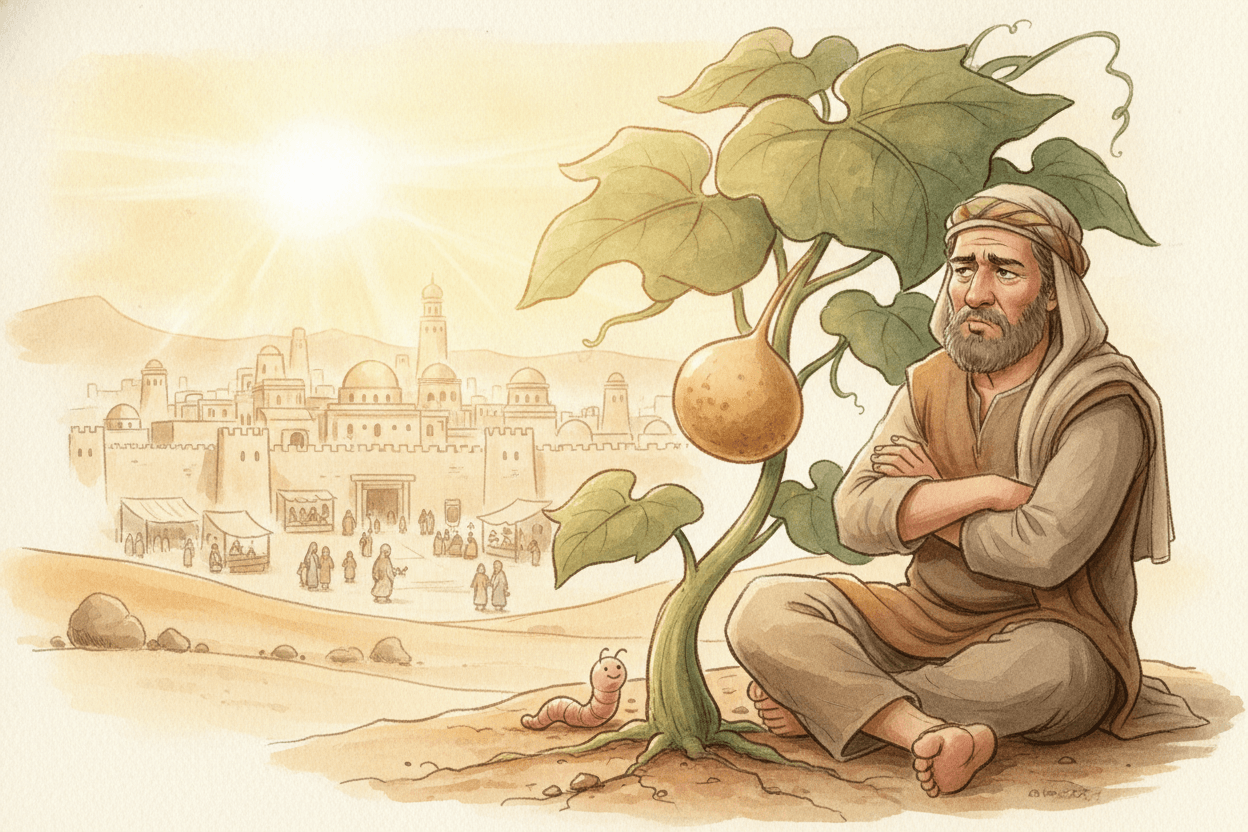
Picture this: my son is on the couch, arms folded, frowning at the story of Jonah. "Dad, how can Jonah be so mad after God saved all those people?" It’s a fair question, and one that many of us stumble over, especially when we consider just how messy our own hearts can be. We read about Jonah finally heading to Nineveh, preaching God's message, and the whole city repents! It feels like a happy ending, but then we hit a brick wall. Jonah is furious. Why? Because God spared the Ninevites, the very people Jonah was afraid of and had wanted to see punished. It opens a dialogue worth having at our table about compassion, fairness, and mercy.
As parents, we know our kids see the world in black and white. For Jonah, it’s about justice: his enemies don’t deserve mercy. When he sees God’s slow, deliberate grace, it clashes with Jonah's sense of what’s 'right.' That’s where our parenting can kick in. We can guide our kids to see that God's kindness often confounds our human sense of fairness. It’s a mind-bending lesson that speaks to our own experiences—think about a time when it felt hard to forgive.
Then comes the plant and the worm. It's a curious twist. Jonah is sitting in his sulk, waiting to see what happens next. God grows a plant to give him shade and ease his discomfort. Jonah loves that plant—until God sends a worm to destroy it. Now he's really mad. "I’m so angry I could die!" he yells. And God responds, asking Jonah if it’s right to be angry over a plant he didn’t grow or care for.
It’s here that we get a glimpse into God’s heart. Jonah has obeyed—he’s done the work of a prophet—but he still needs to learn about mercy for people. This is relatable, isn't it? Sometimes in parenting, we do all the right things, but we still have to look beyond our immediate comfort and preferences for the bigger picture—what it means to love, forgive, and show kindness, even when we’d rather keep our distance.
One small thing we tried in our house was to draw a connection between Jonah’s experience and our own. When my kids argue, I remind them about the plant and the worm. I gently ask them, "Are we caring for each other like God cares for us?" It helps them see that sometimes, mercy involves a change of heart, and it’s a journey.
The story of Jonah is not just about an angry prophet; it’s about our need to learn, even after we’ve done the right thing. God can be pleased when we come back and still keep teaching our hearts to be kinder. Just like Jonah, we all have steps to take on the road to compassion.
And the LORD said, "You are concerned about the plant, which you did not work for and which you did not grow. It came up in a night and perished in a night. And should I not be concerned about Nineveh, that great city, in which there are more than a hundred twenty thousand persons who do not know their right hand from their left, and also many animals?"
Try a Jonah ‘Turn Around’ Practice This Week
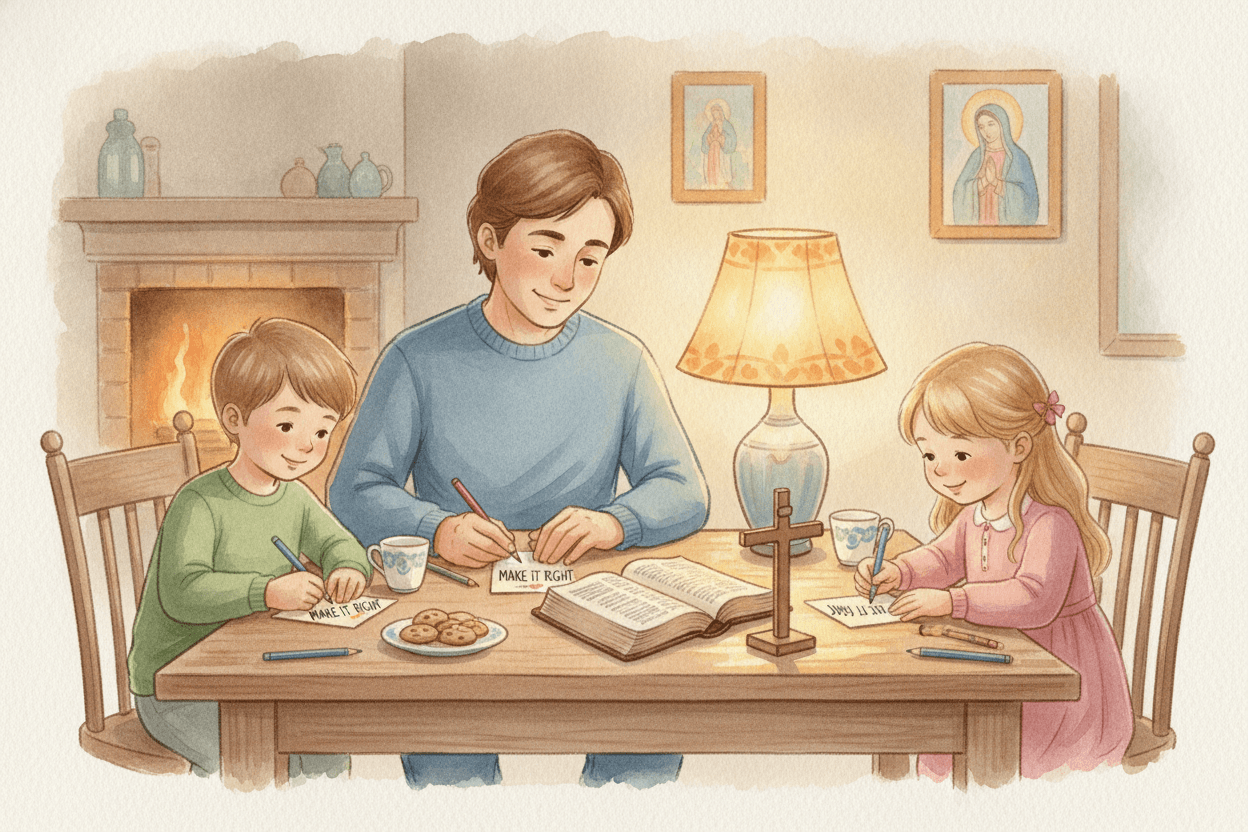
Last week, at our kitchen table, the conversation took a turn. One by one, our kids began to share moments from their day when they didn't make the best choices. My son, with a sheepish grin, admitted that he took a toy from his sister without asking. My daughter recounted how she snapped at a friend during recess. It felt like a small-scale Jonah story unfolding right there. Each of them ran from what felt right, just like Jonah running from God's call. The good news? We had a chance to turn that around together in a practical way.
Here's a simple 'turn around' practice we've started doing. Each family member takes a moment to name one specific time they ran away from doing what was right. This isn't about shaming anyone; rather, it's about opening the door for reflection and growth. Once everyone has shared, we say a short prayer asking Jesus for help. It’s a gentle reminder that we can bring our worries and wrongdoings to Him at any time. Like Jonah cried out from inside the fish, we can call out, trusting that God hears us and is ready to guide us back onto the right path.
After the prayer, we ask ourselves what one concrete repair we can make. Perhaps it's an extra favor for a sibling or a note of apology to a friend. The focus here is on taking action. This echoes Jonah’s experience; after he turned back to God in prayer, he went to Nineveh to deliver a message of mercy. In our house, following through on a small act of kindness can feel just as monumental. It teaches our kids that making amends is a vital step in our life of faith.
We’ve noticed that this practice builds resilience in our children. It reassures them that running away from God's expectations can happen, but it’s not the end of the story. Just as Jonah learned, we can always choose to turn back towards what's good and right. This week, I invite you to give it a try at your own table. Reflecting together strengthens our bonds and creates a safe space for honest conversation. It’s not always tidy — but hey, what is with young kids around?
Remember, making mistakes is part of growing up. The key is how we respond. When our children see that our family reinforces the idea that God’s love is steadfast, even when we veer off course, they begin to understand forgiveness. They learn that God is always ready with grace for anyone who sincerely wants to change. We can hold that thought in our hearts throughout the week: every 'turning around' moment leads to opportunities for grace and mercy.
Just as Jonah was in the belly of the sea monster three days and three nights, so will the Son of Man be in the heart of the earth three days and three nights.
Frequently asked questions
Why did Jonah run from God?
Jonah ran from God because he feared the difficult task of preaching to Nineveh and was afraid that God would forgive people he thought didn’t deserve it. He wanted to avoid confronting a challenging situation, much like kids often do when faced with chores or uncomfortable tasks.
What can I tell my kids about God's love when they make mistakes?
You can explain that just like God pursued Jonah, He loves us unconditionally, even when we mess up. Encourage your kids to understand that making mistakes doesn't mean they're unloved, and they should think about how to make things right.
How can I help my kids understand fear and compassion in relation to Jonah's story?
Create open conversations at home about times when they’ve felt scared to do what's right, just like Jonah. Discussing their feelings can help them relate to Jonah's fears and see the importance of extending compassion even when it's challenging.
How do I frame Jonah's story in discussions about forgiveness?
You can relate Jonah's journey to everyday situations where your kids might struggle to forgive or be kind. Highlight the fact that God calls us to show love, even when it feels unjust, helping them understand the broader themes of mercy in the story.
What are some practical ways to discuss repentance with my children?
Discussing repentance can be tied to their daily choices, like saying sorry after a conflict. Encourage them to think about their actions and how they relate to the lessons from Jonah’s journey, fostering an understanding of God's mercy and kindness.
Sources: bible.usccb.org · bible.usccb.org · bible.usccb.org · bible.usccb.org · vatican.va · vatican.va · wordonfire.org · pewresearch.org · barna.com · catholic.com
Scripture quotations in this article use the NABRE translation.